OK, I get it. Nobody knows the day or the hour, not even the angels of heaven.
(Not being one of the angels of heaven, I know I don’t know when that hour will come.)
And Jesus, I know that you know not the hour or the day, but God alone has time’s command.
But to be perfectly honest, now, if you could say to God, “Today would be Just Fine to return…”
That would be fine with me.
A poem/prayer based on Matthew 24:36-44, the Revised Common Lectionary Gospel reading for Year A, First Sunday of Advent.
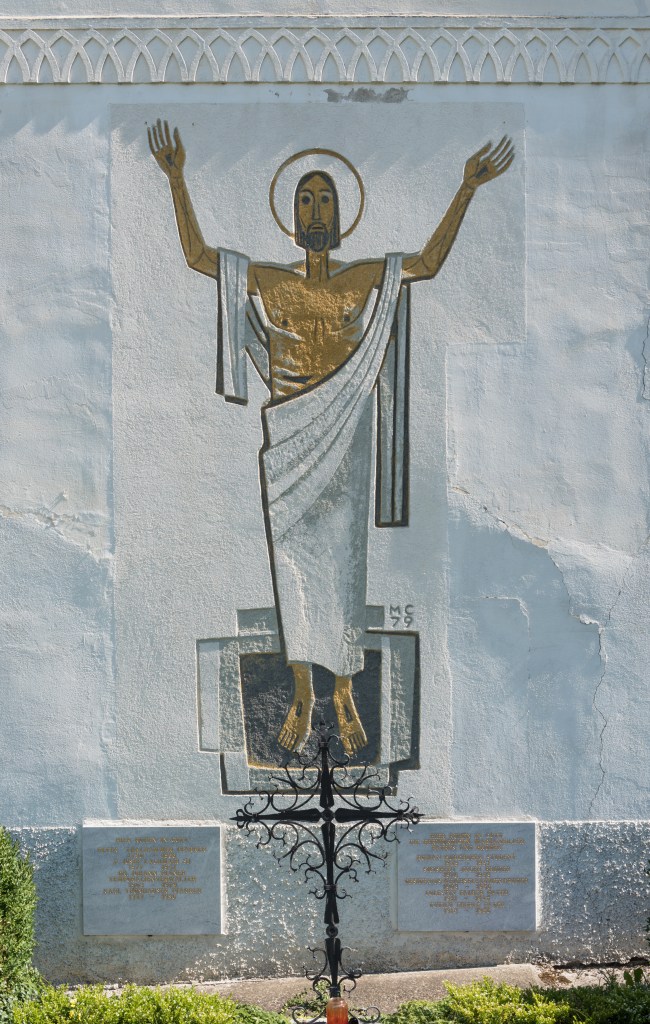
The image of Christ is painted on the outside wall of the Church of Saint James the Greater, Sankt Georgen am Langsee, Carinthia, Austria. Photo by Johann Jaritz / CC BY-SA 4.0, CC BY-SA 4.0, https://commons.wikimedia.org/w/index.php?curid=43256814.
Today I am with you, dear Jesus, drenched with tears to see the shepherd-wolves, the ones who bay and scatter all the desperate flock, rapaciously defending their carnivorous pack.
Today I am with you, dear Jesus, looking for that so elusive Righteous Branch, and longing that the fear may fade in those who seek a refuge from the flood incarnadine.
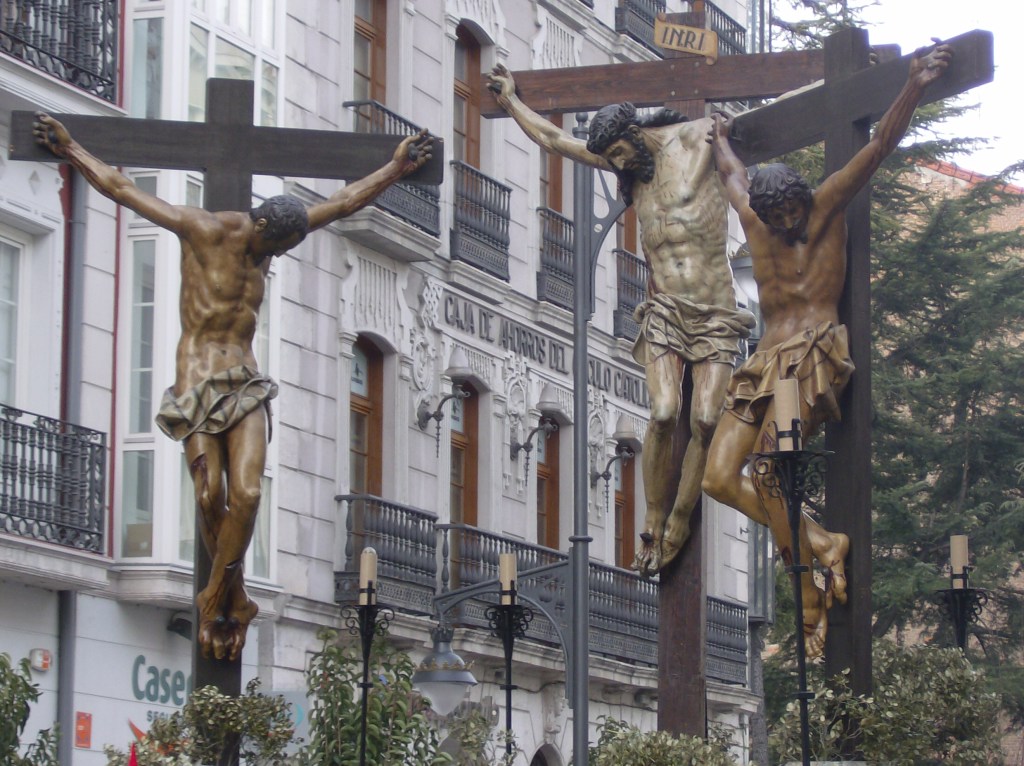
Today I am with you, dear Jesus, though I hang not on a cross of my deserving, save as witness horrified at this: humanity’s appalling inhumanity.
I turn to look at you, dear Jesus, and I see your tortured arms, your blood-streaked face, and say, “Remember me, O Jesus, on that precious day you come into your holy realm.”
And then, O Jesus, pray: What do you say?
A poem/prayer based on Luke 23:33-43, the Revised Common Lectionary Gospel reading for Year C, Proper 29, Reign of Christ Sunday.
“They shall plant vineyards and eat their fruit.” – Isaiah 65:21b
O God, I’m doing fine. Some days are long, some short. At each day’s end, I eat and drink. I am refreshed.
Yet half my neighbors, half the households of this land, bring home from labor 13% of total income, while half the checks increase the wealth of 10% of earners.
They sweat and plant, assemble and sell, cook and clean, press the grapes for wine for wealthier homes where wealthier people eat and drink and sleep.
Do they not labor in vain? Are not their children born for calamity? Where are those offspring blessed by the LORD? For, rich and poor alike, are we not damned for this?
A poem/prayer based on Isaiah 65:17-25, the Revised Common Lectionary First reading for Year C, Proper 28.
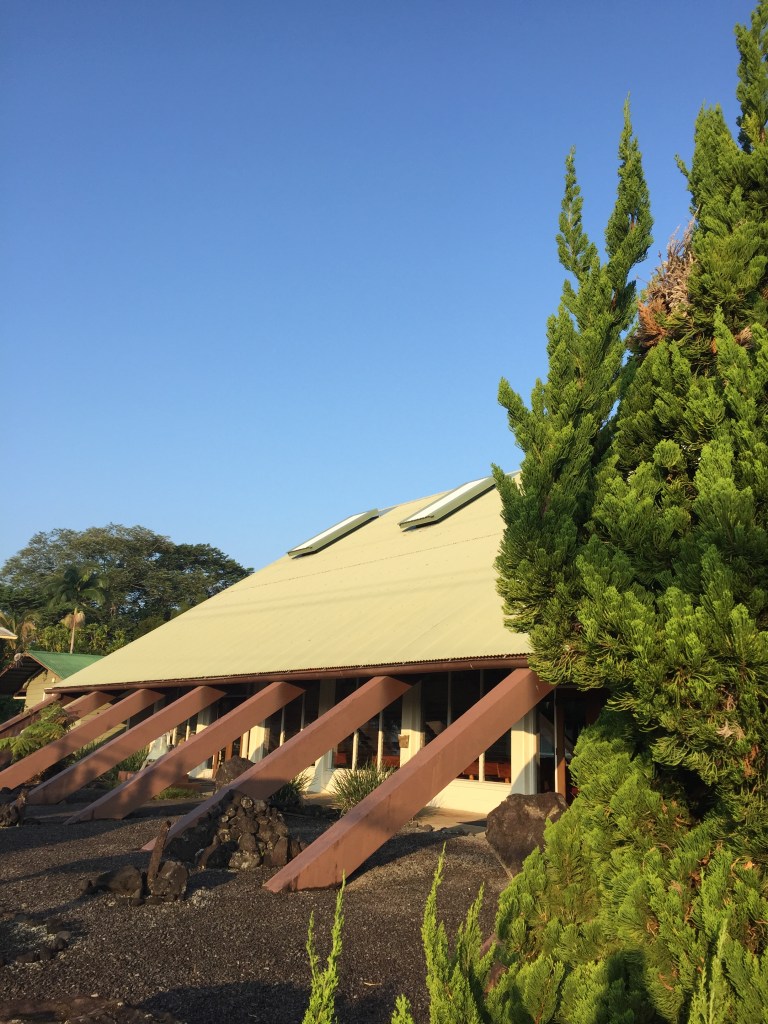
I was putting the final touches to the sermon on Sunday morning in my study at Church of the Holy Cross. My brain was slowly turning to think about the children’s message – though I consider ideas through the week, the final story takes its final shape on Sunday morning.
It may not be the least anxiety-provoking method in the world, but that’s how it goes.
The usual calm of the morning suddenly vanished. Above my head, I heard the voices of the mynas suddenly rising in volume and intensity. The metal roof began to pound and thump as they beat their wings at one another, resonating like a great drum at me as I sat wondering below.
I’ve heard myna arguments before, but never anything quite this shrill, quite this loud, and frankly, quite this amplified.
Whatever the conflict was about, it seemed to involve several birds, each of them screeching with might and main. The pounding doubled and redoubled. The voices multiplied. Nobody was willing to give in, it seemed. It went on and on.
Suddenly, the source of the sound began to move. Slowly at first, and then accelerating, the screeches and pounding moved from my left to my right, sliding down the slippery slope of the aluminum roof toward the edge. I looked left in time to see the birds drop from the gutter to the sidewalk, still screaming at one another, but with the wingbeats now slowing their unplanned descent to the ground.
For a few seconds more the argument continued unabated, then abruptly ceased. Silence fell. Then the birds, as one and without a sound, took to their wings and flew off.
I promptly threw out all the ideas I’d had for a children’s message to talk about the mynas whose argument ended like this:
“Well, that’s not where I thought this argument was gonna go.”
“Yeah.”
“Do you remember what this argument was about?”
“No.”
“Maybe we should take this up later?”
“Yeah.”
“Somewhere where it isn’t quite so slippery.”
“Yeah.”
They all knew what the future was supposed to be: a winner to the argument. Instead, the future turned out to be an embarrassed group of dusty mynas.
The future, I told the children, is not always what you expect.
In reflecting on the reflection, however, I realized that the future wasn’t what I expected, either. The image of a group of fighting mynas sliding down the roof had never occurred to me until I heard them doing it.
In the midst of our work and efforts, in the midst of our dedication to service and our commitment to creativity, in the midst of our solemn self-reliance that is so common and yet so foreign to nearly every faith tradition I’ve ever learned about, the subtle (or screeching) movements of the world around us may yet become the inspiration, or the direction, or the guide for our continued journeys. For if the mynas were surprised to find themselves dumped off the roof onto the parking lot, so was I. And if the mynas were surprised to find that a change in circumstance had wiped away their argument, so was I.
The future doesn’t always hold what we think it does. Our lives of faith don’t always look like what it think it will, either. The world may, from time to time, teach us where to go. The Divine may, from time to time, give us the ingredients for our imagination.
So I know it’s just a hypothetical, this woman widowed seven times, a cynical construction built for theological confounding, still…
Were I the seventh brother, I would be reluctant to be wed unto this agent of ill fortune, no matter what her charms and grace.
And I’d be right.
A poem based on Luke 20:27-38, the Revised Common Lectionary Gospel reading for Year C, Proper 27.Though technically not a prayer, I’ve tagged it as a lectionprayer anyway.
“The latter splendor of this house shall be greater than the former, says the LORD of hosts; and in this place I will give prosperity, says the LORD of hosts.” – Haggai 2:9
With Zerubbabel and with Joshua imagination stands and weeps to see the scattered blocks of stone once standing proud, now scattered with the blackened ruined beams.
A few would then recall those stones erect, those beams above, a roof embellished with a gilded glow. No doubt they wept and wept to see their memory cast down in ash.
Imagination, yes, but also I have seen the ruined churches, heiau – razed sometimes by accidental flames, sometimes by hands’ deliberate destructive force.
I turn to Zerubbabel and I turn to Joshua, and part of me, so up to here with things to fix and clean and paint, the bulbs and window glass and water spouts,
Cries out, “Do you not see how you are blessed to have no structure to maintain, no house exacting so much toil, so much gold, demanding much more worship than our God?”
Then silently and softly, Haggai’s God replies, “Take courage, child of mine, despite the costs and worries, for these houses make a home for those who join their hearts in prayer.
“These spirits seek a shelter from the blast of circumstance and ill intent, and so we raise these walls of stone and wood and glass to make for souls a refuge and a home.”
A poem/prayer based on Haggai 1:15b-2:9, the Revised Common Lectionary First reading for Year C, Proper 27.


 ordainedgeek