“I give thanks to you, O Lord my God, with my whole heart, and I will glorify your name forever.” – Psalm 86:12
My heart is fractured, God.
Let’s face it, it’s been broken by the disappointments and betrayals of my all-too-human life. What mortar can rebuild the broken soul?
My heart is fractured, God.
My heart is torn by contradictions, pulling me from one side to the other. If it were a matter of but two directions, I could manage – but it’s more than two.
My heart is fractured, God.
Not all my inclinations and desires content me, God. I know that some are sin, and know you know which other ones are sin, that I am happy to delight in.
My heart is fractured, God.
How can I give you thanks with a whole heart? My heart is shattered in the bony cage which carries it. I sing a wild cacophony of praise.
My heart is fractured, God.
But you, O God, are merciful. Your grace abounds beyond imagination. You forgive and heal and give me strength. Someday, perhaps, I’ll praise with a heart that’s whole.
A poem/prayer based on Psalm 86:11-17, the Revised Common Lectionary Alternate Psalm Reading for Year A, Proper 11 (16).
“For John came neither eating nor drinking, and they say, ‘He has a demon’; the Son of Man came eating and drinking, and they say, ‘Look, a glutton and a drunkard, a friend of tax collectors and sinners!’ Yet wisdom is vindicated by her deeds.” – Matthew 11:18-19
There was a time they said I looked like Jesus. I had grown my hair quite long, and wore a beard whose scraggly thinness I would not wish on a Savior.
Has anybody ever said I act like Jesus? I cannot say I have overheard the words, although it’s true I like to eat and drink.
Nobody, I’m quite sure, has said I look like John, or act like him. I’m no ascetic. As I said, it’s true I like to eat and drink.
Nor does it matter. Whether clothes are soft or ragged, whether wine is sweet or sour, the task is still to testify to truth:
That God is real, and God is loving. God cares about the ways we treat each other, more than making regular appearances at worship.
God is not fooled by fools, and not by shrewd deceit. Yes, God will judge, and yes, God will forgive, but God will grieve for every sin we wreak upon each other.
So unconcerned about my clothes and diet, I still wonder: does anybody think I act like Jesus, righteous, showing love and grace?
A poem/prayer based on Matthew 11:16-19, 25-30, the Revised Common Lectionary Gospel Reading for Year A, Proper 9 (14).
Photo of Eric Anderson by Eric Anderson.
During my first year of college, I was cast in a play set in the 17th century. To look “the part” a little better, all the male actors let their hair and beards grow. During my spring break back home, a number of old friends insisted that I looked like Jesus, much to my surprise and consternation. I think I’ve finally lost the portrait photo taken for the lobby display, which is all for the best.
I’m not a fisherman. You’re not likely to find me along the shore with a long fishing rod or standing in the shallows somewhere with a net. What I do know about fishing, however, is a piece of advice I’ve only picked up in recent years.
“It’s called fishing, not catching. There’s a reason for that.”
People who fish spend more time not catching fish than they spend actually catching fish, and that matches my admittedly limited experience.
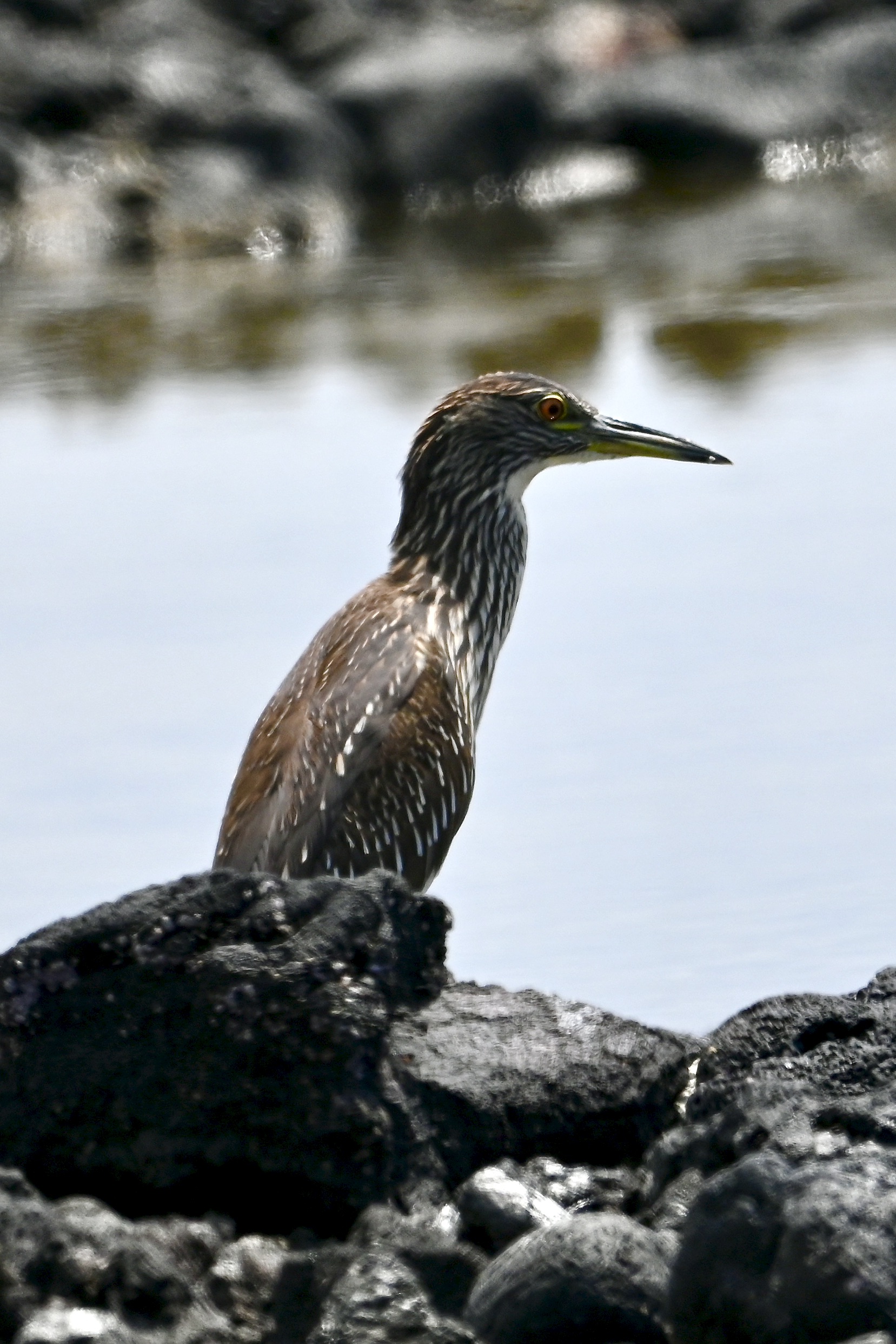
The ‘auku’u doesn’t have much choice about whether to go fishing or not. If you want to eat, and your diet is basically fish, well, you’ve got to go fishing. For our young ‘auku’u here (you can tell she’s young because of her brown feathers and orange eyes; the older ones have blue-black feathers and red eyes), that wasn’t a problem. She liked fishing.
She liked catching better, but she didn’t mind fishing, at least if it led to some catching. The problem was that she wasn’t entirely clear on where to go to minimize the fishing and maximize the catching. That’s one of things you learn if you’re a young ‘auku’u, and she was still learning.
She knew two older ‘auku’u who were happy to give her advice. One was a cheerful uncle of a bird who was always enthusiastic about guiding her to good spots. The other was a rather gloomy auntie, and she was much more likely to say, “Don’t go to this spot; there’s no fish there.” The number of spots she could tell you had no fish in them was impressively long, but also downright depressing. The young ‘auku’u wanted to be told where to go, not where not to go.
So she tended to listen to the happy uncle.
It worked out less well than you’d hope. When she asked him, “Uncle, are there fish in that pool in the next cove?” he tended to say something like, “Oh, my, yes. I’m sure there are. Go have a good breakfast!” Reassured, she’d go see. Sometimes there were fish there, but more times than not, there weren’t.
She learned to ask him, “Have you checked that lately?” but he always said he’d checked it today, and strangely, the fish had often gone somewhere else by the time she arrived.
She did far more fishing than catching in the spots uncle suggested.
Gloomy auntie, on the other hand, didn’t get things wrong very often. There were times when uncle said, “Fish here!” and auntie said, “There’s no fish there,” and auntie had been right. When auntie said she’s found fish recently, there were always fish to catch there. She was always gloomy, but she was often right.
The young ‘auku’u asked her straight out one day: “Auntie, why do you and uncle tell me different things about fishing, and why don’t I find fish where he says more often?”
Auntie considered this question rather sadly, then said, “Niece, I tell you what I actually know about. I know the spots I’ve been to on the day, so I know when there’s no fish there. I might not always know where the fish are, but I can tell you where I haven’t found them.
“Your uncle, on the other hand, likes to tell happy stories, and he doesn’t check things before he tells them. Sometimes he’ll be right by pure chance, but most of the time he just doesn’t know and he says it anyway.”
The young ‘auku’u considered this. “Sunny stories are all very well,” she said to her auntie, “but fishing is fishing and catching is catching, and one of them will have me hungry and the other won’t. If it’s all right, auntie, I’ll ask your advice more than uncle.”
“That’s fine,” said auntie, “and when you have nieces and they ask your advice, try to tell them what you know, and not what you’d like to believe. They’ll eat better that way.”
by Eric Anderson
Watch the Recorded Story
I write these stories in full, but I tell them from memory and improvisation. The story as I wrote it does not precisely match the story as I told it.
Photo of an immature ‘auku’u (black-crowned night heron) by Eric Anderson.
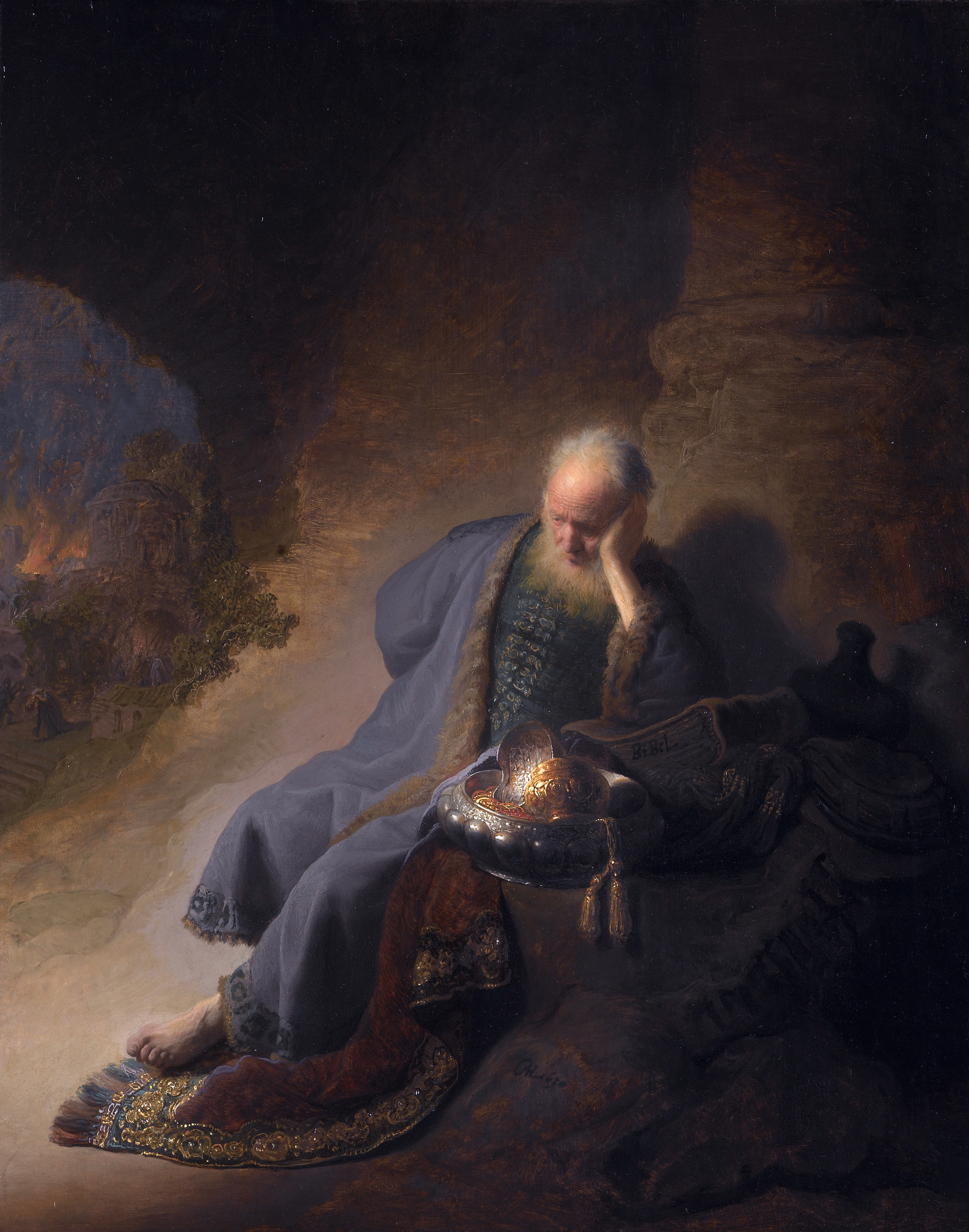
“And the prophet Jeremiah said, ‘Amen! May the LORD do so; may the LORD fulfill the words that you have prophesied and bring back to this place from Babylon the vessels of the house of the LORD and all the exiles.'” – Jeremiah 28:6
I hoped I’d have a simple life. I had ambition, certainly. I would succeed but in a nation resting in its justice, peace, its people living all in righteousness.
It was a pleasant dream. Though some may learn while young how hard the heart of human beings may be, I hardly knew. With age I learned that things were not as I assumed.
And so I find myself today a croaking voice of warning, heard sometimes with pity (which is better than contempt). I’d tear my hair, except I know I’d add derision to contempt.
Do you not think I’d rather say that everything will be all right? Do you not think I’d rather claim that the illusions of my childhood will become our daily bread and feed us all?
The prophets long before me named the sins impoverishing the poor, empowering the rich, and warned that these would undermine the underpinnings of the covenant,
The covenant with God, and with the people who are paid so little, and who ask that if they lack the wealth, at least they might receive the justice to maintain themselves in life.
Increasingly this justice is denied. Increasingly this covenant is broken, as the rich grow wealthier, and the poor grow desperate, and imperiled populations walk in fear.
Do you not think I’d rather tell you what I want to hear? I yearn to live my working life and my retired life in peace. The times say otherwise. And though I’d rather tell you lies, I’ll speak the truth.
I’ll speak the truth I do not wish to hear.
A poem/prayer based on Jeremiah 28:5-9, the Revised Common Lectionary Alternate First Reading for Year A, Proper 8 (13).
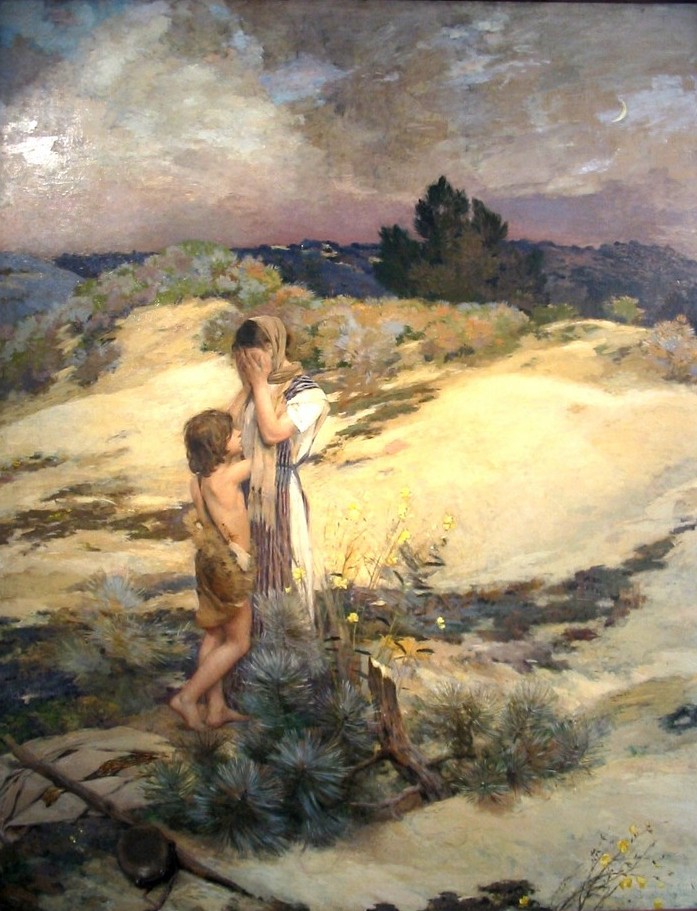
“But Sarah saw the son of Hagar the Egyptian, whom she had borne to Abraham, playing with her son Isaac. So she said to Abraham, ‘Cast out this slave woman with her son, for the son of this slave woman shall not inherit along with my son Isaac.'” – Genesis 21:9-10
They laughed, the boys at play. How many mothers watched? But one saw threat and dissolution of the wealth expected for her own.
How precious was her Laughter! She had laughed to hear an angel say that she would bear a much-desired son, for she had forced her maid already to
Her husband’s bed, there to conceive the older laughing child. No wonder that she laughed, not just at things that could not be, but that she’d brought an heir to life.
But now, she finds that promises fulfilled have made a change. The boy she forced another human being to bear, what is his place? She could not bear to share the wealth.
“Go, cast them out,” she said to Abraham. “He cannot have a place beside my son.” Now Abraham had argued with his God to find a place for his first born, but no.
He would not argue with his wife. He cast them out. He knew the skin of water would not last, and neither would the food. He cast them out to where the sun would bleach their bones.
They were disposable, these two, to Sarah and to Abraham. They’d had a purpose once, but it had flown. No purpose in the camp? Then go.
Too often and too many people find they have been named “disposable” by others with the power to displace them, cast them out, and let them die.
But God, despite a failure to tell Abraham and Sarah, “No. You shall not kill,” at least preserved the lives of Hagar and of Ishamael, declared that they were not disposable.
How soon will our humanity see what our sacred texts still strain to see: no people are disposable. All souls have worth to God, and if to God, then how much more to us?
A poem/prayer based on Genesis 21:8-21, the Revised Common Lectionary First Reading for Year A, Proper 7 (12).
“[Jesus said,] ‘As you go, proclaim the good news, “The kingdom of heaven has come near.” Cure the sick; raise the dead; cleanse those with a skin disease; cast out demons. You received without payment; give without payment.'” – Matthew 10:7-8
Give without payment, O Lord? But I can’t. How will I eat, where will I sleep, if I don’t have a contract or letter of call?
What do you mean, life has no guarantee?
Cast out the demons, O Lord? But I can’t. I’m not sure I’d recognize a demon in person, and surely I’m lacking the strength for such spirits.
What do you mean, my strength is in you?
Cleanse those with a skin disease, Lord? But I can’t. Ask my dermatologist. My own skin’s a problem. I cannot heal myself, let alone someone else.
What do you mean, bring healing, not cure?
Cure the sick, you say, Lord? But I can’t. I’ve no more control over illness of body than skin. Send the physician to those who are sick.
What do you mean, you are a physician of souls?
Raise the dead, you say, Lord? But I can’t. If I had such power, I’d have used it already, to hold all the loves that I’ve lost in my life.
What do you mean, give hope to the hopeless, strength to the fainting? What do you mean, pilot the rudderless, encourage the fearful?
What do you mean, breathe life into your Body?
A poem/prayer based on Matthew 9:35-10:8, the Revised Common Lectionary Gospel Reading for Year A, Proper 6 (11).
The image is The Sick Awaiting the Passage of Jesus (Les malades attendant le passage de Jésus) by James Tissot (between 1886 and 1894) – Online Collection of Brooklyn Museum; Photo: Brooklyn Museum, 2006, 00.159.118_PS1.jpg, Public Domain, https://commons.wikimedia.org/w/index.php?curid=10195961.
God saw everything that he had made, and indeed, it was very good. And there was evening and there was morning, the sixth day. – Genesis 1:31
Praise the Poet, Breath and Wind and Word, who movement on the waters stirred up light and night and land and sea, stars and planet whirling on the cosmographic page.
Praise the Poet, summoning the earth to green abundance, summoning the seas to swarm with life, summoning the trees to welcome birdsong, summoning the land to bear the tracks of feet.
Praise the Poet, maker of more poets, speakers of the word, creators in the image of Creator, author of more authors. A human writer often finds their characters find their direction. The Poet watches poets make a universe of words.
A poet of the people, though, relies upon the languages of human speech, on rhyme and rhythm and multiple meanings, while God has written in broad rays of light, in buzzing bees, in sweet perfume, in gentle touch, in salt upon the tongue.
Praise the Poet, Breath and Wind and Word!
A poem/prayer based on Genesis 1:1-2:4a, the Revised Common Lectionary First Reading for Year A, Trinity Sunday.
This story didn’t take place on our island, because although one of the birds in it lives on Hawai’i, the other doesn’t. I took this picture on Kauai, though both birds also live on O’ahu.
The one on the left, swimming in the water, with its red beak and red on its forehead, is an ala’e ‘ula, or Hawaiian gallinule. The one on the right, standing on long thin pink legs with white and black feathers and a very long straight black beak, is an ae’o, or Hawaiian black-necked stilt.
Both of them like to search for food in roughly the same kinds of places: relatively still and shallow water, like old fish ponds or coastal marshes. They don’t eat the same food, however. The ala’e ‘ula likes plant roots and seeds and shoots, and enjoys a snail or two. The ae’o mostly looks for fish, but will snap up water insects when it finds one.
Actually, the ala’e ‘ula will eat those insects, too, but neither of them is so fond of a diet of bugs to get very upset about it.
On this day the ae’o was getting somewhat upset, but not about bugs. It was fish. He couldn’t find many. Oh, one or two swam his direction, but where were the rest of them? He was getting hungry, and he was also getting irritated with the world. Being hungry does that to some people, and to some birds as well.
“Where are the fish?” he squawked in frustration.
“You can’t find fish?” asked an ala’e ‘ula a short way away.
“No, I can’t, and is that any of your business?” he said rudely.
“No, I suppose not,” said the ala’e ‘ula, who’d been feeding quite happily on roots and shoots and therefore wasn’t hangry with the world. “Would you like me to tell you if I find some fish?”
“You do what you want to do,” said the ae’o irritably, and as the ala’e ‘ula swam off to another section of the fishpond, grumbled to himself, “It’s not as if you’ll be of any help.”
It wasn’t very long, though, before the ala’e ‘ula swam back toward the hungry, grumpy ae’o. “Say, friend,” he said. “Take a look over there. There’s a good sized school of fish milling around eating flies.”
“How would you know?” demanded the ae’o, who couldn’t make out the flies on the water from where he stood.
The ala’e ‘ula shrugged. “One might know if one looks under water,” he said. “I was pulling up a root and there they were, all around. When I got my head out of the water I saw the flies swimming on the surface.
“I suppose you could make a meal of the flies if you have to,” he said thoughtfully, “but I imagine you like the fish better.”
“One might know,” muttered the ae’o as he stepped over to where the ala’e ‘ula had been, “but one probably doesn’t. More fool I.”
Then he saw the milling flies, and he saw the ripples where the fish had risen to the surface. He saw the water swirl as they swam beneath. In a moment he was there, and dipping his beak, and catching his fish, and feeling better than he had all day.
“I guess one might know at that,” he said when the ala’e ‘ula found him again shortly after.
“One might know,” said the ala’e ‘ula.
“Even better,” said the ae’o, “one might share what one knows. And the world gets a little bit better than it was.”
by Eric Anderson
Watch the Recorded Story
I write these stories in full ahead of time, but I tell them in worship from memory and improvisation. The story as written and the story as told are not identical.
Photo of an ala’e ‘ula (Hawaiian gallinule) and an ae’o (Hawaiian black-necked stilt) by Eric Anderson.
For as I went through the city and looked carefully at the objects of your worship, I found among them an altar with the inscription, ‘To an unknown god.’ What therefore you worship as unknown, this I proclaim to you. – Acts 17:23
Not looking carefully, I typed “Kiijubg” as first word for the title of this poem/prayer.
It’s not a word I’ve seen before; I’d struggle to define it, and truthfully it’s definitely not the word I meant.
But Shaw once wrote that when a thing is funny, search it for a hidden truth (and promptly replied to himself that it takes all the fun out of it).
That fierce and fascinating man from Tarsus, though offended by the shrines to idols all about, found one shrine
Which honored Agnostos Theos (perhaps); enough to base a sermon on, to find a common root within a verdant forest
Of complex and disparate devotion, and twist a cord to complement relationship
Between the human children worshiping the God of Jacob, and the human children worshiping Olympians.
If Paul had looked less carefully, perhaps his ire for idols would have leapt to his lips.
Instead his plea for understanding fell on ears which heard. Some scoffed, it’s true,
But if he’d launched into a diatribe against the shrines, what could they do but scoff and turn away?
For anger, like a hand misplaced upon the keys, makes meaningless its words, however filled with hope.
A poem/prayer based on Acts 17:22-31, the Revised Common Lectionary First Reading for Year A, Sixth Sunday of Easter.
The image is a photo of the “Altar of the unknown god” ca. 90-110 CE, discovered on the Palatine Hill in Rome (not Athens) in 1820. Photo by Sailko – Own work, CC BY 3.0, https://commons.wikimedia.org/w/index.php?curid=56294298. The inscription can be translated, “Whether sacred to god or to goddess, Gaius Sextius Calvinus, son of Gaius, praetor, restored this on a vote of the senate.”
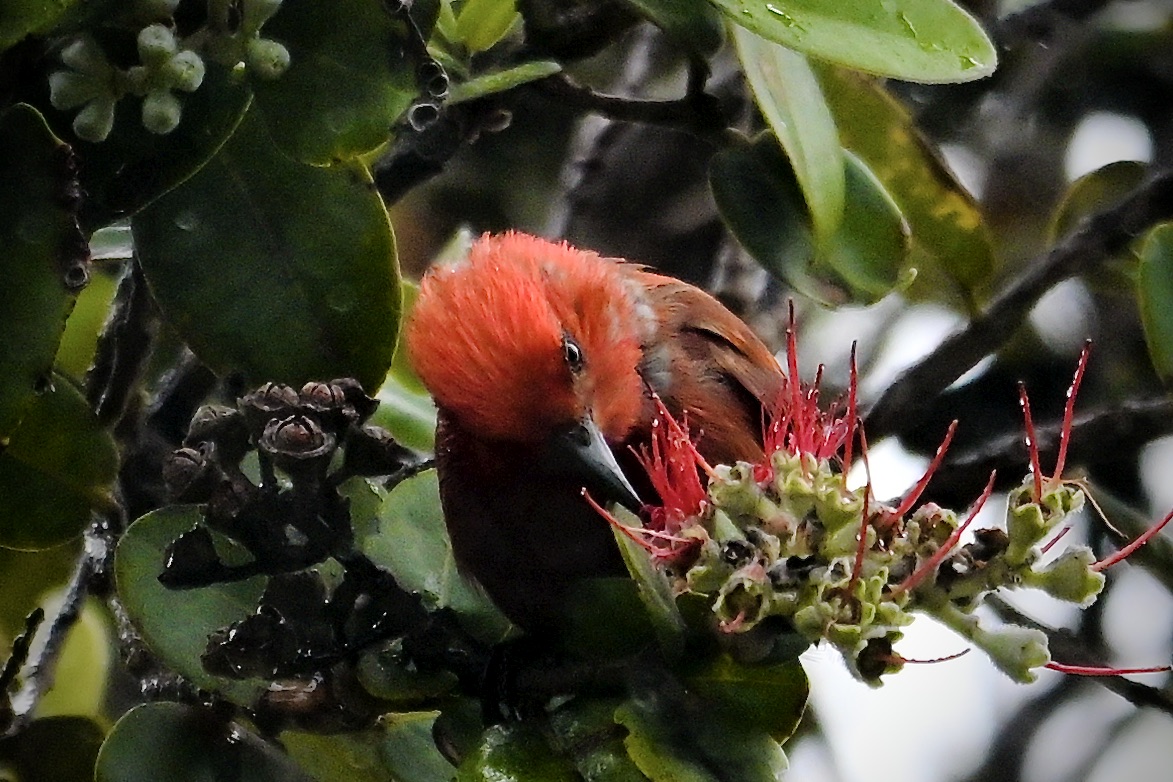
‘Apapane depend on finding flowers for their nectar, and also to find the bugs that they eat, because those bugs tend to like eating the nectar. For an ‘apapane, a grove of ohi’a in blossom is like a long buffet table with all the variety they could ask for. When the trees where they are aren’t blooming, they’ll search about to find some that are.
One ‘apapane turned out to be really good at finding trees in blossom. His friends and family grew to depend on him. He’d fly about early in the morning, find a grove of lehua, and summon the rest of the flock. They’d all descend on it and merrily feast on nectar and bugs until they set off to find another good spot.
One day, as this ‘apapane was making his morning search for nectar, he found two places before he headed back to his family and friends. One of the spots was barely okay. It would do if nothing else was available. The other spot was amazing. Every tree was just dripping with blossoms. A flock could spend a couple days and not visit every flower.
He could just about taste the nectar. He started flying back, and as he did, a thought crossed his mind. What if he led everybody back to the first spot, the one that was just okay? If he did, he could go to the second spot and have it all to himself.
He got back to the flock and said, “I’ve found something! It’s not great, but it will do until something better comes along.” So they followed him – to the first little grove.
As they settled in to sip nectar and hunt bugs, he quietly flew away to the second spot and drank nectar until he overflowed.
The next day he did it again. He found two spots, and led his friends and family to the one that wasn’t as good, while he snuck off to the better one. The next day he did it again. And again.
One of his friends noticed that he wasn’t finding good groves the way he had before, and then also noticed that he went missing shortly after leading them to iffy trees. So when he slipped away she followed him to the heavily flowered grove he’d found and not shared. As he took his first deep sip of an ohi’a blossom, she landed next to him.
“Is this what you’re doing now?” she asked. “Being selfish?”
“How do you know what I’m thinking?” he demanded.
“I don’t know what you’re thinking,” she said. “I do know what you’re doing. What you’re doing is showing your friends middling spots while you save the good spots for yourself.”
“What are you going to say to the others?” he wanted to know.
“That depends on what you do tomorrow,” she said.
Early the next day, he flew off to seek for ohi’a groves. His friend watched him go, and she watched him come back. The flock followed him to a stand of ohi’a trees, and they were covered in bright red blossoms.
He perched next to his friend.
“Better?” he asked.
“Better,” she said. “I’m glad to know you’re not selfish at heart.”
“How do you know that?” he asked. “Can you read my heart?”
“Of course not,” she said, “but what you do reveals your heart. When you act selfishly, you show a selfish heart. When you share, you show a sharing heart.
“Of the two,” she added, “I prefer the sharing.”
by Eric Anderson
Watch the Recorded Story
I write these stories in advance, but I tell them live from a combination of memory and improvisation. The story as written does not exactly match the story as told.
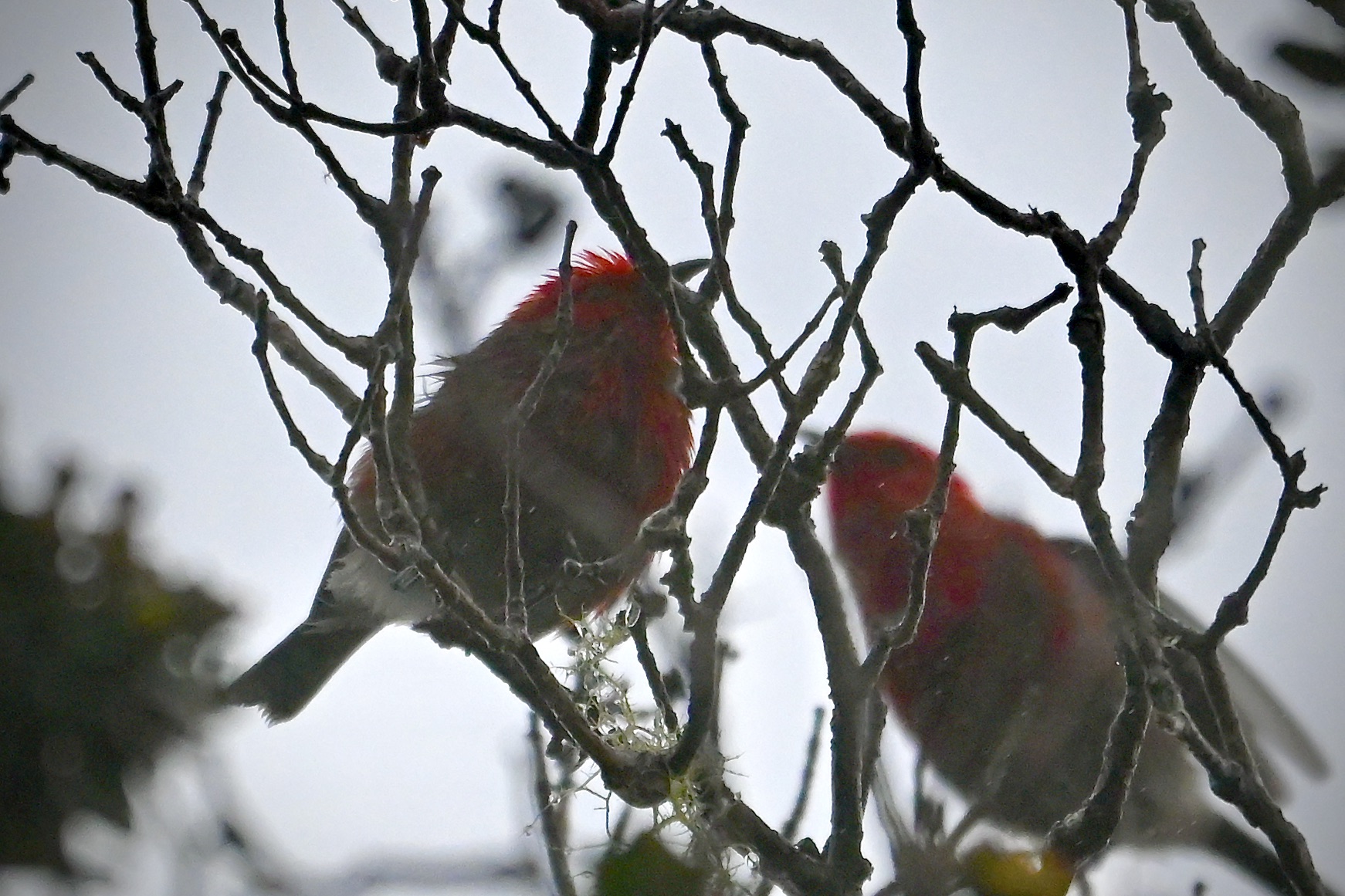
Photo of an ‘apapane in ohi’a blossoms by Eric Anderson.