Story: The I’iwi Who Liked Spiders

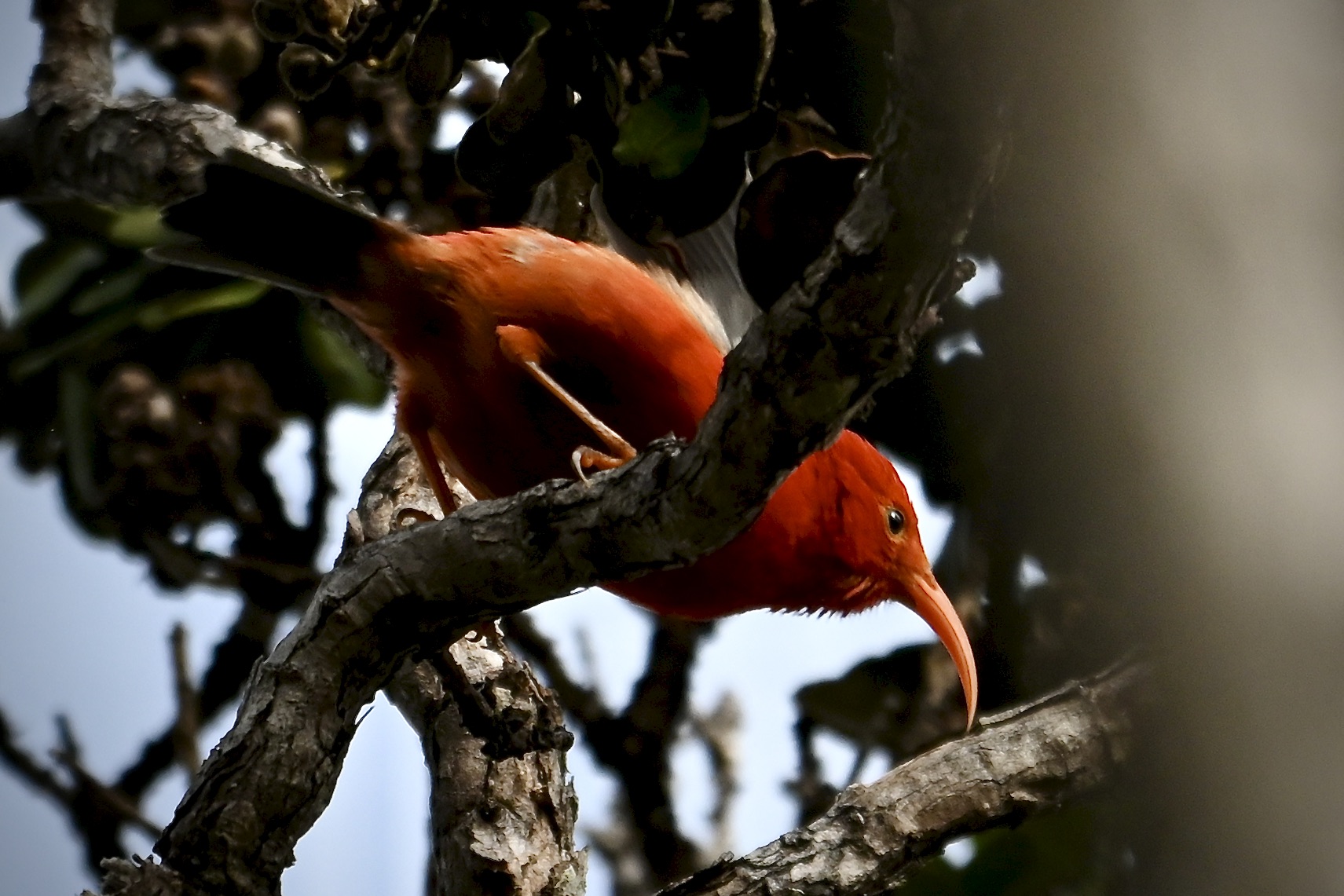
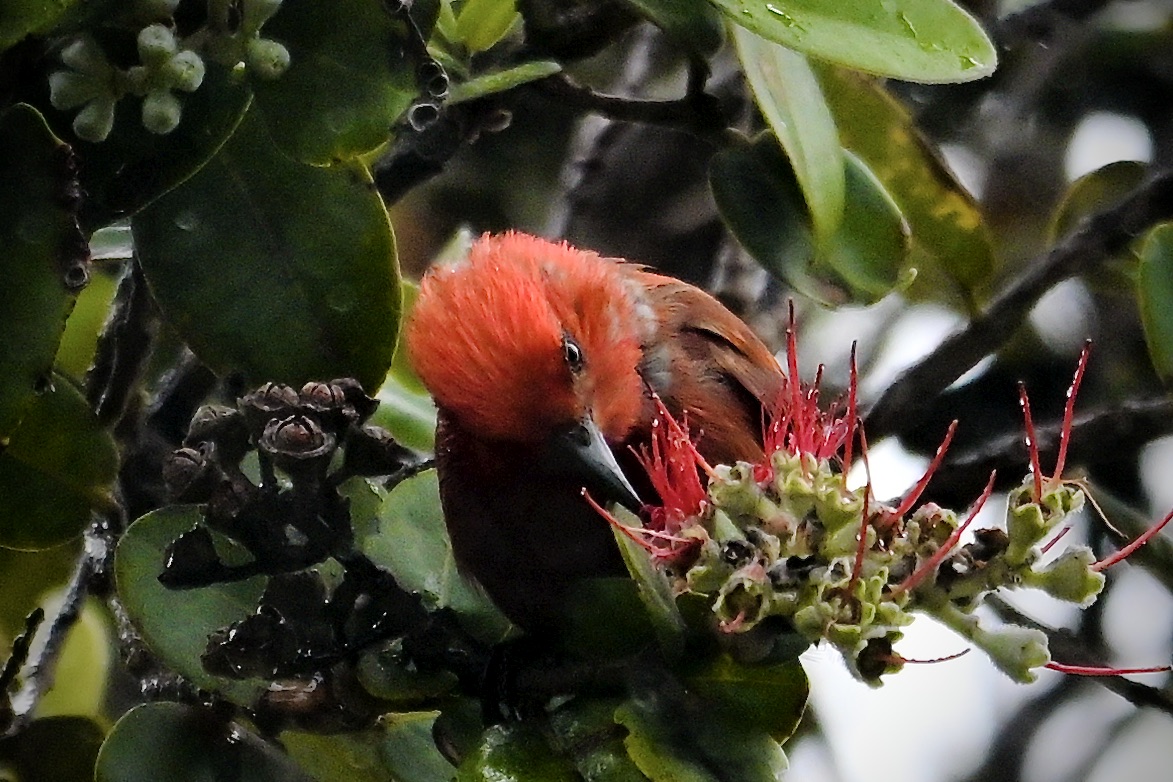
A red orange bird with a very long curved orange beak perched in a tree.

September 13, 2026

Romans 14:1-12
Matthew 18:21-35

I’iwi can be rather opinionated birds. They can also be very grumpy about their opinions. In their opinion, for example, blossoms full of nectar should be sampled by… me. That is, whatever i’iwi happens to have noticed those blooms at the time. ‘Apapane and ‘amakihi can go to another tree. Another i’iwi might be tolerated. Might. If they behave themselves. And aren’t greedy.

Most of all, though, they had to act like a proper i’iwi, and sip from the floral nectar. That’s how a proper i’iwi behaved. Most of all, they didn’t go looking for spiders.

I’iwi do eat spiders, but not very often by choice. They like the liquid diet of nectar, and they’ve got a long beak and a long tongue to drink it with. If a butterfly or moth happens by, they’ll eat it. They’ll fill in with other bugs as well. Far down the list, though, is spiders.

It’s something they’ll eat, but only if they’re really hungry.

Except for one i’iwi, who just so happened to really enjoy spiders. I don’t know why he did. He did. I’m pretty sure that if he explained it to me, I wouldn’t understand it, because I don’t like eating spiders. And I’m pretty sure that if I explained it to you, you wouldn’t understand it, since I suspect you’re not big fans of eating spiders.

If you are and I got that wrong, I apologize. You can explain it to me later.

The older i’iwi watched this younger one enthusiastically eating spiders with a certain feeling of, “Ick.” Most of them were content to let him enjoy his meals. After all, if he was eating the spiders, there was more nectar for them, wasn’t there?

One of those older i’iwi, though, got really annoyed with it all. He took it upon himself to fly over and grumble, “Knock it off, spider-lover. No more of this. Eat like a real i’iwi. Drink nectar.”

“I do,” said the i’iwi who liked spiders. “I drink plenty of nectar.”

“But you’re also eating all these spiders,” said the grumpy one. “Stop it.”

“I like spiders,” explained the younger i’iwi, which was really all that could be said, wasn’t it?

“No proper i’iwi likes spiders,” pronounced the elder. “No sensible i’iwi would make a full meal out of them. No real i’iwi prefers spiders to nectar.”

“And that’s how it is, youngster,” said that older i’iwi. “If you keep eating spiders like this, you’re not a real i’iwi, and we’ll treat you like a stranger and a nuisance.”

Word flashed around the little community of i’iwi about what had been said, and they called a very unusual little gathering to set matters straight. The older grumpy bird and the younger spider-eating bird perched before the flock.

“Do you eat spiders by choice?” they asked the younger one, who had to say, “Yes.”

“Did you tell him that eating spiders by choice meant he wouldn’t be a real i’iwi?” they asked the older one, who proudly said, “Yes.”

One of the grandmothers fluttered her wings at this, and said, “Diet does not make an i’iwi an i’iwi, or not an i’iwi. We’ve all eaten things we’d prefer not when times are lean, and we’ve all found that some of them tasted better than we’d expected. You’re just as much as i’iwi as anyone, youngster,” she said, “even if you eat things I’d rather not.”

“You, however,” she told the grumpy bird, “have taken it upon yourself and yourself alone to say what makes an i’iwi and what doesn’t. That’s something an i’iwi may do and remain an i’iwi, but they should not do it. The forest is hard enough with wind and rain and dry times. We do not need to make barriers for one another.

“You are an i’iwi. But you have not behaved like an i’iwi should. Make your apology to your cousin, and never let us hear you have done this again.”

by Eric Anderson

Watch the Recorded Story

I write these stories in full each week, but I tell them from memory and improvisation. The story you just read is not precisely the way I told it.

Photo of an i’iwi by Eric Anderson.

Story: Rules for Love

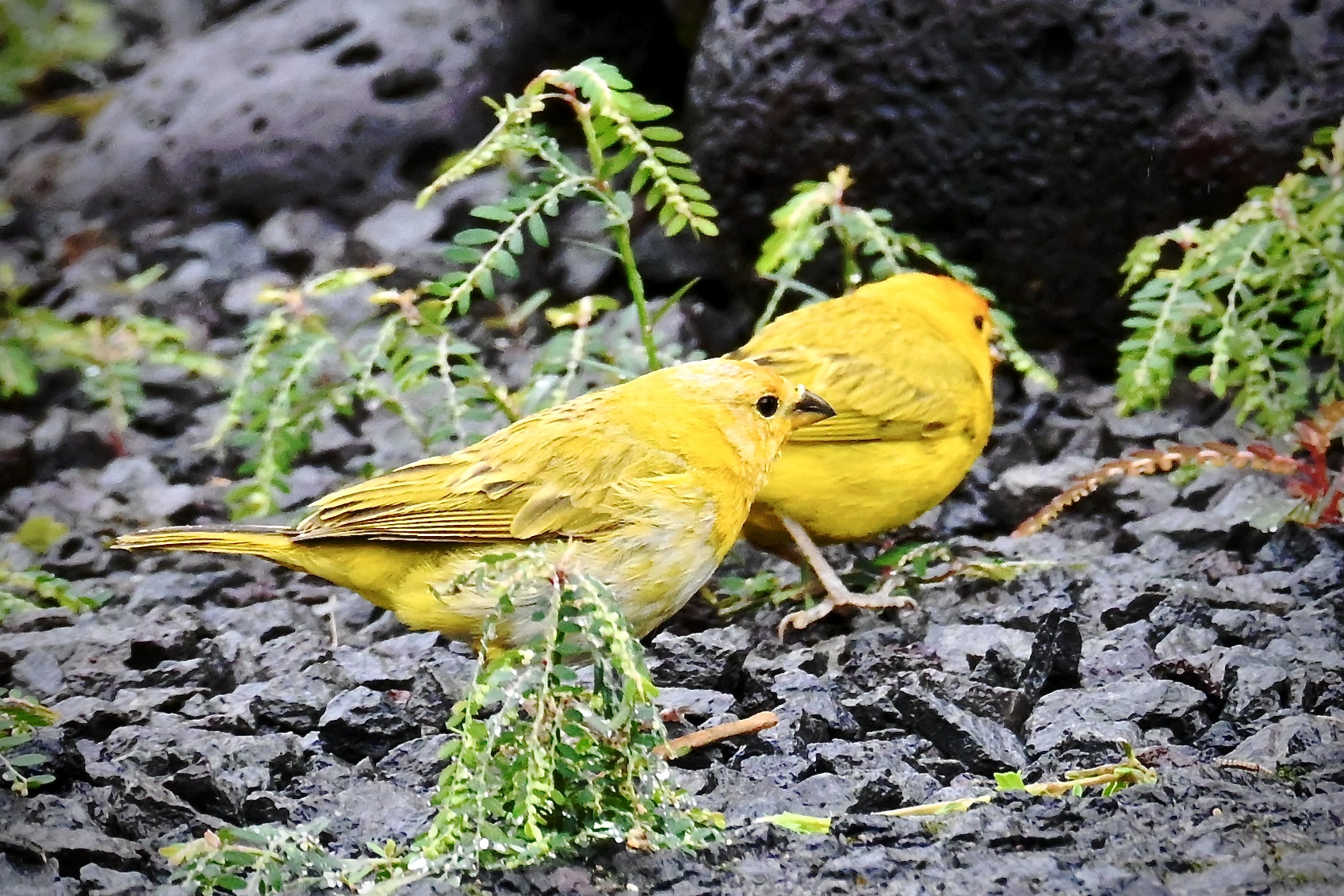
Two small yellow birds on stony ground.

September 6, 2026

Romans 13:8-14
Matthew 18:15-20

The two saffron finches were young. They liked each other a lot. In fact, they liked each other so much that they called it love. They just didn’t know how. That made for a certain amount of disappointing conversations, and gifts that the other one didn’t enjoy, and careless words that launched long periods of hurt silence – saffron finches aren’t much for big fluttering fights.

One day each bird flew back to its parents with a question.

But not the same question.

“How can there be rules for love?” asked the young female. “He wants me to follow rules for love.”

“How am I supposed to love without knowing what the rules are?” complained the young male to his parents. “She just wants me to know what love is and do it.”

Neither set of parents really knew how to answer these questions. The male’s parents liked to know what to do and what not to do. They liked things to be orderly and predictable. They liked to say, “Eat these seeds, but not those seeds.” They liked to say, “Don’t fly when the clouds are a very deep gray.”

The female’s parents, on the other hand, preferred to start with a big idea and work their way down to the way to make it happen. They liked look at the clouds, consider the wind at the moment, and take an experimental flight to see if a storm was kicking up. They liked to try different seeds at different times to see if seeds changed with the season – which they do. They liked to start with the idea of love, and try things they believed would be loving, and, if they had to, make changes.

The male’s parents liked to know what to do to be loving.

In the absence of help from their parents, the young saffron finches fluttered at one another in confusion. “How can I know what you’ll like without a rule?” the male asked the female.

“How can a rule tell me what you’ll like next week or next month?” the female asked the male.

They were pretty well stuck.

“What are we going to do?” they asked one another.

It just happened that a kolea overheard. “Can you tell him the things that make you feel loved?” he asked the female. Well, she could, she thought. And she did. When she had, the kolea asked the male, “Can you make some rules or guides from that?” Well, he could. And he did.

“Now for you,” said the kolea to the male. “Can you assume that what she does, she does because she’s trying to show you she loves you?” Well, he could, he thought. And he would. “Can you tell her honestly and gently when something she does isn’t as loving as she hopes?” Well, he could. And he would. “And can you remember those things that didn’t work, and try new things that might work, and do the things that did work?” Yes, she could. And she would.

“It doesn’t matter whether you love from rules or from ideas,” said the kolea. “What matters is that you love, and trust in love.”

by Eric Anderson

Watch the Recorded Story

I write these stories in advance, but I tell from memory and improvisation. The story as I wrote it does not match the story as I told it.

Photo of two saffron finches by Eric Anderson.

Story: Unexpected Blossoms

July 12, 2026

Isaiah 55:10-13
Matthew 13:1-9, 18-23

In all her lifetime, there was a grove of ohi’a that had never, ever blossomed.

Admittedly, she was young. There hadn’t been a great deal of her lifetime for the ohi’a to blossom. But they never had, she knew. Because that stand of trees was really handy, she had visited it regularly when she was younger – which wasn’t a long time ago, you understand – and although there’d been bugs to snack on, there just wasn’t any nectar and there just wasn’t a lot of reason to visit those trees.

So she stopped.

For one thing, there were plenty of other trees to visit, including ohi’a and koa and even a little grove of mamane trees. She didn’t need those ohi’a trees to bloom, though she did wonder if they were coming down with the disease that has left a lot of dead trees on the mountain slopes. They weren’t sick, though. On the increasingly rare occasions she flew over that grove, they were rich with dark green leaves – just no flowers.

So she stopped flying over them.

She joined a little flock of ‘apapane and ‘amakihi and one or two i’iwi, some of whom were really good at finding those blossoming stands. She followed their lead with confidence, because they tended to guide her to good places.

Then came the day that one of them announced that the flock would be flying over the stand of trees that she’d stopped visiting. “There’s blossoms there, I’m sure,” he said.

She was young but she was also confident, so she objected. “There aren’t any blossoms there. There are never any blossoms there. We might find some bugs, but the smart bugs will be where the nectar is, and that won’t be in those trees.”

“Oh,” said the leader. “Have you been there today?”

“No,” she said. “I’ve been there plenty of times, though, and they never blossom. Never. Not in my entire life.”

The other birds looked a little doubtful about this. One or two of them, who were older, had seen tree stands bloom unexpectedly after long periods without flowers, but many of them thought that “never blossomed” sounded pretty final.

“Let’s try,” said the leader.

“I’m not going,” said our young ‘apapane, “because it’s a waste of time and effort. I’ll be here when you come back so I can tell you I told you so.”

The leader shrugged as only an ‘amakihi can shrug, and took off along with nearly all the birds in the flock. Three or four thought they’d just as soon trust the youngster. They hunted around the tree they were in, and waited for the rest of the flock to return empty-beaked.

But they didn’t.

One by one, the other birds flew off to join the rest of the flock. One by one, they didn’t return empty-beaked, either. Finally she took off as well, with her stomach (and her song) grumbling away.

She found that grove full of flowers, of course, as the leader had expected. She settled in to sip nectar, rather embarrassed but also rather hungry. She didn’t know what to say.

“Nothing is forever,” said the leader kindly. “Trees bloom and then stop. Trees die and new shoots rise. Sometimes what you think you know isn’t so; and sometimes it is. You just have to look again.”

by Eric Anderson

Watch the Recorded Story

I write these stories in full in advance, but I tell them from memory and improvisation. The story as I wrote it and as I told it do not precisely match.

Photo of an immature ‘apapane by Eric Anderson.

But I Can’t

“[Jesus said,] ‘As you go, proclaim the good news, “The kingdom of heaven has come near.” Cure the sick; raise the dead; cleanse those with a skin disease; cast out demons. You received without payment; give without payment.'” – Matthew 10:7-8

Give without payment, O Lord? But I can’t.
How will I eat, where will I sleep,
if I don’t have a contract or letter of call?

What do you mean, life has no guarantee?

Cast out the demons, O Lord? But I can’t.
I’m not sure I’d recognize a demon in person,
and surely I’m lacking the strength for such spirits.

What do you mean, my strength is in you?

Cleanse those with a skin disease, Lord? But I can’t.
Ask my dermatologist. My own skin’s a problem.
I cannot heal myself, let alone someone else.

What do you mean, bring healing, not cure?

Cure the sick, you say, Lord? But I can’t.
I’ve no more control over illness of body than skin.
Send the physician to those who are sick.

What do you mean, you are a physician of souls?

Raise the dead, you say, Lord? But I can’t.
If I had such power, I’d have used it already,
to hold all the loves that I’ve lost in my life.

What do you mean, give hope to the hopeless,
strength to the fainting? What do you mean,
pilot the rudderless, encourage the fearful?

What do you mean, breathe life into your Body?

A poem/prayer based on Matthew 9:35-10:8, the Revised Common Lectionary Gospel Reading for Year A, Proper 6 (11).

The image is The Sick Awaiting the Passage of Jesus (Les malades attendant le passage de Jésus) by James Tissot (between 1886 and 1894) – Online Collection of Brooklyn Museum; Photo: Brooklyn Museum, 2006, 00.159.118_PS1.jpg, Public Domain, https://commons.wikimedia.org/w/index.php?curid=10195961.

Story: Bully’s Progress

May 17, 2026

1 Peter 4:12-14, 5:6-11
John 17:1-11

He was a year or so old, and he wore the red and black of an adult ‘apapane. He still thought of himself as young and growing and learning, and truly he was all of those things.

He was also the target of a bully in his generation and his neighborhood, and that wasn’t such a good thing.

There are, I’m afraid, bullies among the ‘apapane sometimes, as there are among the i’iwi and the ‘amakihi and, as I’m sure you know, among human beings. Like other bullies, this ‘apapane bully didn’t have much if any real reason to dislike our young and learning ‘apapane. He’d just taken it into his head that this was a good bird to pick on, and pick on him he did.

The bully would squawk at him when he saw him, and he’d call him names which I’m not going to repeat, because I don’t want you to go up to the mountain forests and start bullying ‘apapane. Sometimes the bully would dive at him while flying, and sometimes he’d dive at him when he was quietly perched in a tree. Worst of all, if the bully found him feeding on an ohi’a lehua, he’d land next to him and startle him away from his meal.

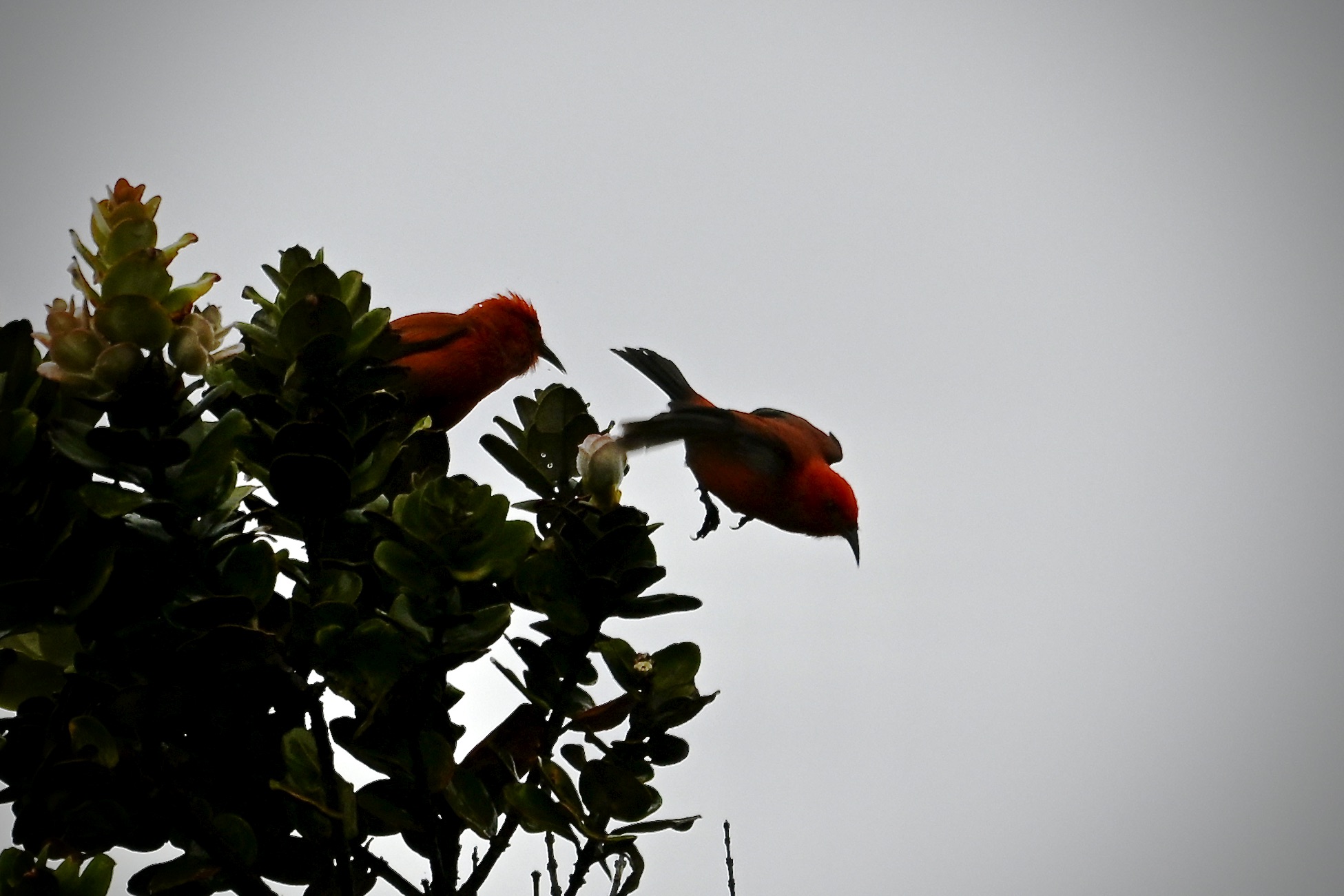
That’s pretty much what you’re seeing in the photo, isn’t it?

Our young and learning ‘apapane didn’t really know what to do about it. Not all, but all too many of the other birds in his flock and neighborhood seemed to egg the bully on. When he squawked, they’d stay silent. When he called him names, they’d laugh. When he swooped, they’d giggle. And when he drove him away from a meal, the most they’d do was cluck softly. The thing they simply wouldn’t do was help.

“What am I to do?” he asked his auntie one day. “Nothing stops this bully. Not soft chirps, and not loud protests. He’s pecked me more than once, and I’ve never pecked back, and if I even show signs of it he pecks harder. Nobody helps. Why? And what can I do?”

Auntie said, “I’ve seen more than a few bullies in the flocks, and there’s always someone they pick on worse than anyone else. It’s always bad and it’s always wrong. I’m really sorry it’s you.

“The other birds, I’m sorry to say, are afraid of the bully. They know that if it’s not you, it’s going to be somebody else, and that somebody will be one of them. It’s not very caring and it’s not very brave, but it’s what a lot of birds do.”

“So what do I do?” asked her nephew.

“You continue to be a kind, sensible, and caring bird,” said Auntie. “You help your flock to find food and sing songs and keep away from predators – even the bully. It takes time, and sometimes a long time, but the flock usually realizes that they are a flock, and a bully is just a bully, and when they realize that, the bully loses his hold on everyone, including you.”

“So I just wait?” asked our young and learning bird.

“You wait, and you show the rest of the flock what a good ‘apapane is,” said Auntie. “One of these days they’ll choose you.”

It took longer than it should have, but Auntie was right. The bully lost his power in the flock, and they stopped giggling and they stopped allowing him to pick on the other birds.

Among people, bullies can seem awfully strong, and they can be. Most of the time, communities figure it out and act to end the bullying, but it can take much longer than anyone thinks it should. We are also held in the heart and mind of God, who tolerates no bullying at all. So summon all your courage and summon all your heart, and remember that God wants you to be the best person you can be, and not to be like those who bully you.

by Eric Anderson

Watch the Recorded Story

I write these stories in full ahead of time, but I tell them from memory and improvisation. The story as I wrote it does not completely match the story as I told it.

Photo of two ‘apapane by Eric Anderson. In fairness, there’s no reason to believe either one is a bully.

Story: Good Advice

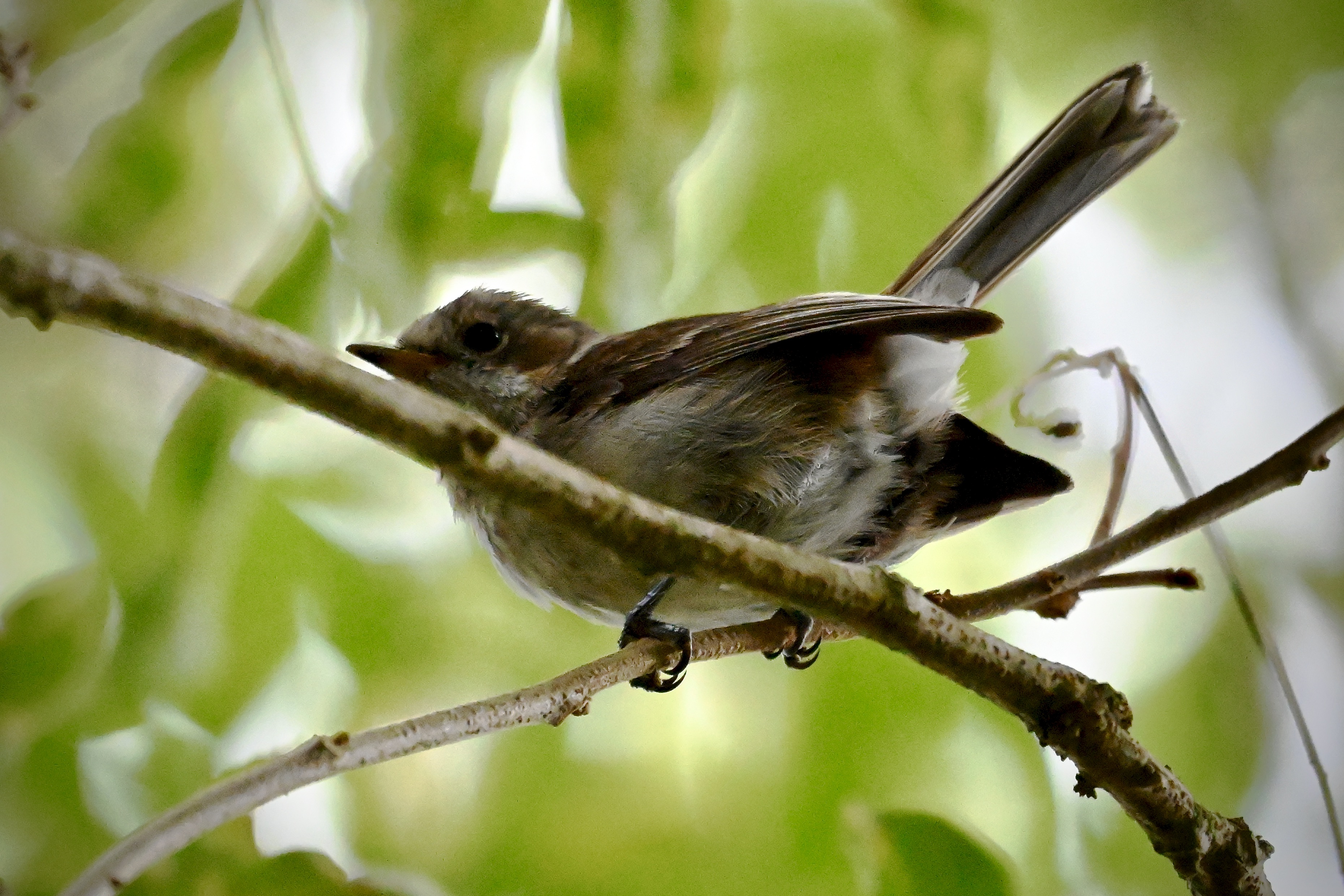
An 'elepaio: a small bird with mottled brown and cream feathers perched on a branch.

April 26, 2026

Acts 2:42-47
John 10:1-10

What do you need to know if you’re an ‘elepaio? It helps that most of the ‘elepaio are very curious, so they tend to ask themselves the questions and then find out the answers. Is it sunny on that side of the tree? Are there bugs to be had in that stand of koa over there? Can I catch a bug in mid-flight?

One young ‘elepaio was having some difficulty answering his questions, though. He was a bit overwhelmed with options. There were so many bugs flying around him, and how was he to know which ones were OK to eat, which ones were OK to eat but tasted bad, and which ones tasted the best? The world swirled with possibilities as the insects danced around him in the air and on the branches and on the leaves.

“What should I eat?” he chirped aloud, and a somewhat devious ‘amakihi heard him.

I think I’ve told you that most birds are basically truthful. Telling lies often means that you deceive yourself as much as anyone else, and a bird can’t live on lies in the mountain forests. This ‘amakihi, however, thought he might amuse himself (in a cruel way) with this young ‘elepaio and keep some of the tastiest insects for himself at the same time.

“Don’t you know, young one?” he called in his friendliest voice.

“Not really. There’s so many choices,” said the ‘elepaio.

“Let me sample them for you,” said the ‘amakihi. “That will help, won’t it?”

Honestly, the ‘elepaio thought that suggesting which ones to try would be more help, but before he could say so, the ‘amakihi had plucked a big spider off a tree branch.

“Oh, this isn’t very good,” he said, as he polished it off and laughed to himself because it was, in fact, delicious. “Stay away from these.”

“Okay,” said the ‘elepaio as the ‘amakihi plucked at another bug.

“Try one of these,” said the ‘amakihi. “They’re very good.” Which they weren’t, in truth, and small besides.

“Okay,” said the ‘elepaio, and he didn’t really think the bug tasted as good as other bugs, but maybe he hadn’t developed an appreciation for fine bug dining yet.

This went on for an afternoon, as the ‘amakihi enjoyed tasty bugs and recommended the sour bugs to the ‘elepaio. Eventually the ‘amakihi flew off with a cheery, “I’ll help you some more tomorrow!” and the ‘elepaio went to find his family.

“Grandmother, when will I learn to like the tasty bugs?” he asked her when he found her?

“The what?” she asked, and he explained the helpful ‘amakihi whose suggestions hadn’t tasted all that good to him.

“Oh, grandson,” she sighed. “I wish you’d come to me or another of our family with that question. The ones who know and love you are the ones who’ll give you the best advice. We care about you. We’ll do the best we can. We don’t know everything, and sometimes we’re wrong about things, but we’ll tell you the truth as we know it.

“I’m afraid this ‘amakihi told you a lot of things that aren’t true. And you’ve had a sour afternoon because of it. Here. Try this,” she said, and she plucked one of those spiders off a branch, and sure enough, it was delicious in his beak.

“Two things, grandson,” she told him. “The ones who know and love you will give you the best advice they can. More than that, remember: you’re an ‘elepaio. When you don’t know, try it for yourself. That’s what we do. We look at the world, we ask questions about it, and then we try to learn what’s true.”

by Eric Anderson

Watch the Recorded Story

I write these stories ahead of time, but I tell them during worship from memory (plus improvisation). The story as I wrote it does not match the story as I told it.

Photo of an immature ‘elepaio by Eric Anderson.

Story: Comforter

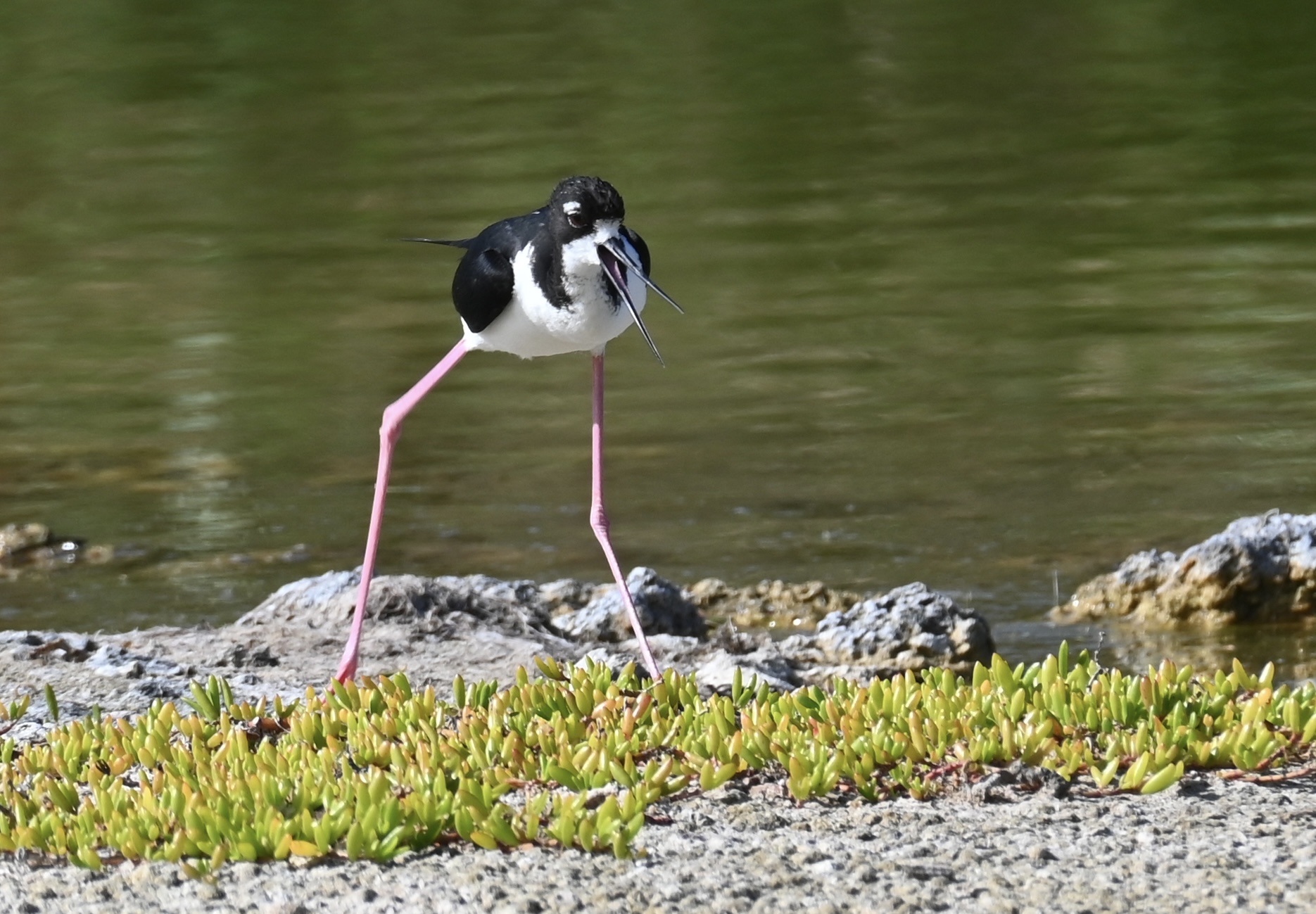
A black and white bird standing on widely space long pink legs has its long straight black wide open.

March 8, 2026

Exodus 17:1-7
John 4:5-42

I don’t know precisely why the ae’o was upset. I don’t know whether someone had squawked something at her, or if one of the fish she caught tasted bad, or whether the sun was too hot for her that morning. I suppose she might have been frustrated by a fish that got away, or by the sun’s glare in the sky, or by a friend who forgot to say, “Hi.”

It could have been any of these things or more. For whatever reason, she was upset and she let everybody else know it.

She squealed and she squawked. Ae’o can be very loud about that. She hollered at the fish she was hunting. She hollered at the ala’e ke’oke’o in the water. She screeched at ‘auku’u and the cattle egrets and the kolea and the akekeke. To be honest she yelled at so many different birds that I can’t name them all.

She was upset and everybody knew it.

Her family couldn’t get anywhere with her. Brothers, sisters, parents, even tutus all flew over to her and asked her what was wrong. She didn’t tell them anything – she just shrieked at them without words and they unhappily retreated. They didn’t like being yelled at. They also knew that as long as she was yelling at them she wasn’t getting less upset, so they went away.

“I don’t know what to do for her,” said a brother.

“I didn’t get anywhere,” said a sister.

“She even yelled at me,” said her grandmother.

“Let me try,” said one of her friends.

“Are you sure?” asked the ae’o’s mother. “She’s just getting more upset with everybody.”

“I think there’s one thing I can try,” said the friend, and she flew to be a little closer to her upset friend.

She didn’t get very close. She just settled onto the shore and started poking at the grasses for bugs and worms. Her friend huffed, but didn’t scream.

Gradually, the friend took one or two steps at a time toward her upset friend. Each time she poked her beak down to peck at a bug. Each time she paused before taking any more steps.

Eventually the two birds were standing much closer to one another. The upset one hadn’t screeched. Her friend hadn’t said anything. She just drew a little closer to her friend, so she could see she wasn’t alone.

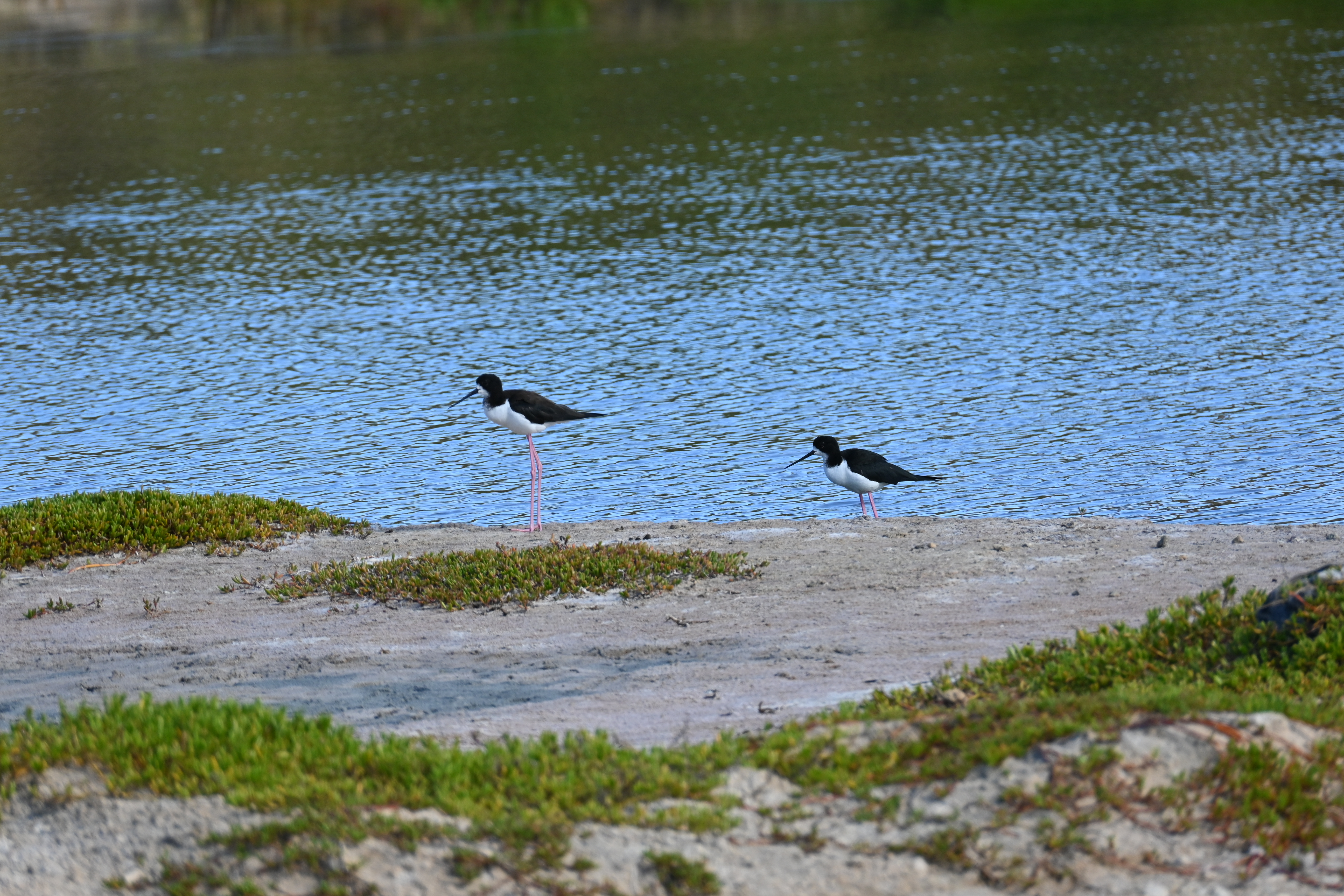
Two black and white birds with long straight black beaks and long pink legs stand near one another alongside a large pool of water.

Neither of them spoke for a long time. It was the upset bird who broke the silence.

“Thank you,” she said.

“You’re welcome,” said her friend.

“I’ve been so upset,” said the first bird.

“I know,” said her friend. “And you’re not alone.”

“That’s good,” said the first bird. “It’s good to know it, too.”

by Eric Anderson

Watch the Recorded Story

I write these stories in advance and tell them from a combination of memory and improvisation. The story as I wrote it is not precisely as I told it.

Photos of ae’o (Hawaiian black-necked stilts) by Eric Anderson.

Story: Why Do You Fly So Far?

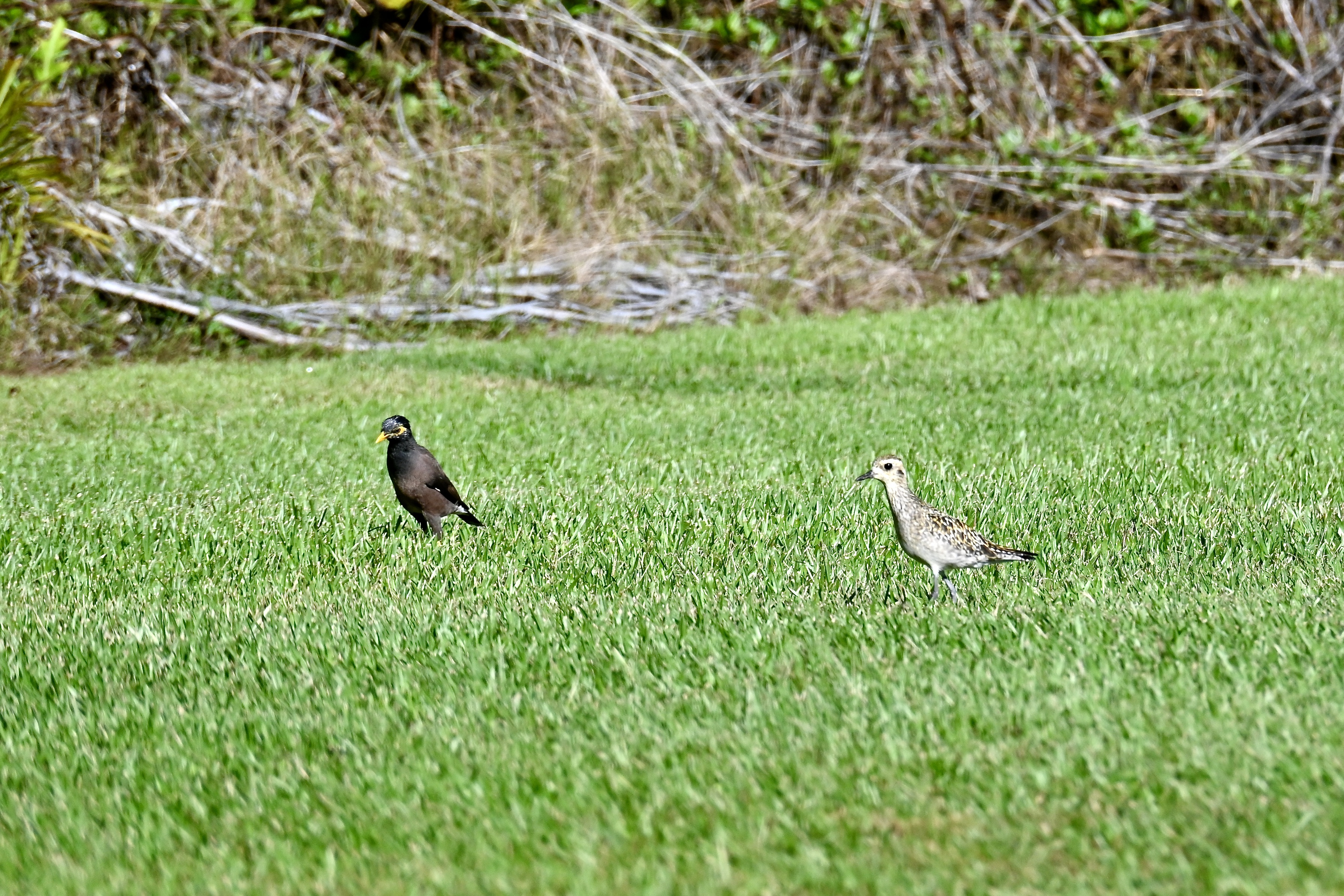
A myna (a dark colored bird with yellow feathers around the eye) and a kolea (Pacific Golden-plover, a light brown bird with darker brown spots) in a grassy field.

December 14, 2025

Luke 1:46-55
Matthew 11:2-11

The kolea is a pretty mellow bird. They’re not terribly skittish, though some will keep a sensible distance from people. We are a lot bigger than a kolea and probably look kind of scary to them.

The myna, on the other hand, is not a mellow bird. They sing a fair amount, but they also screech and argue. They’re pretty sociable with one another, and one moment everybody is happy and content, and the next moment everybody is hollering at one another.

Which makes them a lot like some people, now that I think of it.

Mynas fly, of course, but you could call them homebodies. They don’t tend to go very far. Kolea, on the other hand, fly long distances from where they nest in Alaska to where they spend the winter here in Hawai’i. If you’ve ever flown on an airplane to the North American continent, you know that’s a long flight. Well, kolea fly it with their own wings and they don’t go as fast, so it takes longer.

The mynas find it all rather puzzling and strange.

A myna was picking worms and seeds alongside a kolea one day. The two of them were quiet most of the time, because by chance most of the myna’s other friends had had a big argument and flown off to continue it somewhere else. So it was just the two of them.

“I’ve always wanted to know,” said the myna to the kolea. “Why do you fly so far?”

The kolea thought about it. “I’m not sure anyone has asked me that before,” he said.

“Well, I’m asking,” said the myna.

“I do like the change,” said the kolea, “and I know that it gets awfully cold in Alaska during the winter.”

“Then why not stay here?” asked the myna.

“There are different things there,” said the kolea, “and it just feels right to raise chicks there.”

“Then why fly all the way here?” asked the myna. “What do you come here to see?’

The kolea was quiet for so long that the myna was about to ask the question again, but then the kolea spoke:

“I come to see different trees, trees that blossom red and purple and gold. I come to see soaring mountains crowned with snow when there’s green all around the island. I come to see waterfalls that make rainbows. I come to see mountains with fire and beaches with black sand.

“I come to see birds that also live in Alaska, like ‘akekeke, and birds that don’t live in Alaska, like ‘apapane and nene and saffron finches.

“I don’t think I’d appreciated, though, that I also come to see mynas, and to be asked questions I was never asked. The next time I fly to Hawai’i, I’ll be coming to see you.”

“I’m glad,” said the myna. “Next time you fly from Alaska, I’ll be very glad to see you.”

by Eric Anderson

Watch the Recorded Story

I write these stories in advance, but I tell them from memory (and inspiration). The story you have just read is not identical to the story as I told it.

Photo of a myna (on left) and a kolea (on right) by Eric Anderson.

Story: Caterpillar’s Hope

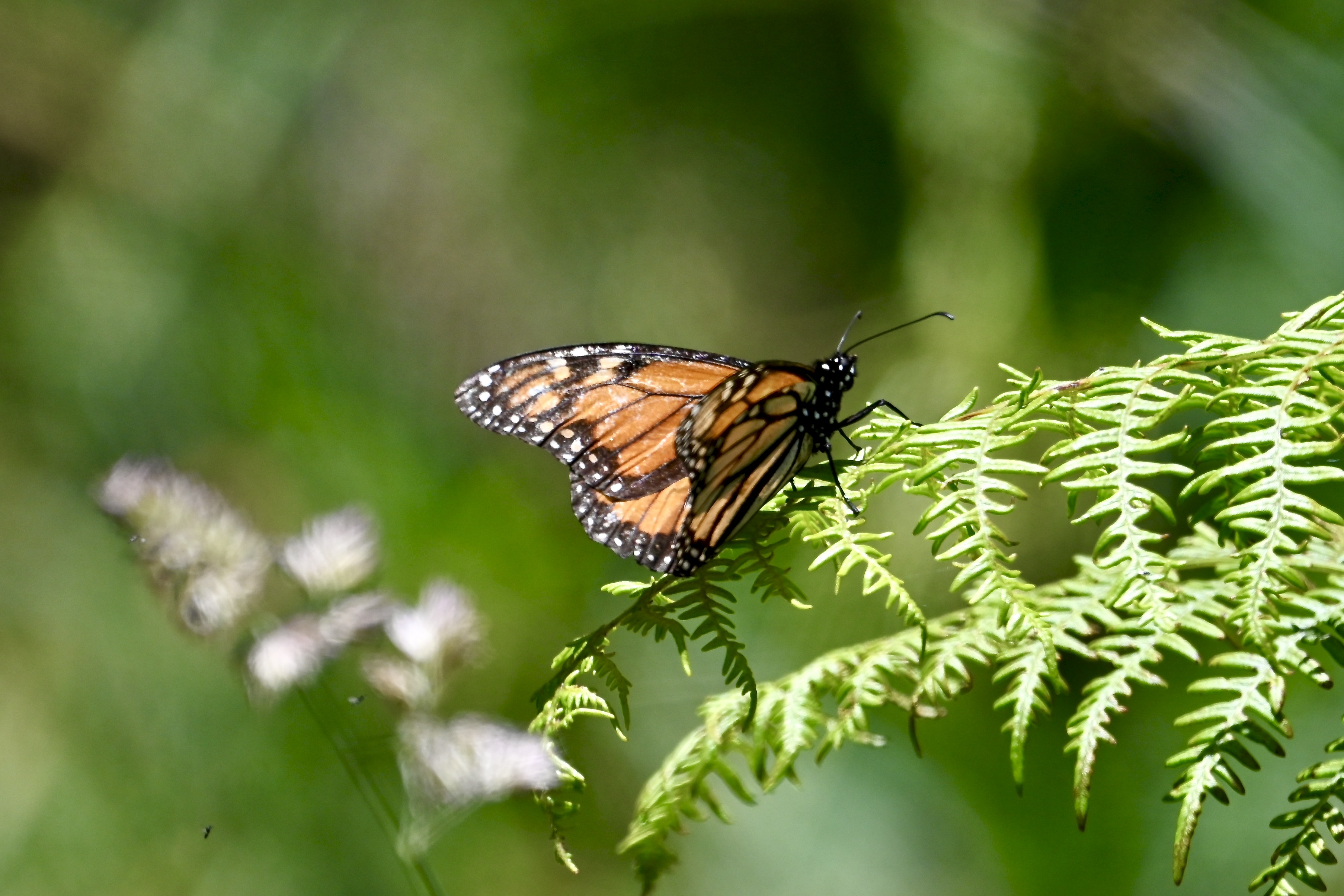
An orange and black butterfly resting on a fern leaf.

November 30, 2025

Isaiah 2:1-5
Romans 13:11-14

Caterpillars don’t have the easiest life. They don’t get around very much – but then, when you move mostly to find another leaf to eat, you don’t need to move very far. There are things about that, while you’re eating leaves, would be very happy to eat you, and that makes for more than a few anxious moments. A lot of the birds I happily tell stories about would happily eat a caterpillar, and that makes them rather sad.

Caterpillars are among the most hopeful creatures on Earth, however. Each one of them hopes to go from an animal that crawls slowly across the branches to one that flies through the skies. They hope to go from someone that you hope will be overlooked (and so not eaten) to one that glows brightly in the sunlight. They hope that the beauty they feel on the inside will be mirrored on the outside.

What’s amazing is that that’s what happens.

Two caterpillars were sharing their hopes on a branch one day between bites of leaf. I’m going to leave out the biting and chewing, because it actually took more time than the conversation. Caterpillars are serious about eating.

“I’m really looking forward to being a butterfly,” said the first.

“Me, too,” said the second.

“I can’t wait to fly,” said the first.

“Me, too,” said the second.

“I’d like to see more of the world than this flower patch,” said the first.

“It’s a good patch,” said the second.

“I’m not saying it isn’t,” said the first.

“You’re right, though,” said the second. “It would be nice to visit another one.”

“All we’ve got to do,” said the first caterpillar, “is wait.”

“Just wait?” asked the second.

“Just wait,” said the first.

“That doesn’t’ sound right,” said the second. “I think we’ve got to build a chrysalis, and stay in it, and then come out as butterflies.”

“Don’t be silly,” said the first. “You hope for it, and then it happens.”

“I don’t think so,” said the second. “I think you hope for it, and then you do something about it. And then it can happen.”

I don’t know what happened to the first caterpillar. I hope it made a chrysalis and became a butterfly, because the second caterpillar was quite right. Caterpillars become butterflies in the chrysalis. They’ve got to make things happen to make other things happen.

Dream of better days. Hope for them, and believe they can come to be. But don’t forget to do the work for them. Hope is good, but hope and effort are better.

by Eric Anderson

Watch the Recorded Story

I write these stories ahead of time, but I tell them on Sunday from memory plus inspiration. The story you just read will not be identical to the story as I told it.

Photo of a monarch butterfly by Eric Anderson.

Story: Remember

October 26, 2025

Ephesians 1:11-23
Luke 6:20-31

I remember a good number of things. I also forget a good number of things. Some of them I’m happy to forget, especially if they made me unhappy at the time. Some of them I wish I could remember, especially if they involve the question of where did I put down my keys?

The i’iwi wasn’t much worried about the things he’d remember. He was worried about the things others would remember about him.

A lot of i’iwi get remembered by other birds as being, well, kind of aggressive. Bossy. Selfish. They drive other birds away from the places that they’re eating. Other kinds of birds do that, too, but when an i’iwi gets aggressive, ‘apapane and ‘amakihi will tend to give in and fly away.

“But is that,” he asked himself, “how I want to be remembered?”

He knew plenty of i’iwi that loved to chase other birds away. They claimed that they ate better when they did, but he also knew i’iwi that tended to ignore other birds, even slept in the same trees overnight. They seemed to eat just as well, he thought.

“How do I,” he asked himself, “want to be remembered?”

He had a friend who was one of the most effective bullies around. Where some of the aggressive i’iwi would chase an ‘apapane for a couple of feet, he’d chase them for a twice or three times as far. Sometimes he’d chase a bird so far that he’d find another bird in the place where he’d started, and he’d chase that one, too. If that seems like extra work to you, it does to me, too. Still, he was flashy (but then, all i’iwi are pretty flashy) and he was popular (as long as he wasn’t chasing you).

“But is that,” he asked himself, “how I want to be remembered?”

Then he remembered his grandmother.

She didn’t take any nonsense from other birds, no she didn’t. No ‘apapane had ever driven her away from a cluster of ohi’a blossoms. But she’d never chased an ‘apapane, either, or an ‘amakihi, or a young i’iwi. In fact, she’d let other birds know when she’d found a good spot, whatever the color of their feathers.

His grandmother loved him. He knew that, because she used to hop aside so he could get to the best flowers.

He loved his grandmother.

He went to find her, and said, “I want to be remembered like you, grandmother.”

“That’s good,” she said. “Let’s go see if we can find something good to eat, and then we’ll let everybody else know.”

That’s how both of them would be remembered.

by Eric Anderson

Watch the Recorded Story

I write these stories in advance, but I tell them from memory (plus improvisation) during Sunday worship. The story you have just read will not precisely match the story as I told it.

Photo of an i’iwi (being reflective?) by Eric Anderson.