June 7, 2026
Hosea 5:15-6:6
Matthew 9:9-13, 18-26
Last week an oma’o had to learn that he couldn’t judge an entire species of bird because of the bad behavior of some of them. Specifically, he had to abandon his idea that all i’iwi are evil.
It’s a pity that this week’s story is about an i’iwi that, well, had the bad habit of behaving badly. This was one of the i’iwi that would have given that oma’o some support for his mistaken belief.
In the defense of this i’iwi, he knew he was over the top. Mind you, he firmly believed that the right way to be an i’iwi, and not just an i’iwi but a honeycreeper, and not just a honeycreeper but a bird, was to protect the things he thought were his from anyone and everyone. What did he think was his? Well, any ohi’a tree in blossom. Any mamane tree in blossom. Any koa tree in blossom. Actually any blossom that might have nectar.
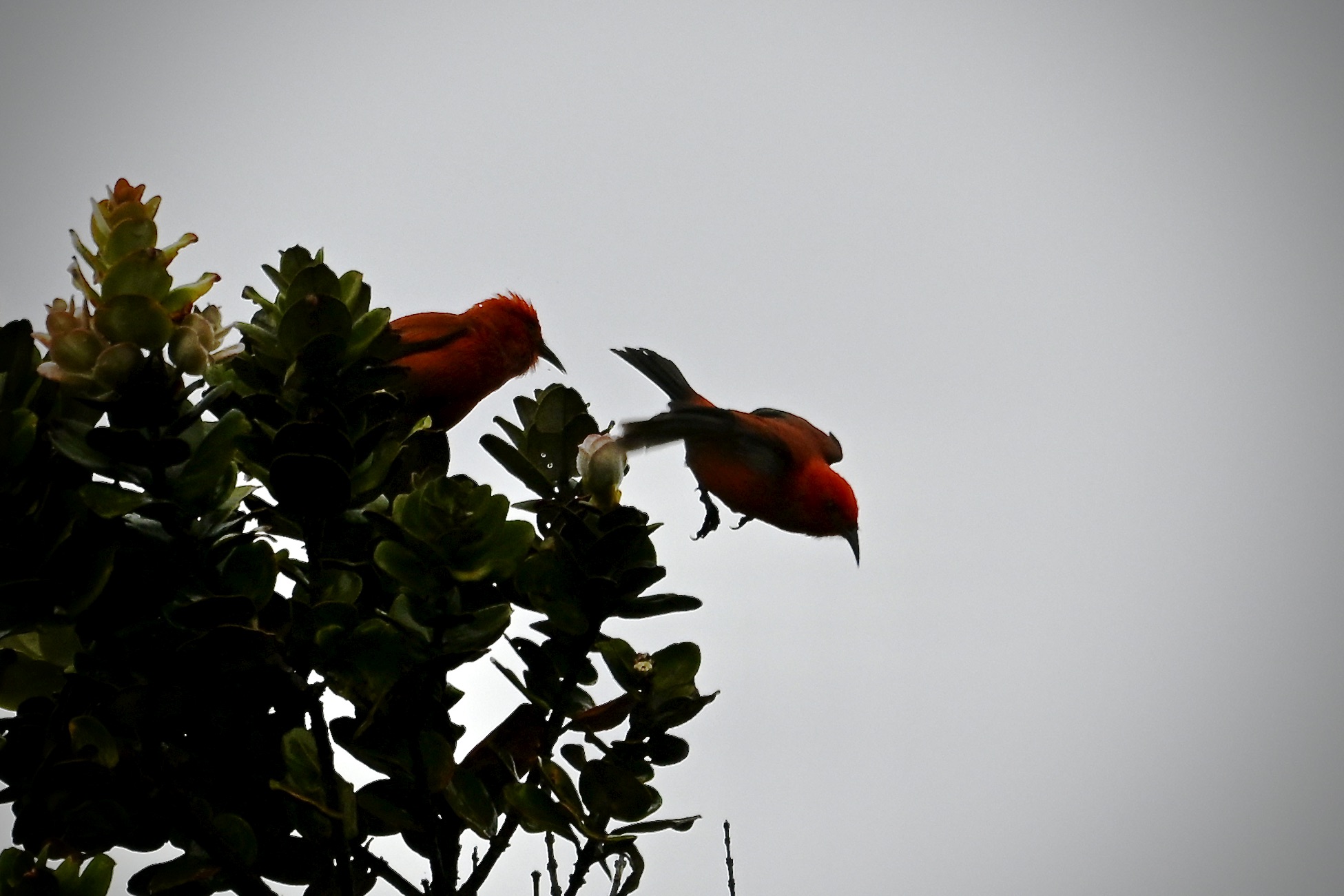
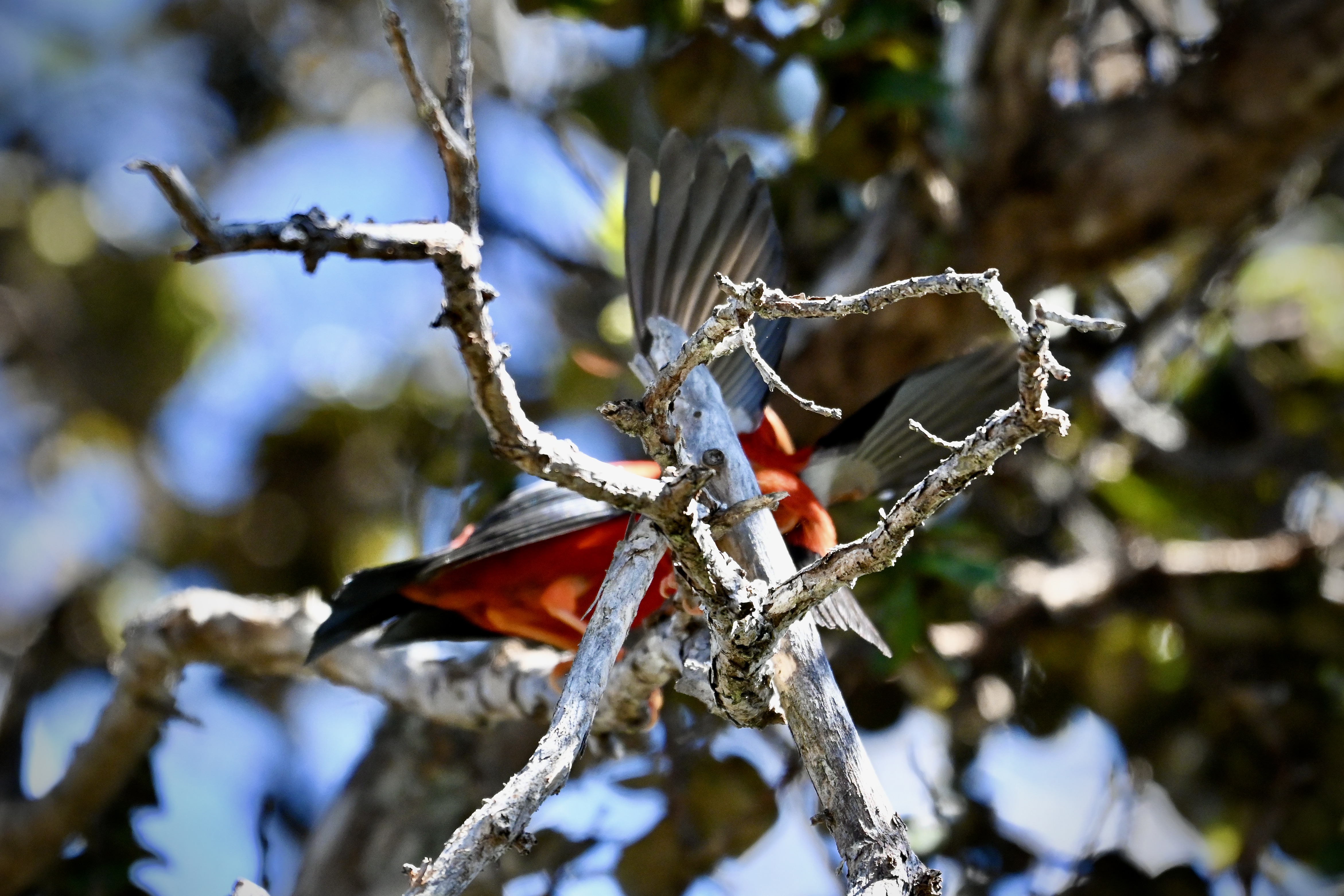
The photo up there isn’t a great one, but it’s two i’iwi, and one of them is trying to frighten the other one away – successfully, I might add.
This i’iwi was quite good at frightening other birds away. ‘Apapane? Fly away! ‘Amakihi? Get going! Oma’o? Take off!
As for other i’iwi? Well, there’s a reason I chose that photo. He’d chase them away, too.
If all that sounds pretty evil, well, there is something I haven’t mentioned yet. He had the bad habit of bullying other birds. He had the good habit of apologizing. He realized, a little deeper in his heart, that they weren’t his blossoms, they were the flowers of the tree and offered for everyone. After he’d chase a bird away, especially an i’iwi, he’d perch on “his” tree and call out, “I’m sorry! I overreacted there! Do you forgive me?”
He’d keep calling that until the other bird, especially if it was an i’iwi, said, “Yes, I forgive you.”
But if that bird or any other bird returned to “his” tree, he’d chase them again.
Fortunately he had the good sense not to chase his i’iwi grandmother, so when she settled down next to him one day he simply greeted her and didn’t flutter his wings at her.
“Grandson,” she said, “you’ve got to stop apologizing when you don’t mean it.”
“What do you mean, Tutu?” he asked. “Of course I mean it.”
“If you apologized and meant it,” said Tutu, “you wouldn’t chase the bird away the next time. Or any other bird. An apology doesn’t mean anything if you keep doing the thing you’re apologizing for.”
“Are you saying I should stop saying I’m sorry?” asked her grandson.
“I’m saying you should stop doing the things you apologize for,” said his grandmother. “You being sorry doesn’t do anybody any good. The other birds feel bad for being chased. You feel bad for doing something you’re sorry for. So change the thing that makes you both feel bad.
“You already know that you don’t need to chase everyone away. Work on that. Make everyone see that you’ve apologized by not repeating the thing you’ve said you’re sorry for.”
by Eric Anderson
Watch the Recorded Story
I write these stories in full ahead of time, but I tell them from a combination of memory and improvisation. The story as written does not precisely match the story as I told it.
Photo of two i’iwi by Eric Anderson.