God saw everything that he had made, and indeed, it was very good. And there was evening and there was morning, the sixth day. – Genesis 1:31
Praise the Poet, Breath and Wind and Word, who movement on the waters stirred up light and night and land and sea, stars and planet whirling on the cosmographic page.
Praise the Poet, summoning the earth to green abundance, summoning the seas to swarm with life, summoning the trees to welcome birdsong, summoning the land to bear the tracks of feet.
Praise the Poet, maker of more poets, speakers of the word, creators in the image of Creator, author of more authors. A human writer often finds their characters find their direction. The Poet watches poets make a universe of words.
A poet of the people, though, relies upon the languages of human speech, on rhyme and rhythm and multiple meanings, while God has written in broad rays of light, in buzzing bees, in sweet perfume, in gentle touch, in salt upon the tongue.
Praise the Poet, Breath and Wind and Word!
A poem/prayer based on Genesis 1:1-2:4a, the Revised Common Lectionary First Reading for Year A, Trinity Sunday.
For as I went through the city and looked carefully at the objects of your worship, I found among them an altar with the inscription, ‘To an unknown god.’ What therefore you worship as unknown, this I proclaim to you. – Acts 17:23
Not looking carefully, I typed “Kiijubg” as first word for the title of this poem/prayer.
It’s not a word I’ve seen before; I’d struggle to define it, and truthfully it’s definitely not the word I meant.
But Shaw once wrote that when a thing is funny, search it for a hidden truth (and promptly replied to himself that it takes all the fun out of it).
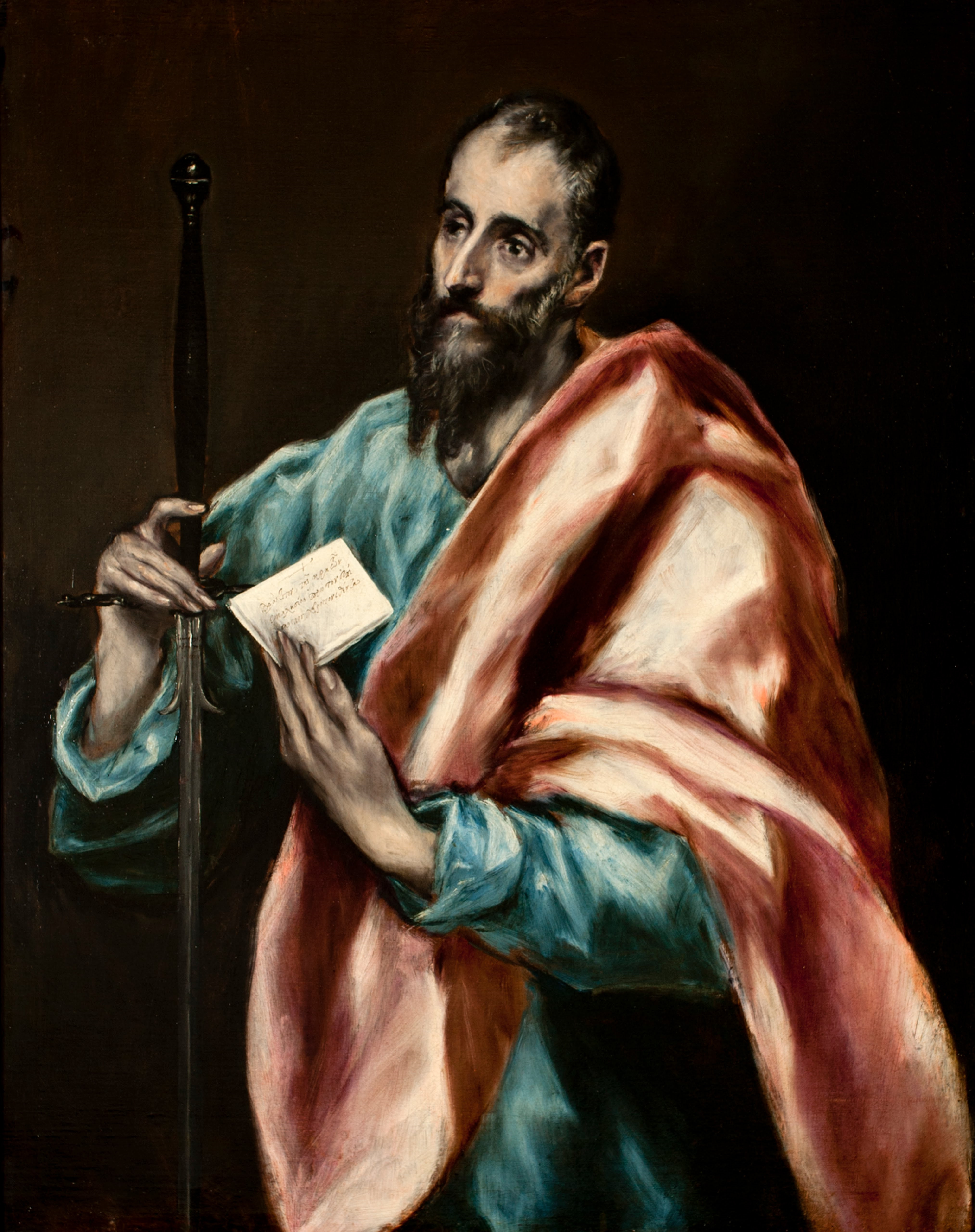
That fierce and fascinating man from Tarsus, though offended by the shrines to idols all about, found one shrine
Which honored Agnostos Theos (perhaps); enough to base a sermon on, to find a common root within a verdant forest
Of complex and disparate devotion, and twist a cord to complement relationship
Between the human children worshiping the God of Jacob, and the human children worshiping Olympians.
If Paul had looked less carefully, perhaps his ire for idols would have leapt to his lips.
Instead his plea for understanding fell on ears which heard. Some scoffed, it’s true,
But if he’d launched into a diatribe against the shrines, what could they do but scoff and turn away?
For anger, like a hand misplaced upon the keys, makes meaningless its words, however filled with hope.
A poem/prayer based on Acts 17:22-31, the Revised Common Lectionary First Reading for Year A, Sixth Sunday of Easter.
The image is a photo of the “Altar of the unknown god” ca. 90-110 CE, discovered on the Palatine Hill in Rome (not Athens) in 1820. Photo by Sailko – Own work, CC BY 3.0, https://commons.wikimedia.org/w/index.php?curid=56294298. The inscription can be translated, “Whether sacred to god or to goddess, Gaius Sextius Calvinus, son of Gaius, praetor, restored this on a vote of the senate.”
“But filled with the Holy Spirit, he [Stephen] gazed into heaven and saw the glory of God and Jesus standing at the right hand of God.” – Acts of the Apostles 7:55
I wonder about Stephen, what he knew when he was brought before the council of the priests. Did he expect they’d hear him out? Or see the door as gateway to his grave?
Oh what a fool he was to speak the words he did if he had hope they’d hear him as they’d heard out the apostles not so long before, and waited on the signs of God.
Yes, “stiff-necked people” echoed Genesis, and all he said about the troubled times of their ancestors had been said before by those who crafted First and Second Kings,
But telling those in power that they lived just as their grim progenitors had done, as faithless slayers of the prophets, roused their wrath and spurred them order his death.
Now, if he had a hope of being heard he spoke the ravings of a fool, and died for it, but if saw the writing on the wall, he spoke a liberated word.
Without a hope of living through this trial, his mind and tongue could speak his fearless truth, his soul adjust to choose another hope, one which did not rely on human beings.
“I see the heavens opened and the Son of Man, who stands there next to God,” he said, and as they dragged him to his death, he found that hope is flexible enough for all.
A poem/prayer based on Acts 7:55-60, the Revised Common Lectionary First Reading for Year A, Fifth Sunday of Easter.
“So again Jesus said to them, ‘Very truly, I tell you, I am the gate for the sheep.'” – John 10:7
It’s not your most compelling image, Jesus. In a section where you said, “I am…” three times, how many hold this one in memory? To say the truth, I barely do.
And yet a gate is comforting. It guards a home, a sheepfold, or a soul from harm. It’s hardly perfect, since a thief may climb the wall: They’ll have to work to work their ill.
The beauty of a gate is not protective force, but its capacity to swing, admitting those outside who’ve recognized the voice and come to claim their place and home.
You tell us you are gatekeeper and gate. May we remember that the gate is you, and when we close it, we usurp your power, your authority. and you yourself.
May we have faith and wisdom both to hold the gate wide open for the gathering flock and only close it in the most compelling circumstance, then open it with welcome love.
A poem/prayer based on John 10:1-10, the Revised Common Lectionary Gospel Reading for Year A, Fourth Sunday of Easter.
“Jesus said, ‘Take away the stone.’ Martha, the sister of the dead man, said to him, ‘Lord, already there is a stench because he has been dead four days.'” – John 11:39
The first stones were the threats, the stones they reached for when you said, “The Father and I are one.” They called it blasphemy, and well, it would be if it weren’t true.
Given the risk of stones, which thrown, break bones, returning to Judea to heal your friend whose illness was not to the death would make no sense, at least if true.
But Lazarus was dead and in the grave when you decided to return. Dear Thomas pledged to join you in your death if stones were cast. I’m sure he thought he told the truth.
They came to you to weep. They came to tell you just how much they trusted you. “If you had been here, Lazarus would not have died.” Your tears proclaimed your love for Lazarus in truth.
“Remove the stone,” you called, despite the stink. “Remove the stone,” you called, though they recoiled. “Remove the stone,” you called, and Lazarus emerged. “Unbind him now,” you called: he lived in truth.
The stones they feared remained upon the ground. No stones would break your bones, though one would seal your tomb like Lazarus’. You there, as here, proclaimed “I am the resurrection and the life” in truth.
A poem/prayer based on John 11:1-45, the Revised Common Lectionary Gospel Reading for Year A, Fifth Sunday in Lent.
“Jesse made seven of his sons pass before Samuel, and Samuel said to Jesse, ‘The LORD has not chosen any of these.'” – 1 Samuel 16:10
Eliab, no. Abinadab: rejected, too. Perhaps Shammah? Well, no. Not he. Four more paraded past their father and the prophet and of those seven sons you chose, O God,
Not one.
I wonder if they knew. I wonder if they guessed, since all seemed to have heard that king and prophet were at odds. Were they at all concerned that You, O God, sought to incite rebellion?
Maybe one?
You told the prophet you peer in the heart, where humans cannot comprehend (my own heart is a mystery). Full seven times you looked, and saw, and told the prophet, “No.
“Not this one.”
What did you see in David, God, for he committed sins that Saul had never dreamed. A hasty spear that missed is terrible. Conspiracy to cover up a rape is so much worse, as David did.
This one.
They fade away from this account: Eliab and Abinadab, Shammah as well. Four brothers’ names have fallen from the tale. I wonder, though, how many breathed a soul-relieving sigh that they were not anointed by the sage, that they were not
The one.
A poem/prayer based on 1 Samuel 16:1-13, the Revised Common Lectionary Gospel Reading for Year A, Fourth Sunday in Lent.
“For this reason the promise depends on faith, in order that it may rest on grace, so that it may be guaranteed to all his descendants, not only to the adherents of the law but also to those who share the faith of Abraham (who is the father of all of us, as it is written, ‘I have made you the father of many nations’), in the presence of the God in whom he believed, who gives life to the dead and calls into existence the things that do not exist.” – Romans 4:16-17
An ox-cart won for Gordias the crown of Phrygia, so they say, and Midas tied the cart’s yoke with a knot so intricate removing it would win a continent.
Great Alexander, so they say, could not untie the knot. Perhaps he pulled the pin. Perhaps he sliced it open with his sword. His death released the Asian lands he’d won.
Three centuries and some, along came Paul with no ambition toward war and rule, but faced with as intractable a knot as Midas ever tied to hold a cart.
The knot held some, he thought, in servitude, in hopeless effort to be righteous when “not one is righteous, no, not one… they all have turned aside from kindness, every one.”
The knot barred others from the knowledge of their failure to do good (though honestly they should have known through what Creation tells of God’s eternal justice, wrath, and power).
How to release this knot? How meld these two communities into a house of faith? How reconcile circumcised with those uncircumcised, with mutual distrust?
How else? He tied a knot of elegant and pirouetting thought, a logical connection that would bind the Church in one, close fastened, one and all, to Jesus Christ.
What loving, faithful pains he took to show we travel in one boat, we worship just one God, we are one Church, wherever we began our faith’s life’s journey, Jew or Greek.
I wonder, though, if tying up new knots is all that useful when the animal needs water, and the lead is all too short, when dinner waits beyond the leash’s length.
I wonder if the Messianic fingers had already loosed the knot dividing us, and if, with all this elegance of thought, poor Paul re-tied it hopelessly again.
Some months ago upon a mountain trail I came upon a fence and gate, which served to give endangered plants a chance to grow, not be consumed by wandering ungulants.
The gate was closed by string, and at first glance I thought it held by a close-fastened knot, and reached toward it, fingernails prepared to pull and loosen its constricted coils.
But then I looked again. The knot did not secure the gate. It closed a loop, which I quite easily unwrapped and wrapped again, continuing along the mountain trail.
Dear Paul: Is that what you have tried to do? Is this a loop we can unwrap to make our way along the Way? Is grace beyond accessible to us despite the knot?
A poem/prayer based on Romans 4:1-5, 13-17, the Revised Common Lectionary Second Reading for Year A, Second Sunday in Lent.
“Then the devil left [Jesus], and suddenly angels came and waited on him.” – Matthew 4:11
He challenged you, Jesus. Summon the angels! They won’t let you fall. You won’t have a bruise on your heel, Nor a strike from a snake.
You said no. No to bread. No to flight. No to glory (that fails to transcend all the kingdoms of earth).
Then he left. And who came? Yes, the angels. The angels. They were hovering ’round, And they brought you relief.
Well, Jesus, I’m tempted. So tempted, you know, so hungry and weary, confused and distressed.
Where are the angels? Will they tend my bruises? Will they feed my hungers? Where are the angels, Jesus the Christ?
“There are angels hov’ring ’round.”
A poem/prayer based on Matthew 4:1-11, the Revised Common Lectionary Gospel Reading for Year A, First Sunday in Lent.
The image is Weite Gebirgslandschaft mit der Versuchung Christi (Vast Mountain Landscape with the Temptation of Christ) by Jan Brueghel the Elder – dorotheum.com heruntergeladen am 30. September 2012, Public Domain, https://commons.wikimedia.org/w/index.php?curid=21801997.
“Six days later, Jesus took with him Peter and James and his brother John and led them up a high mountain, by themselves. And he was transfigured before them, and his face shone like the sun, and his clothes became bright as light.” – Matthew 17:1-2
Bright with light, walking with the prophets, hailed by holy voice that stunned the clouds and silenced even Simon Peter: Jesus the Beloved Son of God.
Transfigured on the mountaintop.
At mountain’s foot, however, trouble lay, because a demon would not be rebuked by any of the nine disciples there. “Where can I find the mustard seed of faith?” they asked.
I grant you they had missed the mountaintop.
But Peter, James, and John, who’d seen the sight, had heard the voice, been silenced clean: how had they been transfigured? Were they changed? Did they bring nourishment to their own mustard seeds?
For they had known the mountaintop.
Yet Peter asked if there were limits on forgiveness. He wondered what he’d gain from following his Lord. While James and John coopted their own mother to secure a place of power.
Though they had been upon the mountaintop.
When Jesus brought the three apart again, this time into a corner of Gethsemane, their bodies ruled their spirits, and they slept, while Jesus wept the bitter tears of grief and fear.
Had they forgotten about the mountaintop?
Approaching soldiers woke them. Weariness no longer slowed them. As blood streamed from a stricken servant’s ear, the three who’d seen and heard the most took to their heels and fled.
Had they been changed upon the mountaintop?
One found his courage and his way back to the courtyard of the trial, but did not bring his name. Three times they asked, three times he cried, “I do not know the man!”
He’d known him on the mountaintop.
So Jesus, here I stand, at best an image in a mirror darkly of those first disciples. I am not the person I would like to be, say nothing of the follower whom you expect.
And I was never on that mountaintop.
Yet truly, you have summoned me by less dramatic means than brilliant clouds and stunning voices on the wind, to be your follower, your servant, and your friend.
But have I been transfigured by the mountaintop?
A poem/prayer based on Matthew 17:1-9, the Revised Common Lectionary Gospel Reading for Year A, Transfiguration Sunday.