Father of orphans and protector of widows is God in his holy habitation. God gives the desolate a home to live in; he leads out the prisoners to prosperity, but the rebellious live in a parched land. – Psalm 68:5-6
I am grateful, O God, to know the people for whom You labor, the people for whom You care.
You care for the homeless. You care for the resource-less. You care for the refugee.
I am grateful, O God, to know the people for whom You care. Do You wonder why people do not?
A poem/prayer based on Psalm 68:1-10, 32-35, the Revised Common Lectionary Psalm Reading for Year A, seventh Sunday of Easter.
[Jesus said,] “I will not leave you orphaned; I am coming to you.” – John 14:18
Technically, I have been an orphan now for twenty months and three. My mother died as I was starting to believe that I was an adult – perhaps, of course, before I had achieved that title – in the waning months before my second decade reached its close. It seems so odd to be now older than she ever was.
My father lived much longer, though afflicted so in latter years by Parkinson’s Disease, he could not make the trip to visit me, his eldest son, in the Hawaiian Islands. The flowers of this place adorned his passing when I wish they could have welcomed him as honored guest. But he greeted eighty years with such a smile.
So I have been left orphaned well into my middle age, a kinder fate than many folk endure. If none of us were perfect in our love, we had at least the grace to learn and grow, to love anew when older means to love had passed. So Jesus, if you would, come visit me, I pray, for I am orphaned, and I weep for your embrace.
A poem/prayer based on John 14:15-21, the Revised Common Lectionary Gospel Reading for Year A, sixth Sunday of Easter.
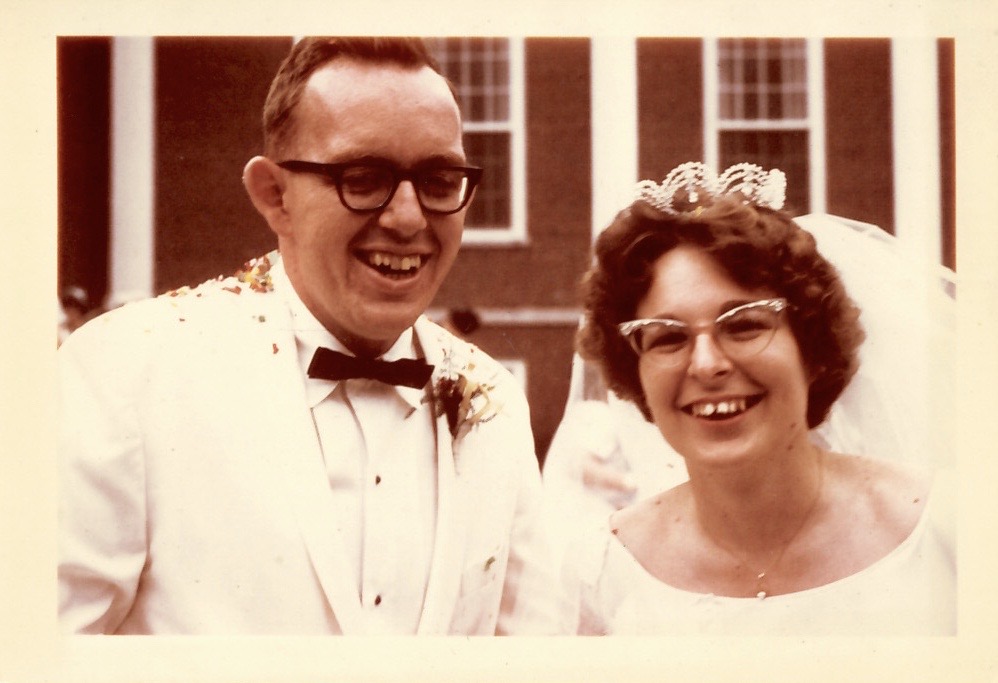
The photo is of my father and my mother on their wedding day in 1962; photographer unknown.
This poem/prayer fails to honor the woman my father married in 1995; they met while both pursuing M.Div. degrees at Andover Newton Theological School. She has been the mother-to-an-adult my own mother could not be. My son said it best. His grandfather had had the privilege to marry the love of his life twice.
[Jesus said,] “If in my name you ask me for anything, I will do it.” – John 14:14
I’m asking.
I’m asking for deliverance from a virus. I’m asking for deliverance from all-encompassing folly. I’m asking for deliverance from the demands of greed. I’m asking for deliverance from injustice.
I’m asking.
I’m asking for deliverance from my loneliness. I’m asking for deliverance from my narcissism. I’m asking for deliverance from my burdens. I’m asking for deliverance from my sin.
I’m asking.
I’m asking for deliverance from my grief. I’m asking for deliverance of the world’s grief. I’m asking for deliverance of the world’s violence. I’m asking for deliverance from… it all.
I’m asking.
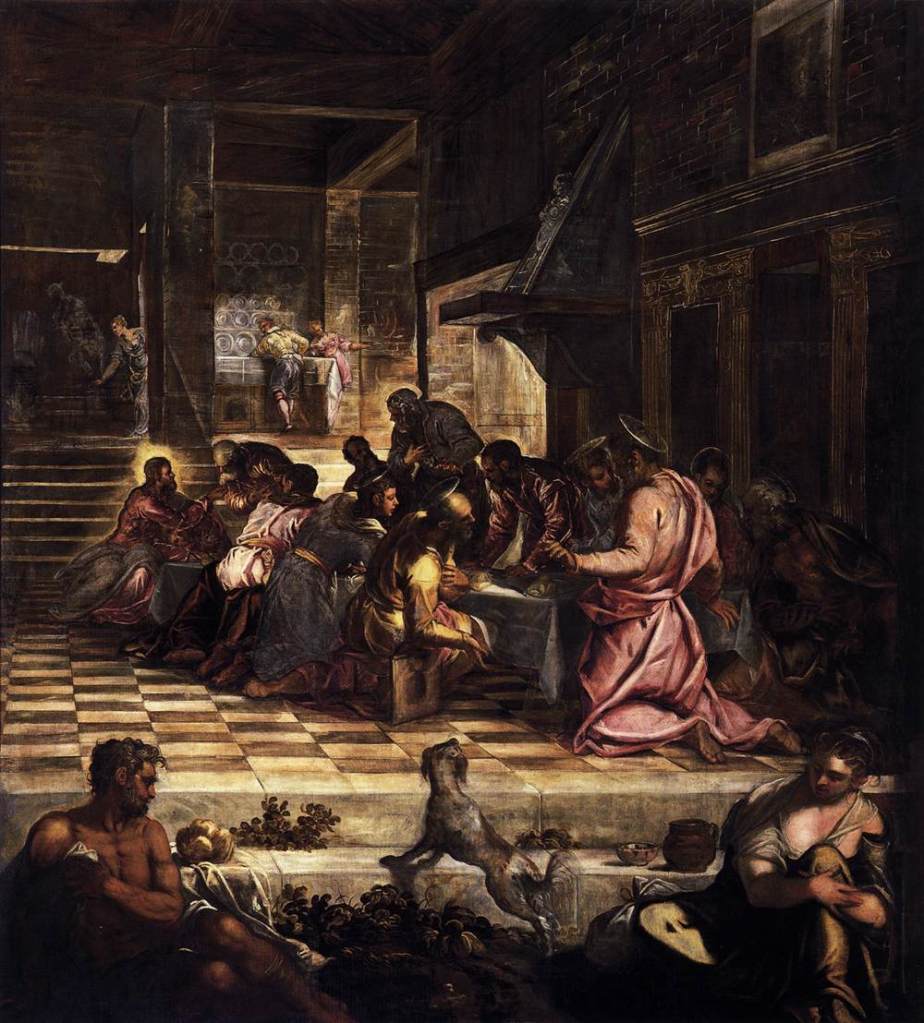
What say you, Jesus? Shall we wait at this table until it comes to pass? Here, at least, we have the bread to sustain us… Except that it has not been broken yet in you.
A poem/prayer based on John 14:1-14, the Revised Common Lectionary Gospel Reading for Year A, fifth Sunday of Easter.
May 6, says the calendar, is National Nurses’ Day in the United States. I have seen Facebook and Twitter observances today, as well as a statement by the President – one which, I observe with some pain, he made with nurses present, standing too close to one another, and without masks.
Ironically, as the nation and the world face a rapidly spreading and deadly pandemic, thousands of nurses and other health care workers have been laid off as “elective” medical procedures have been deferred. Others have been fired for refusing to enter risky situations without proper protective equipment. Some have been screamed at by “open now” demonstrators for simply speaking the truth about a widespread and serious illness.
In these days that nurses are hailed as heroes one moment and treated so shabbily the next, I want to thank them for being the heart and soul of compassionate health care.
Late in 2017, I noticed a strange growth on my nose. I didn’t think much of it at first, as it acted first like one thing and then like another thing that I expected to heal up and go away. When it continued to grow instead, I reluctantly took myself to have it examined.
I have two major flaws as a patient. The first is that I will delay a medical consult. I don’t care much for the standard discomforts and indignities of a medical exam. Yes, I know they’re needed. Yes, they’re still uncomfortable and undignified. I value my dignity. If I’m present in a physician’s office, it’s either because it’s a regular check-up and I’m giving up my dignity for the responsibility of self-care, or I’m really afraid. Really afraid.
The second is that while I can be trusted to follow through on things like wound care, I’m terrible when it comes to lab work. See the paragraph above.
That December in the examining room of dermatologist Dr. Monica Scheel, I was terrified. I strove to present a calm demeanor. I told my body that it was not to flinch. I kept my voice light. If I succeeded, the only reason I didn’t get an Oscar for that performance was the absence of a film crew.
Dr. Scheel went a long way to try to reassure me, to turn my act into some semblance of reality. She is a skilled physician with great people skills. There came the time, however, when her attention had to be focused on some parts of my skin rather than on me. She numbed the area thoroughly. Then she removed the sample to figure out what it was.
As she did, the nurse on the other side gently moved her gloved fingers back and forth along my forearm. She didn’t say anything. She just let me know, in the only way that could reach me in that moment, that there was comfort for my fears.
I tear up just a little remembering it.
In my experience, it is nurses who have been given the role of rooting medicine in humanity. This is no slight to physicians or technicians, who I have also known to bring that human touch. For them, however, there will often come a time when they have to set that part of themselves aside, to focus on a portion of the person, not the whole.
Nurses – RNs, LPNs, CNAs – they have been given the awesome responsibility to be the comforting presence, the one who accompanies us as we endure treatment and the one at our side as we heal.
Thank you, nurses. There are no words to fully appreciate what you do.

 ordainedgeek