A Song Worth Living

“If I speak in the tongues of mortals and of angels, but do not have love, I am a noisy gong or a clanging cymbal.” – 1 Corinthians 13:1

They tell me it’s a song, Jesus,
but we’ve lost the tune.

They tell me it’s a song, Jesus,
but we’ve sucked the blood from the words.

They tell me it’s a song, Jesus,
but we’ve forced it into four-four time,
when it was supposed to soar
and warble and hover and dance.

They tell me it’s a song, Jesus.
Hum me the tune.
I want to sing along.

A poem/prayer based on 1 Corinthians 13:1-13, the Revised Common Lectionary Second Reading for Year C, Fourth Sunday after the Epiphany. 

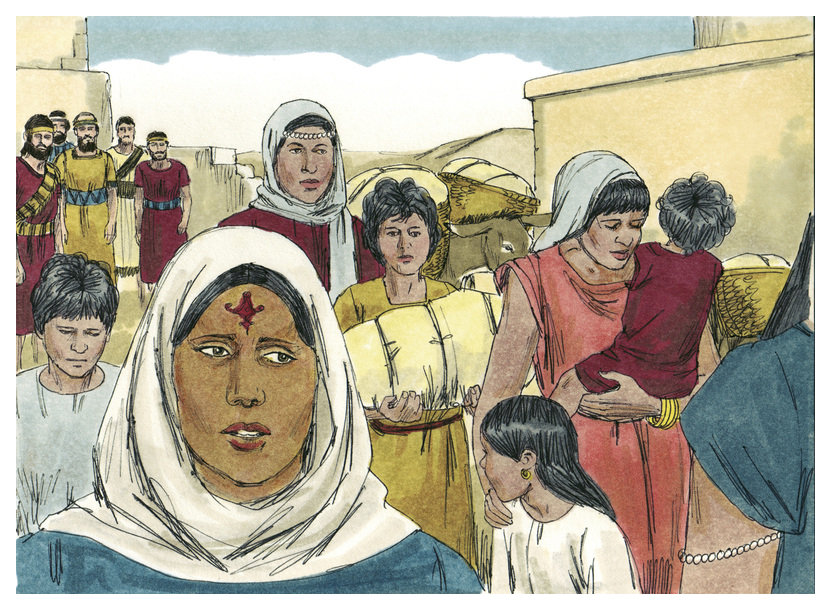
The image is Saint Paul Writing His Epistles by Valentin de Boulogne – Blaffer Foundation Collection, Houston, TX, Public Domain, https://commons.wikimedia.org/w/index.php?curid=596565.

I’m including my own version of the 1 Corinthians 13 text in a song, “Hymn to Love.”

They Wept Because They Understood

So they read from the book, from the law of God, with interpretation. They gave the sense, so that the people understood the reading. And Nehemiah, who was the governor, and Ezra the priest and scribe, and the Levites who taught the people said to all the people, “This day is holy to the LORD your God; do not mourn or weep.” For all the people wept when they heard the words of the law. – Nehemiah 8:8-9

Could you not let them weep, Ezra?

Could you not let the tears fall for repentance?
I’m sure they had their share.
What person doesn’t?
Did you never weep to know your sins?

Could you not let the tears fall for relief?
Their labor was complete, the city wall
stood tall despite the efforts to disrupt it.
Did you never weep in triumph?

Could you not let the tears fall for awareness?
How few had ever heard the Law in part?
Complete? I’d venture there were none.
Did you never weep in ignorance dispelled?

Could you not let the tears fall for… loss?
Ah, yes, I raise that question, Ezra.
Did you recall another gathering,
with rain to match those families’ distress
to hear their marriages must break,
their spouses torn from homes,
their children cast away?
Where did they go, Ezra?

Where did they go?

I understand theologies of purity.
Exiled for three generations, searching for the cause,
you sought to build a faithfulness to last,
forestall another covenant in ruin.

But Ezra, it didn’t work, you know.
Deep faith has always had to struggle with
the mud, the mess, the muckiness of life.
Women and children cast aside? Mud of a different kind.

No, let them weep, Ezra. They’ve earned their tears.
They’ll strive for your perfection, and they’ll fail,
and so did you, and so do I, and so do all.
Alas, the parents’ sour grapes have set the children’s teeth on edge.

A poem/prayer based on Nehemiah 8:1-3, 5-6, 8-10, the Revised Common Lectionary First Reading for Year C, Third Sunday after the Epiphany. I am indebted to Cory Driver for his reflection on this text which made the connection to Ezra 10:6-44.

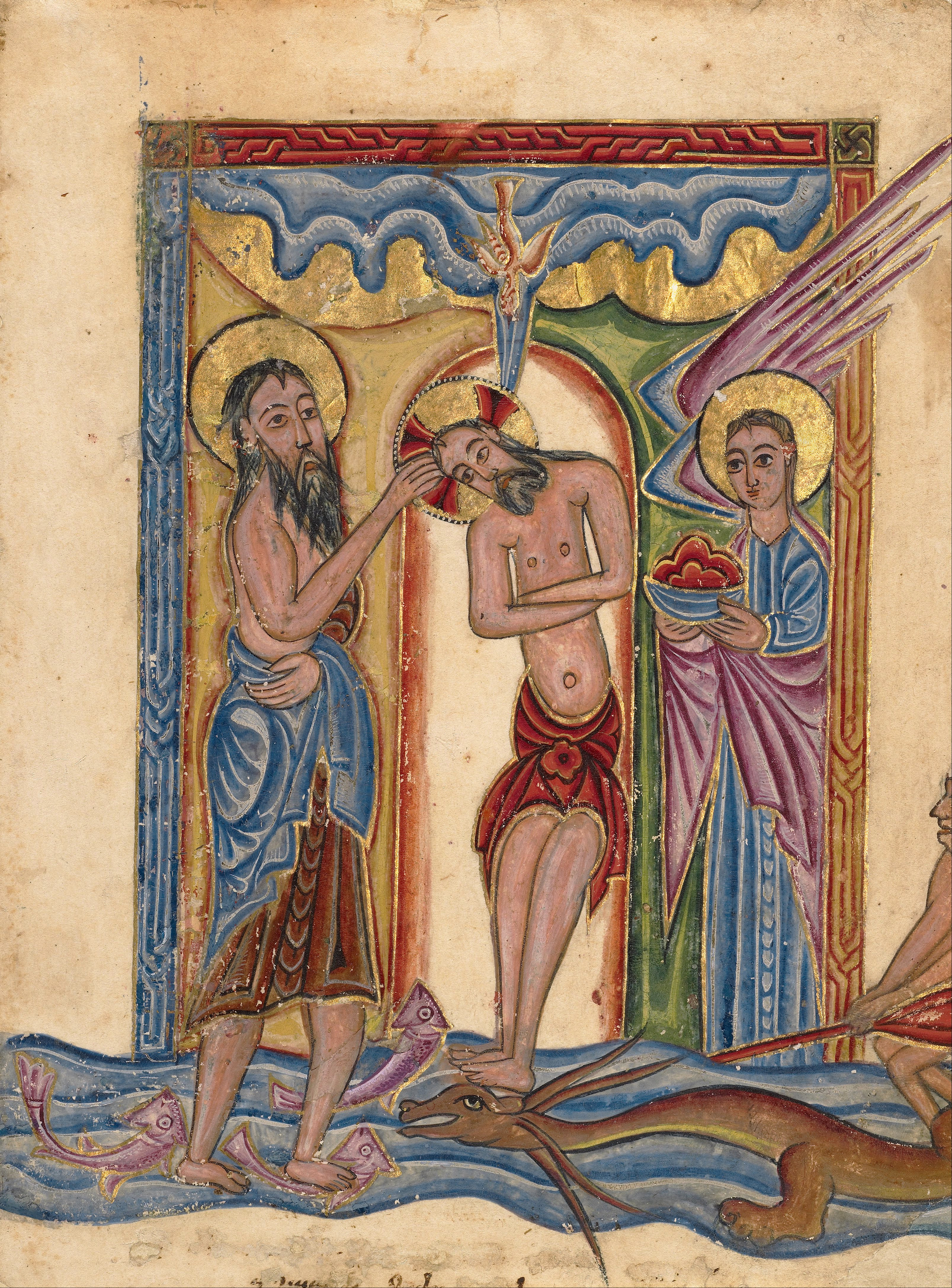
The image is an illustration of Ezra 10 by Jim Padgett (1984), published by Distant Shores Media/Sweet Publishing, CC BY-SA 3.0, https://commons.wikimedia.org/w/index.php?curid=18884444. I was somewhat startled to find this image, which captures some – not nearly all – of the heartbreak of Ezra 10.

What *Do* People Say to Ministers?

Author’s Note: I wrote this essay in January 2012 responding to a video produced by some people completing their seminary education. Those people have become treasured colleagues and effective leaders in the Church – they also decided to make that video private, so sharing the link won’t do anything.

I posted the original essay to Facebook. I’ve returned to it because the Memories feature drew it to my attention.

A video appeared in my News Feed ten years ago. I watched it. I recognized one of the actors. I chortled. I laughed out loud. And, being somewhat cautious in the language I use in public, I hesitated to re-Share it on my own Wall. It was, after all titled “[Stuff] people say to ministers.”

The word was not “Stuff,” of course. It did begin with the letter “S.”

I’ve been an ordained minister for thirty-three years. And I’ve heard most of the questions asked in the video over that time (I’m particularly fond of a sequence of blank stares). OK, I haven’t been asked about being a nun, and I haven’t heard many of questions about the Mayan calendar. I suspect that’s just chance. But I’ve certainly been asked what I do when it’s not Sunday, and people clearly stop before telling me certain jokes.

I watched it. I recognized the people being played by the actors. I chortled. I laughed out loud.

And I hesitated before sharing it on my own Wall, because I knew that this light, playful, slightly wistful mirror on the life of an ordained minister, which had been created by four people still in the early days of that life, could so easily be seen and heard as a dismissal of those earnest, honest people who dared to lay aside their ignorance and ask a question.

It wasn’t, and I know it isn’t, and so I commend the filmmakers, my colleagues and friends (alums of my own seminary), for their gentle humor, their earnest wrestling with the new shape of their lives, and their courageous honesty. I offer them my sympathy for the misunderstandings that did, indeed, come their way.

There are so many ways in which members of the clergy share the experience of other professionals, other “experts” in a field of study. We are sought out for what we know and what we know how to do – for exposition of texts treasured by communities for thousands of years, for comforting the bereaved in the midst of shock and loss, for expressing the needs and longings of a community to powers beyond us – and we are also subject to being dismissed for filling those expectations. The therapist frustrated by the client who rejects the advice “that sounds like something a psychologist would say” and the safety consultant dismissed for being “over-cautious” will recognize the experience of the preacher whose warnings about selfishness go unheeded because that, after all, is “what ministers always say.”

Like these other professionals, ministers may be discounted if they seem to step outside their field. The auto mechanic is unlikely to be taken seriously when giving stock advice, and the securities trader may be ignored when suggesting a remedy for car trouble. The minister faces this problem in the week-to-week exercise of the profession, however, attending to the management of a physical plant and to the oversight of financial resources. Not all ministers are good at these things. I, for example, am far better at recognizing plumbing problems than fixing them. Those who are highly skilled, however, may find it difficult to have their skills recognized by congregation leaders.

Ordained ministry comes with a huge load of cultural expectations, some of which have been confused amidst the shifts of culture, some of which have combined expectations from disparate traditions, and some of which have been muddled by imperfect transmission of the traditions. In a society increasingly disconnected from a common religious heritage, this puzzling welter of expectations is likely to only get more scattered.

As I said, I’ve been asked what I do when it’s not Sunday. It’s not really a bad question. Very few people prepare a new public presentation every week, so it’s difficult to appreciate the planning time required for a sermon (and indeed, the entire worship service). One hundred years ago, the pastor’s house-to-house visits which kept the community aware of its members’ needs were easily visible down the street or across the fields. Today, the pastor’s car blends in with the rest, and in cities and suburbs the pastoral visit is a rare event since families are only briefly together at the close of day. Planning meetings, hospital visits, and convalescent home calls are mostly invisible. It’s Sunday morning that can be seen.

But some of the questions reveal the power – and the constraints – placed upon clergy by others’ expectations. “Oh, so you’re a minister? I used to sleep around a lot in college.” It’s funny; it’s also a statement of profound honesty that I can’t imagine being addressed to a member of very many other professions. The mere mention of the vocation’s name invited a memory and a moral reflection. It’s an invitation (potentially, anyway) to a deeper conversation. The same is true of “Why do bad things happen to good people?” and “Can you lead us in grace?”

How many people, walking into a room, communicate the compassion of a community, and of a Power greater than any community, simply by their presence?

Likewise the constraints: the questions about musical tastes, and sexuality, and drinking, and swearing. “It’s so great that the church lets you out.” Oh, yes, and my favorite, the puzzled stares. Those are real. There’s a line in the ordination service which is so true it’s nearly universally ignored: “Set apart by the laying on of hands.” The cultural expectation, however muddled and confused, follows right along. Ordained people are, in some way we may not entirely understand, different. Set apart. Subject to a different set of expectations. Accountable in entirely different ways.

The best example I can come up with is the expectation about, well, dumb questions. Every professional, every worker in a trade, gets them. Few will be surprised at the occasional annoyed outburst. Hurt, perhaps, but not surprised.

From clergy, it’s not acceptable.

That’s not unique – many of the other helping professions come with the same expectation – but I recall the degree of shock and even some outrage which greeted Lillian Daniel’s exasperated (though considered) response to one-too-many casual “I’m spiritual, but not religious” conversations with strangers. She should have listened to the person, I read. There may have been wisdom she hasn’t heard.

Perhaps she should. Perhaps there was.

But if she was a therapist with years of study in her field and twenty years of counseling practice, would we so easily endorse a questioner’s statement, “I don’t need therapy for my failings. I’ve got my own resources.”

Perhaps we should. Perhaps he has.

But perhaps he doesn’t.

What do people say to ministers? They accept the invitation of the calling and the office to go places they might not go with anyone else in the world, powerful places of self-examination and spiritual exploration. They project upon the minister, the rabbi, the priest, the monk, all the power of spiritual community and spiritual Power, and reaching through that projection, they sometimes find the real thing.

And what do people say to ministers? They may also project their mistaken understandings of the office and the calling, and stumble into conversations that will take huge effort to end up somewhere good. Sometimes they’re innocuous and humorous – for Protestants, at least, that describes the questions about sex – but sometimes they’re not. “Well, I don’t believe that the world was created in seven days, so I don’t believe in God.” That’s a place it’s hard to move on from. Not impossible, but very, very hard.

Full credit to these, my now-and-future colleagues in this puzzling, precious calling. They’ve dared to ask the questions, because they’ll be faced with them as they live their lives: lives set apart by the laying on of hands.

Self-portrait by Eric Anderson.
Not Now. Not Now.

“When the wine gave out, the mother of Jesus said to him, ‘They have no wine.’ And Jesus said to her, ‘Woman, what concern is that to you and to me?'” – John 2:3-4

Oh, no. Don’t even. Don’t even think it.

I can see the whispers at the table.
I see indignant looks into the cups.
The arms would like to strain to carry them, and…
they don’t.

Now here comes mother. Surely not.
I’m just here to relax, to raise a glass
(now lighter) in honor of this day,
and pray a silent special prayer for them.

I did not come to play the host
reliable in lieu of host incompetent.
And really? Is it such an awful thing
the wine is gone? Just look! They’ve had enough.

They’ve had enough and more, you know,
because they’ve drunk the good,
the mediocre, and the bad to drain
these wineskins dry. There’s wine aplenty: all in them.

So, call me grumpy Jesus if you like.
It’s just three days since dripping
I arose to dove’s descent and prophet’s roar.
Not now, I say. I need a moment’s peace.

We came here, you and I, accompanied
by strangers (Was it they who drank the wine?
Well, by their smiles, they drank enough)
who say that they will follow me for wisdom and for life.

So what have I to do with them?
And what have I to do with this?
And what have I to do with you?
And what have I to do with anything at all?

Not now. Not now. Not now.

“His mother said to the servants, ‘Do whatever he tells you.'” – John 2:5

All right. Just… right. Just grab some buckets there
and fill those jars. Yes, those, The biggest ones.
All six. I hope they’ve got some water in them
or this part will take all day.

They’re filled? All right. Now dip
a pitcher in, and tell the steward that
there’s wine to serve again, and plenty
for the day to run into the night.

And woman – mother – can I have the time
I need to ask and answer who I am,
John’s “Lamb of God”? I swear by all that’s holy,
if I do not get that time, I will…

I will…

Well. Let’s just say that tables are gonna fly.

A poem/prayer based on John 2:1-11, the Revised Common Lectionary Gospel Reading for Year C, Second Sunday after the Epiphany.

The image is The Wedding at Cana by Giuseppe Maria Crespi (ca. 1686) – https://www.artic.edu/artworks/2166, Public Domain, https://commons.wikimedia.org/w/index.php?curid=74197382.

Epiphany 2022

“When King Herod heard this, he was frightened, and all Jerusalem with him…” – Matthew 2:3

One year since some deluded,
some deluding, some misinformed,
some misanthropic stormed
the halls of Congress, to retain
a would-be Herod on his throne,

Revealing in an afternoon of rage
the violence they credited to others,
the hollowness of civic virtues
claimed, the eagerness to claim
the lie as truth, to curse the truth.

The rising of tide of wrath withdrew
as evening – came in face of force –
so legislators came once more to count
the votes, and as they did, the injured
sought relief, the grieving comfort.

King Herod missed his mark. The child
he sought escaped, though wailing rose
in Ramah where Rachel wept uncomforted.
His rising tide of wrath withdrew
though unfulfilled, without success.

Would Herod be assured to know his work
was finished near Jerusalem’s height
by Pontius Pilate after thirty years
had passed? Did his corpse-teeth grin
to hear the soft moan, “It is finished”?

Is our Epiphany to be
that Herods rise, and Pilates rise,
as tides of poison circling the globe?
Oh, might see once more the One beset
by violence, who died, indeed – and rose.

A poem/prayer based on Matthew 2:1-12, the Revised Common Lectionary Gospel Reading for Year C, Epiphany of the Lord.

Photo by Eric Anderson.

Bath of New Direction

“Now when all the people were baptized, and when Jesus also had been baptized and was praying…” – Luke 3:21

Rise from the water,
streaming droplets
patter in the stream.

Dust of travel swirls
in ochre ribbons
carried in the current.

Shivers in the sun
from unseen water
leaping from the skin.

Toes gripping at the mud,
legs straining at the bank,
emerging with a tiny slip.

Though newly washed,
the feet once more
wear soil on their soles:

The river silt,
the muddy bank,
the wind-blown dust.

Within a heartbeat
gritty sand alights,
defying wash and washer.

The tunic settles on
the dampened, dirt-streaked
skin, applying sediment anew.

A moment and the bather
is no longer clean, and
we wonder at the bathing’s purpose,

For what repentance
did the bather bring,
and what forgiveness need?

But look: the newly washed
re-sandaled takes another way,
into the wilderness.

A baptism of cleaning?
Not so much. But of direction?
Jesus chose the blessed way.

A poem/prayer based on Luke 3:15-17, 21-22, the Revised Common Lectionary Gospel Reading for Year C, First Sunday after the Epiphany, the Baptism of Christ.

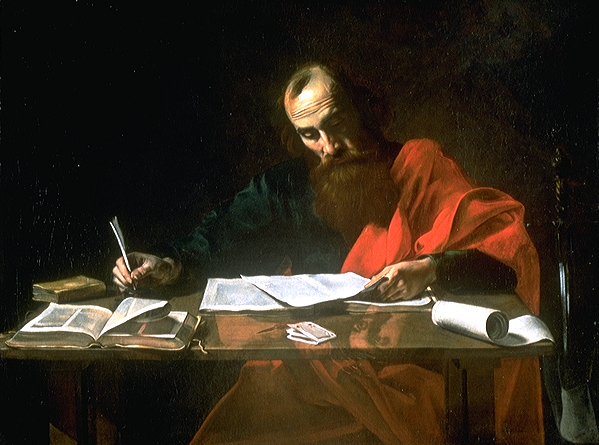
The image is Baptism of Christ by Mesrop of Khizan, active 1605-1651. Image from Art in the Christian Tradition, a project of the Vanderbilt Divinity Library, Nashville, TN. https://diglib.library.vanderbilt.edu/act-imagelink.pl?RC=56064 [retrieved January 5, 2022]. Original source: https://commons.m.wikimedia.org/wiki/File:Mesrop_of_Khizan_(Armenian,_active_1605_-_1651)_-_The_Baptism_of_Christ_-_Google_Art_Project.jpg.