August 27, 2023
Exodus 1:8-2:10
Romans 12:1-8
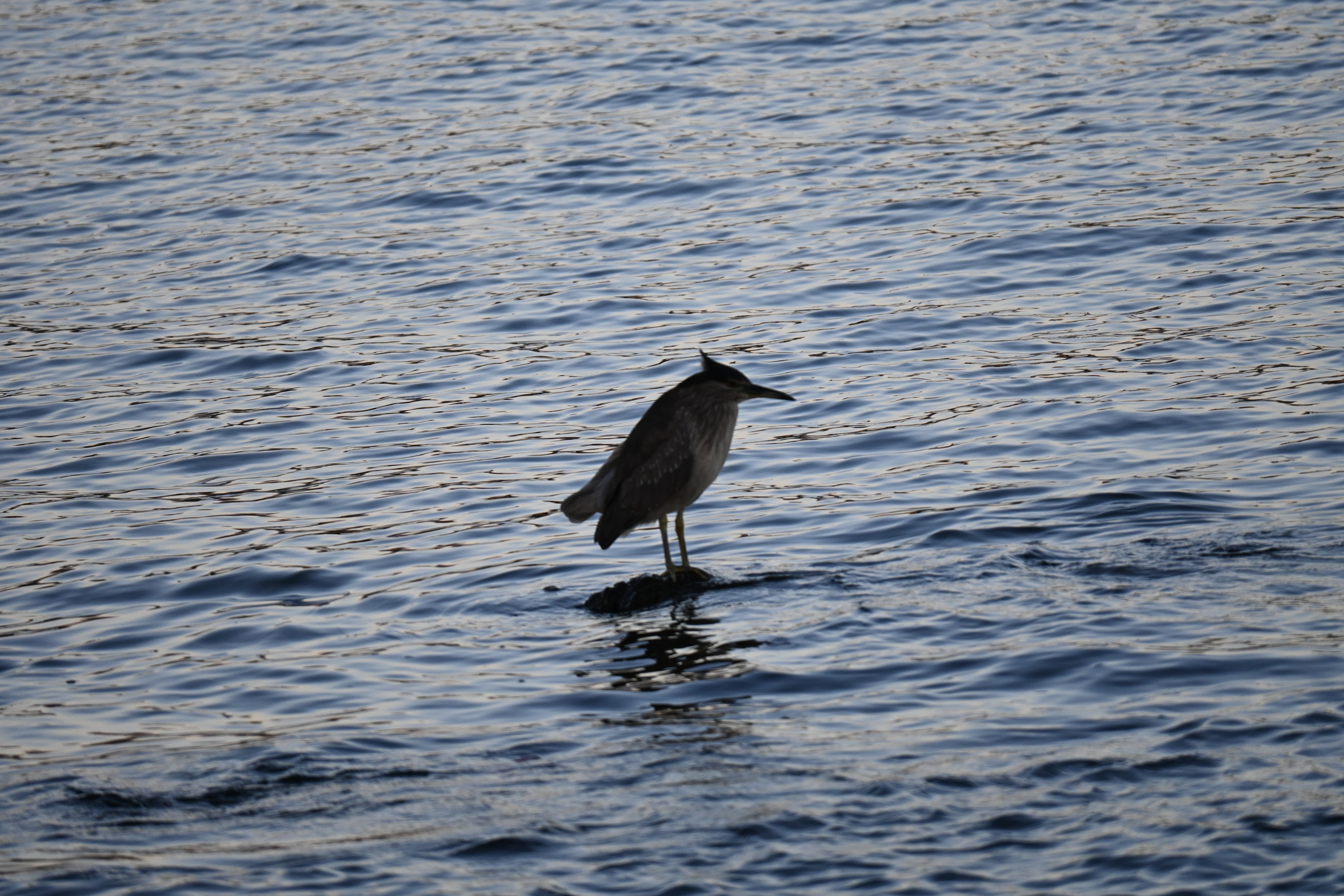
This story is not about a Hawaiian bird, although this bird does have relatives in Hawai’i. She was a black-crowned night heron. Black-crowned night herons live all over the world – they’ve been seen on all seven continents. They live here in Hawai’i, where you can find them in the shallow waters hunting for fish. The Hawaiian name is ‘auku’u.
I’m not sure what this bird called herself, partially because she lived a long time ago and languages change, partially because she lived in Egypt and I don’t know the Egyptian name for an ‘auku’u, and partially because I strongly suspect that birds don’t call themselves by the names people use for them anyway. She lived up to the name “night heron,” though, because she slept through most of the day and hunted the shallows of the Nile River at night. Hawaiian ‘auku’u, by the way, sleep and night and fish during the day.
This ‘auku’u, however, had had her sleep interrupted by the sounds of soldiers marching by. Although she hunted fish, she had no trouble concluding that they were hunting something. They went into little homes with their swords and spears ready, frightening the poor people within, most of whom worked hard all day with other people standing nearby with whips. Sometimes the ‘auku’u had seen the whips used on those poor people and she’d felt very sorry for them.
The soldiers didn’t seem to find what they were looking for, so they gathered together and marched away. A few minutes later, the heron heard voices from one of the little huts. A young girl rushed out, dashing from house to house and asking those within for things. When she returned, she had jars of sticky oil and pine pitch.
The ‘auku’u settled back to sleep again, but then the door to the hut opened again and the girl returned, this time accompanied by her mother. The mother carried a shallow bowl that glistened with newly applied oil and pitch. The two walked down to the riverbank, where the ‘auku’u watched unnoticed in the reeds.
The bowl wasn’t a bowl after all, but a woven basket, and the ‘auku’u was surprised to see that the oily pitchy coating worked to keep it afloat as they laid it in the water. The ‘auku’u was even more surprised to see that the improvised boat held a baby, a human baby. The mother and daughter cried as they pushed it out to where it could be caught in the current. It began to float slowly away.
The girl followed along on shore, moving slowly among the reeds to hide as best she could. The ‘auku’u was too curious to go back to sleep. She followed the girl and the girl followed the basket, rocking gently on the water.
They all three – baby, girl, and bird – heard the splashing ahead. Another group of women were swimming in the river. One saw the basket get caught in the reeds. Another went to fetch it. They gathered around the child, who was awake and yawning.
The ‘auku’u watched as one of the women adopted the baby as her own. She watched as the girl emerged from hiding, offering her mother’s services to care for the child. She watched as they all left the riverbank together.
The ‘auku’u didn’t understand all of what was going on, of course, but she recognized this: those soldiers had been a danger to this infant, one which would only get worse. The mother and sister had done their best to get him to place of safety, and they had succeeded. This new woman in the baby’s life had given him a home in which to grow.
The ‘auku’u didn’t know it, and frankly neither did any of the women, but the baby whose life they’d saved that day would grow up to deliver those enslaved people and lead them to a new home. We know him as Moses. He lived because of what those women had done.
by Eric Anderson
Watch the Recorded Story
I write these stories first, then tell them from what I remember of what I wrote. That process includes both a certain amount of, well, misremembering, and somewhat more improvisation.
Photo of an ‘auku’u in Hilo Bay by Eric Anderson.
 ordainedgeek
A lovely way to tell this story in your amazing way.
Thank you. To be honest, I spent more time figuring out what bird might live both in Egypt and in Hawai’i than I did on the story. I even tried to find out what the Egyptian name for an ‘auku’u is, to no avail.
Oh! You let yourself be sent on those little journeys, too?
Oh, my, yes.