The world is filled with tears. They spring from eyes emotion-swollen, running down the cheeks across the bare or stubbled chin. The world is filled with tears.
The fountains spray their eloquence, responding to the pains of circumstance, of body or of mind, of tearing of the fragile soul. The world is filled with tears.
From other eyes the liquid leaps for joy like ocean spray and seething foam, a coruscating rainbow of delight. The world is filled with tears.
Oh, Holy One, I do not pray for you to dry our tears today, but that we weep, relieved of fear. Oh, let these be our tears.
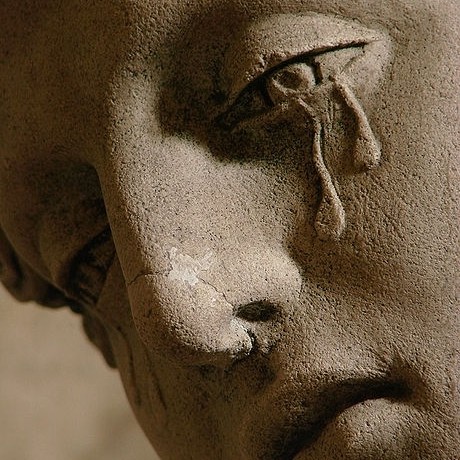
The image is a detail of the figure of Mary Magdalene in the sculpture The Entombment of Christ in the Church of St. Martin, Arc-en-Barrois, France. Photo by User:Vassil – File:Sépulcre_Arc-en-Barrois_111008_12.jpg, CC BY 3.0, https://commons.wikimedia.org/w/index.php?curid=16942922.
It’s a funny thing. When you hear just part of a conversation, it can be misleading. I mean, you might think you know what folks are talking about, but it turns out you might not.
In this case, it was a kolea, a Pacific Golden Plover, who overheard some people talking about heaven. And yes, he got confused.
He heard enough to learn that the people talking about heaven believed it was a really nice place. He heard enough to learn that the people talking about heaven didn’t expect to go there for some time. He heard enough to learn that the people believed that other creatures could also go to heaven.
He didn’t hear anything about it being a new life and a very different kind of place. He didn’t hear anything about dying as a transition from one kind of life to another kind of life. They just didn’t mention that while he was listening.
But at the end of the conversation, as the people were walking away, one of them said something about heaven being beyond the clouds.
People tend to talk that way about heaven because even though we have telescopes and can look a long way into space, “beyond the clouds” is something most of us don’t know much about, and the life God intends for us beyond our lives here is also something we don’t know much about. But the kolea didn’t know that. He said to himself:
“Those people can’t fly beyond the clouds, but I can. I can get to heaven myself.”
And he launched himself into the sky.
A kolea migrating from Hawai’i to Alaska, or from Alaska to Hawai’i, can get very high indeed. He flew up over the low clouds that were raining on Hilo. Then he flew up over the middle clouds that were spotted about around the slopes of Mauna Kea. Then he flew up even above the high wispy clouds above Mauna Kea.
Each time, he looked about for signs of heaven.
Each time, he didn’t see them.
“I must be close to heaven,” he said.
What he found as he circled higher and higher was that it got colder and colder. He’d felt that before, but as he flew higher than he had before it got colder than he’d ever known. He didn’t like that. He also didn’t like that the air got thinner. Not only was it harder to breathe, he had to flap his wings harder to move enough air to keep flying. In fact, there came a point that he just couldn’t go higher. Gasping, he let himself fall, then circle, and glide back down to the ground.
He landed, still winded, on some grass near another kolea, who hopped over to see what was wrong. “I tried to fly up to heaven,” he said sadly, and told her the story. “I must have been close, but I couldn’t get there.”
“That’s too bad,” she said to him. “Here, take a bite or two. There’s some tasty things here. And you’ll find some good water to drink just over this way.” She led him over to the food, and water, and a safe place to rest.
He ate. He drank. He rested. His breathing settled. His wings regained their strength. He looked at his new friend.
“You know, I flew a long way up to get close to heaven,” he said, “but you’ve been kinder to me than I can remember anyone else being. It might just be that I’ve been closer to heaven here than I ever was up there in the sky.”
by Eric Anderson
Watch the Recorded Story
I write these stories in advance, then tell them from memory during worship. The story you just read and the story as I told you will not be the same.
Photo of a kolea (a Pacific Golden Plover) by Eric Anderson.
“One of the scribes came near and heard them disputing with one another, and seeing that he answered them well he asked him, ‘Which commandment is the first of all?’ Jesus answered, ‘The first is, “Hear, O Israel: the Lord our God, the Lord is one; you shall love the Lord your God with all your heart and with all your soul and with all your mind and with all your strength.” The second is this, “You shall love your neighbor as yourself.” There is no other commandment greater than these.'” – Mark 12:28-31
The scribe approved your words, or so says Mark, and silenced all the snare-deploying crowd. Yet he might ask (and yes, in Luke he did) “Who is my neighbor to receive my love?”
Then you, Redeemer, might have said (though you did not, or so says Luke), “Look to the Book of Ruth, to what is written there: ‘I will not leave you. Do not press me.
“‘Where you journey, I will go. And where you stop, there I will take my rest. Your people shall be mine, and more: Your God shall be my God.'”
A poem/prayer based on Mark 12:28-34, the Revised Common Lectionary Gospel Reading, and Ruth 1:1-18, the First Reading, for Year B, Proper 26 (31).
Well, that’s not an original way to begin a story, but it was pretty dark, and rain was falling, and the winds were howling up there on the mountain. If you were a pig, it was a good night to find a rocky overhang. If you were an ohi’a tree, it was a good night to rock back and forth with limbs and trunk, and a better night to hold on tight with your roots.
If you were one of the honeycreepers of the forest, it was a good night to shelter beneath lots of thick leaves and hope the branch you’d perched on was sturdy.
A grumpy ‘amakihi had found just such a space in a koa tree. He wasn’t exactly dry, but he wasn’t being pelted by rain, either. The branch he grasped with his feet was only tossing a little bit. He wasn’t comfortable – that’s why he was grumpy – but he was as comfortable as he was going to get until the sun came out so he could dry his feathers.
He wasn’t pleased when the branch gave another bounce that was out of rhythm with the winds and there was a new shadow among the leaves. A young ‘apapane – so young that she didn’t have her red feathers yet – had landed on the branch and stood shivering. She tried to shake the water from her wings, but mostly just banged herself against the leaves and twigs.
“Stop that,” said the grumpy ‘amakihi. “What are you doing here? You shouldn’t be flying in this storm.”
“I didn’t mean to,” said the young ‘apapane. “The wind swept me off the branch.”
“Well, you’d better go back there,” said the ‘amakihi. “Go on.”
The young ‘apapane looked out through a gap in the leaves to where they could both see the trees tossing in the gale.
“Well, maybe not right now,” said the ‘amakihi, who was still grumpy but a fairly considerate bird. “What can I get for you? Do you want a bug? There’s some here.”
“No, sir,” said the ‘apapane.
“How about a drink of water? Well, maybe not,” he said, when the young ‘apapane shivered. “You’ve probably had enough water.”
“Yes, sir,” said the ‘apapane.
“Well, what do you want? You don’t want me to help you find your own tree, do you?”
The ‘apapane shook her head.
“What do you want me to do for you?” insisted the ‘amakihi.
“Could I just stay here for a while, and not be alone?” asked the ‘apapane.
“You don’t want to be alone?” asked the ‘amakihi.
“No, sir,” said the ‘apapane.
The ‘amakihi thought about it, and realized even as he said it, “You know, I don’t want to be alone in this storm, either. Come find a dryish spot here on this branch. We’ll ride it out together.”
And that is how a grumpy ‘amakihi and a frightened ‘apapane were merciful to each other in the midst of the storm.
by Eric Anderson
Watch the Recorded Story
I write these stories in advance, then tell them from memory during worship. That means that changes happen.
“Jesus stood still and said, ‘Call him here.’ And they called the blind man, saying to him, ‘Take heart; get up, he is calling you.’ So throwing off his cloak, he sprang up and came to Jesus.” – Mark 10:49-50
“How strange. Do you see that?”
“See what? Oh, that? What is that, do you know?”
“I think that it’s a cloak.”
“Who’d leave a cloak abandoned in the road like this?”
“I wouldn’t. That’s the thing that keeps a being warm at night.”
“Let’s take a look. Perhaps the owner is not far, and if we raise it, they’ll come back.”
“What’s that? It rolled away into the dirt.”
“Hang on, I’ve got it now. Look: it’s a coin. It must have been entangled in the cloak.”
“You know, I’ve seen a beggar here with such a cloak. He’d plead for coins…”
“…Which people threw upon the cloak. You’re right. This must be his. But where is he?”
“I can’t believe he’d leave without his cloak.”
“I can’t believe he wouldn’t comb the cloak to find each coin.”
“He’s not here now… and if he left without the cloak…”
“I don’t think he’ll return.”
A poem/prayer based on Mark 10:46-52, the Revised Common Lectionary Gospel Reading for Year B, Proper 25 (30).
When the birds of the ohi’a forest start to flock together – which tends to happen when the chicks have learned to fly and left the nest – some of those flocks rotate leadership among the birds: an ‘apapane this week, an ‘akepa this week, and who knows? Perhaps an ‘alawi the next.
There came a week when one of the ‘amakihi was chosen to lead, and he was going to lead, by all that was feathered, he was. He had done a lot of watching and a lot of listening to the other leaders, and he knew he’d do a good job. He wouldn’t bully, and he wouldn’t brag, and he would get help from other birds to be sub-leaders, and above all else, he would keep an eye out for food, for shelter, and for danger.
He was, after all, the one in charge.
Things seemed to go just that way for the first couple of days. The other birds followed where he led, they sang cheerfully as they foraged for bugs and nectar, and they avoided both the nuisance of a cranky i’iwi and the dangers of two cats and an ‘io. On the third day, however, something seemed to be going… differently. The birds still followed where he led, but… it almost seemed like some of them were slightly ahead of where he was going. He thought they might just be faster fliers, but as the day went on he noticed that some of them seemed to open their wings just slightly before he did.
What puzzled him about all this was that, as he thought about it, it seemed… perfectly normal. The other flock leaders had also been just slightly behind two or three birds. Which seemed… perfectly normal and perfectly odd.
When the next day came, the same thing was happening, and he kept a close eye on things. Another ‘io came by over the course of the morning, so that a sudden alarm whistle sent everyone deep into the branches. A little while later, the same voice trilled that it was safe again, and the flock took wing for another ohi’a tree – one that he, the leader, hadn’t chosen. He probably would have tried that direction (because the ‘io went the other way), but he hadn’t chosen it. What was going on?
In early afternoon, it happened again. Two or three birds took off just before he did, and later on two or three more took off just before he did, but they were different birds. Still, he spotted what was the same: those birds had been close to another bird, an ‘amakihi, just before they flew.
So he landed right next to that bird when they got to a new tree and found… she was his mother.
“Are you… What are you doing, mother?” he asked. “Are you trying to take over as leader?”
“Not at all,” she said. “I’m following you, just like everyone else.”
“Then how come birds take off ahead of me from around you?”
“Well,” she mused. “I might be mentioning that you’re looking at a tree in a particular direction. They seem to think that’s a reason to go that way. You and I both have been paying attention to what’s safe and what’s in blossom.”
“Isn’t that leading?” he asked.
“It might be,” she said, “if leading is paying attention to what’s good for all the birds of the flock. Which you’re doing. But it’s something that all of us can do along with you. When your leadership time is over, you can do it, too.”
He was a good leader, they all agreed. They were surprised to find, however, that he was an even better follower when another bird’s turn came to lead. He did the best he could to see that all the birds were fed, warm, and safe – and so did his mother.
by Eric Anderson
Watch the Recorded Story
I write these stories ahead of time, but I tell them in worship from memory. Memory plus a fair amount of improvisation.
James and John, the sons of Zebedee, came forward to him and said to him, ‘Teacher, we want you to do for us whatever we ask of you.’ And he said to them, ‘What is it you want me to do for you?’ And they said to him, ‘Appoint us to sit, one at your right hand and one at your left, in your glory.'” – Mark 10:35-37
While you’re at it, Jesus, sign me up for that. For while I think I have one of the sittingest jobs there is, (I sit in chairs and cars and at so many meals), I’d really like to sit nearby to you and bask in glory.
Ahhhhhh…
Yes, I can follow you and what you do to find my place in glory, banquet marvelous, and if the places to your right and left are occupied already, I understand.
Ahhhhh…
So though I share the indignation of your other followers, I share as well their thought that it should not be them, but me, to sit at your right hand. Of course.
Ahhhh…
I’ve chosen to forget as James and John did then, so long ago, that you’d been laying out the likely forecast, which was stormy to be sure, a blow to carry you up on a cross.
Ahhh…
I’ve chosen to ignore again your call to servanthood and service. Humility, not arrogance, displays your Way. I’d be more comfortable, frankly, with my pride.
Ahh…
Instead, I sit dismayed. You’ve asked for all, for more than I prepared, for more than I have understood. It’s not enough, but in this moment, it is all I have to give.
Ah.
A poem/prayer based on Mark 10:35-45, the Revised Common Lectionary Gospel Reading for Year B, Proper 24 (29).
The image is “The Calling of the Apostles St. James and St. John,” print, Friedrich August Pflugfelder, after Johann Friedrich Overbeck (MET, 2004.451) (August W. Schulgen/ Josef Spithöver) – This file was donated to Wikimedia Commons as part of a project by the Metropolitan Museum of Art. See the Image and Data Resources Open Access Policy, CC0, https://commons.wikimedia.org/w/index.php?curid=60859225. Sadly, most artists’ renderings I could find of this interchange between Jesus, James, and John, favor Matthew’s version of the story, in which their mother made the request on their behalf.
I’iwi are not known for their generosity. They tend to chase other i’iwi away if one comes too close, and they have an expansive notion of what “too close” means. They’re willing to put up with other birds, most of the time, but if there’s an ohi’a tree full of flowers to be sipped at, well. Then things can get exciting, and they’ll chase the ‘apapane and the ‘amakihi away.
One day an i’iwi was perched in a tree and saw a family of four humans come along. They stopped for a moment nearby and the big humans gave the little humans the last two cookies out of a little bag. The littlest human, a boy, took big bites. The next-littlest human, a slightly older and taller girl, nibbled at her cookie, enjoying its sweetness.
When the little boy had finished his cookie, the parents announced that it was time to keep walking, and their son burst into tears. He was tired. He didn’t like walking. Most of all, he was still hungry, because he hadn’t had enough cookie.
But there were no more cookies in the little bag.
Big sister – who wasn’t that much bigger, remember – looked at her cookie. More than half of it was left. Without a word she broke it in half and gave a piece to her little brother. He stopped crying – mostly, he snuffled some more – but the two of them finished their cookies together, and then the family moved on.
The i’iwi was impressed. Half a cookie had done so much good for the little boy, and also for the parents who wanted to comfort him but couldn’t. Half a cookie wasn’t a big thing, but it made a big difference.
The i’iwi decided that he’d make a difference, too. Not with cookie halves, which he wasn’t going to eat anyway, but with ohi’a flowers. He’d bring those to the hungry birds of the forest.
If he could figure out how.
An i’iwi’s long curved beak is pretty good for sipping nectar, but it’s not that good for snipping flowers from branches or carrying them. His first few experiments showed him that he damaged more flowers beyond use than he actually carried. He managed to get one blossom in his beak, however, and flew off to find a hungry bird to give it to.
After a few minutes, he found a section of the forest where the trees weren’t blossoming much, and then he found a sad-looking ‘apapane perched on a leafy, but flowerless, branch. He landed and carefully placed the flower on some leaves before he said, “Here. You look hungry. Take a good sip.”
The ‘apapane looked surprised and then puzzled, but said, “Thank you,” before dipping her beak into the flower. Sadly, there wasn’t much nectar to be found. Much of it had dried out when it was plucked from the tree and carried through the air.
“I’m sorry,” said the i’iwi. “I’ll go get you another one.”
“Wouldn’t it be easier,” asked the ‘apapane, “to show me the tree you found it on?”
“Why, yes,” said the i’iwi. “It would. Why didn’t I think of that?”
Cookies don’t grow on trees. Sometimes if you want to share, you have to divide them up. But sometimes if you want to share, you can bring your friend to the flower, not the flower to the friend. However you share, though, remember that small things can make a big difference, and that giving to someone goes a long way.
Watch the Recorded Story
I write these stories ahead of time, but I tell them from memory – memory plus improvisation – so what you hear will not match what you’ve read.
I was ordained in my home church, Union Congregational Church UCC in Rockville, Connecticut, thirty-six years ago today.
A lot of things have changed in the intervening three and six-tenths decades. For one thing, my home congregation left the United Church of Christ, which is a lingering ache. My father retired from a distinguished career as a public school educator, completed a seminary degree, and was ordained himself. My daughter has also graduated from seminary and I look forward to celebrating her ordination. My son has kept his concentration on the writing and creating he wants to do, a quest that has taken him to the heartland of Arthurian stories in Wales.
The UCC has lost members and lost churches every one of these thirty-six years. We’re not alone. Similar things have happened in “mainline” Protestant denominations and in traditions that have rejected the mainline. The church has aged. Even now, as I have entered my sixth decade, I remain younger than a majority of my parishioners.
It seems like I ought to have learned something over all these years, and to have some wisdom to offer to colleagues, friends, church members, and church leaders. I feel like I should. If I do, I wish it were clearer to me.
The time has passed in the blink of an eye, a blink of an eye that has included innumerable endless days.
A couple weeks ago ministers of the Hawai’i Conference gathered for a retreat, which was held just a few miles from my home. On one of the afternoons, we participants could participate in “adventures.” For various reasons, including the vigorous advocacy of a young person in my congregation, I was asked to be the local pastor who accompanied (and joined) those who took part in a zipline adventure.
It wasn’t entirely outside my wheelhouse. While in Connecticut, I sought training as a ropes challenge course facilitator. I really enjoyed the training and the work of guiding people through an experience of testing their boundaries, trying something scary and finding a new sense of accomplishment. As I’ve put it more than once, facilitators spend their time safely on the ground, but in training we spent more time at the heights. The conference’s retreat center didn’t have a zipline, but I did get a chance to try one before moving to Hawai’i.
The simple truth is that I don’t have much fear of heights, and doing that training and that work taught me to trust the equipment.
I still wasn’t sure how I’d feel until I set off on the first zipline that afternoon. Would it be exhilaration? Had I developed a fear of heights without realizing it? Would something else happen that I didn’t anticipate?
It did. I settled into the harness, glided along the cable, and felt about as relaxed as I’ve felt in some time.
Yes. You read that right. I felt relaxed.
I was surprised, too.
Relaxation can be hard to come by in a pastor’s life. Sometimes pastoral duties come with a lot of anxious energy. The other day I received an urgent call to go to the hospital, as someone from another church, someone I have known and worked with, had been rushed there by ambulance. When I got there, nobody had a record. It turns out that they’d died in the ambulance without ever reaching the hospital.
That afternoon brought a lot of concern, anxiety, shock, and grief.
If I have any wisdom to offer on the thirty-sixth anniversary of my ordination, it’s this: Relax into the glide of the zipline. Ministry can feel like an uncontrolled glide over a yawning chasm at times: mercifully, not all the times. When it does, the mechanisms that keep me from falling aren’t readily apparent, or if they are, I may not be convinced of their strength. Those pitfalls look awfully deep.
Relax into the glide.
You’ll get to the other side.
It’s an imperfect metaphor, of course. One of the features of ziplines is that they make straight lines between one place and another. Ministry frequently doesn’t. You set off in one direction, and find yourself landing in a completely different place. Thirty-seven years ago, did I expect that I’d do interim ministry? Play the guitar and ukulele? Manage IT and publications for a Conference? Facilitate on a challenge course? Pastor a church in Hawai’i?
No, no, no, no, and no.
Not all of my transitions have been gentle (far from it) and not all of my landings have been soft (far from that, too). The ground that looked firm has crumbled beneath my feet both at the beginning and the end of the traverse. I still don’t really understand the systems that have kept from out of the crevasse all these times.
But if I have one piece of advice, it is: Relax into the glide.
You’ll get to the other side.
The photo shows me (a gray figure with an orange helmet) gliding down a zipline over a waterfall. Photo by Ben Sheets.
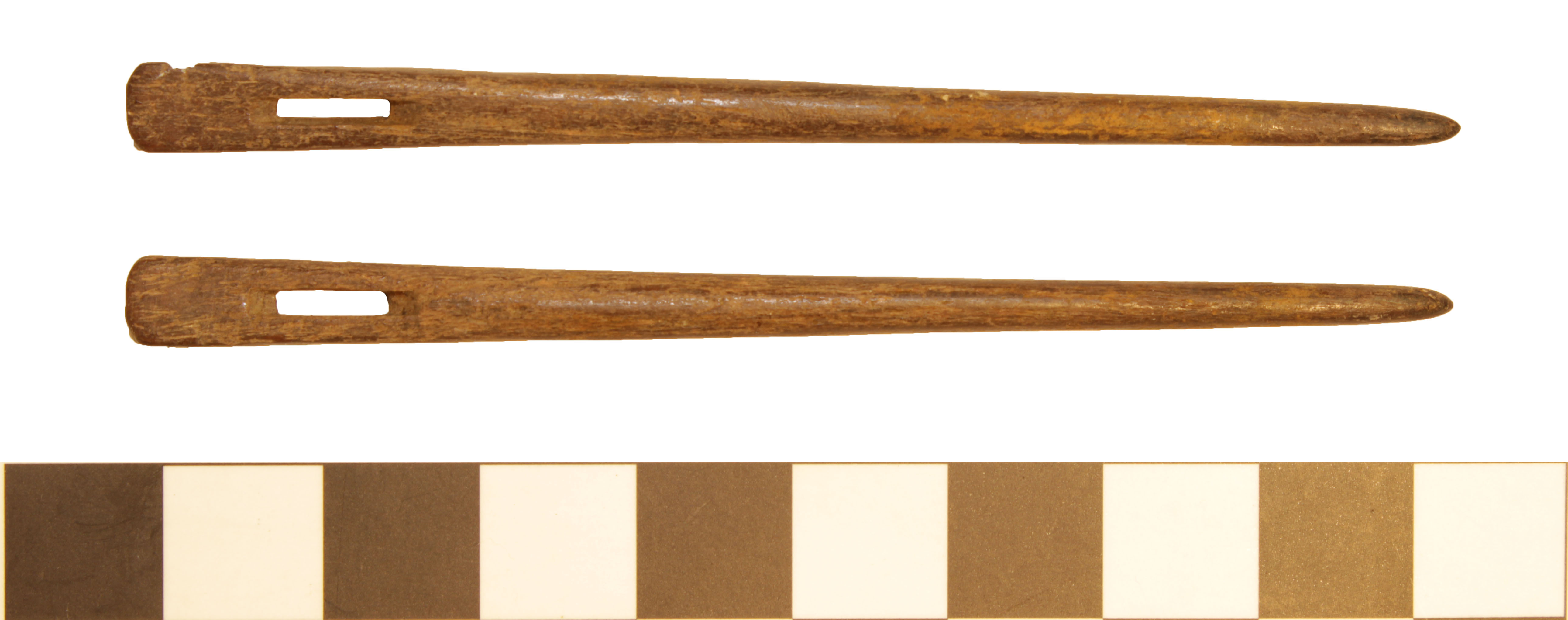
“But Jesus said to them again, ‘Children, how hard it is to enter the kingdom of God! It is easier for a camel to go through the eye of a needle than for someone who is rich to enter the kingdom of God.'” – Mark 10:24b-25
A camel, which is a beast with sense, will cast a jaundiced eye upon a needle’s eye if told that they’re to pass on through. At most, a knobby hoof may paw the ground.
Yet I engage in exercise of needle-passing almost every day, and have for one score years, and ten, and six, endeavoring to tell a story so it lifts a heart or redirects a mind.
A task for fools, I say, as those I teach nod sagely in agreement with my words, then go to do the opposite of what I’d said, and what they’d then approved,
Because, you know, though there’s a better way, the one we know is still the one we’ll do. We thank you for the wisdom of your words and hope the world one day works as you say.
If only it were only “they,” the ones to whom I speak! For it is also “Me,” the one I seek to govern by your guidance, Christ, the “I” who also cannot seem to follow you.
I would despair, save that some seeds I never thought would bloom have grown, have blossomed, borne sweet fruit as marginalized people claim their place and power where they once had none.
So take my challenge, camel. I will make my painful way through this so-tiny eye, and once we’re through, what visions might we see, what glory celebrate, in God’s sweet possibility.
A poem/prayer based on Mark 10:17-31, the Revised Common Lectionary Gospel Reading for Year B, Proper 23 (28).




 ordainedgeek
