“[Jesus said,] ‘When the Spirit of truth comes, he will guide you into all the truth; for he will not speak on his own, but will speak whatever he hears, and he will declare to you the things that are to come.'” – John 16:13
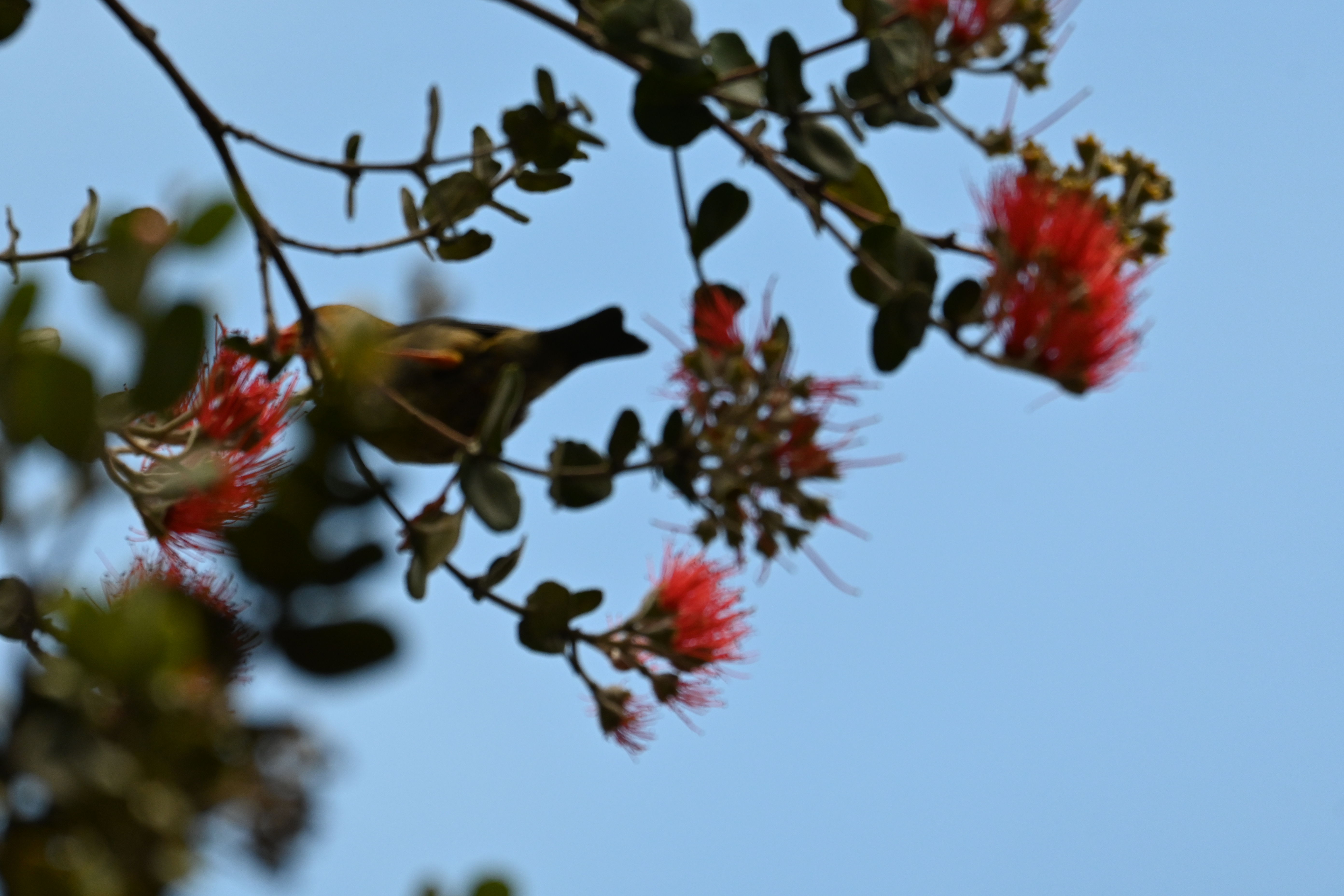
May the Spirit of Truth visit me, O Holy One, for I live squinting into trees, struggling to discern the movements of the Spirit’s wings from the motions of the tossing wind, a wind which might reflect the Spirit, too.
I strain to disentangle fern and feather, branch and beak, blossoming lehua from the nectar-feeder there. Through magnifying glass and brightening screens you’d think I’d recognize the truth above, but still I struggle to keep focus on the Truth.
Perhaps I should lay down the lenses and the sensors that record the light, set my ears to listen to the Spirit’s various calls, and find the Truth in other medium than sight.
A poem/prayer based on John 16:12-15, the Revised Common Lectionary Gospel Reading for Year C, Trinity Sunday.
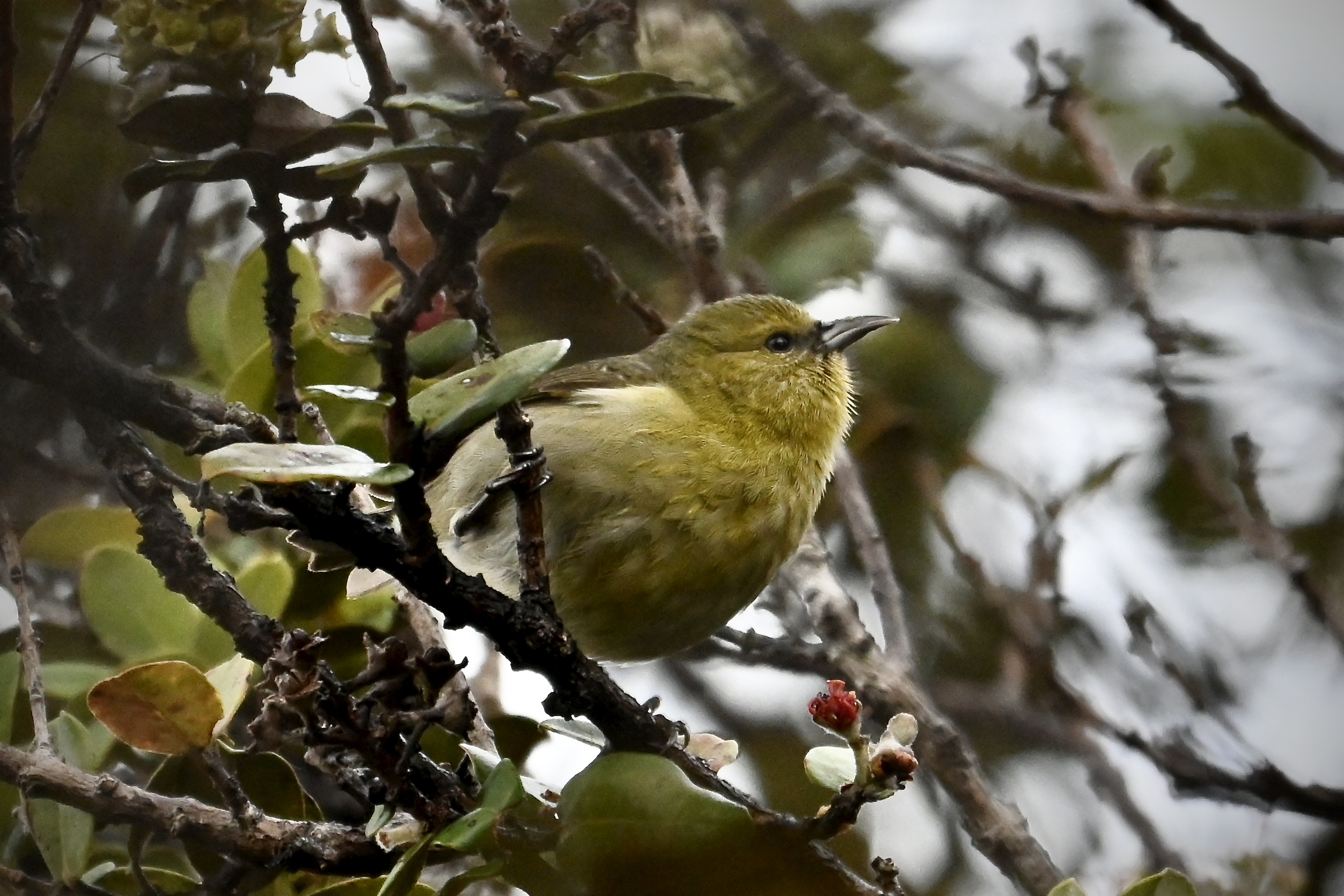
Blurry photo of an i’iwi in juvenile plumage by Eric Anderson.
The ae’o shouldn’t have had any doubt about the question. But she felt awkward and ungainly, which isn’t unusual when you’ve done a lot of growing in a very short time. She was only about four weeks old, but that was time enough to learn a few things about the world.
For one thing, she’d learned that she had very long legs as compared to the size of her body. The ae’o, it’s said, has the second longest legs for the size of their body of any bird. That’s a lot of leg, or not a lot of body, depending on how you want to think of it. She’d also learned that those legs were very useful for walking around in the calm waters of a fishpond, and she learned that she could use her long beak to pull food out of the water. She’d learned that in English she was called a “black-necked stilt,” which seemed fair enough, because she had long stilt-like legs and the feathers on her neck were definitely turning black as they changed with her age.
But she’d also learned that other birds were very different. The ‘Alae Ke’oke’o were sort of similar in size, but they had much shorter legs. In fact, they swam across the top of the water. She’d seen kolea and akekeke pecking for bugs and such along the shorelines before they left for Alaska. All of those birds seemed a lot more compact than she did, with her smallish body and long neck and long long legs. She’d watch the kolea wheel about the sky.
And she grew to believe that she could not fly.
I don’t know how she missed the fact that her parents flew quite well. I don’t know how she failed to notice that she, herself, had been taking wing-aided hops for a week. I don’t know how she missed all that. But she did. “I’m not going to be able to fly,” she said sadly one day, thinking that nobody was there to hear her.
“Really?” said a voice. “Why not?”
When she looked over, she saw another bird’s face with a long beak looking at her. It was a cattle egret, one of the many who liked the area of her fishpond.
“Just look at me,” she said. “Look at these long legs. Look at this long neck. Look at these wings. They can’t possibly get me off the ground and into the sky.”
The cattle egret looked her over carefully and said, “I’ve got long legs.”
She took a good look and realized that he did. “And I’ve got a long neck,” he continued.
“So you do,” she said.
“And have you noticed?” he asked. “I can fly.” And to prove it, he took to the air and flew twice around the fishpond before he landed near her again.
“I can’t be sure, but I think you can fly,” he said. “Have you tried?”
She didn’t bother to say, “No,” because they both knew she hadn’t. She didn’t say anything at all, in fact, but she did spread her wings. She looked at him sharply to make sure he wasn’t teasing her, but there was no trace of laughter in his face.
She took off. She flew.
She took three turns around the fishpond – she’d meant to do the same two turns he had, but she miscalculated the landing and had to come back and try it again.
“I can fly!” she said.
“You can,” he said. “I’m glad you tried. And I’m glad you fly.”
by Eric Anderson
Watch the Recorded Story
I write these stories in advance, but I tell them from a combination of memory, improvisation, and of course in conversation with the young people I tell them to.
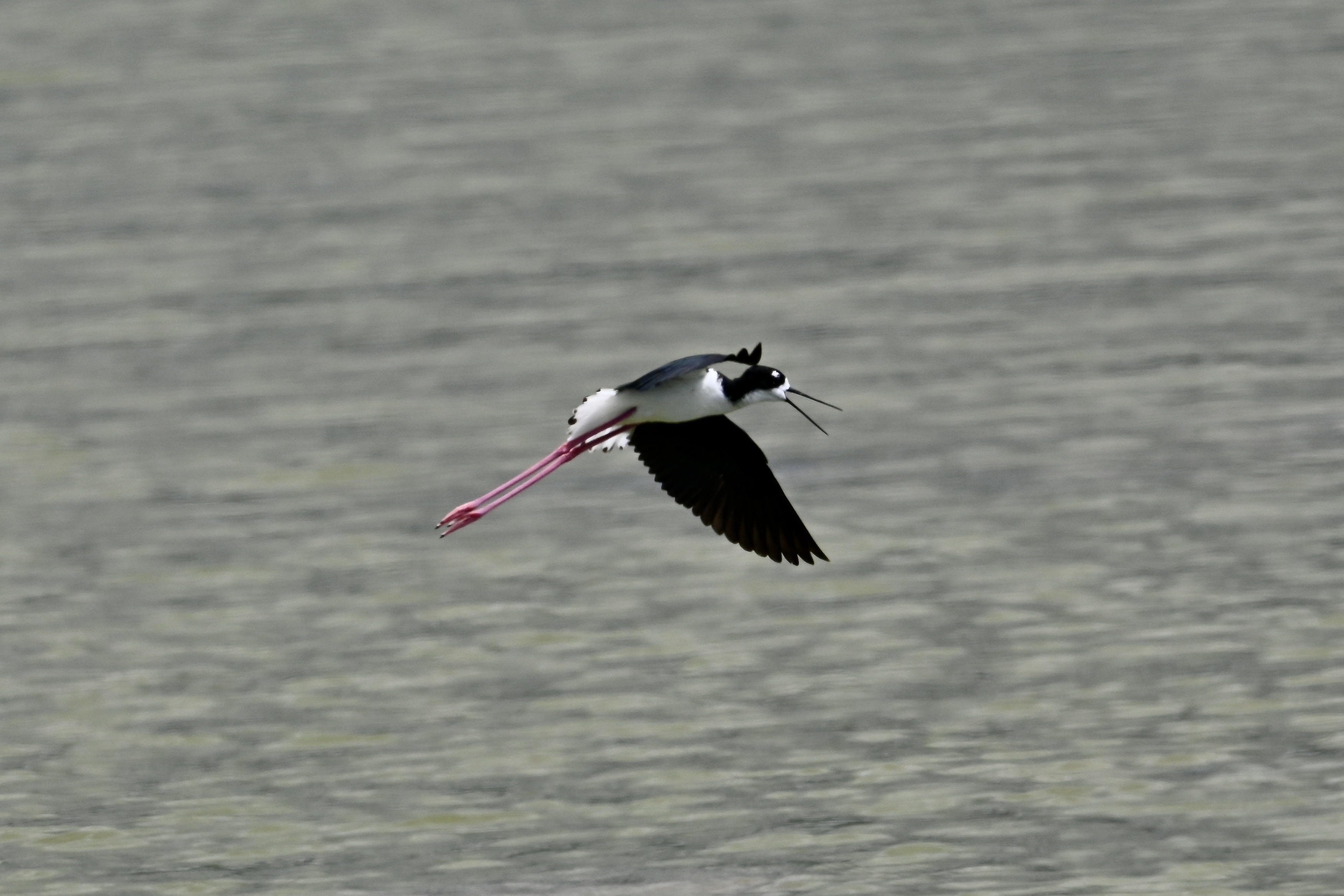
Photo of an Ae’o (Hawaiian Black-necked Stilt) in flight by Eric Anderson.
“In the last days it will be, God declares, that I will pour out my Spirit upon all flesh, and your sons and your daughters shall prophesy, and your young men shall see visions, and your old men shall dream dreams.” – Acts 2:17, quoting Joel 2:28
Assembling for the feast of Shavuot, the Spirit roared. No gentle breeze for us; a tempest howled there among our trembling circle, through our trembling souls. The flickering light upon our foreheads did not shed illumination, no. I saw it as a portent of our immolation. Not since the angel told me not to fear have I been so afraid.
My limbs have dragged my shivering frame into the streets, which teem with goggling worshipers. They fight their way upstream along the way my son last trod beneath the burden of a cross. How many know, how many care, that Jesus died abandoned by his follower-friends, attended by these women who, like me, recall dear Miriam, who danced before the Law.
The raucous streets resound with Babel sound, with accents I know well, and languages I don’t. To my astonishment, one voice is mine, another comes from Mary here, and Mary there, and from a hundred other throats. We praise our God, because when Jesus had been laid into his tomb, the Holy One rejected our rejection, called him back to life.
They scoff, of course, that we are drunk (how drunk, they do not know, for I am filled with Spirit I have never known). I draw my breath in deep. I plant my feet upon the unforgiving stones. I start to lift my arm to summon all to hear my words, and then I hear it: Simon’s voice, my son’s beloved Rock, against all expectation quoting from the prophet Joel. Who would have thought it? I rejoice, except: I wonder, when will faithful people hear a woman’s voice again?
A poem/prayer based on Acts 2:1-21, the Revised Common Lectionary First Reading for Year C, Pentecost Sunday.
The image is The Virgin surrounded by twelve apostles or Pentecost, by Master of the Crucifix of Pesaro (ca. 1380). Photograph by Rama, Wikimedia Commons, Cc-by-sa-2.0-fr, CC BY-SA 2.0 fr, https://commons.wikimedia.org/w/index.php?curid=11148957.
Many artists included Mary among the Twelve in their depictions of Pentecost.
Full inclusion of God’s people does not stop at men and women.
He was young, which may explain why he tried something that an older bird would know didn’t work. He was also pretty anxious about things, which explains more. In the end, though, it was his tutu who saw the biggest reason, which was…
I’m getting ahead of myself. Perhaps I should start the story at the beginning.
The ‘amakihi was young. And, as I mentioned, he could get anxious about things. If it was sunny, he worried about whether rain would come again. If it was raining, he worried about whether it would ever stop. If he was surrounded by other birds, he worried about whether it would ever be quiet with all these birds singing. If he was by himself, he worried that he’d be lonely forever.
Mostly, though, he worried about being hungry.
As a young and growing bird, he’d driven his parents to distraction by his constant calls for food. Some birds, and people for that matter, eat when they’re hungry. He’d call for food when he was full, because he knew he’d be hungry again soon. That can be pretty unhealthy for people and for birds, but frankly his parents couldn’t keep up with his demands, so they fed him more or less the right amount of food.
When he left the nest, he kept it up. If he was hungry, he’d head for the nearest flower, snap up the bugs, and drink the nectar. If he was still hungry, it was time for the next flower and the next bug. And if he wasn’t hungry, he’d still move on to the next flower.
What kept him from getting sick from overeating is that he had to do enough flying between trees that he couldn’t quite eat more than was good for him. Not quite.
One day, though, he was watching some bugs instead of trying to eat them. They were bees in their hive, and they were gathering nectar and storing it away. Suddenly it struck him.
“I can gather flowers and store them away like the bees,” he said. “Then I’ll never have to worry about finding flowers, and I’ll never be hungry.”
Off he flew.
He started snipping blossoms from the trees: Ohi’a, Mamane, anything he could find. He tucked them into an abandoned nest he found, then flew out in search again. If there were other birds around, he’d chase them off first so he could get the flowers. He had gotten rather big with eating, so other birds tended to fly away. The forest filled with squawking, protesting birds as he flew about with flowers in his beak.
He’d made quite a few trips and the forest was in an uproar when he found his grandmother perched next to his store of flowers.
“Aloha, Tutu,” he told her.
“Aloha, grandson,” she said to him. “What are you doing?”
“Storing flowers,” he said, “so I’ll never be hungry.”
“Really?” she said. “Who gave you that idea?”
“The bees,” he said. “They store nectar and pollen and they’re never hungry.”
“Grandson,” said Tutu, “would you look carefully at your flowers?”
For the first time since he started collecting them, he looked. No longer connected to their branches, they’d wilted and faded. Their nectar had dried and disappeared. A few bugs were crawling on them, of course, but even the bugs preferred the liquid nectar of a living flower.
“Why did you do that?” she asked. “Did you really think it would work?”
“I thought that I needed food for myself,” said her grandson, “that the other birds couldn’t take away from me.”
“The forest is for everyone,” said Tutu, “for every one of us. We’re not bees, who have ways of storing things, and they share what they store with the entire hive. We are forest birds. We don’t hoard. We don’t keep things away from others, not from ‘amakihi, not from ‘apapane, not from i’iwi. We share.”
She looked at him closely. “What do we do, grandson?”
“We share, Tutu.”
“Good. Let’s go have lunch.”
They left the sorry hoard behind for the living flowers they shared with all the creatures of the forest.
by Eric Anderson
Watch the Recorded Story
I write these stories in full ahead of time, but I tell them from memory (and inspiration).
“One day as we were going to the place of prayer, we met a female slave who had a spirit of divination and brought her owners a great deal of money by fortune-telling. While she followed Paul and us, she would cry out, ‘These men are slaves of the Most High God, who proclaim to you the way of salvation.'” – Acts 16:16-17
My soul was heaped with chains.
A demon claimed my eyes, my mind, my tongue, to speak of things beyond a mortal’s ken. Or possibly to fill the air with lies.
Some businessmen had claimed my freedom. For as long as people paid to hear the demon’s truth or lies, the money went to them, and chains to me.
I still don’t know who claimed my legs and tongue those days. The demon knew, as I could not, that these strange men were also chained, but to the healing power of a god.
I followed, but I don’t know how. The demon’s words leapt from my lips, but would it risk its power in the face of God? Regardless, my legs pushed me after them.
I saw the look upon the speaker’s face, a look of one whose patience had been tried beyond its limited capacity. Beyond my hope, he spoke the words that broke the demon’s chains on me.
I fell into the street and saw the businessmen seize him and his companions, chain them for the magistrates’ displeasure. I looked down and found their chains bound me.
I am not fully free, but I am freer than before, and even though it cost them chains like mine, I would be pleased to wear the chains of God.
A poem/prayer based on Acts 16:16-34, the Revised Common Lectionary First Reading for Year C, Seventh Sunday of Easter.
He wasn’t the oldest among his siblings, cousins, and friends from nearby nests, but he was one of the first to molt from his young feathering to his adult colors. He’d had gray feathers on the chest and brown on his head and back, with black on his wings and tail. They all did. It made their games of hide-and-seek pretty difficult, because those colors melded into the shadows on the tree branches pretty well.
As I say, though, he was the first among them to start losing some of those brown and gray feathers, and start to gain the red feathers from head to tail. Frankly, it wasn’t going well. Loose feathers itched, and so did the new feathers as they grew in. They also didn’t fall out evenly. He found himself with a grayish belly blotched with the new red feathers.
“You look ridiculous,” said one of the young ‘apapane who played hide-and-seek with him, and, well, he felt ridiculous.
“Can’t you hide that?” asked another of the ‘apapane. He was a cousin, but he could be mean, even to a cousin. Our young ‘apapane couldn’t think of how.
“Go clean that up,” ordered one of the bossier young ‘apapane. She was one of those who thought she knew best for everybody else. But he still didn’t know how to take care of it, so he kept his perch and tried not to cry.
“Knock it off,” said the smallest of the young ‘apapane. All her feathers were still brown and gray, and she looked like she’d just been groomed by the finest feather-settlers of the forest. Everybody assumed that she was talking to the young bird with the splotchy red.
“Yeah, knock it off,” said the one who’d started this by calling him ridiculous in the first place.
“No, you knock it off,” said the smallest ‘apapane. “And you. And you. And all of you.”
She shook her wings and continued, “First of all, what can he do about it? You all know that our feathers will change from what we’re wearing to what our parents wear. Did you think that happened overnight? Didn’t you realize that it’s going to take time and that there are rough spots along the way?”
As it happened, none of them had thought about it.
“What are you going to do,” she demanded, “when this happens to you in a week or two? Are you going to make everybody going through this fly away, or are you going to help them when it itches and tell them it will be all right? What would you want for yourself?”
She asked that last question straight at the bird who’d ordered the molting ‘apapane to go clean that up. She didn’t say anything until it became clear that she had to answer.
“I’d want help,” she said.
“How about the rest of you?” demanded the smallest ‘apapane. They all admitted they’d want help.
“And that’s what you’ll get,” she said. “We’ll start with our friend here.”
“So how are you?” she asked. “Does it itch today?”
That’s how that generation of ‘apapane made it through their molt.
by Eric Anderson
Watch the Recorded Story
I write these stories in advance, but I tell them from memory and improvisation. What you have just read will not match the way I told it.
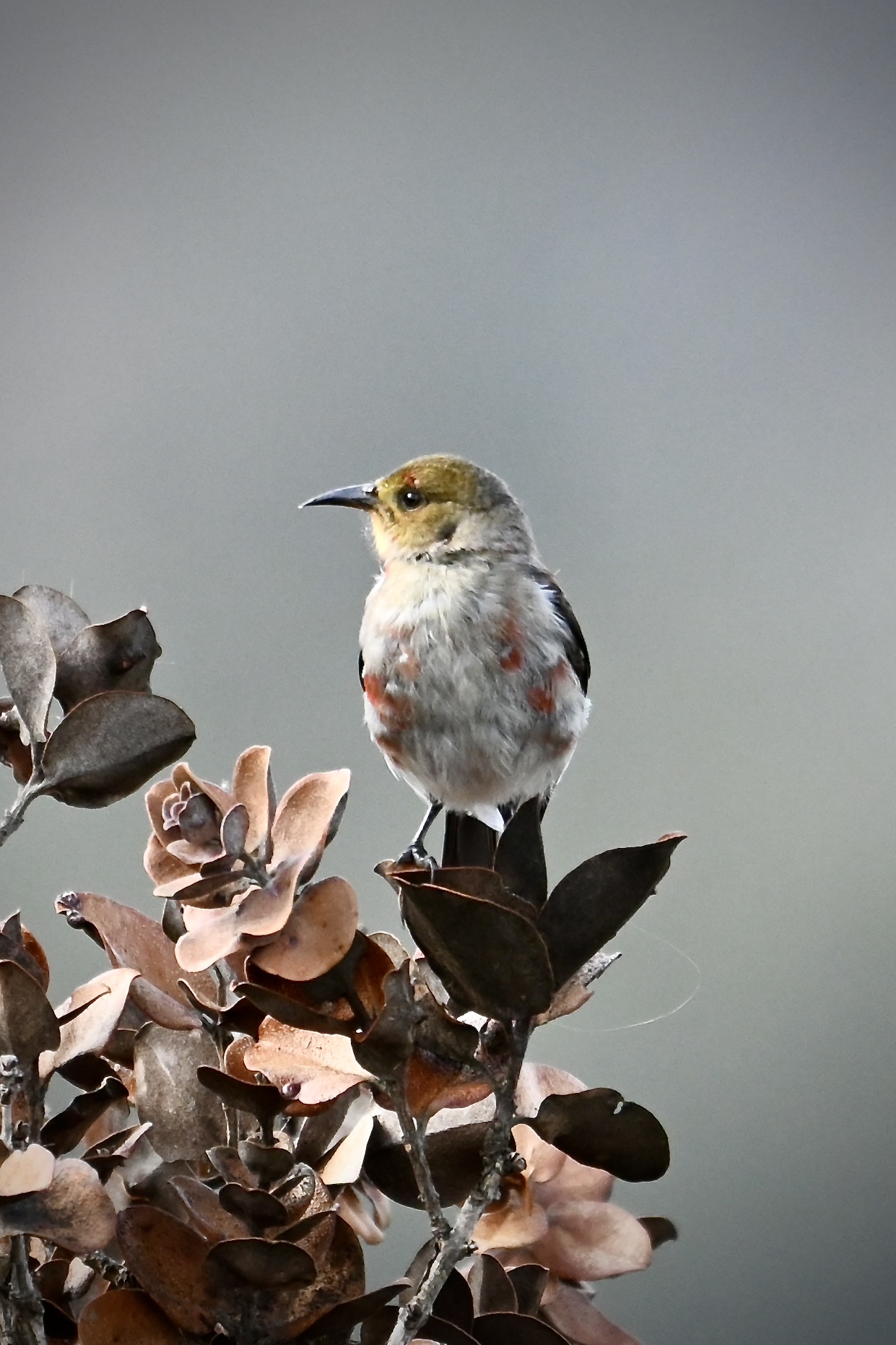
Photo of a juvenile ‘apapane in molt (at least that’s what I think it is) by Eric Anderson.
[Jesus said,] “Peace I leave with you; my peace I give to you. I do not give to you as the world gives. Do not let your hearts be troubled, and do not let them be afraid.” – John 14:27
The world gave to you the way it gives, Lord: Resentment, suspicion, condemnation, violence. At the table you offered your peace to your friends. In the garden, at the cross, peace fell away.
I pray, give to me as you give, not the world. The world still loves to condemn and coerce. In your peace I just might be able to stand, my spirit unbowed by all evil’s power.
A poem/prayer based on John 14:23-29, the Revised Common Lectionary Gospel Reading for Year C, Sixth Sunday of Easter.
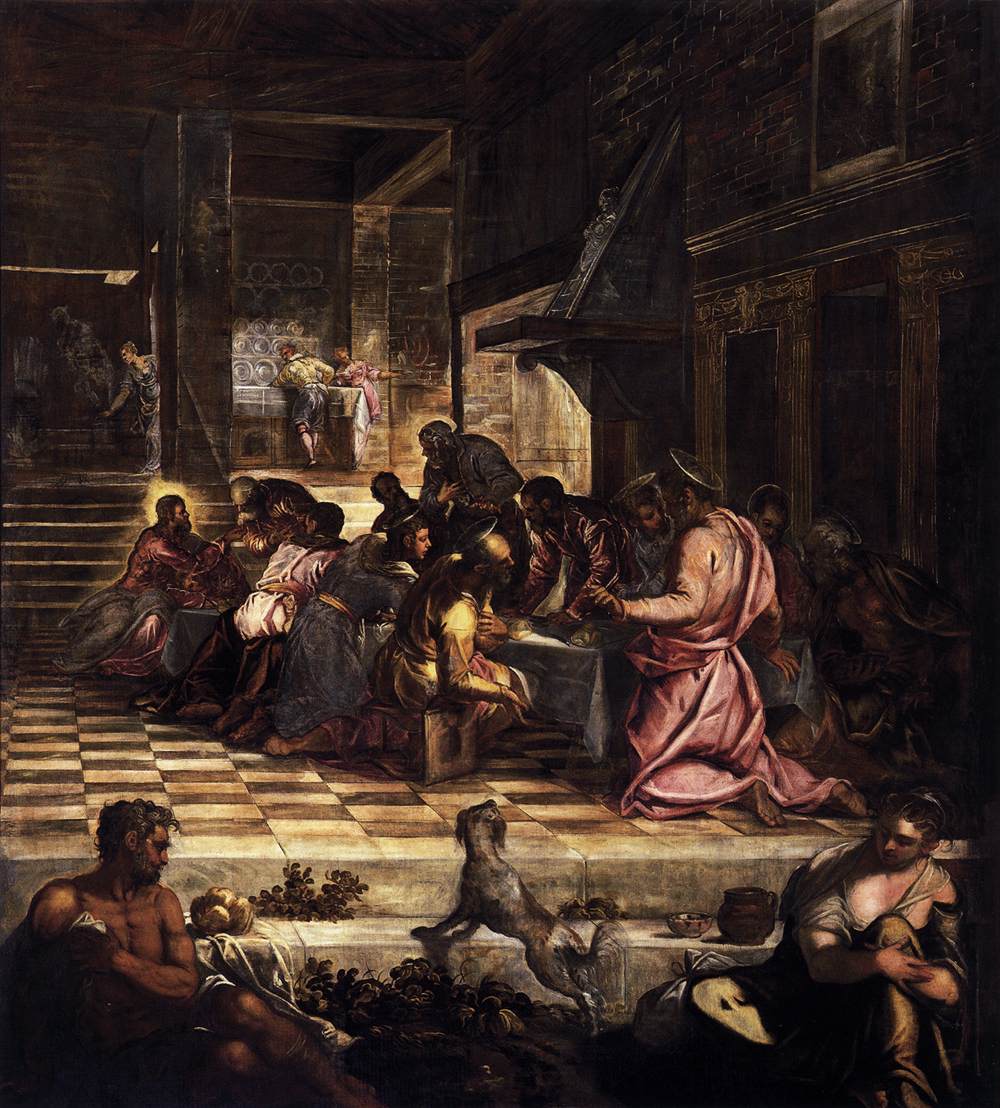
Tintoretto painted more than one Last Supper. The chaotic atmosphere of this image drew me in, even as I was writing about peace, because peace in the chaos is our great challenge.
Simon Peter went to see a man A Roman centurion with power in his hands. “Speak to us, Peter, we’d like to hear news of a new way of living, one we can choose.”
[Chorus]
Who are the people of Spirit? Open my heart to see. Who are the people of Spirit? Is it you? Is it me?
[Verse 2]
Simon Peter told his story to them How a crucified brow bore a bright diadem. Then he gasped as those Romans, unashamed Displayed in their bodies the Spirit unchained.
[Chorus]
[Verse 3]
Simon Peter brought the Council the word That even in Gentiles the Spirit had stirred. “Who am I, who are you, to hinder our God?” In the grace of the Spirit their spirits were awed.
The young ‘amakihi was nervous. She had been busy growing up, which ‘amakihi do a lot quicker than human beings do, but there was a lot to pack into that time. There was eating, and learning what to eat. There was taking care of her feathers, which changed when she molted and the feather lengths changed. And of course there was flying.
Then she had to learn about eating again, because there were things she could get to with working wings that she couldn’t get to in a nest. She learned about new bugs, new fruits, and new flowers. She’d been too busy to be nervous.
She was nervous now, though, because her parents had announced that the family would join a flock for the summer. She wasn’t really used to other birds. She’d met an auntie or an uncle or two, and of course her tutu, but these would be strange ‘amakihi. Would they like her? Would they be mean to her?
It made her more nervous to realize that the flock wouldn’t include just ‘amakihi. It would include ‘akepa, ‘alawi, and scariest of all, ‘apapane. She knew there were a lot of ‘apapane around. She’d seen far more of them than she had ‘amakihi. She’d also seen them chase ‘amakihi through the forest, even her own father. “I got too close to their nest,” he’d explained, and that made sense because she’d seen him chase other birds away from her nest, but still. The ‘apapane made her nervous.
“It will be all right,” said her father. “It’s different when birds aren’t worried about nests and eggs.”
“It will be all right,” said her mother. “You’ll make it all right.”
The day came when she and her brother and her parents flew over to an ohi’a tree filled with other birds. There were other ‘amakihi, and she knew some of them because her tutu were there. There was ‘akepa and ‘alawi showing off their green and bright orange feathers. Mostly, though, there were ‘apapane. They hopped through the branches, singing their beautiful songs, and looking very sharp in their red and black feathers.
One of them, who was keeping rather quiet, hopped over to the branch where she was sitting, keeping very quiet and hoping nobody would notice her.
“Hi,” said the ‘apapane. “What kind of bird are you?”
“I’m an ‘amakihi,” she said. “And you’re an ‘apapane.”
“I am,” he said, and looking rather nervous, said, “I feel really dumb. I’ve never seen most of these birds before. Do you know any of them?”
“Well, I know my family,” she said, “and I’ve seen a couple of these other birds before,” – she didn’t mention that they’d been chasing her father away from their nest – “but most of these birds are as new to me as they are to you.”
“Oh, good,” said the ‘apapane. “I guess this is new to most of us youngsters?”
“I think it is,” said the ‘amakihi. “I’ve been worried that nobody would like me.”
“You’ve made me feel better,” said the ‘apapane. “I think most birds would like you for that.”
“And you’ve made me feel welcome,” said the ‘amakihi. “Thank you so much for that.”
Mother had known, after all. She had made it all right.
by Eric Anderson
Watch the Recorded Story
I write these stories ahead of time, but I tell them from a combination of memory and improvisation. As a result, what you’ve just read will not match what you hear.
So when Peter went up to Jerusalem, the circumcised believers criticized him, saying, “Why did you go to uncircumcised men and eat with them?” – Acts 11:2-3
You think I wanted to eat with them? I didn’t want to go at all. I was riding pretty high, you know, elated with a woman’s resurrection. OK, the only place they’d put me up was with a tanner, but a fisherman’s smelled worse.
Yes, I was riding high, and trying not to think about the things that happen when you’re riding high, the way success becomes a series of new challenges, new obligations. I was smelling those amidst the tannery. It came for Jesus; it would come for me.
I didn’t know that I could lie in dreams or visions, waking or asleep. I claimed I’d never eaten food that was unclean, and knew full well I’ve eaten shellfish when the Romans hadn’t purchased all my stock. And let’s ignore the grain I plucked on Sabbath Day.
A vision or a dream; regardless, it would summon me to something new I knew. I did not know what it would be, but who gets visions for a trivial thing? I didn’t know what that dream meant. I knew I’d go where I’d not wish to go.
The house of a centurion was not within my plan. Who knew what I would find when I reached there? Most likely was a naked sword to seek my naked gut. Why trouble with a cross when you can drain a troublemaker’s life without?
I had no plan to speak of Jesus there until they asked, but ask they did, and I pulled in my breath, and breathed it out, and spoke with sometimes trembling voice of Jesus, of his healing touch, his mercy to such fools and failures as I am.
I certainly did not expect the fire of the Spirit in a Roman house, of one who marshals military might against the people of this land. They said that he feared God, but this? The Holy Spirit, lit in him as it had been in me? Who knew?
And now, my friends, I have no plan for you. I didn’t want to go. I went. I didn’t want to speak. I spoke. I didn’t know the Spirit would appear. She did. I didn’t know that God had welcomed them, the Gentiles, just as openly as us. And now, I have no words for you, except
To tell my tale again.
A poem/prayer based on Acts 11:1-18, the Revised Common Lectionary First Reading for Year C, Fifth Sunday of Easter.




 ordainedgeek