Father Fooler Fooled

“Now Israel loved Joseph more than any other of his children because he was the son of his old age, and he made him an ornamented robe.” – Genesis 37:3

You strive with family, heel-grabber.
You strive with God (hey, how’s your hip?).
You set up strife of wives and slaves
to seek your favor, bear your children.
So from your favored woman you select
a favored son, just as your father did
(and as your mother did on your behalf),
and with a single coat you paint a target on his back.

You seized the heel. You took the blessing and the land.
You wrestled through the night with God
and were not fully overcome. You stole
your flocks from Laban and his daughter stole his gods.
You’re set up well, heel-grabber.
You’re blessed, God-wrestler, in your tent.

But now they’ll fool you, Trickster man.
They’ve sold your favorite son away.
They couldn’t tell you that. Oh no, not that.
They’ll bring that stunning coat with tears
and stains and you will be deceived.
Your weeping will not move them to the truth.

Your sons have learned their lessons well,
just as you did from soft Rebecca’s words,
and as your father did from Abraham,
the father of his slave’s offspring,
the wife-concealer, son near-executioner.
Where, heel-grabber, will it end?

A poem/prayer based on Genesis 37:1-4, 12-18, the Revised Common Lectionary Alternate First Reading for Year A, Proper 14 (19).

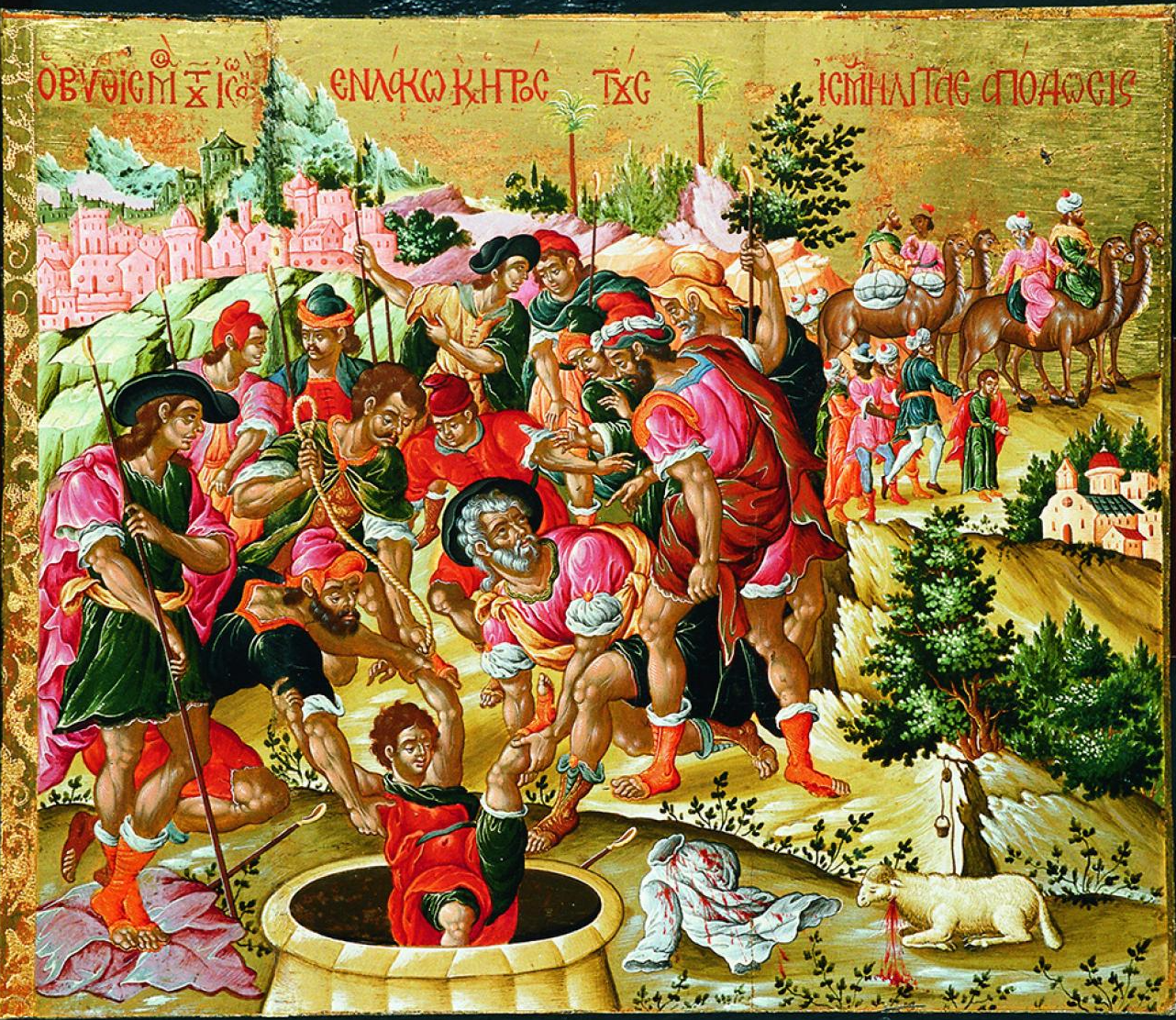
The image is Brothers Sell Joseph into Slavery by Theodore Poulakis (between 1677 and 1682), Public Domain, https://commons.wikimedia.org/w/index.php?curid=120364437.

Following Jesus

Now when Jesus heard this, he withdrew from there in a boat to a deserted place by himself. But when the crowds heard it, they followed him on foot from the towns. When he went ashore, he saw a great crowd; and he had compassion for them and cured their sick. – Matthew 14:13-14

Where is he, then? This Jesus who is my
last hope of healing from this bitter rash?
It lingers and it spreads; my friends all know
that without healing, I will be cast out.

So where is Jesus? Yesterday I knew
he had returned from Nazareth to learn
of John the Baptist’s execution. Then,
they say, his weary face dissolved in tears.

He took a boat, they say, and so my son,
his wife, and daughter, shepherd me along
the rutted hillside trails above the beach
so we can see the sails of Jesus’ craft.

We’re not alone. The path, though trampled firm,
shows sign of feet ahead, and we can see
that others follow us behind, and more,
I’m sure, beat down the trail I cannot see.

He sailed, this weary disappointed man,
to weep and grieve in peace, and I regret
that he will find a multitude of us
awaiting his attention and his care,

Yet not enough regret to risk my health
and home and loves and place to “it will heal,”
for healing’s failure ends the life that I
have known and cherished deep within my soul.

My son cries, “Quickly, father, come! The sails
a-shiver! Look! The boat has turned to shore!”
We stagger down the pathless bluff. Now I
can see the spray-flecked face regard us all.

Just for a moment, graven deep, I see
the hollows of the skull beneath the skin
worn thin by weariness and grief. “He’ll turn
the boat,” I whisper, “out to sea, away.”

He gestures to the sailors and they strike
the sail, then bring the boat ashore. He stands,
he leaps upon the strand. He takes three steps
and people gather all about him there.

First one, then five, then ten, then dozens more
present their bodies’ and their souls’ dis-ease.
He comes to me; he sees my skin, he sighs,
and tells me not to fear. I will be well.

Before he turns away, I have to ask,
“You could have turned your craft far from this shore.
Why did you stay?” He gently says, “My friend,
I’ll always be with those who follow me.”

The day has drawn toward dusk. Somewhere they found
a heap of bread, and even some dried fish
to share about this seething crowd. My skin
is softening. I know I will be well.

Soon we shall follow once again the ruts
along the bluffs, this time toward hearth and home,
but not the same. For any path I take
to any place from here: I follow him.

A poem/prayer based on Matthew 14:13-21, the Revised Common Lectionary Gospel Reading for Year A, Proper 13 (18).

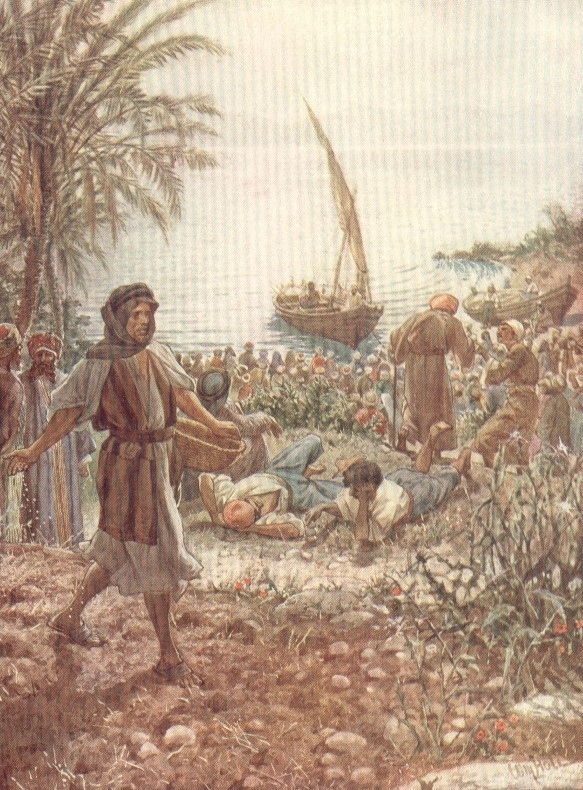
The illustration is Feeding the Multitude from The Life of Jesus of Nazareth, Eighty Pictures by William Hole (1908) – http://www.jesuitas.org.co/documentos/dominical/GabrielPerez/100705.html, Public Domain, https://commons.wikimedia.org/w/index.php?curid=3222948.

Author’s note

Like a lot of clergy, I tend to identify primarily with Jesus in this story. We have something of a self-narrative that we are people who get asked to do many things. If I’d been in the boat, I’d have wanted to sail to somewhere else that the people seeking me couldn’t reach. This poem takes the perspective of those who tracked those sails along the shoreline of the Sea of Galilee, and helps me understand why Jesus didn’t do that. In a very real, embodied sense, those thousands of people followed Jesus.

Leah’s Prayer

“When morning came, it was Leah! And Jacob said to Laban, ‘What is this you have done to me? Did I not serve with you for Rachel? Why then have you deceived me?'” – Genesis 29:25

O Holy One of Abraham and Isaac
and of my husband-now-by-fraud, Jacob:

Hear my prayer.

My veil is now cast off. But will he view
my face by flickering lamplight, or
instead will he embrace me knowing that
I am my sister. How could he not know?

I shiver here, O Holy One, for fear
of what he’ll do upon discovering
he’s been deceived. My face has never pleased
him. Will he break it in his rage?

What am I doing here? My father claims
I need a husband and to be the first
to wed, before my sister does, and so
I stood a-shaking in the gown and veil.

My sister, I am sure, wept bitter tears
which I imagine I could hear during the vows,
and which I still hear echoing
within this dark and stifling room.

God, here I am, compelled to wed,
and soon I’ll be compelled to mate,
and then I’ll be compelled to bear,
and bear resentful eyes of sister and of him.

What can I do? Where could I run?
Perhaps I’ll speak to him, but to what end?
The deed is done – except the deed, of course –
and who will credit anything I say?

Oh, God. There’s laughter in the hall.
My father’s voice, and his. Dear God.
Preserve my life this night from violence,
and bring me safe to morn.

Perhaps a dawn will come, some day,
when Jacob, Rachel, and myself will laugh
as Jacob laughs outside the door,
and then we’ll weep for all the pain we’ve borne.

Quick, God! Oh, spirit me away!
I dread this night, and fear the morn,
and cannot see beyond these hours
a future brighter than this unlit room.

He comes.

A poem/prayer based on Genesis 29:15-28, the Revised Common Lectionary Alternate First Reading for Year A, Proper 12 (17).

The image is Jacob and Laban with Rachel and Leah, artist unknown (Bologna, Italy, 17th cent.) Image posted by https://clevelandart.org/art/1939.666.a, CC0, https://commons.wikimedia.org/w/index.php?curid=77173131.

More Complicated

“No; for in gathering the weeds you would uproot the wheat along with them. Let both of them grow together until the harvest; and at harvest time I will tell the reapers, Collect the weeds first and bind them in bundles to be burned, but gather the wheat into my barn.” – Matthew 13:29-30

Such a simple story, Jesus. But I have to say
that life is much more complicated than you’ve said.

We are not seeds, you know, that can be labeled
“good” and “bad.” A person wobbles like a child’s toy
through life, a nod to good this moment, leaning to
the bad the next. No simple good and bad.

We need no enemy except what we call up
ourselves to sow the bad amidst the good.
Those who claim “good” know well their ill within
and evil souls have shown the signs of care.

We’re more complex than this, your tale,
suggests. We struggle so against the ills
around us and we struggle with the ills within.
How much we’d welcome weeding in our fields!

But…

If life is much more complicated than
your story, how much harder would the task
of weeding be, when wheat and weeds are all
the same, and each may bear good fruit some day.

Your story may be simple, Jesus, but
its lesson holds. Our lives are far too wound about
with good and bad, with health and ill, to separate
them in the here and now.

May we, someday,
bear good fruit.

A poem/prayer based on Matthew 13:24-30, 36-43, the Revised Common Lectionary Gospel Reading for Year A, Proper 11 (16).

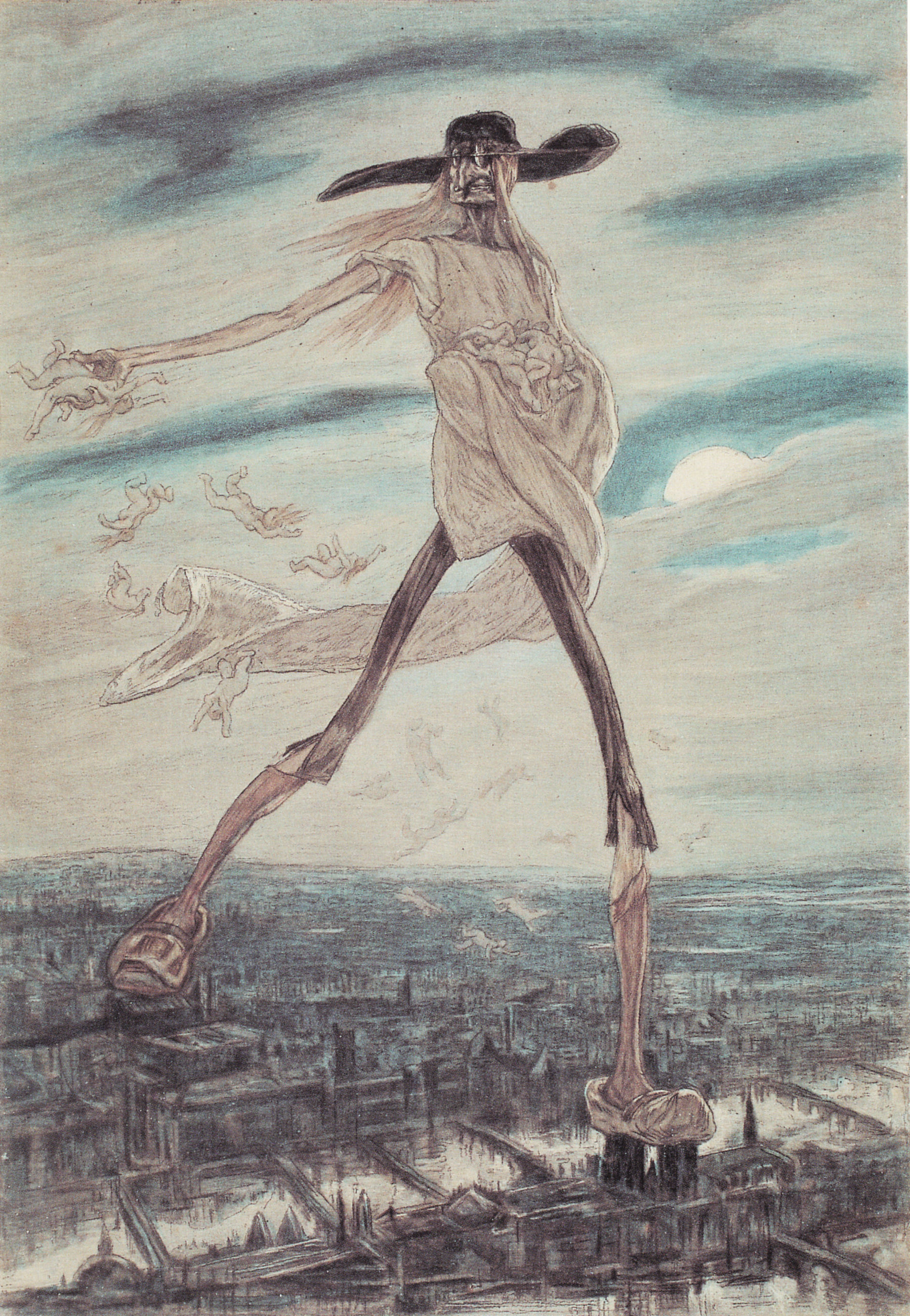
The image is Les Sataniques. Satan semant l’ivraie (The Satanics: Satan Sowing Tares) by Félicien Rops – photo by Hans Joachim Neyer (Hrsg.): Felicien Rops. 1833 – 1898. Katalog der Ausstellung im Wilhelm-Busch-Museum Hannover 17. Januar bis 21. März 1999. Hatje, Ostfildern 1999, ISBN 3-7757-0821-9, Abb. 61, Public Domain, https://commons.wikimedia.org/w/index.php?curid=12525528.

A Well of Water

“Cast out this slave woman with her son; for the son of this slave woman shall not inherit along with my son Isaac.” – Genesis 21:10

O God who values children, how could You
applaud this hideous, this (dare I say it)
visibly unholy plan to send a mother and
a child out to die near Beer Sheba,
and of all places, this the Well
of Seven, this the Well of Oaths.

What of the oath a parent makes to child
when he is born? What of the oath a mistress
lays upon herself when making one a slave?
What of the oath a man should owe
to one with whom he has conceived a child?
What of the oaths pure decency demands?

Instead an oath to Sarah’s son is paramount.
Instead You credit Sarah’s oath to see her son
to elevation. Instead You make another oath
to make another nation from another child.
Could not You value these two lives
for Ishmael’s life, for Hagar’s life itself?

I’d like to judge You, God, but I cannot.
I’ve wondered if, like Hagar, I could bear
to see my child’s life come to its end.
I’ve tried to comfort those whose children
died and known that mine had not.
If anyone can judge You, it is they.

In humble, grateful, timid words
I offer you a whispered thanks,
for when the harshest wilderness
was all I saw and knew, I found
beyond all hope and bitter fear,
You’d dug a well of water.

A poem/prayer based on Genesis 21:8-21, the Revised Common Lectionary First Reading for Year A, Proper 7 (12).

The image is Hagar and Ishmael by George Hitchcock – Hindman Auctions, Chicago, Public Domain, https://commons.wikimedia.org/w/index.php?curid=90805891.

To the SBC

Mary Magdalene went and announced to the disciples, “I have seen the Lord…” – John 20:18

Christ’s first messenger to those
he called as messengers was Mary.
Mary Magdalene. His friend.
She traveled with him on his road.

“Apostle to apostles,”
she’s been called, though they,
it must be said, did not believe.
But she was right and they were wrong.

So, those who now decide
to set aside the witness of
their sisters, you would mute
the Magdalene

As if you’d set your course
into a desert wasteland,
and there deprive yourselves
of water.

A poem written in response to votes at the Southern Baptist Convention’s annual meeting on June 14, 2023, to ban women from pastoral roles and remove churches led by women from the denomination’s rolls.

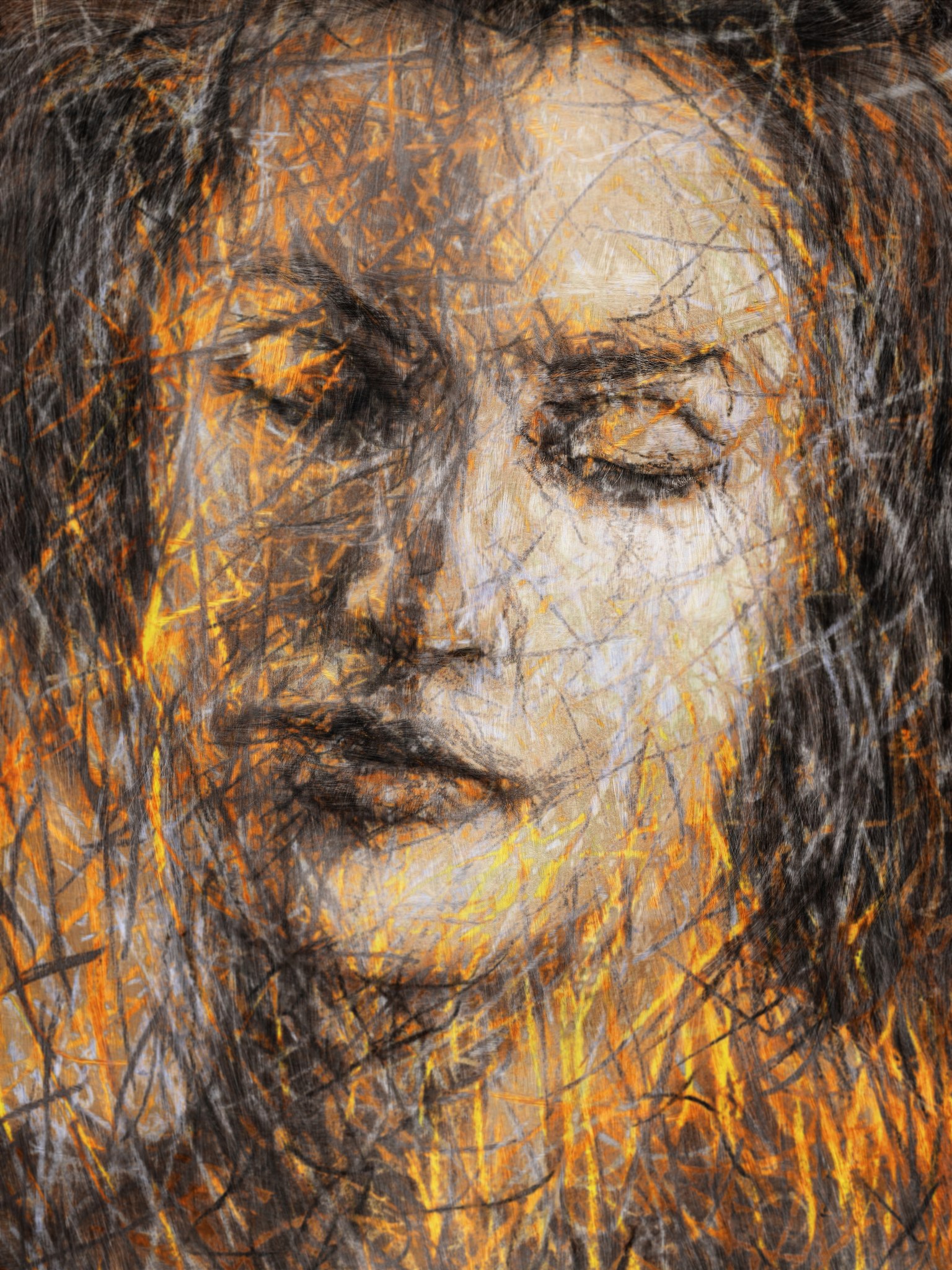
The image is Mary Magdalene, a Profoundism work by Koorosh Orooj – http://profoundism.com/free_licenses.html, http://profoundism.com/free_licenses_mary_magdalene.html, CC BY-SA 4.0, https://commons.wikimedia.org/w/index.php?curid=108033456.

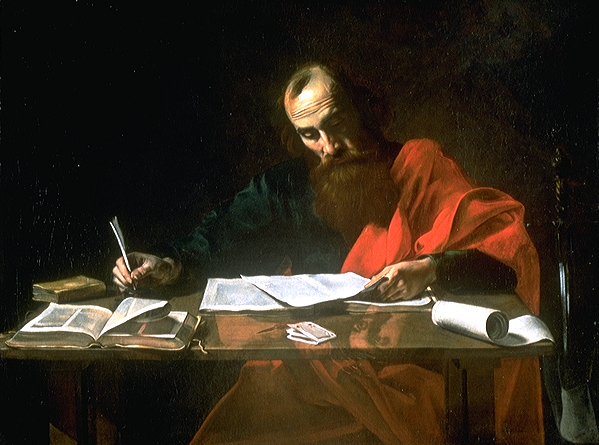
Stop Talking, Paul

“And not only that, but we also boast in our afflictions, knowing that affliction produces endurance, and endurance produces character, and character produces hope, and hope does not put us to shame, because God’s love has been poured into our hearts through the Holy Spirit that has been given to us.” – Romans 5:3-5

Stop talking, Paul.
You had me there at
“We have peace with God.”
That’s good. That’s great.
That’s all I want (or need?)
to hear. Stop there.

You can’t just stop
there, can you?

“We boast in our afflictions” –
but complaining isn’t boasting.
“Affliction produces endurance” –
unless it kills your spirit, Paul.
“Endurance produces character” –
it also fosters hubris.
“Character produces hope” –
is hope the same as resignation?
“And hope does not put us to shame” –
well, Paul, I’m with you there,
as long as you do not expect me
to assume I’ll get just what I hope for.

You can’t stop talking, can you?

Still, I’m grateful that you looped
back round again to God’s salvation.
We’re reconciled by Christ’s gift of self.
We’re saved because we share Christ’s life.

But now, be still – not Paul, but me.
If Tarsus’ famous correspondent can run on,
the same is true of those of us less known.
Stop, Eric, for we’ve made the crucial point:

We have peace with God.

Skip Lightly

As Jesus was walking along, he saw… (Matthew 9:9)
And as he sat at dinner in the house… (Matthew 9:10)
While he was saying these things to them, suddenly… (Matthew 9:18)
Then suddenly a woman… (Matthew 9:20)
When Jesus came to the leader’s house… (Matthew 9:23)

Skip lightly, Jesus, skip lightly.
Just a pause at the table, just a quick word.
Look how he rises to follow your call!
How lightly his step echoes yours.

Skip lightly, Jesus, skip lightly.
Your words will dance at the table with all.
“Why eat with these people? They know that they need me.
They know I am with them, God’s mercy bestowed.”

Skip lightly, Jesus, skip lightly.
A father arrives; he has fear in his eyes.
“Skip quickly, Jesus, or my daughter dies.”
The dishes, untasted, rest cooling behind.

Skip lightly, Jesus, skip lightly,
as need reaches out for your power to heal.
Stop quickly, Jesus, stop and assure her
her body, renewed, can flourish again.

Skip lightly, Jesus, skip lightly.
Death has come quicker than your skipping feet,
but Death cannot hold what you have raised up,
and the little one joins in the dance.

Skip lightly, Jesus, skip lightly.
From outcast to souls disregarded,
from parent to patient to mourners and on
for a moment, skip lightly with me.

Skip lightly, Jesus, skip lightly.
I cannot hold you to my place and time.
Teach me the skipping, the light-footed step,
that carried your grace to each person’s need.

A poem/prayer based on Matthew 9:9-13, 18-26, the Revised Common Lectionary Gospel Reading for Year A, Proper 5 (10).

The image (which includes the healing of the woman as well as the resurrection of the daughter) comes from the Phillip Medhurst Collection of Bible illustrations in the possession of Revd. Philip De Vere at St. George’s Court, Kidderminster, England. Photo by Philip De Vere – Own work, CC BY-SA 3.0, https://commons.wikimedia.org/w/index.php?curid=44393013.

It was Good

“God saw everything that he had made, and indeed, it was very good.” – Genesis 1:31

Well, God, what is good?
Hold on, I’ll see.

When Earth was a chaotic void
amidst a formless universe,
You made the light, and see!
You called it good.

When sky and planet took their shapes
and water rolled alone,
You raised the land and blessed the sea.
You called it good.

When land and ocean bore no life
You whispered to the sands and rocks.
They sprouted greens and reds and blues.
You called it good.

When light was general, You rolled
its radiance into the burning stars,
and gentled night with moonbeams.
You called it good.

When Earth was green but silent
You scattered creatures in the sea and air,
from ocean’s depth to dizzying heights.
You called it good.

When land remained bereft of creatures You
supplied the lack of things that crawl or run.
They slithered and they leapt from pole to pole.
You called it good.

Then You considered all this life
and made anew a pair like You,
created in Your image, and you blessed them.
You called it good.

From tiniest seed to leaf-crowned stem,
from drifting plankton to leviathan,
from wren to soaring albatross,
from smallest ant to elephant,

From woman on to mahu and to man,
from skin of ebony to cinnamon to tan,
from farthest north to deepest south,
from those who speak a myriad of tongues,

You called it good. You called them good.
You called us good. You called Creation good.
And we in foolish bravery would contradict
Your words, and claim that “those” do not deserve our care,

When You declared them good.

A poem/prayer based on Genesis 1:1-2:4a, the Revised Common Lectionary First Reading for Year A, Trinity Sunday.

Photo by Eric Anderson.

Are They Prophets, Too?

“And a young man ran and told Moses, ‘Eldad and Medad are prophesying in the camp.'” – Numbers 11:27

“But others sneered and said, ‘They are filled with new wine.'” – Acts 2:13

Oh, what we would not give for prophecy with order.
These seventy we know.
These two we will ignore.
Oh, what we would not give for prophecy predictable.
Seventy selected
to tell us what we know.

Your Spirit raises prophets without due regard to order.
We’d all do well with twelve.
We’ve no great need for more.
With twelve we’d know the words before the prophets even voice them,
saving time, so much time
we might have to discern.

Why is the Spirit’s call so destructive of our order?
We know our daily ways.
We follow our set hours
Until a strident voice, just like the nails upon a blackboard
unsettles our assurance
and overturns our peace.

Oh, have your own way, Spirit, in the wreckage of our order.
They’ll call us drunk, you know,
Or they’ll run and tattletale.
With Moses, Peter, Matthias, we’ll join the Spirit’s order
alongside Eldad, Mary, Justus,
Medad – and Mary, too.

A poem/prayer based on Acts 2:1-21 and Numbers 11:24-30, the Revised Common Lectionary First Reading and Alternate First Reading for Year A, Pentecost Sunday.

The image is Moses Elects the Council of Seventy Elders by Jacob de Wit (1737) – AQGtI5P6nkpYyw at Google Cultural Institute maximum zoom level, Public Domain, https://commons.wikimedia.org/w/index.php?curid=21988106.

This lectionprayer gets a lot of inspiration from Maren Tirabassi’s Blessing the Dice and Barbara Messner’s Variations on Pentecost.