Not Now. Not Now.

“When the wine gave out, the mother of Jesus said to him, ‘They have no wine.’ And Jesus said to her, ‘Woman, what concern is that to you and to me?'” – John 2:3-4

Oh, no. Don’t even. Don’t even think it.

I can see the whispers at the table.
I see indignant looks into the cups.
The arms would like to strain to carry them, and…
they don’t.

Now here comes mother. Surely not.
I’m just here to relax, to raise a glass
(now lighter) in honor of this day,
and pray a silent special prayer for them.

I did not come to play the host
reliable in lieu of host incompetent.
And really? Is it such an awful thing
the wine is gone? Just look! They’ve had enough.

They’ve had enough and more, you know,
because they’ve drunk the good,
the mediocre, and the bad to drain
these wineskins dry. There’s wine aplenty: all in them.

So, call me grumpy Jesus if you like.
It’s just three days since dripping
I arose to dove’s descent and prophet’s roar.
Not now, I say. I need a moment’s peace.

We came here, you and I, accompanied
by strangers (Was it they who drank the wine?
Well, by their smiles, they drank enough)
who say that they will follow me for wisdom and for life.

So what have I to do with them?
And what have I to do with this?
And what have I to do with you?
And what have I to do with anything at all?

Not now. Not now. Not now.

“His mother said to the servants, ‘Do whatever he tells you.'” – John 2:5

All right. Just… right. Just grab some buckets there
and fill those jars. Yes, those, The biggest ones.
All six. I hope they’ve got some water in them
or this part will take all day.

They’re filled? All right. Now dip
a pitcher in, and tell the steward that
there’s wine to serve again, and plenty
for the day to run into the night.

And woman – mother – can I have the time
I need to ask and answer who I am,
John’s “Lamb of God”? I swear by all that’s holy,
if I do not get that time, I will…

I will…

Well. Let’s just say that tables are gonna fly.

A poem/prayer based on John 2:1-11, the Revised Common Lectionary Gospel Reading for Year C, Second Sunday after the Epiphany.

The image is The Wedding at Cana by Giuseppe Maria Crespi (ca. 1686) – https://www.artic.edu/artworks/2166, Public Domain, https://commons.wikimedia.org/w/index.php?curid=74197382.

Epiphany 2022

“When King Herod heard this, he was frightened, and all Jerusalem with him…” – Matthew 2:3

One year since some deluded,
some deluding, some misinformed,
some misanthropic stormed
the halls of Congress, to retain
a would-be Herod on his throne,

Revealing in an afternoon of rage
the violence they credited to others,
the hollowness of civic virtues
claimed, the eagerness to claim
the lie as truth, to curse the truth.

The rising of tide of wrath withdrew
as evening – came in face of force –
so legislators came once more to count
the votes, and as they did, the injured
sought relief, the grieving comfort.

King Herod missed his mark. The child
he sought escaped, though wailing rose
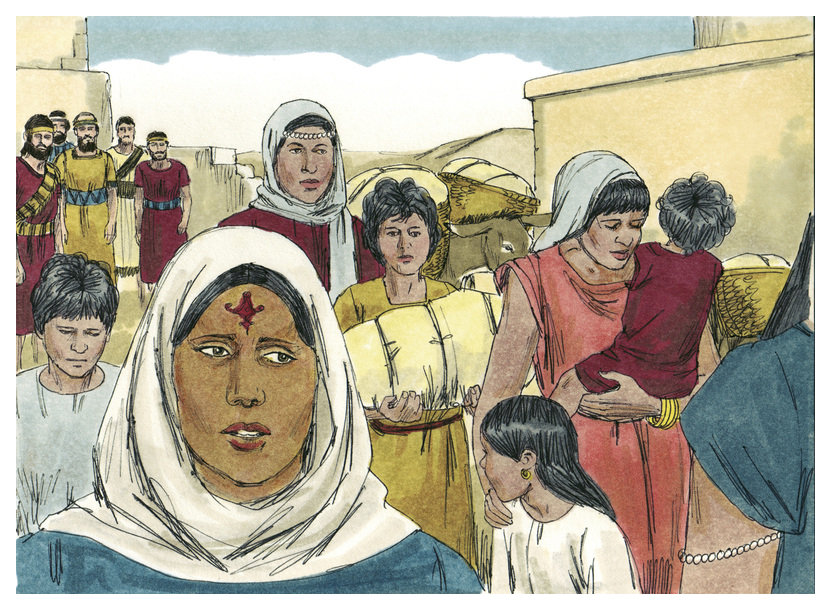
in Ramah where Rachel wept uncomforted.
His rising tide of wrath withdrew
though unfulfilled, without success.

Would Herod be assured to know his work
was finished near Jerusalem’s height
by Pontius Pilate after thirty years
had passed? Did his corpse-teeth grin
to hear the soft moan, “It is finished”?

Is our Epiphany to be
that Herods rise, and Pilates rise,
as tides of poison circling the globe?
Oh, might see once more the One beset
by violence, who died, indeed – and rose.

A poem/prayer based on Matthew 2:1-12, the Revised Common Lectionary Gospel Reading for Year C, Epiphany of the Lord.

Photo by Eric Anderson.

Bath of New Direction

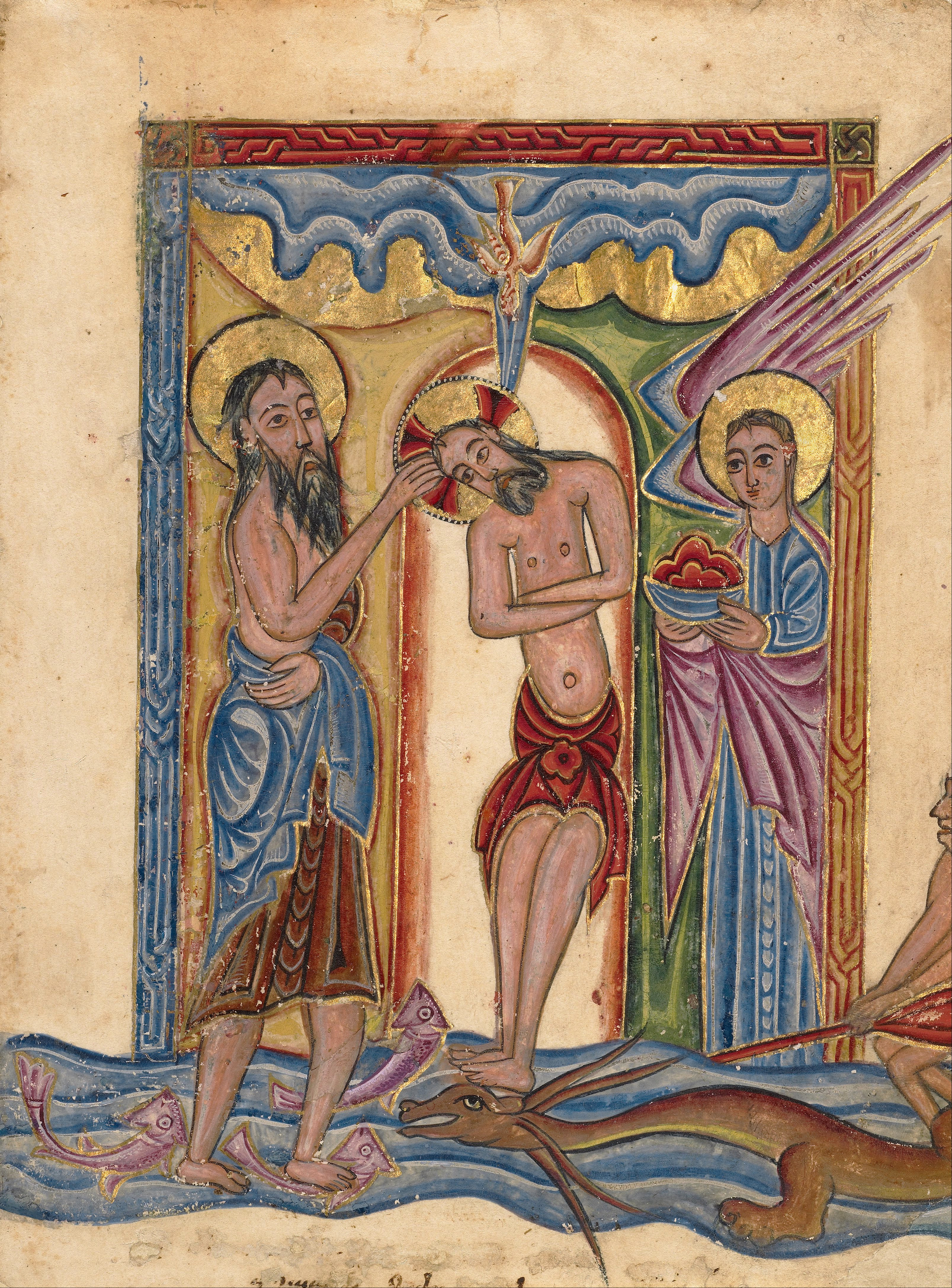
“Now when all the people were baptized, and when Jesus also had been baptized and was praying…” – Luke 3:21

Rise from the water,
streaming droplets
patter in the stream.

Dust of travel swirls
in ochre ribbons
carried in the current.

Shivers in the sun
from unseen water
leaping from the skin.

Toes gripping at the mud,
legs straining at the bank,
emerging with a tiny slip.

Though newly washed,
the feet once more
wear soil on their soles:

The river silt,
the muddy bank,
the wind-blown dust.

Within a heartbeat
gritty sand alights,
defying wash and washer.

The tunic settles on
the dampened, dirt-streaked
skin, applying sediment anew.

A moment and the bather
is no longer clean, and
we wonder at the bathing’s purpose,

For what repentance
did the bather bring,
and what forgiveness need?

But look: the newly washed
re-sandaled takes another way,
into the wilderness.

A baptism of cleaning?
Not so much. But of direction?
Jesus chose the blessed way.

A poem/prayer based on Luke 3:15-17, 21-22, the Revised Common Lectionary Gospel Reading for Year C, First Sunday after the Epiphany, the Baptism of Christ.

The image is Baptism of Christ by Mesrop of Khizan, active 1605-1651. Image from Art in the Christian Tradition, a project of the Vanderbilt Divinity Library, Nashville, TN. https://diglib.library.vanderbilt.edu/act-imagelink.pl?RC=56064 [retrieved January 5, 2022]. Original source: https://commons.m.wikimedia.org/wiki/File:Mesrop_of_Khizan_(Armenian,_active_1605_-_1651)_-_The_Baptism_of_Christ_-_Google_Art_Project.jpg.

Star-Creator

“In the beginning was the Word, and the Word was with God, and the Word was God.” – John 1:1

“For we observed his star at its rising…” – Matthew 2:2

Star-Creator discovered beneath a star,
Planet-Former found over the curve of Earth,
Human-Shaper nurtured in the womb of Mary,
All-Embracer wrapped in mother’s tears:

Shine upon us.

Monarch-Ruler fleeing from a king,
Word-Incarnate lacking human speech,
Life-Light needing one to testify,
All-Knowing yet unknown:

Shine upon us.

Spirit-Eternal in human flesh,
Glory-Unbounded with a weary face,
Life-Everlasting corpse upon a cross,
Love-Transcendent unrecognized in a garden:

Shine upon us.

A poem/prayer based on John 1:1-18, the Revised Common Lectionary Gospel Reading for Year C, Second Sunday after Christmas, and Matthew 2:1-12, the RCL Gospel Reading for Epiphany.

Photo by Eric Anderson.

Where on Earth?

After three days they found him in the temple, sitting among the teachers, listening to them and asking them questions. And all who heard him were amazed at his understanding and his answers. When his parents saw him they were astonished; and his mother said to him, “Child, why have you treated us like this? Look, your father and I have been searching for you in great anxiety.” – Luke 2:46-48

One day lost. He’s with Uncle. Or Auntie’s taken charge.

Two days lost. One day outward, one day back,
and no way to decrease the time. Messengers
from Marathon we’re not.

Three days now. Scour the inn, the streets
around the inn, the streets around the streets.
“Come child, have you seen my child today?
Or yesterday? Come child, speak quickly now!
If you do not, I must find one who knows.”

“He wouldn’t, would he?” “Oh, I think he would.”
The Temple. Right. Of all the places. Yes, he would.
Too tired to race, we clamber up the rising streets,
to gain the shadow of the outer courts,
the bustle of the moneychangers, cooing of
the doves, the lowing from the cattle stalls.

Around a corner, round a corner, take this bend.
We’d ask a guard, but visitors from Galilee
might get an answer from a backhand slap,
or worse, we’d get our son arrested.

The teachers and the scribes assemble in
these knots of deep discussion, picking at
the tangle of the faithful life, unbraiding it
to see if might be new woven into
tapestry, or if we make new knots
unweaving what was woven once.

Ah, there! We hear the piping voice, not
a grey-capped head, but a headstrong boy.
We stride, relieved, but fear’s receding wave
has left revealed parental wrath.
“Now, child,” (don’t jostle the Great Men)
“How could you do this thing to us?”

And he, still thinking like a scholar and a scribe,
returns a question to the question –
a tactic he will anger many people with some day –
“Where did you think I’d be but in my Father’s house?”

Quick glances pass between us, with a common thought,
a memory of angel’s promises,
of ragged shepherds claiming to have heard a song,
and marveling to this child in his feeding trough,
a memory of aged sages praising him
in this same temple all those years ago.

Well. First, we thought he’d be with us.
And then we thought he’d be with relatives
who’d come with us to celebrate the Passover.
And then we thought he’d still be at the inn
where we had stayed, or with the children of
the neighborhood, or not too far away.

And, child, if you ask, “Where would I be
but in my Father’s house?” then I shall ask
(and see, you’re not the only one
to answer questions with a question), “Son,
what is your Father’s house? Does God
live in this Temple, shining though it does,
with prayers and incense rising in the air?
Oh, no, your Father’s house is wider than
the world. Your parents find no clue
to finding you by knowing you are in
‘your Father’s house.'”

But we are too distressed with fading fear
and overwhelming joy to say such things.
We murmur “Thank you,” to the smiling scribes
and gather up our budding scholar in
our arms. Once more we’ll take the road
to Nazareth and home, and treasure what
we’ve heard within our hearts.

A poem/prayer based on Luke 2:41-52, the Revised Common Lectionary Gospel Reading for Year C, First Sunday after Christmas.

The image is Jesus retrouvé dans le temple (Jesus Found in the Temple) by James Tissot (between 1886 & 1894) – Online Collection of Brooklyn Museum; Photo: Brooklyn Museum, 2007, 00.159.41_PS2.jpg, Public Domain, https://commons.wikimedia.org/w/index.php?curid=10195808.

Christmas Eve 2021

Such fear upon that blessed night:

The fear of Joseph, who had failed
to find a shelter proper for the birth.

The fear of Mary, who had never birthed
a child before, nor known her body to take charge.

The fear of neighbors, who awoke
to sounds of labor echoing.

The fear of stable owner, wondering
if father’s stormy brow meant violence.

The fear of midwife, all experienced
with healthy births – and infant deaths.

The fear of all, when mother’s screams
went silent, and the universe was hushed.

The fear of mother, marveling to hold
a newborn who would not be comforted.

The fear of angels, asking if a band
of shepherds was their audience.

The fear of shepherds, so the messenger
said first, “O do not be afraid.”

The fear of singers in the heavens’ choir,
lest heaven’s song lack harmony.

The fear of watchmen at the gate,
confronted by the shepherd band.

The fear of seekers for the infant Christ,
uncertain where to find the stable bed.

The fear of parents, shocked to see
the hillsides’ wanderers had come.

The fear of parents, hearing angels’ words,
which would the fear of monarchs generate.

The fear of monarchs, which would bring
no celebration, only tears like rain.

The fear of sleeping child. Who can know
what infants know? And who can say
what infant Jesus knew of dusty days
and stormy seas and quiet conversations
by the water’s edge, of questions over meals
and by a paralytic’s cot and in the shadows of
the night, of lepers leaping thanks unspoken
save for one, of baptism and Satan’s snares
and stories told and proverbs taught
and so much more, and so much more,
all leading to an agonizing cross
and to a tear-swept joyful dawn.

A poem/prayer based on Luke 2:1-20, the Revised Common Lectionary Gospel Reading for Year C, Nativity of the Lord, Proper I.

The image is The Adoration of the Shepherds (ca. 1612-1614) by El Greco, 1541?-1614, from Art in the Christian Tradition, a project of the Vanderbilt Divinity Library, Nashville, TN. https://diglib.library.vanderbilt.edu/act-imagelink.pl?RC=48042 [retrieved December 24, 2021]. Public Domain. Original source: https://commons.wikimedia.org/wiki/File:El_Greco_002.jpg.

In Those Days

In those days Mary set out and went with haste to a Judean town in the hill country, where she entered the house of Zechariah and greeted Elizabeth. – Luke 1:39-40

In those days, Luke? Say rather:
“After her imagined life had been upset
by visitation of an angel,
Mary saw the pretenses of life too well,
her friends and loved ones, neighbors, too,
persisting in a sad semblance of ‘normal’
when the love of God was breaking in.

“She fled because her efforts to
acquaint the villagers of Nazareth
with blessing, with deliverance,
were greeted with polite discount,
with blank incomprehension,
silent disbelief, and smirks that smack
of shame and slander.

“She fled because she had no outlet for
the wonder bottled up inside,
no person who would recognize the glory.
Who but one already bearer of
a miracle would comprehend
a miracle before her?

“So in those days she fled. When Mary stood
upon the threshold of Elizabeth, received
a wave of welcome, knew they shared in wonder,
all the pain of others’ disbelief gave way,
and in a flood of tears she praised
magnificent reversal, pride dispersed,
power humbled, humble lifted,
hungry satisfied and wealthy leaving empty.

“For in the shared experience of grace,
they built on love’s foundation,
Mary and Elizabeth, to raise up faith
and hope and joy that others would not see.”

Write that, Luke. It’s what you meant by,
“In those days.”

A poem/prayer based on Luke 1:39-55, the Revised Common Lectionary Gospel Reading for Year C, Fourth Sunday of Advent.

The image is Visit of Mary to Elizabeth by Fr. George Saget, a portion of a larger mural behind the altar of Keur Moussa Abbey in Senegal. Downloaded from Art in the Christian Tradition, a project of the Vanderbilt Divinity Library, Nashville, TN. https://diglib.library.vanderbilt.edu/act-imagelink.pl?RC=56517 [retrieved December 15, 2021]. Digital source photo by Jonas Roux – Flickr [1], CC BY 2.0, https://commons.wikimedia.org/w/index.php?curid=4870110.

Lay It On Us, John

John said to the crowds that came out to be baptized by him, “You brood of vipers! Who warned you to flee from the wrath to come? Bear fruits worthy of repentance.” – Luke 3:7-8a

Lay it on us, John.
We can take it.
Here we are,
this viper’s brood.
Who warned us?
You did.
Here we stand to flee
or rather, to repent.
Lay it on us. What
should be our fruits?

Say what?
To share?
To give an extra coat
to someone who has none?
To feed the hungry
when we’ve eaten what we need?

OK. That’s fine.
It’s not so hard at all.
Now lay it on us, John.
No punches pulled.
We’re good.

Say what?
Collect no more
than what is owed?
Do not defraud
the customer
or client?

I mean, okay, but really?
That’s so simple.
Childish, even.
Lay it on us, John.
Come on.

Say what?
Do not extort
by threats
or accusation?
Live on our wages,
not on bullying?

But that’s too easy, John.
It’s nothing more
than we’ve been taught
from infancy.
Now lay it on us, John.

Say what?
You’ve noticed how
our closets bulge with clothes,
our cabinets with food?

Say what?
You’ve noticed how
we set the prices just
as high we can set?

Say what?
You’ve noticed how
so many threatened people
find so little aid?

No, lay it on us, John.
Ask us for something hard
to do, because…

We’d really rather not
do what is easy.

A poem/prayer based on Luke 3:7-18, the Revised Common Lectionary Gospel Reading for Year C, Third Sunday of Advent.

The image is The Preaching of St. John the Baptist by Rembrandt – Photo is by Sailko, taken on 6 March 2014, Public Domain, https://commons.wikimedia.org/w/index.php?curid=41314190.

Messaging Woes

“n the fifteenth year of the reign of Emperor Tiberius, when Pontius Pilate was governor of Judea, and Herod was ruler of Galilee, and his brother Philip ruler of the region of Ituraea and Trachonitis, and Lysanias ruler of Abilene, during the high priesthood of Annas and Caiaphas, the word of God came to John son of Zechariah in the wilderness.” – Luke 3:1-2

“Excuse me, are you John son of Zechariah?”

“Yes. Why do you ask?”

“I’ve got a delivery for you. Sign here.”

“What is it?”

“It says it is… let’s see… ‘The Word of God.'”

“Oh, no. I’m not accepting that. Take it back.”

“I can’t do that. It says it right here. ‘NO REFUSALS.’ It’s even in all capital letters.”

“What are you talking about? There’s no such thing as small letters in these days. Everything is capital letters.”

“It doesn’t matter. ‘NO REFUSALS.’ You have to accept it.”

“[Grumbling] I might have known this day would come. ‘Miracle baby,’ my parents said. That kind of thing always happens for a reason.”

“There’s an additional message for you here.”

“I suppose that’s marked ‘NO REFUSALS’ as well, huh?”

“I’m afraid it is.”

“Well, read it out. I’ve got my hands full of the Word of God here.”

“Okay. It says… Get yourself a camel’s hair outfit, move to the Jordan valley, and start washing people.”

“What?”

“Yep. That’s what it says. Camel’s hair, Jordan, washing.”

“Do I look like a camel’s hair kind of guy? I’m the son of a priest, for heaven’s sake.”

“Well, shouldn’t the washing and preaching be right up your alley?”

“Not in camel’s hair it’s not. Do you have any idea how much that itches?”

“Yes, which is why I’m not wearing it.”

“Good grief. What am I supposed to eat? Does it mention that?”

“Let’s see… locusts and wild honey.”

“I do not believe this.”

“‘NO REFUSALS.'”

“Right. Well. I guess I’ll look over this Word of God.”

“Sounds like a good idea. Anything else I can get for you before I leave? A thesaurus with synonyms for snake? Means of monarch-mollifying? A Messiah recognition kit? A dancing adolescent?”

“Let’s not get ahead of ourselves.”

Yes, I know the last line is a pun.

Not precisely a poem and not precisely a prayer but still based on Luke 3:1-6, the Gospel lesson for Year C, Second Sunday of Advent.

The image is Landscape Composition: Saint John in the Wilderness by Thomas Cole (1827) – The Athenaeum, Public Domain, https://commons.wikimedia.org/w/index.php?curid=183048.

I Don’t Want to Hear About Fig Trees

Then he told them a parable: “Look at the fig tree and all the trees; as soon as they sprout leaves you can see for yourselves and know that summer is already near. So also, when you see these things taking place, you know that the kingdom of God is near.” – Luke 21:29-31

I don’t give a fig for fig trees, Jesus.
Tell me clearly what the future brings.

I know that changes in the wind forecast
the rain, or sun, or clouds, or stormy blast
that drowns or feeds or shields the fields,
or lays them down in wind-swept rows.

I know that rumblings deep within the ground
presage emergence of the fiery rock
that ravages the things we’ve built
and does what we cannot: make land.

And, yes, I know that human beings have a way
of signaling the things they’ll do.
I mean, sometimes they say it loud and clear
and we, somehow, will not believe.

I even know that when I dare not say myself
the compass point to which I’ll set my course,
I’m pretty sure which ways I will not go,
and that’s a good prediction where I will.

So it’s not ignorance of figs and leaves
or strength of wind or human whim:
it’s weariness, my LORD. The fig may speak;
my spirit is too tired to hear its voice.

A poem/prayer based on Luke 21:25-36, the Revised Common Lectionary Gospel Reading for Year C, First Sunday of Advent.

The image is a Byzantine icon of Jesus as in Mark 11:12–14 – http://revcrystalk.files.wordpress.com/2009/04/miraclesofthelordpa31.jpg, Public Domain, https://commons.wikimedia.org/w/index.php?curid=19042975.