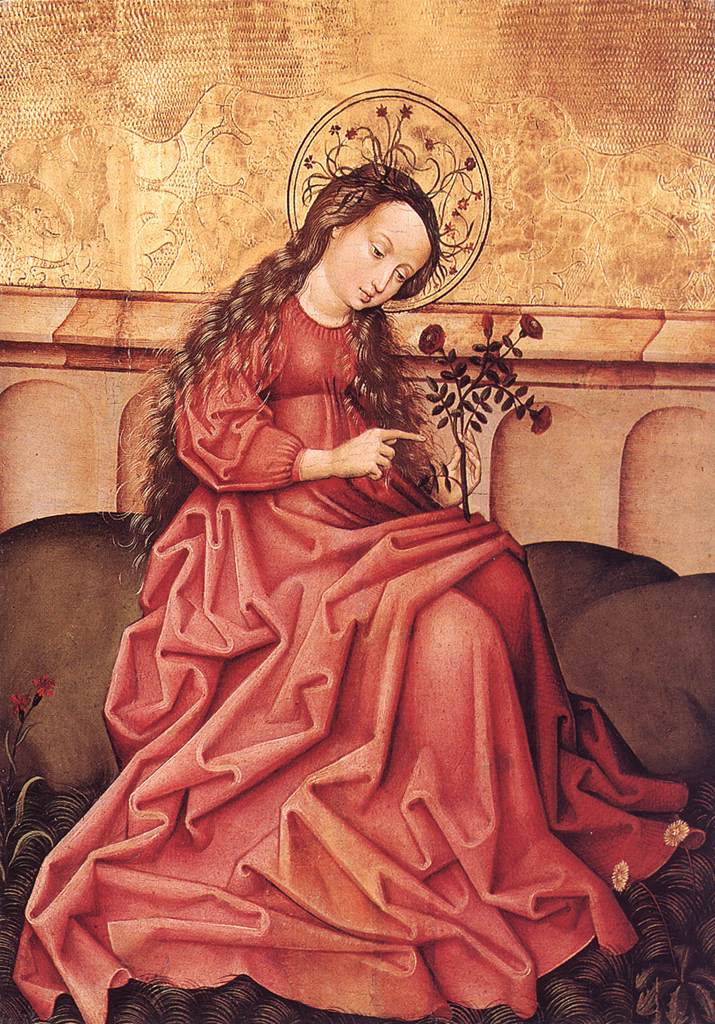
Oil Consumed

[The people said,] “Therefore we also will serve the LORD, for he is our God.” But Joshua said to the people, “You cannot serve the LORD, for he is a holy God.” (Joshua 24:18-19)

[Jesus said,] “The foolish said to the wise, ‘Give us some of your oil, for our lamps are going out.'” (Matthew 25:8)

My faithfulness is… erratic. Let’s get that right.
Strong in speech – sometimes.
Strong in action – well, it’s happened.
Strong in sustained endeavor… Um.

I’m cautious enough to carry extra oil
(batteries, cords, replacement lamps).
I’m aware enough to know the things
of human effort… tend to break.

I’m honest enough to look upon
my own faith practice with not
too much self-flagellation, not
too much contented self-approval.

I’m honest enough to see that as
I answer Joshua’s ageless question,
“Which God will you serve?” I am
likely to respond: “At this moment, me.”

In the next moment, though, I’ll say
with tears, “You have the words of life.
Who else should I follow? Who
to serve?” And then I’ll trim my lamp.

But…

In these days, I find, the lamp
is weighing less and less, the oil
level settling. The lamp still burns,
but for how long, O God? How long?

And where am I to find a store
of oil to replenish what I’ve saved,
and used, and burned? For light
is fleeting, and the night is long.

A poem/prayer based on Joshua 24:1-3a, 14-25 and Matthew 25:1-13, the Revised Common Lectionary First Reading and Gospel Reading for Year A, Proper 27 (32).

Photo by Eric Anderson.

Election Day 2020

Amidst a global pandemic (which some deny),
amidst racist violence (which some discount),
amidst xenophobia (which some applaud),
amidst voter suppression (which some embrace),
we come to express the will of the People, O God.

May there be wisdom.
May there be health.
May there be compassion.
May there be mercy.

May the will of the People be love, O God.

For this I must hope.

The image “hope” by @polsifter is licensed under CC BY 2.0.

Moses’ Seat

To be quite truthful, Jesus:
I cannot really claim to know
just what you meant by “Moses’ seat,”
and what you meant to say about
authority, interpretation of the law,
or representing God. For certain
we have called a host of people “Lord,”
or “Teacher,” “my Professor,” “Mom,” or “Dad.”

Whatever may be true about the Truth
Divine, how cloudy and obscured it is
when heard from human tongues or hands!
Just like a cosmic game of “Telephone”
in which the loss of clarity means life for some
and death for many more. But Jesus, we
have heard your words through intermediaries,
assembled generations after you had taught.

From you to eager followers who did not, I know,
take notes, from them to others who, perhaps,
would write a word or two, to others yet
who finally recorded what they heard on reeds,
on parchment, vellum, paper, with a press,
and on to me today reminding me once more
that greatness is the act of service,
and hubris is just asking to be tumbled into dust.

Once more my memory returns to a great soul,
who truly in her life embodied what you said
was great, whose smile was the mirror of her soul,
who sparked new life in all who saw her,
who heard her words, who knew with her such joy.
I’m sure she was a human, not a plaster saint,
because her passing pains me still, and woe, ye world,
that misappraises pride for what what is truly great.

Facing Faces

God: “…but my face shall not be seen.” (Exodus 33:23c)

Jesus: “Whose head is this…?” (Matthew 22:20b)

Faces clattering as coins descend
to bounce and roll across the counter;
faces whispering as fingers count
the bills, exchanging paper for some goods.

Faces flicker on the screen, three up
and three across to form a game
or set the stage for stories, echoed now
in tiny screens within a telephone.

Faces sheltered in the swaddling cloth
of masks, reducing by some meaningful
amount the risk of illness and of death
to me , to you, to those we love.

Faces twisted now by scorn and rage,
by privilege and power and by pique,
faces streaked with tears as faces
lacking breath are given to the earth.

Faces sighing from exhausting toil,
faces bright with gratitude for love,
faces furrowed with confusion,
faces that conceal the hearts within.

Each day I face the faces, Holy One
(if just the one that gazes from the glass),
and every day I long for one bright face,
O God, the one I cannot see and live.

Some day.

Some day.

A poem/prayer based on Exodus 32:12-23, the Revised Common Lectionary First Reading and Matthew 22:15-22, the Gospel Reading for Year A, Proper 24 (29).

The image is a denarius from the reign of Emperor Tiberius. Photographed by: York Museums Trust Staff – This file has been provided by York Museums Trust as part of a GLAMwiki partnership. This tag does not indicate the copyright status of the attached work. A normal copyright tag is still required. See Commons:Licensing., CC BY-SA 4.0, https://commons.wikimedia.org/w/index.php?curid=48143736.

If Only I Weren’t Distracted

Finally, beloved, whatever is true, whatever is honorable,

I used to call them “Squirrel Days,” O Jesus.
Before I moved here to this island without squirrels,
it was my tag for days when concentration
failed, when focus flailed, when even consciousness would fade.

whatever is just, whatever is pure,

It’s funny how the unimportant can assume
such prominence and even over what is right
before me. Who needs the phone to ring or text to buzz
when adolescent disappointments still possess me?

whatever is pleasing, whatever is commendable,

I cannot even concentrate upon the evils, cannot choose
which one is worst, which ones are worse, which ones
are dangerously proximate. Sufficient for this year
are evils, rages, suffering arising in a single day!

if there is any excellence and if there is anything worthy of praise,

Incarcerated children, children still not reunited with their parents,
refugees denied a hearing, tear gas fired at civilians,
a pandemic dismissed despite two hundred thousand graves,
a tax break for the rich and no relief for those now unemployed.

think about these things.

Oh, I’ll try to follow Paul’s advice, dear Jesus, but
I am… somewhat… distracted.

A poem/prayer based on Philippians 4:1-9, the Revised Common Lectionary Second Reading for Year A, Proper 23 (28).

Distracted photo by Eric Anderson.

I Pray for a Miracle

O, God,

I pray for a miracle.

I pray for weary bodies to find strength
and in resilience live beyond a virus.

I pray for souls who lack compassion
to find empathy for suffering.

I pray for those augmenting their own power
to embrace compassion and its sharing.

I pray for those obsessed with their self-image
to be filled with overflowing love.

I pray for those in pain of injury
to be comforted in justice.

I pray for those dismissive of their neighbors
to be startled at the gifts their neighbors share.

I pray, O God, for miracles
to erupt within the human soul.

Keeping Ten… Or Not

“All pay heed! The Lord! The Lord JEHOVAH, has given unto you these fifteen [Moses drops one tablet and it shatters] – Oy.

Ten! Ten Commandments for all to obey!” – Mel Brooks as Moses in History of the World Part I.

If you had given us fifteen commandments, God,
we would have kept them… even worse.

You shall have no other gods before me.

Except for wealth and power. Except for claiming
our self-righteousness. Except for comfort.
Except for what fulfills a moment or a day.

You shall not make for yourself an idol…

Except for units of exchange. Except for statues
celebrating history founded in illusion.
Except for pale-pigmented skin.

You shall not make wrongful use of the name of the LORD your god…

Except to justify oppression. Except to conjure up
Your favor of injustice. Except to claim
that wealth and power, even evil, are Your will.

Remember the sabbath day, and keep it holy.

Except for the essential workers. Except for those
we will not pay a living wage for their six working days.
Except for those at home we do not pay at all.

Honor your father and your mother…

Except for those the stresses of the world overwhelm.
Except for those whose errors are still lesser than their love.
Except for those we choose to lay aside.

You shall not murder.

Except for those we find a threat.
Except for those whose nations we oppose.
Except for those we fear.

You shall not commit adultery.

Except upon intense desire in a moment.
Except upon a disappointment with the spouse. Except
when something better comes along.

You shall not steal.

Except to maximize my profit over others’.
Except to minimize my workers’ compensation.
Except to claim Your work is mine.

You shall not bear false witness against your neighbor.

Except to emphasize my righteousness and power.
Except to render powerless the ones in opposition.
Except to maintain structures of oppression.

You shall not covet…

Except… every damn day.
Every damned day.
Every damnable day.

If you had given us fifteen commandments, God,
we would have kept the other five… even worse.

A poem/prayer based on Exodus 20:1-4, 7-9, 12-20, the Revised Common Lectionary First Reading for Year A, Proper 22 (27).

The photo “Broken stone” by smallcurio is licensed under CC BY 2.0.

Grapes Inherited

Sour grapes – that’s our phrase. “It’s just sour grapes.”
We use it to disguise injustice.
We use it to to discredit injury.
We use it to avoid accountability.
“It’s just sour grapes,” and therefore we
bear no responsibility.

For Jeremiah and Ezekiel, however,
sour grapes were something that passed on,
with parents’ sour sufferings
experienced by children. “As I live,” said God,
“this proverb shall no more be used.”
That’s true – but the proverb’s truth remains.

The child of the refugee is hungry.
The child of the battered woman cries.
The child of the homeless has no home.
The child of the oppressed is marked.
The child of the person of color
wonders when their life will matter.

Will we blame you, O God,
that we reject the refugee, that we
refuse the see the signs of the abuse,
that we permit a child to be homeless,
that we accept oppression and
we give excuses to this violence?

Of course we will.

And you will say, to quote Ezekiel,
who wrote from exile in the shadow
of the walls of Babylon, who knew
disaster from the inside and from out:
“Repent and turn from your transgressions,
or iniquity will be your ruin.”

And so it is.

A poem/prayer based on Ezekiel 18:1-4, 25-32, the Revised Common Lectionary Alternate Reading for Year A, Proper 21 (26).

Icon of the prophet Ezekiel attributed to Terentiy Fomin from Vologda – photo by shakko, Public Domain, https://commons.wikimedia.org/w/index.php?curid=8828814.

And Now: Two Hundred Thousand

How does one even start to grieve
for ten, for twenty, for a hundred?
How does one even start to grieve
when headstones reach a thousand?

How does one even start to grieve
at tens of thousands, fifty thousand,
when the interring earth is flying,
the crematory flames arising?

How does one even start to grieve?
One grieves for one, each one,
a precious human soul, and with
a hand of comfort, weeps.

I Got a… Denarius

When those hired about five o’clock came, each of them received [a denarius] the usual daily wage. – Matthew 20:9

“I got a rock.” – Charlie Brown in It’s the Great Pumpkin, Charlie Brown

Nobody hired us. You could say I didn’t try.
At least, I didn’t try the ones with work.
I promise you I tried the ones that didn’t,
at least the ones who said they didn’t.

Another day of working to find work;
another day of working without pay;
another day of wondering just how
the evening’s meal will come together.

“Why are you standing here so idle all the day?”
“I’ve chased the ones who will not hire
from this end of the marketplace to that.
So now, I stand, because there is no hope for work.”

Or is there?

Now that was just an hour ago. I worked
to pull the weeds and stake the vines,
but to be honest, darkness came too soon
to make much impact on this vineyard.

Darkness came too soon to make much impact
on the emptiness of my larder.
Darkness came too soon for work to be
rewarded with enough to keep our lives.

But look: there in my hand. The owner
of the vineyard has presented me
with a denarius, a coin whose worth
will keep us fed today, perhaps tomorrow.

I run back to the marketplace
for oil and flour, beans and dates.
My family will not believe
the owner’s generosity – I hardly do!

Behind me I hear quarrelling.
I pay no mind if others’ eyes are evil.
My family will eat tonight
because someone was good.

I usually imagine Jesus’ parable from the perspective of the all-day workers, the ones “who have borne the burden of the day and the scorching heat.” For this poem/prayer, I thought I’d choose another point of view.

A poem/prayer based on Matthew 20:1-16, the Revised Common Lectionary Gospel Reading for Year A, Proper 20 (25).

Photo of a denarius by Classical Numismatic Group, Inc. http://www.cngcoins.com, CC BY-SA 3.0, https://commons.wikimedia.org/w/index.php?curid=534248.