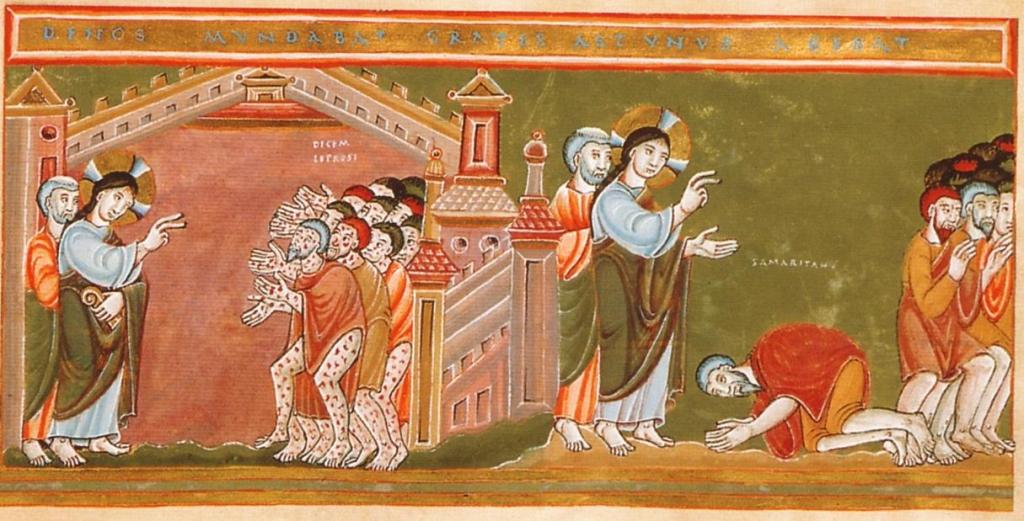
I feel no guilt, Redeemer, that I took You at Your word, and took myself to see the priests, to show Your manifested grace. You spoke. I did. We did. Except for one.
I feel no guilt, Redeemer, that I ran to show the priests the signs that would redeem me to my home, my family, my life. You spoke. I ran. We ran. Except for one.
I feel no guilt, Redeemer, that I chose to follow what You said entirely to the letter. Go. And show. And return home. You spoke. I went. We went. Except for one.
I feel no guilt, Redeemer, for my acts, but in my heart burns my regret I missed the approbation of Your loving smile. I went. I missed. We missed… except for one.
A poem/prayer based on Luke 17:11-19, the Revised Common Lectionary Second reading for Year C, Proper 23.
At one time or another, or many times, in fact, the ones who serve as pastors cry, beset with too much evidence of human triviality,
“Oh, get yourself a real problem!”
And then, we gaze upon the weary brow, the face so thinned by illness that we didn’t recognize the sufferer, and pray, with all our heart, for triviality.
Should I not be like the experienced apostle, offering encouragement to the uncertain youth? Should I not be the one to bless the faithfulness that they received from mother and from grandmother, to summon them to bear the shame and cost?
Should I not be the one to suffer for the gospel as a herald, teacher, and apostle, bearing up despite the shame of disregard, dismissal, and distress? Should I not be the one to offer truth in sound and faithful speech to one and all?
Yet after thirty years, eleven months, and four and twenty days since hands were laid upon me, prayers proclaimed, and I was raised, now set apart, a minister of Christ, my heart still skips a beat to think that God has given power, love, self-discipline…
To me.
A poem/prayer based on 2 Timothy 1:1-14, the Revised Common Lectionary Second reading for Year C, Proper 22.
Photo by Mohamed Rasheed Ahmed, used by permission.
I saw a photo once, a photo of three children. One grinned a happy grin. One wore the neutral look of child before a camera. One’s eyes gazed into my soul.
I saw a photo once, a photo of three children, “And these,” the speaker said, “are children who will be homeless.” Their island home is flanked by rising seas.
I saw a photo once, a photo of three children, and that picture should have been enough, the smile, the uncertainty, the soulful gaze should have stopped us cold.
I saw a photo once, a photo of three children, children whose homes will vanish due to greed, to others’ comfort, and to lies. Their truth overwhelmed in a wave of falsehood.
I saw a photo once, a photo of three children, and I heard the voice of Jesus ask, “How is it that the children of this age are shrewder than the children of the light?”
“I see this photo, too, this photo of three children, and I ask you, people, will you guard the wealth of some and wreck the homes of many? Are you less shrewd than these deceivers?”
I saw a photo once, a photo of three children, children who will lose their homes to lies. And I said to Jesus, “Yes. I am less shrewd.” And wept.
A poem/prayer based on Luke 16:1-13, the Revised Common Lectionary Gospel reading for Year C, Proper 20.
The photo by Mohamed Rasheed Amed was shared by 350.org on their Flickr site under the Creative Commons license BY-NC-SA/2.0.
Search for me, Holy Mother. Search for me. I await your questing fingers, searching eyes. Search for me, Blessed One. I wait.
Oh, how I long to be so sought as by that sweeping, seeking woman! How I long to rest in lostness here. Search for me, Blessed Sister. Here I wait.
For when you find me, Divine Woman, when you find me my rest ends. Then will I, with your other silver discs, reflect your glory with my polished face. Until then: I await.
A poem/prayer based on Luke 15:1-10, the Revised Common Lectionary Gospel reading for Year C, Proper 19.
The image is La Drachma Perdue (The Lost Drachma) by James Tissot, painted between 1886 and 1894 – Online Collection of Brooklyn Museum; Photo: Brooklyn Museum, 2008, 00.159.93_PS2.jpg, Public Domain, https://commons.wikimedia.org/w/index.php?curid=10195929
The vessel he was making of clay was spoiled in the potter’s hand, and he reworked it into another vessel, as seemed good to him. – Jeremiah 18:4
Formerly he was useless to you, but now he is indeed useful both to you and to me. – Philemon 1:11
I can make no excuse for Paul, O God. He knew the story of the Exodus, he knew that you are LORD of people free, and still he sent a man to be a slave.
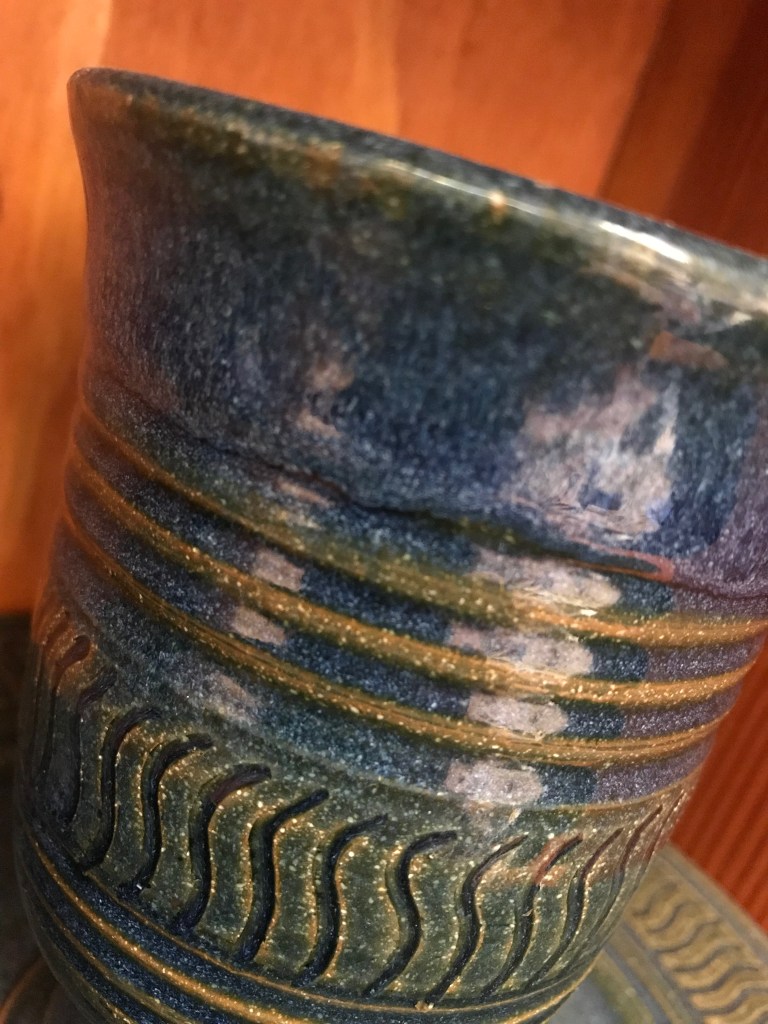
Rework me, LORD, into a useful cup.
He knew, but still he did not know, O God, he did not draw the straight and simple line from Egypt and Mount Sinai to the life of Christ, in whom are no more slave or free.
Rework me, LORD, into a useful cup.
He knew, but still he did not know, O God. And I? What do I know yet do not know? What insights will seem obvious to those in times to come so shrouded still from me?
Rework me, LORD, into a useful cup.
So obvious to me, these lacks in Paul. So obvious to them, the people who will judge my ignorance. So obvious that we should give ourselves to be reshaped.
Rework me, LORD, into a useful cup.
A poem/prayer based on Jeremiah 18:1-11, the Revised Common Lectionary alternate first reading, and on Philemon 1:1-21, the RCL second reading for Year C, Proper 18.
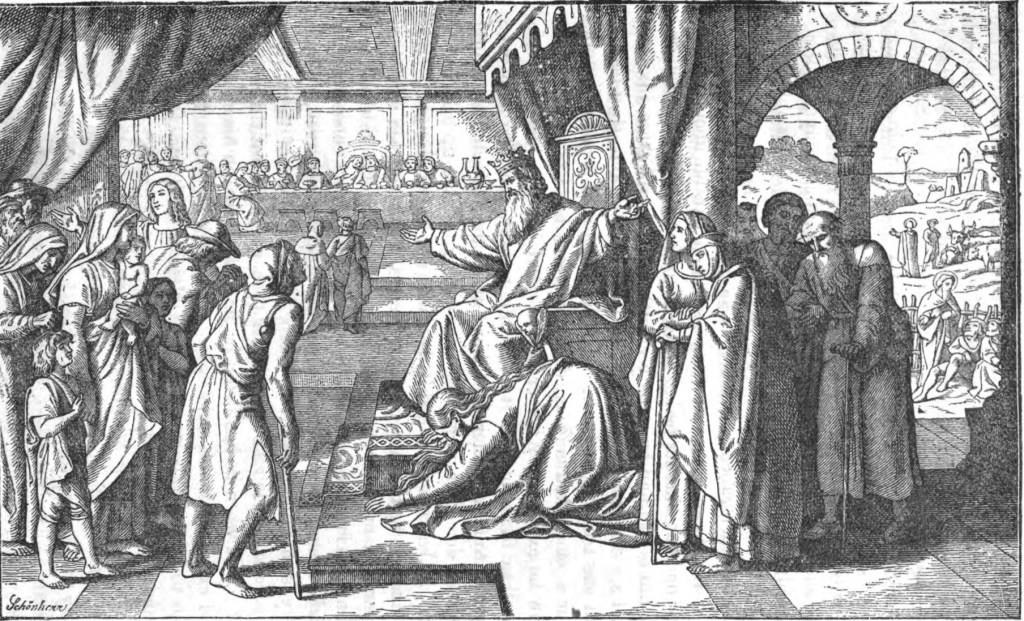
“The poor, the lame, and the blind are called into the supper.”
For once, you’re clear and things are easy, Jesus. Sit in the back, and far away from everyone?
No problem.
Some years ago, and at a wedding feast, I found myself as far away from blaring speakers as I could.
No problem.
But wait… You want me now to throw a party for the poor, the smelly wastrels and the unemployed? Yeah, right.
No problem.
I have a choice of texts. “Don’t work? Don’t eat!” it says as clear as day and night. No party for the lazy ones, say I.
No problem.
And so it goes: I choose the text and means to understand: yet somehow, when I’m done, it works out fine for me.
No problem.
A poem/prayer based on Luke 14:1, 7-14, the Revised Common Lectionary Gospel reading for Year C, Proper 17.
The image is by an unknown artist. It is found in The Story of the Bible from Genesis to Revelation by Charles Foster (Philadelphia, Charles Foster, ca. 1879), Public Domain, https://commons.wikimedia.org/w/index.php?curid=59927089.
When Jesus saw her, he called her over and said, “Woman, you are set free…” – Luke 13:12
Should you not have asked, O Lord? “Without so much as a ‘By your leave?'” as the ex-leper said. “Bloody do-gooder.” Did she want to be healed, O Lord?
Well, I’ll take it as Gospel (did you like the pun there?) that Luke tells it right, and bound she was, straining for freedom.
Loose the mule. Loose the ox. Loose the child. Loose the sea. Loose the woman. Loose the sky. Set them loose! Loose the Creation!
Can today be a Sabbath I can let loose? Can today bring a knot that I might untie? Can today be celebration of liberty? Can today hear the echoes of praise?
A poem/prayer based on Luke 13:10-17, the Revised Common Lectionary Gospel reading for Year C, Proper 16.
The quote in the first stanza is from Monty Python’s Life of Brian (1979), written by Graham Chapman, John Cleese, Terry Gilliam, Eric Idle, Terry Jones, and Michael Palin, directed by Terry Jones.