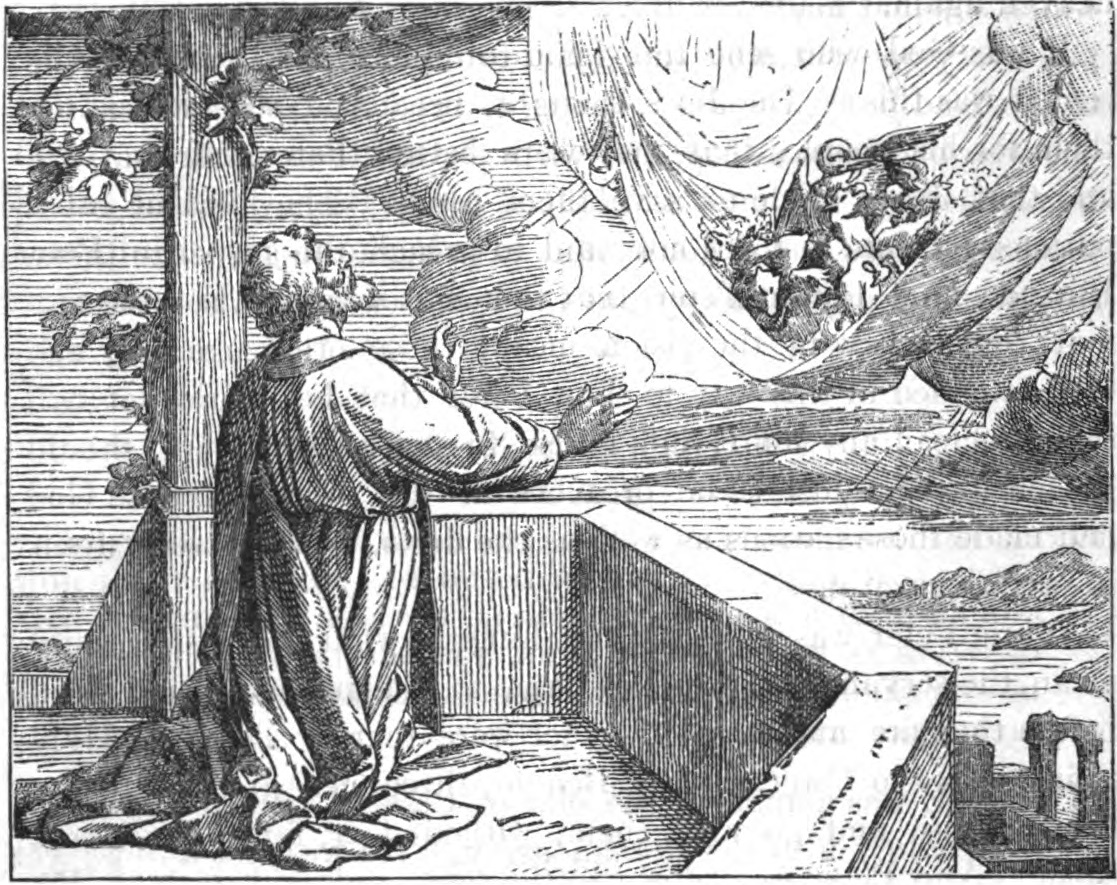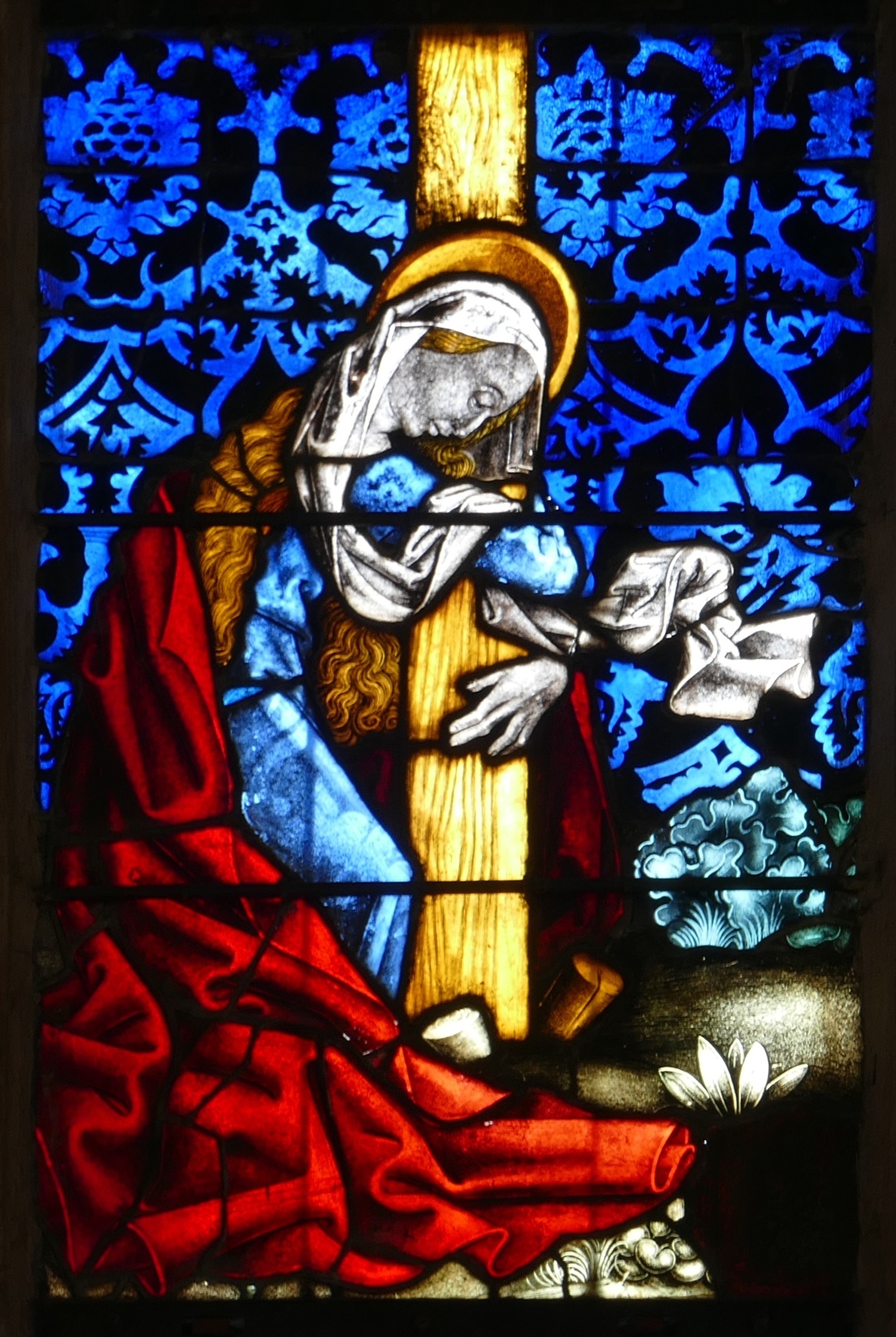
“He made my mouth like a sharp sword, in the shadow of his hand he hid me; he made me a polished arrow, in his quiver he hid me away.” – Isaiah 49:2
Ah, Jerusalem, feel my cutting words! Ah, priests and scribes, feel my penetrating points! Ah, you who stand for God: I wait no longer in the shadow. I speak. I fly.
Step. Step. Step. Step. Along the road. Down the hill. Across the valley. Up the hill. Rest. Repeat.
I never wished for an interesting life.
Led away today, carrying a man.
Step. Step. Step. Step. Along the road.
What’s all the noise? The cloth is nice beneath my hooves, though frankly I don’t care.
Step. Step. Step. Step. Down the hill.
I could walk this route with my eyes shut. I nearly am today. Who wants a palm leaf in the eye?
Step. Step. Step. Step. Across the valley.
I can’t help notice that among the cheering crowd are sour faces, but I frankly don’t much care.
Step. Step. Step. Step. Up the hill.
It’s funny, though. This man does not weigh much, in truth and yet it seems he bears the world upon his shoulders.
Better his than mine, of course.
Step. Step. Step. Step. Rest.
I wonder – who will lead me home again?
The image is Einzug Christi in Jerusalem (1912), by Wilhelm Morgner – The Yorck Project (2002) 10.000 Meisterwerke der Malerei (DVD-ROM), distributed by DIRECTMEDIA Publishing GmbH. ISBN: 3936122202., Public Domain, https://commons.wikimedia.org/w/index.php?curid=155912.
That’s not the shout of “preacher in a panic,” that. Nor is it Jesus’ commentary on a new disciple who, all eager, failed to strip the palm tree of its fronds to deck the road for his approach.
I might imagine, though, the sad and smiling faces of the other gospel writers who, whatever else they may have written right or wrong, included palms upon the road up to the city’s gate.
At least there’s clothes and cloaks to lay beneath the feet of this strange-sought, strange-borrowed colt, who probably could do without the noise and would prefer the eat the absent fronds.
No, Luke, the colt does not awaken my concern, nor do I worry that its burden misses leaf and branch. Instead, imagination balks to think of waving clothes, not palms, upon this Sunday morn.
Oh, yes. Imagination balks.
We’ll wave our palms, dear Luke, not clothes. But really: how could you forget the palms?
A poem/prayer based on Luke 19:28-40 the Revised Common Lectionary Gospel reading for Year C, Sixth Sunday in Lent. In Luke’s account of Palm Sunday, he does not mention any palms.
We gaze into the night and see the stars a-whirl upon the canvas of infinity.
About the stars the planets dance, making their rounds, spinning, gathering heat, reflecting light.
We gaze into the night with our feet firmly planted on sacred stone.
On mountain’s peak we stand on sacred stone. At ocean’s edge we stand on sacred stone.
When rock runs liquid down the slopes and steams into the sea, it is sacred stone.
When weather wears the rock to soil in layers of richness, it is sacred stone.
When loosened by ohi’a’s root, mixed up with life’s decay, it is sacred stone.
A stately galaxy. A star’s vast heat. A planet’s core. Sacred stone.
A bed for flowers. A soaring pali. A mountain sighing. Sacred stone.
We live on sacred stone.
Sacred stone.
I was asked to provide a closing for a meeting of interfaith leaders last night. I said something like this, which I can’t precisely remember, and has become the seed for this poem.
Mary Anoints Jesus by Ilyas Basim Khuri Bazzi Rahib
Jar a-tilting, oil spilling, aroma filling, nostrils widen.
Hair uncovered, tresses flowing, oil clutching to her locks.
Soft voice speaking to her weeping: “Thank you, Mary, for your gift.”
A poem/prayer based on John 12:1-8, the Revised Common Lectionary Gospel reading for Year C, Fifth Sunday in Lent.
Illustration from a 1684 Arabic manuscript of the Gospels, copied in Egypt by Ilyas Basim Khuri Bazzi Rahib (likely a Coptic monk). In the collection of The Walters Art Museum, Baltimore, Md. (on page 51 of the .pdf copy of the document released by the museum under the Creative Commons Attribution-NonCommercial-ShareAlike 3.0 Unported license).
I’ve never worried before, O God, about the younger son’s repentance. I’ve always gratefully assumed he walked the roads of sackcloth and of ashes. What a shock his father’s welcome must have been!
But now… I wonder.
Was he another twister of the truth? Was he another one who turns the world around his little finger? Did Narcissus blush with shame at his temerity, his lies? And did the pounding of his heart betray his gratitude or hidden glee?
And now… I wonder.
In that Great Somewhere, do you wait for me? Do you wonder when I’ll lay aside deceit – delusion sweet for me, unwitting lie to you – and truly bring my starving soul back home? Does the pounding of my heart betray my gratitude or deeply hidden lies?
Yes now… I wonder.
A poem/prayer based on Luke 15:1-3, 11b- 32, the Revised Common Lectionary Gospel reading for Year C, Fourth Sunday in Lent.
Their sins caught up with them, those Galileans, when their blood got mingled with their sacrifices; not to mention, those unspeakably perverse and foolish people crushed by falling blocks when Siloam’s tower fell: Well. I knew it would catch up with them.
No, seriously, Jesus, wait. I’m talking now.
Have you not said that God is just? Have you not said that God is righteous? Have you not said that God will not be mocked? Not even mocked by cracked foundation stones?
No, seriously, Jesus, wait. I’m talking now.
When I’ve been foolish, yes, and sinful, I’ve owned up. I’ve said, “I’m sorry,” even (sometimes) made amends. I’ve done my best (sometimes) to make things right with them and you.
Should not your justice fall on them as well as me?
OK. I’ll wait. You’re talking now.
…
No, seriously, Jesus, are you kidding me? They weren’t egregious sinners? They weren’t different from me? And what? It’s me you summon to repentance?
…
Oh, great. So I’m a fruitless fig tree now? Have you not noticed all this time I spend proclaiming your divinity, your righteousness, your way? And while you’re looking, see where they bear far less fruit that I…
…
Well, no, I know, I’m not exactly perfect…
…
Well, yes, I know, I’ve many things to change…
…
And yes, I know that I’m the only one who really can change me, and yes, I know I really can’t change anyone else but me, but…
No, seriously, Jesus, wait. I ache for this poor broken world, for all this suffering Creation. Why can’t the evil suffer for the ills they bring? Why must the good endure the pain instead?
No, seriously: Why?
Why?
…
All right. In ignorance unblessed, I’ll keep my eye on me.
A poem/prayer based on Luke 13:1-9, the Revised Common Lectionary Gospel reading for Year C, Third Sunday in Lent.
Photo of the And Jesus Wept statue at St. Joseph Roman Catholic Church in Oklahoma City, OK. Photo by Mike Krzeszak; used by permission under Creative Commons license.
Salomé with the Head of John the Baptist by Caravaggio Oil on canvas, 114 x 137 cm, 1606 – 1607
“Go tell that fox for me…”
Are you kidding, Jesus? I’m not telling Herod anything. I know the risks. And if you don’t, might you recall the head of John the Baptist on a platter?
“…’Listen, I am casting out demons and performing cures today and tomorrow…”
That’s great for you, Messiah, but, I’m no messiah (if you hadn’t noticed). I stand by beds of illness impotent, and listen to my breaking heart.
“‘…and on the third day finish my work.”
Ha! That’s a good one, Jesus. Yes, I know the joke, that preachers only work one day a week. Not even I believe I’ll finish – or you’ll finish – in just three.
“‘…Yet today, tomorrow, and the next day I must be on my way.'”
Oh, must you leave so soon? No longer to encourage me to take on earthly powers, summon them to righteousness, decry their foul abuses?
Yes, there you go, into your self-proclaimed three days of labor, leaving me… leaving me… commissioned to confront the Herod of today.
A poem/prayer based on Luke 13:31-35, the Revised Common Lectionary Gospel reading for Year C, Second Sunday in Lent.