There is no fear in love, but perfect love casts out fear; for fear has to do with punishment, and whoever fears has not reached perfection in love. – 1 John 4:18
Fear is not just about punishment, John. Fear is also about being hurt. Fear is about taking a risk. Fear is about the unknown.
I fear punishment, of course. The pain is not just the harsh words, hard tones, spoken to me. I punish myself as well.
I fear as well the hurt that is not punishment, but comes from accident or malice done around me.
I fear to take a risk, of course, because, deserved or not, if risk turns into failure, I will feel the pain.
And I fear the unknown because who knows (I don’t) what dangers lurk for me, what hurts I’ll face and feel?
So John, I know that God is love, rejoice that God loves without fear. I live in love and fear. I fear I am not God.
A poem/prayer based on 1 John 4:7-21, the Revised Common Lectionary Second Reading for Year B, Fifth Sunday of Easter.
“[Peter said,] ‘This Jesus is ‘the stone that was rejected by you, the builders; it has become the cornerstone.'” – Acts 4:11
Your Honor, I am here accused. They say I spoke of resurrection. Yes, I did. They say I said this comes from Jesus, and: I did. They say what you can plainly see. I am no educated scholar, no respected sage, no doctor of the law.
Because of this, they take me up before you as an agitator who disturbs the peace, the truth, the faith, the way, the light. They say I should be silenced, voice unheard, the things I’ve seen forgotten, left untold, until no one remembers anything.
Were I to make a strong defense, I’d tell you that your officers misheard our words, misunderstood what little they had heard. We made no claims like those of which we stand accused. We spoke of resurrected hopes alone, within this man who now can walk.
Alas, I make no strong defense. Instead, I’ll make those claims again for you to hear. In Jesus there is resurrection of the body and of hope, of healing and of joy restored. And neither John nor I can hold our tongues from sharing this great news.
I’m sorry, in a way, that my defense is only to repeat the offense that has brought me here before you in this place. I’m sorry that it grieves you, and I hope beyond imagination, that it moves you to a mercy given, mercy then
received.
A poem/prayer based on Acts 4:5-12, the Revised Common Lectionary First Reading for Year B, Fourth Sunday of Easter.
The image is a part of the Sarcophagus of Marcus Claudianus (ca. 330-335, Palazzo Massimo, Rome): Detail, The Arrest of Peter. Photo by Dick Stracke – Own work, CC BY-SA 3.0, https://commons.wikimedia.org/w/index.php?curid=31956813.
“[Thomas said,] ‘Unless I see the mark of the nails in his hands, and put my finger in the mark of the nails and my hand in his side, I will not believe.'” – John 20:25
So now I, too, demand, O Christ, to see your wounded hands and side, your living skin, as Thomas asked, and I, too, will agree that second-hand report tends toward chagrin. As much as I appreciate the word that blessed are they – am I – those who believe without the gift of sight, the centuries have blurred what they reported. Some try to deceive us, with their testimonies falsified. They do not claim you dead, but kill your way of all-surpassing love. That they deride, your new commandment now they disobey. For centuries we have embraced this strife Instead of taking hold of your new life.
A poem/prayer based on John 20:19-31, the Revised Common Lectionary Gospel Reading for Year B, Second Sunday of Easter.
As an undergrad, I studied stage lighting. Caravaggio’s use of light and shadow taught me a great deal. In this painting, the shadows on Thomas’ bright forehead reveal his stunned astonishment.
“[Jesus] said to them, ‘Go into the village ahead of you, and immediately as you enter it, you will find tied there a colt that has never been ridden; untie it and bring it. If anyone says to you, “Why are you doing this?” just say this, “The Lord needs it and will send it back here immediately.”‘” – Mark 11:2
I was just minding my business, which is: Kicking at cobblestones. It’s what I do. Others may carry the great and exalted or strain to haul carts, but not me. Oh, no.
I kick at the cobblestones. It’s what I do.
Along come these dudes. I’d never seen them or smelled them or known them, so what did they do? They untied the rope that ran from my halter along to the post. I didn’t panic. Or move.
I kicked at the cobblestones. It’s what I do.
Give me a chance, though, idiot dudes, and I’ll kick your cobbles. You know that I will. They fussed at the rope and they petted my nose. I sniffed them for sugar, but they weren’t that smart.
I kicked at the cobblestones. It’s what I do.
A couple of neighbors – I’d seen them before – spoke to the dudes. I paid no attention. I had my afternoon plans good and set. Neither neighbors nor dudes would bollix those up.
I kick at the cobblestones. It’s what I do.
There’s a tug at my halter. Both neighbors and dudes are nodding, and telling me, “Come along now. The Lord needs your services. Step down the road.” I’d have reared or planted my feet, but I went along.
I kicked at the cobblestones. It’s what I do.
Next thing I know there’s cloth piled on me. I thought about kicking it off. It was hot. But then there’s another dude sitting upon me. I braced then to toss him off, placing my feet,
Kicking the cobblestones. It’s what I do.
“A moment,” the dude said, and breathed in my ear, “I need you today,” and his hand brushed my neck. Are you kidding? There are others who’ll carry and haul. They’re not me. I’m my own. I won’t carry at all.
I’ll kick at the cobblestones. It’s what I do.
But my hooves took their steps down the Bethany slope, into the valley, along to the gates. There were people about and they shouted, “Hosanna!” They laid clothing and branches ahead of our way.
They covered the cobblestones – but it’s what I do.
I kicked at the cloth and I kicked at the greens. The dude on my back, well, he chuckled at that. “Kick away, little friend,” came that intimate whisper. “It won’t be too long ’till you’re back home at last.
“And kicking the cobblestones.” It’s what I do.
With anyone else on my back I’d have bolted. The noise and the heat, the dust made me sneeze, the leaves made for treacherous footing beneath, so that kicking made balance a tenuous thing.
When kicking the cobblestones is what I do.
The dude left my back with a softly said, “Thank you.” Two of the dudes stripped the cloaks from my spine. They turned me around to the gates and the valley, and back up the Bethany hill to my home
Where I kicked at the cobblestones. It’s what I do.
A poem/prayer based on Mark 11:1-11, the Revised Common Lectionary Gospel Reading for Year B, Sixth Sunday in Lent, Liturgy of the Palms.
The borrowing of a “colt that has never been ridden” is an odd element in the odd story of Jesus’ serio-comic “triumphant entry” into Jerusalem. Mark gave it twice as much time as he gave to describing the procession itself. The entire project of borrowing an unridden colt begs for disaster: arrest for theft, an animal that refuses to move, Jesus careering through the streets on a bucking colt. I don’t claim to have captured the colt’s perspective in any real way here. Hopefully I’ve given some idea how odd it all was.
The image of a child and a donkey is by a Byzantine mosaicist of the 5th century – The Yorck Project (2002) 10,000 masterpieces of painting (DVD-ROM), distributed by DIRECTMEDIA Publishing GmbH. ISBN: 3936122202., Public Domain, https://commons.wikimedia.org/w/index.php?curid=148600.
But this is the covenant that I will make with the house of Israel after those days, says the LORD: I will put my law within them, and I will write it on their hearts; and I will be their God, and they shall be my people. – Jeremiah 31:33
Of all the promises you’ve made, O God, through human speech of ancient poets, this I wait for most expectantly. Oh when, I ask, will human hearts be oriented to your will?
From Jeremiah’s day to this, I do not see a sudden change in human righteousness. Not even Jesus’ resurrection prompted us to set aside our greedy lust for power,
Our tolerance for prejudice, enshrining it in law that breaks the Law I yearn to feel a-written on my heart. How bright would be the dawn of such a day!
But God, I fear that knowledge of your law within the heart would do no better than to write it on papyrus, paper, wood, or stone. We learn it, and we know it, and we break it.
So did you, have you, written on our hearts, and did we find a way to curtain it away, as centuries of Christians have ignored the Savior’s last command to love?
I tremble that this promise is fulfilled.
A poem/prayer based on Jeremiah 31:31-34, the Revised Common Lectionary First Reading for Year B, Fifth Sunday in Lent.
“And this is the judgment, that the light has come into the world, and people loved darkness rather than light because their deeds were evil.” – John 3:19
Too close to power, Nicodemus, to be unaware of what a savage place the palace, or the council chamber, is.
The finest houses are adorned with “those retired” by the coups and calumnies of those who rule.
Sometimes they’ve stepped across the corpses slaughtered on the battlefields of Munda or the streets of Rome.
By sprays of blood or of dishonor, Caesar’s heirs and Herod’s threaten you, poor Nicodemus, and you know it well.
The light has come into the world by law and prophets’ words, and greed has shrouded it in murder, theft, and royal robes.
So nod, then, Nicodemus, as you ponder on the snake which, lifted up, no longer threatened life but gave it back again.
How strange to find the light at night as Moses’ people found their healing in the very form they feared. So, Nicodemus, nod.
The day approaches when you’ll gaze upon the lifeless form of light, and carry it into the dark, and light will shine once more.
A poem/prayer based on John 3:14-21, the Revised Common Lectionary Second Reading for Year B, Fourth Sunday in Lent.
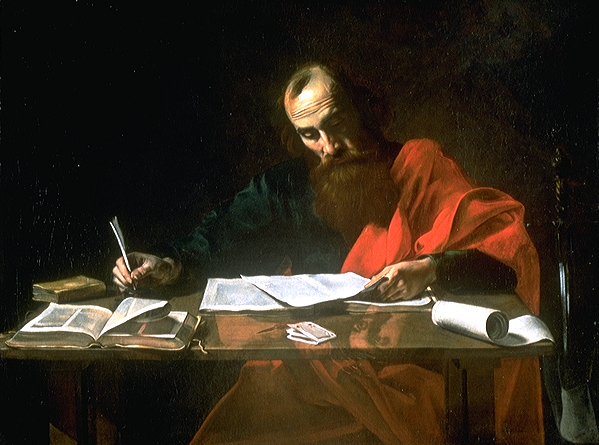
For Jews ask for signs and Greeks desire wisdom,but we proclaim Christ crucified, a stumbling block to Jews and foolishness to gentiles, but to those who are the called, both Jews and Greeks, Christ the power of God and the wisdom of God. – 1 Corinthians 1:22-24
Even Cephas, who when travelling with Christ was always first to say it wrong, agrees: Do not divide the church.
Apollos, now, whom some of you prefer to me, prefer to Christ, agrees: Do not divide the church.
I asked him if he’d come to you, and do you know the words he said? “No.” “I could divide the church.”
If you must give me up to live in Christ, then do it. Give up Cephas, too. Do not divide the church.
I was not crucified for you. My resurrection still is years away. Do not divide the church.
Or else – what follows then? A Church dividing like the fractured bread – Do not divide the church –
But unlike when our Savior broke it on the hillside, who will eat? Do not divide the church.
Across the centuries, I see it. So can you. Love abandoned for these power plays. Do not divide the church.
Or they will follow your example.
A poem/prayer based on 1 Corinthians 1:18-25, the Revised Common Lectionary Second Reading for Year B, Third Sunday in Lent.
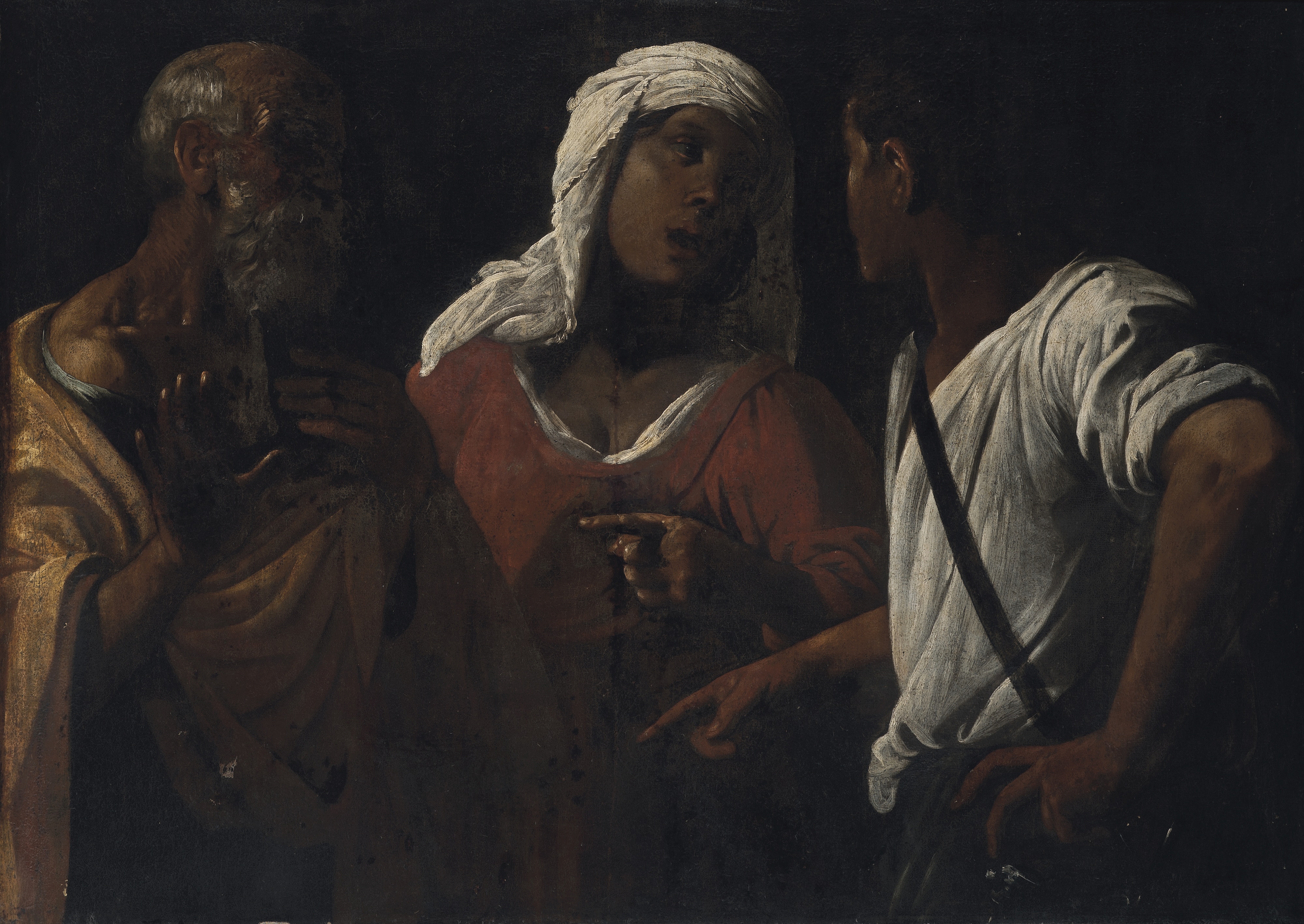
Then he began to teach them that the Son of Man must undergo great suffering and be rejected by the elders, the chief priests, and the scribes and be killed and after three days rise again.He said all this quite openly. And Peter took him aside and began to rebuke him.But turning and looking at his disciples, he rebuked Peter and said, “Get behind me, Satan! For you are setting your mind not on divine things but on human things.” – Mark 8:31-33
Don’t you like it, Simon, when I say that your Messiah is not what you want? Don’t you like it, Simon, when I tell you raising up will be upon a cross?
Of course you don’t, dear Simon. How could anyone be pleased to hear Messiah is no conqueror, no King except to turn the tables over Death.
I told you, but you wouldn’t hear that, Simon. You tell me how I’ll live my life and die my death, and no. That is not yours to settle or define. It’s mine. And God’s.
Ah, Simon Peter, my dear Rock, so hard of head, so transparent of heart, so certain of what must be true, and come to pass, and be:
I chide you hard for this denial now. A night will come when your denials will emerge like clockwork ticking toward the dawn. And then, I will not chide, for you will turn aside
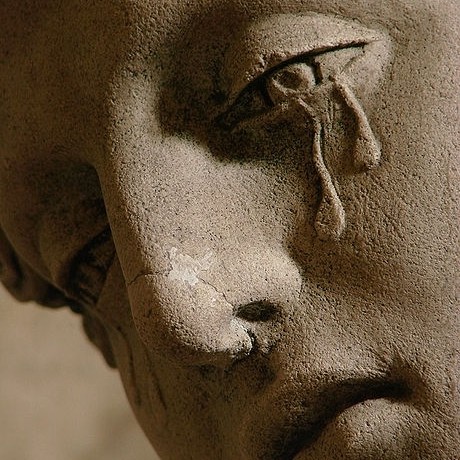
And weep.
A poem/prayer based on Mark 8:31-38, the Revised Common Lectionary Gospel Reading for Year B, Second Sunday in Lent.




 ordainedgeek
