Story: Flight School

April 23, 2023

Acts 2:14a, 36-41
Luke 24:13-35

The myna chick was in flight school.

She’d already been to flight school, but now she was in a different flight school. The first flight school was what you think it is, and her instructors were mostly her parents, with occasional helpful contributions from random mynas near the nest – because a myna has something to say about just about anything – and not-so-helpful contributions from her sisters and brother, who also had plenty to say about her first attempts at flight but they didn’t really know any more about it than she did, and sometimes less.

They were mynas, of course, so they had something to say about it whether they knew anything or not.

She had graduated flight school, however, with flying colors. By which I mean, she could fly.

And now she was in flight school. This one, however, was not about flying. It was about fleeing. The first flight school taught her how to make her way through the air. The second flight school taught her about the things to fly away from.

There were a good number of them. The problem was that she found it all very boring. The instructors would suddenly shriek, “Cat!” and all the students would fly away. Then they’d do it again. And again. It was tiring. And boring.

When everybody was wing-weary and tired, the teachers announced a short break. The students scattered to the trees to rest.

Our myna hadn’t been settled long when some other birds also perched on nearby branches of her tree. She didn’t know much about them. There was a kolea, and a couple of finches and doves, and a yellow-billed cardinal. She was really startled, though, when a very large bird with long white wings and long legs settled near the top of the tree. Nobody else seemed to move, however, so she folded the wings she’d planned to fly away with. Her flight school lessons hadn’t moved on to birds yet.

“Startled, little one?” said a voice from above and behind her.

“Yes,” she said. “I don’t think I’ve seen a bird that large before.”

“Don’t worry,” said the voice. “That’s a cattle egret. They don’t hunt mynas.”

“Are there birds that hunt mynas?” she asked.

“Certainly,” said the voice. “Not a lot, but they do enjoy a tasty bit of myna when they can get it.”

“What birds are those?” she asked, not sure she wanted to know.

“There’s the pueo,” said the voice. “They have very flat faces and big eyes, and they fly really quietly. You want to fly away from those.”

“Anything else?” asked the myna.

“Definitely,” said the voice. “Watch out for the ‘io. It’s got a sharp curved beak, large pointed talons, and big broad wings. It can spot you from high up in the sky.”

“At least it doesn’t roost in trees,” sighed the myna.

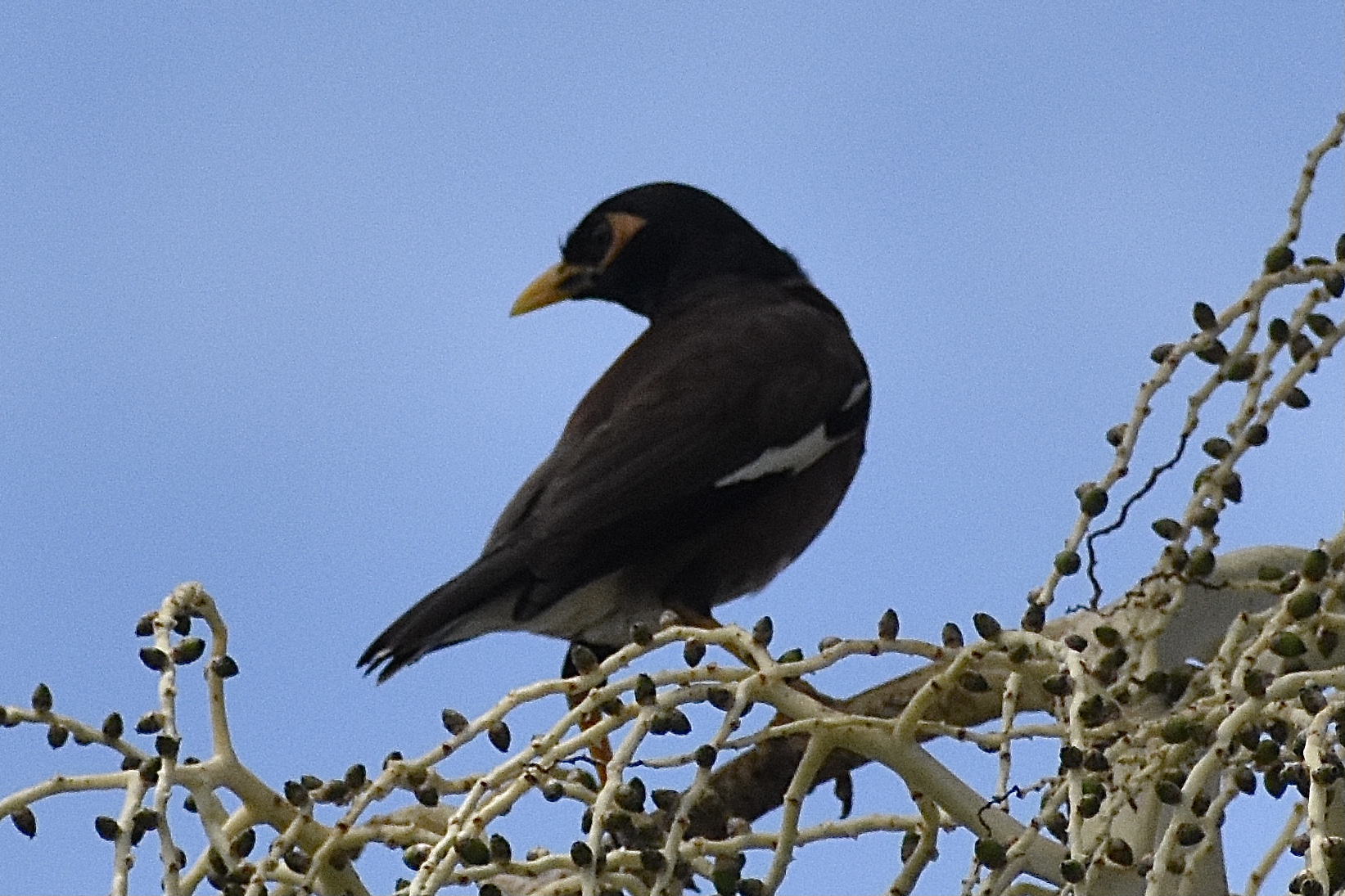
“Who says it doesn’t?” said the voice. The myna turned her head, and saw a larger bird with cream and brown feathers, bright eyes, a curved beak and sharp talons on its great feet. The finches leapt from the tree with a screech of “’Io!” followed by all the other birds – except the ‘io, who didn’t happen to be hungry.

She didn’t find flight school boring after that. She wanted to know everything about identifying the creatures around her – the ones to fly away from and the ones who wouldn’t harm her. She lived her life grateful for an ‘io who would tell her the truth.

by Eric Anderson

Watch the Recorded Story

I tell these stories during worship from my memory of the story as written (that’s the text you’ve just read). My memory is… not photographic.

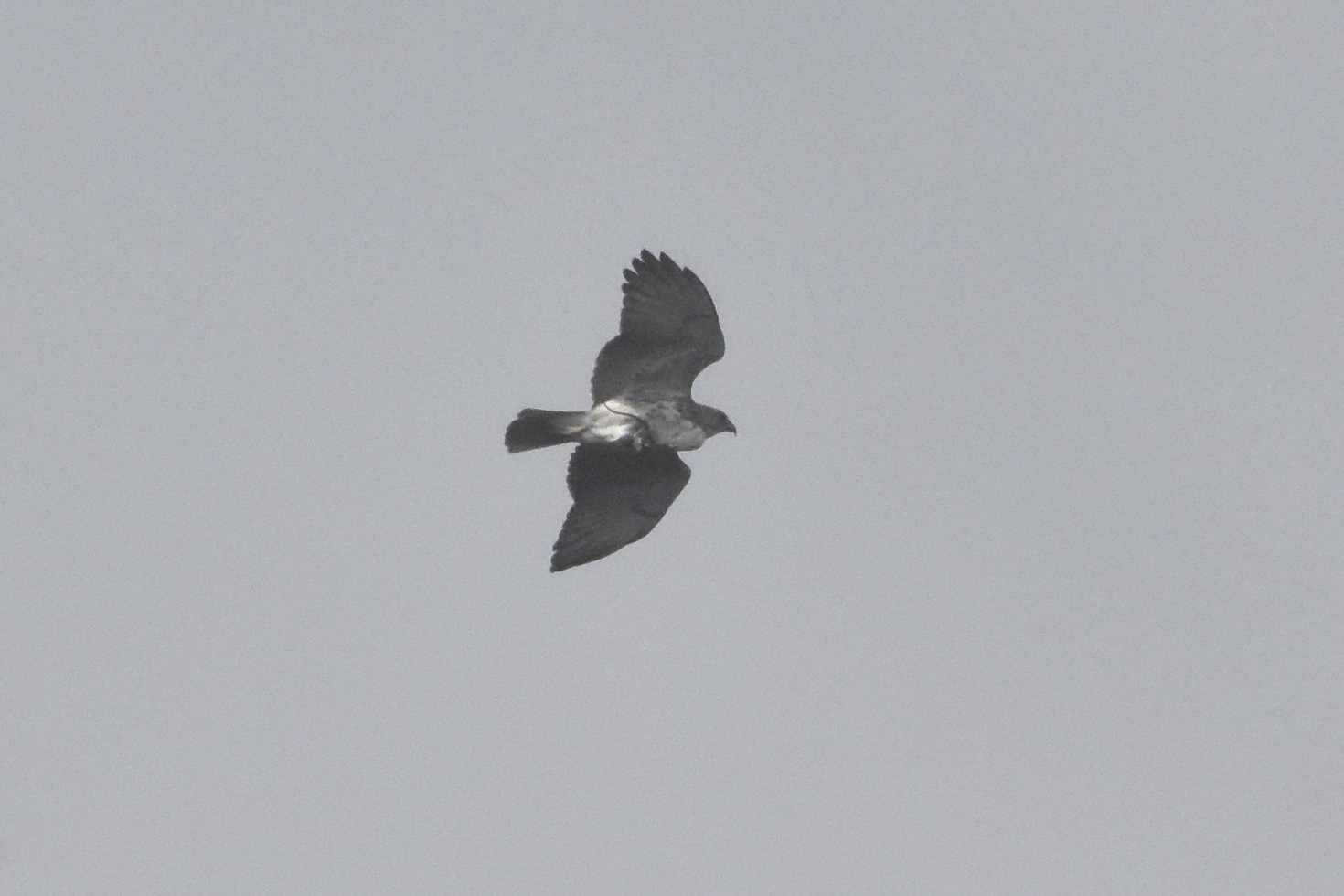
I did take the photo of the ‘io at the top of the page.

Story: Unconvinced

April 16, 2023

Acts 2:14a, 22-32
John 20:19-31

The saffron finch was unconvinced.

He’d had a long conversation with the kolea as they both searched for food in the grass. They were mostly looking for the same things: seeds, bugs, and so on. Fortunately there was plenty to be found, so the saffron finch’s dissatisfaction had nothing to do with how much or how little he was getting to eat. No.

It was that the kolea was preparing for the journey to Alaska, and the saffron finch thought this sounded like a bad idea. I mean, a Bad Idea with Capital Letters.

“Have you ever been in Hawai’i over the summer?” he demanded of the kolea between mouthfuls.

“No,” said the kolea. “Have you ever been in Alaska during the summer?”

The saffron finch had no reply to this. “It couldn’t be better than Hawai’i during the summer,” he insisted.

“It might not be,” agreed the kolea. “But it’s where I’ll be.”

“It’s such a long way!” moaned the saffron finch, “and your wings might be bigger than mine, but they’re nothing like a nene’s, and they don’t fly to Alaska.”

“I know how far it is,” said the kolea, who knew it much better than the saffron finch could, since he’d flown it and the finch hadn’t. “And I know it can be done.”

“What will you eat there?” demanded the saffron finch, who had just plucked some very tasty seeds out of the grasses.”

“Much the same as here,” answered the kolea, though it was a little hard to hear because his mouth was full.

“I say you should stay here,” announced the saffron finch. “Hawai’i is the place to be.”

“It’s a great place to be,” said the kolea, “but…”

“But nothing!” interrupted the saffron finch.

“But… said the kolea, “it’s where I was hatched, and where my parents were hatched, and where my grandparents were hatched. Other birds, even other kolea, lay their eggs in other places. I know it can be done. But this is how we do it, and we know it works for us.”

“It’s really strange, you know,” said the saffron finch.

“It’s not so strange,” replied the kolea. “There are other birds here that make much the same journey – the akekeke, for one – and I’ve met birds in Alaska that make long journeys to spend the winters in very different places than Hawai’i.”

“I’m not convinced,” said the saffron finch.

“You don’t have to be,” said the kolea. “It’s still something I have to do, even if you don’t like it or understand it.”

The saffron finch was quiet for a while and finally said, “I’ll miss you.”

The kolea gave a kolea smile – birds don’t have lips, after all – and said, “I’ll miss you, too, and I’ll be back in the fall to pluck seeds from in front of you again.” And he pulled a seed out right in front of the saffron finch’s beak.

“You’ll be welcome,” said the saffron finch, and he plucked a seed from in front of the kolea.

He remained unconvinced, but he remained satisfied, too, that his friend would come back once more.

by Eric Anderson

Watch the Recorded Story

The story in the recording was told from memory of this text – imperfect memory coupled with affection for improvisation…

Photos of a kolea (left) and a saffron finch by Eric Anderson.

Story: The Earth at Easter

April 9, 2023

Acts 10:34-43
Matthew 28:1-10

How did the world feel that first Easter morning?

I don’t mean the people of the world – most of them didn’t have any idea what was going on. The people of the Pacific islands wouldn’t hear for over 1700 years. They didn’t get the word in Japan or in China. Some people in India would hear about Jesus and his crucifixion much sooner, but they didn’t know on that first Easter morning.

They didn’t know in Africa, even as close to Jerusalem as Egypt. They didn’t know in Britain or the wide plains of Russia or in the palaces of Rome. They didn’t know in Athens. A few might just have heard the word of Jesus’ crucifixion in his home town of Nazareth – someone on a fast horse might have traveled overnight to reach there – but they wouldn’t have word of what happened Easter morning.

No, the only people who knew that Easter morning, at least as Matthew told it, were two women named Mary – it was apparently a common name in Jesus’ day – and, of course, Jesus.

But that wasn’t my question. How did the world feel that first Easter morning? This globe of ours, this Earth that God had created working with the Word of God, the Word that had taken human shape in Jesus. How did the world feel when Jesus died on Friday? How did the world feel when Jesus rose to life once more on Easter morning?

Well. That’s the story.

According to Matthew’s Gospel, the world shuddered when Jesus died, shuddered with an earthquake that shook people’s bodies and spirits, shuddered with grief and loss. And on Easter morning, the Earth felt that quickening of new life. The Earth perceived an angel descending to the rock-cut tomb where Jesus’ body lay. The Earth asked, “What is this?” as a spark of hope flared deep in its center.

The Earth shook itself again, but this time it shook to cast off the sadness and despair of the last two nights. This time it shook itself to cleanse its depths of sorrow and doubt. This time it shook to make a path for joy. This time it shook to awaken the people on its surface to something new and wondrous and holy and blessed.

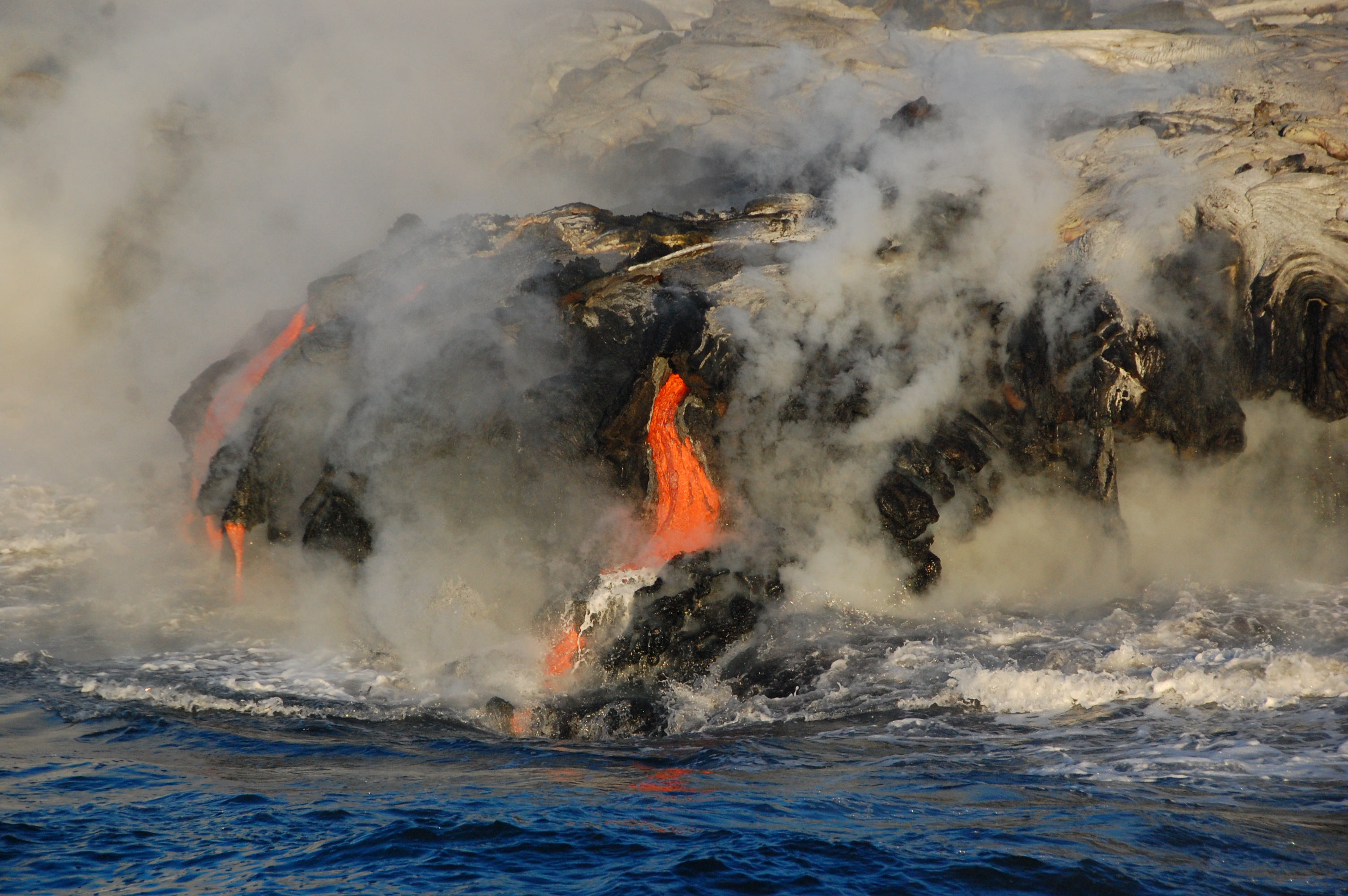
Did the Earth shake all across the globe? I don’t know, to be honest. I can imagine, though, that where lava was flowing, it flowed just a little brighter, just a little faster. I can imagine that some of the mountains breathed in and became just a little taller, stretched a little bit further toward the sky. I can imagine that the ocean waves ruffled along the shores as the Earth laughed with joy.

When the angel rolled the stone away, I imagine the Earth settled beneath it just a little bit, so that the stone rolled away down a little slope that hadn’t been there before. When the women began running back to the city to tell their friends, perhaps the Earth smoothed the road so they would not trip and fall.

When Jesus met them on the road and they knelt at his feet, perhaps the Earth softened beneath them. When they ran on, after he greeted them and told them, as the angel had, to bring the good news to their friends, they didn’t trip or fall.

Beneath them, the Earth carried on with turning, with following its orbit around the sun, with moving the continents about, with cradling the oceans and raising the mountains, with turning seamounts into islands in the middle of the sea. Beneath those running women, God’s messengers and apostles that morning, the Earth smiled and laughed for joy, for its Creator and Redeemer lived, and so the Earth would be a home for life as long as time endures.

In its own way, the Earth said, “Christ is risen! Alleluia!”

by Eric Anderson

Watch the Recorded Story

In worship, I tell the story from memory. Memory sometimes give way, as today, when I substituted a completely new ending for the one I’d written.

Photo by Eric Anderson.

Story: Easter Egg Mystery

April 9, 2023

Acts 10:34-43
Matthew 28:1-10

The island creatures had heard about Easter eggs, and they could not figure it out.

“Why would you take eggs out of a perfectly good nest?” asked the ‘apapane.

“We went to such trouble building it in the first place,” said the ‘amakihi, which builds a nest that is much bigger than its eggs.

“You don’t need to build a nest at all,” said the Manu-o-Ku, which lays its egg precariously on a branch to balance there until it hatches.

“You’ve got to keep your eggs protected from the sea spray,” said the noio.

“You could always put your eggs on ledges higher up the mountain,” pointed out the koa’e kea, which was maybe a little bit of a mean thing to say to the noio.

“Or you could lay your eggs in Alaska,” said the kolea, but nobody else really wanted to think about that except for the ‘akekeke which does much the same thing.

“Why would you want to put color on them?” wondered the ‘io. “Our eggs are a nice blue when they’re new, and then they turn paler.”

“We like mottled eggs,” said the ‘akepa. “They’re harder for egg eaters to see in the nest.” Everybody looked a little puzzled at this, because the ‘akepa is bright orange and hard to hide from anything.

“We like mottled eggs, too,” said the i’iwi, and now everybody was puzzled but nobody said anything.

“I also don’t see why you’d hide the eggs,” said the pueo. “A nest in the grass is fine.”

“I prefer a tree,” said the mejiro.

“A palm tree,” said the myna.

“A beach,” said the honu, and everybody looked at her.

“Dig a hole, lay your eggs, and cover it over. That’s how to do it,” she said with assurance, and all the other turtles agreed. The birds were almost as confused about this as about Easter eggs. But that got them all to turn to… the chicken.

“What?” she asked.

“Those humans are using chicken eggs,” they told her.

“That doesn’t mean I understand what they’re doing,” she said.

They waited and they didn’t say anything.

The chicken sighed and said, “I really don’t understand what it all means, but I have seen what they do and how they feel about it. They take eggs that aren’t going to hatch – which makes no sense to me, because what good is an egg that isn’t going to hatch? – and as you’ve all noticed, they put bright colors on it. While they’re doing it, they’re smiling and laughing. They’re doing it together, so when one colors an egg, another one tells them how beautiful it is. When they’re done, they admire them together, and congratulate everyone for a job well done.”

“I guess that must feel good,” said the kolea. “What about the hiding?”

“The adults hide the eggs, and the young ones look for them. And when they do, they’ve got those big smiles again, and they’re laughing. They get excited to find the eggs they’ve colored and the ones the other keiki have colored, even if they aren’t going to hatch.”

“Oh, and they also hide and find eggs that aren’t real eggs,” the chicken said. “Those have food in them.”

Everybody nodded at this. Everybody likes to find food.

“I think the point is the joy,” said the chicken. “From beginning to end, these eggs are about joy. Coloring them, hiding them, finding them, and celebrating them. These eggs are about joy.”

They all nodded at this, too. Eggs are about joy for birds and turtles.

And, it turns out, eggs – Easter eggs – are about joy for human beings, too.

by Eric Anderson

I told this story to begin the children’s Easter Egg hunt on Sunday, April 9, 2023. Unlike stories told in worship, it was not filmed or recorded.

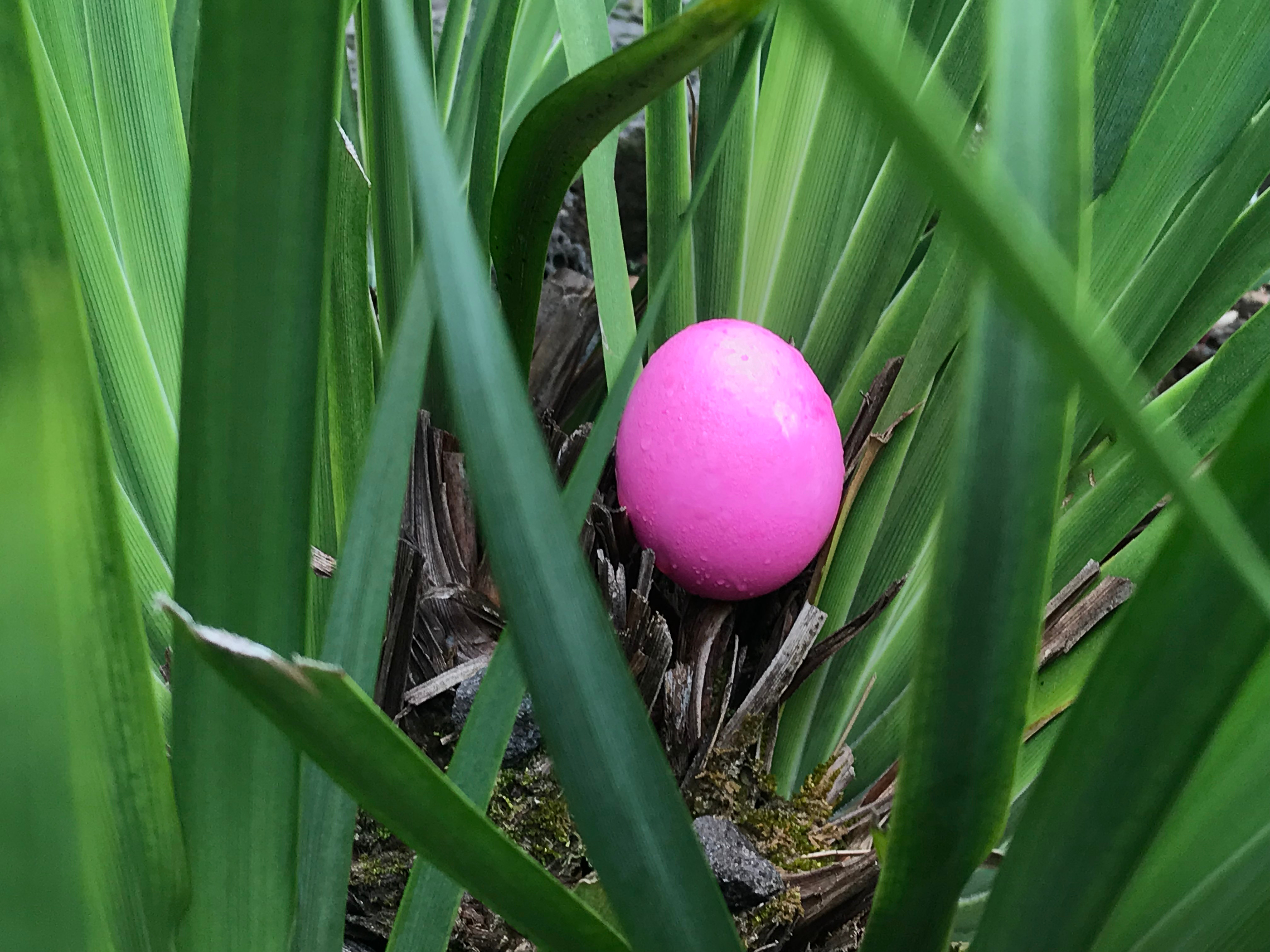
Photo by Eric Anderson.

Story: Keep it Humble

April 2, 2023

Philippians 2:5-11
Matthew 21:1-11

I imagine you have some idea of the story of the first Palm Sunday, probably because we just read the story. It’s been a year since the last one, though, so let me remind you of the basics. On Jesus’ last visit to Jerusalem, he sent two of his disciples to borrow a donkey for him to ride. As the donkey walked up into the city with Jesus on its back, people waved tree branches – palms, for the most part, I guess – and put their cloaks on the road to soften the donkey’s feet, and shouted a welcome to Jesus that also begged him to save them. It was a big, noisy, spectacle.

One thing the gospels leave out, however, is what the disciples said to Jesus when he told them to get a donkey, and what they said to each other as they were going to get it.

Here’s what I imagine they said to each other.

“Well, we lost that argument.”

“Have you ever won an argument with Jesus?”

“Well, no. But I was hoping this was the first time.”

“I was rooting for you. I mean, you were absolutely right. We should get Jesus a horse.”

“He said no.”

“I know he said no. But can’t you imagine Jesus riding into Jerusalem on a horse? It would be so cool.”

“Everybody would cheer. And then they’d follow him. He’d look just like a Messiah on a horse.”

“Yeah. And look! There’s a horse!”

Now I imagine the two of them standing there, looking at the horse.

“What a great horse.”

“Very noble.”

“And… Jesus said no.”

“He did. We lost that argument.”

“Here’s the donkey he told us to find.”

The two of them looked at it.

“The horse was better.”

“The horse was a lot more impressive.”

“The horse was royal.

“He’ll look like just anybody on a donkey.”

“They might cheer anyway.”

“Let’s hope.”

“Why do you suppose he insisted on a donkey?”

“I don’t know. I mean, you’re a king on a horse. On a donkey, you’re just anybody.”

“A humble anybody.”

“Really humble.”

I’m not sure all that many people value humility these days. There weren’t a lot of people who valued it two thousand years ago. I think it’s worth pointing out, though, that one person who chose to be humble was… Jesus.

by Eric Anderson

Watch the Recorded Story

When I tell the story, it’s from memory – I can’t quite resist improvising in the telling!

The image is L’ânon de Bethphagé (The Foal of Bethpage) by James Tissot – Online Collection of Brooklyn Museum; Photo: Brooklyn Museum, 2008, 00.159.191_PS2.jpg, Public Domain, https://commons.wikimedia.org/w/index.php?curid=10957484.

Story: Dry Season

March 26, 2023

Ezekiel 7:1-14
John 11:1-45

A dry season had come to the ohi’a forest, and one ‘apapane was worried about it.

She still considered herself young, but she’d long since left the nest, and for most of her life things had been rather predictable in her forest. That is, there would be rain, and there would be sun, and there would be clouds, and there would be rain again. It was often hard to tell when any of those things would happen, but she knew that they would happen, and if it seemed to rain for a long time, the sun would come again.

That season, however, had been very sunny, and the nights had had mostly clear skies. Clouds had spread across the sky sometimes, but they’d been high up and they hadn’t been the sources of rain. She’d been accustomed to sipping water from the tops of leaves from time to time, but she hadn’t been able to do that for several days. That was all right; she could satisfy her thirst with nectar, but she could tell that the trees were beginning to suffer from the dryness themselves.

Trees that went into blossom produced fewer flowers. Other trees simply didn’t go into blossom, or seemed to be putting it off. She was doing all right for now, but she wondered – she worried – about what would happen if this went on. Would there come a day with no flowers at all?

She sang a sad little song as she settled into a branch to sleep overnight. It was a song about sadness and fear and just a hint of hunger and thirst. The ohi’a heard the song, and when it was done, the tree sang its reply in the breeze rustling its leaves.

The ‘apapane didn’t really hear the tree’s song, she was asleep. Instead, the song became something of a dream, and in the dream she saw the sun leaping from the horizon, speeding across the sky, and diving below the opposite horizon – and then it all happened again, faster and faster. She realized, in wonder, that she was seeing days race by in seconds. Those days included sunshine and clouds and rain, but each one took just a brief time before the sun was flying across the sky with the next day again.

Then, in her dream, came a series of days in which the sky stayed blue and the rain didn’t fall. Day after day, and in her dream she saw the flowers fade and wither on the ohi’a. She wondered if this was a sign that the end was near… but then, in her dream, the sun rose one morning behind clouds, and as the sun raced invisibly across the sky, the clouds streamed rain upon the waiting trees below.

As the dream went on, she saw long dry periods and long wet periods, but they both came to an end, turning to rain if they’d been dry and to sun if they’d been rainy.

“Do not fear, little one,” she heard the tree sing as the dream drew to a close. “Do not fear.”

She woke to see the sun rising again, now at its normal pace, and the tree now silent in the still air of the morning. She shook herself awake, and saw that overnight the tree had produced a new set of blossoms – not many, but plenty for breakfast.

“Thank you, tree,” she said, though she wasn’t entirely sure she’d heard the tree singing or not. Still, it’s good to give thanks for breakfast.

“Thank you,” she said again. “I won’t fear.”

Good things and bad things come to us in life. The bad news is that the good things will come to end from time to time. The good news is that the bad things will come to an end, too. Do not fear, because the best news of all is that God’s love is the good thing that never ends.

by Eric Anderson

Watch the Recorded Story

I write these stories first, and then tell them from memory – well, memory and invention – which explains the differences between the text I prepared and the story I told.

Photo by Eric Anderson.

Story: Your Fault!

March 19, 2023

Ephesians 5:8-14
John 9:1-41

The two i’iwi – I don’t know whether they were husband and wife or brother and sister or cousins or friends, but there was he and there was she – were very excited. Setting out early in the morning, they had found an ohi’a tree that had gone into full blossom overnight. From its lowest branches to the tip of its crown, it glowed bright red in the dawn. The scent of nectar – which I can’t smell, can you? But they could – wafted out among the other trees, some of which had a few blossoms, but nothing compared to this marvel.

They settled in to feed.

“Let’s keep this for ourselves,” said he to she.

“We’ll keep this for ourselves,” said she to he.

Shortly after they arrived, along came an ‘amakihi eager for breakfast. The two i’iwi promptly drove him away, determined to keep all the nectar for themselves. Another i’iwi appeared and they chased him off, too. As the sun slowly rose into the sky, the two birds kept others away as they appeared, sipping nectar in between to keep their strength up.

About mid-morning an ‘apapane sniffed out the nectar and the blossoms and the tree and flew straight into the walloping wingbeats of the i’iwi. “Go away and never come back!” shrieked the “he” i’iwi. “And don’t tell anyone else about this tree!” screamed the “she” i’iwi.

“Uh, oh,” said he to she.

“What?” said she to he, though she knew.

“That’s an ‘apapane. They’ll tell anybody,” said he to she.

“They’ll tell everybody,” said she to he.

Sure enough, the birds began to arrive in larger numbers. Before it had been just one at a time. Now they came in pairs, in double pairs, in sixes and sevens and eights. The two i’iwi zoomed around the tree, using their bright red feathering and bright red voices to startle other birds away. As she chased some ‘amakihi away, he noticed an ‘apapane – it as the same one who’d spread the word earlier – swoop in, settle on a cluster of blossoms, and get a good sip of nectar before he took off again, with the he i’iwi in pursuit.

“That was your fault!” said he to she.

“That was your side of the tree!” said she to he.

The birds kept coming – i’iwi, ‘apapane, ‘amakihi, mejiro, and I do know who all. They kept coming and no two birds in the entire world could have kept them all away. Still, the forest rang with the angry shouts of the two i’iwi.

“That was your fault!” said he to she.

“That was your fault!” said she to he.

In fact, they’d lighted on an ohi’a branch to better carry on the argument rather than chase other birds away from the tree. They didn’t even eat, despite the deep red blossoms glistening with nectar next to them.

“Ahem,” said a voice. They stopped their shrieks and turned to see that first ‘apapane, the one who’d spread the word, perched nearby.

“Thank you,” he said. “It’s been a delicious breakfast.”

With one motion, the two i’iwi pointed their beaks at the ‘apapane and screamed, “This is your fault!”

“It might be, I suppose,” he mused, “but whose fault it is doesn’t get you any breakfast.” And off he flew.

The two i’iwi, hungry, throat-sore, and tired from all the morning’s chases, looked at one another, looked at the flowers, and had breakfast.

by Eric Anderson

Watch the Recorded Story

I tell my stories from my memory of the text I’ve prepared. Inevitably, it is different from what I’ve prepared.

Photo of an i’iwi by Gregory “Slobirdr” Smith – https://www.flickr.com/photos/slobirdr/32085166458/, CC BY-SA 2.0, https://commons.wikimedia.org/w/index.php?curid=93213259.

Story: The ‘Amakihi’s New Feathers

March 5, 2023

Romans 4:1-5, 13-17
John 3:1-17

The ‘amakihi was concerned. He was about 15 months old, feeling something like an adult – I know that’s young for a human being but he was an ‘amakihi, and they grow faster. Come to think of it, they haven’t got quite as much growing to do. He could fly. He could find food. He could sing. All in all, he had a pretty good ‘amakihi life.

He didn’t want it to change.

His feathering was still that of a younger ‘amakihi, which is basically a medium green with some hints of yellow. Some birds might think it dull – the bright red i’iwi might say so – but he rather liked it. It matched the leaves of an ohi’a tree rather nicely. Sometimes he thought of that as safety from circling i’os. Sometimes he thought of it as a fashion statement. Anyway, he liked his feathers, their color, and their shapes.

He didn’t want it to change.

But… it was starting to change and he knew it.

Already he’d had a couple of his big wing feathers fall out and grow back, and more were coming. He’d been through feather molting before, and he knew what was coming. The wing feathers would go and grow, and then the smaller feathers on his head and chest. Even with the first wing feathers he could see the change in color. They were less green, more yellow, and he knew that when the new feathers came on his chest they’d be bright yellow in the sun.

And he didn’t want it to change.

He couldn’t think of a single thing to do about it, so he went to his grandmother. “Tutu,” he said, “what do I do? My color is changing and I don’t want it to!”

“What’s wrong with it?” she asked.

“Nothing, but I like how I am now. I don’t want to change.”

“You don’t want to change?” she asked, and when he said no, she took to her wings and called, “Follow me!”

The first thing they saw was a butterfly flitting through the air. When they landed, there was a caterpillar on the branch. “One of these,” said Tutu, “made a big change to become one of those,” and she pointed her beak at the butterfly. “Do you think it was worth it?”

“To fly? Yes, I do,” said her grandson, and flew off after Tutu again.

They took a look at an ‘amakihi nest, where two young birds had hatched, grown, and taken their first flights over the previous several weeks. They were about ready to leave for a life of their own. “Did you want to stay in the nest?” asked Tutu.

“Of course not,” he said.

“But that was a change.”

“I suppose it was,” he said.

“Life is filled with change,” said Tutu. “Some are big, like the caterpillar that becomes a butterfly, or the ‘amakihi that leaves the nest. Some are smaller, like the bright yellow feathers that are coming to you. Perhaps you’ll become a parent, and that’s a big change, and perhaps there will be a lava flow in our forest, and that’s a big change.”

“So what do I do?” he asked.

“Make the best new you as you grow and change,” said Tutu gently. “Find delight in new things where you can, and make delight when the new things come hard. You’ll always be a new you. Be a loving and caring new you.”

by Eric Anderson

Watch the Recorded Story

I tell my Sunday morning stories from memory of what I’ve written. Memory and what’s written… rarely match.

Photo of an ‘amakihi in mature feathering by Bettina Arrigoni – Hawaii Amakihi (male) | Palilia Discovery Trail | Mauna Kea | Big Island | HI|2017-02-09|12-21-50.jpg, CC BY 2.0, https://commons.wikimedia.org/w/index.php?curid=74674240.

Story: The Untempted ‘Apapane

February 26, 2023

Psalm 32
Matthew 4:1-11

I think you may have heard the story I’m not telling, the one about when the Tempter tried to tempt Jesus. He challenged him to turn stones into bread because Jesus was hungry, and Jesus said, “No.” He challenged him to prove he was the Messiah by jumping off the Temple roof, and Jesus said, “No.” He challenged him to rule the nations of the world by worshiping him, that is, Jesus worshiping the Tempter, and Jesus said, “No.” Then the Tempter went away.

But I’m not telling you that story.

I’m telling you what happened next, which is that the Tempter was angry and fed up and feeling like a failure. What do people do when they need a break? That’s right. They go on vacation in Hawai’i.

I promise you that most of the visitors aren’t angry Tempters.

But the Tempter walked the koa and ohi’a forests and tried to feel better about things, which wasn’t working. One of the problems with being a Tempter is that you never really do find peace inside yourself. So he decided that instead of peace, he’d find success. He’d tempt something, and this time he’d win.

He went searching, and he found an ‘apapane.

“’Apapane,” he said, “have I got a deal for you. I will give you the power to turn these stones into bread. Just do that, and you’ll never worry about being hungry ever again.” The Tempter demonstrated by turning some lava rock into bread. The scent rose into the air.

The ‘apapane gave it a sniff, and then flew a short distance to an ohi’a tree, where he sniffed at the nectar from a bright red blossom. He gave it a taste.

“No, thank you,” he said. “I’ll stick to nectar.”

The Tempter was very disappointed with this, but not ready to quit. He brought the ‘apapane to the top of the highest tree in the forest. “All you have to do is prove that God takes care of all God’s creatures,” the Tempter said. “Throw yourself down from this tree, and let the angels catch you.”

The ‘apapane looked at the ground far below, stretched out his wings, and flew. “I think I’ve got that one covered already,” he said.

The Tempter realized that this temptation had been a bad mistake, and he was rattled. Still, he was undaunted. He was going to have a success. This time he swept the ‘apapane all the way to the summit of Mauna Kea, and there he showed the bird all the nations and forests and mountains of the world. “Worship me,” said the Tempter, “and all of this will be yours.”

The ‘apapane shivered in the cold, and pecked experimentally at a small bug on a rock. “I’d rather live in the ohi’a forest,” he said. “It’s warmer and things taste better there.”

At that the Tempter gave up, both on tempting an ‘apapane and on his Hawaiian vacation. I believe he went to sulk in Antarctica, where there’s a lot of empty space to sulk in.

The ‘apapane went back to the forest and, when other birds asked him about his adventure, simply said, “I just chose to be myself, to enjoy my life and its nectar. It’s not really much of a temptation to be something or someone else than myself.”

If you’re tempted, friends, choose to be yourself, the best and truest self you can be. Send the Tempter sulking to Antarctica.

by Eric Anderson

Watch the Recorded Story

I write the story. I tell the story. In the telling, there are departures from the writing.

Photo of an ‘apapane in flight by Eric Anderson.

Story: The River Who Wanted to Be a Mountain

February 19, 2023

Exodus 24:12-18
Matthew 17:1-9

The river was a pretty good river. It had some charming waterfalls and some broad pools. It had earth banks solid rock banks and stony banks and down near where it entered the ocean, it had sandy banks. It made chuckling sounds over small rocks, roaring sounds as it fell, and seemed to create its own silence in its wide, slow sections. Anyone would say it was a pretty good river. – anyone, perhaps, except the river itself. You see, the river wanted to be a mountain.

It looked up to the mountain and envied its craggy sides and its lofty peak. It envied the clouds that wreathed its summit sometimes and the snowy crown they left behind. It envied the sheer mass of the mountain, so great that it pressed down the sea floor from which it had grown. It envied its grandeur. It envied its majesty.

The river wanted to be a mountain.

“Oh, I wish I could be a mountain,” it said in the musical rippling of the water over stones.

To the river’s surprise, the mountain heard, and to the river’s greater surprise, the mountain replied. “Why do you want to be a mountain?” it hummed with its deep, rumbling voice.

“I’d like to be as tall as you,” said the river. “I’d like to touch the sky. I’d like to see all the earth around me. I’d like people to look up to me with awe.”

“You’re nearly as tall as me,” pointed out the mountain. “Water that falls on my peak comes down to you – you and other rivers on my sides. Water you carry to the sea rises up to touch the sky. Between the oceans and the clouds, your waters cover all the earth. And you know that people look at your falls and pools with joy.”

“Yes, but I’ve heard stories,” said the river, “about times when God had special things to say, and those things were said up on the mountains. God spoke to Moses on a mountain, and Jesus taught on a mountain.”

“That’s true,” said the mountain. “I’ve heard those stories, too. And I’ve heard another story. Did you forget that one?”

“Which one?” asked the river.

“I’ve heard that before Jesus taught on a mountain, he was baptized. In a river.”

The river was silent, because that was a familiar story, too, and in its envy, it had forgotten it.

“I guess it’s not so bad to be a river,” said the river.

“I’m glad to hear it,” said the mountain. “Can I send the water that falls on me your way?”

“You can,” said the river. “And I’ll send it on to the ocean.”

The mountain stands, and the river runs, and both have their place in the life of the world, and in the stories of the Bible and our faith.

by Eric Anderson

Watch the Recorded Story

The story in this recording is told from memory of the text above. Sometimes the memory isn’t perfect, and by “sometimes” I mean “always.”

Photo by Eric Anderson.