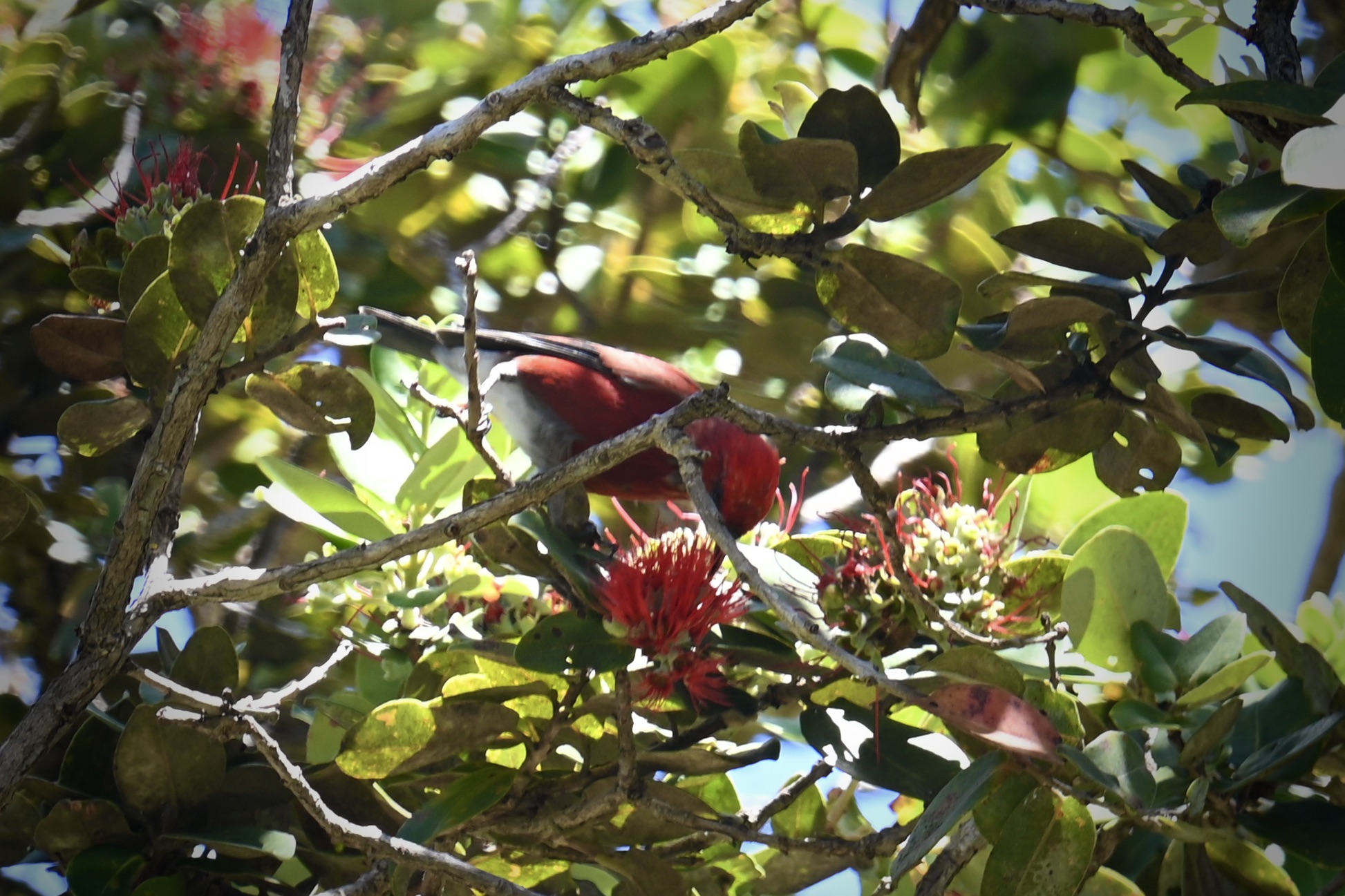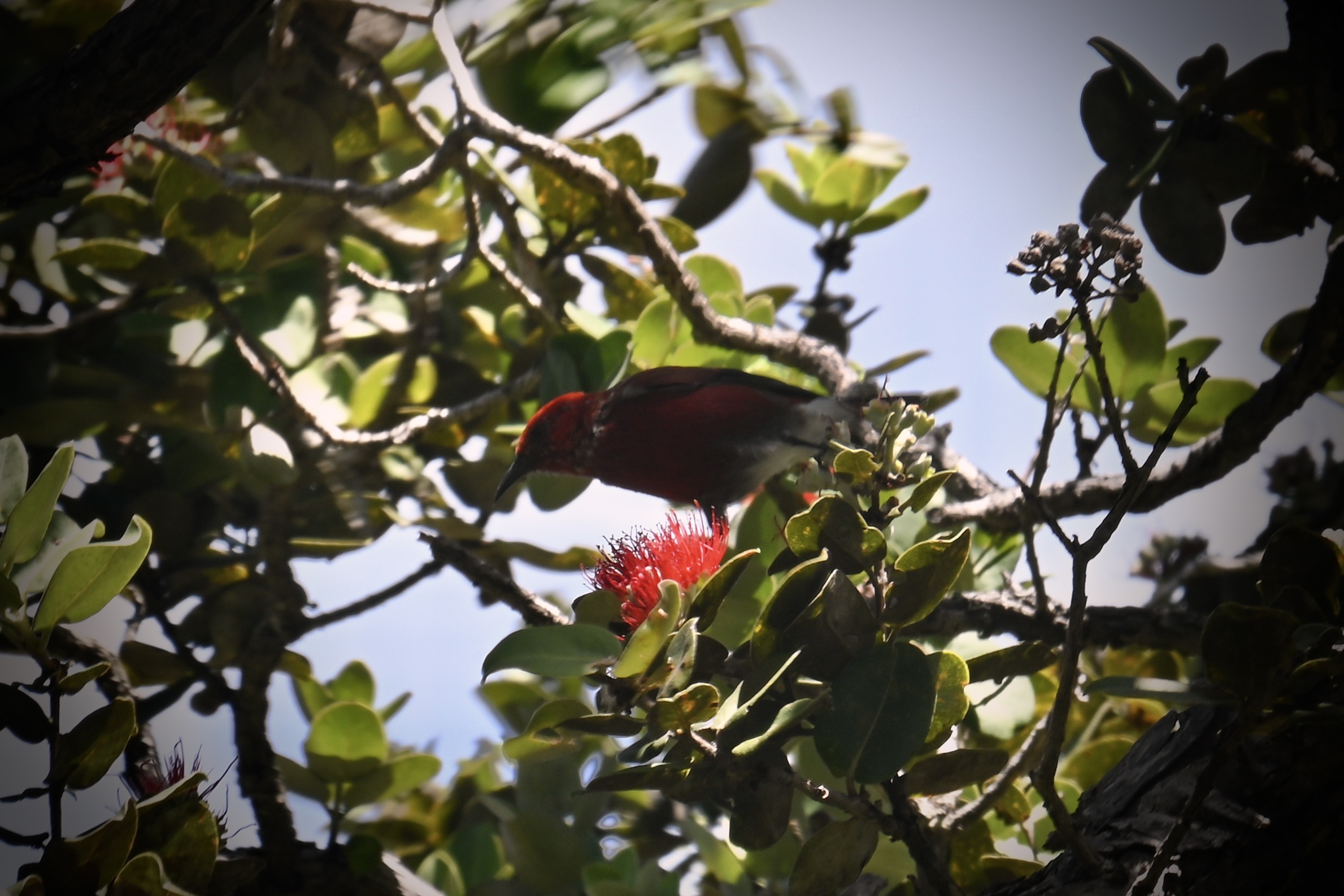
Story: Stranger

August 20, 2023

Isaiah 56:1, 6-8
Matthew 15:10-28

When the young myna was a fledgling, he didn’t pay much attention to other birds around. As he grew he took more of an interest in the little flock and those around.

Mynas don’t typically pay a lot of attention to other birds – they save most of their squawks and shrieks for other mynas – but this young myna was a little more territorial. He thought the grasses and seeds and bugs and worms on his turf should be for the mynas, and pretty much only for the mynas. Other birds weren’t worthy. They could go wait in a corner until the mynas were done.

He would fly and shriek at the cardinals and finches and waxbills that settled on his flock’s patch of grass until they flew off to find a quieter place for lunch. The other mynas mostly ignored this; some birds go through this stage, they told one another. He’ll grow out of it.

To their surprise, there was one bird he was particularly mean to. He didn’t actually peck at this bird, but he’d get closer and scream louder and flap his wings harder at the kolea than any spotted dove. It might be because the kolea was actually slightly bigger than he was, so he put more effort into his, well, I guess we’ve got to call it bullying, don’t we? than he needed to for a little yellow-beaked cardinal. And I’m afraid the other reason was that the kolea was always alone. The saffron finches usually fed in pairs, but the kolea was always alone.

To this bully of a myna, that just made him vulnerable.

He’d scream and flap and chase and generally make himself obnoxious. The kolea never said a word, just hopped or flew aside until the myna was satisfied. And he always came back.

Until one day when the kolea wasn’t there, and the myna thought he’d won.

“I drove that one off for good!” he exclaimed, but there was a big myna argument going on so nobody heard him to correct him.

Months passed, and one morning he landed on his flock’s favorite grassy area to find the same kolea, resting peacefully and feeding on grasses and bugs and worms. The myna was furious.

“How dare you come back?” he shrieked. “You’ve no business here, you coward. I drove you off once, I’ll drive you off again!”

“Hold on a minute,” said an older, somewhat wiser myna. “What are you talking about?”

“I drove this pest away months ago. He hasn’t dared to show his beak since.”

“You didn’t drive him off,” said the older myna. “He spends the summers in Alaska.”

“Where?” said the bully myna, who’d never heard of Alaska, and of course the older myna had never been to Alaska, so it took some time to explain that the kolea had flown 3,000 miles over the ocean to get there, and another 3,000 miles to get back.

“That kolea’s no coward,” said the older myna in conclusion. “Nor are the saffron finches or the northern cardinals or the spotted doves. They just don’t like all the noise while they eat.”

The bully myna was silent. He couldn’t fly 3,000 miles and back, and he knew it.

“The kolea’s more worthy of eating here than I am,” he said.

“Everyone’s worthy of eating here, youngster,” said the older myna. “’Worth’ has nothing to do with being hungry and needing food.”

After that the young myna still had to be reminded to let other birds alone from time to time, but that was OK, because it usually meant that he got to screech at other mynas instead, and that, as we know, is just what mynas love to do.

by Eric Anderson

Watch the Recorded Story

I tell these stories live without notes – so they will always be different from the text I’ve prepared.

Photo of a myna by Eric Anderson

Story: Favorite

August 13, 2023

Genesis 37:1-4, 12-28
Romans 10:5-15

In the old days, ‘elepaio followed the canoe makers through the koa stands as they searched for tree trunks that were suitable for a canoe. They were and are curious birds, and they would watch the trees fall and the people removing the limbs and branches so they could bring the trunk down to the shore for a canoe.

The people watched the ‘elepaio, because as well as being curious, they were hungry. If an ‘elepaio settled onto a koa tree and began to chase bugs and spiders, or if an ‘elepaio did the same on a log they’d just cut down, the canoe makers would move on. If the ‘elepaio was interested, they concluded, the tree must be too full of burrowing bugs to make a good hull.

People don’t cut koa for canoes much any more, but the ‘elepaio are still curious and will still follow people through the forest.

Which doesn’t have much to do with this story, because there aren’t any people in it. There’s an ‘elepaio, of course. And there are koa trees. There is one specific koa tree, and one specific ‘elepaio, and that koa tree was his favorite koa tree.

I’m not sure why. There were plenty of koa trees in that part of the forest, and to my untutored eye they looked rather the same. Oh, some were a little taller, and some were a little shorter, and some were wider, and some were thinner, but his favorite tree wasn’t the tallest or the shortest or the widest or the thinnest. It was just his favorite tree.

When people choose things as their favorite, they tend to act differently around it. It turns out that ‘elepaio do, too. On all the other koa trees he would search long and hard for the bugs and spiders that made up his breakfast, lunch, dinner, and any-time-of-the-day snacks. On his favorite tree, however, he’d sit quietly. It was too special, he thought, to be hunting on it. To his distress, the tree wasn’t doing well. Some of its leaves were turning brown.

“What’s wrong with my favorite tree?” the ‘elepaio asked himself out loud one day. “I think it’s sick.”

“What have you been doing to it?” asked an ‘akepa who overheard.

“Nothing,” said the ‘elepaio. “It’s my favorite tree. I don’t even hunt on it.”

The ‘akepa hopped over to the favorite koa, and said, “That might be the problem. There are lots of bugs in this tree. I don’t think that’s good for it.”

Sure enough, the bugs the ‘elepaio hadn’t been hunting on his favorite tree were making that tree rather ill.

“How can I treat my favorite tree just like everything else?” he asked.

“What about if you thought about it the other way around?” asked the ‘akepa. “What if you treat your favorite tree as well as you can think of – including cleaning off all the bugs – and then treat all the other trees as well as you treat your favorite tree?”

“You mean, treat all of them really well?” marveled the ‘elepaio.

“Treat all of them really well,” agreed the ‘akepa, and that is what the two of them did.

by Eric Anderson

Watch the Recorded Story

I write these stories ahead of time, and then tell them in worship without the manuscript or notes. As a result, the telling is somewhat… improvised.

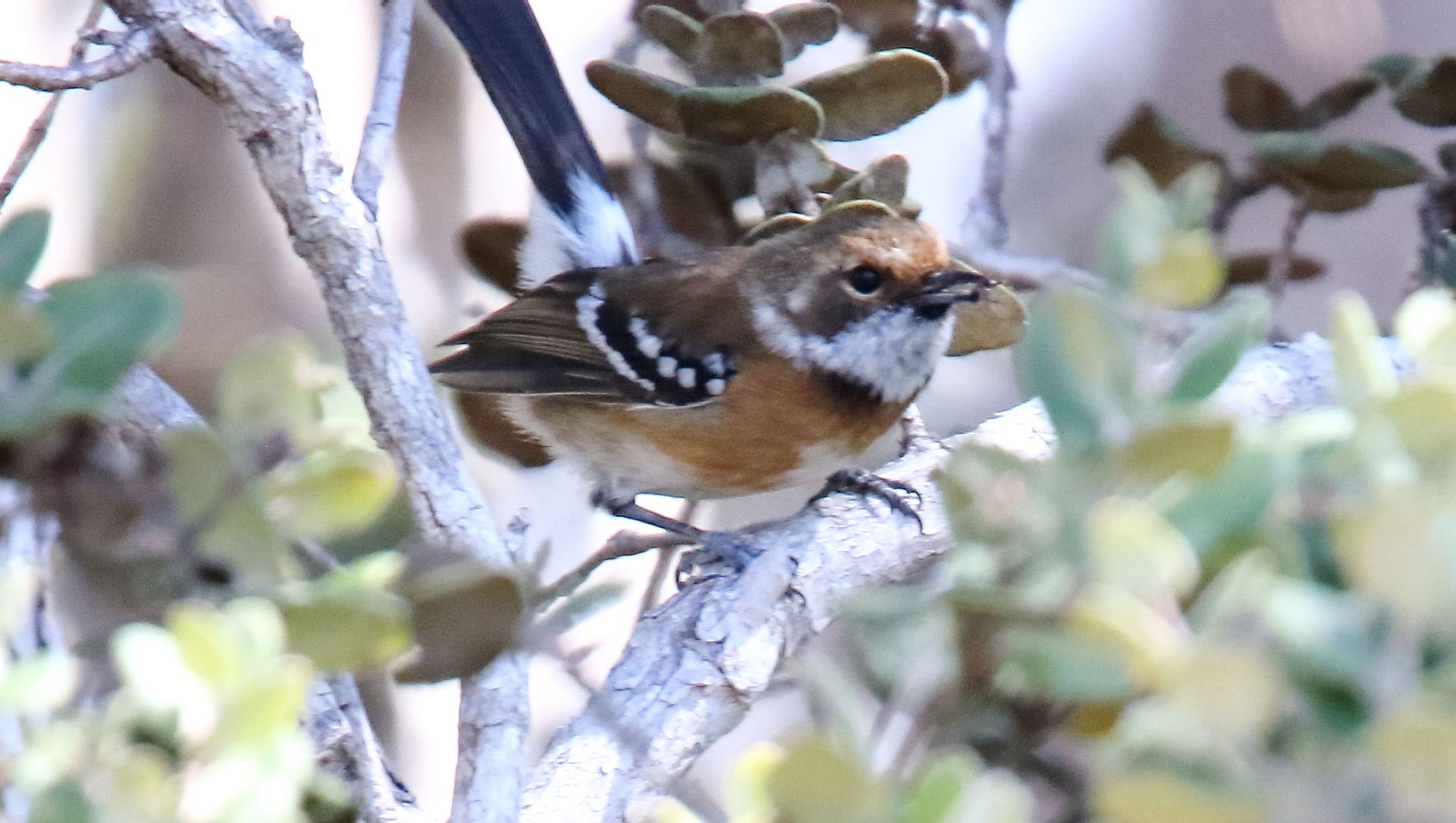
Photo of an ‘elepaio (not in a koa tree) by Eric Anderson

Story: Ohi’a at Rest

August 6, 2023

Isaiah 55:1-5
Matthew 14:13-21

How tall an ohi’a tree grows depends a lot on where its seed falls. If it falls into old, deep soil, rich with nutrients and able to hold water, the seed will spread its roots wide and raise its stem tall, until its leafy crown can wave eighty feet above the forest floor.

If the seed falls on the bare expanse of an old lava flow, however, the seed may struggle to sprout at all. It needs some soil, and the soil has to hold some water, but with time, an ohi’a’s roots can actually crumble some of the rock into more soil. In this way a plant with just a couple branches can grow into a tree – granted, still a small tree, but recognizably a tree and not a bush hugging the ground.

One such ohi’a seed had done just that. It had found a crack in an old lava flow, one that had contained some sand and some soil and would hold water. The ohi’a grew, and as it grew its roots found new spaces in the rock and filled them with soil. It took years, but one morning as the sun rose scarlet flowers bloomed along its branches, the red tendrils tipped with gold that gleamed in the morning light.

An ‘amakihi had already been visiting the little tree, because its leaves sheltered – almost – some of the bugs and spiders she liked to eat. She was the first bird to discover the ohi’a flowers in full bloom. She sipped their nectar and she ate the insects that had followed the scent of blossoms and basically enjoyed a good breakfast.

This went on for a while, with flowers blooming, then fading. After some time no new flowers grew, but where they had been, seed pods took shape. The ‘amakihi watched with interest as the pods split open and the winds took the tiny seeds and scattered them about the landscape.

And then… the tree did nothing. Well, it spread its green leaves, and it pushed out its roots, and maybe it got a little taller. But there were no new flowers, no new seed pods. Just… leaves and roots and stems.

One morning the ‘amakihi came by again to find the little tree aglow with crimson blossoms again. She rejoiced – she’d come to really like this tree – and she enjoyed her breakfast and lunch and dinner. She watched again as the blooms faded and the seed pods formed. She watched the tiny seeds sail away on the wind.

And then… nothing.

“What are you doing tree?” she asked one night as she settled in to sleep among its branches. “Why do you bloom and then stop?”

As I’ve noted before, trees talk in a dream. Sure enough, the tree replied in the whispery voice of air moving among leaves, “I’m resting.”

“Why do you rest?” asked the ‘amakihi, although she was resting as she asked (dreams happen while you’re resting most of the time).

“It takes a lot to make those flowers,” said the tree, “and to share that nectar with you and with the other creatures. Then it takes a lot to transform those flowers into seeds. I’m happy to do it, I’m happy to share, and I’m happy to be part of a new forest of ohi’a trees on this rocky ground – but I can’t do it all the time. Could you? Could you do anything day in, day out, forever?”

The ’amakihi wanted to say, “I could eat all the time,” but she was an honest bird and she knew she was asleep, and if that’s not resting what is?

“Rest well, tree,” she whispered.

“Rest well, bird,” came the soft reply.

All God’s creatures – including us – need our rest.

by Eric Anderson

Watch the Recorded Story

I write these stories first and then tell them from my (faulty) memory of the text I’d prepared. Differences are… inevitable.

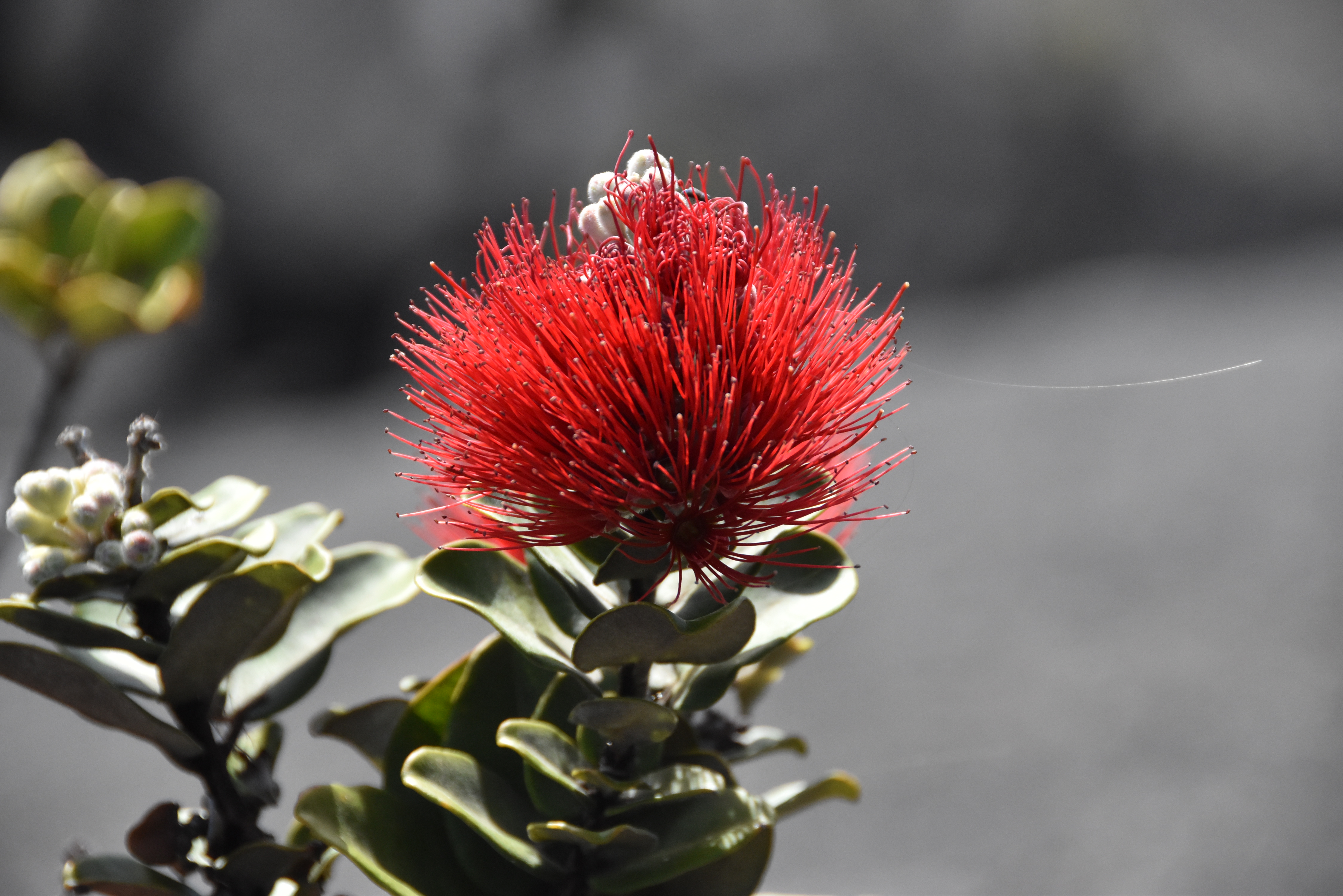
Photo of an ohi’a in blossom (not resting) by Eric Anderson.

Story: The ‘Apapane Who Lied

July 30, 2023

Genesis 29:15-28
Romans 8:26-39

Generally, ‘apapane are pretty honest birds. They give warning calls when there’s danger near, they sing “Waiting for the rain to end” songs when it’s raining, and they sing “Oh, look what I’ve found!” songs when they’ve discovered a tree particularly rich in ohi’a blossoms.

One day an ‘apapane had a different idea. He had sung his “Waiting for the rain to end” song when it was cloudy, not raining, mostly because he was sure it was going to rain. Even though nothing ever fell from the sky, a number of birds, ‘apapane but also i’iwi and ‘amakihi, took shelter for a few minutes. It didn’t take long for them to come out again when the rain didn’t happen, but it started him thinking.

A day or two later he found a lovely ohi’a tree just dripping with nectar and already attracting a number of the bugs he liked to eat as well. He told some members of his family and a few close friends to wait for him in a certain spot, while he flew over to a place where there were trees with a few blossoms on them, but nothing like what he’d found on that one tree.

There, surrounded by mostly greenery, he sang his “Oh, look what I’ve found!” song.

When he heard wings approaching he flew off low to one side and circled back around to where his friends and family were.

“Somebody’s found something,” said his sister. “We should go see.”

“I just found something better,” he said. “Follow me.” And they did.

As a result, their little group of ‘apapane had quite some time enjoying the nectar-rich flowers before other birds discovered it – as a result, I should say, of them singing their own, “Oh, look what I found!” song.

He repeated the trick a few days later when he discovered another very nice tree, and about two days after that, and a couple days after that, and he was very pleased with himself.

He was caught, of course, and that was by his grandfather. There were rumors going about that some of these “Oh, look what I found!” songs seemed to be overly optimistic at best and downright deceptive at worst. Grandfather had perched at the top of a tall ohi’a and heard the early morning call from a group of trees he knew was pretty sparse for flowers. He looked for the flash of red and black wings, and when he spotted it, he followed. To his surprise, they led first to a little flock of his own family, and then to a tree that glowed red in the morning light.

As the birds fed, he perched next to his grandson. “Come,” he said, pointing to a neighboring tree. “We need to talk.”

When they both had landed on a branch with enough flowers for a breakfast that wasn’t nearly as extravagant as the other tree, the younger ‘apapane wanted to know what it was about.

“Grandson,” said the elder. “You’ve been lying.”

“Not to you, tutu,” protested the younger one. “Not to any of our family or my friends.”

“I appreciate that,” said grandfather, “but truth isn’t just for family or friends. Truth is for everyone.”

“What’s the harm?” demanded the grandson. “Everyone is getting fed. I haven’t prevented anyone from finding good trees. I mean, I haven’t driven anyone away.”

“You’ve misled them – and concealed that it was you doing it,” said grandfather.

“Well, sure. Because then they wouldn’t trust my song,” said the younger one, and that was when he realized.

“Because I wouldn’t be worthy of trust, would I?” he asked.

Grandfather said nothing.

“Because I haven’t been worthy of trust, have I?” he asked.

Grandfather and grandson sat quietly for a few moments.

“I’ll be worthy of trust, Tutu.”

“I know you will.”

by Eric Anderson

Watch the Recorded Story

I tell these stories from memory of what you’ve just read – without a manuscript or notes. Inevitably, it varies from the text I’ve prepared, as it does today.

Photo by Eric Anderson

Author’s note

I found myself with a real quandary in developing a story that comments on Genesis 29, a text with so much that just makes me stop and go, “That’s not right.” Bringing its themes to children (or even to adults) looked impossibly difficult. Finally I settled on one theme of Jacob’s saga, something that happens again and again to cause pain and distress to the people involved: deception and lies. Thus this story about lies and truth.

Story: Protecting the Tree

July 23, 2023

Genesis 28:10-19
Matthew 13:24-30, 36-43

An i’iwi overheard some people talking one day about a disease that was harmful and even fatal to ohi’a trees. He followed them and listened closely as they took care to clean their shoes and avoid bringing the fungus spores to where healthy trees were. The i’iwi decided that he would help protect his favorite ohi’a tree.

It wasn’t a very big tree, which was one of the reasons it was his favorite. It had a nice shape and plenty of leaves and it tended to blossom quite freely, which made it a great place to find safety and enjoy a good meal of ohi’a nectar. And because it wasn’t very big, it was a size that he could guard.

Guard it he did. When ‘apapane came by, he drove them off, and likewise amakihi, mejiro, and even the little ‘elepaio. They squawked and complained, but a determined i’iwi is difficult to convince, so they all went to other trees.

The i’iwi then set out to make sure that the tree was safe from being infected by insects that might carry the dangerous fungus. He flicked bugs off the leaves and branches with his wings, with his toes, and with his long curved beak. The spiders and insects didn’t try to argue. It’s hard to argue when something many times your size has kicked you off a branch when you’re a long way up in the air. Some tried a second or a third time, but found the i’iwi ready for them, and so they headed off as well.

The i’iwi found himself pretty much alone in the tree, and quite satisfied, settled down to sleep as night fell, prepared for another day of defending his favorite tree.

As the wind moved the tree limbs, however, his dreams turned strange. It seemed like the tree was speaking to him. “Why are you doing this?” asked the tree. “Why are you chasing everyone away?”

In a dream, of course, you can talk to trees, so the i’iwi said, “I’m keeping away everything that might make you sick. I want to keep you well.”

The tree creaked thoughtfully for a few minutes – trees think long and deeply – before replying.

“That’s good of you,” said the tree. “I appreciate the thought. But has it occurred to you that if no one visits me, my flowers don’t become seeds?”

That had not, in fact, occurred to the i’iwi, who hadn’t known it. Most plants blossoms attract creatures like honeybees, who in traveling from flower to flower bring the pollen that enables the blossoms to produce seeds. In the ohi’a forest, this gets done by bees, and by beetles, and by birds such as the amakihi and ‘apapane and yes, the i’iwi.

“If nobody visits other trees, and nobody visits me, there won’t be any seeds,” explained the tree.

The i’iwi didn’t know what to do. “If they visit you, you might get sick,” he said, “but if they don’t visit you, there won’t be new ohi’a trees.”

The tree limbs sighed in agreement.

“We’ll have to chance it,” said the tree. “But thanks for the effort.”

“We’ll have to chance it,” said the i’iwi. “May it all go well.”

You and I can still help protect ohi’a trees by cleaning our shoes before entering ohi’a forests and not moving ohi’a wood around and by taking care to not damage the tree bark when we’re in the forest. But the i’iwi and the birds and bees of the forest will also be sipping nectar and flying from tree to tree, and its risky – but it’s also how the next generation of ohi’a will take root and grow.

by Eric Anderson

Watch the Recorded Story

On Sundays I tell these stories from memory of the text I’ve prepared (which you’ve just read above). Between failures of memory and the creative impulse, they are not identical.

Photo of an i’iwi by HarmonyonPlanetEarth – I’iwi|Pu’u o’o Trail | 2013-12-17at12-43-209 Uploaded by snowmanradio, CC BY 2.0, https://commons.wikimedia.org/w/index.php?curid=30241880.

Rapid Ohi’a Death (ROD) is a real danger to Hawai’i’s ohi’a forests. Read more here about how to prevent its spread.

Story: Not Like That

June 25, 2023

Genesis 21:8-21
Romans 6:1-11

There were three fledglings in the ‘apapane nest, a sister and two brothers. All three had hatched on the same day, which is pretty common for ‘apapane. All three had steadily grown from the food their parents brought to them each day. They’d just begun to learn to fly.

For whatever reason, and who knows the reasons for these things, the sister grew more quickly than her two brothers. Her wing muscles got stronger faster, and she stood taller than they in the nest and on the branches near the nest. And… she started to take charge.

When father or mother came by at mealtimes, she got to the front first. Her brothers got the same amount of food that she did, so the parents didn’t remark on it, but she increasingly got fed first. When it came time for their first test flights, she summoned more of her parents’ attention than her brothers did. She’d fly a little farther among the branches of the nesting tree so they had to keep track of her. But she’d also sing out, “Look at me!” when father or mother started giving instructions to one of her brothers.

When they settled down at night, her brothers had to be satisfied with what room she left them in the nest. She began to push them aside when she wasn’t comfortable, and she began to order them to do things for her. She was bigger. She was stronger. They did what she ordered them to do.

They weren’t happy about it.

“Don’t complain,” she told them. “I’m the oldest and the biggest. You have to do what I tell you.”

She wasn’t actually the first to hatch, but they didn’t dare to tell her so.

Father and Mother didn’t actually notice all this. When one of them was nearby, they were the oldest and the biggest, and she didn’t try to dominate them. But the moment the three chicks were alone, she was in charge, and when she was in charge, she got what she wanted.

If one of her brothers had flown to a particularly nice cluster of ohi’a blossoms, she’d come along and order him away. If one of her brothers was relaxing in a sunny spot, she’d push him off the branch. If it was raining and one of them found a spot where the leaves kept the drops away, guess who would be dry at the end of the shower?

You guessed it. She would.

It was grandmother who spotted all this, observing from a neighboring tree. She flew over when big sister had taken over a cluster of ohi’a flowers.

“Not like that,” she told her granddaughter.

“Not like what?” said granddaughter.

“Stop bullying your brothers.”

“I’m not bullying them,” she said.

“You certainly are,” said grandmother. “You just took over this flower cluster.”

“I’m entitled,” said the big sister. “I’m the biggest and the oldest. How should I treat my little brothers?”

“Not like that. You all hatched on the same day,” said grandmother, “and soon enough your brothers will catch up to your size and one or both of them might get bigger than you are. Will you be content to be kicked off your flowers then?”

Her granddaughter had to admit that she wouldn’t.

“Treat your brothers the way you want to be treated. Treat them better, in fact. That’s how we build a strong family. It’s how we make peace among ‘apapane.”

She did change her ways, though it took a little while. Fortunately she did it before one of her brothers did, in fact, grow to be bigger than she was – but he had learned that lesson, too, and treated his sister as he wanted to be treated, and even better.

by Eric Anderson

Watch the Recorded Story

First I write the story (you’ve just read what I wrote). Then I tell it without the written copy in front of me. And… things change.

Photo of an ‘apapane in flight by Eric Anderson.

Story: Noio’s Love

June 18, 2023

Romans 8:1-8
Matthew 9:35-10:8

The little noio chick was convinced that her father didn’t love her.

I have to admit that she had some reasons for thinking this. Noio (or black noddy) nests tend to be kind of shallow, and her parents had chosen a rather bumpy section of the cliff shelf to place their nest. She was never able to get really comfortable, because a bit of rock poked her if she was here, and another bit of rock poked her when she was there, and for quite some time listening to humans she thought of something very different to the word “poke.”

She had to admit that they’d found a spot that kept most of the rain off, but when it was sunny she thought she was going to become a baked noio. If the wind turned the wrong direction while it was raining, well, it blew the water right over her. Big waves would toss spray in her direction as well.

There were plenty of other nearby noio nests, none of which had any great advantages over hers and plenty of them were even pokier, but she wasn’t happy.

There was also the issue of what her father fed her, which was, and forgive me for being gross here, what her father had just eaten. Again, this was no different from what other nearby noio chicks were eating in their no-more-comfortable nests, but she thought that a loving father would have found a better way.

Her father had been a great comfort when she was small, keeping her warm and protected from rain and spray at night, and even shading her from the sun by day. Along the way, however, father had done less and less. As the chick grew, of course, there was less and less room on the nest for father or mother.

The worst, however, had come when it was time to fly. Suddenly father had become the nit-pickiest tyrant ever inflicted upon a daughter. “Spread your wings. Hold them up. Twist the left one. Hold it lower. Lower! Now flap. Not like that!”

She thought she heard the words, “Not like that!” more than any other words in the day.

After a particularly hard day when her flying had been quite erratic and her father quite emphatic about “Not like that!” she settled into the nest. Father perched silently and, she thought, judgmentally on the rocky shelf next to the nest. “Why, Father,” said the young fledgling bitterly, “don’t you love me?”

“Who said I didn’t love you?” asked father, who was quite shocked.

“You show it every day. You watch me so closely, you criticize all the time, you hardly ever hold me close any more, and let’s not even talk about the food.”

Father had to admit that there wasn’t much to say about the food, but he did hop over and sheltered his chick beneath his wings.

“I do love you, and I’m sorry I don’t say it clearly enough,” he said. “First thing in the morning, I’m here to make sure you awake safely. The last thing in the day, I’m here to make sure you’re able to sleep safely, too. I am strict with you about flying, because the ground is hard and the sea is harsh. Hit either of them wrong and I’d be crying for you rather than criticizing you.”

His chick snuggled into his feathers and felt somewhat better.

“I’ll tell you what,” said father. “The quicker you master flying, the quicker you can start catching fish for yourself.”

“Which means?” asked the fledgling.

“You’ll enjoy your meals a lot more -and so will I!”

by Eric Anderson

Watch the Recorded Story

I write the story. I memorize the course of the story… and when I tell the story, it’s simply not the same as the written version.

Photo by Eric Anderson

Author’s note: I originally wrote this story to be about a chick and her mother. Then I remembered it was Father’s Day. It does somewhat change the story’s character.

Story: Who Should Hear?

June 11, 2023

Hosea 5:15-6:6
Matthew 9:9-13, 18-26

The red-billed leiothrix, like myna and the mejiro, is a bird that’s a relative newcomer to Hawai’i Island. They’ve been here for a little over a hundred years.

They can be pretty cheerful singers, on the whole, with a nice lilting chirp. They’re better known on Hawai’i Island for what they sound like when they’re alarmed, though. It’s a loud and harsh rapidly repeated sound that almost sounds like some sticks being rubbed together. If you’re walking about in the forests or the kipukas up the mountains, you’re likely to hear it, because they tend to make it when humans are about.

A grandfather was instructing his grandchildren in making the call (I can’t imitate it, I’m afraid). After he’d taught them how it was done, he turned to the times to make the sound.

“You make it when there’s an i’o about, or a pueo,” he said. “And don’t forget to make it when there’s a human around. We always want to let people know about those.”

The grandchicks wanted to know what a human was like, so after explaining that it was a big flightless bird with very peculiar wings, grandfather taught them to make the call again.

“Who should hear this sound?” one of the chicks asked her grandfather.

“What do you mean, who should hear this sound?” he asked.

“Well, I thought this would be just a leiothrix sound,” she said. “Mynas probably aren’t interested, are they? Other birds might not understand.

“And if some birds do understand,” she continued, “it might not be so good for us.”

“What do you mean?” asked grandfather quietly.

“If I see an i’o and make the sound,” she said, “then all the birds will hide. If I’m not as good or as quick at hiding as they are, the i’o might try for me, wouldn’t it? If some other birds are exposed, then we leiothrixes will be better off.”

Grandfather stayed quiet for a long time. Then he sighed.

“You’re right, of course,” he said. “If we don’t alert other birds to the i’o or the human, we’ll be safer when we see the danger first. But what if the ‘apapane sees the pueo first? Or the ‘akepa? Or the mejiro? What if they alert only their own kind, and not us? What happens then?”

Now the chicks were silent, until the one who’d asked the question said, “Nothing good.”

“Nothing good,” said grandfather. “We warn everybody so that everybody will warn us.”

“I see,” said the chick who’d asked, and her brothers and sisters nodded, too.

“How loud do we make the warning sound?” asked grandfather.

“As loud as we can!” said the chicks.

“Who should hear?” asked grandfather.

“Everyone!”

So when you’re walking the kipukas and the forests on the mauna, you’ll hear the leiothrixes, warning everyone that you’re near.

by Eric Anderson

Watch the Recorded Story

I tell these stories from my… not quite reliable memory of the text I’ve written. Differences are inevitable – and regular.

Photo of a red-billed leiothrix by Raman Kumar – Own work, CC BY-SA 4.0, https://commons.wikimedia.org/w/index.php?curid=53968581.

Better than Appears

June 4, 2023

Genesis 1:1-2:4a
2 Corinthians 13:11-13

The young ‘amakihi had had a bad morning. First there was the big wind that had woken him, first by howling in his ears, then by twisting the branch he was perched on in a very odd way, third by pitching him off the branch into the air, and finally by whirling him along for a way, struggling to get himself upright and under controlled flight.

He’d managed it, but he was still breathing hard when he clutched the twigs of another ohi’a tree tossing in the breeze. It soon settled down, though – that had been a big puff of wind, but just one – when things got exciting again. His eyes caught movement overhead and he took to his wings once more, this time diving further down into the forest canopy to escape the i’o that had just broken from its spotting circle toward a hunting dive. His heart was beating wildly again when he found a space within the branches the i’o couldn’t reach. The i’o flew off to hunt somewhere else.

His breath was just settling to normal when suddenly there was an i’iwi whistling at him. The tree he’d perched in also contained the i’iwi’s nest, and she wasn’t about to put up with an ‘amakihi near her nest. She’d stayed quiet while the hawk was near, but after that. Well. Lots of whistles.

He flew off to another tree, blessedly free of i’iwi, i’o, or high winds, and reflected on his lousy morning. “This is a rotten world,” he said aloud.

“You think so?” said a voice. He looked up. Just to crown his bad morning, just when he’d said something she was bound to criticize, there was his mother.

“If you’d had the morning I’ve had,” he couldn’t help saying, “you’d agree. The world is rotten.”

“Is it?” she said, and beckoned him to follow. They flew over to a great field of lava rock, dark grey and hard and heating up in the morning sun.

“Right! Just like this! Hard and colorless and hot,” he told his mother, who said: “Look again.”

This time when he looked he saw the water droplets left by a rain shower, shining like stars in a grey sky, but now on earth rather than above. He looked again and saw, in the cracked rock, water soaking into small bits of sand. Some of those bits of sand had green things growing in them, some of them had fern shoots, some had leaves waving above. There was ohi’a growing here and there from those crevasses: shoots, stems, bushes, even small trees. His mother led the way down to one young tree in full blossom. They landed amidst the perfume of its nectar.

“The world isn’t so bad,” he said when she gave him a look. ‘Amakihi mothers have a Look, you know, much as many human mothers do.

“Taste,” she said, and even though he knew what he’d taste, he did.

He gave his mother an ‘amakihi smile. She gave him one back.

“The world,” he said, “is good.”

by Eric Anderson

Watch the Recorded Story

I tell these stories from my memory of what I’ve written. And, well, my notion of how they might be improved in the telling.

Photo by Eric Anderson.

Story: The Wind

May 28, 2023

Numbers 11:24-30
Acts 2:1-21

I want to talk to you about the wind.

The wind made its way across the ocean. In the distance it could see the green slopes of Hawai’i Island and the great mountains rising. As it swept over the sea, it took water vapor that the sun had raised from the waters and pushed it ahead as growing clouds. As the clouds passed over Hilo, they showered the earth with rain.

The wind moved on, and now the clouds dispersed on the shoulders of the mountains, and the sun poured down in shimmering waves. The wind blew through the town and over the fields, and it cooled the stifling heat. As it did, it blew hard enough to pluck hats from heads and turn umbrellas inside out before they could be closed.

A nene near seaside turned into the wind and spread her wings. The flowing air began to lift her even before she swept them down in a powerful stroke. The wind helped carry her aloft until she turned to fly inland.

Not just birds, but seeds flew on the wind, so that new plants would grow.

In places the wind eased things, but in places I have to admit that the wind broke things. Nails in a roof popped loose. An old tree tumbled to the ground, where its trunk would nourish new trees yet to grow there. A sudden gust scattered a myna’s nest over the ground, and the parents-to-be screeched and started building again.

The flowing wind swept over the summit of Kilauea, where fumes rise from the volcano’s liquid heart beneath. It carried the sulfur and tiny flecks of glassy ash further along the island, dispersing them as it went. Oh, they smelled it and they frowned in Kona!

But when the sun set, those bits of glassy ash caught the light and glowed in red and orange and gold. The people and the creatures and the birds gazed at it with satisfaction. “It’s a Kona sunset,” they said.

The wind laughed to hear them say it, for the Kona sunset depends on the Kilauea wind.

And the wind blew on, far over the Pacific Ocean to lands far distant from our shores, blowing where it will.

It’s an old, old thing to compare the Holy Spirit of God to the winds that blow across our planet. In the ancient languages of the Bible, and also in Hawaiian (but not in English) the words for “wind,” “breath,” and “spirit” are the same: Ruach. Pneuma. Ha. Like the winds of earth, the Holy Spirit brings the things of life, for the spirit as well as the body. Like the wind beneath the wings of the birds, the Holy Spirit can lift us up. Like the wind that brings down trees, the Holy Spirit will shake our ideas and assumptions and make us consider new things. Like the wind that creates a Kona sunset, the Holy Spirit creates, helps us create, and helps us appreciate, beauty.

The Holy Spirit is God’s gift to the world, to the Church of Jesus, and most of all, to you.

by Eric Anderson

Watch the Recorded Story

On Sunday I tell the story from memory of the story I’ve written – and I rarely strive to remember it word for word. The differences are part of the creative process – or so I tell myself.

Photo by Eric Anderson.