Love You!

June 26, 2022

Galatians 5:1, 13-25
Luke 9:51-62

You may have heard people say that kids can get out of hand. You know. Kids jump about. Kids make lots of noise. Kids butt each other with their heads.

Yes. They butt each other with their heads. You don’t do that? Well of course you don’t. You’re not a… Oh. Right. I’m sorry.

When I say “kids” today, I’m not talking about young human beings. I’m talking about young goats. And those kids can definitely get out of hand, jumping about, making lots of noise, and butting each other with their heads.

One kid, however, was a handful even by kid standards – that is, goat kid standards. He was constantly head-butting and foot-kicking and even mouth-biting. Goat kids can get rather rough with one another, but he was rougher than any of them wanted to deal with. Pretty soon he didn’t have any friends in the pasture. If they let him close he’d butt or kick or bite.

He was sad when he got back to his mother. “Why don’t I have any friends?” he asked, and when he’d explained how he behaved with the other kids, his mother thought for a moment.

“If you want friends, you’ve got to love them,” she said.

“Love them?” he asked.

“Love them,” she said.

He thought about this until he fell asleep and thought more about it when he woke up in the morning. He bounced off to the pasture and happily shouted, “I love you!” to the other kids. Then he rushed up to them, butted one with his head, kicked another with his hooves, and bit a third with his teeth, all the while shouting, “I love you!” The herd of kids scattered and he certainly didn’t make any friends.

“Why don’t I have any friends?” he asked his mother that night.

“Didn’t you love them?” she said.

“I tried. But it didn’t work,” he said.

“Tell me what you did,” she said. He did, and when he finished, she sighed.

“Tell me this,” she said. “Do you enjoy it when another kid hits you or kicks you or bites you?”

“Well, not much,” he admitted.

“If I did that, would you believe that I loved you?” she asked.

He wasn’t sure how to answer that.

“Do you think the other kids believe you love them when you butt them and kick them and bite them?” she asked.

“No,” he admitted. “I guess they don’t.”

“Love isn’t just saying it,” said his mother. “Love is doing things because they help someone or help them be well. Love is not doing things because they hurt someone or make them feel bad. So go back tomorrow and try to love them – and this time, show it.”

I won’t claim that he did it perfectly the next day – he didn’t – but he really did show more love for the other kids than he ever had before. As the days passed, he made friends, and they loved him, too.

by Eric Anderson

Watch the Recorded Story

The video includes the complete service of July 26, 2022. Clicking “Play” will jump to the beginning of the story. The recording is of the story told live without notes. It is not the same as the prepared text.

Photo of goats on Maui by Forest & Kim Starr, CC BY 3.0 us, https://commons.wikimedia.org/w/index.php?curid=70450192.
Help to Get Home

June 19, 2022

1 Kings 19:1-15
Luke 8:26-39

The ‘apapane was lonely, lost, and scared. He’d been flying just above the treetops when the big wind blew up. In a moment its strength had snatched him away from the tree branches he wanted to cling to and shelter in. It carried him along above the slopes of Mauna Loa and off toward Kona-side. It was too much to fly into the wind. It was too much to fly across it; he’d simply have been tumbled. All he could do was stay in the air and ride it until it calmed enough that he could land somewhere and take shelter.

That took far longer than he’d hoped. Off to his left he could see the ocean from time to time. The land beneath him fell away, and he let himself descend with it, which eventually put him behind one of the ridges of Mauna Loa. The wind’s strength faded, and he was able to find a perch in an ohi’a tree. There he clung and gasped for breath and was just grateful to be safe again.

He knew he was a long way from home, however. His own flock was far behind. None of the land shapes looked familiar – or if they looked familiar but he knew they weren’t home. When the storm calmed, he knew he’d have a long flight home.

After a while, he heard the roar of the wind overhead subside. He took off once more to test it, and it was safe to start the journey back. But he was still scared, he was pretty much lost, and he was all alone. What else could he do but start his flight?

He stayed close to the trees – he didn’t want to be blown back again if the wind returned – and tried to avoid the i’iwi and the ‘amakihi and the ‘akepa he saw. He flew around the little flocks of ‘apapane as well. He wasn’t sure he’d be welcome. But that meant that he was also flying around the places where ohi’a was in blossom. That, after all, was where the local birds were. Avoiding them meant he was also avoiding the places to find food and to rest safely.

Tired and hungry, he thought he spotted an ohi’a tree with no birds in it. It had a few blossoms on it, not many, and not enough to make a meal of nectar, but he hoped he’d find bugs to eat to fill himself up. He landed near a cluster of blooms and had dipped his beak for nectar when he heard and ‘apapane voice say, “Who are you? What are you doing here?”

He turned his head to see an older female ‘apapane, a tutu for certain, he thought, so he answered respectfully, “I’m sorry, auntie. The wind blew me away from my home and my flock, and I’m on my way back. I’ll just go now.”

He opened his wings to take off again, but the tutu ‘apapane stopped him. “Wait, now. You’re in no shape to fly. Eat something.”

He gratefully dipped his beak in the ohi’a blooms again, and hopped about chasing bugs and spiders. “Rest,” said his new friend, and he let his eyes close. When they opened again she said, “Come with me,” and they flew to another ohi’a tree, this one dripping with blossoms and nectar. She told the other ‘apapane in the tree that he was a visiting friend, and he had an excellent meal and took another rest.

When he woke, the other birds had flown to other trees, but the tutu ‘apapane was still there. “How do you feel?” she asked.

“Like I can fly home,” he said.

“Have a safe flight and happy landings,” she said, which is the most ancient of ‘apapane prayers.

Off he went, and he did find his way safely home, because he’d been given food, and rest, and kindness by someone who was loving and wise.

by Eric Anderson

Watch the Recorded Story

The recording is of this story told live without notes. It’s not the same as the prepared text.

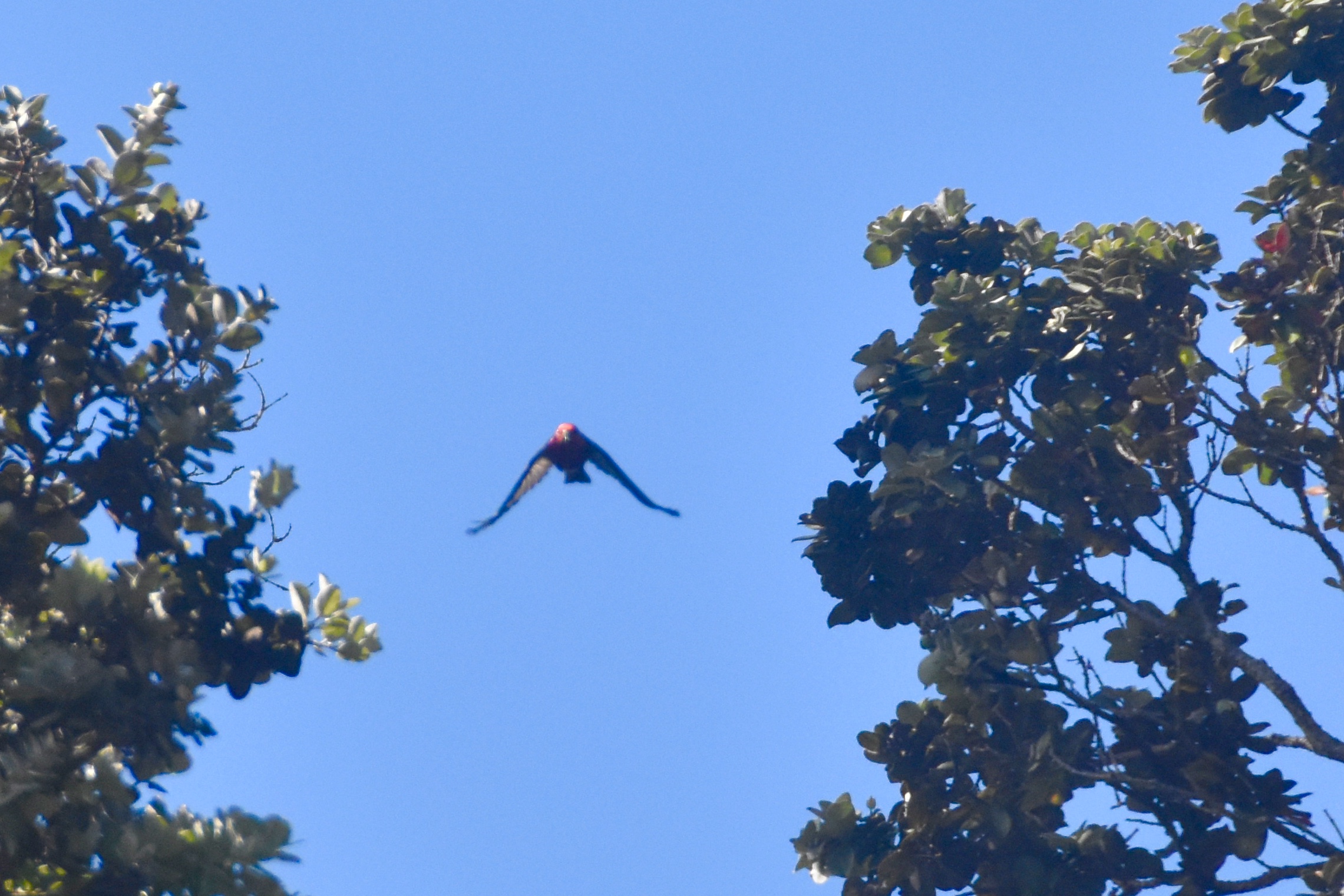
Photo by Eric Anderson.

Chasing Hope

June 12, 2022

Proverbs 8:1-4, 22-31
Romans 5:1-5

The young pueo had learned many things. He’d learned how to fly, and how to find his way home, and how to spot small creatures in the grasses. He was, in many ways, prepared to begin a life of his own.

But he didn’t know what hope was.

His mother talked about hope a lot. Or muttered about it a lot. “Do you think we’ll find mice out there today?” he’d ask, and she’d say, “Hope.” “Do you think it will be sunny and warm today?” he’d ask, and she’d say, “Hope.” “Do you think I’ll learn something new today?” he’d ask, and she’d say, “Hope.”

Sadly, one of the things that he hadn’t learned by the end of any day up to that point was what “Hope” meant.

So he went to ask grandmother, Tutu Pueo, his mother’s mother. He flew to the rock on which she’d perched and asked, “Tutu, what is hope?”

“Hasn’t your mother told you?” she asked, rather surprised.

“No,” he said. “She mutters ‘Hope,’ a lot, like when we set out to find dinner, or when I ask about what’s coming. But she never says what it is.”

Tutu laughed. “I’ll just have to teach you the way I taught her,” she said. “Come fly with me. Let’s chase Hope.”

Puzzled but willing, he followed grandmother into the sky. “You’ve got to chase Hope,” said Tutu over the rush of the air. “Yes, but what does Hope look like?” asked the grandson, but suddenly she shouted, “Look there! In the grasses!”

Down they pounced to where an unwary mouse had ventured out. They enjoyed their snack, but then he said, “That wasn’t Hope, was it? That was a mouse.”

“You’ve got to chase Hope,” said Tutu. “Come on.”

Once more they took to the air, but clouds were pouring through the gap between Mauna Loa and Mauna Kea. “Look! There’s Hope!” shouted Tutu and she poured on the speed, heading for the retreating sunshine. Before the rain began to fall they were circling again in the sun.

“That’s not Hope, is it?” said grandson. “Isn’t it just… sunshine?”

Tutu turned lazy circles. “You’ve got to chase Hope,” she called. “Have you learned anything?”

He thought about it. He thought about being hungry, and about chasing something to eat. He thought about wanting to be warm and dry, and chasing the gaps in the clouds. He thought about wanting to learn something, and…

“I’ve learned that you have to chase Hope,” he said. “It’s always somewhere out there ahead, isn’t it?”

Tutu nodded. “And when you catch it, it’s the thing you hoped for – and then Hope becomes the next thing you need or you want.”

When he went home, he found his mother waiting. “Did Tutu teach you anything?” she asked.

“She taught me to chase Hope,” he said. “Do you think I’ll learn something new tomorrow?”

She smiled a pueo smile and simply said, “Hope.”

by Eric Anderson

Watch the Recorded Story

The story as written does not match the story as told – I work from my memory of the text above, but not from the manuscript itself.

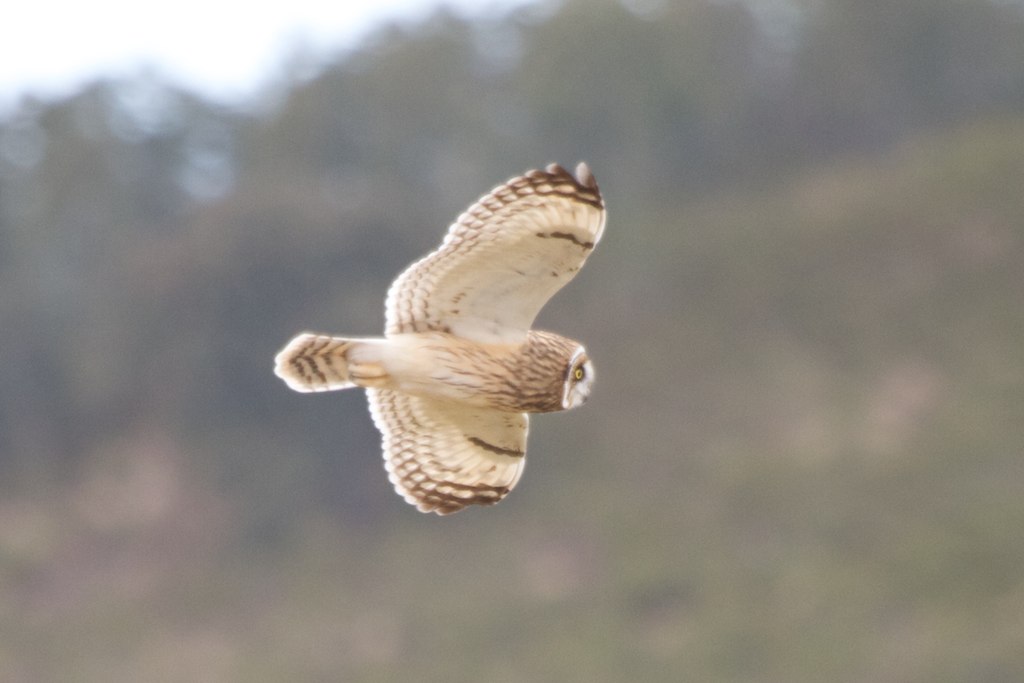
Photo of a pueo on Hawai’i Island by HarmonyonPlanetEarth – Pueo (Hawaiian Owl)|Saddle Rd | 2013-12-17 at 17-45-012 Uploaded by snowmanradio, CC BY 2.0, https://commons.wikimedia.org/w/index.php?curid=30241884.

Returning Tide

June 5, 2022

Genesis 11:1-9
Acts 2:1-21

The opihi – do you know about opihi? They’re a shellfish, a little bit like scallops or clams. Scallops and clams, of course, have two shells and a hinge. They’ve got protection from creatures that like to eat them on top and on the bottom. And when things are safer, they can open up and let the water bring the little bits of seaweed and tiny creatures to them.

An opihi, however, only has one shell. I suppose it’s a little bit like a hat, only it’s a hat that covers the entire creature. An opihi – they’re called limpets in English – finds a spot on the rocks and holds tight as its shell grows over its top. And then it continues to hold tight. It might move a little bit to get to another spot on the rock with more algae, but you and I might not even notice them on the move.

And they don’t talk much. There’s not a lot to talk about, when you’re an opihi.

Here’s the thing: they like to live in the shallows along the shorelines of our islands. In those places, the tides come in, and the tides go out. Sometimes when the tide goes out, an opihi is in a pool of water. But sometimes, it finds itself above the water after it drains away. Sometimes it just sits there in the open air.

A honu pulled itself up on a rock to nap in the sun one day and found an opihi already there. I’m a little surprised it noticed. A honu is a lot bigger than an opihi. But they both have shells, so the honu felt a little bit of sympathy for this opihi, stranded on the rock outside the water.

“Do you need help?” the honu asked. “I see you’re out of the water here.”

The opihi wasn’t used to conversation – there’s not a lot to talk about when you’re an opihi (I may have mentioned that). But finally it found a reply:

“No. I’m fine.”

“Isn’t being out of the water a problem?”

“Well, not so much. If it went on a long time, that would be a problem,” said the opihi.

“How do you know it won’t be a long time?”

The opihi thought about this. “Honestly, I don’t know that it won’t be a long time. I suppose it could be. This isn’t the first time I’ve been left high and dry. Some of those times really did seem pretty long.”

The honu waited. Finally the opihi finished:

“The tide has always come back. I trust the tide more than I trust myself to swim if you swept me off the rock into the water.

“The tide has always been good to me. I’ll hold on here until it returns again.”

by Eric Anderson

Watch the Recorded Story

The story is told from memory of this prepared text – and thus will never be quite the same.

Photo of opihi in Honokanaia, Kahoolawe, Hawaii, by Forest & Kim Starr, CC BY 3.0 us, https://commons.wikimedia.org/w/index.php?curid=71815389.

You Can Do Something

May 29, 2022

Acts 16:16-34
John 17:20-26

by Eric Anderson

The i’iwi, I’m afraid, can be something of a bully.

Most of the time things are OK. They’ll even join a flock of ‘apapane to find good trees for nectar sipping. But… there are times when it all goes very badly. An i’iwi that finds an ohi’a tree in full blossom first is pretty likely to chase other birds away. ‘Apapane and ‘amakihi in particular aren’t welcome when there’s a tree full of flowers. When an i’iwi starts swooping at them, most of the time they leave.

There was one i’iwi in the ohi’a forest, though, who was a thoroughgoing bully. He would chase ‘apapane away from a tree with just a few flower clusters. He would dive at ‘amakihi as they passed by a tree he was sitting in. If there were more flowers, he’d just get more aggressive. Some ‘apapane had to dodge strikes with his long curved beak. Some ‘amakihi swerved away from his extended claws.

A group of ‘apapane were perched in a not-very-flowery ohi’a tree rather glumly. They weren’t exactly hungry, but they certainly weren’t well fed. They’d had to fly further to find ohi’a in blossom, and sometimes he’d come after them and chase them away from those trees, too. It was a bad situation.

“I wish there was something we could do about it,” said one of the ‘apapane.

“You know, I think there might be,” said an ‘amakihi at the edge of the group.

The birds, ‘apapane and ‘amakihi alike, and maybe an ‘akepa or two, listened in astonishment as she shared her idea.

“I don’t think that will work,” said a skeptical ‘apapane.

“If it doesn’t, we’re no worse off than we were,” said the ‘amakihi, and they all had to agree.

The next day, a few ‘amakihi joined the one whose idea it had been and flew by the tree the bully i’iwi was perched in. It was a tree just dripping with blossoms and nectar, so of course he took off after them to chase them off. What he didn’t notice was that as he flew after them, a larger group of ‘apapane and ‘amakihi and ‘akepa descended on the tree he had left and began to feed. When he returned, he found the tree full of birds. With more anger and confidence than good sense, the bully set in to chase them away, but found they weren’t very chase-able when they already had a purchase in the tree – and when there were quite a good number of them. The decoy ‘amakihi flew in behind and so they, too, were in the tree, as the i’iwi fluttered about, getting wings and beaks batted at him by three or four birds at a time, until he finally flew off in disgust.

“I didn’t think it would work,” repeated the skeptical ‘apapane.

“My tutu told me you can always do something,” said the ‘amakihi who’d led the flock. “Sometimes the something even works.”

You can always do something.

Watch the Recorded Story

The story is told from memory of this prepared text – and thus will never be quite the same.

Photo by ALAN SCHMIERER from southeast AZ, USA – HAWAI’I AMAKIHI (8-30-2017) Hakalau Forest National Wildlife Refuge, Hawaii Co, hawaii-03 male, CC0, https://commons.wikimedia.org/w/index.php?curid=74675379.

Surrounded by Air

May 22, 2022

Acts 16:9-15
John 5:1-9

by Eric Anderson

The young noio was confused.

The world was, let’s face it, a fairly confusing place, especially there on the ocean-fronted cliffs of Kamokuna. There’s a lot of wind down there, and that plays with your mind. There’s a lot of noise from the waves breaking against the cliffs, and that’s just distracting. And in addition to the things he felt most of the time – the warmth of his parents’ feathers, the ruffling of his own feathers in the wind, the warm sun of day and the coolness of night – there was the occasional spatter of wind-driven spray.

All that would confuse anyone.

His nest gave him a great view of his world. Perched on a rocky shelf, he could see far off into he distance where the ocean stretched away. He could see the other noio skimming the water’s surface and dipping their beaks in and sometimes diving in briefly before taking off again. As day began the other birds of the colony would take off and begin their fishing above the ocean. As day closed they’d fly back, landing at their nests and bringing food to their young – like him.

What confused him was… flying.

It didn’t frighten him, the way it did some other birds in some other stories I’ve told before. It confused him. He didn’t understand how it could work. He could clearly see that it did, but as far as he was concerned it simply shouldn’t work. How could gravity be so much a force here at the nest and stop being one when a noio had left it? How could his wings flap against nothing and accomplish something? What invisible thing were the other noio grasping – and wings can’t actually grab hold of anything – to change direction like that?

It was terribly confusing.

I don’t really know why he didn’t ask anyone about it. His parents were kind and caring, his grandparents wise and intelligent, all good qualities for someone looking for a good person to answer questions. But he didn’t. He didn’t ask his friends in neighboring nests, and he didn’t ask their parents, either. Maybe he was just trying to work it out himself. I don’t know.

So when the day came to take his first flight, with his parents and grandparents and friends and their families all watching in anxious pride, he was anxious, too. Could he do something he didn’t understand? Was that the magic to flight? But he stretched out his wings, did a hop or two, and the next thing he knew he was off the ledge and moving.

Somehow there was a substance to the nothing he couldn’t see beneath his wings. He could use his wings to shape it and push off from it, and there would be more when his wings came forward again. A subtle adjustment meant a turn. A greater adjustment made a tighter turn.

And since noio are members of the tern family of birds, turn about is fair play.

He flew back to the home ledge and successfully landed with a bit of a flurry of wings and feathers for that first attempt.

“I don’t understand,” he said.

“You don’t understand what?” asked his father.

“I don’t understand how it works. I can see rock. I can see water. But I can’t see what I’ve been flying on.”

“It’s air,” said his mother, “the same air you breathe, the same air in the wind. No, you can’t see it, but it’s there, always there, and it will carry you anywhere you want to go.”

Watch the Recorded Story

This story is not told from the manuscript above, but from a memory of its composition.

Photo by Eric Anderson.

Explain Yourself

May 15, 2022

Psalm 148
Acts 11:1-18

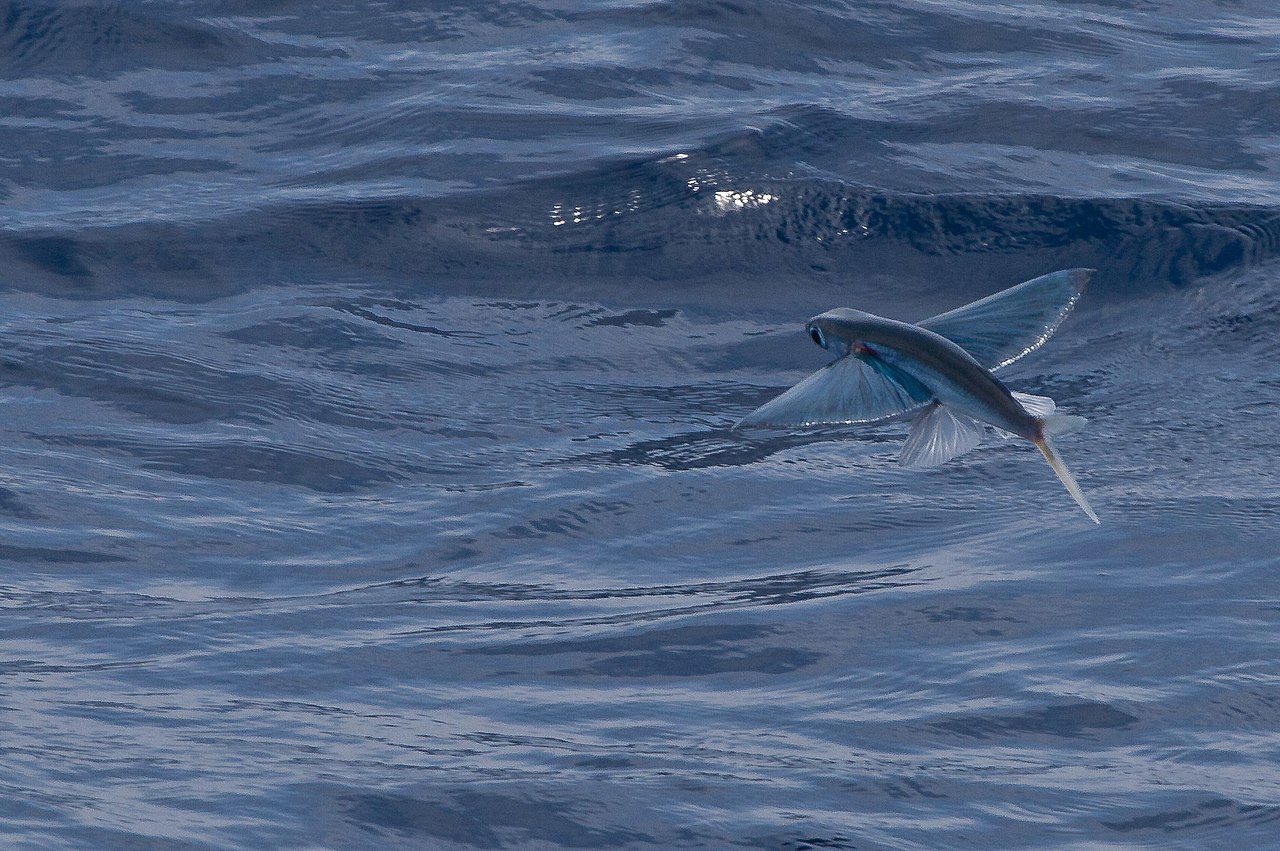
The mālolo is known in English as the flying fish. They don’t really fly, although I must admit that they fly better than, say, I do. They can get themselves moving through the water at near forty miles an hour, which is faster than you should be driving through the streets of Hilo. Then they spread their forward fins and glide above the water. They can stay in the air for about a quarter of a mile, which is about the distance across Liliuokalani Gardens.

I know I can’t stay in the air that far.

The mālolo didn’t always fly that far, or fly at all, however. They swam like fish do, and they swam in big groups, or schools, and they could swim really fast. That allowed them to get from one source of food to the next, and it also allowed them to swim away from fish that wanted to make them into food.

But there was a day when swimming fast just didn’t seem like it would be enough. Some great big ‘ahi had found a school of mālolo, and they were very hungry great big ‘ahi. Soon the school was scattered as the big fish charged through it.

One mālolo found himself pursued by an ‘ahi who was not only big and hungry but also very fast. The mālolo churned his tail and paddled his fore fins and he could feel the ‘ahi’s teeth getting closer and closer. A panicked curve of his fins brought him closer to the surface. The next thing he knew, he’d actually come right out of the water into the air and splashed down again. It confused the ‘ahi for a moment, so the mālolo put on as much speed as he could and spread his forward fins to curve him toward the surface.

This time when he emerged above the water he started to glide along with air streaming beneath those great fins. He held them stiff and kept on above the ocean surface, hoping the ‘ahi wasn’t following right beneath him. He stayed there as long as he could before he slowed and slid into the water once more.

The ‘ahi had turned aside. Perhaps it hadn’t seen him above the surface. Perhaps it had just thought he made a sharp turn in its confusion. It didn’t matter. It went elsewhere.

The mālolo went looking for his friends and family. The school was re-gathering. Some of them weren’t happy.

“What did you do?” they demanded. “Did you go above the water?”

“Well, yes,” he said. “I didn’t mean to.”

“We don’t go above the water,” some of them said. “We’ll die.”

“With the ‘ahi right behind me, I’d have died if I stayed in the water,” said the mālolo.

“How do you explain yourself?” the asked in the cold tones of judgement.

“I really can’t explain it,” said the mālolo, “except to say that it worked.”

I can’t say that the other mālolo took up gliding right away. They didn’t. Some of that generation never did. Others tried it but didn’t do it very well, and they ended up back in the water right in front of hungry predators. But each season more and more mālolo took up that glide through the air, for no other reason than… it worked.

Watch the Recorded Story

Photo of a mālolo by Mike Prince from Bangalore, India – Flying Fish, CC BY 2.0, https://commons.wikimedia.org/w/index.php?curid=63637092.

I Don’t Want to Try

May 8, 2022

Acts 9:36-43
John 10:22-30

by Eric Anderson

It was coming up to graduation day in the i’iwi school – why, yes, i’iwi go to school. They learn to fly from the nest, but there’s advanced flying techniques to learn, and flower identification, and how not to be where the i’o is hunting. These things are important.

One i’iwi was not looking forward to the final test. She was quite good in most subjects. She was a strong flyer. She knew the flowers of the ohi’a forest like the back of her… wing. She had learned to find sheltered places in the trees when hungry i’o were near. But… there was one thing she had not mastered.

She didn’t eat upside down.

That’s one of the things that i’iwi frequently do. They get to a flower, particularly those like the ‘opelu or ‘oha wai, flowers which sort of point downward from their stems, and they swing upside down so they can push their curved beak into the flower from below. They sip the nectar, swing back up again, and push off to the next flower. It’s a pretty basic way for i’iwi to eat.

For whatever reason, this young i’iwi found the whole idea incomprehensible. “I’ll get a headache,” she said. “I never have,” said her teacher. “I’ll miss the flower opening with my beak,” she said. “There’s always a second time to try,” said the teacher. “I’ll lose my grip,” she said. “That’s not likely,” said the teacher, “and besides, you can fly.”

“I’ll just sip ohi’a,” she said. “You can do that,” sighed her teacher, “but ‘oha wai is pretty tasty. And you won’t graduate from i’iwi school.”

She just set her wings and looked cross.

A little later, she watched her best friend sip from an ‘ohelu flower – upside down – and asked, “How can you do that?”

“It’s not hard,” said her friend. “How can you not?”

“I’ve tried enough new things,” she said. “I don’t want to try any new ones.”

“OK,” said her friend. “I guess you can live the rest of your life without trying anything new. I can’t imagine that will go well for you.”

She thought about it as her friend flitted from flower to flower, sipping the ‘ohelu nectar.

“All right,” she said. “I don’t want to try. I don’t really think I can do it or that it will be good. But I can’t live the rest of my life without trying new things. So I’ll try this one, too.”

She hopped onto a flowering stem, let herself swing upside down with a shudder, and poked her beak into the blossom. A moment later she’d hopped to another stem with another flower and did it all over again.

“Not so bad?” asked her friend.

“I guess I can try a few more new things,” she said. And she did.

Watch the Recorded Story

The photo is of an i’iwi sipping from a mamane flower. National Park Service photo. Public Domain.

The Time to Be Brave

May 1, 2022

Acts 9:1-20
John 21:1-19

by Eric Anderson

It was late April, and it was about to be May. The kolea didn’t know that. Pacific golden plovers, the English name for na kolea, don’t pay much attention to the calendars that people use. I’m not entirely sure what they pay attention to, but they do get a sense at about the same time, don’t they, that it’s time to fly from Alaska to Hawai’i or that it’s time to fly from Hawai’i to Alaska.

It was, in fact, about time to fly from Hawai’i to Alaska. One of the kolea was acutely aware of that, even though he was a fairly young bird. He’d only made the long flight once, from his Alaskan birthplace to the shores of Hawai’i Island. He’d really enjoyed the winter here, even if by our standards it was rather cold. The worms and bugs he ate had been more than plentiful, and the rains tended to drive the worms up from their flooded tunnels.

You and I might call that disgusting. The kolea called it lunch. Unless it was dinner. Or a mid-afternoon snack.

He knew it was time to fly to Alaska because his feathers had changed color. For most of the winter they’d been a dappled cream and brown, handsome enough but not dramatically so. Over the weeks of March and April (which he didn’t call March or April) he’d developed deep black feathers on his chest and face, set off by bands of white. His mother called him handsome. His friends called him handsome, though some of them teased him about it. There was another young kolea that he hoped found him handsome, but he was reluctant to ask her about it.

So he knew it was time to fly.

He just… didn’t want to.

His one trip to Hawai’i hadn’t been dramatically awful, but it hadn’t been great, either. It was just over two solid days in the air, beating his wings twice a second the entire time, with no place to land and rest and nothing to eat the entire way. His eyes had ached from holding them open so long and his wings hurt for days. Why would one ever want to do such a thing more than once?

Hawai’i Island, he thought, made a nice place to live. So he decided to stay.

“Oh, no, you don’t,” said his mother. “This isn’t where we have our families,” said his father. His friends just said, “You’ve got to be kidding.”

Only one young kolea asked him why. So he told her about the aches and the pains and why should one do that ever again?

“Because sometimes you have to be brave,” she told him.

That evening she joined a growing flock of kolea. They would leave together soon. When she turned her head, she saw a familiar bird. “Hello, handsome,” she said.

He might have blushed beneath his feathers, but who could tell?

“I decided that it’s time to be brave,” he said.

As the evening fell, the two of them were part of the flock that rose high in the air and began their long flight back to Alaska.

Photo by Eric Anderson.

I’ll Catch Up

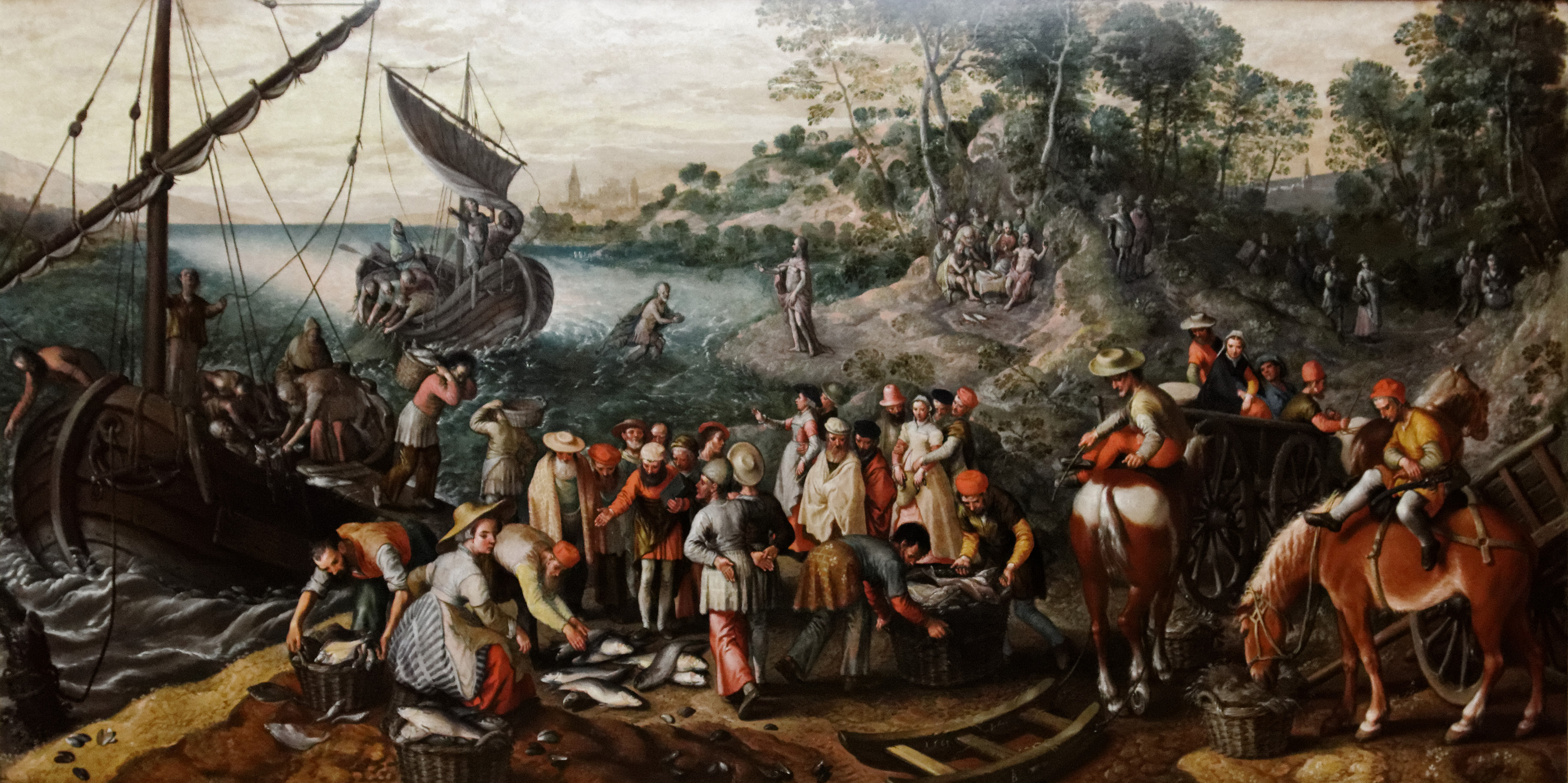
“…They caught so many fish that their nets were beginning to break.” – Luke 5:6b

“When they had brought their boats to shore, they left everything and followed him.” – Luke 5:11

“What the…? The net is full of fish!”

“How can it be? We fished all night.”

We both avoided looking at the Teacher/Healer sitting in the boat. He’d probably be smiling. We knew that he’d be smiling. He’d probably start laughing if we saw his face.

“Clap on that line and heave!

“I’m heaving, Simon! But we’re dragging the gunwale under!”

“We’ve got to get the fish into the boat!”

“Do we need to bring the water in as well?”

Oh, now he’s laughing. He’s ankle-deep in water and he’s laughing.

“James! John! Come help!”

“Are you crazy, Simon? They’ll laugh, too.”

“They can do all the laughing they like as long as they take some of the weight.”

They laughed, for sure, but they ran their boat into the water fast, and pulled like racers to our swamping craft.

“Hold on!”

“I’m holding! It’s not helping!”

They came alongside. The Teacher, laughing, tossed a line to them from the overflowing net.

“Haul away!”

“We’re hauling, Simon!”

“We’re hauling ourselves into the lake!”

We paused, panting, and considered our predicament. We hadn’t raised a single fish above the gunwale. Instead, the fish had hauled our gunwales down into the the waves. The water chuckled back and forth from stem to stern.

“James, take hold. John, take the oars. We’ll row back to the shore and deal with the net and the fish there.”

“Got it, Simon!”

“Andrew, row!”

I rowed. The Teacher’s mirth subsided, mercifully. James and John giggled between gasps. Simon’s arms could have been carved of stone. He might have modeled for a Greek sculptor interested in those ligaments and veins. I rowed, and each stroke carried us a fraction of what it should, dragged back by that overflowing catch of fish.

The net caught first, its bottom still beneath the keels. The boats grounded further out than we had liked, semi-swamped as they were. Simon shouted directions I can’t remember to roll the net’s silvery burden toward the shore. Eventually, the net and its wriggling contents rested on solid ground, except for those fish that had flung themselves back into the waves, where we, exhausted, let them go.

“Fear not,” the Teacher said. “I’ve got some other fishing for you to do.”

Simon, James, and John in bafflement stepped toward him. But… someone had to deal with all the fish, and clean the nets, and bail the boats.

“Go on. I’ll tend to this. Don’t worry.

“I’ll catch up.”

A story based on Luke 5:1-11, the Revised Common Lectionary Gospel Reading for Year C, Fifth Sunday after the Epiphany. 

The image is The Miraculous Draught of Fishes by Joachim Beuckelaer (1563) – Own work, Public Domain, https://commons.wikimedia.org/w/index.php?curid=13268606.