Story: Aloha for the ‘Iwa

September 28, 2025

Jeremiah 32:1-3a, 6-15
Luke 16:19-31

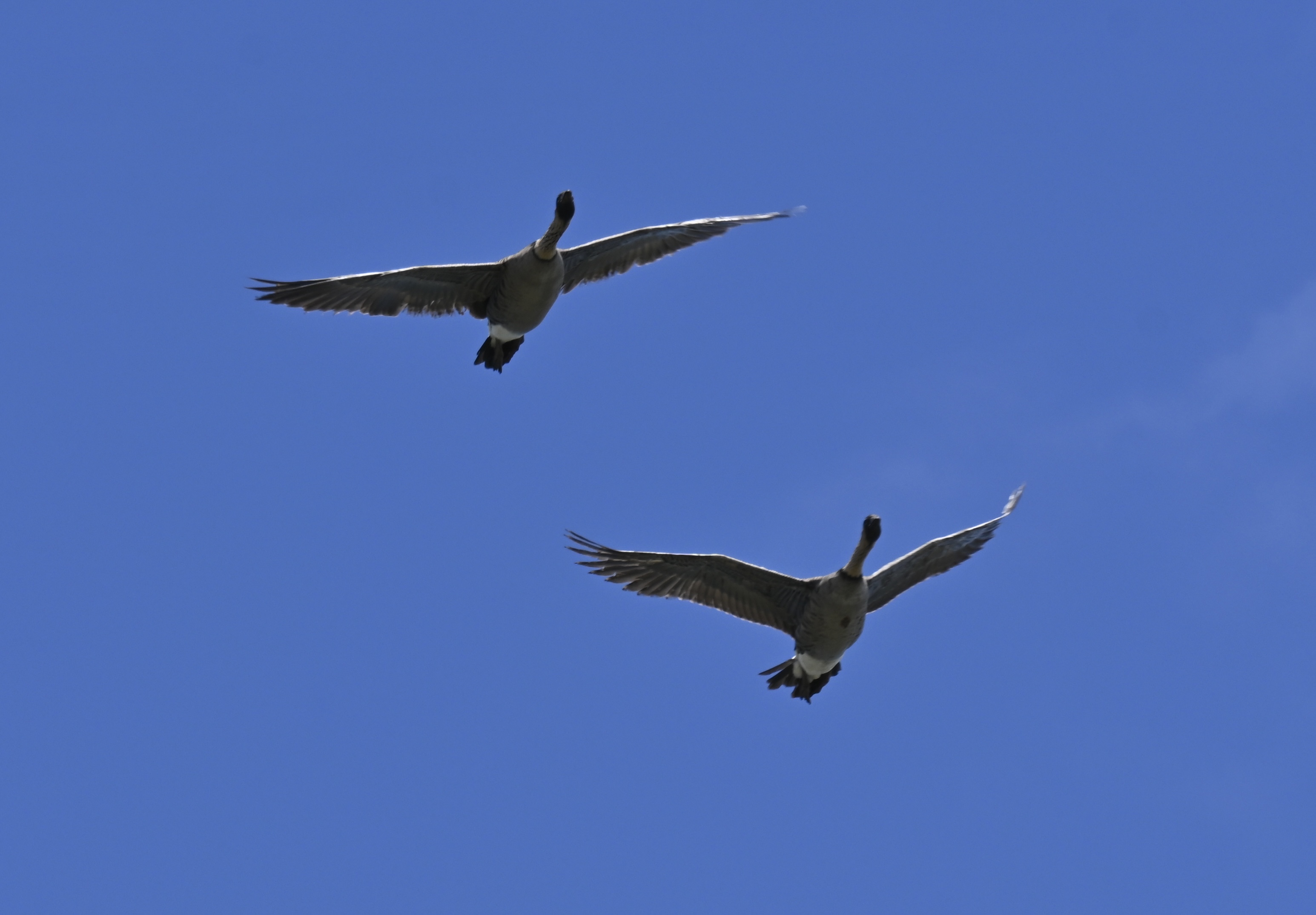
The ‘iwa, or great frigatebird, has a bad reputation among the seabirds around Hawai’i. ‘Iwa have been known to bully other birds to get them to drop their meals, which the ‘iwa then swoops down to eat. That’s pretty nasty. As a result, a flock of koa’e ula – red-tailed tropicbirds – had decided to have nothing to do with them.

When an ‘iwa flew by, they ignored him. Or her. They veered off to one side or another to keep their distance. When the ‘iwa called out a friendly “Aloha!” they said nothing in return. They called out to one another instead.

Except for one bird.

This koa’e ula decided that until an ‘iwa actually did anything mean, he’d assume that they were as worthy of a friendly “aloha” as any other bird. Seabirds tend to swoop around together a lot, which means that the air is full of “aloha,” which sounds a lot like lots of bird calls to us. A shore with lots of seabirds over it can be a very noisy place.

“Why are you greeting the ‘iwa?” asked his friends. “They’re bullies. They’re mean. They’re never going to give you an aloha.”

“I don’t know about any of that,” said the koa’e ula. “None of the ‘iwa I’ve greeted have done anything to me. Except to say, ‘aloha’ right back.”

Koa’e ula can fly for a long time, but they also like to spend some time resting on the ground, usually on smaller islands offshore from bigger islands like Kauai. There came a day when most of this particular flock was resting from some pretty vigorous flying and fishing. On that day something had happened a long way away that they didn’t know about. It was a big earthquake, and it kicked up the water into an ocean-spanning tsunami. All this was much too far away. The birds had no idea.

Hours later, a series of great waves approached the little island. A few of the koa’e ula were aloft, but they weren’t looking at the water closely. As the first wave came closer, an ‘iwa swooped low over the island, right over the place where the friendly koa’e ula had settled.

“Take off! Fly!” cried the ‘iwa. “There’s a big wave coming! Get into the air!”

“Take off! Fly!” shouted the koa’e ula to those near him, and he opened his wings and leapt into the air. Those near him did the same, and in a few moments the island was empty of birds and the sky was filled with them.

They looked down as the first wave washed over the entire island where they’d been. They were so shocked that they forgot to call “aloha” to one another as they circled. Without the warning of the ‘iwa, they’d have been there when the wave came.

“How did you know?” they started to ask the friendly koa’e kea, the one the ‘iwa had come to warn. “Hod did you know that the ‘iwa would know to warn us?”

“I didn’t know,” said the koa’e kea. “I just knew that everyone deserves an aloha. Everybody deserves aloha.”

As the ‘iwa swooped by with an anxious look to make sure her friend was all right, the koa’e ula called out, “Aloha and mahola nui loa to you!” The ‘iwa looked relieved and called back, “Aloha!” and she soared off once more.

I don’t know what other flocks do – there are ‘iwa and there are koa’e ula all around the world – but I can tell you that there’s been lots more aloha among those birds from that day to this, and long may it stay the same.

by Eric Anderson

Unfortunately, the video recording of worship for September 28, 2025, did not include audio, so there is no recording appended.

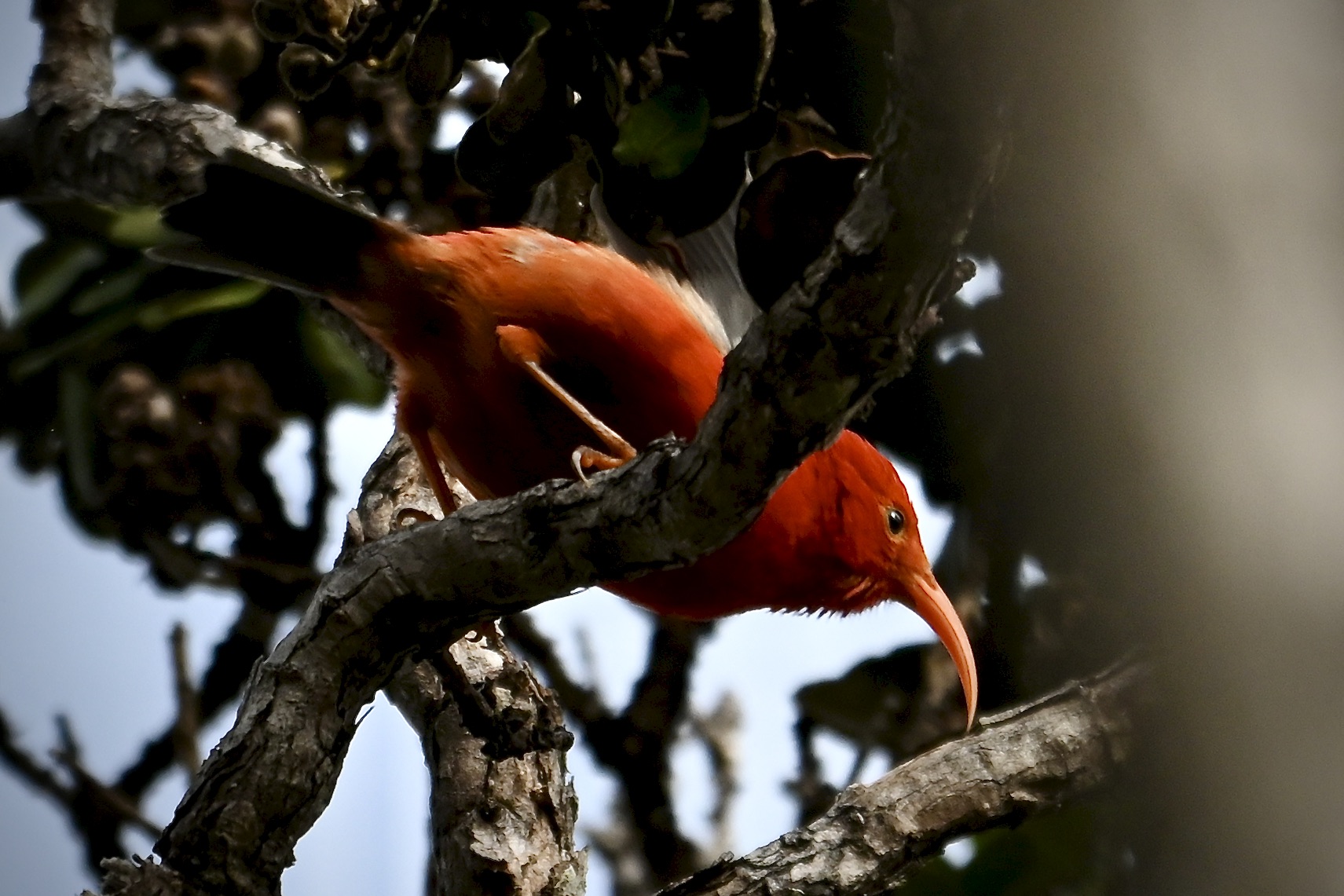
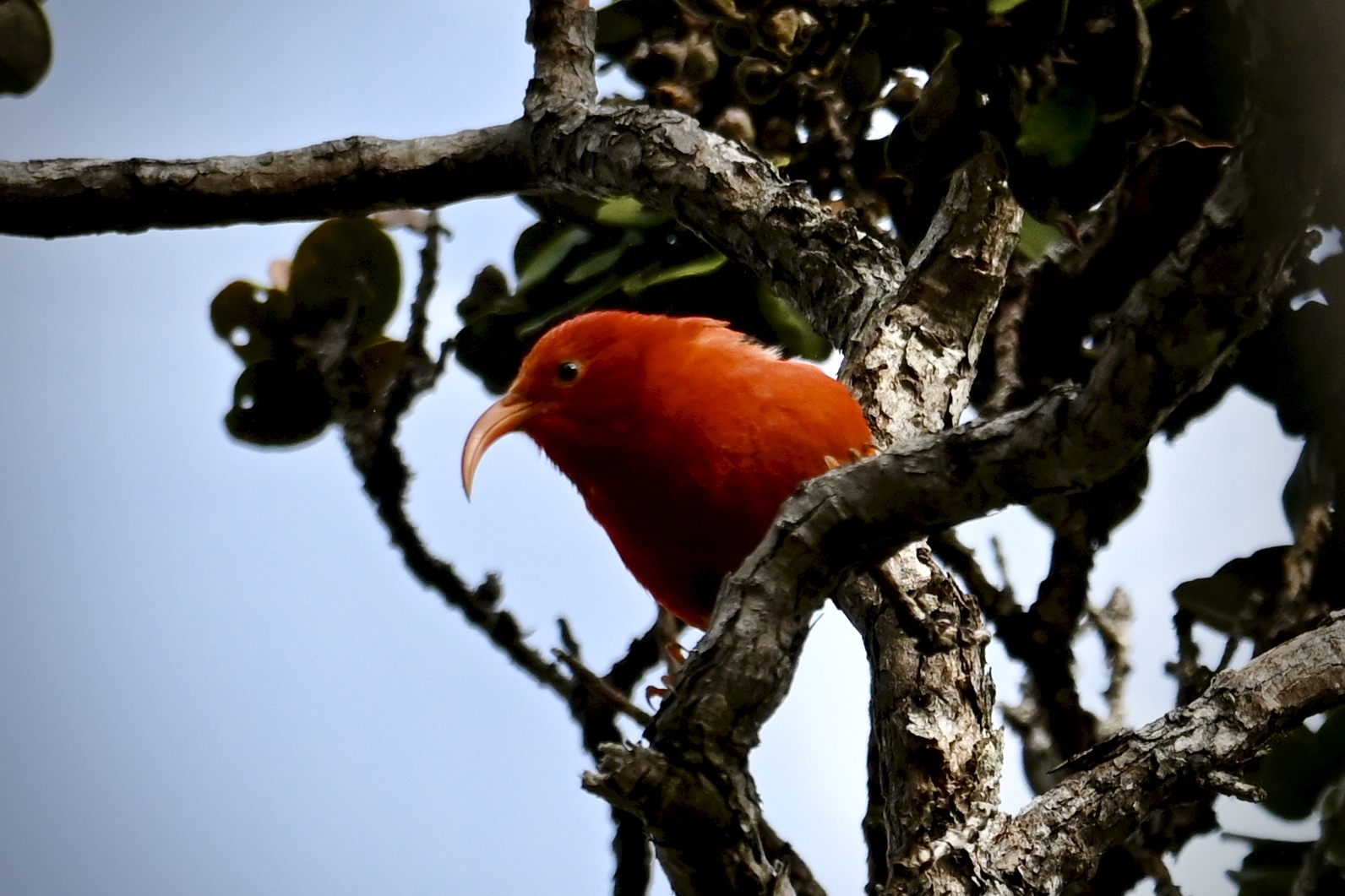
Photo of an ‘iwa (female) by Eric Anderson.

Story: Peace

September 21, 2025

Jeremiah 8:18-9:1
1 Timothy 2:1-7

He was a yellow-billed cardinal, and he was young. He was so young, in fact, that the feathers on the top of his head weren’t red; they were brown. He was so young that his bill wasn’t yellow, it was tan.

He was old enough to be living mostly on his own, finding his own food among the seeds and berries, and his own shelter for the night. He was old enough to enjoy a sunrise or a sunset, and he was old enough to enjoy sitting quietly in the sun.

What he wasn’t old enough for was to understand what “peace” was.

That may seem odd, given that sitting quietly and enjoying the sunshine sounds pretty peaceful, but it didn’t always feel that way. For one thing, if he sat in the sunshine for too long, he’d start to feel hungry. Feeling hungry, he thought, wasn’t very peaceful. I guess he had a point there. Being uncomfortable isn’t very peaceful.

Worse than that, though, when he got hungry, he had to find food. He knew how to do that, of course. That wasn’t the problem. The problem was that other birds would show up, and he didn’t like that. Other yellow-billed cardinals were usually OK – he knew a couple of them that tended to tease him – but he really didn’t like it when different kinds of birds turned up. House finches made him nervous. House sparrows were kind of scary. Saffron finches made him feel uneasy about his rather dull coloring.

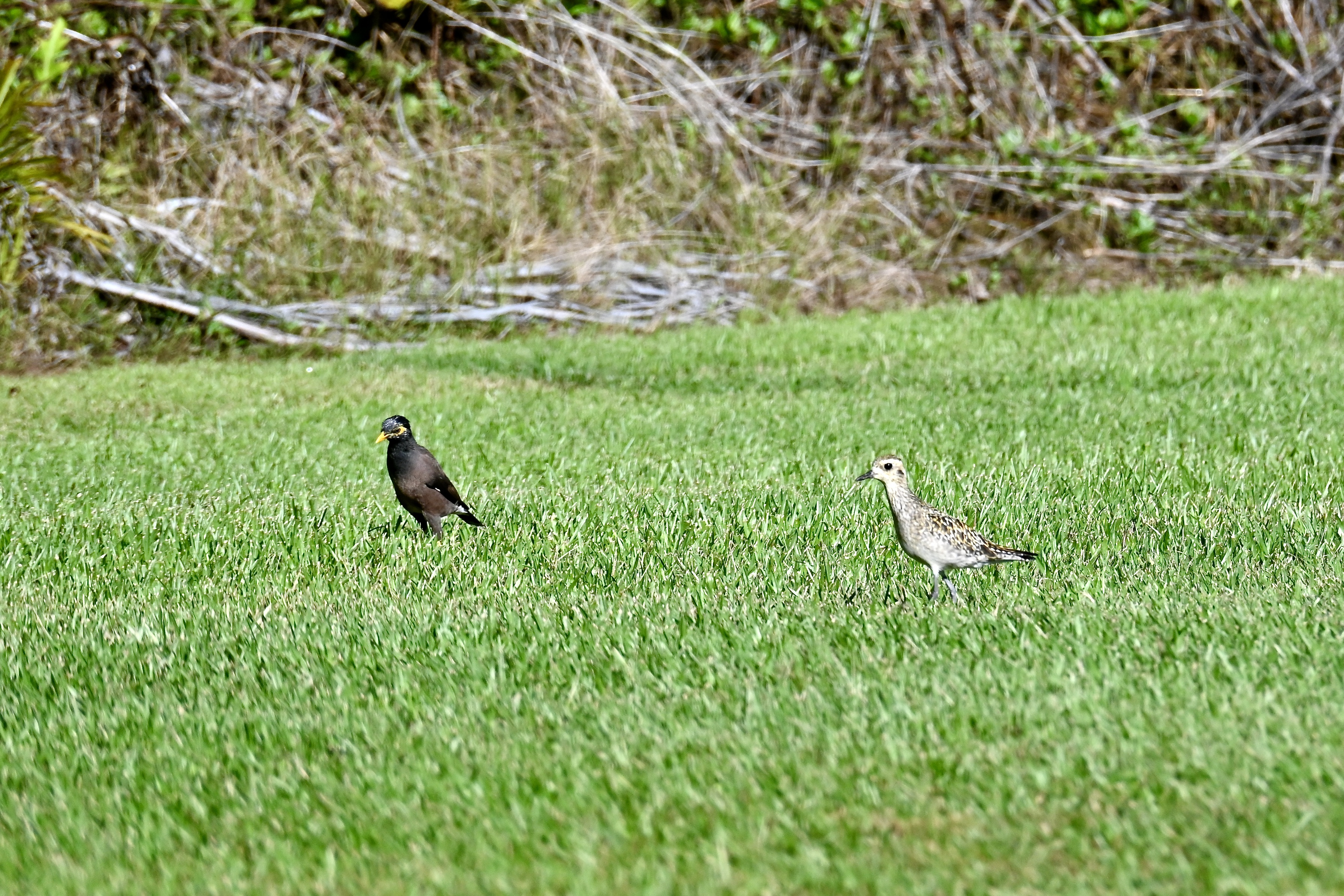
Worst of all, as you might guess, were the mynas. For one thing, they had brighter yellow bills than he did. For another, they were a good deal bigger. And, of course, they were often really loud, really argumentative, and really frightening.

As he got older and his head feathers turned red and his bill turned more yellow, he still didn’t like it when other birds turned up while he was feeding. He didn’t really notice that the finches and sparrows and kolea really paid him no mind. They just got on with looking for bugs and seeds and worms to eat. So when the myna turned up near him while he was eating, he jumped.

“What’s wrong, youngster?” asked the myna. “Is there something wrong?”

“Oh, no, myna sir,” said the yellow-billed cardinal. “Nothing wrong at all.”

“You jumped,” said the myna. “Did something startle you?”

“Well,” said the cardinal, “you did. You caught me by surprise when you landed.”

“Oh, that’s fine,” said the myna, who sounded somewhat relieved. “Sorry about that. You had me worried for a minute there.”

“You worried?” said the yellow-billed cardinal. “Why?”

“Some birds get upset about mynas,” said the myna. “They think we’re loud and obnoxious. They don’t like it when we’re around.”

The yellow-billed cardinal had thought such things, so he thought that now he’d better stay quiet.

“I’m glad you’re not like that,” said the myna. “I could do with a bit of peace today.”

That’s when the yellow-billed cardinal learned what peace could be – a time when creatures who were rather different could live side-by-side, meet their needs, and not fear one another. A yellow-billed cardinal could be safe from the bullying he feared from a bigger bird. A myna could be safe from the rejection and disdain of a smaller bird.

“I could use a bit of peace myself,” said the yellow-billed cardinal. “Let’s enjoy it while we can.”

by Eric Anderson

Watch the Recorded Story

I write these stories in advance, but I tell them from memory, which means things change.

Photos by Eric Anderson.

Story: Grand

September 14, 2025

1 Timothy 1:12-17
Luke 15:1-10

There was a tree, an ohi’a tree, that stood on the cliffside above Kilauea Iki. The tree had stood there long years. He was tall. He was grand. And he was proud.

He looked down upon the mostly flat black rock of Kilauea Iki and sniffed. There were ohi’a trees down there, too, but they were small and bushy. The tallest rose no more than eight or nine feet, less than a tenth of this tree’s one hundred foot crown.

“You’re so small,” he said to the little ohi’a trees below. “What difference can you make?”

Next to him stood another tree, just as tall, just as grand, but not so proud and rather wiser. “Don’t you remember?” she asked him. “This was no more than a pond of lava years ago. These trees had to catch every drop of rain. They had to make their own soil. Someday this crater will be filled with trees, and it will be because these trees got it started.”

“Well, all right,” huffed the other tree. “But what about these little bugs that crawl all over me? They’re even smaller. And they nibble at me. And they itch. They can’t be of any use.”

His neighbor looked him over and said, “These are the same creatures that attract the birds to you. Between the birds and the bugs, they carry the pollen around that means there will be ohi’a seeds.”

“Seeds,” huffed the proud tree. “What good are they? They’re even tinier than the bugs!”

“Seeds,” said the wise tree, “mean that there will be a future for our forest up here on the cliffsides as well as in the rocky bottoms of the craters. Seeds mean new trees where there hadn’t been any before.”

“Seeds,” she said softly, “mean that when we are measuring our height on the forest floor, there will be other trees rising over us.”

The proud tree huffed again. “There could never be a tree as grand as me,” he said, and he ruffled his branches in the breeze.

“Seeds,” said the wise tree, as she watched a little cloud of them dance in the wind from the proud tree, “Seeds mean that there will be a forest even grander than either of us.”

by Eric Anderson

Watch the Recorded Story

I write these stories ahead of time, but I tell them from memory (and a little bit of inspiration). What you have just read does not precisely match what you’ll see.

Photo of an ohi’a in the Kilauea Iki crater by Eric Anderson.

Story: Considering and Preparing

September 7, 2025

Philemon 1:1-21
Luke 14:25-33

People, in general, don’t do well if they eat a lot of food quickly. It’s a good way to feel sick. Sometimes, somebody who eats a lot of food really quickly will get sick.

Ick.

The young ‘akekeke had learned something similar from his parents as they led him and his sister and brothers around the Alaskan tundra near where they’d hatched. There they found the bugs and worms that filled their bellies and kept them growing. Both mother and father, however, warned them against eating too much, and after one of his brothers ignored their advice and got a nasty stomachache the rest of the chicks decided their parents knew something after all.

As the summer wore on, it became time for the trip to Hawai’i. The four chicks became fledglings, learned to fly, and watched as more and more of the ‘akekeke began flying toward the coast. Their mother joined in with lots of the other mothers, leaving them with their father to finish flight school with him.

Even more birds departed before their father gathered them along with some other youngsters into a little flock and said, “It’s time to get ready.” They flew to the shoreline where they found a number of other groups of ‘akekeke probing through the shallows for small fish and shrimp.

“It will be time soon,” said their father, “to make the long flight to Hawai’i. You’ll need all the energy you can get for this. So eat. Eat all you can. Eat more than you think you can.”

“But wait,” said his son. “You’ve been telling us for weeks not to eat too much. In fact, when our brother tried it anyway, he got sick. Are you telling us that was wrong?”

“It was wrong then,” said father, “but now we’re doing something very different. We’re making a long flight and there’s nowhere to stop and eat until we get there. This is the time to plan. This is the time to prepare. This is the time to get ready.”

The young ‘akekeke wasn’t convinced. He wasn’t convinced that eating a lot was a good idea, even though his sister and two brothers had plunged right into an outcrop of mussels. He also wasn’t sure that taking such a long flight was a good idea, even if so many of the adults had already gone. His father looked at him with sympathy and with love.

“There’s some time, youngster,” he said. “Take time. Consider. I don’t think you’ll enjoy staying here for the winter – it gets cold, you see. But think it over. I hope you’ll join us.”

The young ‘akekeke thought about it. He thought about being cold, which he couldn’t really imagine. He thought about eating more than he ever thought possible, which he couldn’t really imagine, either, but he could see that his father, sister, and brothers didn’t seem to have any troubles as they ate their way along the shoreline. He thought about Hawai’i, which he also had trouble imagining, since he’d never been there before. Mostly he thought about being the only ‘akekeke in Alaska when everybody else had gone.

A little while later he was industriously feeding himself alongside his father.

“I’ve thought it over,” he said, “and I’ll stick with you.”

by Eric Anderson

Watch the Recorded Story

I write these stories ahead of time, but I tell them without notes, so the text I prepared does not match the way I told it in worship.

Photo of an ‘akekeke (ruddy turnstone) on Hawai’i Island by Eric Anderson.

Story: The ‘Alawi Who Was Noticed

August 31, 2025

Proverbs 25:6-7
Luke 14:1, 7-14

Up on the mountain slopes, there are a lot of very colorful birds. The i’iwi and the ‘apapane are the brightest in color, with those glistening red feathers and the contrasting black of their wings. They’re not alone, though. The ‘amakihi makes a pretty brave sight in yellow, and the ‘akiapola’au is brighter still. Add in the colors of the flowers on the trees and on the bushes, and the forest is a pretty colorful place.

And then there’s the ‘alawi. The ‘alawi isn’t brightly colored. It’s grayish green with some yellow tint on the belly. It’s not even a strong singer. It has a pretty plain kind of call. It’s so understated, in fact, that people went many years before making the connection between the old Hawaiian word “’alawi” and a bird westerners called the “Hawai’i Creeper.”

Mostly, this hasn’t bothered the ‘alawi at all, since they don’t pay much attention to what people think of them. But one of them did start to feel bad. In the midst of a forest full of bright red ‘apapane, orange ‘akepa, and yellow ‘akiapola’au, who would notice a little green ‘alawi?

“It’s a pity I’m so drab,” he told himself one day. “I’m going to change that.”

I have to admit that his approach had some promise. He was going to start wearing jewelry – that is, he was going to tuck a flower behind his ear, as we see so often from human women in Hawai’i. He was so clever that he came up with the idea himself – he really didn’t pay much attention to people.

There was, however, a problem. Oh, he could grasp flowers with his feet quite well. But when you want to tuck a flower behind your ear, it really helps to have, well, ears.

An ‘apapane watched him do this and asked, “Why? I mean, why?”

“I want to be noticeable,” he said with some embarrassment. “I don’t want to be drab.”

“I’m noticing,” said the ‘apapane, “and I guess you aren’t drab. But you do look silly. Is that how you want to be noticed?”

This might have gone on for a while, but it turned out to be another of those dry times in the forest, and it got harder and harder to find things to eat. For the ‘alawi that’s mostly bugs. Everyone in the forest was feeling the pinch in their bellies.

Our friend the ‘alawi, however, got lucky one day. He found a stand of trees that were better watered, and the flowers on them had attracted a good crowd of insects. He flew over to feed, but stopped. He didn’t want anyone else to be hungry while he ate his fill. So he started to call the ‘alawi’s plan song. That didn’t seem to attract anyone, so he found an ‘akiapola’au and brought him to those trees. The ‘akiapola’au whistled, and some other birds and some other birds and some other birds made their way over, sang their songs, and settled in to eat.

Hopping along a tree branch, the ‘alawi met the ‘apapane he’d seen a few days before.

“You found a way to be noticed, youngster,” said the ‘apapane.

“I did?” said the ‘alawi.

“You did,” said the ‘apapane. “We’ve all noticed you, and not for wearing a flower. We’ve all noticed you for being the considerate and compassionate bird you are. Well done. And thank you.”

by Eric Anderson

Watch the Recorded Story

I write these stories in advance, but I tell them without notes, so between memory and improvisation the story as I told it is different from the story as I wrote it.

Photo of an ‘alawi by Eric Anderson.

Story: Feeding the I’iwi

August 24, 2025

Isaiah 58:9-14
Luke 13:10-17

Up on the slopes of Mauna Loa, where the forest birds gather into little flocks during the summer, there was one little flock that had decided to get itself better organized. They figured out who was the best in the flock at finding food, and other birds that were good at spotting bad weather. They found places to shelter when it was hot in the middle of the day and places to start foraging when it was cool in the morning. Each bird got a buddy to make sure nobody got lost. Each bird got a buddy to make sure that when they were feeding, everybody found out about it. Each bird got a buddy to make sure that everybody got fed and sheltered and safe.

The birds agreed that it was a pretty good system.

“One more thing,” said one of the birds who had been a big part of the organizing. “No i’iwi.”

“What do you mean?” said an ‘amakihi. “They don’t like to fly in flocks anyway.”

“What I mean is,” said the first bird, “that if we see any i’iwi, we chase them away.”

That didn’t sound good to most of the other birds, who were far more accustomed to flying away from a chasing i’iwi than chasing one.

“I don’t think that’s going to work,” said an ‘akepa. The other birds chorused their agreement.

“Well, all right,” said the first bird, an ‘apapane. “but we won’t encourage them, either. Make sure when you call that there’s no i’iwi listening. We’ve organized to feed ourselves, not them.”

And so it was. There was one ‘apapane in the flock, though, who thought that sounded a little unfair. Sure, she’d been chased by i’iwi more than once and hadn’t enjoyed it, but she didn’t see any reason for even a grumpy bird to go hungry.

It turned out to be a tough season in their area of Mauna Loa. It was dry, and the trees weren’t blossoming much. There were a few spots around where a small grove would bloom all once, but they were hard to find. The finder birds were a real blessing. Without them the flock would have been much hungrier.

One day the scout birds had to work really hard. They looked this way and that without finding much. Finally one pair spotted a little group of trees with blossoms, and they called the flock. The other birds followed gratefully.

That’s when one of them spotted an i’iwi. “Remember!” he shouted out. “Don’t tell the i’iwi where we’re going!” Most of the flock, in fact, detoured so that the i’iwi wouldn’t notice them.

But not the one ‘apapane. She couldn’t bear the thought of another bird going hungry, even a grumpy i’iwi. She took a turn over the tree where the i’iwi was and called out a quick, “Follow me!” As she flew along the i’iwi followed, and when they arrived at the little stand of blossoming trees, the i’iwi settled into a tree as far away from the others as it could.

“Why did you do that?” asked her buddy bird. “You broke the rule. You brought an i’iwi!”

“Of course I did,” she said. “Have you been hungry? Did you enjoy it?”

“Yes, of course,” he said, “and no I didn’t.”

“So was he,” she told him, “and I’m sure he didn’t like it either.”

“But he’s an i’iwi!” he told her. “He’s a bully and a jerk.”

“And he’s hungry,” she said. “Everybody should get help when they’re hungry.”

From the adjacent tree, the i’iwi let out an unpleasant chirp, but that’s because i’iwi aren’t great singers. The two ‘apapane, however, knew that he’d said, “Thank you.” Nobody likes to be hungry, and everybody should get help when they are.

by Eric Anderson

Watch the Recorded Story

I write these stories in advance, but I tell them without notes. Between the vagaries of memory and the impulse to improvise (not to mention the contributions of the congregation), what I’ve written and the way I told it are not the same.

Photo of an ‘apapane by Eric Anderson.

Story: Following the I’iwi

August 17, 2025

Jeremiah 23:23-29
Hebrews 11:29-12:2

During the summer, plenty of the forest birds form small flocks which may include ‘apapane, ‘amakihi, ‘akepa, and so on. Plenty of those birds may fly about and forage by themselves as well, but one little flock on the slopes of Mauna Loa was having a bad day. They just weren’t finding much in the way of food.

“I’m hungry,” complained an ‘amakihi.

“We all are,” replied an ‘apapane, and the other birds agreed.

“What are we going to do about it?” asked the first ‘amakihi.

“Does anyone have any good ideas?” asked another ‘apapane, looking around at the other birds. From the shaking heads, nobody did.

That’s when the heard they heard the squeaky sound of an i’iwi. They watched as he rose from a nearby tree – one which didn’t have much in the way of flowers on it, circled once or twice, and flew off.

“What was that about?” asked an ‘apapane.

“I don’t know,” said an ‘akepa.

“How about we follow him?” said the first ‘amakihi, the one who was hungry.

Nobody could think of a good reason not to, so the little flock took to the air and flew in the same direction the i’iwi had taken. For a little while they just flew over flowerless trees, but then a few ohi’a blossoms appeared. Things were looking up. Eventually the i’iwi settled in a tree just dripping with flowers, surrounded by plenty of other blossoming trees as well.

The i’iwi squawked a little unpleasantly at them – they’re not great singers, the i’iwi – but didn’t come out to chase them away as they settled into surrounding trees and began checking the flowers for nectar and the branches for bugs. There wasn’t much sound for a while other than some satisfied songs and wing flutters as they shifted from branch to branch.

“How did you know?” said an ‘apapane to the ‘amakihi.

“How did I know what?” said the ‘amakihi.

“How did you know that the i’iwi would lead us to flowers?”

The ‘amakihi shrugged. “I didn’t know,” he said, “but as sad as it is that the i’iwi isn’t a great singer, and as nasty as they can get when they’re upset about something, they’re really good at finding trees in blossom. I’d trust them to find food any day of the week.”

“You’d trust an i’iwi?” said the ‘apapane in wonder.

“I trust an i’iwi to do what an i’iwi does,” said the ‘amakihi. “And look. This one did.”

The i’iwi, who had overheard all this, let out a contented squawk, hopped to another flower, and settled in to sip the sweet nectar.

by Eric Anderson

Watch the Recorded Story

I write these stories in advance, but I tell them from a combination of memory and improvisation, so what I wrote and how I told it do not match.

Photo of an i’iwi by Eric Anderson.

Story: The Inattentive ‘Elepaio

‘Alawi (left) and ‘Elepaio (right)

August 10, 2025

Isaiah 1:1, 10-20
Luke 12:32-40

The ‘elepaio are usually the most actively curious birds in the forest. They hop and flutter and fly their way around the trees from the topmost branches all the way to the forest floor. They look into gaps in the leaves, cracks in the bark, and even holes in the rocks for the bugs and things they like to eat. They’ll perch on a branch and pick up bugs and caterpillars. They’ll pull bugs out of rolled-up leaves. They’ll chase flying insects on the wing.

You can do that if you’re paying attention.

If you’re not paying attention, well… it’s all going to be harder.

There was an ‘elepaio who just couldn’t concentrate. He didn’t pay attention to what was around him. His friends liked to sneak up on him and ruffle their feathers; they made a game of how loud they had to be before he noticed. I’d like to say that he was so inattentive because in his curiosity he was thinking deep thoughts, but no. He wasn’t.

Mostly he was sitting rather sleepily on a branch.

The result was that he got rather hungry. An ‘elepaio is a small bird, for sure, but an ‘elepaio eats small things, so you have to eat a lot of small things to keep from being hungry. He’d get hungry, but it would only rouse him to do a casual look around. If he spotted a bug, well, he could usually catch it. He still didn’t look closely, though, and it surprised those who watched him how many other bugs and caterpillars he’d miss.

It was an ‘alawi that helped him concentrate.

She was moving along a branch near the one he perched on one day, searching for the bugs she liked to eat, which were also pretty much the bugs that the ‘elepaio liked to eat. He wasn’t greedy, so he didn’t chase her away. He was even feeling a little friendly, so he called out a greeting, and then said:

“I’m afraid you won’t find anything there. I’ve been here a while and haven’t seen anything to eat.”

She looked puzzled, because right in front of her, barely hidden by a fold in the bark, was a spider. She took it in her beak, showed it to the ‘elepaio, and ate it rather sheepishly. She felt a little guilty eating in front of a hungry fellow creature.

“Oh,” he said. “I didn’t see that one.”

“How about this one?” she said, showing him another bug.

“Really? There were two?”

“Three,” she said, and then, “Four. Actually, quite a bit more than four.”

He watched in some amazement as she pulled bug after spider after caterpillar from the branch he was sure didn’t have any bugs on it.

“How did you find those?” he asked, astonished.

“I looked,” she said. “I moved along, and as I moved, I looked.”

He thought about what he’d been doing, which was sitting still, and not looking.

“I guess I ought to do more of that,” he said.

“If you don’t want to be hungry, it would work better,” she agreed.

So the two birds moved along their respective branches, and both of them agreed it was good to be fed.

by Eric Anderson

Watch the Recorded Story

I write these stories ahead of time, but I tell them in worship from memory (and improvisation). What you just read will not match the video recording of my telling.

Photos of an ‘alawi and ‘elepaio by Eric Anderson.

Story: The Rich Ae’o

August 3, 2025

Psalm 49:1-12
Luke 12:13-21

“How would an ae’o get rich?” she wondered.

How would an ae’o (that’s a black-necked stilt in English) even think about getting rich? You might be wondering, and I would be wondering, too. This particular ae’o had been listening to some human beings who were visiting the Hawaiian shoreline near where she hunted for shrimp and bugs in an old fishpond. The people had been talking about how wealthy they were and how glad they were to be rich.

I’m afraid a lot of it was pure foolishness, and some of it was pure hard-heartedness, because they talked about how they paid their workers as little as possible and bought things for low unfair prices and sold things for high unfair prices. Frankly, most of that went over the ae’o’s head, despite how long her neck and her bright pink legs were. Still, the humans seemed pleased about it, so she determined to get rich.

“How would an ae’o get rich?” she wondered.

She wondered about it as she and her husband prepared a nest. An ae’o nest is pretty simple. They make a hollow in the ground, then line it with grasses and even some of their downier feathers. As they were working, she noticed something bright on the ground. It was a white pebble.

“I know how to be rich!” she said. “I’ll line our nest with bright things.”

Her husband had no idea what to make of that, and even less when she flew out and around and returned with odd things that didn’t make much sense in an ae’o nest. She found more pebbles, which poked at you when sitting on the nest. She found plastic bottle lids, which weren’t any more comfortable than the pebbles. She brought in crushed soda cans that someone had carelessly dropped somewhere, which took up a lot of room, and she brought in bits of discarded paper with the shiny photos of visitor brochures.

“Why are you doing this?” asked her husband. “To get rich,” she told him, and had no better answer.

It was her grandmother, of course, who came by at last to take a look at the bright and shining nest. She was settled uncomfortably into it, wedged in by cans and bottles and avoiding the sharp bits of glass that a sensible bird would have left where they were.

“You call this being rich?” said tutu ae’o.

“Of course,” she replied.

“It looks more like this nest is demanding more of you than it’s giving you in return. It’s supposed to protect your eggs. Is it doing that?”

Indeed, the eggs were going to have a hard time finding space amidst all the hard and sharp surfaces in the nest. Even our rich ae’o had to admit that.

“This isn’t how an ae’o gets rich anyway,” said tutu. “We get rich with family. We get rich with sunshine. We get rich with a big school of shrimp. We get rich with the things the world gives us, things that are never ours, but which we enjoy when they come.

“Give up this empty nest, granddaughter,” she said. “Come lay your eggs someplace comfortable and safe. Then you’ll be rich with a new generation.”

Without a word, the ae’o stood up and walked off to build a new nest with her husband. She never looked back. She looked ahead to being rich in love.

by Eric Anderson

Watch the Recorded Story

I write these stories in full ahead of time, but I tell them from memory plus improvisation. As a result, what you just read does not precisely match the way I told it in the video.

Photo of two ae’o by Eric Anderson.

Story: Sun, Rain, and Trees

Three red birds with black wings, two perched in a tree top, with the third flying toward the other two from the right.

July 27, 2025

Hosea 1:2-10
Luke 11:1-13

You know how it is with brothers and sisters and siblings of all kinds. Some days everybody gets along, and the next day nobody gets along. It’s squabbling from dawn to sunset, and on the following day everybody is happy again.

In one ‘apapane family, that wasn’t what happened.

Mind you, they were pretty good to one another in the nest. They were cheerful most of the time when they were learning to fly and when they were getting their adult red-and-black feathers. Each of them felt very grown up as they paraded their bright colors through the ohi’a trees.

For a reason nobody ever discovered, that’s when things fell apart. The two younger ones – and younger is a very narrow thing when you hatch in the same nest just minutes or an hour apart – couldn’t speak a kind chirp to one another. “You’re impossible!” said the brother, who was the middle one. “You’re more impossible!” said the youngest, who was one of the sisters. “There’s no such thing as more impossible!” said her slightly older brother, and it went downhill from there.

The oldest one, an older sister, listened to them with a mixture of laughter at her younger siblings and a fair amount of sadness that they couldn’t get along.

It got worse during nesting season. For some reason some of the supplies were in short supply. Twigs were in plenty, and grasses for lining, but a lot of the mosses were hard to find. The younger sister and her husband had a lot of trouble. Her older brother and his wife, on the other hand, did pretty well. It was chance, pretty much, but they actually had more mosses than they could use and his sister didn’t.

That’s when she flew over to her brother’s nest and clamored and called for help.

“No!” he called. “Go away!” But her nest really needed the materials, and she really couldn’t find them.

“Help! Help us!” she said, and she kept calling and pecking at the branch by the nest until, at last, he couldn’t do anything but give her some mosses and watch her fly away to her own nest.

Of course she came back. She still needed more. One beakfull wasn’t enough, as both of them knew. She had to go through the same thing again. And again. Until he relented – again – and she flew off with the mosses.

That’s when big sister appeared at her younger brother’s nest.

“Are you going to make her go through that again?” she asked.

“She’s annoying,” said her younger brother, which sort of was and sort of wasn’t an answer to the question.

“And you’re not?” said older sister, to which younger brother could only mumble in reply.

“Did you grow these mosses?” asked his sister. “Did you grow this tree? Do you make the sun to shine or the rain to fall? Do you make the sweet nectar in the flowers? Did you make it so that eggs could hatch and fledglings fly?”

Of course the answer to all those questions was no.

“Be like the sun. Be like the rain,” said his older sister. “Be like the tree and the flowers. Don’t make her peck and poke for what the world provides. It’s easier, too. You’ll both feel better.”

When the younger sister came back, her brother had mosses ready for her, and even helped her carry some back to her own nest. And when, in another season, it was the younger sister who found lots of nesting materials and older brother who didn’t, she shared without fuss or complaint.

They were like the sun, the rain, and the trees.

by Eric Anderson

Watch the Recorded Story

I write these stories in advance, but I tell them in worship from memory and improvisation. As a result, what I wrote doesn’t match how I told it.

Photo by Eric Anderson.