Imagining Cleopas and Companion

The_Road_to_Emmaus_-_Google_Art_ProjectI wrote this little dialogue for the sermon “Hidden Messiah, Visible Messiah,” preached on April 30, 2017, at Church of the Holy Cross UCC in Hilo, Hawai’i. It, um, “fills in” part of the story omitted from Luke 24:13-35. I’ve always enjoyed inventing these conversations. So here it is in a stand-alone format.

One: “That was Jesus.”

Two: “Yes. That was Jesus.”

One: “So he’s really resurrected?”

Two: “Apparently so.”

One: “Just like Mary Magdalene, and Mary, and Joanna said.”

Two: “Just like they said.”

One: “Wow.”

Two: “Wow.”

The two disciples were silent for a moment.

Two: “And how far did we just walk with him?”

One: “About six miles or so.”

Two: “And we didn’t recognize him until just a moment ago.”

One: “That’s right. We didn’t.”

Another silence falls.

One: “Do you want to go back to Jerusalem and tell this story to all our friends?”

Two: “No. Do you?”

One: “Not for a moment.”

More silence.

One: “We have to, though, don’t we?”

Two: “Yes, we do. Let’s get going.”

One: “They’re going to hold this over our heads for two thousand years aren’t they?”

Two: “Could be. But if you’re lucky, Cleopas, they won’t remember your name.”

Hidden Things

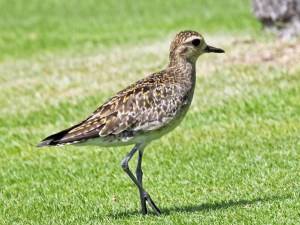
Pacific_Golden_Plover_hawaii_RWDAs I invited the young people to come forward, I gathered my notes and brought them down front with me. 

I don’t usually bring notes with me for these stories, but I’ve managed to get the name of this bird wrong five times this morning, and I want to get it right. Because this story is about a kolea.

There are a lot of kolea about this island these days. In English, they’re called the [look at notes] the Pacific Golden Plover (the Hawaiian name is easier, isn’t it?). They’re all born in Alaska, which is a long way from here, and they have the good sense to fly here to Hawai’i to spend the winter. That’s where they are now, but they’re all getting ready to go back to Alaska. There they’ll look to find mates, and build nests, and lay eggs, and hatch chicks, and raise the young birds.

And then they’ll fly three or four days, flying without landing, to come back to this island again.

Well, this one young kolea had only made one of those long flights: the time she flew here after her birth in Alaska. That had been a grueling four days, but she made it, and she had enjoyed her stay here on Hawai’i. The time is coming for her to make the trip to Alaska for the first time.

Which means that she eats pretty much anything she can find, so she’ll have the strength. But she’s also wondering what will happen back in Alaska.

Will she find someone to build a nest with, and raise a family with? Will she find love? And how will she know?

The older birds have been telling her not to worry. Male kolea fly and dive about to show their territory. There are calls and hops and ways to hold their wings.

One older female took her to a grassy place, maybe a little bit like our lanai, and said, “Look there. Is there anything to eat in that grassy place?”

The kolea looked, and quickly counted eight bugs and two slugs.

Yes, kolea like slugs. I’m glad something does. I’m really glad that something isn’t me!

“Yes,” she said, “I count eight bugs and two slugs.”

Why are you making that face? Oh. You don’t like thinking about eating slugs. Well, I don’t either. We’ll think about something else, then.

The older kolea said, “Look again. Now tell me, how many of those do you actually see?’

“Well,” said the younger one. “Just two, actually.”

“How do you know the other ones are there?”

“I can see that they must be there. It’s how the grass moves, or doesn’t move when the wind is blowing.”

“That’s right,” said the older bird. “We learn about what is hidden by how it changes what we see.

“So don’t worry. There will be a bird who loves you. And he’ll show it. You’ll know how he feels by how he acts toward you. You’ll see more than enough signs to know.”

I’m sure she will.

And it’s true of us, too. We learn about what is hidden by the way it influences what we can see. So we can see that others love us by how they act toward us, how they care for us, how they listen to us and talk to us.

So that when somebody loves and care about you, you will know.

Photo is by Dick Daniels (http://carolinabirds.org/) – Own work, CC BY-SA 3.0, https://commons.wikimedia.org/w/index.php?curid=18649090. Used by permission.

Slippers and Resurrection

Flip-flop by Zeev BarkanThis story is about that same little girl who always seemed to have two things on her mind. You might remember her from the times that she was trying to fly kites and understand love and so forth.

Well, she awoke one morning and put together her two-item agenda for the day. And the first thing she wanted to do was learn how to run and keep her rubber slippers on her feet.

You see, that was just something she’d never been able to do. At some point when running along, whether the ground was grassy or graveled or paved or something else, suddenly she’d be running with only one rubber slipper on one foot. The other would be somewhere else in the field, or the driveway, or wherever. It never failed — and she was determined to make that change.

The second thing she wanted to do that day was understand how Jesus had risen from the dead. It was around Easter time, after all, and she’d heard a lot about that.

Let it not be said that she was afraid of asking difficult questions!

So she and her friends went out to a nice grassy field, and they started running. They went hither and yon and up and down and back and forth and this way and that, and pretty much every time, there was at least one rubber slipper left behind.

Sometimes two. Or frequently two.

They tried different things. They tried putting their legs straight down, which didn’t help their speed or, as it turned out, prevent the other slipper from falling off. They tried clenching their toes in all sorts of different ways, but somehow they couldn’t maintain the grip all through their strides. They tried running with knees up and knees back; they tried running backwards and sideways; they tried swapping them from one foot to the other (because, after all, why not?).

None of it worked, or if it did, it slowed them down so much they might as well have been walking. At some point, a slipper would sail away as if it had something else it would rather do.

It was all quite disappointing.

So she went to find her grandparents, who usually had pretty good answers to difficult questions like this. They were together, so she hopped up before them and asked, “How do I keep my slippers on when I run?”

(It took the grandparents a little time to understand the question, which had taken them by surprise.)

Then they looked at each other for a second or two, before they looked back at their granddaughter and confessed, “We don’t know. If there is a way to keep them on when you’re running, we never found it.”

“In fact,” they added, “We always thought that’s why you call them slippers. Because they slip off, you know.”

The news came as a disappointment, but also as something of a relief. After all, it meant that she and her friend weren’t hopelessly clueless about life.

But speaking of the unknown, she put her second question to them: “How did Jesus rise from the dead?”

Her grandparents looked at one another again, and then back at their granddaughter.

“We don’t know that, either,” they gently said. “It’s a more amazing thing than keeping a rubber slipper on. But we think it has to do with how much God loves, and how strong God’s love is. It’s strong enough to bring Jesus to us. It’s strong enough to bring Jesus’ message to us. And it’s strong enough to bring Jesus back to us.”

She thought about that for a moment, and gave her grandfather a big hug. “Love like that?” she asked.

“Like that, only even bigger,” he told her.

She gave her grandmother and even bigger hug, and asked, “Love like that?”

Her grandmother laughed for sheer joy and said, “Exactly like that: Only even bigger, and grander, and stronger.

“Yes, grandchild: Exactly like that.”

Two notes: First, this story led into the dedication of rubber slippers collected by the church to be given to local school health aides. They will be available for children whose rubber slippers break or disappear during their active days, and for those who appear at school without them.

Second, I was told after the service by a proud (and wondering) grandmother that her grandchildren run around all day in rubber slippers without them ever falling off. So I guess there is a secret to it — but I sure never learned what it is!

The photo is by Ze’ev Barkan, used by permission under Creative Commons license.

Searching for Jesus

2017 Easter egg hunt group

Photo by Gloria Kobayashi

I told this story to the young people waiting to begin the Easter Egg hunt. I must say, for a group of children eager to find decorated eggs and candy, they were remarkably patient with the storyteller! They even posed for a photo.

You’re all here to hunt for Easter eggs that have been scattered around the church grounds. And what a lovely sunny morning it is to do it!

Some those eggs might look familiar, if you were here yesterday and part of the group that dyed them all these wonderful colors. These are real, cooked eggs. If you crack one open, well, you’ll find lunch.

You know, you make it into egg salad?

Some of them, though, are brightly colored, but not because they were dyed by people yesterday. Their color got molded right into the plastic. And I’m told that if you open the plastic eggs, you might find something sweet inside…

Money? Well, I don’t think these eggs will have money in them. Chocolate, now: that’s a real possibility.

On the first Easter, they didn’t go on an Easter egg hunt. Instead, some of Jesus’ friends went on a kind of Jesus hunt. That’s sort of like an Easter egg hunt, but a lot simpler. There was only one place to look, and that was the place where he’d been buried on Friday, after he’d died on the cross.

What turned it into a Jesus hunt was that he wasn’t there any longer. That’s unusual. Most people, when they die and are buried, tend to stay in the same place.

Easter eggs, now they can be anywhere. And suddenly it turned out that Jesus could be anywhere, too, except for the one place that they’d been certain he’d be. He had been dead, but he was no longer dead. He had been buried, but he was buried no longer. He had been in a grave, but now the grave was empty.

So a Jesus hunt was a pretty amazing one to do.

And it’s still something you and I can do. Jesus said that he pays attention to how people treat one another. In fact, he said that when you treat pretty much any person well, you’re treating Jesus well.

So: After you’re done hunting for Easter eggs, try going on something of a Jesus hunt yourself. Go looking for someone that you’d like to treat as well as you’d like to treat Jesus.

It won’t be hard. There’s a lot of people in the world, and there’s some Jesus in every single one of them.

Be good to them, and you’ll have found Jesus. Be good to them, and Jesus will smile.

Have a good time!

The Pueo Who Wouldn’t Cry

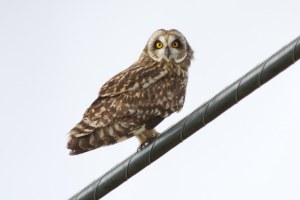
Asio_flammeus_-Hawaii-8_(2)A pueo sat in a tree, looking out over the world around him.
Which, I must confess, looked to him mostly like just leaves, since his branch was pretty sheltered. Still, there he was, looking out at things, and enjoying the day.

Down below his tree, he heard the voices of two people as they walked through the forest. I’m afraid, however, that they were saying some pretty foolish things.

One declared, “I never, ever cry. If you’re in tears, you’re weak.”

The other replied, “Right. I don’t cry either. Why, crying makes you look like a baby.”

The pueo thought about this long after they were gone. He, after all, didn’t want to look weak in front of the other owls. And he didn’t want anybody to mistake him for a baby. Er, a chick.

Now, like other owls, the pueo has tear ducts, but it’s just to keep their eyes from getting dry. When they’re upset, they don’t cry. They might flap their wings about, or ruffle their feathers (at this point I made a completely unsuccessful attempt to rustle my own feathers). They might make a sound (Hoo!) or they might stamp their feet. But they don’t cry.

Nevertheless this pueo decided that he, too, would not cry, like those human beings he’d overheard.

He decided that the problem was going to be blinking. That’s when the tear ducts would open, and his eyes would get moist. How to stop from blinking, though?

He could keep his eyes closed – that would do it – but that would make it awfully hard to find food. No, Mission Eyes Closed was a bad plan.

He could, however, keep his eyes open. So with eyes held wide (lest they blink by accident), he took up an unblinking gaze at the world.

If he’d had a toothpick to put underneath his eyelids, he would have tried it.

He’d been doing this for a while when an ‘io swooped in and perched on a nearby branch. He couldn’t help but notice the pueo staring wide-eyed out into space. Er, leaves.

“What on earth are you doing?” he asked.

The pueo explained about overhearing the people talking about crying, and how he had decided never to cry, and to prevent it he’d hold his eyes open. The ‘io was skeptical.

If he’d been a television personality, he’d probably have asked, “How’s that working for you?” but he was a Hawaiian hawk, so he asked, “How’s it going?”

The pueo admitted that his eyes were feeling drier and drier and it was getting really uncomfortable.

The ‘io sniffed, and flapped his wings about in preparation to take flight again. “I thought owls were supposed to be wise,” he told the pueo. “It seems rather foolish to me.”

And off he soared.

Owls don’t have any teeth, either, or the pueo might have chewed this thought over for a time. He had to think about it instead. In the end, he decided that he’d have to risk the tears. In fact, not crying didn’t sound like great advice for the two humans either.

He chose to be wise.

If I could offer you some advice today, I’d suggest that you be wise, too. Tears keep our eyes moist, but they also keep our souls moist. They help us clear away what’s troubling us inside, and get us ready for the next thing, bad or good.

So let the tears come, and be wise, like the pueo (eventually) was.

Photo Credit: By HarmonyonPlanetEarth – Pueo (Hawaiian Owl)|Saddle Rd | 2013-12-17at18-07-587Uploaded by snowmanradio, CC BY 2.0, https://commons.wikimedia.org/w/index.php?curid=30241891

A Proper Dinner

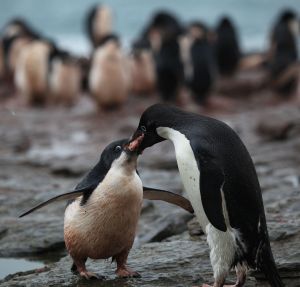
Adélie_Penguin_regurgitates_krill_for_its_chick_(5917753158)Usually, I try to tell stories about creatures that live here on these islands (or in the seas around them), but not today. This story is about birds who live far away, on the shores of Antarctica, where it is distinctly colder than it is here.
It’s about penguins.

You’ve heard of penguins, I’m sure. They swim rather than fly, and they’re always well dressed. What other creature wears a tuxedo twenty-four hours a day?

Well, this penguin was a young one, and he knew what a “Proper Dinner” consisted of.

He knew that a Proper Dinner was important. After all, he was always dressed for it.

So. Here’s how a Proper Dinner goes. Mom or Dad appears at the nest after hunting for fish out in the water. And you, as the young one, you stand straight up and tall. You throw your head back and open your mouth, and Mom or Dad sticks their beak in your mouth and…

How do I put this?

Well, let’s just say that food that was in their stomach goes into yours.

If that sounds gross to you, it does to me, too. Which makes us people, not penguins.

In any case, that was a Proper Dinner for this young penguin, and after all, he was always dressed for it.

One day, though, when Mom appeared, she was carrying an actual fish in her beak. And when Sister put back her head and opened her mouth, mother put the fish in.

Sister swallowed it right down with every sign that she enjoyed it, but Brother knew that it wasn’t a Proper Dinner.

Sure enough, Dad appeared shortly afterward, and like Mom, he had a fish in his beak. Brother looked at it, and it wasn’t a Proper Dinner.

So he didn’t stand up straight. And he didn’t put his head back. And he didn’t open his mouth.

If he could have, he would have folded his wings across his chest, but he couldn’t, because penguin wings don’t do that.

Sister got the fish. And Brother had to wait until Dad went away, caught some more fish, and returned to feed Brother what he’d already eaten, so that he’d have a Proper Dinner.

This went on for two days, which is an endless amount of time when you’re a young penguin. Mom and Dad brought fish, and Brother wouldn’t eat them, and he’d wait, hungry, until they returned with a Proper Dinner.

Finally, Mom and Dad had had enough. They wouldn’t do this any more.

Has that ever happened to you? That Mom and Dad wouldn’t do something for you any more?

You, too, eh?

So they stood there and eyed him with the fish dangling from their beaks. And he stared back with a gaze that slowly fell away in the face of their united disapproval. He slowly raised his beak, and opened his mouth. A little. Then a little more. Until Mom tucked the fish onto his tongue.

He swallowed.

To his utter astonishment, he liked it.

“Well,” he decided. “I guess there’s more than one way to have a Proper Dinner.”

“And after all, I’m dressed for it, whatever comes.”

Photo credit: By Liam Quinn from Canada – Adélie Penguin regurgitates krill for its chick, CC BY-SA 2.0, https://commons.wikimedia.org/w/index.php?curid=24444946

Moi Questions

Sixfinger_threadfin_school

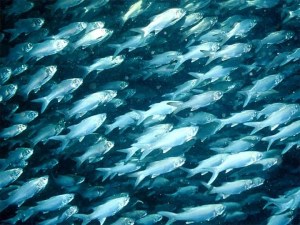
A school of moi.

Today I’m going to tell you a fish story.

I mean, literally. I’m going to tell you a story about a fish.

This fish was a moi, which are well known here in Hawai’i for being a fish that only the ali’i, the royalty, the most powerful people in the islands could eat in the ancient days. That’s not how the moi think of themselves, though. Who really think of themselves in terms of who is going to eat them?

There was one young moi who was always asking questions. I mean, always. He’d ask one question, and get an answer, and then he’d ask another.

“What’s that bright light up above the surface of the water?”

“Why are the corals different colors?”

“What’s that coming toward us, with all the holes? Should I avoid it?”

(Well, yes. It was a fishing net.)

“What’s that shiny thing on the end of the grass-like thing? Should I eat it?”

(It’s probably best not to eat the fishhook.)

Probably the most common question, though, was one he asked over and over and over:

“Is that good to eat?”

“Is that good to eat?”

“Is that good to eat?”

Let’s face it, that’s an important question when you’re a moi.

With all his questions came something else: He got to know the answers. Other moi started to ask him questions, because they thought he’d probably asked it already and knew the answer. Much of the time, he did.

When he didn’t, you know he’d turn around and ask that question of some other fish.

He always had moi and moi questions.

A decided groan greeted that last remark.

Moi swim in great schools, and if you’ve ever seen a school of fish, you realize that when the school turns, then a new leader emerges. The one who had been at the front is now at the side, and someone at the side is the new leader of the school.

All the other moi learned to feel very good about having this curious moi as their leader. When he was in front, they didn’t swim into fishing nets. When he was in front, he didn’t have them chase after fishhooks.

So his questions made him a valued leader among the moi.

That’s true of you, too. If you ask questions, if you seek after what you don’t know, if you keep learning, well, like our curious moi, you can be a success in school.

More groans.

Seriously. It will help you in school. But it will also help you make a better life. Ask questions, even when your parents, or your teachers, or even I start to look like you’ve asked a lot of them. It’s OK.

Because you’ll be learning, and thriving, and growing.

The Untidy ‘Elepaio

Hawaii_Elepaio_(Chasiempis_sandwichensis)_(26372854912)Most ‘elepaio, it seems, take a good deal of pride in their nests.

The ‘elepaio is a small songbird who lives out in the koa and ohi’a forests. It’s colored tan and gray, and it’s a curious bird who might just fly over to get a good look at you as you’re walking in the woods.

That has nothing to do with the story, by the way; it’s just so you might recognize one if you see one.

‘Elepaio mothers take a great deal of effort to build their nests in the tree branches. They weave their cup-shaped nests from grasses and bark and even spider silk, and they trim everything up so that it looks neat and tidy.

There was one mother bird, however, whose nests, while not actually being a shocking mess, nevertheless always looked… unfinished. Grass ends would stick up from the edges instead of being carefully tucked away. Bits of spider silk waved in the breeze. And in some places you could actually see the underlying structure of the nest.

The other ‘elepaio thought she was a pretty careless, untidy bird.

One of the younger ones, however, noticed something after a few windy days had gone by, and they’d endured some rain showers. When those things happened, everybody had to repair their nests. Rain and wind force you to do that sort of thing.

Most of the ‘elepaio had to undo a good deal of work in order to get to the thing that needed to be replaced or fixed. They’d untuck grasses and pull out bits of bark until the problem was visible.

The untidy ‘elepaio, however, always seemed to get her nest repaired before anybody else. The problem areas were easier for her to reach. She did less removing and more replacing.

So the young bird flew over to ask for her secret.

“It’s nothing special,” she said. “I just leave gaps in the nest where there will probably be a need. There’s always something. I’m just a little more ready for it.”

She left her gaps where the new needs might arrive.

I don’t always explain my stories, but today I will. Because this story is not about being messy and not picking up your things and putting them away. I could get in a lot of trouble with your parents if that’s what you decide, and for that matter, if you don’t pick up those plastic building blocks at night you’ll step on one when you get out of bed in the morning, and then nobody will be happy.

It’s also not an excuse for not finishing your homework. You should finish your homework. That will make your parents, and your teacher, and eventually you, much happier.

No, this story is about not seeing ourselves as finished. None of us are ever “finished,” we learn new things all our lives. This story is about making sure that you always leave a place in your life to learn something new, and grow some more, and become a you who’s more you than you were before.

Leave some places in you where the world, and where God, can help you learn and grow.

Amen.

The photo is by Dominic Sherony – Hawaii Elepaio (Chasiempis sandwichensis), CC BY-SA 2.0, https://commons.wikimedia.org/w/index.php?curid=52150176

Dolphin Tempted

dolphins-by-robert-youngThis story may sound like one you’ve heard before. Perhaps it will be a little familiar, even though it’s not set on land like the original. This one takes place in the ocean.

Once there was a shark who decided to try to tempt a dolphin away from its pod.

(Do you know what a pod is? You do? Yes, that’s exactly right: a pod is a group or family of dolphins. Well done!)

So the shark found a pod, with one young dolphin swimming along near the side and toward the back. The water was rather murky, so the shark was able to get pretty close without being clearly visible as a shark.

I don’t really want to tell you what the shark had in mind. What? No, I’m afraid it wasn’t friendship. You’re thinking of the movie, Finding Nemo. No, this shark was not following the twelve steps toward seeing fish as friends, not food. Or, in this case, dolphins.

So, okay, the shark had his mind on lunch.

Well, from out there in the murk, he said to the young dolphin, “Hey, come over to the other side of this reef. I found this amazing place to catch fish. You’ll eat until you can’t eat any more.”

The young dolphin was pretty hungry himself, so this sounded pretty good, but his pod leader hadn’t said anything about going to the other side of the reef. “No,” he said eventually, “I think I’d better not. You might tell the pod leader about it, though.”

That was the last thing the shark wanted to do, so he tried something different.

“The pod leader would want you to learn leadership yourself,” he said. “Not to worry, of course. Other dolphins will come along to keep you safe if there should be any danger nearby.”

Though not enough, he thought, to make a difference when the dinner bell chimes.

That sounded even better to the young dolphin, who certainly aspired to become a pod leader. Maybe this would be a good time to experiment, and to take a risk.

“Well, no, I don’t think so,” he finally said. “I wouldn’t want to make the other members of the pod choose between me and our pod leader. No. Definitely not.”

Oh, come on, thought the shark. So close and yet so far…

“If you come now,” the shark murmured, “I’ll make you into a pod leader. You’ll be the pod leader. Just follow me.”

Oh, that sounded awfully good to the young dolphin. To be a pod leader, and not wait! Wow.

Wouldn’t you like to be a pod leader?

Yes? No?

Well, about half and half.

Our dolphin, though, he did want to be a pod leader someday. But he decided that he’d trust in his own pod leader’s wisdom about when that time would come, and not the sweet words of this rather murky figure.

“No,” he said firmly. “I’ll follow my pod leader until it’s time to lead myself.”

It was at about that time that the pod leader up at the front realized that there was a figure in the shadows behind them that didn’t belong. He darted back through the swimmers, joined by other dolphins as he went, and together they chased the shark far away from the pod, clear to the other side of the reef, where the fishing truthfully wasn’t any better than where they were.

So, did that story sound at all familiar?

A little?

The title of that other story?

Why, it’s “The Temptation of Jesus.”

Photo by Robert Young. Used by permission under Creative Commons license.

Isn’t It Enough to Fly?

nene-201611There is a sad shortage of kites in this story. I’m afraid that the ‘apapane fails to make an appearance. There isn’t even a mongoose.
You were hoping for a mongoose? I’m sorry. There will be other stories with a mongoose, I’m pretty sure.

A baby? Well, sort of. It had been a baby, just not a baby human being. Actually it had been a chick, and now it was a gosling. A young nene.

And this nene: Oh, how he yearned to fly. He wanted to soar above the trees, and learn all the secrets he was sure lingered in the clouds, and to see the whole world changed when he took to the skies. He was sure that flying would make the sun shine more brightly, and the rain fall more sweetly, and make food taste richer and even make his dreams deeper.

But he had to wait. When he was born, well, actually, he wasn’t born. He was hatched, from an egg, exactly like all of you weren’t.

He was hatched with feathers that are completely unsuitable for flying. They were soft and fuzzy and very well suited for keeping him warm at night, but they wouldn’t move air when he moved his wings up and down. So he had to wait to grow the new feathers.

He also had to wait for his wings to grow. There’s a limited amount of space in an egg, so his wings were very small things at hatching. But as he got bigger, so did they, and took on the shapes of flight.

He also had to wait for his muscles to strengthen. Flying takes a good amount of strength, and his newly hatched muscles hadn’t had any exercise at all.

So he waited while feather grew and wings took shape and muscles hardened, and then came the day to fly.

What can I say? He flew round and about just like this (only not like this because my feet are touching the ground and his definitely weren’t), and looked down on the trees and creatures and the other birds and It. Was. Amazing.

But he found that the world really didn’t change. The sun didn’t shine any brighter, and the rain didn’t fall any more sweetly, than it ever had. His dreams were about the same, and as for food, it tasted just like he remembered. In fact, he found himself more hungry more often, because flying is hard work.

So he went to see his grandmother to ask why the world hadn’t changed when he became able to fly.

“Ah,” she said. “Learning to fly doesn’t change the world. It changes you.”

It changes you.

Plenty of moments will come in your life that are times when you’ll fly in new ways: when you graduate from one school and go to another; when you make a new friend; when you graduate from school and go to work.

In each of these times, though, the world will go on much as it has. It’s you that will change.

Mind you, each of your changes will change the world, just a little bit. But each of the times of flying: they make you into you.

nene-in-flight-201702

Nene in flight over Halema’uma’u