Story: High Tide

December 1, 2024

1 Thessalonians 3:9-13
Luke 21:25-36

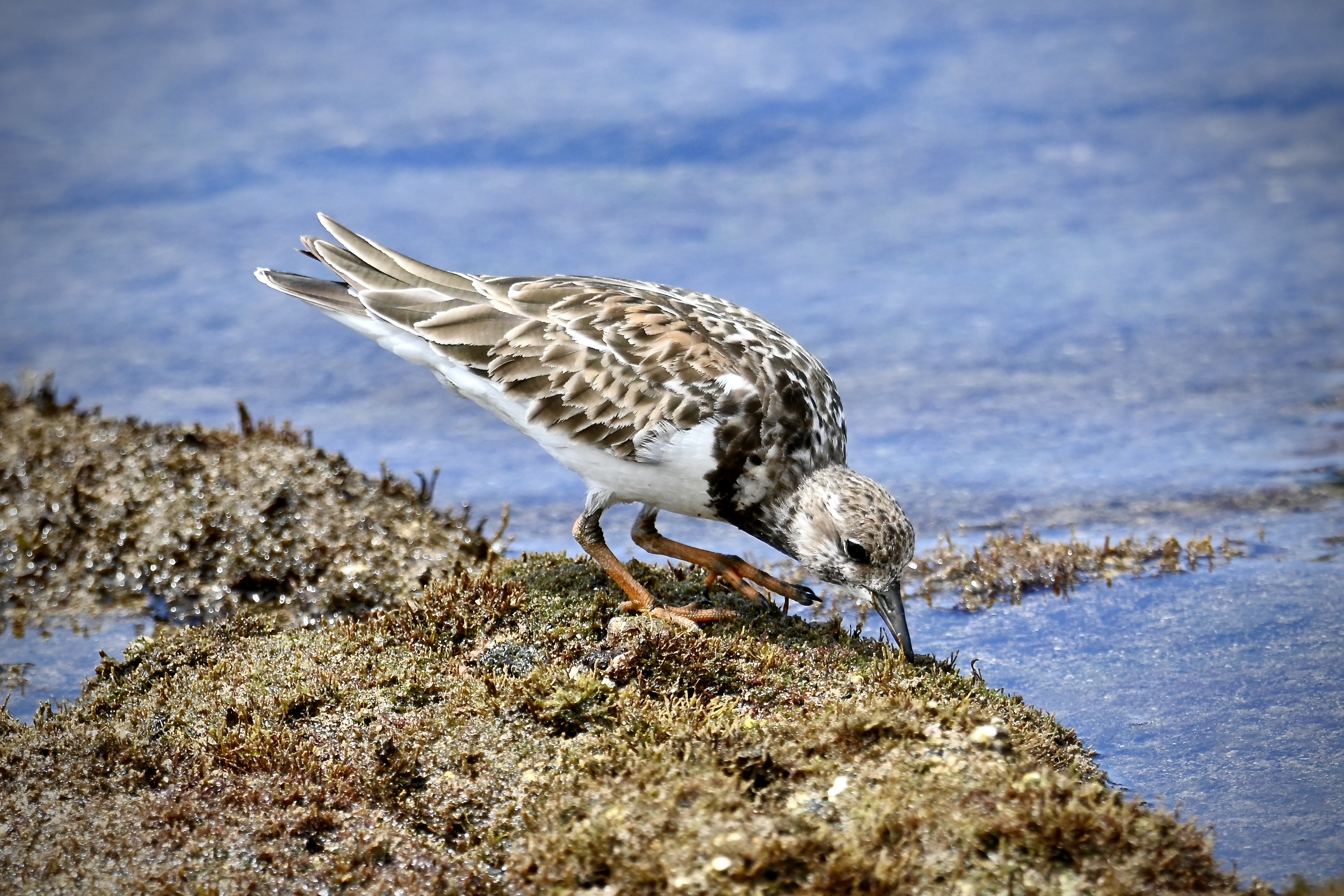
The auku’u, or black crowned night heron, likes to eat. If you look out along the shallows of Hilo Bay, or in the rivers of the valleys, you’ll find auku’u perched on rocks or grass or just standing in the water looking for fish. Although they’re called “night herons” in English, in Hawai’i auku’u fish during the day, and do pretty well at it.

One auku’u, however, developed a somewhat unusual habit. He didn’t like being wet, which is a sad thing for a bird living in Hilo, and he discovered that if he waited for high tide he could spend less time with his feet in the water, since the water, as it were, brought the fish to him.

The thing about a high tide is that it happens just about twice a day, roughly twelve and a half hours apart. That means that sometimes high tide will be in the middle of the day, but a couple weeks later it’s well into the evening. At some times there would be two high tides during daylight, but at other times one high tide would be in the middle of the night. That meant he’d go over a day between meals. And that would make him hungry.

He was moping on the shoreline one morning, waiting for the next high tide (coming in at noon) when a friend landed near him. Noticing that he looked unhappy, she asked him what was wrong.

“I’m hungry,” he said.

She looked at him. Auku’u have been known to say, “I’m hungry,” but they usually say it while they’re on their way to start fishing. An auku’u sitting near the water and saying, “I’m hungry,” was a new and different experience. She didn’t know what to say.

“I haven’t eaten since about this time yesterday,” he said.

“For heaven’s sake, why? Aren’t there any fish?”

Then he explained about fishing at high tide.

“Let me get this straight,” she said. “You’re going hungry for hours because you don’t want to get your feet wet?”

“Do you like wet feet?” he demanded.

“I like being hungry a lot less,” she replied.

He was silent because, he realized, he like being hungry less than he liked having wet feet.

“Sometimes things are perfect,” she said, “like when you get to fish at high tide. But most of the time, we have to muddle along with things as they are. At those times you do the best you can, and look forward to it getting better later on.

“Now come with me,” she told him. “Let’s go fishing. I’m hungry.”

The two of them flew over to the shore.

by Eric Anderson

Watch the Recorded Story

I write these stories ahead of time, but I tell them from memory (plus improvisation), so what you’ve just read does not match what I said.

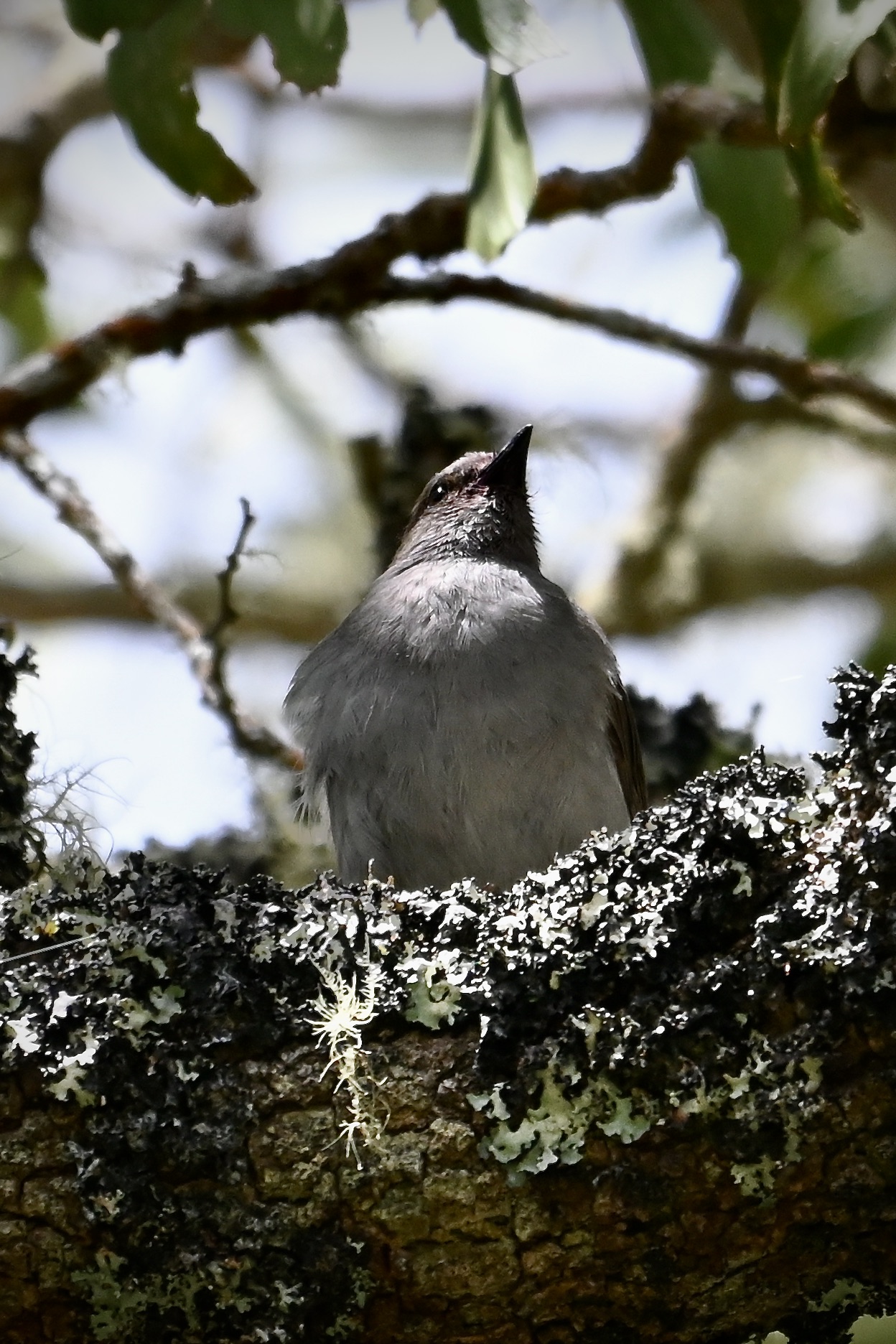
Photo of an auku’u in Hilo Bay by Eric Anderson.

Story: Bully Price

November 24, 2024

2 Samuel 23:1-7
John 18:33-37

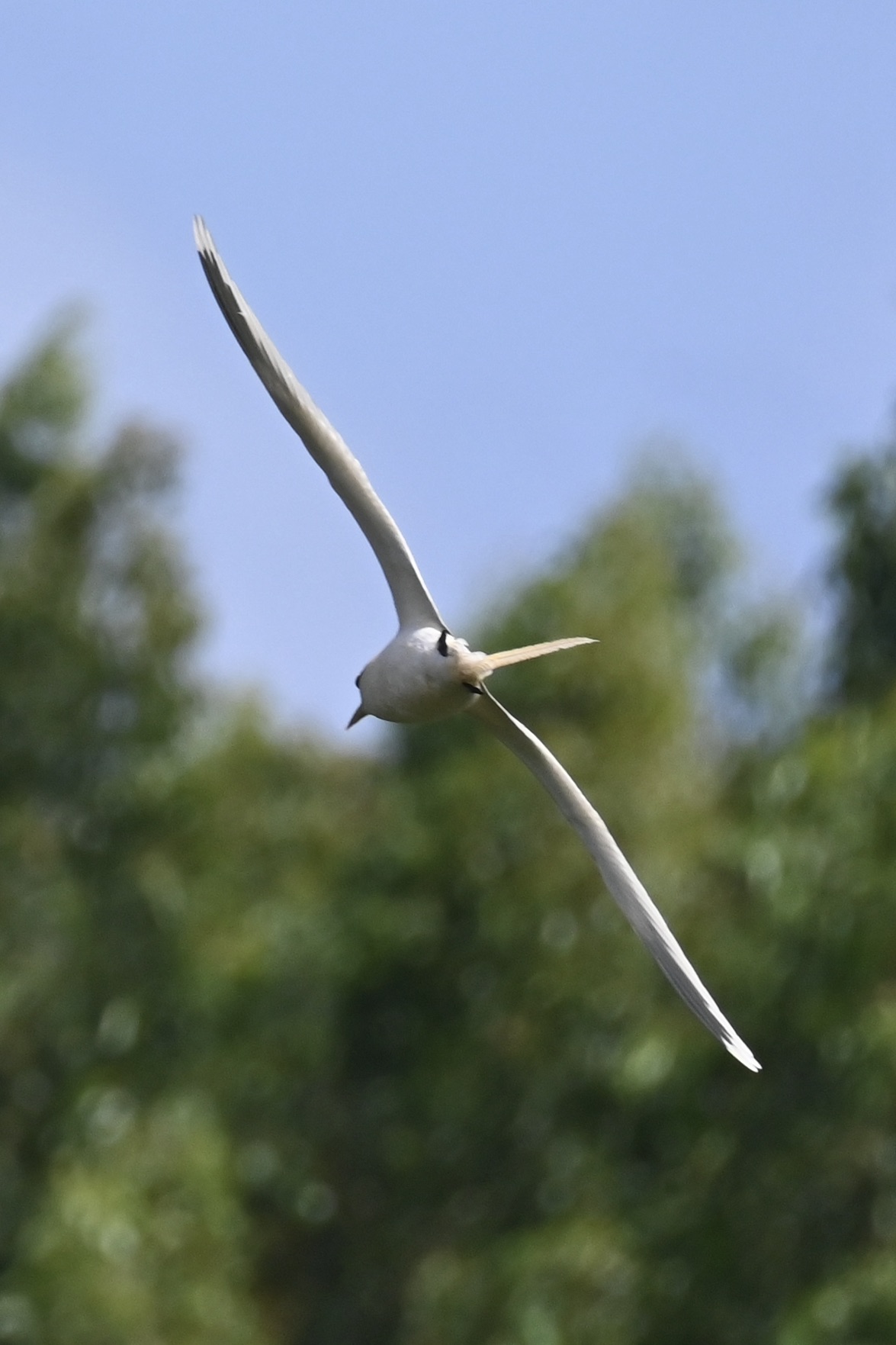
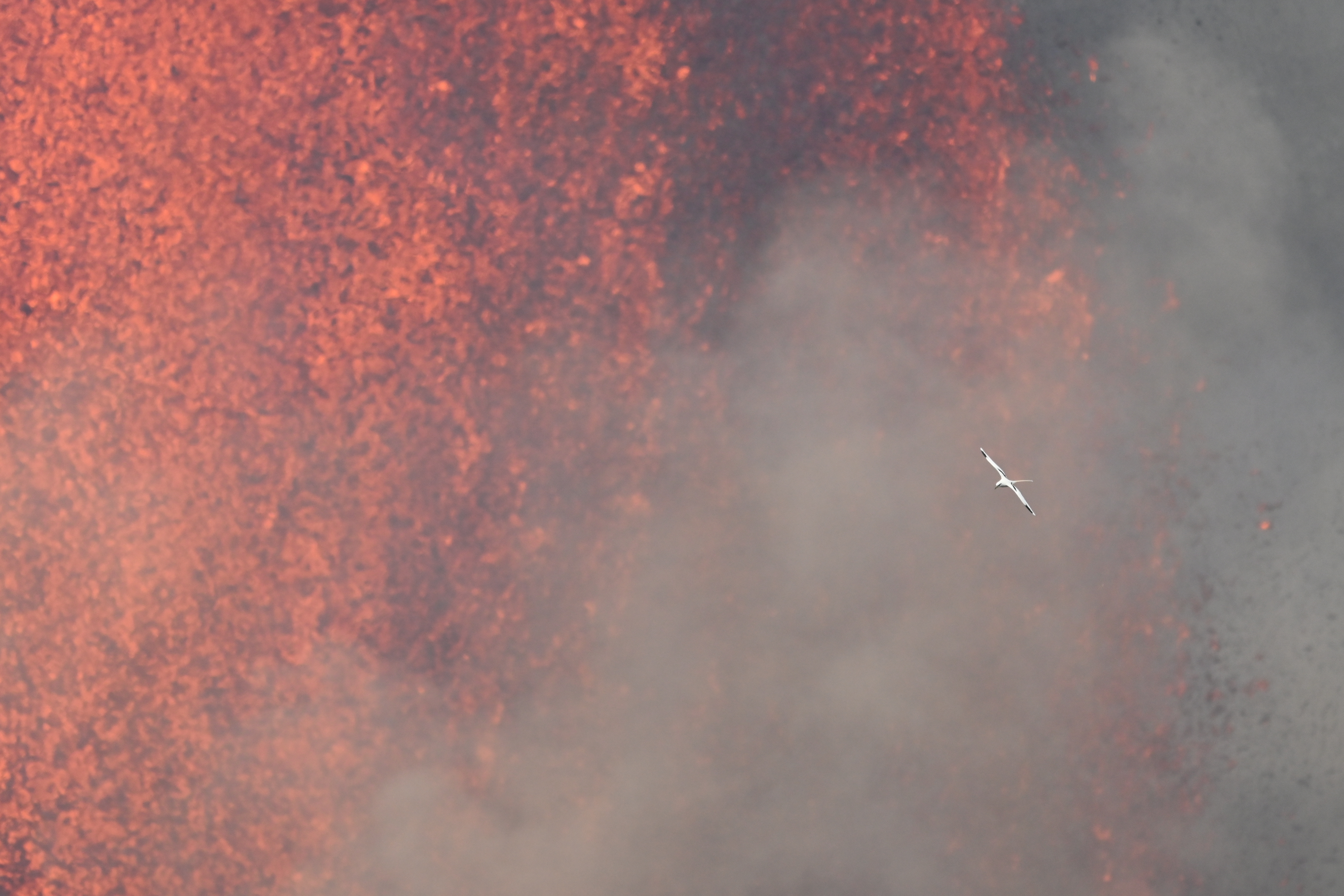
The noio, or black noddy, nests in the cliffs above the breaking waves on Hawai’i Island (and, actually, on lots of islands. They’re all over the Pacific and Atlantic Oceans). You’ll tend to find a lot of them close together. They raise their young together, they fly together, and they fish together.

One of the younger noio was fast, big, and strong. There were a few who were faster. There were one or two that were bigger. Nobody could remember anyone who was quite that strong, though. He used that strength to pick up fish that were just a little bigger than everyone else, and as you might expect, that was part of what made him big and strong.

One day as he was out fishing with lots of other noio, he saw an ‘Iwa, a great frigatebird, soaring around overhead. He didn’t think much of it until the ‘iwa dove down upon the flock of circling noio. It chased a noio who had just caught a fish until the noio dropped it, and then snatched the fish from the air, ate it, and climbed back into the sky.

Then the ‘iwa did it again. And again.

When it was no longer hungry it flew away. The frustrated noio returned to their fishing.

The big, strong noio was impressed. The ‘iwa had had a complete meal and never caught a fish on its own. That seemed like a lot less work than sweeping over the surface to pluck a squid from below.

So he tried it. He chased another noio, and it worked. The noio dropped its fish, and the bigger, stronger noio ate it. Then he did it again. And again.

The other noio squawked at him to no avail. He did it over and over until he was satisfied.

Nobody would speak to him later.

Nobody would speak to him the next day when he did it again. His friends, his cousins, even his own sisters wouldn’t say a thing except to squawk as he swooped and pecked to make them drop their fish.

Later, though, one of his uncles landed next to him on his ledge, which should have been crowded with noio, but everybody left when he landed. Except, now, there was his uncle, another big, strong bird.

“I heard what you’ve been doing,” said his uncle. “You’ve learned to be an ‘iwa.”

“I’m eating pretty well, too,” said the nephew. “You’re big enough to try it. It would work for you.”

“I did try it, long ago,” said his uncle, “but it wasn’t worth the price.”

“What price?” asked his nephew, though he already knew.

“The price of an empty ledge,” said his uncle. “The price of never having a friend, except for someone else who’ll bully with you, and who will bully you the first chance they get. The price of the skies emptying when they see you. The price of hearing only the wind and the waves when you should be hearing the cries of other noio.”

The nephew said nothing.

“Look around, nephew,” said the uncle. “Where are your cousins now? Who are your friends? Who do you fly with?

“Is it worth the price?”

by Eric Anderson

Watch the Recorded Story

I writes these stories in advance, but I tell them from memory (and improvisation), so what you read will not match what you see and hear.

Photo by Eric Anderson.

Story: The Easy Way to Fly

November 17, 2024

Hebrews 10:11-25
Mark 13:1-8

I’m afraid it’s true that there are not many nene. They are easily outnumbered by the ‘apapane, and more than easily outnumbered by people. You may wonder why, if there aren’t that many of them, you hardly ever see them one at a time. I mean, wouldn’t you expect that a nene would go its own way from time to time, just to find some ‘ohelo berries of their very own?

One nene thought that independence sounded like the way to go.

He’d been to nene school, so he thought he knew it all. He knew how to find food. He knew how to fly. He’d done the drills at formation flying without getting excited about it. He was going to be the nene who made his own way, without relying on (and, you know, sharing with) the other nene.

So off he went to find his own spaces.

There’s a lot more of Hawai’i Island than there are nene, so it wasn’t difficult. If he spotted a little flock of nene in the air or on the ground, he’d just go somewhere else that they weren’t. That was lots of places, and plenty of those places had food, and water, and places to rest and relax. All in all, he thought he was having a pretty good nene life.

One day as he was in the air looking for another place to relax and eat, he heard the calls of some nene behind him. Glancing back, there was a little “V” shape of five geese flying in formation. They called out a friendly greeting, to which he replied – he liked being alone, but he wasn’t going to be rude about it.

What surprised him, however, was that the little “V” of nene was catching up with him. In fact, they passed him in the air, still calling out their “Hello!” He thought he was a pretty good flier, but they sped on by and he couldn’t keep up. It didn’t take long before they’d disappeared into the clouds.

How had they flown past him so fast?

Sometimes when you don’t know something and you don’t have Google, the best thing you can do is ask someone who should know. So he sought out his nene school teacher. When he found her, she was just finishing up a formation flying class. He waited, mostly patiently, until she was done, and told her about being passed by those other nene.

“Am I just so slow?” he asked her.

“No,” she said. “You’re not slow. You’re alone. Flying together – in that ‘V’ formation – allows us to fly more easily. The wings of the birds in front create good flying air for the birds behind. It makes a difference. We can put more strength into it. We fly better together.”

“You mean,” he said, “that if I always fly alone, I’ll always fly harder and slower?”

“That’s exactly what I mean,” she told him. “Together is the easy way to fly.”

Never let it be said that nene won’t learn. He found his own place in a little flock, and there in its “V” he flew easier and faster than he could remember doing before. Together is the easy way to fly.

by Eric Anderson

Watch the Recorded Story

I write these stories ahead of time, but I tell them from memory plus inspiration. The story you just read will not match the recorded telling of it.

Photo by Eric Anderson

Story: The ‘Io and the ‘Amakihi

November 10, 2024

Ruth 3:1-5, 4:13-17
Mark 12:38-44

There is a lot to learn when you’re a young bird. Or a young human, of course. But this story is about a young bird.

He was an ‘amakihi, and he’d hatched, fledged, and flown. He’d toured around with a little flock of various forest birds, and he’d seen plenty of sunrises and sunsets. All in all, he thought he was pretty wise.

Then he saw a creature he hadn’t seen before. It was big. It was impressive. It soared along in the air on broad wings. He watched it from an ohi’a branch with awe. Such presence. Such grace. Such magnificence. Such size.

To his surprise, it landed in a neighboring tree, where it seemed to rest.

“What are you?” asked the young ‘amakihi.

“I’m an ‘io,” said the big bird. “Haven’t you heard about me?”

In truth, the young ‘amakihi had been told about the ‘io, but he hadn’t been paying attention. These things happen sometimes, have you noticed?

“I can’t remember hearing anything about you,” said the ‘amakihi with some truth. “What are you like?”

“Oh, I’m a very friendly bird,” said the ‘io. “I fly around overhead and watch out for all the other birds in the forest. All the birds are safe when I’m around.”

“That’s really great,” said the young ‘amakihi. “And what do you eat?”

“Oh, this and that,” said the ‘io. “Kind of like yourself.”

“You mean, bugs and nectar and fruit?”

“Kind of like that,” said the ‘io.

“I’m a little hungry myself,” said the ‘amakihi, “and this tree has been pretty well picked over. If you don’t mind I’ll see you later.”

“That’s fine,” said the ‘io, who fortunately for the young ‘amakihi wasn’t hungry at the moment. “I’ll catch you later.”

The ‘amakihi flew off, and the ‘io didn’t chase him, fortunately. A little later he found his grandmother, and told her about the bird he’d just met.

“The ‘io told you he protects the other birds?” said his Tutu.

“Oh, yes,” said her grandson.

“Don’t you remember what your mother and father said about the ‘io?” asked his grandmother sternly.

“I’m afraid I don’t,” said the young ‘amakhi. “I may not have been listening all that well.”

“That wasn’t a good time to not listen,” she said. “Didn’t you notice the ‘io’s beak, and the talons on his feet? Do you think those are good for eating bugs and nectar?”

And she told him what an ‘io eats. He was horrified and pretty surprised that he’d survived that conversation.

“Those who are danger to you won’t always tell you so,” said Tutu. “Sometimes they’ll lie about it. Listen to the warnings of those who love you. We may not always be right, but we will always tell you what we know and what we believe we know.

“And keep an eye out for those ‘io.”

by Eric Anderson

Watch the Recorded Story

I write these stories in advance, and I tell them from memory during Sunday worship. Therefore, the story you’ve just read will likely differ from the story as I told it.

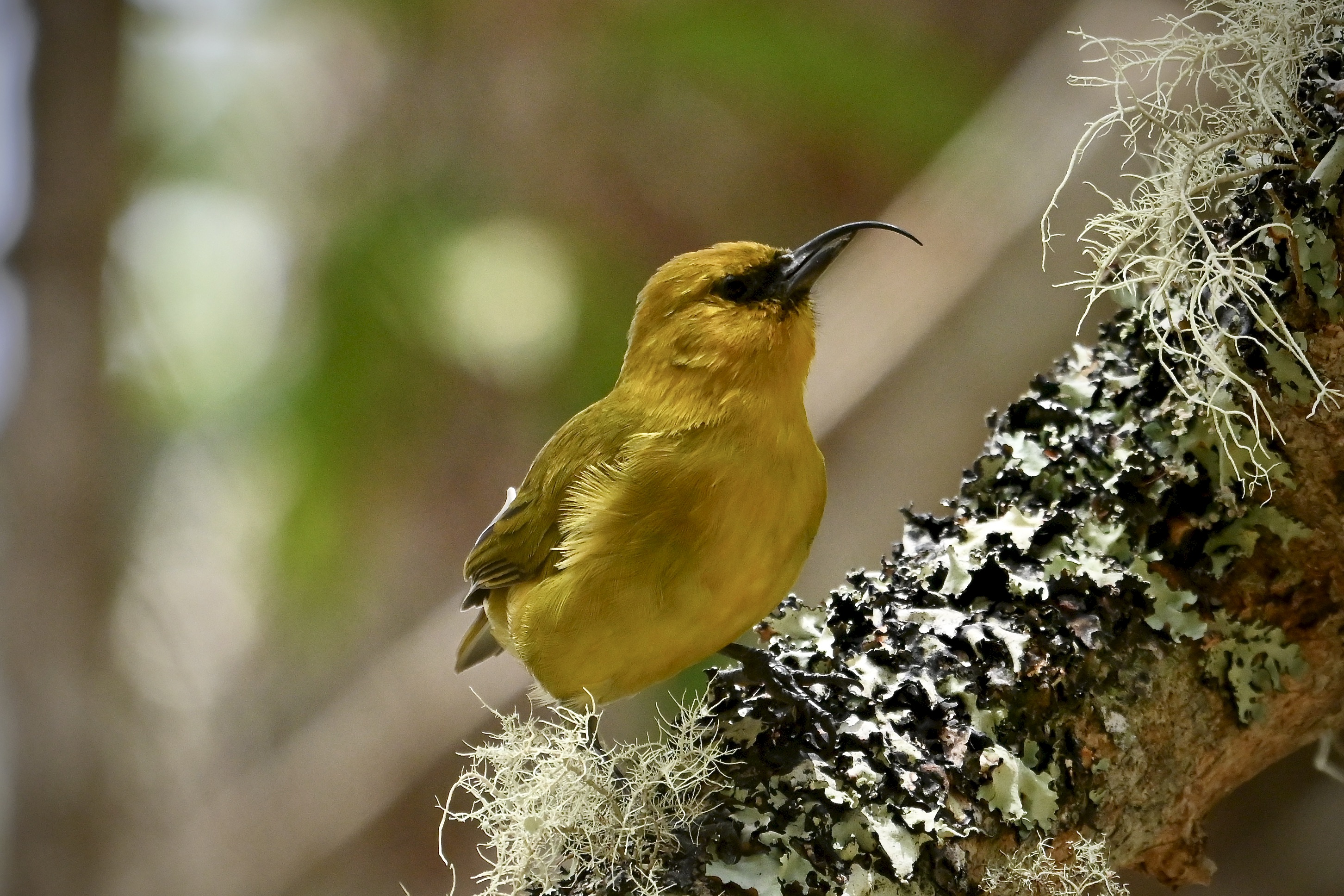
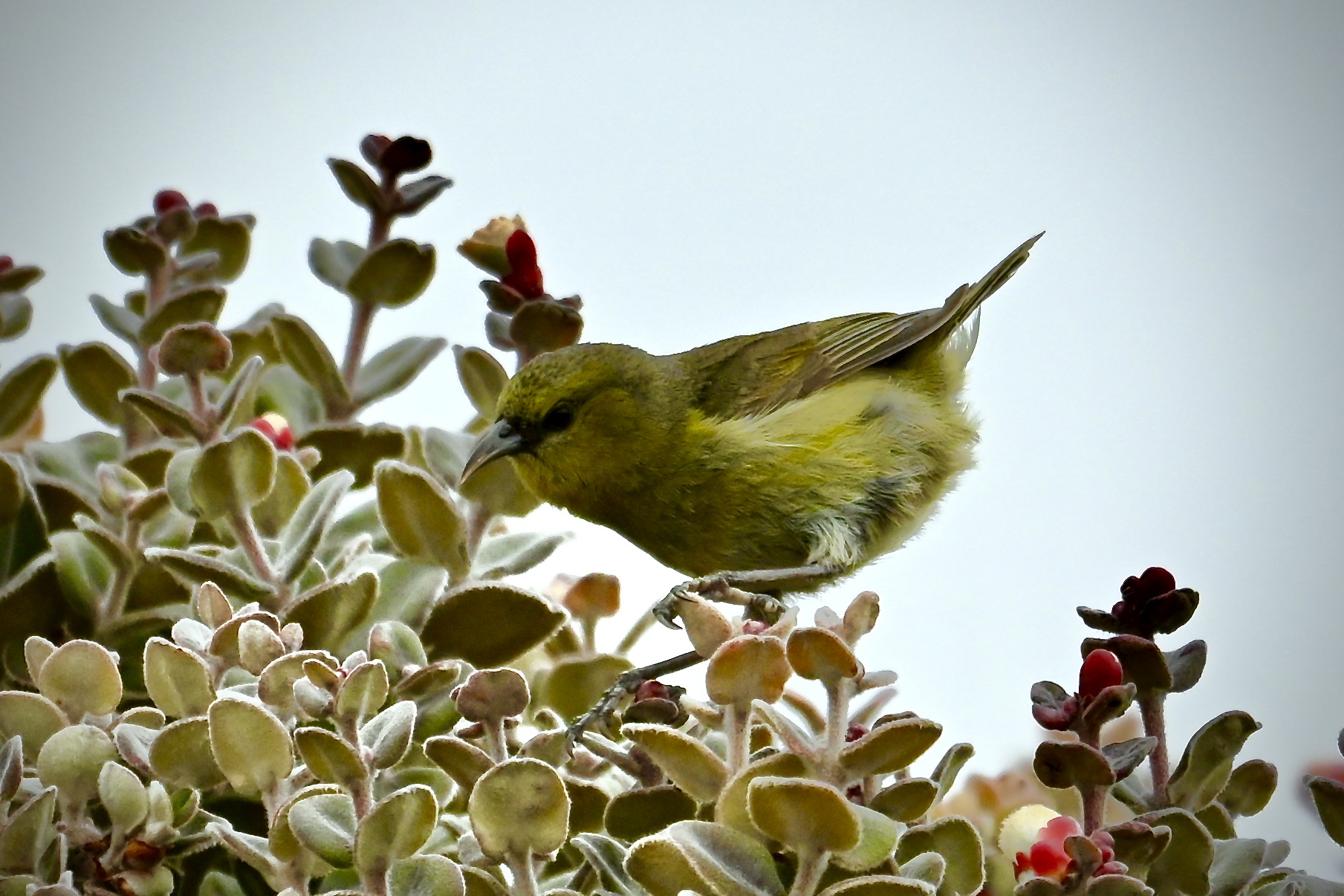
Photos of an ‘amakihi (top) and an ‘io (smaller photo on right) by Eric Anderson.

Story: Close to Heaven

Photo of a kolea (a Pacific Golden Plover), a bird with a thin straight beak, white, brown, and tan feathering, walking along a grassy area.

November 3, 2024

Ruth 1:1-18
Mark 12:28-34

It’s a funny thing. When you hear just part of a conversation, it can be misleading. I mean, you might think you know what folks are talking about, but it turns out you might not.

In this case, it was a kolea, a Pacific Golden Plover, who overheard some people talking about heaven. And yes, he got confused.

He heard enough to learn that the people talking about heaven believed it was a really nice place. He heard enough to learn that the people talking about heaven didn’t expect to go there for some time. He heard enough to learn that the people believed that other creatures could also go to heaven.

He didn’t hear anything about it being a new life and a very different kind of place. He didn’t hear anything about dying as a transition from one kind of life to another kind of life. They just didn’t mention that while he was listening.

But at the end of the conversation, as the people were walking away, one of them said something about heaven being beyond the clouds.

People tend to talk that way about heaven because even though we have telescopes and can look a long way into space, “beyond the clouds” is something most of us don’t know much about, and the life God intends for us beyond our lives here is also something we don’t know much about. But the kolea didn’t know that. He said to himself:

“Those people can’t fly beyond the clouds, but I can. I can get to heaven myself.”

And he launched himself into the sky.

A kolea migrating from Hawai’i to Alaska, or from Alaska to Hawai’i, can get very high indeed. He flew up over the low clouds that were raining on Hilo. Then he flew up over the middle clouds that were spotted about around the slopes of Mauna Kea. Then he flew up even above the high wispy clouds above Mauna Kea.

Each time, he looked about for signs of heaven.

Each time, he didn’t see them.

“I must be close to heaven,” he said.

What he found as he circled higher and higher was that it got colder and colder. He’d felt that before, but as he flew higher than he had before it got colder than he’d ever known. He didn’t like that. He also didn’t like that the air got thinner. Not only was it harder to breathe, he had to flap his wings harder to move enough air to keep flying. In fact, there came a point that he just couldn’t go higher. Gasping, he let himself fall, then circle, and glide back down to the ground.

He landed, still winded, on some grass near another kolea, who hopped over to see what was wrong. “I tried to fly up to heaven,” he said sadly, and told her the story. “I must have been close, but I couldn’t get there.”

“That’s too bad,” she said to him. “Here, take a bite or two. There’s some tasty things here. And you’ll find some good water to drink just over this way.” She led him over to the food, and water, and a safe place to rest.

He ate. He drank. He rested. His breathing settled. His wings regained their strength. He looked at his new friend.

“You know, I flew a long way up to get close to heaven,” he said, “but you’ve been kinder to me than I can remember anyone else being. It might just be that I’ve been closer to heaven here than I ever was up there in the sky.”

by Eric Anderson

Watch the Recorded Story

I write these stories in advance, then tell them from memory during worship. The story you just read and the story as I told you will not be the same.

Photo of a kolea (a Pacific Golden Plover) by Eric Anderson.

Story: Merciful

October 27, 2024

Hebrews 7:23-28
Mark 10:46-52

It was a dark and stormy night.

Well, that’s not an original way to begin a story, but it was pretty dark, and rain was falling, and the winds were howling up there on the mountain. If you were a pig, it was a good night to find a rocky overhang. If you were an ohi’a tree, it was a good night to rock back and forth with limbs and trunk, and a better night to hold on tight with your roots.

If you were one of the honeycreepers of the forest, it was a good night to shelter beneath lots of thick leaves and hope the branch you’d perched on was sturdy.

A grumpy ‘amakihi had found just such a space in a koa tree. He wasn’t exactly dry, but he wasn’t being pelted by rain, either. The branch he grasped with his feet was only tossing a little bit. He wasn’t comfortable – that’s why he was grumpy – but he was as comfortable as he was going to get until the sun came out so he could dry his feathers.

He wasn’t pleased when the branch gave another bounce that was out of rhythm with the winds and there was a new shadow among the leaves. A young ‘apapane – so young that she didn’t have her red feathers yet – had landed on the branch and stood shivering. She tried to shake the water from her wings, but mostly just banged herself against the leaves and twigs.

“Stop that,” said the grumpy ‘amakihi. “What are you doing here? You shouldn’t be flying in this storm.”

“I didn’t mean to,” said the young ‘apapane. “The wind swept me off the branch.”

“Well, you’d better go back there,” said the ‘amakihi. “Go on.”

The young ‘apapane looked out through a gap in the leaves to where they could both see the trees tossing in the gale.

“Well, maybe not right now,” said the ‘amakihi, who was still grumpy but a fairly considerate bird. “What can I get for you? Do you want a bug? There’s some here.”

“No, sir,” said the ‘apapane.

“How about a drink of water? Well, maybe not,” he said, when the young ‘apapane shivered. “You’ve probably had enough water.”

“Yes, sir,” said the ‘apapane.

“Well, what do you want? You don’t want me to help you find your own tree, do you?”

The ‘apapane shook her head.

“What do you want me to do for you?” insisted the ‘amakihi.

“Could I just stay here for a while, and not be alone?” asked the ‘apapane.

“You don’t want to be alone?” asked the ‘amakihi.

“No, sir,” said the ‘apapane.

The ‘amakihi thought about it, and realized even as he said it, “You know, I don’t want to be alone in this storm, either. Come find a dryish spot here on this branch. We’ll ride it out together.”

And that is how a grumpy ‘amakihi and a frightened ‘apapane were merciful to each other in the midst of the storm.

by Eric Anderson

Watch the Recorded Story

I write these stories in advance, then tell them from memory during worship. That means that changes happen.

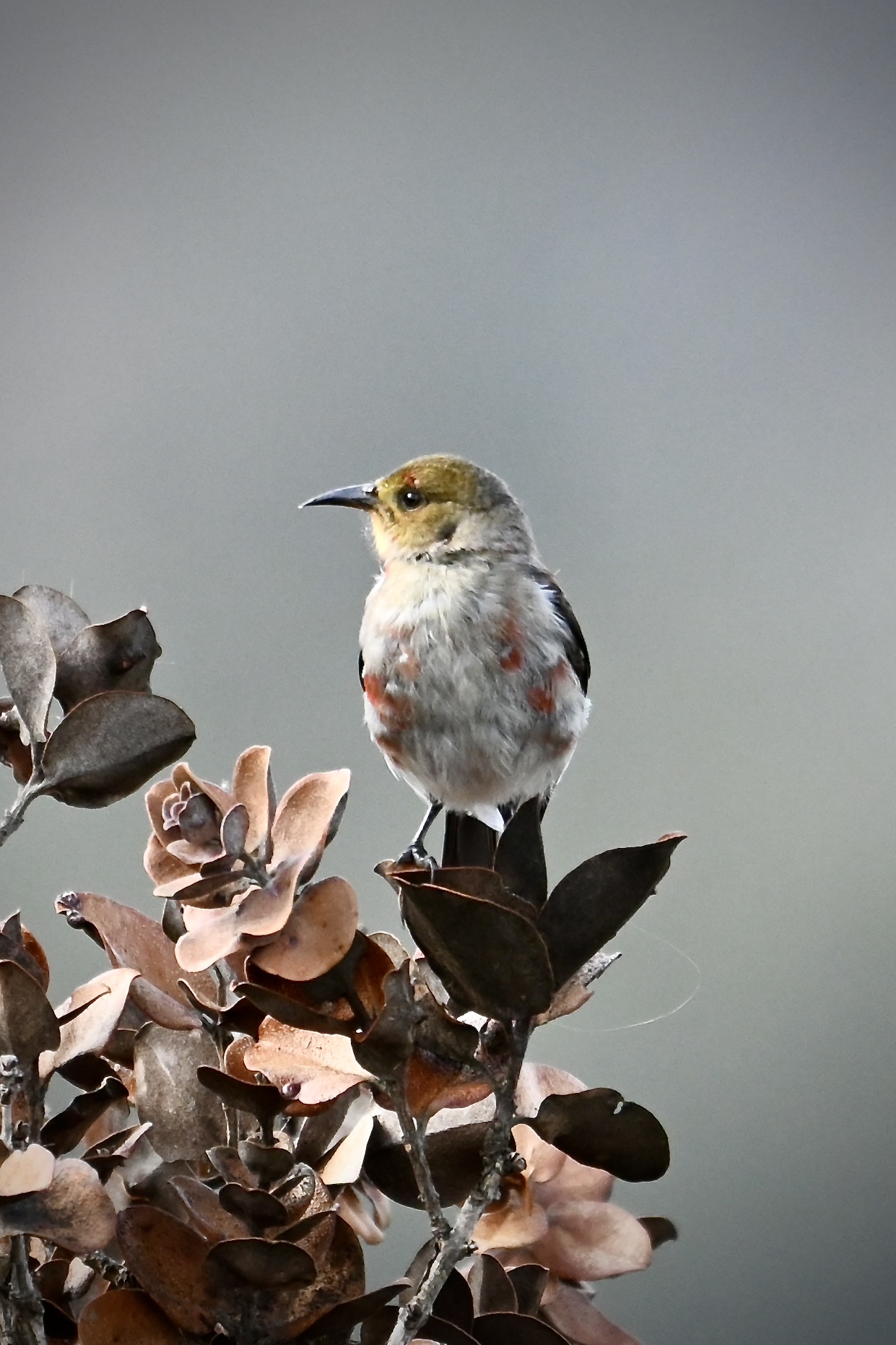
Photo of an immature ‘apapane by Eric Anderson.

Story: The One in Charge

October 20, 2024

Isaiah 53:4-12
Mark 10:35-45

When the birds of the ohi’a forest start to flock together – which tends to happen when the chicks have learned to fly and left the nest – some of those flocks rotate leadership among the birds: an ‘apapane this week, an ‘akepa this week, and who knows? Perhaps an ‘alawi the next.

There came a week when one of the ‘amakihi was chosen to lead, and he was going to lead, by all that was feathered, he was. He had done a lot of watching and a lot of listening to the other leaders, and he knew he’d do a good job. He wouldn’t bully, and he wouldn’t brag, and he would get help from other birds to be sub-leaders, and above all else, he would keep an eye out for food, for shelter, and for danger.

He was, after all, the one in charge.

Things seemed to go just that way for the first couple of days. The other birds followed where he led, they sang cheerfully as they foraged for bugs and nectar, and they avoided both the nuisance of a cranky i’iwi and the dangers of two cats and an ‘io. On the third day, however, something seemed to be going… differently. The birds still followed where he led, but… it almost seemed like some of them were slightly ahead of where he was going. He thought they might just be faster fliers, but as the day went on he noticed that some of them seemed to open their wings just slightly before he did.

What puzzled him about all this was that, as he thought about it, it seemed… perfectly normal. The other flock leaders had also been just slightly behind two or three birds. Which seemed… perfectly normal and perfectly odd.

When the next day came, the same thing was happening, and he kept a close eye on things. Another ‘io came by over the course of the morning, so that a sudden alarm whistle sent everyone deep into the branches. A little while later, the same voice trilled that it was safe again, and the flock took wing for another ohi’a tree – one that he, the leader, hadn’t chosen. He probably would have tried that direction (because the ‘io went the other way), but he hadn’t chosen it. What was going on?

In early afternoon, it happened again. Two or three birds took off just before he did, and later on two or three more took off just before he did, but they were different birds. Still, he spotted what was the same: those birds had been close to another bird, an ‘amakihi, just before they flew.

So he landed right next to that bird when they got to a new tree and found… she was his mother.

“Are you… What are you doing, mother?” he asked. “Are you trying to take over as leader?”

“Not at all,” she said. “I’m following you, just like everyone else.”

“Then how come birds take off ahead of me from around you?”

“Well,” she mused. “I might be mentioning that you’re looking at a tree in a particular direction. They seem to think that’s a reason to go that way. You and I both have been paying attention to what’s safe and what’s in blossom.”

“Isn’t that leading?” he asked.

“It might be,” she said, “if leading is paying attention to what’s good for all the birds of the flock. Which you’re doing. But it’s something that all of us can do along with you. When your leadership time is over, you can do it, too.”

He was a good leader, they all agreed. They were surprised to find, however, that he was an even better follower when another bird’s turn came to lead. He did the best he could to see that all the birds were fed, warm, and safe – and so did his mother.

by Eric Anderson

Watch the Recorded Story

I write these stories ahead of time, but I tell them in worship from memory. Memory plus a fair amount of improvisation.

Photo of an ‘amakihi in flight by Eric Anderson.

Story: The Generous I’iwi

October 13, 2024

Job 23:1-9, 16-17
Mark 10:17-31

I’iwi are not known for their generosity. They tend to chase other i’iwi away if one comes too close, and they have an expansive notion of what “too close” means. They’re willing to put up with other birds, most of the time, but if there’s an ohi’a tree full of flowers to be sipped at, well. Then things can get exciting, and they’ll chase the ‘apapane and the ‘amakihi away.

One day an i’iwi was perched in a tree and saw a family of four humans come along. They stopped for a moment nearby and the big humans gave the little humans the last two cookies out of a little bag. The littlest human, a boy, took big bites. The next-littlest human, a slightly older and taller girl, nibbled at her cookie, enjoying its sweetness.

When the little boy had finished his cookie, the parents announced that it was time to keep walking, and their son burst into tears. He was tired. He didn’t like walking. Most of all, he was still hungry, because he hadn’t had enough cookie.

But there were no more cookies in the little bag.

Big sister – who wasn’t that much bigger, remember – looked at her cookie. More than half of it was left. Without a word she broke it in half and gave a piece to her little brother. He stopped crying – mostly, he snuffled some more – but the two of them finished their cookies together, and then the family moved on.

The i’iwi was impressed. Half a cookie had done so much good for the little boy, and also for the parents who wanted to comfort him but couldn’t. Half a cookie wasn’t a big thing, but it made a big difference.

The i’iwi decided that he’d make a difference, too. Not with cookie halves, which he wasn’t going to eat anyway, but with ohi’a flowers. He’d bring those to the hungry birds of the forest.

If he could figure out how.

An i’iwi’s long curved beak is pretty good for sipping nectar, but it’s not that good for snipping flowers from branches or carrying them. His first few experiments showed him that he damaged more flowers beyond use than he actually carried. He managed to get one blossom in his beak, however, and flew off to find a hungry bird to give it to.

After a few minutes, he found a section of the forest where the trees weren’t blossoming much, and then he found a sad-looking ‘apapane perched on a leafy, but flowerless, branch. He landed and carefully placed the flower on some leaves before he said, “Here. You look hungry. Take a good sip.”

The ‘apapane looked surprised and then puzzled, but said, “Thank you,” before dipping her beak into the flower. Sadly, there wasn’t much nectar to be found. Much of it had dried out when it was plucked from the tree and carried through the air.

“I’m sorry,” said the i’iwi. “I’ll go get you another one.”

“Wouldn’t it be easier,” asked the ‘apapane, “to show me the tree you found it on?”

“Why, yes,” said the i’iwi. “It would. Why didn’t I think of that?”

Cookies don’t grow on trees. Sometimes if you want to share, you have to divide them up. But sometimes if you want to share, you can bring your friend to the flower, not the flower to the friend. However you share, though, remember that small things can make a big difference, and that giving to someone goes a long way.

Watch the Recorded Story

I write these stories ahead of time, but I tell them from memory – memory plus improvisation – so what you hear will not match what you’ve read.

Photo by HarmonyonPlanetEarth – I'iwi|Pu'u o'o Trail | 2013-12-17 at 12-43-196 Uploaded by snowmanradio, CC BY 2.0, https://commons.wikimedia.org/w/index.php?curid=30241883.

Story: Follow the Leaders

September 29, 2024

Numbers 11:4-6, 10-16, 24-29
Mark 9:38-50

It’s a funny thing about people. Sometimes people choose leaders without getting them ready for leadership first. You’ve probably seen it in school sometimes. The teacher asks someone to lead the class in a song or a reading, but it turns out they hadn’t learned it yet.

That can be pretty embarrassing.

As it happens, it’s not just humans who do such things, although it turns out that for a lot of those creatures, a school is also the place to do them. A school of ta’ape, or “Bluestripe Snapper,” selected a relatively young fish to be the leader of their school one season. He was pretty big, he seemed pretty smart, and as far as anyone could tell without asking, he seemed to know what he was doing.

He… didn’t know what he was doing.

The first hour was a disaster. He tried calling out from the front of the school, “Everybody turn right!” And everybody turned right. Everybody who heard him. That wasn’t all that many of them. It was a big school, and his loudest voice didn’t carry all the way to the back, or even to the middle. Fish swam off in all sorts of different directions. It was quite a muddle.

Fortunately, he was a smart ta’ape, and one thing about being smart is knowing when you need to learn something. Clearly there were things he needed to learn about leading the school, and he needed to learn them quickly. So when the school was feeding quietly on some beds of algae, he sought out some of the ta’ape kupuna and said, “I need some help. How do I get the school to follow?

The kupuna were gracious. One or two of them did think he might have learned this before, but they kept quiet about it. They told him the secret.

“You need to choose fish to lead with you.”

“The school is too big for one fish to lead,” they said. “As you’ve found, it can’t be done by one fish. So you appoint other leaders, and space them throughout the school. The ones closest to you listen for what you’re doing, and the ones farther away listen for what they’re doing. When you turn, they turn, and the other leaders turn, and the school turns.”

The leader was relieved. He didn’t have to do this alone. He would have help. He promptly asked as many of the kupuna as were willing (some of them thought it was time for some new fish to learn) to become the other leaders, and he found a few more fish and taught them what. They needed to know.

The next time he directed the school toward clearer water they turned in a flash. He laughed for joy, and so did the other leaders, and so did the whole school full of fish, because he’d led them all in joy.

by Eric Anderson

Watch the Recorded Story

I write these stories ahead of time, but I tell them from memory. And sometimes I don’t remember the names of the fish.

Photo of a ta’ape school by Tchami – Bluestripe Snapper, CC BY-SA 2.0, https://commons.wikimedia.org/w/index.php?curid=34504430

Story: Everybody’s Songs

An 'apapane, a red bird with black wings, singing in tree branches.

September 22, 2024

Jeremiah 11:18-20
Mark 9:30-37

Everyone thought she was one of the best singers among the ‘apapane. Her notes were clear, her improvisations were delightful, and she had the breath to sing long bubbling musical runs. Other ‘apapane used to listen for her in the mornings, and if they heard her, they’d take off in her direction.

It turned out that she used to sing loudest and longest when she found a grove of ohi’a with lots of blossoms, so everybody who flew into the neighborhood got a good meal. She’d sing, however, even in a tree between flowering times. When she did, the other ‘apapane – and the akepa, and the ‘alawi, and the ‘amakihi, and even the i’iwi – settled into nearby trees to listen.

It was like having a great concert every day.

She couldn’t help noticing that a fair number of birds got a free lunch, or breakfast, or dinner out of her songs. At the start she didn’t mind – she was pretty flattered that everyone flew to hear her sing – but as time went on it started to rankle. “Can’t they find their own trees?” she grumped to her brother one day, and if he had anything useful to say, she didn’t listen.

Then she had a bad scare. She’d landed on a branch near to the ground, which she rarely did, and began to sing. Suddenly the branch heaved with a heavy weight. She fluttered into the air, taken by surprise, and only then noticed the hunting cat which had leapt onto her branch and only just missed her.

She flew higher into another tree, whistling with alarm, and watched while the cat climbed back to the ground and disappeared into the forest.

The next day the sun rose, but her voice didn’t rise. The day grew brighter, but nobody heard her song. Other ‘apapane and ‘amakihi and mejiro and the rest begin to sing, but she remained silent.

She found a place deep within some leafy ohi’a branches and hid from the world.

They noticed that she wasn’t singing that day, the other birds did, but they mostly thought she’d gone to another part of the forest and would be back soon. But one day became two, and two became four, and four became over a week and nobody had heard her song. They began to look around, hoping to find her well, and terribly afraid that something bad had happened.

 Her mother found her – mothers often have a talent for finding their children – still huddled in her ohi’a tree, silent and afraid. She told her mother about what had happened with the cat.

“I don’t want to sing ever again,” she said.

“Your songs are beautiful,” said her mother. “Everybody loves you for them.”

“Everybody follows me because they think they’ll eat well,” said the daughter. “Somebody else can do that. Not me.”

“Listen for a moment, daughter,” said the mother, and the two were quiet. The forest, however, was not. The calls and songs of the forest birds sailed out over the trees.

“Listen to that,” said mother. “It’s everybody’s song.”

“Won’t they attract cats?” asked the singer.

“They might,” admitted her mother, “but there are ways to sing beyond their reach. Mostly, though, realize that it’s your voice, and your melodies, but it’s not really your song. It’s everybody’s song when you share it, greater and more wonderful than you know.

“What do you think, daughter? Can you sing with everybody’s song?”

In answer, the young ‘apapane opened her beak and sang.

by Eric Anderson

Watch the Recorded Story

I write these stories in advance, but I tell them in worship from memory and from improvisation. What you’ve just read will not match what you watch.

Photo of an ‘apapane by Eric Anderson.