Not Enough Cooks

“[Moses said,] ‘I am not able to carry all this people alone, for they are too heavy for me.’ So the LORD said to Moses, ‘Gather for me seventy of the elders of Israel…'”

They wept for food, the wandering people did.
Their palates had grown weary of the miracle,
which sounds ungrateful. I suppose it is.
But who does not grow weary of life’s wonders?

Then Moses was displeased, and not with weeping
people, but with God, whom he accused of treating him
so badly. “Why do you lay the burden of these people
upon me?” For Moses, too, had wearied of the wonder.

And God – the singular, the Trinity not yet
imagined, whose powers had rained flies
and hail and pestilence and death upon
the wailing people of the Pharaoh – said,

“You shall not lead alone. You never have.
Did you forget? We’ve been a team, we have,
with you and me and Miriam and Aaron.
The team will grow by seventy today.

“They say too many cooks will spoil broth.
Sometimes, you know, that’s true, if they
neglect to speak and listen to each other. Now
my Spirit shall be given to these elders.

“They shall prophesy, including those
who missed the memo in the camp.
And you, my harried, whiny Moses, shall
at last be glad for helpers on the road.

“As for these weeping people, now:
Let them eat quail.”

A poem/prayer based on Numbers 11:4-6, 10-16, 24-29, the Revised Common Lectionary Alternative First Reading for Year B, Proper 21 (26).

The image is Moses elects the Council of Seventy Elders by Jacob de Wit (1737) – AQGtI5P6nkpYyw at Google Cultural Institute maximum zoom level, Public Domain, https://commons.wikimedia.org/w/index.php?curid=21988106.

Story: Everybody’s Songs

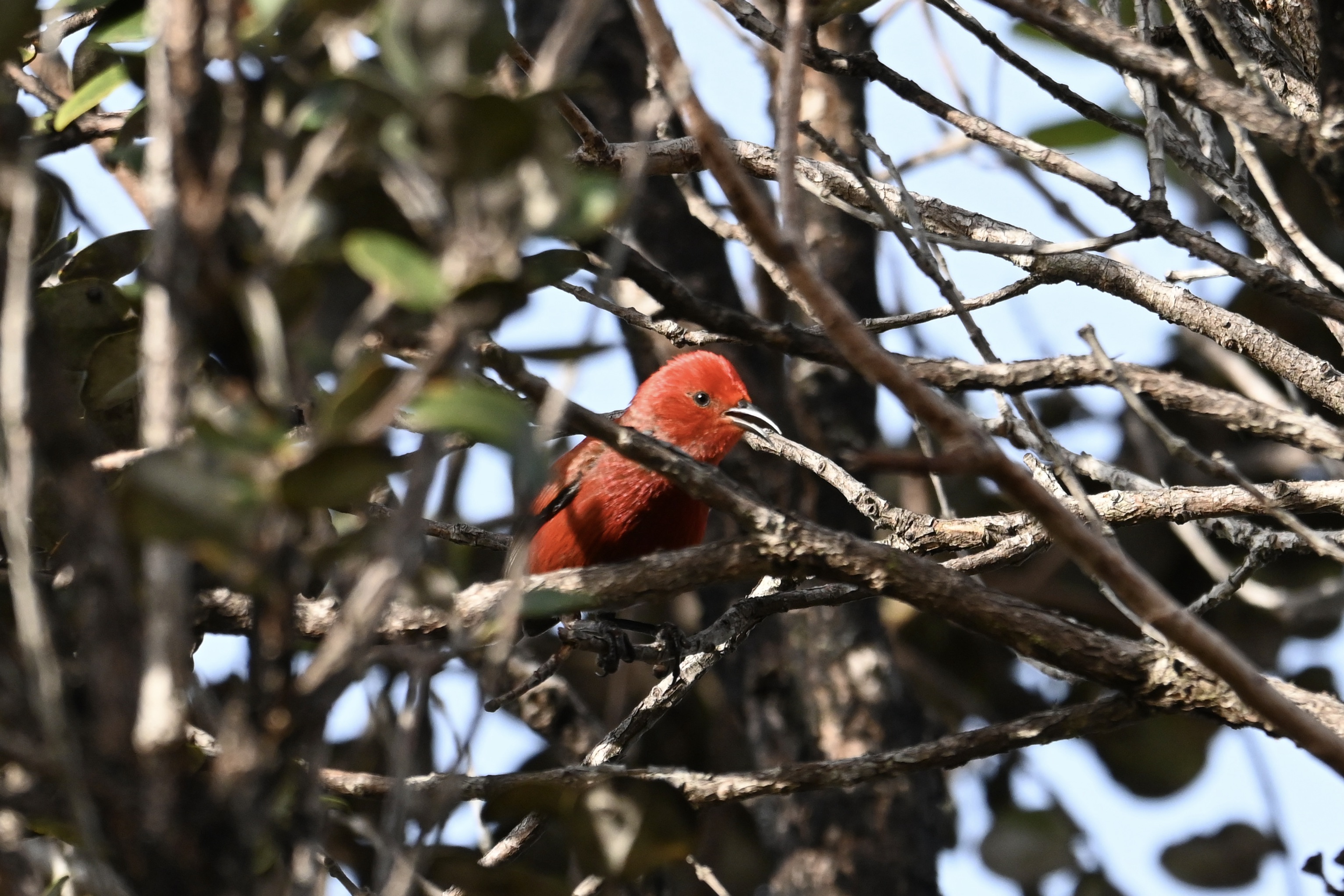
An 'apapane, a red bird with black wings, singing in tree branches.

September 22, 2024

Jeremiah 11:18-20
Mark 9:30-37

Everyone thought she was one of the best singers among the ‘apapane. Her notes were clear, her improvisations were delightful, and she had the breath to sing long bubbling musical runs. Other ‘apapane used to listen for her in the mornings, and if they heard her, they’d take off in her direction.

It turned out that she used to sing loudest and longest when she found a grove of ohi’a with lots of blossoms, so everybody who flew into the neighborhood got a good meal. She’d sing, however, even in a tree between flowering times. When she did, the other ‘apapane – and the akepa, and the ‘alawi, and the ‘amakihi, and even the i’iwi – settled into nearby trees to listen.

It was like having a great concert every day.

She couldn’t help noticing that a fair number of birds got a free lunch, or breakfast, or dinner out of her songs. At the start she didn’t mind – she was pretty flattered that everyone flew to hear her sing – but as time went on it started to rankle. “Can’t they find their own trees?” she grumped to her brother one day, and if he had anything useful to say, she didn’t listen.

Then she had a bad scare. She’d landed on a branch near to the ground, which she rarely did, and began to sing. Suddenly the branch heaved with a heavy weight. She fluttered into the air, taken by surprise, and only then noticed the hunting cat which had leapt onto her branch and only just missed her.

She flew higher into another tree, whistling with alarm, and watched while the cat climbed back to the ground and disappeared into the forest.

The next day the sun rose, but her voice didn’t rise. The day grew brighter, but nobody heard her song. Other ‘apapane and ‘amakihi and mejiro and the rest begin to sing, but she remained silent.

She found a place deep within some leafy ohi’a branches and hid from the world.

They noticed that she wasn’t singing that day, the other birds did, but they mostly thought she’d gone to another part of the forest and would be back soon. But one day became two, and two became four, and four became over a week and nobody had heard her song. They began to look around, hoping to find her well, and terribly afraid that something bad had happened.

 Her mother found her – mothers often have a talent for finding their children – still huddled in her ohi’a tree, silent and afraid. She told her mother about what had happened with the cat.

“I don’t want to sing ever again,” she said.

“Your songs are beautiful,” said her mother. “Everybody loves you for them.”

“Everybody follows me because they think they’ll eat well,” said the daughter. “Somebody else can do that. Not me.”

“Listen for a moment, daughter,” said the mother, and the two were quiet. The forest, however, was not. The calls and songs of the forest birds sailed out over the trees.

“Listen to that,” said mother. “It’s everybody’s song.”

“Won’t they attract cats?” asked the singer.

“They might,” admitted her mother, “but there are ways to sing beyond their reach. Mostly, though, realize that it’s your voice, and your melodies, but it’s not really your song. It’s everybody’s song when you share it, greater and more wonderful than you know.

“What do you think, daughter? Can you sing with everybody’s song?”

In answer, the young ‘apapane opened her beak and sang.

by Eric Anderson

Watch the Recorded Story

I write these stories in advance, but I tell them in worship from memory and from improvisation. What you’ve just read will not match what you watch.

Photo of an ‘apapane by Eric Anderson.

The Argument

“Then they came to Capernaum, and when he was in the house he asked them, ‘What were you arguing about on the way?’ But they were silent, for on the way they had argued with one another who was the greatest.” – Mark 9:33-34

Sitting in your house, you catch my eye.
I see the smile play upon the corners of your lips.
“That argument you had along the way. Now tell me:
What were all those snarling words about?”

Now, I don’t want to tell. You see that, right?
Your eyes move on from mine to James, and John,
to Andrew, Philip, Matthew, Simon, James,
Bartholomew and Thaddeus, Thomas, Judas, too.

“So tell me!” you repeat and smile, still.
You know, I know, because my frozen face
declares it. So do all the faces of the twelve.
You shake your head at our embarrassed silence.

“Would you be great?” you ask me, and I need
not answer. Yes, I would! I’d be the warrior
at the side of Christ, to fight and even die
if need be. I would live in glory.

“If you’d be great,” you say, and lift
the ragged cuff of my left sleeve,
“you won’t be first, but last. You’ll be
the servant of the least of these.”

All right, you’ve said such things before,
and we had nodded, for your words were wise.
I somehow never thought that they’d apply to me.
I somehow never thought I’d die in poverty.

I may have held my tongue since your rebuke
of “Get behind me, Satan!” but I do not yet
accept your forecast of betrayal and a cross.
I’d overcome those evils, not embrace them.

I see again, however, you and I
have taken sides in opposition here.
My greatness is not yours. Your greatness is
not mine. I can’t think what to do.

Whatever happens, I will not abandon you.
I’ll wrestle with these things I do not want
to understand, and maybe one of us
will change their mind. In honesty?

I hope it’s you.

A poem/prayer based on Mark 9:30-37, the Revised Common Lectionary Second Reading for Year B, Proper 20 (25).

The image is The Tears of Saint Peter by El Greco (ca. 1590) – National Museum of Art, Architecture and Design (Norway), Public Domain, https://commons.wikimedia.org/w/index.php?curid=98036830.

Story: Celebration Songs

September 15, 2024

Isaiah 50:4-9a
James 3:1-12

He was her brother. She was his sister. They’d been raised in the same ‘apapane nest up in the ohi’a forest. They’d been fed by the same parents. They’d learned to fly together. They’d learned how to forage in the trees together. They both wore bright red feathers and black wings with white feathers underneath. They were…

Completely different from one another.

He was a complainer. No ohi’a blossom ever had enough nectar. No bug was ever crunchy enough. If he ate a caterpillar, it wasn’t soft enough. The sunny days were too hot. The rainy days were too… well, too wet.

Worst of all, in his opinion, were all the other birds. I’iwi were too obnoxious. ‘Amakihi were too yellow. Mejiro were too green. ‘Akepa were too orange, unless they were female ‘akepa, in which case they were too green. ‘Io were too hungry.

I grant you that, since ‘io like to eat ‘apapane, he may have had a point with that last one.

His sister, on the other hand, was a celebrator. She savored the taste of the nectar in the smallest ohi’a blossom. She enjoyed the crunchy bugs and slurped down the soft caterpillars with the same enthusiasm. She let the rain cool her and she spread her wings to dry in the heat of the sun.

As for other birds, well. She sang with other ‘apapane, chirped with the i’iwi and the ‘amakihi and the mejiro and the ‘akepa and everyone else she met. She was sure there something good to say about the ‘io, but she’d have to find a safe way to chat with one to find out what it was.

Her brother perched in an ohi’a tree dripping with blossoms and moaned. His sister sang joyful songs in a tree with a single flower. Her brother insulted birds that came by about their feathers, their songs, and their diets. His sister complimented their flight and their colors and their voices.

Now, not every day is a good day for an ‘apapane. It can get pretty cold on a rainy night, and they’ve got to watch out for hunting ‘io. Sometimes lots of trees are in blossom, and sometimes there’s just a few. She wasn’t always happy. Sometimes it took time to find food, or a dry place, or to get through a long cold night.

But in the good times, on the good days, she celebrated the good things, whatever they were. Other birds joined her to share in the nectar or the sunshine and always in the joy of being in her presence.

Her brother went through bad times with grim satisfaction that all his woeful predictions had come true once more. And when bad times turned to good, he… sat glumly in the tree and complained about the nectar, and the bugs, and the sun, and the rain, and the way that nobody seemed to want to be around him.

He made his bad times harder, and his good times glum. She made her good times better, and her bad times easier. Given the choice, my friends, I think I’d rather be like her.

by Eric Anderson

Watch the Recorded Story

I write these stories in advance, but I tell them from memory. And I improvise. So what you’ve just read will not match the way I told it.

Photo of an ‘apapane by Eric Anderson.

A Bit for Fire

A lava vent viewed through greenery.

“If we put bits into the mouths of horses to make them obey us, we guide their whole bodies… And the tongue is a fire.” – James 4:3, 6a

My tongue has been trained, yes it has.
It has been trained in true and righteous speech,
through the best efforts of parents, teachers, friends.
I am a credit to them when I speak well.

Well.

My tongue has been inflamed, yes it has.
It has sputtered sparks and spat forth fire.
When furious clamor has arisen from my foolish words,
I am a credit only to myself.

Well.

What bit will serve to govern streams of fire?
What governor will guide a flaming tongue?
A pity that there is no quick solution,
though silence, at the least, constrains the blazing word.

A poem/prayer based on James 3:1-12, the Revised Common Lectionary Second Reading for Year B, Proper 19 (24).

Photo by Eric Anderson.

Story: Ours. Not Yours.

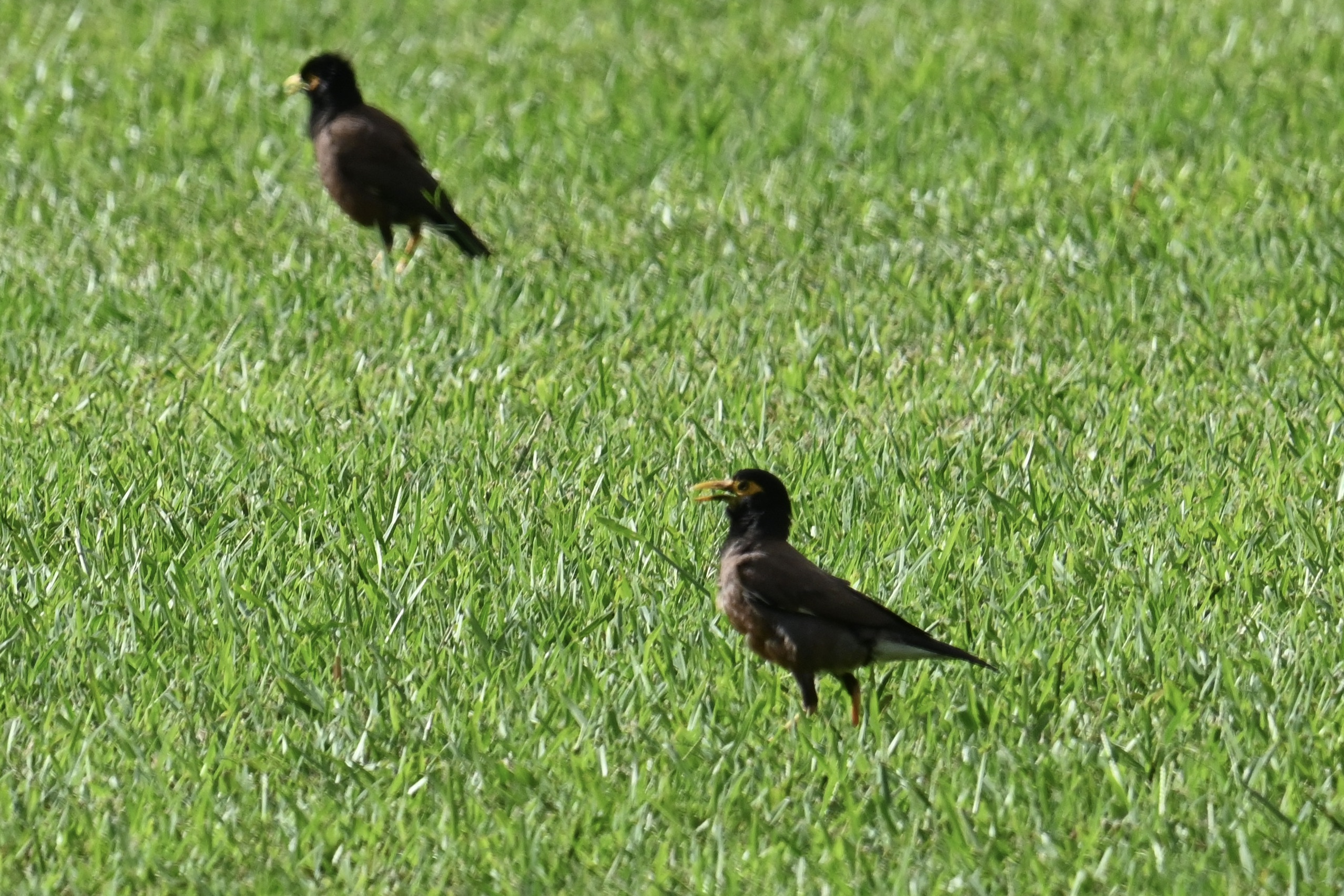
Two mynas in the grass.

September 8, 2024

James 2:1-17
Mark 7:24-37

I don’t know what I did to offend a couple of our local mynas, but I have clearly disturbed one or two them. They screech at me as I’m walking along outside the church buildings. Maybe I’m breathing too loudly for them?

Mynas are somewhat quarrelsome among themselves, and when nesting spots are scarce they’ll chase anyone and everyone away, but they typically share feeding spots with anyone around. Kolea, saffron finches, house finches, doves, and others eat their seeds and bugs alongside flocks of mynas.

One mynas flock, however, chose a feeding spot to be their very own, and only theirs. They wouldn’t accept other birds in it. They screeched at them, they advanced threateningly at them, and if they didn’t take the hint they’d jab at them with their beaks.

“No finches allowed!” they’d screech, and then, “Get out of here, dove!”

“Kolea go home!” they said, which seems pretty unfair, and “No room for cardinals here!”

It was pretty ugly, and pretty selfish.

It was also remarkably foolish.

You see, having chosen their ground, they’d also chosen to protect it. There’s a limit to how much ground a flock of mynas can protect, and in this case, it wasn’t big enough for them. Ordinarily, when a patch of land gets picked over for seeds and bugs so there’s not much left, they’d move on to another place. The old place would get some rest for new seeds to form and new bugs to move in. But they’d picked their ground, and they weren’t moving, and the seeds began to get scarce and the bugs harder to find.

Even with the spot limited only to mynas, it wasn’t quite enough.

If they hadn’t driven other birds away, they might have noticed when other birds started looking somewhere else, and they might have followed them to a better spot. They didn’t. If they hadn’t driven other birds away, they might have moved about more freely themselves. They didn’t. If they hadn’t driven other birds away, they might have given their chosen piece of land some time to pause and replenish.

They didn’t.

The flock began to dwindle. One day a myna flew away because she was hungry and there wasn’t enough there. The next day two mynas flew away. The area they could protect got smaller, so even with fewer mynas there still wasn’t quite enough food.

When the flock got down to two or three hungry birds, they looked at one another on the thin grass of their chosen ground, and said to a curious nearby kolea, “This is ours. Not yours.”

“You can have it,” said the kolea. “I’ll be better elsewhere.”

And you know what? The kolea was absolutely right. He did much better elsewhere than these stubborn mynas did in their chosen spot.

by Eric Anderson

Watch the Recorded Story

I write these stories in full, but I tell them from memory and improvisation. Therefore the story you just read will sound different from the one that I told.

Photo by Eric Anderson.

No Illusions

“Now the woman was a gentile, of Syrophoenician origin. She begged him to cast the demon out of her daughter. He said to her, ‘Let the children be fed first, for it is not fair to take the children’s food and throw it to the dogs.'” – Mark 7:26-27

I had no illusions, Jesus.

I almost didn’t spot you, though I looked.
A neighbor mentioned casually that
“a healer Jew from Galilee” was near
as if it made no difference to me.

You know it did, Jesus.

I left my wailing daughter with a friend
and searched the streets to find
a face I did not know. Despite our sorrows, I
know every face upon our streets.

I knew you from not knowing you, then, Jesus.

You’d made no effort to declare yourself
so I could not believe you’d come to help
the sick and demon-burdened in our village here,
but help you would, if I could have my way.

I had to have my way, Jesus.

I found your stranger’s face. I bowed
upon your feet. I begged you for
your healing touch to soothe my child’s rage,
assuage her fear, give to her peace.

I knew that you’d say, “No.”

You said it with a cruelty that nearly stopped
my breath, though I had no illusions, none.
I stammered out my need’s reply:
“The dogs can eat the children’s crumbs.”

I was not after crumbs.

No, Jesus, I would have it all.
Not all or nothing, I would have it all,
because what use is partial banishment
of demons burdening the human soul?

No crumbs, Jesus. All. And I mean all.

You gave it all to me, you know.
You gave me all your cruelty (I hope
you used it up). But then you gave me all
the healing power of your anguished face.

My daughter got it all.

She’s never seen you, Jesus, as
you know. You took your shattered heart,
remade it new, to heal and heal again,
and left behind a girl once more herself,

And your illusions cast aside.

A poem/prayer based on Mark 7:24-37, the Revised Common Lectionary Gospel Reading for Year B, Proper 18 (23).

The image is “Jesus and the Woman of Canaan” by an unknown artist (ca. 980-993) – found in the Codex Egberti, Fol 35v, Public Domain, https://commons.wikimedia.org/w/index.php?curid=8096755.

Story: Dirty Finches

Two saffron finches in the grass.

September 1, 2024

James 1:17-27
Mark 7:1-8, 14-15, 21-23

Saffron finches don’t fly about in larger flocks like mynas, but they certainly do gather in small groups to feed and chirp and, one assumes, share the news of the saffron finch world. One little group was having a problem with not one, but two, of their members.

The first one who bothered them was, well, unwashed. Routinely. A finch is going to get dust and bits of grass and, I suppose, the occasional bug wing on their beak and face, and he did that. They’ll also get dirty feet and, if they’re hopping about on muddy ground, get dirty feathers. He did that, too.

Most saffron finches find ways to wash it off. They’ll clean with beak and toes and let the rain wash them off when they can. On a gray day a saffron finch is a pretty bright sight. But not this guy. Somehow a rain shower left him muddier. If he pushed bug wings off his head he’d get dirt in the feathers.

He was a sight, let me tell you.

The other troublesome bird was clean and bright. He not only got himself clean, somehow he avoided most of the dust and dirt that the other birds had to deal with. And… he let you know it.

“Are you going to clean those feet?” he asked. “There’s a bug wing on your beak,” he said. “Can you believe it? You’ve got a speck of mud on your feathers,” he commented.

He went on and on about the finch with the dirty feathers. “Look at that, he’s a disgrace,” he’d say, and “I’m so glad I’m not like him.”

They say “Sticks and stones may break my bones, but names will never hurt me,” but you know? Words hurt. And nearly every bird in the little flock of saffron finches felt the sting, with our dirty finch feeling it the worst.

What to do?

They got together, the other finches. They talked it over while the dirty finch and the absolutely clean finch were elsewhere. They come up with some possibilities. They made some decisions. They got ready to offer some options.

They called the whole flock together, including our two problem finches, and said, “We’ve got to see some changes here. First,” they said to the dirty finch, “we’re going to give you some help, because clearly you need it. We’ll help you with the preening and the cleaning and make sure you stay both healthy and show off your bright feathers.

The dirty finch, who thought he was going to be kicked out of the flock, chirped a grateful “Mahalo!”

The absolutely clean finch huffed, “I can’t believe you’re going to put up with him and his filth. You’re as bad as he is.”

“What we’re not going to put up with,” said the spokesfinch, “is your bullying any longer. You’ve been hardest on this finch here, but you’ve been at all of us at one time or another. Yes, your feathers are always immaculate, and no, our aren’t always at their best. But your tongue is never at its best, and that needs to change. Now.”

The absolutely clean finch was speechless for a moment (which was a good thing, if you think about it), and then he burst out with a harangue that few have ever heard. I’m afraid he didn’t learn his lesson, and I’m afraid he couldn’t stay with that flock.

When it came down to it, the things that make a finch dirty from the outside are things they could help with. But the things that make a finch dirty from the inside, all the harshness and bullying, those are the things that have to go.

by Eric Anderson

Watch the Recorded Story

I write these stories ahead of time, but I tell them from memory – memory and inspiration. What I’ve written does not match how I tell it.

Photo by Eric Anderson.

The Awkward Hour

“[Jesus said,] ‘…there is nothing outside a person that by going in can defile, but the things that come out are what defile.'” – Mark 7:15

The awkward hour – well, not quite an hour –
takes place each morn as I step in the shower.
While water cascades on my form and soap dislodges
clinging dust, my memory tunes to regret.

I sigh into the foam.

I’ve plenty to regret, and hope that you have less.
I recall failed relationships, the ways I’ve failed
my family and friends. I wonder how I’ve grieved
my God – and wonder, too, how I can claim to wonder…

My feet shift with discomfort.

The exercise might be worthwhile if
it prompted me to understandings new,
new ways to make amends, repair what had
gone wrong, but mostly I just grieve.

I close my eyes against the shampoo’s sting.

Symbolically, I’m doing all I can to cleanse,
but in my spirit: no. These demons have not been
expelled. They live quite happily within
my memories and recollected thoughts.

Knobs turned, the water does not fall.

Yes, Jesus, it is from within these things emerge,
defiling once again my spirit, laying low
my joy in you. I ask myself, “Why do this to yourself?”
and know I am not reconciled to me.

I pray that I am reconciled to you.

A poem/prayer based on Mark 7:1-8, 14-15, 21-23, the Revised Common Lectionary Gospel Reading for Year B, Proper 17 (22).

Photo by D O’Neil, CC BY-SA 3.0, https://commons.wikimedia.org/w/index.php?curid=682251.

Story: Rocky the Honu

August 25, 2024

Psalm 34:15-22
Ephesians 6:10-20

A newly hatched honu isn’t very big. Two or three inches long. They spend their time feeding on the seagrasses in which they hide in the shallows of our island.

A kupuna honu is a lot bigger, up to four feet long and weighing over 300 pounds.

Our honu today was bigger than a hatchling and smaller than a kupuna. He was maybe a foot long, had well developed flippers and tail, and enjoyed both swimming in the ocean waters and in the shallows near the beach. And, like all honu, he liked sunning himself on the rocks or the sands.

But… he was worried about manō. Sharks. A good size tiger shark could be a real problem. He kept a wary eye out for manō as he swam along the reef, and he listened intently for the sound of water passing over their sleek fins. He had a good strong shell, he knew, but… well. Who could tell if that would be enough?

One day, though, he got an idea. He’d just seen a wave move some rocks up and down the beach. What if he could find some way to attach rocks to his shell? Corals and opihi and, for that matter, the sea grasses he liked to eat managed to stick to things. What might give him an extra shell?

I still don’t know what he found to do it, but he did find something sticky, and he covered his shell with it. Then he went to a beach loaded with loose stone, moving back and forth with the waves. As they went clattering down the beach, they stuck to his shell, and suddenly he was the best armored honu in history.

He rested on the beach for a while, delighted with his success. He napped in the sun. The rocks actually made him just a little warmer as the sun warmed them, which was really nice. When he woke up, he was hungry. So he started crawling down the beach into the surf.

He was surprised to find it really difficult to move along. The stones on his shell weighed him down, and his flippers strained to push him along. “It will be better when I get into the water,” he thought.

He was wrong.

As difficult as moving along the beach had been, swimming was worse. The stones dragged him right down to the sea floor, and he struggled to swim back up to breathe – honu aren’t fish, you know. They breathe air. Every time he caught a breath he’d be back under a moment later. Honu can hold their breath a lot longer than I can, but this was not good. Not good at all.

He struggled back to the beach until his tail was in the water and his head out of it, with waves lapping at his shell as he gasped.

“Too heavy?” asked a passing ‘ulili.

“Too right,” said the honu, who started scraping the stones off. The ‘ulili used his long beak to help pray them away.

“Thanks for your help,” said the honu, and the ‘ulili replied, “I’m happy to help, Rocky.”

Rocky the honu laughed, and he wore the name the rest of his long life, but he never wore any rocks again.

Armor has its price, you know. Sometimes its protection is too heavy for living. Sometimes we do best by relying on what we can carry.

by Eric Anderson

Watch the Recorded Story

I write these stories in advance, but I tell them on Sunday morning from (occasionally poor) memory and (occasionally creative) inspiration. What you’ve just read will not match what I said.

Photo of a honu by Eric Anderson.