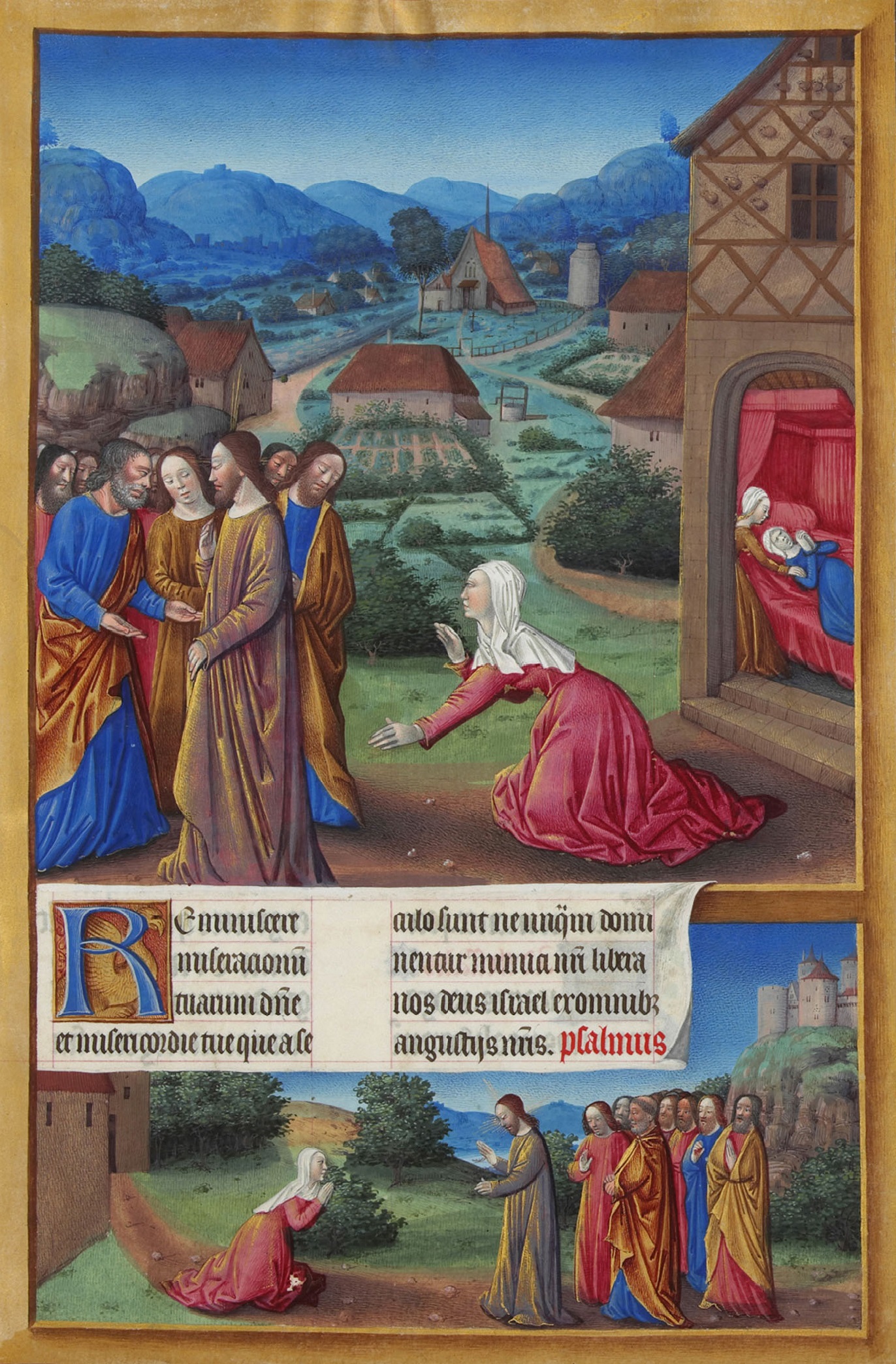
This song is based on the intercalated stories of Jesus healing the woman with a hemorrhage and the raising of Jairus’ daughter in Mark 5:21-43. It also reflects the ideas I considered in the poem “Twelve Years.”
Twelve years is a long time to suffer, to be pallid and drained, to be aching and strained. Twelve years without hope to be healed, ‘till a Teacher came by but you don’t dare to cry.
[Chorus]
Reach out a hand to a new life. Twelve years and a moment is here To shed all the pain and the torment And to celebrate a thirteenth year.
[Verses]
Twelve years is a short time to blossom, To be merry on Earth in your childish mirth. Twelve years, but the hope to be healed has risen and died like a deceitful tide.
[Chorus]
Twelve years, and the moment has come to set illness away to give healing its day. Twelve years and a moment have made all the difference for two and it could be for you.
The image is of the healing of the woman with the hemorrhage from theTrès Riches Heures du duc de Berry. Artwork by the Limbourg brothers (between 1411 and 1416) – Photo. R.M.N. / R.-G. Ojéda, Public Domain, https://commons.wikimedia.org/w/index.php?curid=17443172.Somewhat unusually for images of this text, Jairus’ daughter is visible at right in the upper image.
He was the oldest pueo in the nest. He was the best. He did things right.
At least, that was his opinion.
It wasn’t his younger sister’s opinion, but that frequently happens with younger brothers or sisters. They tend to think an older (or a younger, come to think of it) sibling can’t do anything right. Oldest children, however, or oldest fledglings in this case, tend to think, “I’m right. I’ve got this. Depend on me.”
And before you ask, yes, I was the oldest child in my family.
To his sorrow, it turned out his mother didn’t think he did everything right, either. She wasn’t like his sister, who didn’t think he did anything at all right. No, Mother was far more specific. She didn’t like the way he flew, or hunted for food, or caught it. “You’re beating your wings too fast,” she’d tell him. “You’re not paying enough attention while you’re circling,” she told him. And, of course, “You’re coming down too fast.”
The problem was that everything she told him happened to be correct. He was an overeager flier, and he tired himself out. In that fatigue haze, he didn’t look carefully for mice on the ground, and he’d miss them. So far his dives to catch prey hadn’t been complete disasters, but they weren’t getting better, either.
“I’m doing fine,” he hooted at his mother.
“No, you’re not,” she hooted back.
Exasperated, he flew off alone, without his mother or his sister, to avoid her steady barrage of corrections.
That worked. Well, it stopped the criticisms. At least the ones he could hear with his ears. His mother had succeeded, however, in creating some mother memory in his head, and he could still hear her telling him to fly slower, look more carefully, and for pity’s sake, control your dives.
But he didn’t change any of that. Which is why, after missing several swoops and getting hungrier and hungrier, he made a desperate dive for a mouse and crashed right into a bush. He crawled out, leaving behind several feathers in the process, and found his little sister waiting for him.
“Are you OK?” she asked, and she meant it.
“Mostly,” he said, feeling rather bruised.
“You need to talk to Mom,” she said. “Actually, you need to listen to Mom.”
He knew he did, but he also knew how much he’d annoyed her. “I don’t think she’d help me after all I’ve put her through,” he said.
His sister shook her head. “She absolutely will,” she fussed at him. “Go ask Mom for help. Say you’re sorry. But ask her for help. She will.”
They flew back together, and he did say he was sorry, and he did ask for help, and he finally started following her instructions, and he finally started to learn.
His sister couldn’t resist telling him, “I told you so,” but he was grateful to both of them anyway.
by Eric Anderson
Watch the Recorded Story
I write these stories in advance, then tell them from memory. I improvise a lot.
A poem/prayer based on Mark 5:21-43, the Revised Common Lectionary Gospel Reading for Year B, Proper 8 (13).
The image is of the healing of the woman with the hemorrhage from theTrès Riches Heures du duc de Berry. Artwork by the Limbourg brothers (between 1411 and 1416) – Photo. R.M.N. / R.-G. Ojéda, Public Domain, https://commons.wikimedia.org/w/index.php?curid=17443172.Somewhat unusually for images of this text, Jairus’ daughter is visible at right in the upper image.
The ‘amakihi was, everyone had to admit, an adult. Even her mother had to admit it. She was young, sure, but she had her adult feathering, she had lots of hours of flight time, and she knew the difference between a tasty bug and a yucky bug.
(Which I don’t, by the way. I’m inclined to think they’re all yucky bugs.)
Her mother, however, continued to give her good advice. She pointed out the tasty bugs. She pointed out the blooming ohi’a blossoms. She pointed out the ripe fruit. She even said, “Oh, look, it’s nighttime,” as the sun set beyond Mauna Loa.
“Mother is so boring,” said our adult ‘amakihi of a daughter.
“Why do you tell me these things all the time?” she asked one day, and her mother replied, “Because a day will come when I’m not around when you have a question. I want to make sure I’m always with you in your memories for such a time.”
“But it’s so boring,” said the daughter, but she said it to herself because she didn’t want her mother to hear.
One day, exasperated by another recital of the bugs that weren’t good to eat, she took off and flew fast and far. She didn’t pay a lot of attention to where she was going. When she got hungry, she’d stop for a nectar snack or a bug break. Then off she flew again.
When nighttime came, she realized that she had no idea where she was.
What should she do? she wondered. And as if her mother was there, but she wasn’t, she heard in her memory the words, “Look, it’s nighttime. Find a branch with greens around it and settle down to sleep.”
So she did. In the morning her mother’s voice in her memory guided her to tasty bugs and ripe fruit. But now she had to remember the more difficult thing: how to find her way home.
“Look at the slopes,” said her mother in her memory. “We don’t live on Mauna Loa, so don’t fly that way. But fly up the slopes of Kilauea until you find the crater at the top.”
She followed the rising slopes but didn’t turn up Mauna Loa. After some time, she saw some familiar trees. After a little longer, she saw the great crater at the summit. She made her way around it until she found the stand of trees where her nest had been.
And… found her mother.
Her mother fussed at her for a while about being away overnight, but her daughter said, “Please, let me say this,” and mother fell silent.
“Thank you,” said her daughter, “for being with me in my memory to get me home.”
I’m afraid that from time to time afterward, she did get exasperated with her mother and think she was boring, but… she never fussed or protested, because of how important it was to have her mother in her memory to help her find her way home.
by Eric Anderson
Watch the Recorded Story
I write these stories ahead of time, but I tell them from memory. And sometimes, as today, things happen that have to be acknowledged – like a mother clear saying to her son, “I told you so.”
The last installment of this series, to my surprise, is nearly four years old. Since July of 2020 Church of the Holy Cross UCC returned to online-only worship when COVID infections rose dramatically that summer. In-person worship did not resume until April 2022.
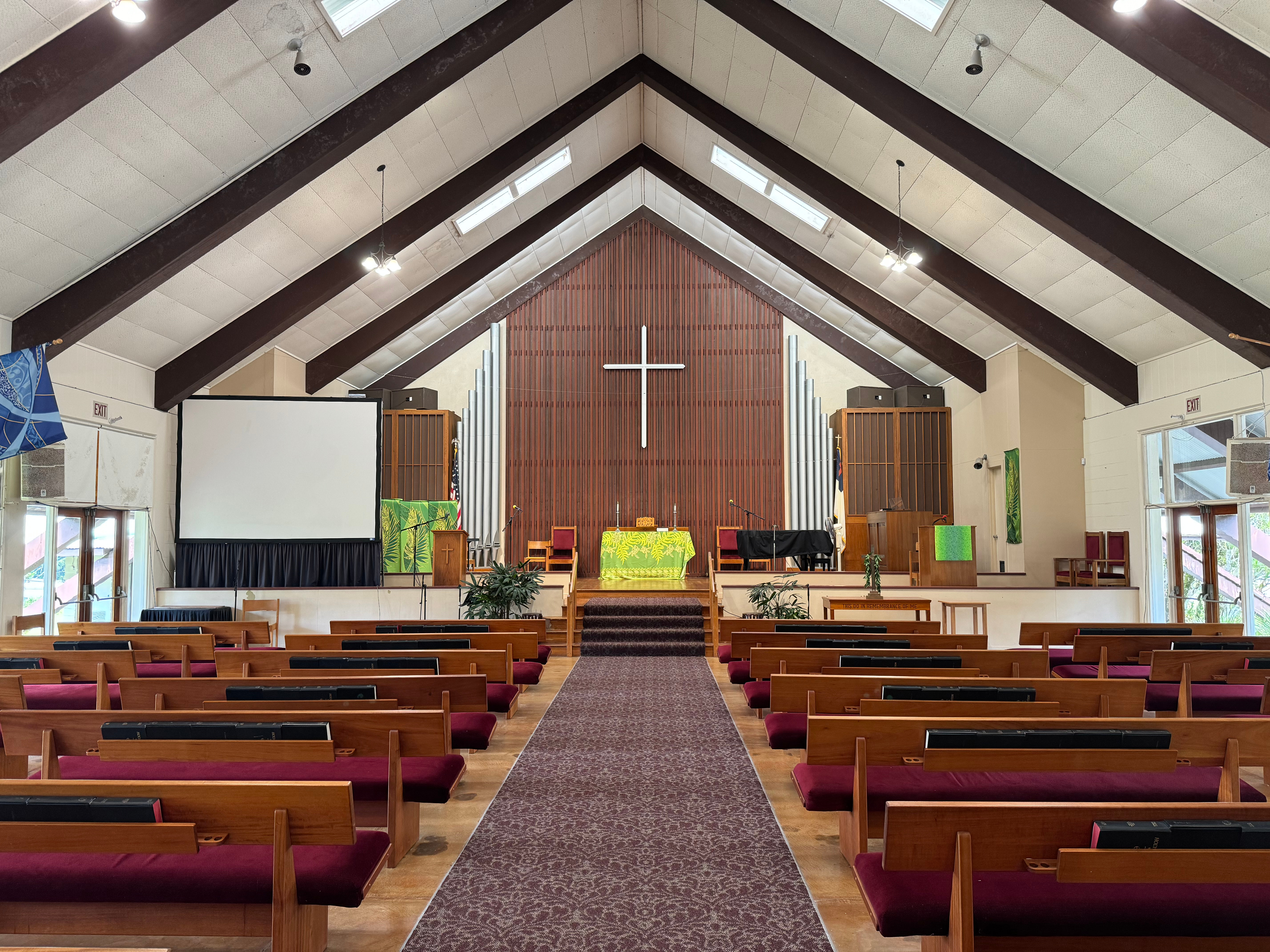
When people returned to the sanctuary, we restored some, but not all, of the pews to the room, maintaining wider spacing. Eventually we returned nearly all of them. We continue to make masks and hand sanitizer available, and we have a policy that dictates when we will require masks, and when we will require online-only services. In the last two years, we have not had to implement that policy.
We found solutions to a number of our challenges during those two years of streaming. Having moved to the pulpit and lectern in the summer of 2020, we remained there, to give more of an in-person feel. We added more music. When people came to the sanctuary, we made some additional changes.
Moving the Consoles
With only the worship team in the sanctuary, we could place the mixing console with its PC, ATEM mini switcher, and remote control for the sound board where it was convenient for cable runs. As I’d noted in the previous piece in this series, we were near the limits of HDMI cable length. With a congregation in place, however, we needed to move the technical station, preferably to the back of the room. How could we get the camera signals there, however?
The answer was fiber-optic HDMI cables, whose prices had plummeted over the last few years. They carried signals over 100′ with no degradation. We initially laid them across the floor with cable covers, but then moved them along the walls above the windows.
In the meantime, Blackmagic Design had issued a series of upgraded ATEM Mini units. We purchased an ATEM Mini Pro. Its four inputs gave us the ability to connect three cameras plus the feed from our internal slides. Best of all, this piece of hardware can display a multiview on an external monitor, allowing us to retire the field monitors.
Camera Upgrades
The little Canon video cameras had done good service, but they were showing problems. They used a mini-HDMI connector, and it was not built for the strains of moving the camera back and forth. We began to suffer short dropouts on cameras, and I began to worry that one or both of the connectors would fail. In addition, we faced the need to move the cameras further back in the sanctuary as people returned. We looked for a better long-term solution.
We invested in three Blackmagic Design Studio Camera 4K Plus cameras. We equipped two of them with longer power zoom lenses and one with a wide power zoom. The wide lens camera stands raised at the back of the sanctuary and provides a shot of the entire room. It has no operator. Volunteers point the other two, permitting us to continue streaming a three camera production. I have really welcomed these new cameras, because for the first time I know which one is active. I recently discovered that a small tweak to their color balance has really improved the look.
Sound
Our Soundcraft Ui24R has continued to serve us well, allowing us to send separate mixes to the speakers in the room and to the live stream. Moving the control console forced us to a new solution for getting the feed to the stream. We’re much too far from the physical mixer to use USB. Instead, we run an analog connection from the appropriate Auxiliary Out port to the back of the room, where it connects to a sound input on the ATEM Mini Pro. With a little bit of delay to compensate for the delay built into HDMI, we have solid sound.
We did add a “house sound” microphone to the mix. It hasn’t been a rousing success. We haven’t been able to place it so that it picks up the congregation without picking up the internal sound as well. We use it primarily during responsive readings, but not much otherwise. I’d still like to improve that somehow.
Movement
When a congregation returned in 2022, one of our members led them in movement, generally to one of the hymns or a musical anthem. As we increased the number of hymns in the service, this became less needed, and eventually we began to schedule the hula with an anthem. Sadly, the member then went through surgery, and we haven’t got her back on the calendar.
On the other hand, there is more movement in the service. The candle lighters go back and forth, and we stand and sit for prayers and hymns. We seem to have returned to that balance of stillness and striding that fosters a sense of worship.
Lights
We replaced the lights illuminating the sanctuary and the chancel with brighter LEDs that have a consistent color temperature. That has improved the video quality as well as the experience of worshipers in the room. It also led us to replace our sanctuary projector. The brighter overhead lamps made it much more difficult to read the screen, and the old projector wasn’t bright enough.
On Video a Lot
In 2016, when I began to serve Church of the Holy Cross, I began a video series called What I’m Thinking, a short improvised reflection on the Scripture text for the coming Sunday. That series recently exceeded 350 episodes. That makes one appearance in front of the camera in a week.
On Wednesdays, I’ve continued to offer A Song from Church of the Holy Cross. I began this program to test camera and microphone solutions, but also to provide some music in what I anticipated would be an all-too-musicless pandemic environment.
On one Friday a month, I offer a one hour Community Concert, which includes songs in the public domain (because copyright) and a few original pieces.
And of course on Sunday, I’m there before the cameras with worship. I’d never imagined becoming a televangelist, but I have to admit I’ve become one.
“But he was in the stern, asleep on the cushion; and they woke him up and said to him, ‘Teacher, do you not care that we are perishing?'” – Mark 4:38
For once, it wasn’t me. I’m known, of course, for saying all the dumb things I could say to Jesus. This time, it wasn’t me.
(And wouldn’t you know, the time it wasn’t me, they left the culprit unidentified. I ask you, was that fair to me or not?)
No, I was busy with the flying rig, and leaning hard to counter all my lubberly companions who knew nothing of the balance of a boat.
I thought it best to wake him, too. I couldn’t calm the lubbers down. Perhaps he could, and then old James and John and Andrew might have saved the day.
Not even I, with all my lack of sense, would dare to utter what he did (I, too, will shelter here the guilty one). “We’re perishing! Or don’t you care?”
Though rope ran slick along my bloody palm, I winced to hear those words. I’d said them to my mother once, and only once. “I don’t believe you care at all!”
I knew that Jesus would respond no better than my mother had. Like her, he fixed the problem first, the wind and sea subsided,
But then he turned that steely glare upon us, one and all, even those who never would have mouthed those ill-considered words, and said:
“Why are you mewling cowards? Do you ask me if I care? Have you no sense? No confidence? No faith?” And we said nothing back at all.
In truth, my confidence was lacking then. I trusted in my seaman’s skills in preference to God. But none of us appreciated then what he had asked of us.
He asked us not to trust in him awake, but trust in him asleep. He asked not to trust in God when fiery pillars stride, but when the way is still unknown.
He asked us not to trust in signs, but in their absence. He asked us not to trust in prophecy, but in the new things prophets had not said.
We asked the question, “Who is this?” as if the answer mattered more than how we meet the challenges of life encouraged by our trust in God.
A poem/prayer based on Mark 4:35-41, the Revised Common Lectionary Gospel Reading for Year B, Proper 7 (12).
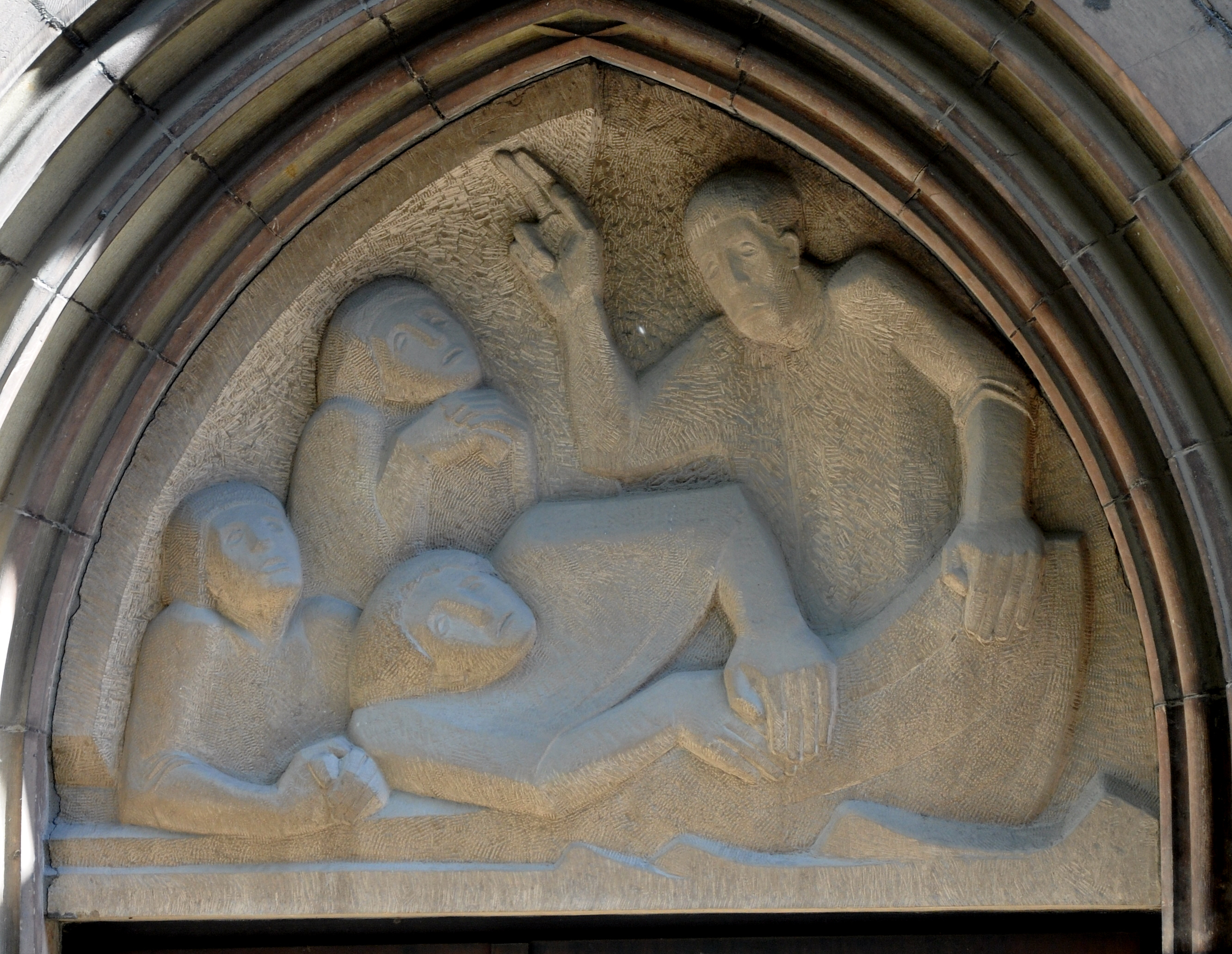
The image is Stillung des Sturmes durch Jesus (Jesus Calms the Storm), a relief on the exterior of the Stuttgart Stiftsckirche (Collegiate Church of Stuttgart), 1957, by Jürgen Weber. Photo by Andreas Praefcke – Self-photographed, CC BY 3.0, https://commons.wikimedia.org/w/index.php?curid=15039823.
I wrote this essay in 2011 as a Facebook Note. Those pieces are getting harder to find, so when I encounter ones I wish to save, I have been posting them here. I have made a few revisions. For one thing, the son in question has since earned both a bachelor’s and a master’s degree.
June, 2011
On Monday, my firstborn child will take a few more of the steps into adulthood. He will walk across the platform and receive the diploma that marks the close of his public school education. With scores of other parents in the seats, and thousands across the nation, I will applaud him. My heart will fill with joy and pride, and my eyes with tears.
Adulthood is not conferred by arbitrary markers such as age, education, or achievement, but it is suggested by them, sometimes even confirmed by them. My son will be very little more mature on Tuesday than he is today (I can hope for at least a little bit), but this is one of the milestones used by our society that shouts loudly indeed. Even though I’ll continue to support him for some time to come – college tuition comes to mind – even in my eyes he can no longer be the boy I’ve known so long.
I hope I’ve been a wise father. In some ways I suppose I resemble the metaphorical “helicopter parent,” hovering over my children. I still read aloud to my children every night, and they still tolerate it. I still walk to the bus stop in the morning with them. This Thursday I saw my son onto a school bus for the last time.
If I am a helicopter father, I’m one who has chosen to tell a central truth. Life comes with pain, and pain comes with life. I had few options about concealing this truth. At a very young age my son learned a great deal about pain and fear, when his baby sister needed treatment for a life-threatening illness. I didn’t try to lie to him about pain, and risk, and heartbreak, and fear. These are realities of the world, and even the most loving parent in the world lacks the power – not the desire, the power – to hold them all in check.
I hope I’ve succeeded in doing what I set out to do instead: to make it clear that though I could not necessarily protect him, I could be with him. There is pain, but there is also comfort. There is death, and there is life. There is sorrow, and there is joy.
I don’t know how well I did with that. It’s a life lesson, and he’s plenty of time to learn it. For the moment, I ache for his disappointments. I ache for mine as well, but I ache especially for his. To some extent, I know, he has made or found his own comfort. To some extent, I fear, his hurts endure.
And I know, imperfect person that I am, that I have inflicted or contributed to some of those hurts, for which, my son, I am most sorry.
I am a minister of the Gospel, and he’s paid some of the price for that. I spent too many evenings away from the supper table, unable to lend my voice to the bedtime story. He has endured the pressure of being a “P.K.,” pressures I can’t wholly know. I lost my relationship with his mother, and I can hardly imagine the tears he’s shed for that, only know that they had an echo in my own.
And it must be said that my flaws of personality, intelligence, and wisdom have nothing to do with that vocation at all, and he’s suffered for those, too.
My son sees, and he dreams. He dreams, and he thinks. He thinks, and he writes. He writes, and he speaks. He’s eloquent, and far more wise than I remember being at that age. He clothes himself in black, to make something of a suit of armor for himself, even though he knows it does not protect him and cannot. And he still he dreams of Camelot: of “the powerful fighting for the powerless, instead of exploiting them.”
My son, go forth and make it real. There is pain, and there is no armor that will keep it from you; there is no shield you can place before anyone else that will entirely prevent them from suffering. But there is also brilliance, and eloquence, and wisdom. There is generosity, and joy, and courage. There is strength and resilience and endurance. There is faithfulness and honor, there is love, and laughter.
My son, there is life. You have it in abundance.
So go forth into Tuesday morning, and the Tuesday mornings that follow. There are books and classes still to come for you, there is time to splash about in the lake. There are long trips and short excursions, there are embraces and there are kisses. There is sorrow and loss and disappointment, and son, there is life.
And if you’d like someone to stand with you when you stand in your armor, hoping your courage will last, call. I walked to the bus stop with you. It’s just one more step.
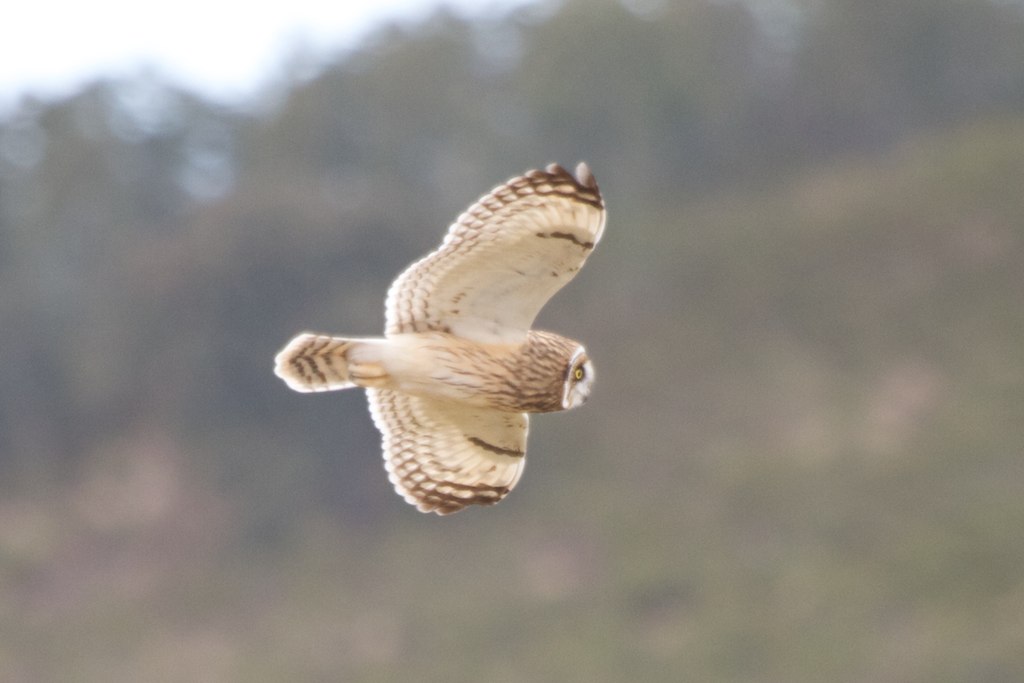
The ‘apapane was still young. So young, in fact, that his feathers were black and brown, rather than black and red. He had another month or two to go before he’d wear red feathers.
So he was still young. It turns out that he was old enough to have had something very scary happen to him, and he still thought he’d had a very narrow escape. He’d been perched in a tree eating bugs and nectar from ohi’a flowers when he heard the rush of air moving quickly over big wings. He immediately hopped along the branch toward the tree trunk.
Sure enough, he saw an i’o had swooped down to a neighboring tree, where he landed. The i’o just sat there for a few minutes, looking all about. The young ‘apapane was absolutely certain the i’o looked directly at him at least three times. He stayed absolutely still. Then the i’o stretched his broad wings and climbed into the sky, where he vanished a minute later.
Now the ‘apapane started to tremble. Truthfully, the i’o probably hadn’t even noticed he was there and had just landed to catch his breath and consider where he’d go next. That never occurred to the ‘apapane, of course. He was convinced that the i’o had seen him, tracked him, and stooped down at him, and that he’d escaped in the nick of time.
He had to find a way to be more aware of potential dangers. Obviously sitting in a tree he was more distracted, but on the other hand he was only a hop or two from safety. The dangerous times, he decided, were in flight. How could he look all around?
I’ll just mention that an ‘apapane’s eyes are set on the sides of their heads, so they already can look all around. He wasn’t quite thinking about that.
Instead, he decided to fly with a series of barrel rolls.
That’s when a bird (or a plane, or Superman, I suppose) rolls over as they fly. If you or I did it, we’d be spinning. It did allow him to see above, below, and to each side. To that extent it worked.
The problem was that it made him dizzy. If you or I were to do a lot of spins, we’d get dizzy. When this ‘apapane did a lot of barrel rolls, it made him dizzy.
Dizzy enough that his next landing in a tree looked rather painful.
Still, he kept trying it. “Eventually it will work,” he told himself, so he did exactly the same thing in exactly the same way. And exactly the same thing happened. He got dizzy, and he landed badly.
He couldn’t really see what was in the sky around him, because when his head cleared after his latest rough landing, he saw his father perched on the branch beside him.
“What are you doing?” said father.
“Watching for i’o,” said his son.
“Is it working?” asked father.
“I’m sure it will,” said his son.
“What are you doing differently?” asked his father.
“Nothing,” said his son. “I’m doing the exact same thing every time.”
“And leads to the exact same problem every time, doesn’t it?” said his father.
“I have to watch for i’o,” mumbled his son.
“Try turning your head rather than your whole body,” said his father. “Try weaving your flight from side to side. Try anything that’s different – because, my son, what you’re doing right now isn’t working, and doing it over and over again the same way won’t make it better.”
You may sometimes see an ‘apapane do a barrel roll as it flies about the ohi’a forest, but when it does, it’s to pull off a fancy landing or just to celebrate the joy of flight. He’d learned something from the wisdom of his father: try something different.
by Eric Anderson
Watch the Recorded Story
I write these stories in advance, then tell them from memory and improvisation. As a result, what you’ll see and hear in the video recording does not match what you’ve just read above.
“And the LORD was sorry that he had made Saul king over Israel.” – Samuel 15:35
“Then Samuel took the horn of oil, and anointed him in the presence of his brothers; and the spirit of the LORD came mightily upon David from that day forward.” – 1 Samuel 16:13
Will you be sorry of my anointing, God? How much regret do you bear for me? How have I grieved you? How have I dismayed you? Or rather, not how. But when. And how much?
Truly we serve you a very short time, since our birth and our death are mere heartbeats away. How much regret does one soul lay on you? Does it burden you more as each person dismays?
If you are sorry of my anointing, O God, I cannot be surprised. I can only confess that I’m trying, and struggling, and failing, and sometimes, I might do it well if you try me again.
A poem/prayer based on 1 Samuel 15:34-16:13, the Revised Common Lectionary Alternate First Reading for Year B, Proper 6 (11).



 ordainedgeek