World and World

“[Jesus prayed,] I am not asking you to take them out of the world, but I ask you to protect them from the evil one. They do not belong to the world, just as I do not belong to the world.” – John 17:15-16

Between the orbit paths of Jupiter and Mars,
a horde of planetoids and rocks and dust
surrounds the Sun, tracing their ellipses
in a dance with gravity.

One speculation to explain these asteroids
is that, long, long ago, a planet strayed too close
to Jupiter’s titanic tides of gravity, and broke
into these countless rocky shards.

When worlds almost collide, sometimes
a world breaks up, and leaves the other
without scar or trace of impact made.
One shatters. One remains.

Your followers, dear Jesus, live in both a world
of harshness, folly, lies, and fraud, and in
the world of God’s creative grace.
They seek to speak the one unto the other.

Yet when these worlds collide, or when
they pass too close, which one will break,
and which endure? Which one reflect
the sun, which one be hard to see?

Oh, let it be the world of God’s creative love!
Oh, let it be the world of Christ’s redeeming love!
Oh, let it be the world of grace and truth!
Oh, let it be! Oh, let it be!

A poem/prayer based on John 17:6-19, the Revised Common Lectionary Gospel Reading for Year B, Seventh Sunday of Easter.

Image by NASA/JPL-Caltech – https://www.jpl.nasa.gov/images/asteroid/20180723/main-animation-16.gif, Public Domain, https://commons.wikimedia.org/w/index.php?curid=71080744.

Story: Fed Up

May 5, 2024

Acts 10:44-48
John 15:9-17

The noio (the English name is “black noddy,” but I like the Hawaiian “noio” better than “noddy”) – the noio was fed up. By which I mean that she was wet, and cold, and hungry. She circled over the ocean croaking unhappily as she looked for small fish and squid. She saw some. She swooped along, dipped her bill, then splashed into the water, and…

Missed.

For the eighth time.

Her mother was circling nearby as she lifted herself back into the air with her cold, wet, wings.

“That looked really good,” mother said. “You might try coming in behind the fish, so it’s less likely to dodge.”

That’s when she yelled at her mother.

She yelled about being wet. She yelled about being cold. She yelled most of all about being hungry. She yelled about being taught to do something that was plainly impossible. She yelled about being the most ignored daughter in her generation. She yelled that her mother didn’t love her. At all.

Then she flew back to the nest, because really, where else could she go?

She plopped herself down on the nest hard enough to make her feet uncomfortable. Her mother hadn’t flown back with her. She sat in the nest and cried with all the frustration of being young, and trying to do something that’s not easy, and failing, and being wet, and cold, and uncomfortable, and not being sure her mother loved her.

She was shivering and her eyes were closed when the nest rocked with someone landing in it. Whoever it was drew close and put their wings over her. Gradually her feathers dried and she started to feel warm. She was still hungry, though, when she opened her eyes to look at her mother.

But it wasn’t her mother. It was her father.

“Where’s mother?” she asked. “I thought she’d come here.”

“She had something to take care of,” said father.

“Did you hear what I said?” asked the daughter.

“Everybody heard what you said,” said father.

“Did I drive mother away?” asked the daughter.

“I don’t think so, but we’ll see,” said her father. She closed her eyes.

A little while later, the nest rocked again as another bird landed. Father’s wings lifted away from his daughter, and she opened her eyes again to see her mother.

“Why didn’t you come right back?” she asked her mother.

“Because it took some time to get you this. Those were sneaky fish you were trying to catch, daughter.” And mother served up some food, and daughter ate, and so she was fed, rather than fed up.

“I guess I’ll try again tomorrow,” said the daughter.

“Maybe they’ll be slower tomorrow,” said the mother.

“Will you help me learn?” asked the daughter.

“Of course,” said the mother, “because I love you.”

And her daughter gave a noio smile and said, “I know. I love you, too.”

by Eric Anderson

Watch the Recorded Story

I write these stories ahead of time (it’s the text you’ve just read) but I tell them from memory, anticipating some new creation as I tell them. So what I’ve written and what I say in the moment are not, cannot be the same.

Photo of a noio in flight by Eric Anderson.

On Second Thought, Call Me Servant

“[Jesus said,] I do not call you servants any longer, because the servant does not know what the master is doing; but I have called you friends, because I have made known to you everything that I have heard from my Father.” – John 15:15

Pedant that I am, I have to tell you, Jesus, that
you’ve never called us servants.
Students, yes, and followers.
You’ve nicknamed some of us
(and isn’t Simon just the perfect Rock
(between the ears?)) but never
servants.

To tell the truth, I can’t recall you’ve called
us friends. It’s quite a lift
from slave to friend you’ve given us.
And all you’ve asked is that we love
each other as you’ve shown your love to us.
That’s your command: it makes us friends, not
servants.

I wish I were as sure as you that I
know what you’re doing, Jesus. I
don’t think that I do. If I’ve been quicker on
the uptake than our brother Simon Rock,
he’s not the brightest lamp within the room.
I hardly feel I know what friends would know, not
servants.

If I let fall the barriers I’ve used to hide
the things you’ve told us from my understanding, then
I know the reasons you have called us friends. And I’m
not comfortable with that. Friends are responsible
for what they do in friendship. They have to think
and act themselves, not wait for orders like a
servant.

On sound reflection, Jesus, might you
reconsider making us your friends? Might you not
step forth majestically in power? Then we,
your servants, rise with you, to rule
with humble title but substantial privilege.
Set our direction, Jesus, as your servants, not
your friends.

A poem/prayer based on John 15:9-17, the Revised Common Lectionary Gospel Reading for Year B, Sixth Sunday of Easter.

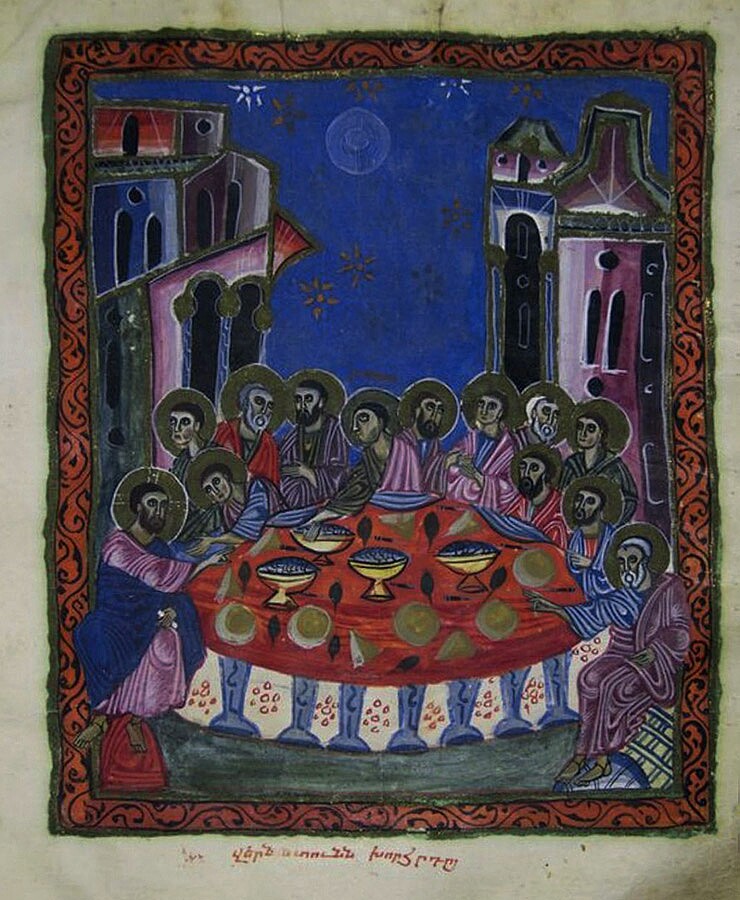
The image is a page from the Targmanchats Gospels (1232), ms2743 Matenadaran collection. Photo by Grigor – https://regionalpost.org/en/articles/a-treasury-of-medieval-thought-in-a-modern-institution.html, Public Domain, https://commons.wikimedia.org/w/index.php?curid=119401477.

Story: Sometimes It’s Simple; Sometimes It’s Not

April 28, 2024

Acts 8:26-40
1 John 4:7-21

The i’iwi eats nectar. Human beings tend to complain about a diet that is mostly liquid, but we might complain less if it was mostly nectar. I’iwi don’t complain about it. Their long curved bill works really well for getting nectar from flowers that other birds like the ‘apapane can’t reach.

I’iwi have a neat trick for feeding from some flowers which open down. One will hang below the flower and poke its beak up into the nectar reservoir. There are other birds on the island that do this, but the i’iwi do it most often.

One young i’iwi came to believe that, because this was a hard-won skill, she had to use it all the time. On every flower. Whether they opened downward or upward.

Believe it or not, it sort of worked. It worked very well on those downward flowers, of course. That’s why i’iwi developed that technique.

It worked on sideways facing flowers, though it was more of a strain to get her neck into the right position. She kept at it, though. If she was going to do something, she’d do it right. And as with many things, constant practice meant that she did, indeed, get better and better.

It was more of a struggle, though, with flowers that opened upward. A lot of ohi’a blossoms, for example, open upward, and i’iwi sip a lot of ohi’a nectar. Still, ohi’a is a pretty open flower, without a lot of petals to get in the way. She managed.

Then there were the flowers with upward petals and, well, those didn’t go well at all.

Her mother came for a visit one day as she was flitting about from tree to tree. She didn’t say anything when she hung upside down for downward facing flowers. She didn’t say anything when she reached up for sideways flowers. She opened her beak but didn’t say anything about the ohi’a flowers she sipped from beneath.

But when she tried to get at a big hibiscus blossom from underneath, she said, “What are you doing?”

“I’m eating,” said her daughter.

“No you’re not. You can’t get at the nectar in that flower from down there.”

“Sure I can. It’s just a matter of technique.”

Mother watched daughter struggle to get her curved beak around the petals and to the nectar at the flower’s center. Eventually the younger bird, with a glance at her mother, perched just above and to the side and took a good long sip.

“You don’t always need to come at things from underneath,” said mother.

“Isn’t that the i’iwi way?” asked her daughter.

“The i’iwi way is to fly, eat, deal with the neighbors, get a good sleep each night, and be the most stylish birds on the mountain,” said her mother. “Nothing says you have to do something the hard way all the time.

“Sometimes things are simple. Sometimes they’re not. Doing simple things in a complicated way doesn’t get you fed, or flying, or sleeping. Doing complicated things in a simple way doesn’t get any of those things done either.

“When it’s simple, do it simply, daughter. Save the complicated techniques for when it’s hard.”

by Eric Anderson

Watch the Recorded Story

I write these stories ahead of time, and tell them from memory – which means that I improvise at the same time.

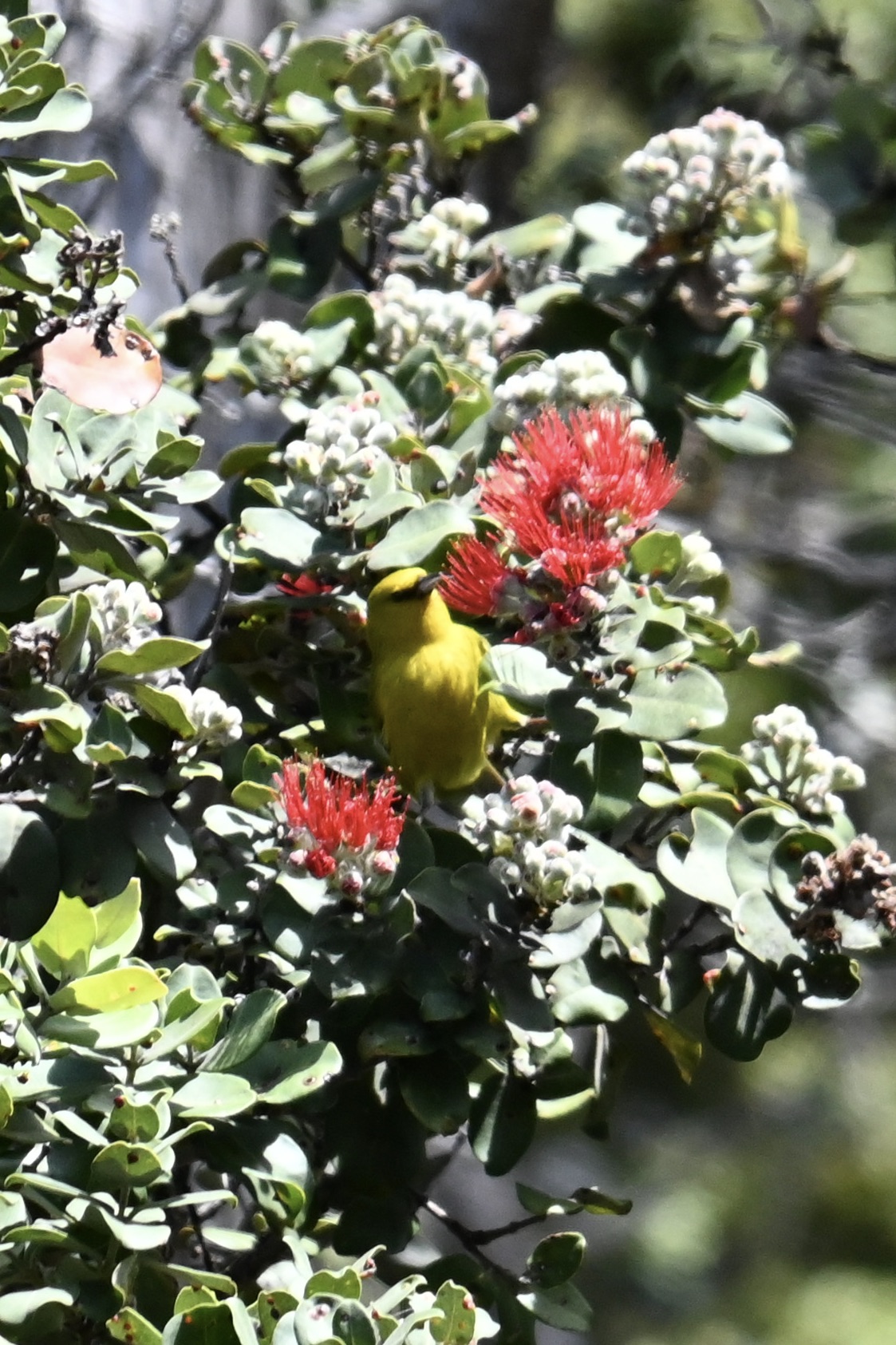
Image of an i’iwi feeding upside down by Bettina Arrigoni – Iiwi | Hakalau NWR | HI|2018-12-02|13-43-26-2, CC BY 2.0, https://commons.wikimedia.org/w/index.php?curid=75174870.

I Fear I am not God

There is no fear in love, but perfect love casts out fear; for fear has to do with punishment, and whoever fears has not reached perfection in love. – 1 John 4:18

Fear is not just about punishment, John.
Fear is also about being hurt.
Fear is about taking a risk.
Fear is about the unknown.

I fear punishment, of course.
The pain is not just the harsh words,
hard tones, spoken to me.
I punish myself as well.

I fear as well the hurt
that is not punishment,
but comes from accident
or malice done around me.

I fear to take a risk, of course,
because, deserved or not,
if risk turns into failure,
I will feel the pain.

And I fear the unknown
because who knows (I don’t)
what dangers lurk for me,
what hurts I’ll face and feel?

So John, I know that God is love,
rejoice that God loves without fear.
I live in love and fear.
I fear I am not God.

A poem/prayer based on 1 John 4:7-21, the Revised Common Lectionary Second Reading for Year B, Fifth Sunday of Easter.

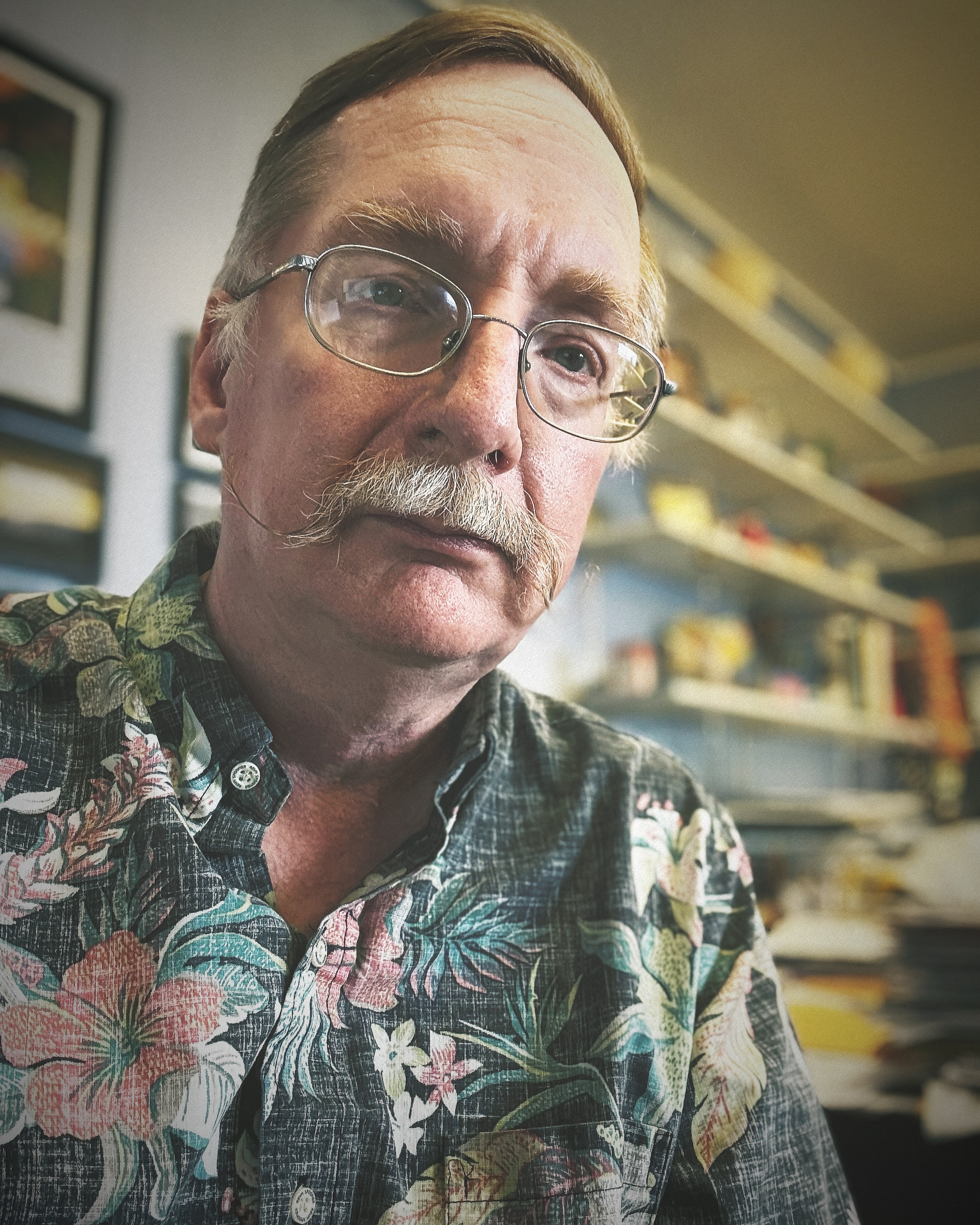
Self-portrait by Eric Anderson.

Story: Rolling Stone

April 21, 2024

Acts 4:5-12
1 John 3:16-24

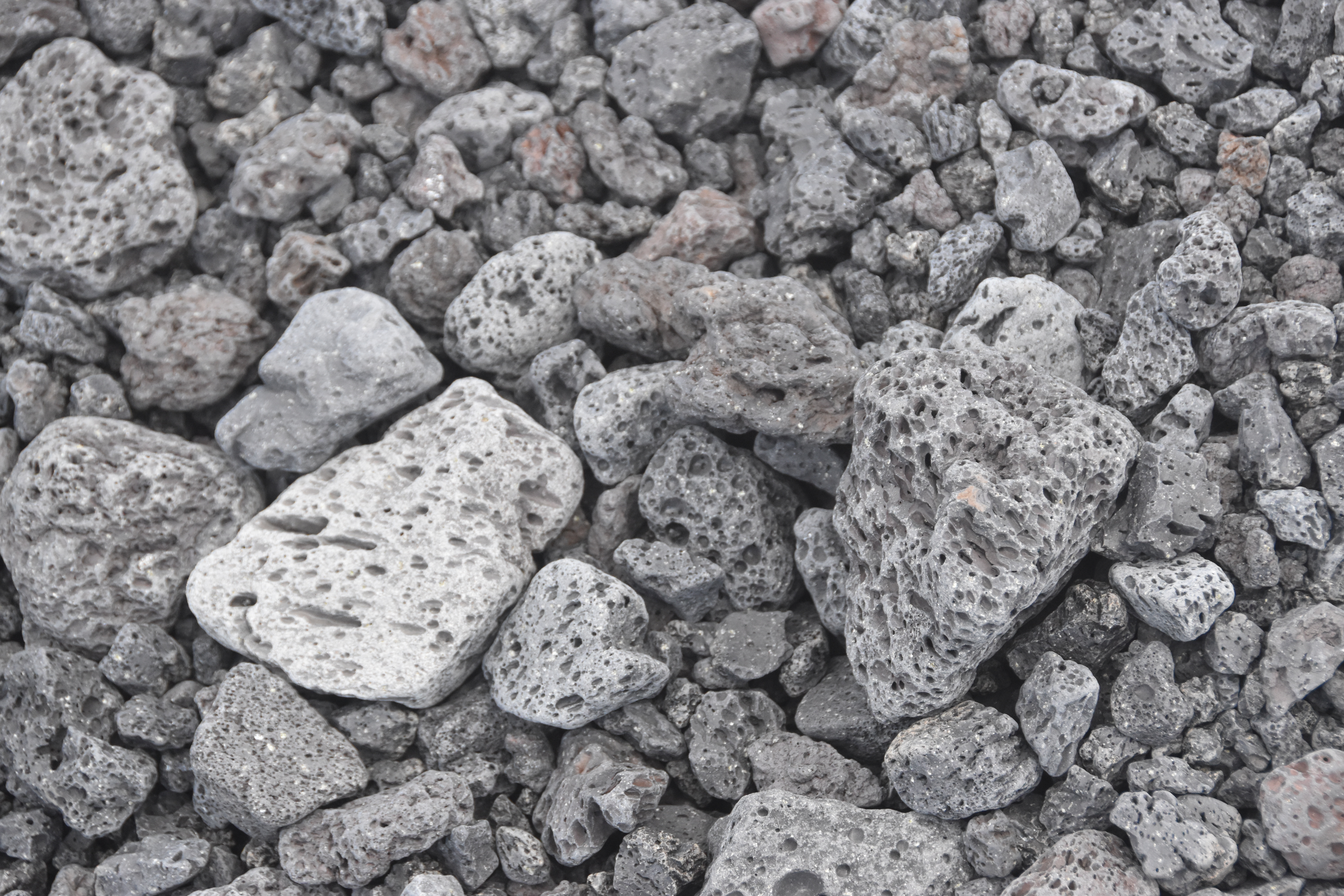
It looked like any other stone that had been tumbled around in the ocean. Not very big. Not very solid. In fact, it was noticeably speckled with holes. The edges of the holes had been smoothed by sand and water moving over it. Eventually, the waves had flung it up on a beach.

And the waves had grabbed it again, so many times, the stone simply couldn’t count them. Not that stones count that well anyway. It had been swept away in the receding waves, then tossed back by the flowing waves, then undermined by another wave going, and pitched up the beach by another wave coming. It was kind of dizzying.

It was also kind of musical. The stone had a lot of company rolling around in the waves, and they rattled against one another as the water pulled away and they rolled together. The music they made, of course, was rock and roll.

If they’d named themselves as a band, I suppose they’d have been the Rolling Stones.

Those days had been exciting, not as exciting as the day it was flung as a hunk of liquid rock into the ocean, but it had been rhythmic and musical and, of course, rock and roll.

With time, however, the beach had grown. New stones, new sand, and new rocks came in with the tides, and the beach expanded further out from where the stone would rest from time to time. Eventually the waves never reached it at all. The stone felt somewhat lost and sad. It felt small. It felt unimportant. It was surrounded by plenty of other stones, but what were they to do except bake in the sun and drip in the rain?

That’s when a seed found its way to the beach, and tumbled down into the space between this stone and the next. It took a rest for a while, and the stone, which had hardly noticed it, forgot all about it – until it began to sprout. A root went down. A shoot came up.

“What are you doing there?” asked the stone.

“I’m growing,” said the plant which had been a seed.

“Why grow next to me?” asked the stone.

“Why not?” asked the seed.

“I’m small and unimportant,” said the stone. “I don’t even make music any more.”

“If you were bigger,” said the plant, “I could never get around you. If you were bigger you’d keep me away from the light. If you were bigger, I’d never find the rain. For me, right now, you’re the most important stone in the world, because you’re here and you’re being exactly what I need.”

The stone started to feel better, but then said, “I’ll still miss the music.”

“Hold that thought,” said the plant.

When it grew tall enough, the wind blew through its leaves with a whistling tone. Below it, the stone’s heart sang.

by Eric Anderson

Watch the Recorded Story

I write these stories ahead of time, then tell them from memory during worship – and make changes as I do. In this case I think all the puns made it into the story when told.

Photo of stones on the beach in Pohoiki by Eric Anderson.

Strange Defense

“[Peter said,] ‘This Jesus is ‘the stone that was rejected by you, the builders; it has become the cornerstone.'” – Acts 4:11

Your Honor, I am here accused. They say
I spoke of resurrection. Yes, I did.
They say I said this comes from Jesus, and:
I did. They say what you can plainly see.
I am no educated scholar, no
respected sage, no doctor of the law.

Because of this, they take me up before
you as an agitator who disturbs
the peace, the truth, the faith, the way, the light.
They say I should be silenced, voice unheard,
the things I’ve seen forgotten, left untold,
until no one remembers anything.

Were I to make a strong defense, I’d tell
you that your officers misheard our words,
misunderstood what little they had heard.
We made no claims like those of which we stand
accused. We spoke of resurrected hopes
alone, within this man who now can walk.

Alas, I make no strong defense. Instead,
I’ll make those claims again for you to hear.
In Jesus there is resurrection of
the body and of hope, of healing and
of joy restored. And neither John nor I
can hold our tongues from sharing this great news.

I’m sorry, in a way, that my defense
is only to repeat the offense that
has brought me here before you in this place.
I’m sorry that it grieves you, and I hope
beyond imagination, that it moves
you to a mercy given, mercy then

received.

A poem/prayer based on Acts 4:5-12, the Revised Common Lectionary First Reading for Year B, Fourth Sunday of Easter.

The image is a part of the Sarcophagus of Marcus Claudianus (ca. 330-335, Palazzo Massimo, Rome): Detail, The Arrest of Peter. Photo by Dick Stracke – Own work, CC BY-SA 3.0, https://commons.wikimedia.org/w/index.php?curid=31956813.

Story: Perfectly Picky

April 14, 2024

1 John 3:1-7
Luke 24:36-48

I believe I mentioned a few weeks ago that if there’s something edible up in the ohi’a and koa forests – bugs, berries, fruit, sap, nectar, caterpillars, and so on – there’s an ‘amakihi eating it. They’re not picky eaters. They’re enthusiastic eaters.

Except for one young ‘amakihi. She was perfectly picky.

I don’t know how it got started, but I do know that early on she’d only eat bugs that she’d seen fly. I guess that meant they were fresher, somehow? Which meant that she would no longer eat the crawling bugs or the caterpillars, and there would be no spiders in her diet.

I know. You’re thinking, good choice. Along with you, I am pretty happy not to eat bugs at all. We are people, though, and not ‘amakihi.

Then she wouldn’t eat tree sap that came from cracks in the bark. I know – again, it sounds like a good choice for a human. But if you’re not going to eat tree sap that comes from cracks in the bark, how are you going to get to it at all? An ‘amakihi beak isn’t a good shape for making holes in bark. She’d removed another entry from her diet.

Then she decided not to eat fruit or berries unless it was perfectly ripe. That cut out a whole lot of fruit that was almost ripe, and it cut out a lot of fruit that was just past ripe, all of which feed other ‘amakihi perfectly well.

Her family started to notice that she was maybe getting a little thinner.

When she decided that the only nectar she’d sip would be from perfectly formed ohi’a flowers, that really did it. Go up to the ohi’a forests and you’ll find plenty of flowers on the trees. But are they perfectly formed into red puffballs? Not exactly. Some flowers show just a few scarlet tendrils. Some form ovals or just plain look squashed.

She wouldn’t eat from them. She wouldn’t even eat the flying bugs that landed on them.

She was hunting through an ohi’a tree that was bright red with blossoms – but very few of them perfect blossoms – when the branch jumped with another bird landing. She looked up and saw her grandmother watching her. Grandmother watched her pick over a big bunch of lehua, sip from none of them, and hop over to another, and sip from none of them.

“What are you doing, granddaughter?” asked grandmother.

“Eating,” said the picky ‘amakihi. “I’m hungry.”

“Eating what?” asked grandmother, who hadn’t actually seen her granddaughter eat anything.

“Nectar,” said granddaughter.

“Where?” asked grandmother.

“From the good ones,” said her granddaughter. “I only eat from the perfect flowers, Tutu.”

Grandmother looked at the tree full of blossoms and didn’t see many perfect ones. “You won’t find many perfect ones, granddaughter,” she said. “Not here, and not anywhere.”

She watched the picky ‘amakihi skip perfectly good (if imperfectly formed) ohi’a flowers for a little longer and said, “I think you should eat from some of the imperfect ones, young one.”

Granddaughter, who was annoyed, poked her beak toward a flower that basically had two red tendrils and no visible nectar, and said, “You mean like that one?”

“No, child,” said grandmother. “Not like that one. There’s nothing there. But the question isn’t whether a flower is perfect or not. The question is whether it feeds you.”

The picky ‘amakihi thought about this a while. And she really was hungry. With a glance at her grandmother, she put her beak into a bright red ohi’a flower which, to be honest, wasn’t perfect, and fed.

by Eric Anderson

Watch the Recorded Story

I write these stories ahead of time, then tell them in worship without notes. As a result, they change in the telling.

Photo of an ‘amakihi feeding at imperfect ohi’a flowers by Eric Anderson.

Imperfect Children

Beloved, we are God’s children now; what we will be has not yet been revealed. – 1 John 3:2

Once upon a time –
Or many times upon a time, I’m sure –
A child pooped while in the bath.

“Clay of my clay,” they thought,
and with the smelly umber made new art
upon the tiled walls,

Until the laughing, grossed-out parents
scrubbed it all away
and washed it down the drain.

We are your children, God,
imperfect still, inclined to build
our lives with grosser stuff than poop,

Uncertain when we’ll know just who
and what we yet may be,
and when we’ll be that one,

And when our grand creations stand
the press of soapy sponge and water,
to please ourselves and you.

A poem/prayer based on 1 John 3:1-7, the Revised Common Lectionary Second Reading for Year B, Third Sunday of Easter.

The photo of a bathtub is by L.M.Arias – Own work, CC BY-SA 3.0, https://commons.wikimedia.org/w/index.php?curid=17573377.

Story: Missed Lesson

April 7, 2024

1 John 1:1-2:2
John 20:19:31

Most of the birds of our island fly by themselves, or in a loose flock. Around Hilo we’re mostly likely to see a pair of finches or a larger group of mynas flying together. Myna flocks tend to be rather chaotic, with birds crossing back and forth and no real attempt to build a formation and stay in it.

There’s an exception to that, and it’s the nene. I’ve mentioned nene school to you. I haven’t told you about the origin of nene school, which goes back so far that nobody really knows when it started. The nene don’t, and if the nene don’t, I certainly don’t.

The problem was that the nene liked to fly together and chat while they flew. They make that “Ne. Ne,” sound as they go. In the days before the foundation of the nene school, however, the cheerful “Ne. Ne,” would be interrupted by screeches and cries to veer off, and sometimes by the distressing sounds of wing feathers scraping over one another, and then the groans of pain and, of course, angry squawks of denunciation.

The problem, of course, was that nobody knew, when flying together, what any other goose would do, so they were making goose guesses. Actually, since there’d be more than one goose guessing, there’d be geese guesses. If one was young, you’d have gosling guesses. And if you had a visiting goose, there’d be guest goose guesses.

When one of these geese guesses was wrong, you’d get geese gripes.

When they founded the first nene school, everybody was eager to take part, and everybody came to the first class. And the second. And the third.

But one goose guessed wrong about when the fourth class was being held, and he missed it. He did show up for the fifth class, and, well, he made more goose guesses that goofed. The nene flying that day lost feathers, altitude, and tempers.

The teacher took him aside when class was over. She didn’t ask him why he’d missed the previous class. She just told him that what he’d missed, he’d have to learn.

“This is why we started this school in the first place,” she said. “We’re learning to fly together, to fly the same speed at the same time holding the same distance. We’re learning to be predictable and trustworthy in our own flying so that we can trust what the other nene will do. No more goose guessing.”

So he stayed and flew, and this time he learned the things he’d missed from the previous lesson, and he learned the things he’d missed from the lesson he’d just taken but hadn’t learned anything because his goose guesses had gone so goofy.

There are plenty of things in our human lives that we do separately, each in our own way. But there are also lots of things that we do together. We need to know what our fellow Christians are going to do, and they need to know what we’re going to do, so that we make things happen together.

It goes better than geese guesses.

by Eric Anderson

Watch the Recorded Story

I write these stories ahead of time (it’s the text you just read) but I tell them from memory without notes. And so they change in the telling.

Photo of nene in flight by Eric Anderson.