Story: In Plain Sight

January 7, 2024

Isaiah 60:1-6
Matthew 2:1-12

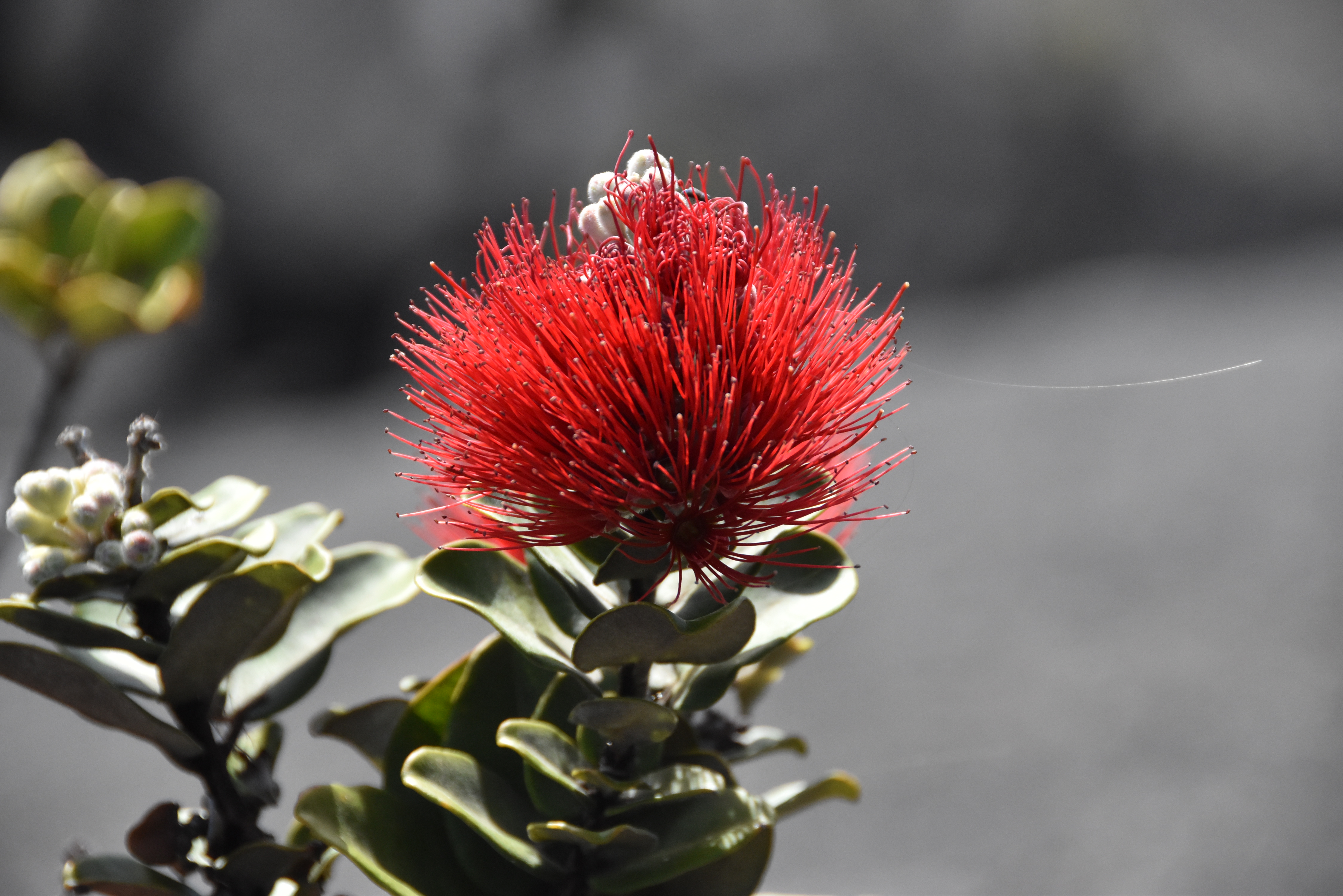
Most of the ‘apapane, if you ask them, are delighted with their red feathers. They think their black wings make for a really smart and distinguished look.

One young ‘apapane, however, was not enthusiastic. As a juvenile, less than a few months old, he’d worn brown and yellow feathers. He was aware that as he grew those brown and yellow feathers would fall out, replaced by bright red or crimson feathers. As far as he was concerned, this was a Very Bad Idea.

“Why can’t my feathers stay brown, like the ‘elepaio?” he asked his mother.

“Because you’re an ‘apapane,” she told him.

“What about green feathers, like an ‘amakihi?” he wanted to know.

“You’re still an ‘apapane,” said his father.

His questions puzzled them, because he didn’t tell them why he wanted different feathering. It was because of the ‘io. His parents had warned him about the ‘io, and about their diet, which would include ‘apapane if they could get it. To our young friend, bright red feathers seemed like waving a big red cape at a bull.

“It’s like a big sign saying, ‘Breakfast here!’” he muttered to his older sister, who wasn’t remotely interested.

“There’s nothing to be done about it, so chill out,” she told him. “And besides, look how many ‘apapane there are?”

“So nobody will miss me when the ‘io eats me,” he muttered, but she didn’t hear him.

One day not long after all his red feathers had grown in, and he was bright scarlet from the top of his head down to his belly, he went foraging for bugs and nectar in an ohi’a tree bright with blossoms. “I’m standing out like a sore thumb,” he muttered, which is an odd thing for an ‘apapane to say, since they don’t have thumbs, but he knew what he meant.

That’s when he heard the cry of the hunting ‘io overhead.

He didn’t know what to do. He froze. He stayed stock-still on the branch with the cluster of ohi’a lehua he’d been feeding from. He could see the ‘io circling overhead, its bright eyes scanning the trees below, looking for breakfast.

The ‘io circled once, twice, and three times, then flew off to circle over another tree.

When the ‘apapane took a breath, he found his sister perched beside him.

“Why didn’t it eat me?” he asked. “I was in plain sight.”

“Take a quick flight overhead and look down,” said sister.

The ‘io had flown farther off, so he did as she advised. When he looked down, he saw spots of red all over the tree. Spots of red flowers… and among them, his bright red sister didn’t stand out at all.

He joined her again. “We hide in plain sight,” he said in amazement.

“We do,” she said. “Do you still want brown or green feathers?”

Sometimes our safety relies on our being right where we’re expected to be, a place where we might not be noticed because we fit right in. And sometimes we’re the ones who are looking, and the first place to look is still the obvious place, the place where things don’t quite stand out, like a child in Bethlehem, or a teacher on a dusty road.

by Eric Anderson

Watch the Recorded Story

I write these stories ahead of time, then tell them from what I remember. That means that a certain amount of… improvisation takes place.

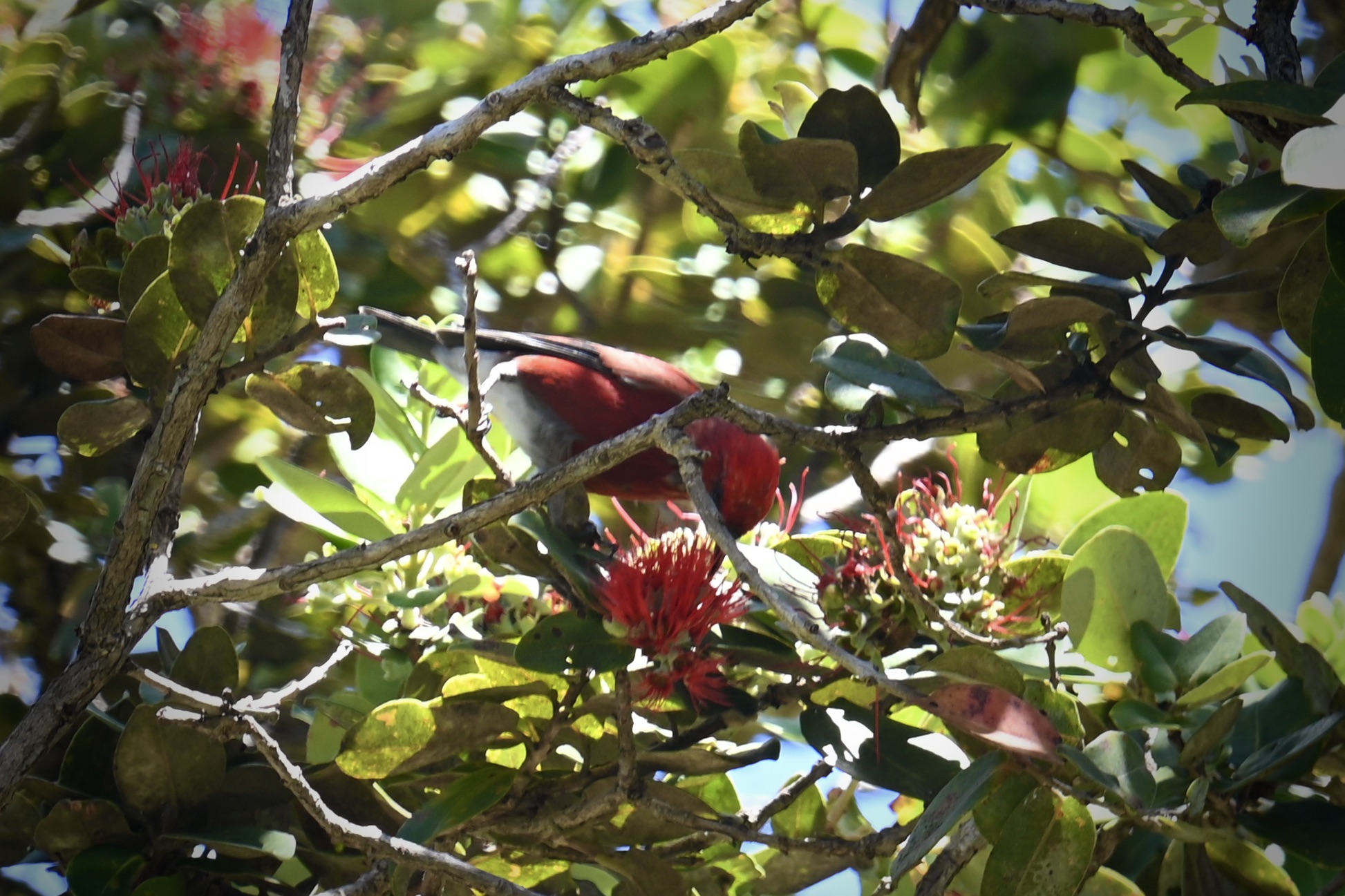
Photos by Eric Anderson; the second is a cropped version of the first.

Shine, Star, Obscuring Light

“In the time of King Herod, after Jesus was born in Bethlehem of Judea, wise men from the East came to Jerusalem, asking, ‘Where is the child who has been born king of the Jews? For we observed his star at its rising, and have come to pay him homage.'” – Matthew 2:1-2

Shine, star, obscuring light,
summoning to you our eyes.
Shine, star, uniquely bright,
raising our gaze
from the child you herald,
sheltered from harm in the light.

Journey, O wise ones, and follow the star.
Messiah is born.
Messiah is born.
Bring with you offerings costly and sweet
proclaiming Messiah has come.

Shine, star, obscuring light,
summoning to you our eyes.
Shine, star, uniquely bright,
raising our gaze
from the child you herald,
sheltered from harm in the light.

Journey, O wise ones, but not to the city
where monarchs are found,
where monarchs are found.
The Herods both ancient and modern are vicious.
Put not your trust in their words.

Shine, star, obscuring light,
summoning to you our eyes.
Shine, star, uniquely bright,
raising our gaze
from the child you herald,
sheltered from harm in the light.

Journey, O wise ones, away from the city.
The child is not there.
Journey, O wise ones, and do not return
to beard a vicious king in their lair.

Shine, star, obscuring light,
summoning to you our eyes.
Shine, star, uniquely bright,
raising our gaze
from the child you herald,
sheltered from harm in the light.

Journey, O wise ones, rejoice you have seen
Messiah is born,
Messiah is born.
Journey, O wise ones, attentive to dreams
that a bright day will come for us all.

Shine, star, obscuring light,
summoning to you our eyes.
Shine, star, uniquely bright,
raising our gaze
from the child you herald,
sheltered from harm in the light.

Before Maren Tirabassi asks, yes: these have become the lyrics for a song. I think I can perform/record it next week.

A poem/prayer based on Matthew 2:1-12, the Revised Common Lectionary Gospel Reading for Year B, Epiphany.

The image is the Magi and the Star by unknown artist, found in Eliza Codex 24, an Ethiopian Biblical manuscript (date uncertain) – Hill Museum & Manuscript Library, Public Domain, https://commons.wikimedia.org/w/index.php?curid=3106202.

2023: The Songs

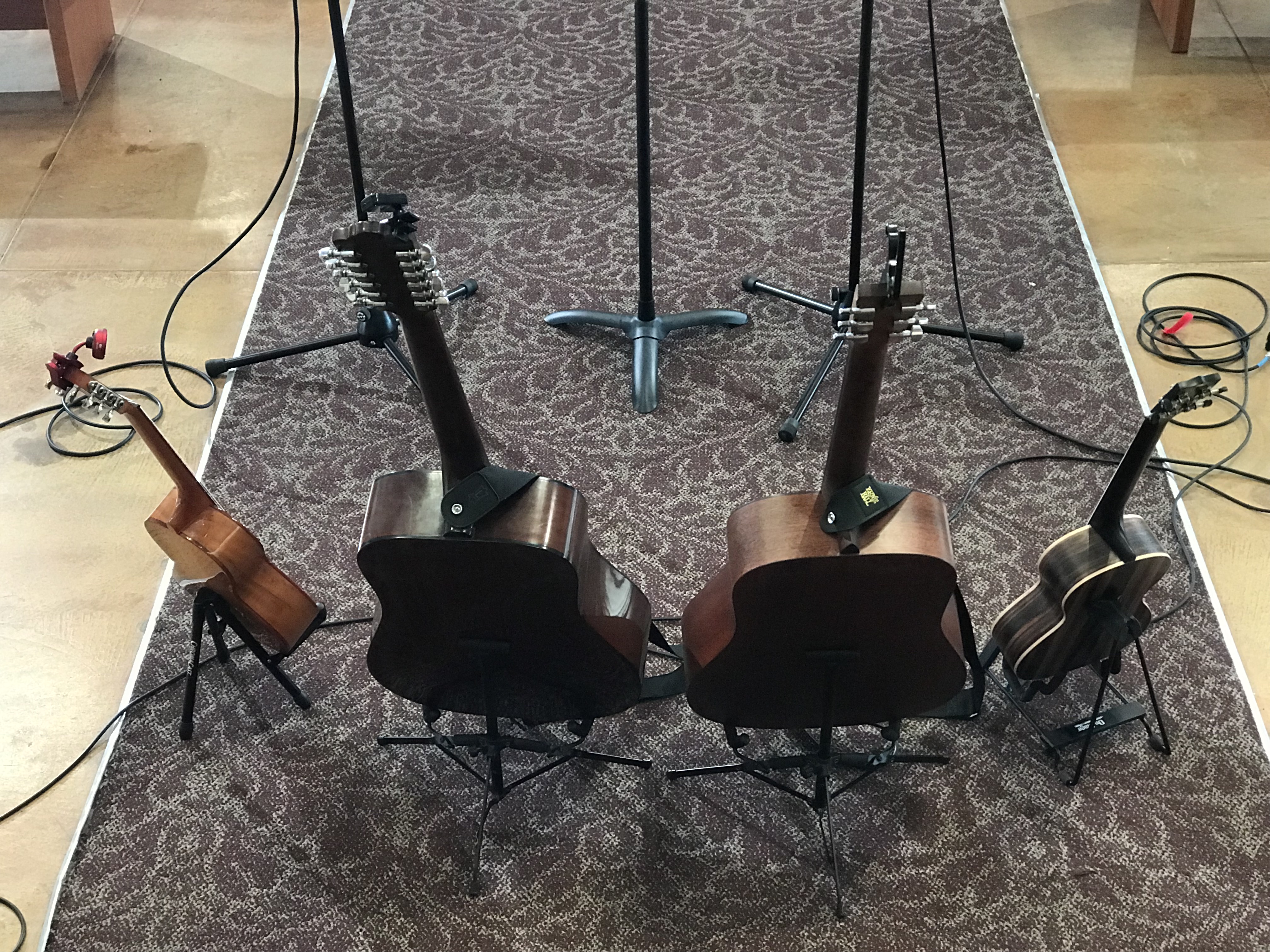
A Kala 6-string ukulele, a Guild 12-string guitar, a Martin 6-string guitar, and a Kala 4-string ukulele ready for the Community Concert performance of October 20, 2023.

In 2022 I wrote twelve songs. That was a lot for me, and 2023 confirmed it. I wrote seven songs this past year, and one of them was not recorded – it was a special composition for a worship service. It’s possible I’ll return to it someday.

Six Days

First performed on April 5, 2023.

“Six Days” is a Holy Week song. I hadn’t written one before.

It’s So Good to See You

First performed during the Community Concert of April 14, 2023.

I have tried to write a song for Easter in most years since arriving in Hilo. This is the one for 2023, based on Matthew’s account of the resurrection.

Bring Me a Rose, Apostles

First performed on April 26, 2023.

One of my regular practices is to compose a poem or prayer (or both) related to the Scripture I’ll preach on. In this case, I wrote the poem, “Romance,” about Acts 2:42-47, a grim story about a couple who fail to keep their promises. To me, this story lays bare the “rose-colored glasses” with which we look at the Early Church. Maren Tirabassi read the poem and asked a simple question: “Is this set to music?” By the next day, it was, and this is it.

Breakfast on the Beach

First performed online on June 7, 2023.

Vacation Bible School returned to my schedule this past summer, with lessons that included the story of Jesus feeding his disciples on a beach of the Sea of Galilee after his resurrection. I thought it needed a song.

Bad Dreams Go

First performed at the Community Concert of October 20, 2023.

I have included the introduction I gave to this song in the clip posted above. I wrote it in the wake of the eruption of yet another bloody and intractable war between Hamas and Israel. Somewhat desperate, I went back to my daughter’s childhood, when I was equally desperate to assure her when she woke from a nightmare.

Fill Up Your Spirit with Love

First performed on December 20, 2023.

I set a goal for Advent 2023 that each of the Wednesday Songs from Church of the Holy Cross would relate to the theme for the coming Sunday. I hoped I might write new songs for three of the four Sundays. In the end, I wrote this one for the last Sunday of Advent on the theme of Love.

2023: What will Normal Be?

January 2023 started with an eruption in Halema’uma’u Crater at the summit of Kilauea. The new lava continued to raise the crater floor. As it happened, two more eruptions would do the same during 2023, adding bit by bit to the island of Hawai’i.

Church of the Holy Cross UCC began the year with a gathered congregation and continued to live stream the service to those, far and near, who needed to worship from their homes. In the spring we ceased to require masking for those attending service. A number of people continue to do so. We experienced a few members falling ill with COVID-19 during 2023, but nobody reported a serious bout with the disease. I kept up with my vaccines as best I could.

I switched cameras this year, joining the ranks of mirrorless photographers. Even with pretty basic lenses I’ve been very pleased with the results.

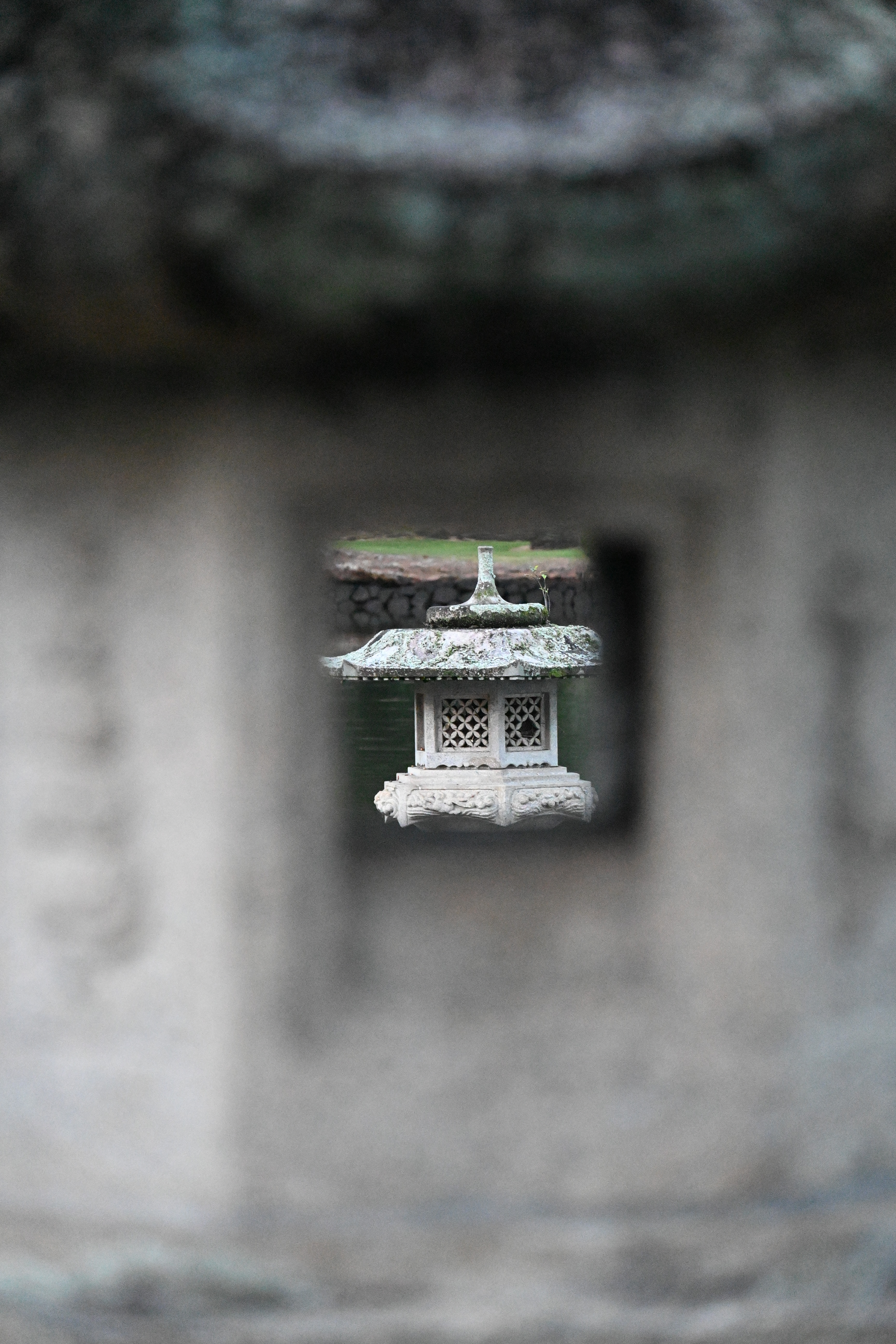
Japanese lanterns at Liliuokalani Gardens, Hilo.

This photo comes from February in Lili’uokalani Gardens in Hilo. It’s one of my favorite images of the year.

In addition to appearing on-camera live each Sunday morning, I continued to offer a song each Wednesday, and a reflection piece (What I’m Thinking) each Tuesday (a change in schedule). Another change was to resume the Community Sing, a gathering for people to choose songs for everyone to sing together. Because copyright issues would rapidly arise, those gatherings haven’t been streamed or recorded, but I did change the Community Concert series so that it includes both a live audience and a live stream.

I wrote seven songs this year, but only six have been recorded. The seventh piece is designed for background music during worship. I wrote it for the first gathered ‘Aha Mokupuni of the Hawai’i Island Association in May. The other six, however, have all been sung during one of the Wednesday performances, and like last year, I plan to create a “Songs of 2023” post shortly. I didn’t buy any new instruments in 2023, and for this grace I breathe a sigh of relief.

I sang with a new singing group in the area for two concert series. Big Island Singers, led by Holy Cross’ choir director Doug Albertson, performed in April, just after Easter, and in November, just before Thanksgiving. The music was lovely, varied, and definitely challenging. As 2024 arrives, my calendar already has rehearsal times marked on it.

I did have visitors, but not as hoped or expected either time. In March my brother Chris and his wife Linda visited, and I came down with a nasty stomach bug the day they got on the plane for Hawai’i. They ended up staying at a local hotel, and I wasn’t up to spending time with them until the last couple days of their visit. They put a lot of miles on my car, though, and I was glad to be at least a little of a decent host.

My cousin Peter and his wife Diane visited in September. The good news is that as they arrived Kilauea had a spectacular summit eruption. The bad news is that I had no hot water in my house. Again, they stayed in a local hotel until I had a water heater that worked. They discovered that there are tours down into Waipio Valley, which I hadn’t known, and I was really happy to join them on the tour and see a part of the island that I hadn’t seen before.

My own travel consisted of a trip to Indianapolis, Indiana, for General Synod, and about ten days vacation in New England afterward. It was a simple delight to see my friend Karen Georgia Thompson raised to become General Minister and President of the UCC and to see my daughter Rebekah taking part in worship leadership during the closing service. My schedule was that of a delegate (though I had voice only, no vote), which was more than challenging. I hope I’m able to return to the next Synod in my former guise as a reporter and photographer.

My trip east included my friend John Madsen-Bibeau’s retirement party and a gathering of former employees of the Connecticut Conference, for which I was most grateful. I also enjoyed time with my brother and sister-in-law, who were very gracious considering that I hadn’t hosted them all that well, with Paul and Kimberly Bryant-Smith, lots of the extended family, and of course Brendan and Bekah.

Those two have both moved since last July to their old college haunts. Bekah now lives in Northampton, Massachusetts, and Brendan in Burlington, Vermont. Bekah continues to work for the Julian Way, an organization working on the intersections between theology and disability, and Brendan started a post with the University of Vermont Medical School in December. I have informed them that visits from Dad will now take place in the summer.

Toward the end of the year, one of my stories appeared in Act Fast, a Lenten devotional published by the United Church of Canada, which is quite exciting.

I spent the year as Chair of the Hawai’i Conference Council and on the Board of Directors of the Hawai’i Conference Foundation; the first leads to the second. As 2024 approaches, we plan to do some review and evaluation of our work toward achieving goals set out in a six year old strategic plan. Since three of those years included a global pandemic, we have had plenty to distract us. In November I actually chaired an in-person meeting of the Council, the first since I received the position in October 2020. I found myself wondering if I knew how to chair a meeting with people present rather than small rectangles on a screen… I am looking forward to passing the gavel to someone else next June, but before I do, I also hope to lead an in-person ‘Aha Pae’aina.

I continued to serve on the Committee on Ministry of the Hawai’i Island Association this year, work I have been very glad of. During the fall I was asked to become mentor and advisor to Keoki Kiwaha, who was entering the ordination process and had been licensed as Kahu of Puka’ana Congregational Church UCC. That is one of the real highlights of my year.

On to 2024!

IMG_4782

Story: The ‘Apapane’s Christmas Pageant

December 24, 2023

2 Samuel 7:1-11, 16
Luke 1:26-38

Last week you gave us a wonderful Christmas pageant. It was touching. It was funny. There was a lot of wonderful cuteness. Thank you. This story is about somebody else’s Christmas pageant. The ‘apapane’s Christmas pageant.

I don’t know how it came into the ‘apapane’s head to organize a Christmas pageant. I don’t even know how he’d heard about Christmas, let alone a Christmas pageant. Nevertheless, he flew around the forest, recruiting creatures who would take parts in the pageant.

He asked the i’iwi, who was feeling grumpy that day and didn’t say yes or no, nothing at all. He asked the i’o, which was pretty brave of him, and the i’o said she might come and looked… hungry. He asked the ‘amakihi and the ‘elepaio and the ‘akepa. They said they might. He even asked the palila in her mamane grove and spoke to a big flock of mynas. That set off an argument among them that wasn’t over when he went to talk with the mejiro.

The honu said no, because she wasn’t going to swim up to the ohi’a forest, which seemed fair. The koa’e kea insisted on playing Mary, because shouldn’t Mary have a long tail? The noio said he’d think about it. The mice looked nervous, and the mongoose looked puzzled. The pig in the forest said, “I’ll come.”

When it was pageant time, it was chaos. Creatures would step into the clearing he’d selected, then fade back into the trees again. Frightened chirps flew back and forth, and so did frightened birds. The mynas insisted they be the angel chorus, then exploded in another argument. The pig alone took its place in the clearing and announced, “I’ll play the pig in the stable,” which was a problem because there weren’t any pigs in the Bethlehem stable, but then he went to sleep.

“What do you need to calm down and play your parts?” asked the ‘apapane in exasperation.

One of the little ‘akepa hopped out. “Is the i’o here?” he asked.

“Yes,” said the i’o from the tree above him.

“Are you going to eat us?” asked the ‘akepa.

For a moment there was silence. Then: “No,” said the i’o. “Not today. Today we’ve got a pageant to do.”

The ‘apapane spent the next hour answering the question of each creature. The koa’e kea wanted to be Mary, so she was. A noio played Joseph after being assured that this wouldn’t take so long that he couldn’t go back to fishing later in the day. The mongoose promised the mice not to eat them, and they were duly cast as sheep and, believe it or not, shepherds. The i’iwi didn’t want to cheer up, so he became the grumpy innkeeper. The sleeping pig played a sleeping cow, and did it very well. The i’o, circling high above, took the voice of the angel Gabriel.

The mynas were relieved they wouldn’t be the only voices in the angel chorus, which stopped the argument, and they were joined by ‘apapane, ‘amakihi, and mejiro in their song, which echoed through the forest and down the mountainside. ‘Akepa brought the gifts of the magi. A young palila, such a rare bird, played baby Jesus.

When it was over, the creatures vanished back into the trees, leaving the ‘apapane alone in the silence. He’d answered every question, met every need, somehow.

The trees rustled in the darkness, applauding the ‘apapane’s Christmas pageant.

by Eric Anderson

Watch the Recorded Story

I probably should have taken a piece of paper with me when telling this story today, because there were a lot of creatures and I lost track of who wanted to do what, but this is the story as I told it this morning and I hope you enjoy it.

Photo by Eric Anderson.

What Do Angels Know?

“And he came to her and said, ‘Greetings, favored one! The Lord is with you.’ But she was much perplexed by his words and pondered what sort of greeting this might be.” – Luke 1:28-29

I almost wish I’d punched him in the nose.
What do angels know, anyway?

“Greetings, favored one!” he said.
I wish I’d told him, “Do not do me favors.
I’m up to here with ‘Just a little task,”
from parents and with posies from that man.

“Don’t do me any favors, angel!
I’m up to here with favors done,
and favors asked, and too few favors given.
Leave me to the chores I have already.”

“Perplexed,” Luke called it. There’s another man
who asked the favor of my memories,
and dressed them up in pink chiffon,
made me sweet as pie.

At least he didn’t blanche the tan
upon my face and rouge my cheeks
and paint a simpering smile on my lips.
No, centuries of artists, they did that.

I almost wish I’d punched him in the nose.
What do angels know?

What do angels know of explanations
to my mother, to my father,
to my oh-so-righteous fiancée?
Only one – my cousin – didn’t ask for words.

What do angels know of smirking gazes,
harsh denunciations, pity hidden
from those oh-so-righteous ones
and hardly even shared with me?

I wish I’d been like Moses, “No! Not I!”
Except it didn’t work for him at all.
And Jonah, I could follow him, through fish and all,
to sit unshaded bitter in God’s favor.

What do angels know?

Well. What do angels know?
They know who will say, “Yes.”
They know who will embrace the need,
and tolerate the scorn, and do the thing.

They know who will endure
the travels and travails, and sing
of mournful seven joys, will break their hearts.
That’s what angels know.

I really wish I’d punched him in the nose.
He knew I wouldn’t.

That’s what angels know.

Luke’s description of Mary during the Annunciation reveals very little emotion. The Greek word translated here as “perplexed” also means “upset.” Unlike my depiction here, Luke’s Mary appears composed, forthright, mindful, and faithful. This is in stark contrast with nearly every other story of a prophet’s call, and if only in the Magnificat, Mary played a prophet’s role. Thus my imaginative retelling here.

I don’t really think Mary would have punched Gabriel in the nose.

A poem/prayer based on Luke 1:26-38, the Revised Common Lectionary Gospel Reading for Year B, Fourth Sunday of Advent.

The image is Annunciation 1912 by Maurice Denis (1912) – Originally from en.wikipedia; description page is/was here., Public Domain, https://commons.wikimedia.org/w/index.php?curid=1880715.

Story: Imperfect

December 17, 2023

1 Thessalonians 5:16-24
Luke 1:46-55

She was making gingerbread cookies for the first time in her life – she wasn’t very old – and she was all excited about it. Her older brother had learned to make gingerbread cookies a few years before, and he’d got rather good at it.

This was her very first time.

She thought it was going pretty well, even if there sometimes seemed to be more flour on the counter than in the bowl. She might have miscounted the amount of ginger, too. She decided she’d better add some more to make sure there was enough. Yes. Just a little more. And a little more.

When she was cutting out the shapes – there were cookie cutters for people shapes, and for star shapes, and for reindeer shapes, and even for Christmas Tree shapes – she got things a little scrunchy. In transferring the cut-out cookies to the trays for baking, things got more disarranged. One poor gingerbread person lost their leg, and she tried to mash it back together.

Her older brother came by about this point and decided to make fun of her more oddly-shaped cookies. The two discussed it calmly and reasonably – well, no. The two of them were yelling by the time the cookies came out of the oven. Which might be why there were a little overdone.

She burst into tears.

Mother gathered her into her arms as she said, “They’re not perfect! They were supposed to be perfect!”

Indeed, they weren’t perfect. Some of the trees looked like they’d been through a windstorm. The mashed-together leg had come off in the baking. At least two of the stars had very bent points.

And, it had to be said, they were a little too brown. Not burnt, quite, but any longer in the oven and burnt they’d have been.

“They’re not perfect for Christmas!”

Mother, who thought about things like this, said, “Do you think Christmas is about being perfect?”

The girl said, “Isn’t it supposed to be?”

Mother told her that Jesus didn’t come into the world because it was perfect. It was full of people doing unkind, even cruel things to one another. Jesus came to show a better way, and help people find and live a better life here on earth and beyond. Jesus came to love the ones who didn’t think they were loveable.

“But my brother’s Christmas cookies are perfect.”

Brother, who was feeling sorry he’d picked on his sister, told her that they certainly hadn’t been perfect the first time. “I really burnt the first batch,” he said. “And the second batch wasn’t much better.”

“Let’s see how yours are,” said mother, and all three of them took a bite. She had, in fact, put in far too much ginger.

“I don’t think these are very good, Mommy,” she said, but she wasn’t crying.

“Not so good,” Mother agreed. “Shall we try again?”

In the meantime, her older brother reached for a second cookie. Mother and sister looked at him.

“I like lots of ginger,” he said. “Can I have the recipe?”

Imperfect we may be, but there’s love for us, too.

by Eric Anderson

Watch the Recorded Story

When I tell these stories, I tell them from what I remember of the story I’ve written. And… I make new things up as we go through. There will always be a difference between what I’ve prepared and what people hear.

The image of gingerbread people cookies is by ParentingPatch – Own work, CC BY-SA 3.0, https://commons.wikimedia.org/w/index.php?curid=24263325.

Echo the Prophets

“He has brought down the powerful from their thrones, and lifted up the lowly;
he has filled the hungry with good things, and sent the rich away empty.” – Luke 1:52-53

Echo the prophets, Miriam.
Echo the prophets from Hannah
to Miriam, Samuel to Moses,
Deborah to Jael, Elijah to Elisha.
Echo the prophets, Miriam,
so this prophet’s mother will dance.

Echo the prophets, Miriam.
Echo the call for justice and right.
Echo inversion so those who are “great”
may tumble from comfort.
Echo the prophets, Miriam,
so the ones at the bottom will rise.

Echo the prophets, Miriam,
for the Word is at work within you.
You have been greeted with voices of angels.
You, you alone, know who is to come.
Echo the prophets, Miriam,
so your child will hear you and learn.

Echo the prophets, Miriam.
If the blessings of God seem slow
in their coming, attended with pain
and discomfort for you,
Echo the prophets, Miriam.
Let your voice rise in glorious hope.

Author’s note: The Hebrew name “Miriam” was rendered “Mariam” in the Greek language of the New Testament. Later English translations transformed “Mariam” to “Mary,” while leaving the Old Testament “Miriam” unchanged. I’ve chosen to use the original to emphasize Miriam/Mary’s connection to the ancient prophet Miriam.

A poem/prayer based on Luke 1:46b-55, the Revised Common Lectionary Gospel Reading for Year B, Third Sunday of Advent.

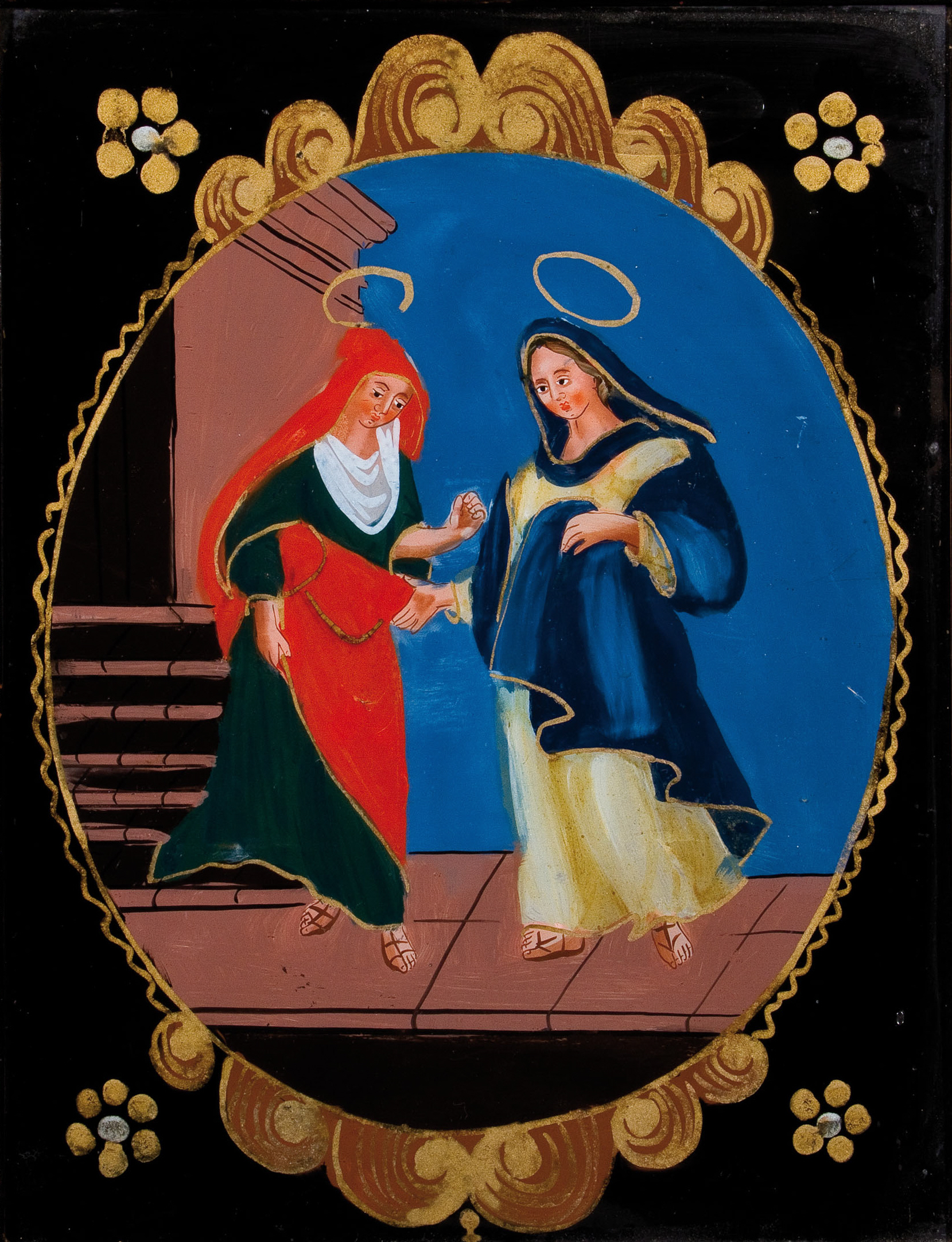
The image is Maria bei Elisabeth (Mary and Elisabeth), 19th century, by Werkstatt Sebastian Winterhalder, Rötenbach, Schwarzwald – Dr. Fischer Kunstauktionen, Public Domain, https://commons.wikimedia.org/w/index.php?curid=17821498.

Story: Seeing Greatness

December 10, 2023

2 Peter 3:8-15a
Mark 1:1-8

A pueo went soaring one sunny afternoon. He’d been hunting most of the morning and he was no longer hungry. So he just flew, holding his wings and tail out, gliding with the wind, rising and falling on the steady breeze flowing between Mauna Loa and Mauna Kea.

As he went, he wondered about greatness.

It started as he looked at the mountains to either side of him. Mauna Kea, he knew, was a little bit higher, and it wears a snowy crown sometimes in winter that’s easy to see from most of the island. Mauna Loa, though – well, it gets snow, too, but it can be hard to see, and it isn’t as high. From the air, though, the pueo could see that over a third of the island is on Mauna Loa’s slopes.

The pueo dipped down over Kilauea and circled around its trees. Some of those ohi’a trees rise a hundred feet into the air, with broad trunks and strong stems. Truly those would have to be considered great.

Other ohi’a grew just a few feet high, but they grew from places which had been solid rock just a few years before. Was it greater, the pueo wondered, to grow broad and tall in good soil, or to grow just a little bit when you had to make the soil yourself?

The pueo saw lava flowing, building up the island. And the pueo saw ferns growing in old lava flows, breaking it up into sand and soil. Which was greater, he wondered?

He saw i’iwi dipping into ohi’a blossoms with their long curved beaks, and saw ‘apapane work harder for nectar with their shorter beaks. But he also saw ‘apapane eat the bugs that also sought out the nectar, while the i’iwi passed them by. Which was greater, the pueo wondered, to have a beak so admirably shaped for nectar, or to have a beak that allowed you a wider diet? Even if it was bugs?

Which was greater, the ocean or the land? The lava flows pushed the island further out, but the ocean wore down the shorelines. Which was greater?

Which was greater, the rain or the sun? Absent one or the other, green things would not flourish, and the creatures would go elsewhere.

Which was greater? He wondered and he flew.

Greatness, he decided, can be found wherever you look. The greatness he preferred, in the end, was the greatness that built things up and made new things.

by Eric Anderson

Author’s note: A Pueo is a Hawaiian owl, a relative of the short-eared owls found in many places.

Watch the Recorded Video

I tell these stories from what I remember about what I’ve written – which means, of course, that I don’t always remember it quite the same.

Photo of an ohi’a in blossom – a small one – by Eric Anderson.

Turn Around

“The beginning of the good news of Jesus Christ, the Son of God.” – Mark 1:1

“John the baptizer appeared in the wilderness, proclaiming a baptism of repentance for the forgiveness of sins.” – Mark 1:4

My life needs refreshing – turn around.
My body is aching – turn around.
My soul needs renewing – turn around.
My sad eyes are streaming – turn around.

Turn us around, John, turn us around.
Turn us and spin us to cleanse us today.
Turn us around, John, turn us around.
We’re desperate for living anew.

He came to the shore – turn around.
To be baptized by John – turn around.
The first to be bathed in the Spirit of God
Was Jesus himself – turn around.

Turn us around, John, turn us around.
We look for what’s greater than we – turn around.
Turn us around, John, turn us around.
Equip us for living anew.

A poem/prayer based on Mark 1:1-8, the Revised Common Lectionary Gospel Reading for Year B, Second Sunday of Advent.

The image is John the Baptist in the Wilderness, artist unknown but in the manner of Jusepe de Ribera – Royal Collection, Public Domain, https://commons.wikimedia.org/w/index.php?curid=92145938. The smile on the Baptist’s face suggests, to me at least, that he knows something about me and it amuses him.