Story: In the Rain

December 3, 2023

1 Corinthians 1:3-9
Mark 13:24-37

The heavy rain this past week put me in mind of some hard rain that fell on some young ‘elepaio. I would guess you weren’t happy about all that hard rain? Well, neither were the ‘elepaio.

I’m getting ahead of myself. Let’s go back a bit.

When the eggs hatched, there were two chicks in the ‘elepaio nest, a brother and sister and within just a couple of days they were constantly hungry, keeping their parents jumping to bring them food. Mother would stay with them while father fetched food, then father would stay with them while mother fetched food. As they got older (and hungrier) both parents would be away finding them things to eat.

One day when both had been away for what seemed like a long time but was probably five minutes (they were both hungry), brother said to sister, “What good are parents?”

“Yeah!” said sister. “Parents are so slow.”

Mother returned to feed them a moment later, and then father, so with their mouths full they said nothing more. But I have to admit that from time to time over the next few days they continued with these complaints when they were hungry.

“What good are parents?”

“Parents are so slow.”

“I’m so hungry!”

And so on.

A little over two weeks after hatching, they spread their wings to fly. They didn’t go far – just a couple branches away – but they didn’t go back to the nest, either. They started gathering their own food from the leaves around them, and their parents continued to feed them on their branch. They continued to complain if it took more than a minute.

“What good are parents?”

“So slow!”

And so on.

That’s when the clouds opened up and the rain streamed down on the ohi’a forest. Even sheltered by the ohi’a leaves, the two young ‘elepaio were soon soaked and cold and miserable.

“What good are parents?” said sister to brother.

“I’m so cold!” said brother to sister.

That’s when mother hopped over to brother and led him toward the tree trunk, where there were more leaves overhead. She got him to crouch down on the branch and spread her wings over him. Father and sister were soon alongside, with father’s wings over sister, keeping her warm as the rain cascaded down.

“Parents are the best,” said sister to brother.

“They’re right there when you need them,” said brother to sister.

I’m afraid not all ‘elepaio parents are right there with their chicks, or all human parents with their children – it’s not just rain that makes the world an uncomfortable place. What I can tell you is that God is always there when you need, and we shelter beneath God’s wings when it’s wet, and cold, and dark in the night.

by Eric Anderson

Watch the Recorded Story

I write these stories ahead of time, and tell them in worship from memory. Memory plus… re-creation. What you read and what you hear will not be the same.

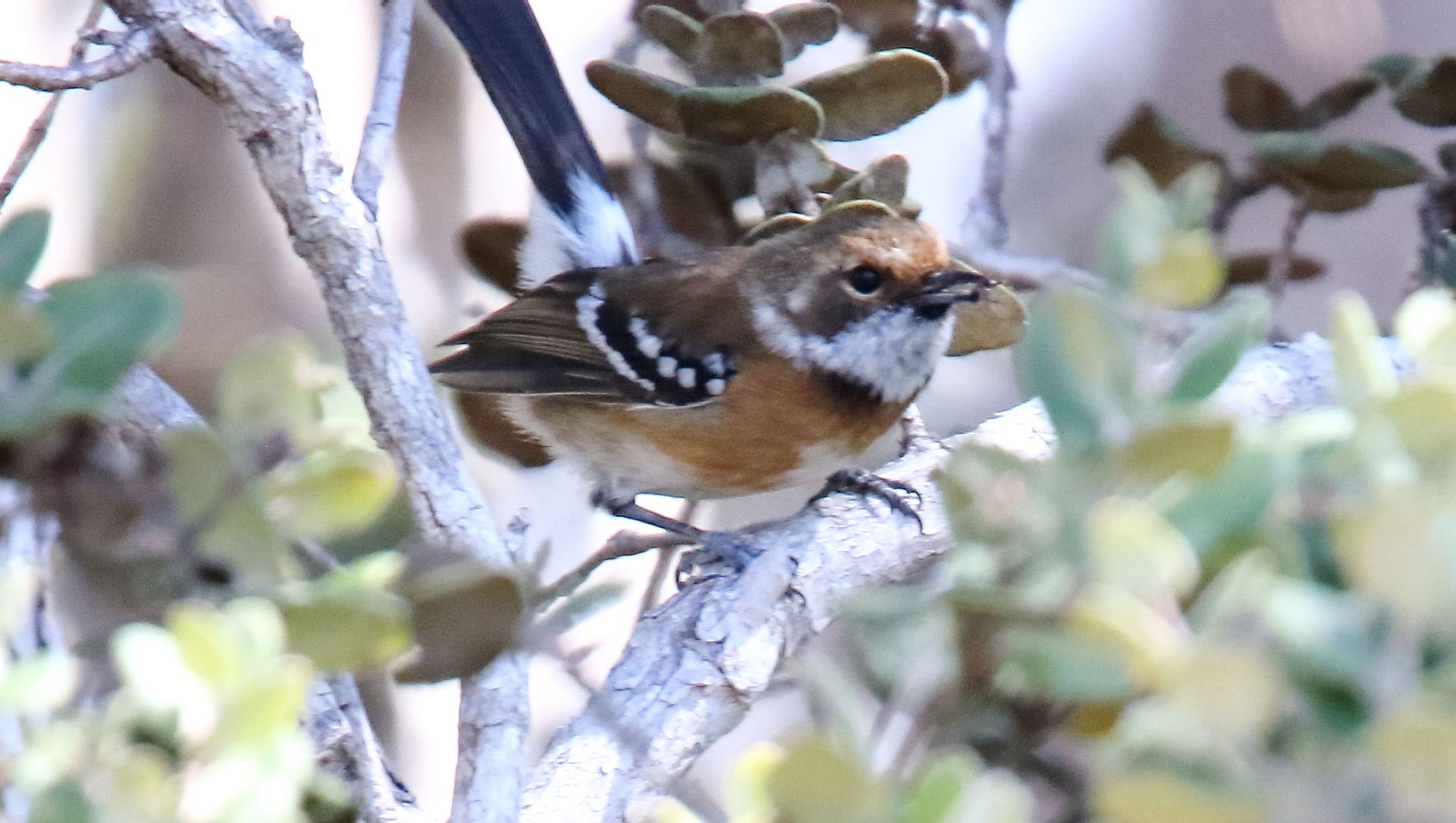
Photo of an ‘elepaio by Dominic Sherony – Hawaii Elepaio (Chasiempis sandwichensis), CC BY-SA 2.0, https://commons.wikimedia.org/w/index.php?curid=52150179.

Clouds

“But in those days, after that suffering, the sun will be darkened, and the moon will not give its light, and the stars will be falling from heaven, and the powers in the heavens will be shaken. Then they will see ‘the Son of Man coming in clouds’ with great power and glory.” – Mark 13:24-26

Outside my window, Jesus,
I see clouds (and sun; no moon).
The clouds will bring us rain
in fifteen minutes, thereabouts.

They will not bring the end of history.

Heaven and earth remain with us.
So do your words, of course.
Some stoke the watching fires,
peering into day and night.

They have not seen the end of history.

Perhaps we have it wrong.
Perhaps rain’s immanence
is not the story of the clouds,
nor do they promise Christ’s return.

They do not bring the end of history.

But just perhaps, if I look close,
in leaden billows or in silver froth,
I’ll see in them a mirror image
of their blessed Creator.

They need not bear the end of history.

A poem/prayer based on Mark 13:24-37, the Revised Common Lectionary Gospel Reading for Year B, First Sunday of Advent.

Photo by Eric Anderson.

Story: The Ambitious ‘Apapane

November 26, 2023

Ezekiel 34:11-16, 20-24
Matthew 25:31:46

Do you know what it means to be ambitious? An ambitious person wants to do better things, and then better things, and then better things. An ambitious person might want to be rewarded for this by other people, with money, perhaps, or recognition, or more responsibility, or just simply with applause.

This story is not about an ambitious person. It’s about an ambitious ‘apapane.

Gazing over the summit of Kilauea, he couldn’t help but notice the koa’e kea soaring about on the rising warm air of the volcano. He determined to outdo the koa’e kea at soaring. He spent hours and days and weeks with his wings extended, carefully catching every breath of air.

But an ‘apapane’s wings are not the same shape or size as a koa’e kea, and he found himself either falling into an ‘apapane’s normal quick wing beats and a brief descent with wings closed, or… well, he found himself falling.

He briefly considered becoming an great ‘io, but he knew what his feathers tasted like from cleaning and preening them with his beak, and they didn’t taste good, so fortunately he didn’t become the first predatory ‘apapane.

He watched the ‘elepaio tapping tree limbs to find bugs and spiders, and he thought, yes, this would work. There must be some difference between an ‘elepaio’s beak and an ‘apapane’s, though, because the first time he tapped a tree it gave him such a pain. The second time it felt like he might turn his beak all the way around to the back of his head.

He was sitting there with a sore beak when his grandmother turned up.

“Grandson, what are you doing?” she asked.

“I’m trying to outdo the ‘elepaio,” he said.

“Really?” she said. “How is that going?”

“I’ve got a sore beak.”

“I’m not surprised,” she said. “Why are you trying to outdo the ‘elepaio?”

“I’m trying to be better and better and better than I am now,” he said. “I’ve got ambition.”

“So what else have you tried?” she asked.

He told her about trying to soar like a koa’e kea and admitted that he’d considered hunting like an ‘io. “I’m thinking about fishing like a noio next,” he said.

“You don’t eat fish,” she said.

“Perhaps I could be a better upside-down feeder than an i’iwi?” he asked.

“At least you’ve got close to the right feathers for that,” said his grandmother. “Have you ever considered getting better and better and better at the things you already do well?”

In fact, he hadn’t. His imagination had been entirely on being better than other birds, not getting better than himself.

“Try getting better and better and better at the things you do,” said his grandmother. “Let the ‘io and the koa’e kea be good at their things. None of them will ever be as good an ‘apapane as you.”

Be better and better and better at being you, my friends. Be better and better and better at being you.

by Eric Anderson

Watch the Recorded Story

I write these stories ahead of time, then tell them from memory – well, from memory and from re-creation. It won’t and doesn’t sound the same as the prepared text.

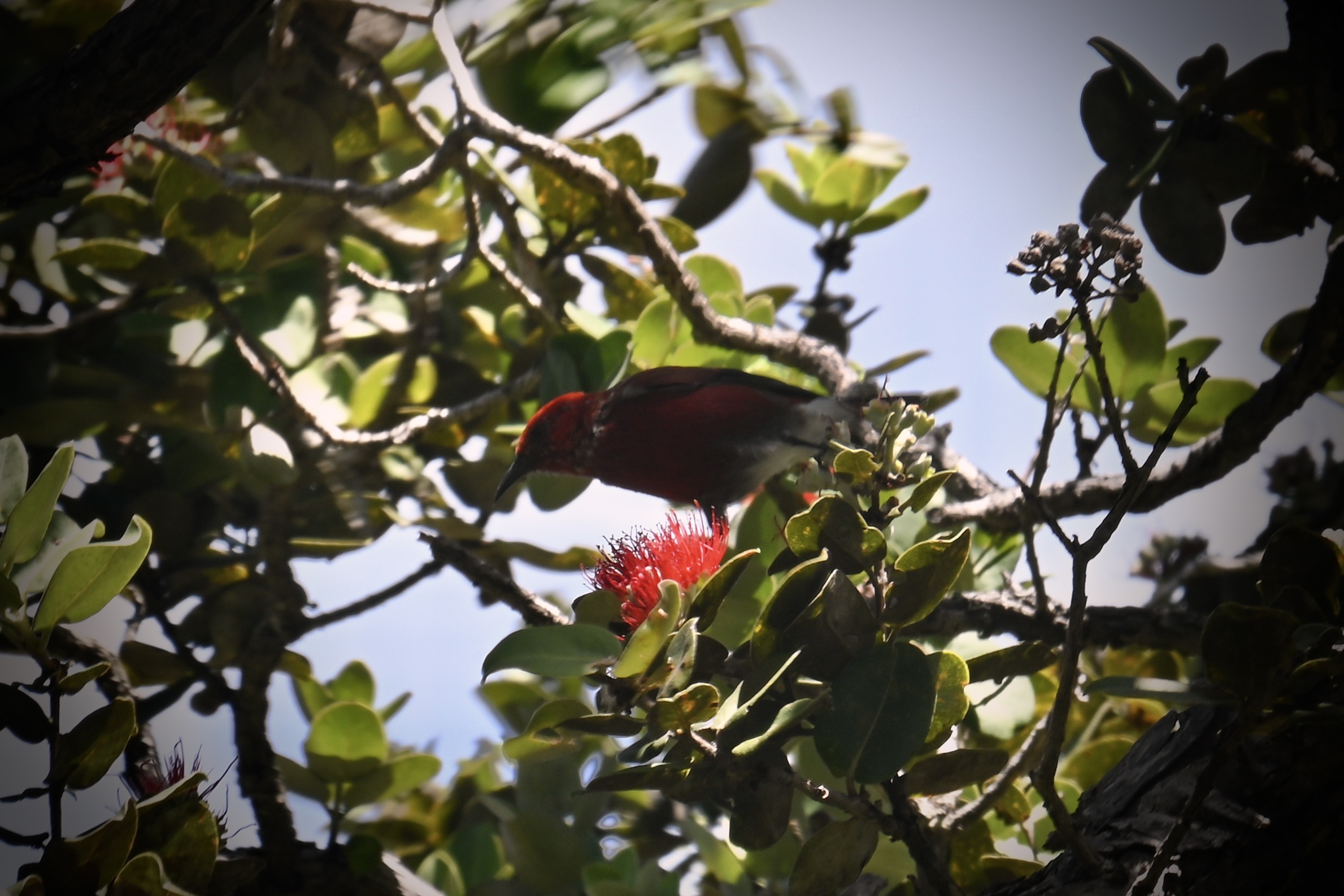
Photo of an ‘apapane and an ‘ohia blossom by Eric Anderson.

Story: Storing Up

November 12, 2023

Amos 5:18-24
Matthew 25:1-13

She was young, young enough that she took a nap every day. She was old enough to think that she didn’t need a nap every day, and she played hard enough that in mid-complaint about taking a nap every day, she’d fall asleep.

It didn’t stop her from complaining about it the next day, but I’m sure I did the same thing when I was that age.

Strangely, it was going to be her first Thanksgiving with a big group of her family. She had been born while her parents were living at quite a distance from grandparents and aunties and uncles and a big crowd of cousins. She’d only met a few of them, and only a household at a time: a couple of grandparents. An auntie and a cousin.

Thanksgiving promised to be a big crowd. She was all excited.

In the couple weeks before Thanksgiving, her parents started buying extra food for the things they’d bring to share: flour and sugar and eggs and pumpkin for pies. “Why are you getting those things?” she asked. “So we’ll have enough to share,” said her parents. “We don’t want to run out, do we?”

Oh, no, we don’t want to run out.

That took a new meaning about a week before Thanksgiving, because as the family was returning from some errands, the car ran out of gas. I guess everything had been so busy that the didn’t pay attention to the gas gauge. It all worked out fine. Some friends brought some gas so they could get to a gas station, and they got home a little later than expected, but it was barely an adventure.

“What happened?” she asked.

“The car ran out of gas,” said mother.

“Is that what happens when you don’t have enough?” she asked.

“It is with a car,” said father.

A couple days later she was all upset and started to cry.

“What’s wrong?” asked father and mother both.

“I don’t want to run out!” she sobbed.

“Run out of what?” they asked.

“I don’t want to run out of love on Thanksgiving!” she wailed.

“How are you going to run out?” asked mother, and she said, “Like the car! Or like falling asleep when I don’t want to nap!”

(I should probably mention that this was happening around nap time, which probably isn’t a surprise.)

“Tell you what,” said father. “We’ll see that you get filled up.”

“What?” she said.

“That’s right,” said mother. “We’ll take time each day to fill you up with love. You’ll have plenty of love for Thanksgiving.”

“How?” she asked, but you probably know the answer. Her parents gave her hugs, and they told her how much they loved her. They praised the cool and clever things she did, and when she misbehaved, they told her they loved her and how to do things better. They played games. They sang songs.

When Thanksgiving came she didn’t run out of love for her grandparents, or her aunties and uncles, or her big crowd of cousins. Nope. She didn’t run out of love at all.

She did skip her nap. She fell asleep in the car on the way home, but I’m sure it was because she was full of pie.

She never ran out of love at all.

by Eric Anderson

Watch the Recorded Story

I write these stories, then tell them from my memory of what I’ve written. Oh, and I improvise along the way, so what I wrote and how I tell it can be very different.

Photo by Eric Anderson

Fuel

“Five of them were foolish, and five were wise. When the foolish took their lamps, they took no oil with them; but the wise took flasks of oil with their lamps.” – Matthew 25:2-4

Be ready, you told us, Jesus,
over and over. Watch the fig trees.
Watch for floods. One will go,
one will be left. Do your work.
Fuel your lamps. Invest your talents.
Care for the sick, imprisoned, and needy.

Over and over: “Be ready.”

Be ready to shine. Be ready to care.
Be ready to share. Be ready to welcome.
Be ready to celebrate. Be ready to help.
Be ready. Be ready. Be ready.

But.

Jesus, for how long?

If the groom had been on time,
ten glowing lamps would have
illuminated him along the way.

Not five.

How long? How much extra fuel
will keep my lamp alight to welcome you?
How much investment of my talents?
How many welcomed, visited, assisted?

How long, belated bridegroom Christ?
How long?

Just so you know I know: the only source
to feed the lamp of human light, the only
place to fill the soul is you, O God.
Is you.

If I am to endure to shine before you,
fill my lamp, O God, my flasks and barrels.
Only with your aid will my light shine
today, tomorrow, and in days to come.

A poem/prayer based on Matthew 25:1-13, the Revised Common Lectionary Gospel Reading for Year A, Proper 27 (33).

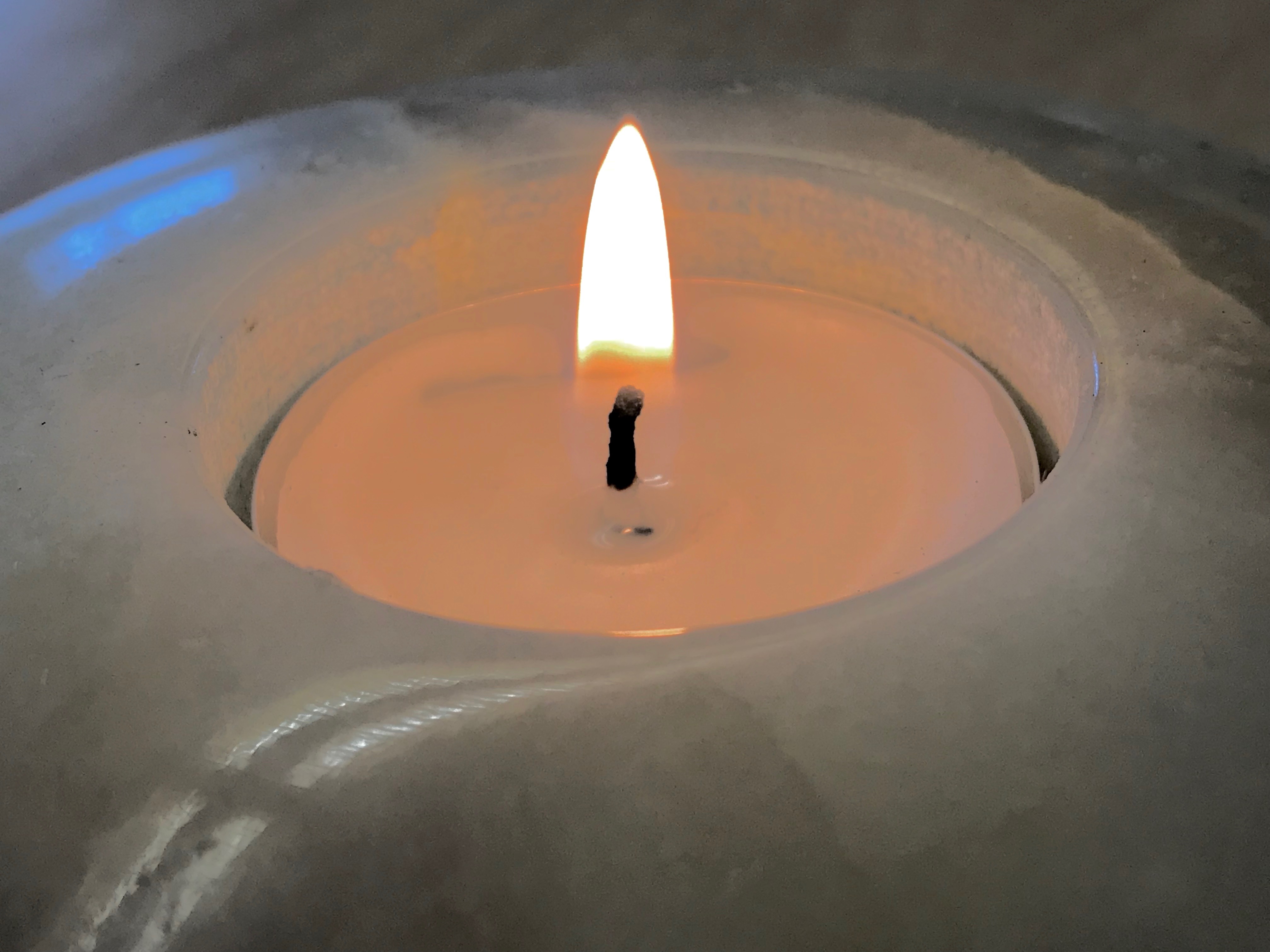
Photo by Eric Anderson. I know it’s of a tealight candle, not an oil lamp, but I like this picture.

Story: Big Cloud

November 5, 2023

Joshua 3:7-17
Matthew 23:1-12

It was a Big Cloud, with a capital B and a capital C. There have been bigger clouds in the history of the world, but this one rivaled the clouds of hurricanes and typhoons. It swept across the Pacific Ocean with a kind of ponderous majesty, with the trade winds gently carrying it along. Other smaller clouds would try to go north or south to get out of its way. If they succeeded, they breathed a sigh of relief. If they failed, well, they became part of the Big Cloud.

It rained on the ocean as it sailed along, but warm sunlight ahead of it raised plenty of water vapor to replace what substance it lost and, in fact, to make the Big Cloud even Bigger. With a capital B.

In the distance it saw Hawai’i Island.

Some clouds accompanying it – after all, what cloud wouldn’t want to ride the Pacific Ocean trade winds? – warned the Big Cloud. “You see those mountains?” they said. “You want to turn aside for those mountains. Bad things happen to clouds that try to go through those mountains.”

The Big Cloud said nothing. It was the Big Cloud, after all, with a capital B and a capital C. What had a Big Cloud to fear from mountains?

“No, really,” they told it. “You’ll rain out on the slopes. You won’t make it through the saddle.”

The Big Cloud coughed, and it sounded like thunder.

“Make a turn to the south or the north,” they urged. “You can do it. Plenty of storms have done so before.”

The Big Cloud was not pleased, and its displeasure flashed in lightning bolts along its forward edges, like a giant electric frown.

“I will go my way,” it said. “I am the Big Cloud, and I go where I choose. I fear no mountains.” And the Big Cloud set its course right between Mauna Kea and Mauna Loa – and actually over both of them, because the Big Cloud was so big it didn’t fit between them.

Rain fell here in Hilo, of course, and way up the Hamakua Coast to Honoka’a and Waipio Valley. Rain fell in Puna, drenching Pahoa and Nanavale and all the way down in Opihikao.

As the Big Cloud rained on the island, it stretched toward the saddle between Mauna Loa and Mauna Kea, with rain thundering down the rising slopes. “I will go my way,” it thundered.

But the other smaller clouds had been right. The rising slopes coaxed more and more rain from the Big Cloud, and didn’t lift moisture from the ocean to replace it. The Big Cloud became a big Cloud with only a capital C, and then a big cloud with no capitals at all. Then it was a medium cloud, and a small cloud, and by the time it got to Kona, it wasn’t a cloud at all.

The other clouds watched with sadness that the Big Cloud’s pride had prevented it from taking their advice.

“The Big Cloud was too proud,” said one.

“It certainly was,” said another. “Now it’s been rained away. Pride goes as the rain falls.”

If you ever hear a human being say something like, “Pride goes before a fall,” well, that’s true enough for people, but among the clouds they say, “Pride goes as the rain falls.”

by Eric Anderson

Watch the Recorded Story

I write these stories and then tell them from memory – well, memory and improvisation. As a result, the story as written differs from the story as told.

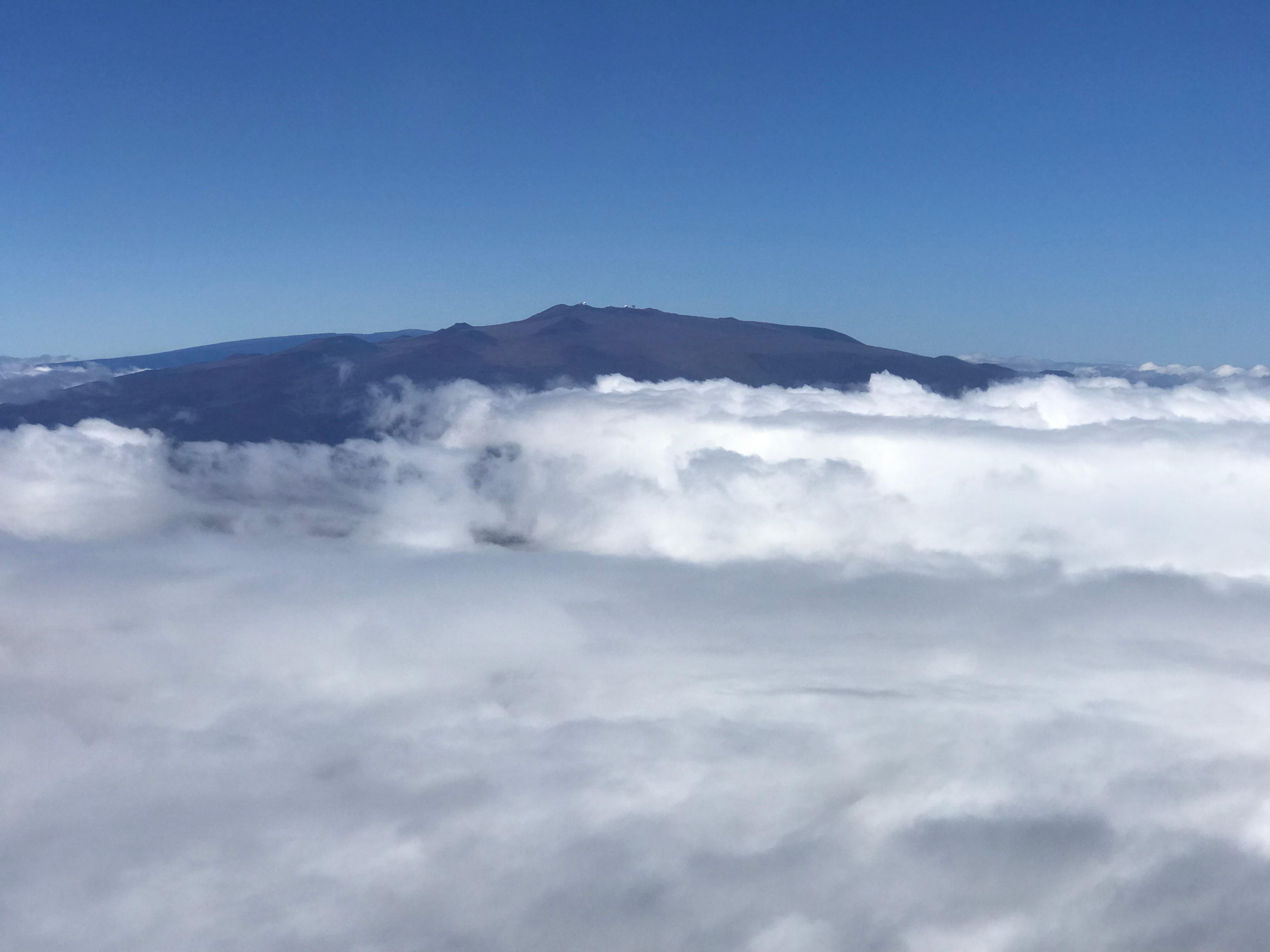
Photo by Eric Anderson

Fringes

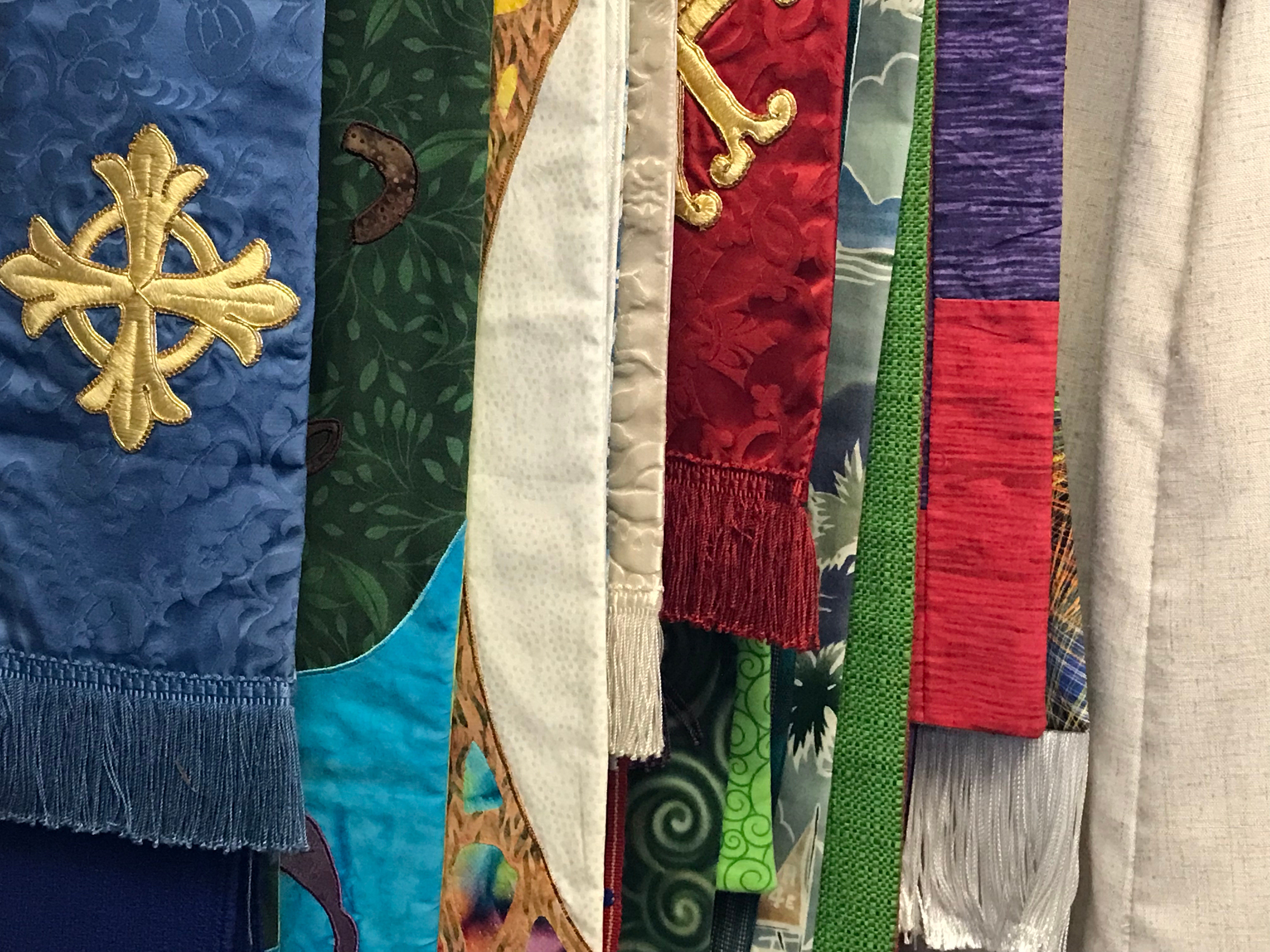
“[Jesus said,] ‘They do all their deeds to be seen by others; for they make their phylacteries broad and their fringes long.'” – Matthew 23:5

Some of my stoles have fringes.
Some do not.

I can’t say that the fringes
influence my choice of stole
for Sunday worship.

“Does the color match the season,
or the day (or can I tell myself
it matches) Sunday morn?”

And though I’ve heard
from colleagues once or twice,
“Why wear a stole to worship
in these islands?”
still I move the hangers
on the valet rod each week
to place upon my neck
the cloth cascade of color,
which may, or may not, terminate in fringe.

I take the best seat in the room.
I’m greeted by my title in the shops.
I stand where you can see me
in the sanctuary or on screen.

And pray – so deeply pray –
not to be worthy of the call
(who could be, and who ever was?)
but to be modest in the call
and stand aside so that a greater light
may shine, illuminating greater things

than me.

A poem/prayer based on Matthew 23:1-12, the Revised Common Lectionary Gospel Reading for Year A, Proper 26 (31).

Photo by Eric Anderson.

Story: On the Wind

October 29, 2023

Deuteronomy 34:1-12
Matthew 22:34-46

He was a recently hatched pueo and he didn’t want to fly.

As far as he was concerned, nest living was plenty good. His father came by with food. His mother got it into bite-sized bits that he, well, bit. He had two sisters in the nest with him and their mother stayed with the three of them. When it was cold her feathers spread over them kept them nice and warm. When the sun got too strong during the day her wings gave them shade. When it rained they were all snug beneath her body and wings.

He didn’t mind leaving the nest. Once his legs were strong enough, he’d hop out and go exploring. So did his sisters. They didn’t go far so they didn’t find much except grass and rocks and more grass, but it made them feel like bold adventurers.

But he didn’t want to fly.

The problem was the wind. The nest was in a spot in the saddle between Mauna Loa and Mauna Kea, and the mountains funneled the wind between their slopes and peaks so that it just howled them. When he’d first stood up to go exploring, a few stronger gusts had knocked him down three times. His legs got stronger after that so it didn’t happen again, but that wind kept going and he didn’t feel any better about it.

“If that wind is going to blow like that,” he said, “I’m not flying. The ground will work just fine for me.”

His mother didn’t quite believe him, so she ignored it when he said this. His sisters took this as an opening to tease him, so they did, but they didn’t take it seriously, either. “Not going to fly, right,” they told him as they settled down to sleep. “You’ll change your mind about that soon enough.”

But as they started to exercise their new-feathered wings, flapping them up and down and front and back, he didn’t do anything of the kind. “This is going to be so cool!” one of his sisters told him.

“Cold, more likely,” he said, “without Mom’s feathers to keep you warm.”

They day his sisters took their first flight, he stayed in the nest. “I’m not going to fly,” he told his mother. “As long as that wind is blowing, the ground is fine for me.”

She might have stayed to argue but her daughters were hopping up and down and squawking about taking their first flight, so she had to pay attention to them. It didn’t take long before all three were in the air, climbing away from the nest.

“As long as the wind is blowing like this,” he said again, “I’m staying on the ground.”

The wind, in fact, blew harder. He had to lean forward into it to stay upright. It dropped to almost nothing so that he stumbled and spread his wings for balance. In that moment the wind blew a great big gust that billowed under his wings and lifted him into the air.

He was so startled that he froze with his wings still extended, rather than folding them right there and getting an uncomfortable return to the ground. He soared higher up, the wind lifting him without so much as a wingbeat. With some small movements of his tail feathers, he turned one way and another, rose up and swooped down.

When he returned to the ground and the nest, his sisters and mother were there. “You’re not going to fly, huh?” his sisters teased.

“The wind is still blowing,” said his mother.

“It lifted me up,” said her son. “I didn’t think it would do that.”

His mother nodded. “Welcome, son,” she said, “to creatures who are held on the wind.”

There are plenty of uncomfortable and even scary things in the world. Some of these things – like God – are much bigger than we are. They may make us feel overwhelmed. And some of these things – it’s best to figure out what they are – will be there to lift us up and help us fly. One of those great powers is God. The Spirit blows as it will, it’s said, and the Spirit blows to help us fly.

by Eric Anderson

Watch the Recorded Story

I write these stories ahead of time, but I don’t read them when I’m telling them. My memory leaves things out and my creativity adds things, so what you read and what you hear will not be the same.

Photo of a pueo in flight by HarmonyonPlanetEarth – Pueo (Hawaiian Owl)|Saddle Rd | 2013-12-17at17-45-012. Uploaded by snowmanradio, CC BY 2.0, https://commons.wikimedia.org/w/index.php?curid=30241884.

Unknown Grave

“Then Moses, the servant of the LORD, died there in the land of Moab, at the Lord’s command. He was buried in a valley in the land of Moab, opposite Beth-peor, but no one knows his burial place to this day.” – Deuteronomy 34:5-6

Note: The Hebrew text can be read that the LORD buried Moses after his death.

“Lay it down, Moses. You have walked and climbed
and spoken and shouted and struck and fed
and led for many, many years. Lay it down, old friend.
Your limbs have carried you, and now you rest.”

In view of promises that he had spoken, he
gently took a breath, and let it go. Unequaled
prophet of the once enslaved, now free,
his spirit spread its wings in eager flight.

They mourned him thirty days down in the valley,
never knowing where his flesh, at last at rest,
remained. Did Joshua ascend the slopes to dig,
or did an angel’s hands move dust for Moses’ clay?

In decades past, they’d panicked when he’d disappeared
upon the rumbling heights. With Moses’ final song
still shivering in their ears, they wept and grieved,
and if they climbed, they never found the prophet’s grave.

Today you’ll find a monument to Moses at
the summit of Mount Nebo, a shrine to mark
a grave at Nabi Musa near the road to Jericho,
but Moses’ grave was hidden from the folk he’d led.

They mourned this time without an idol’s aid,
not even the small comfort of a tended grave.
The leadership had passed unto another generation.
Was that enough to satisfy their grief?

Or was it simply that they’d seen, at last,
through passing of the years, that Moses’ legacy
was they, themselves, the once enslaved now free,
their lives his monument less brittle than the stones.

Though Moses died, his people lived. Though Moses died,
his people found a home. Though Moses died,
another generation rose. Though Moses died,
and though I die, the grace of God lives on.

A poem/prayer based on Deuteronomy 34:1-12, the Revised Common Lectionary Alternate First Reading for Year A, Proper 25 (30).

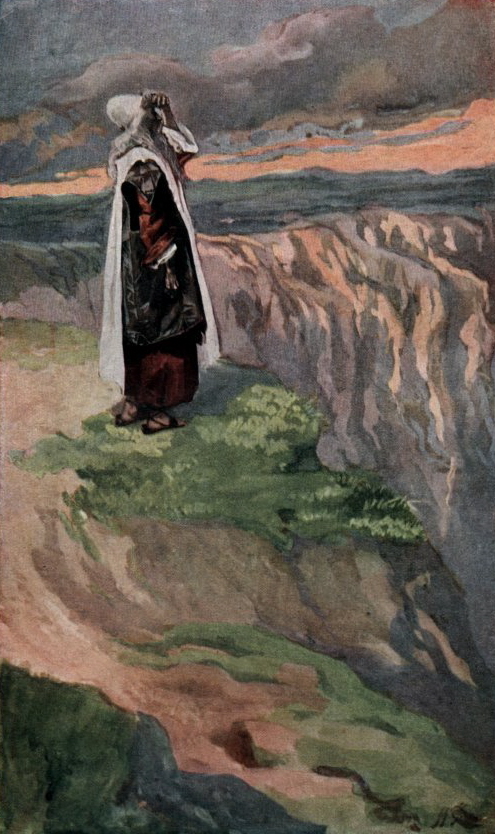
The image is Moses Sees the Promised Land from Afar, as in Numbers 27:12 by James Tissot (before 1903) – http://www.wcg.org/images/tissot/tissland.jpg, Public Domain, https://commons.wikimedia.org/w/index.php?curid=7154558.

Story: That’s Mine

October 22, 2023

Exodus 33:12-23
Matthew 22:15-22

‘Amakihi are generally inoffensive birds. They fly with other birds, they feed with other birds, and they even allow other birds to get pretty close to their nests – though they’ll chase off a bird that gets closer than, say, about three feet.

One ‘amakihi, however, must have been watching i’iwi, perhaps, or more likely people, because he chose and ohi’a tree and said, “That’s mine!”

I told a story a while ago about an i’iwi trying to protect an ohi’a tree and you might remember that it didn’t work. And I’ve told a story about an i’iwi trying to keep other birds away from a tree in blossom and how an ‘amakihi found a way that other birds could eat there, too. Those trees were in full blossom, with the scent of nectar drawing the honeyeaters of the forest in from all around. This tree, however, the one that the ‘amakihi chose as his? It was not at all tall, and barely had a flower on it. Nobody was terribly interested.

Except for this one ‘amakihi, who told everyone who came near: “It’s mine!”

He ate the bugs from it, and sipped nectar when it blossomed, but he couldn’t really feed himself entirely from this one tree, so he’d forage around the forest. As soon as he was satisfied, however, he’d be right back to his chosen tree, to chase away any bird that was getting “too close,” whatever that meant at the time.

“Why are you doing that?” asked his sister.

“The tree is mine!” he told her.

“How is the tree yours?” asked his father.

“It’s mine!”

That’s an argument you can have for a long time.

His grandfather came by and circled the little tree while he was perched there. He didn’t get too close, so his grandson didn’t get upset. He landed a little bit away in another small tree and called out, “Can we talk, grandson?”

The ‘amakihi wouldn’t even let his own grandfather perch in “his” tree, so he flew to where grandfather was.

“That’s your tree, is it?” asked grandfather.

“Yes, it is,” said the grandson.

“How did you plant it?” asked Tutu.

“I didn’t,” said the grandson.

“Then you must have watered it,” said Tutu.

He hadn’t done that, either.

“Or fed it to make it grow,” said grandfather, but the grandson hadn’t.

“All right then,” said the grandson, “maybe I can’t claim the whole tree. I’ll just claim this branch.” He flew over and perched on it, singing out, “It’s mine!”

Grandfather flew to another branch and said, “You must have done a lot of work to get it large enough to hold you.”

“This flower cluster is mine!”

“Well done for making it blossom!”

The grandson fell silent.

“Even among the humans, grandson, who argue about who owns what among the things of the Earth, and who turn some things into other things and who do make things grow where they didn’t, even among the humans, they know that they didn’t make the land, and they didn’t create the seeds, and their claims to own things are… a problem.

“You’re an ‘amakihi. You’ll build a nest and you’ll raise chicks. Even those won’t be ‘yours;’ they’ll be their own. Let it go, grandson. Let the tree be its own.”

“I think it’s a wonderful little tree,” said the grandson.

“Love it all you like,” said Tutu. “Let the tree be its own.”

by Eric Anderson

Watch the Recorded Story

I tell these stories from my memory of what I’ve written. As a result, what I said in the recording may be very different from what I’d previously written.

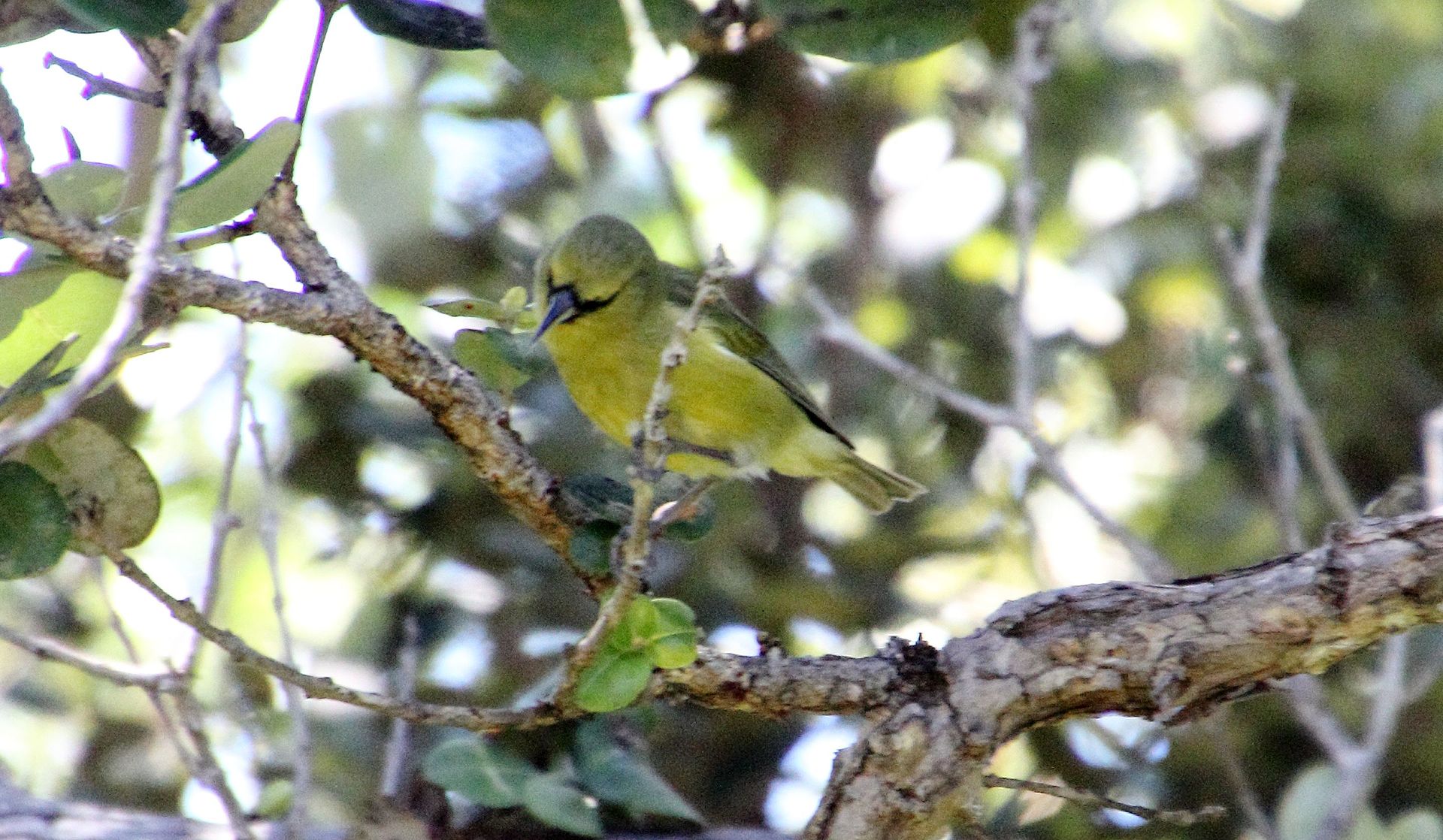
Photo of an ‘amakihi by Dominic Sherony – Hawaii Amakihi (Chlorodrepanis virens virens), CC BY-SA 2.0, https://commons.wikimedia.org/w/index.php?curid=52150186.