After I wrote “Romance,” Maren Tirabassi asked me, “Is this set to music?” It wasn’t, but I, too, found its rhythm begged for a melody. Here it is:
Bring Me a Rose, Apostles
By Eric Anderson April 25, 2023
Bring me your time and a rose, apostles, gathered in prayer; gathered to share. Bring me your time and a rose-colored glass, to which we’ll aspire and fail.
Bring me the needs that were met, apostles, the poor lifted up, assembled to sup. Bring me the gifts of the rich, apostles, the rich become poor in the blood of the cup.
Bring me the change – for it came, apostles. The rich held their wealth despite failure of stealth. Bring me the gifts for the saints, apostles, they gave for Jerusalem’s health.
The rose-colored glass will not hide, apostles, Saphira’s collapse, Ananias’ grim lapse. Nor the laud that is given to greed, apostles, however much time will elapse.
Bring me your time and a rose, apostles, gathered in prayer; gathered to share. Bring me your time and a rose-colored glass, to which we’ll aspire Aspire and fail.
“All who believed were together and had all things in common; they would sell their possessions and goods and distribute the proceeds to all, as any had need.” – Acts 2:44-45
Bring me your time and a rose, apostles, gathered in prayer; gathered to share. Bring me your time and a rose-colored glass, to which we’ll aspire and fail.
Bring me the needs that were met, apostles, the poor lifted up, assembled to sup. Bring me the gifts of the rich, apostles, become poor in the blood of the cup.
Bring me the change – for it came, apostles. The rich held their wealth despite failure of stealth. Bring me the gifts for the saints, apostles, they gave for Jerusalem’s health.
The rose-colored glass will not hide, apostles, Saphira’s collapse, Ananias’ grim lapse. Nor the laud that is given to greed, apostles, however much time will elapse.
Bring me your time and a rose, apostles, gathered in prayer; gathered to share. Bring me your time and a rose-colored glass, to which we’ll aspire and fail.
A poem/prayer based on Acts 2:42-47 (with some reference to Acts 5:1-11), the Revised Common Lectionary First Reading for Year A, Fourth Sunday of Easter.
The image is The Distribution of Alms and the Death of Ananias by Masaccio (ca. 1426-1427), a fresco in the Brancacci Chapel, Florence, Italy – Web Gallery of Art: Image Info about artwork, Public Domain, https://commons.wikimedia.org/w/index.php?curid=15463099.
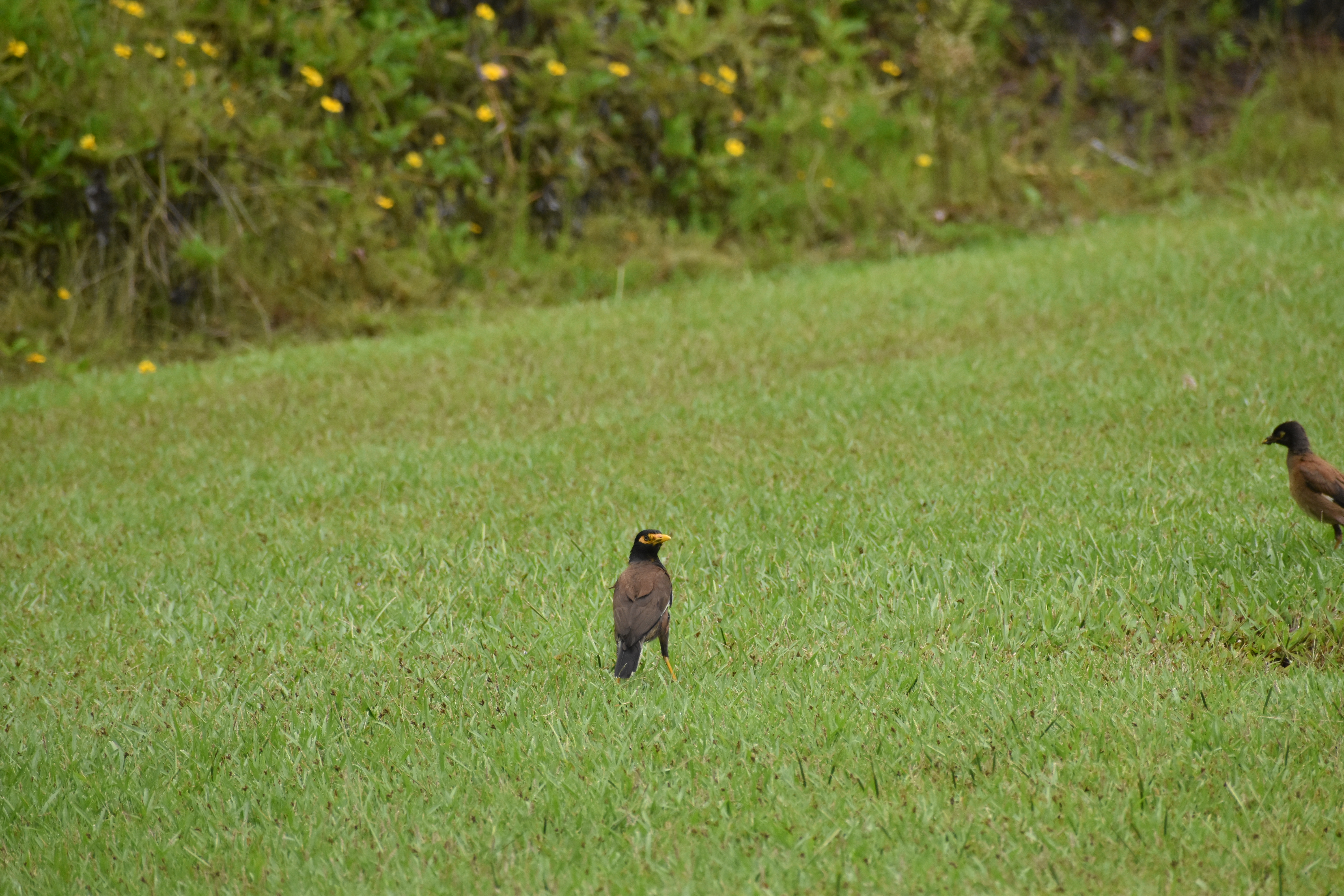
She’d already been to flight school, but now she was in a different flight school. The first flight school was what you think it is, and her instructors were mostly her parents, with occasional helpful contributions from random mynas near the nest – because a myna has something to say about just about anything – and not-so-helpful contributions from her sisters and brother, who also had plenty to say about her first attempts at flight but they didn’t really know any more about it than she did, and sometimes less.
They were mynas, of course, so they had something to say about it whether they knew anything or not.
She had graduated flight school, however, with flying colors. By which I mean, she could fly.
And now she was in flight school. This one, however, was not about flying. It was about fleeing. The first flight school taught her how to make her way through the air. The second flight school taught her about the things to fly away from.
There were a good number of them. The problem was that she found it all very boring. The instructors would suddenly shriek, “Cat!” and all the students would fly away. Then they’d do it again. And again. It was tiring. And boring.
When everybody was wing-weary and tired, the teachers announced a short break. The students scattered to the trees to rest.
Our myna hadn’t been settled long when some other birds also perched on nearby branches of her tree. She didn’t know much about them. There was a kolea, and a couple of finches and doves, and a yellow-billed cardinal. She was really startled, though, when a very large bird with long white wings and long legs settled near the top of the tree. Nobody else seemed to move, however, so she folded the wings she’d planned to fly away with. Her flight school lessons hadn’t moved on to birds yet.
“Startled, little one?” said a voice from above and behind her.
“Yes,” she said. “I don’t think I’ve seen a bird that large before.”
“Don’t worry,” said the voice. “That’s a cattle egret. They don’t hunt mynas.”
“Are there birds that hunt mynas?” she asked.
“Certainly,” said the voice. “Not a lot, but they do enjoy a tasty bit of myna when they can get it.”
“What birds are those?” she asked, not sure she wanted to know.
“There’s the pueo,” said the voice. “They have very flat faces and big eyes, and they fly really quietly. You want to fly away from those.”
“Anything else?” asked the myna.
“Definitely,” said the voice. “Watch out for the ‘io. It’s got a sharp curved beak, large pointed talons, and big broad wings. It can spot you from high up in the sky.”
“At least it doesn’t roost in trees,” sighed the myna.
“Who says it doesn’t?” said the voice. The myna turned her head, and saw a larger bird with cream and brown feathers, bright eyes, a curved beak and sharp talons on its great feet. The finches leapt from the tree with a screech of “’Io!” followed by all the other birds – except the ‘io, who didn’t happen to be hungry.
She didn’t find flight school boring after that. She wanted to know everything about identifying the creatures around her – the ones to fly away from and the ones who wouldn’t harm her. She lived her life grateful for an ‘io who would tell her the truth.
by Eric Anderson
Watch the Recorded Story
I tell these stories during worship from my memory of the story as written (that’s the text you’ve just read). My memory is… not photographic.
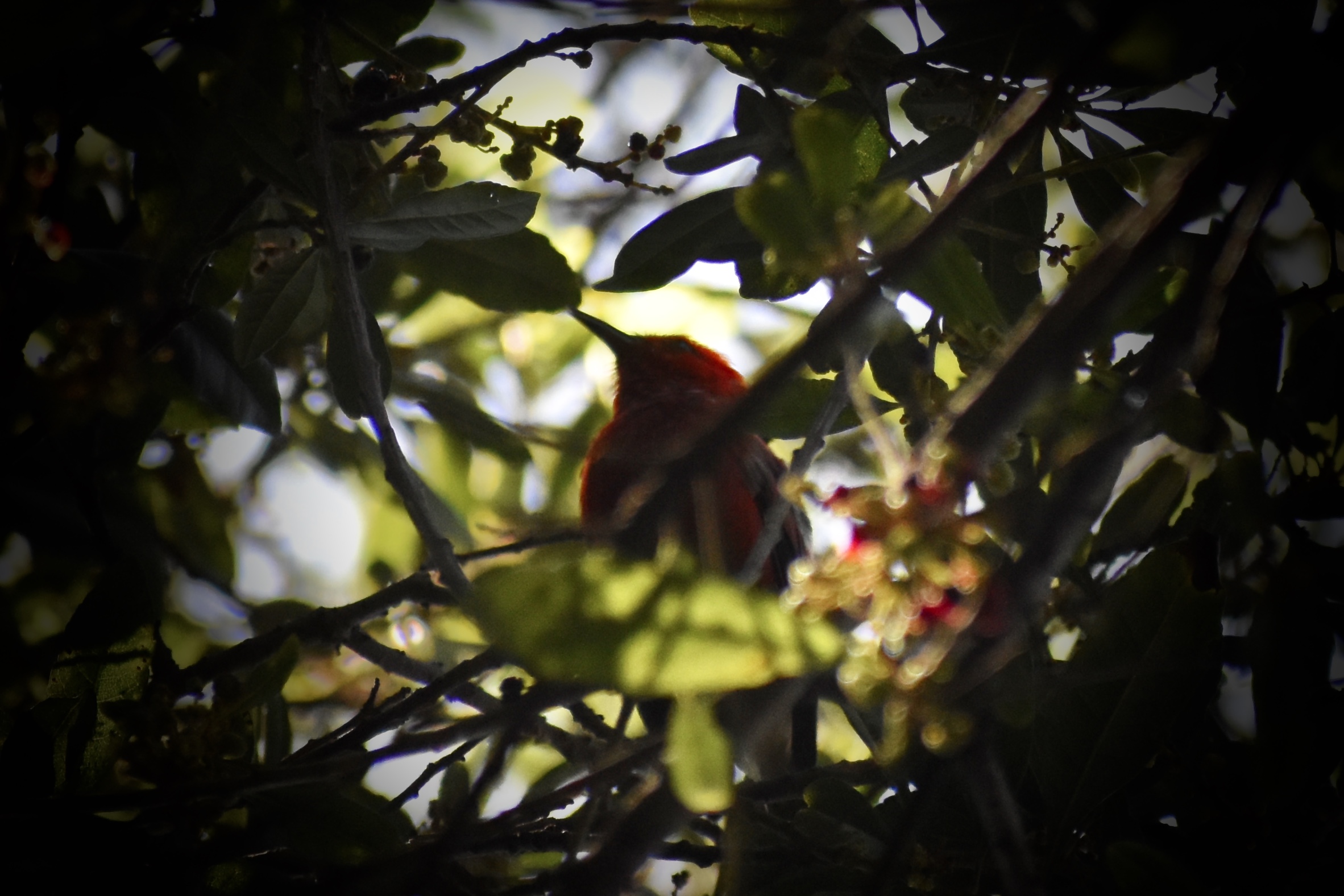
I did take the photo of the ‘io at the top of the page.
[Cleopus and his companion replied,] “But we had hoped that he was the one to redeem Israel.” – Luke 24:21
Cleopus: We needed a savior, we followed a healer, learned some from a teacher. We were crushed to see our longed-for Messiah crucified and slain, and know it was not he.
Judas Iscariot: We needed a savior, but he wouldn’t blink, he wouldn’t lift up the sword. The Zealot alike is tamed. He must be forced his power, even if by his friend he’s betrayed.
Simon Peter: What shall I make of the winds of these days? I ran, then I stopped. I followed and denied. I’ve looked in the empty tomb. Between death and failure my heart subsides, has settled into gloom.
Mary Magdalene: He set me free from torment within. I watched him set others free. You wanted a Savior? You had one, you know! Now the angels claim he lives once more and I’ve come to spread the news to find my word ignored.
Me: You’ve disappointed us all, O Christ. We’ve asked for the things you won’t give (So we’ve taken them instead). If we’re disappointed, what about you? Abandoned, betrayed, denied, ignored, as you labor to lead us to truth.
A poem/prayer based on Luke 24:13-35, the Revised Common Lectionary Gospel Reading for Year A, Third Sunday of Easter.
He’d had a long conversation with the kolea as they both searched for food in the grass. They were mostly looking for the same things: seeds, bugs, and so on. Fortunately there was plenty to be found, so the saffron finch’s dissatisfaction had nothing to do with how much or how little he was getting to eat. No.
It was that the kolea was preparing for the journey to Alaska, and the saffron finch thought this sounded like a bad idea. I mean, a Bad Idea with Capital Letters.
“Have you ever been in Hawai’i over the summer?” he demanded of the kolea between mouthfuls.
“No,” said the kolea. “Have you ever been in Alaska during the summer?”
The saffron finch had no reply to this. “It couldn’t be better than Hawai’i during the summer,” he insisted.
“It might not be,” agreed the kolea. “But it’s where I’ll be.”
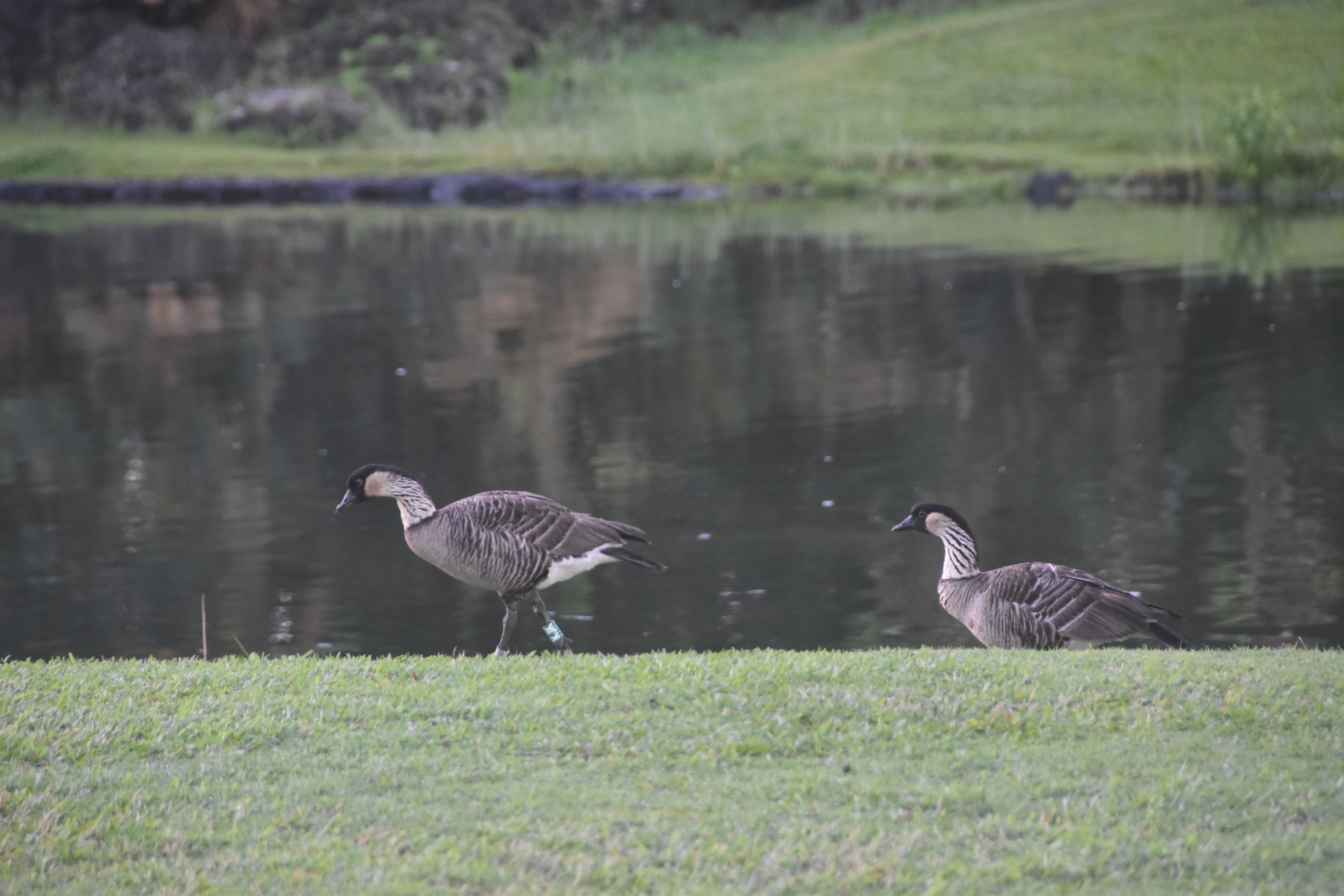
“It’s such a long way!” moaned the saffron finch, “and your wings might be bigger than mine, but they’re nothing like a nene’s, and they don’t fly to Alaska.”
“I know how far it is,” said the kolea, who knew it much better than the saffron finch could, since he’d flown it and the finch hadn’t. “And I know it can be done.”
“What will you eat there?” demanded the saffron finch, who had just plucked some very tasty seeds out of the grasses.”
“Much the same as here,” answered the kolea, though it was a little hard to hear because his mouth was full.
“I say you should stay here,” announced the saffron finch. “Hawai’i is the place to be.”
“It’s a great place to be,” said the kolea, “but…”
“But nothing!” interrupted the saffron finch.
“But… said the kolea, “it’s where I was hatched, and where my parents were hatched, and where my grandparents were hatched. Other birds, even other kolea, lay their eggs in other places. I know it can be done. But this is how we do it, and we know it works for us.”
“It’s really strange, you know,” said the saffron finch.
“It’s not so strange,” replied the kolea. “There are other birds here that make much the same journey – the akekeke, for one – and I’ve met birds in Alaska that make long journeys to spend the winters in very different places than Hawai’i.”
“I’m not convinced,” said the saffron finch.
“You don’t have to be,” said the kolea. “It’s still something I have to do, even if you don’t like it or understand it.”
The saffron finch was quiet for a while and finally said, “I’ll miss you.”
The kolea gave a kolea smile – birds don’t have lips, after all – and said, “I’ll miss you, too, and I’ll be back in the fall to pluck seeds from in front of you again.” And he pulled a seed out right in front of the saffron finch’s beak.
“You’ll be welcome,” said the saffron finch, and he plucked a seed from in front of the kolea.
He remained unconvinced, but he remained satisfied, too, that his friend would come back once more.
by Eric Anderson
Watch the Recorded Story
The story in the recording was told from memory of this text – imperfect memory coupled with affection for improvisation…
Photos of a kolea (left) and a saffron finch by Eric Anderson.
“So the other disciples told him, ‘We have seen the Lord.’ But he said to them, ‘Unless I see the mark of the nails in his hands and put my finger in the mark of the nails and my hand in his side, I will not believe.'” – John 20:25
I told you first, Peter. I told you first. “I have seen the Lord,” I told you, “after you had gone away from the grave. He’s alive, I tell you, alive. I have seen the Lord.”
I told you first, Peter, and you… well. I’ve seen your eyes narrow before when things don’t make sense, or you don’t understand. Then you made a comforting noise, but: I had seen the Lord.
Condescension from you isn’t new, Simon Peter. You’re polite, but you’ll always rely on the witness of your own two eyes – or the witness of another guy – even though I had seen the Lord.
Did you hear me that night when I laughed? Oh, the sight of your faces was rich! Where was your superior eye? Though puzzled, your eyelids spread wide! Now we had seen the Lord.
Is it mean of me to then delight when Thomas repeated your cant: “I’ll believe when I see it myself and have touched what I know I can’t.” Even though we had seen the Lord.
Will you learn, Simon Peter, from this? Will you learn to trust more than yourself? Will you learn to appreciate others? Will you learn to believe when a woman tells you: “I have seen the Lord.”
A poem/prayer based on John 20:19-31, the Revised Common Lectionary Gospel Reading for Year A, Second Sunday of Easter.
I struggled a great deal to find an image of Mary Magdalene fit for this poem. There ought to be one depicting her declaration “I have seen the Lord!” to the male disciples, but I didn’t find one. She is frequently shown at the crucifixion and, of course, at the empty tomb. Most versions of “Noli me tangere” (Do not hold onto me) leave me cold. Mary has frequently been confused with other women in the Bible, partially because so many of them were named Mary (Miriam), and partially because of a strange tendency on the part of Christians to assume Jesus had few followers in his lifetime, so if two people look similar or have the same name, they must be the same. Pope Gregory I’s 591 Easter homily erroneously conflated Mary Magdalene, Mary of Bethany, and the unnamed “sinful woman” of Luke 7. As a result, European Christians came to assume Mary Magdalene had been a prostitute and the misnomer has lingered and grown. Paintings of the “Penitent Magdalene” are… well. They’re awful. Truly awful.
Veneto’s portrait comes from the “Magdalene as Myrrhbearer” genre. The woman’s side-eye glance comes close to expressing what I imagine Mary Magdalene’s irritation with Jesus’ male disciples. Now if someone would only paint her rolling her eyes, that would be better.
I don’t mean the people of the world – most of them didn’t have any idea what was going on. The people of the Pacific islands wouldn’t hear for over 1700 years. They didn’t get the word in Japan or in China. Some people in India would hear about Jesus and his crucifixion much sooner, but they didn’t know on that first Easter morning.
They didn’t know in Africa, even as close to Jerusalem as Egypt. They didn’t know in Britain or the wide plains of Russia or in the palaces of Rome. They didn’t know in Athens. A few might just have heard the word of Jesus’ crucifixion in his home town of Nazareth – someone on a fast horse might have traveled overnight to reach there – but they wouldn’t have word of what happened Easter morning.
No, the only people who knew that Easter morning, at least as Matthew told it, were two women named Mary – it was apparently a common name in Jesus’ day – and, of course, Jesus.
But that wasn’t my question. How did the world feel that first Easter morning? This globe of ours, this Earth that God had created working with the Word of God, the Word that had taken human shape in Jesus. How did the world feel when Jesus died on Friday? How did the world feel when Jesus rose to life once more on Easter morning?
Well. That’s the story.
According to Matthew’s Gospel, the world shuddered when Jesus died, shuddered with an earthquake that shook people’s bodies and spirits, shuddered with grief and loss. And on Easter morning, the Earth felt that quickening of new life. The Earth perceived an angel descending to the rock-cut tomb where Jesus’ body lay. The Earth asked, “What is this?” as a spark of hope flared deep in its center.
The Earth shook itself again, but this time it shook to cast off the sadness and despair of the last two nights. This time it shook itself to cleanse its depths of sorrow and doubt. This time it shook to make a path for joy. This time it shook to awaken the people on its surface to something new and wondrous and holy and blessed.
Did the Earth shake all across the globe? I don’t know, to be honest. I can imagine, though, that where lava was flowing, it flowed just a little brighter, just a little faster. I can imagine that some of the mountains breathed in and became just a little taller, stretched a little bit further toward the sky. I can imagine that the ocean waves ruffled along the shores as the Earth laughed with joy.
When the angel rolled the stone away, I imagine the Earth settled beneath it just a little bit, so that the stone rolled away down a little slope that hadn’t been there before. When the women began running back to the city to tell their friends, perhaps the Earth smoothed the road so they would not trip and fall.
When Jesus met them on the road and they knelt at his feet, perhaps the Earth softened beneath them. When they ran on, after he greeted them and told them, as the angel had, to bring the good news to their friends, they didn’t trip or fall.
Beneath them, the Earth carried on with turning, with following its orbit around the sun, with moving the continents about, with cradling the oceans and raising the mountains, with turning seamounts into islands in the middle of the sea. Beneath those running women, God’s messengers and apostles that morning, the Earth smiled and laughed for joy, for its Creator and Redeemer lived, and so the Earth would be a home for life as long as time endures.
In its own way, the Earth said, “Christ is risen! Alleluia!”
by Eric Anderson
Watch the Recorded Story
In worship, I tell the story from memory. Memory sometimes give way, as today, when I substituted a completely new ending for the one I’d written.
The island creatures had heard about Easter eggs, and they could not figure it out.
“Why would you take eggs out of a perfectly good nest?” asked the ‘apapane.
“We went to such trouble building it in the first place,” said the ‘amakihi, which builds a nest that is much bigger than its eggs.
“You don’t need to build a nest at all,” said the Manu-o-Ku, which lays its egg precariously on a branch to balance there until it hatches.
“You’ve got to keep your eggs protected from the sea spray,” said the noio.
“You could always put your eggs on ledges higher up the mountain,” pointed out the koa’e kea, which was maybe a little bit of a mean thing to say to the noio.
“Or you could lay your eggs in Alaska,” said the kolea, but nobody else really wanted to think about that except for the ‘akekeke which does much the same thing.
“Why would you want to put color on them?” wondered the ‘io. “Our eggs are a nice blue when they’re new, and then they turn paler.”
“We like mottled eggs,” said the ‘akepa. “They’re harder for egg eaters to see in the nest.” Everybody looked a little puzzled at this, because the ‘akepa is bright orange and hard to hide from anything.
“We like mottled eggs, too,” said the i’iwi, and now everybody was puzzled but nobody said anything.
“I also don’t see why you’d hide the eggs,” said the pueo. “A nest in the grass is fine.”
“I prefer a tree,” said the mejiro.
“A palm tree,” said the myna.
“A beach,” said the honu, and everybody looked at her.
“Dig a hole, lay your eggs, and cover it over. That’s how to do it,” she said with assurance, and all the other turtles agreed. The birds were almost as confused about this as about Easter eggs. But that got them all to turn to… the chicken.
“What?” she asked.
“Those humans are using chicken eggs,” they told her.
“That doesn’t mean I understand what they’re doing,” she said.
They waited and they didn’t say anything.
The chicken sighed and said, “I really don’t understand what it all means, but I have seen what they do and how they feel about it. They take eggs that aren’t going to hatch – which makes no sense to me, because what good is an egg that isn’t going to hatch? – and as you’ve all noticed, they put bright colors on it. While they’re doing it, they’re smiling and laughing. They’re doing it together, so when one colors an egg, another one tells them how beautiful it is. When they’re done, they admire them together, and congratulate everyone for a job well done.”
“I guess that must feel good,” said the kolea. “What about the hiding?”
“The adults hide the eggs, and the young ones look for them. And when they do, they’ve got those big smiles again, and they’re laughing. They get excited to find the eggs they’ve colored and the ones the other keiki have colored, even if they aren’t going to hatch.”
“Oh, and they also hide and find eggs that aren’t real eggs,” the chicken said. “Those have food in them.”
Everybody nodded at this. Everybody likes to find food.
“I think the point is the joy,” said the chicken. “From beginning to end, these eggs are about joy. Coloring them, hiding them, finding them, and celebrating them. These eggs are about joy.”
They all nodded at this, too. Eggs are about joy for birds and turtles.
And, it turns out, eggs – Easter eggs – are about joy for human beings, too.
by Eric Anderson
I told this story to begin the children’s Easter Egg hunt on Sunday, April 9, 2023. Unlike stories told in worship, it was not filmed or recorded.
These seven poems and the song are based on Scriptures associated with “the Seven Last Words of Jesus” – strangely, there are eight lessons. The video includes reading of the Biblical texts, reading of the poems, and performance of the song, “As We Bring Him Down.” The poetry and the video were prepared for Good Friday in 2022; I am reposting them for Good Friday 2023.
You strode those streets to teach, to worship and to heal. You strode those streets to cast the moneychangers from the Temple courts.
And now, with failing strength, you stumble up the street, too weak to bear the instrument of death. Where once you rode in festival parade they follow you to mourn for what has been and what will be.
I’m sure that Pilate knew just what he said. This is what happens to the ones who claim they have no emperor but Caesar. King of the Jews? Claim the title if you like, but know that title brings you only here, to die upon a cross, not reign upon a throne. So Jesus, claiming spiritual rule, will offer up his spirit to the Roman callousness and fear.
How strange a criminal, whose deeds “deserved” a death of torture, understood the reign of God much better than the priests, much better than the Roman Governor, much better than the monarch, better even than the ones who followed Jesus. “Jesus, remember me when you come into your kingdom.” For Jesus, entry to that realm was not through gates of stone, but gates of death. Beyond those gates our eyes see only shadow, but to his, and to this criminal, the shadows have been thrown by brilliant light.
Your friends look on, O Jesus. See? Your mother Miriam: she weeps with Miriam and Miriam. She will not urge you to a wedding feast, not now, or prompt you to transform the vinegar of death into a vintage rich with life. Instead, as scarlet stains your hands and feet, you transform stranger into son, and woman into mother. Here amidst the panoply of power and of hate, you fill the purifying jars of love.
Who could not bear to watch from heaven? Was it the sun, ashamed to the Savior die? Was it the moon, unable to divert its gaze? Was it the angels who had praised Messiah’s birth? Or was it simply that the clouds must gather, too, and witness bear, and mourn, and weep?
Forsaken the Anointed One. It seems so strange that Son of God, Messiah should cry out in abandonment – or… Does it?
Do we not hear the question echo down the years, the centuries, and on, “I was your God, and you my people, and you turned away.” We worship a forsaken God.
I could not blame you, Christ, if you let “It is finished” be your final word. You only came to do us good, and we? We desecrated you, we desecrated the tree on which we watched you die.
I could not blame you, Christ, if you decided that we had rejected your salvation – for we did – and now could live in suffering – as we do. And you, who stood for truth, nearly let us live the lie, but you could not let “It is finished” be the end.
The calloused feet that trod the miles. The mobile lips the formed the smiles. The fingers that bathed his friends’ toes Are still – are unmoving – Are released from the world and its woes.
[Chorus]
Hold him gently as we bring him down. Throw aside the bitter thorn crown. Lay him in the cloth we could find. The world has been cruel to the kind.
The sparkling eyes that held yours in peace. The worker’s hands that feared no disease. The ears that heard more than we knew Are still – are unmoving – Are now just memory for a few.
[Chorus]
The open arms we have crossed on the chest Where the loving heart beats not in his breast. Draw the fabric across the dear face So still – so unmoving Oh to see it again. Oh to find such a place.
Mary took a pound of costly perfume made of pure nard, anointed Jesus’ feet, and wiped them with her hair. The house was filled with the fragrance of the perfume. – John 12:3
To the cheers of the crowd, ride along. Turn the tables and scatter the coins. As sweet perfume comforts your feet, Comfort the woman who comforts you.
[Chorus]
Six days, six days in the city. Six days to ready your heart. Six days: does anyone understand That you must play this part?
In the Temple courts, proclaim truth. Turn the arguments back on the skeptics. Raise your sad eyes to the pillars of stone That you know will come down, and come down too soon.
[Chorus]
Send them out to make plans for the meal. Wash their feet, whatever they say. Pray alone as sweat streams from your brow, Knowing thorns will be your crown.
[Revised Chorus]
Six days, six days to the palace. Six days, six days to the cross. Six days, six days to the tomb… Six days for all to be lost.
Six days to wind up the journey. Six days of betrayal and strife. Six days to lay down your power…
Three days… Three days… Three days to take back your life. Three days… Three days… Three days to raise up your life.