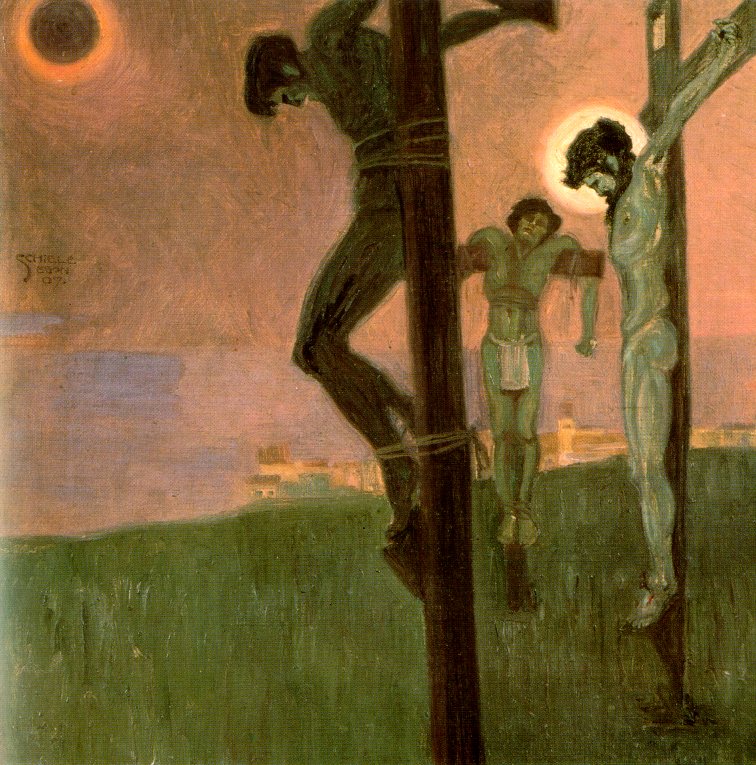
“[Jesus said,] ‘Or what woman having ten silver coins, if she loses one of them, does not light a lamp, sweep the house, and search carefully until she finds it?'”
What is the value of a single coin? Not much today, when we make money with printing upon paper, or with electronic imagination.
What is the value of a single coin? It might be little even in those ancient days, unless, of course, it was a tenth of everything she owned.
What is the value of a single coin? It might be food to take me through the day, or into a coming week, or possibly next year.
What is the value of a single coin? Enough to set me searching high and low, to bear the cost of burning oil in the lamp, to celebrate the sudden silver gleam amidst the dark.
What is the value of a single coin? A better question might be this: What is the value of a single human soul? Enough, said Jesus, for the heavens to rejoice.
A poem/prayer based on Luke 15:1-10, the Revised Common Lectionary Gospel Reading for Year C, Proper 19 (24).
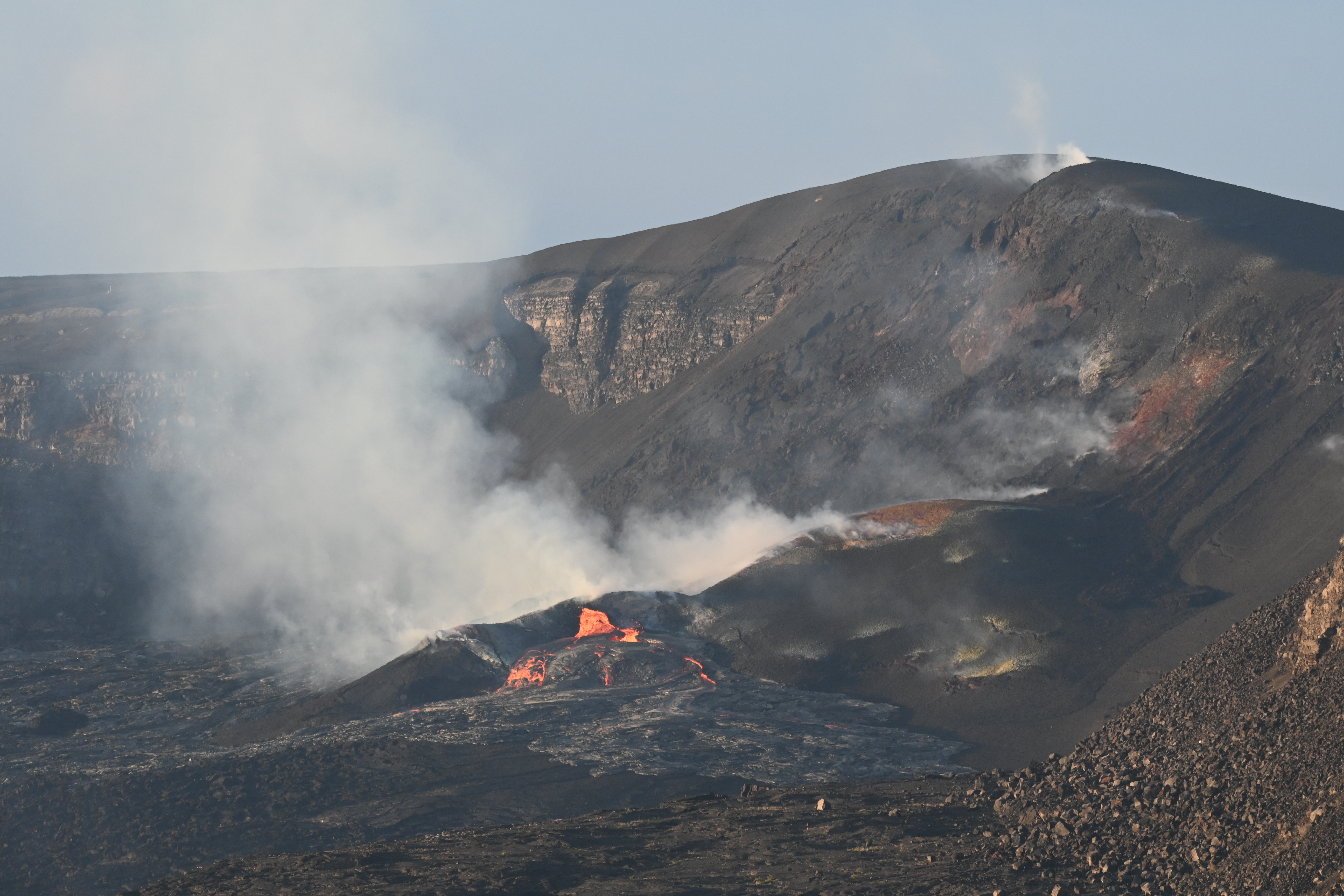
Kilauea, whose peak rises just around 30 miles from my home, resumed erupting in the summit caldera in December 2024. As September begins, there have been 32 eruption “episodes,” including some very dramatic fountaining reaching heights of over 1200 feet. Of the 32, I have observed 14 and captured a very large number of photos and videos. I began to create summary videos, and have settled on producing them in three month intervals.
My great thanks to Scott Buckley, composer of “Snowfall” which I’ve used as the background music for each video, both for writing a great piece and making at available for use with a Creative Commons license.
December 2024 – March 2025
This video includes material filmed from seven visits to the caldera during eruption events.
April 2025 – May 2025
This video includes material filmed from four visits to the caldera during eruption events. It probably includes footage of the highest fountains I have observed to date.
June 2025 – August 2025
This video includes material filmed from two visits to the caldera during eruption events.
People, in general, don’t do well if they eat a lot of food quickly. It’s a good way to feel sick. Sometimes, somebody who eats a lot of food really quickly will get sick.
Ick.
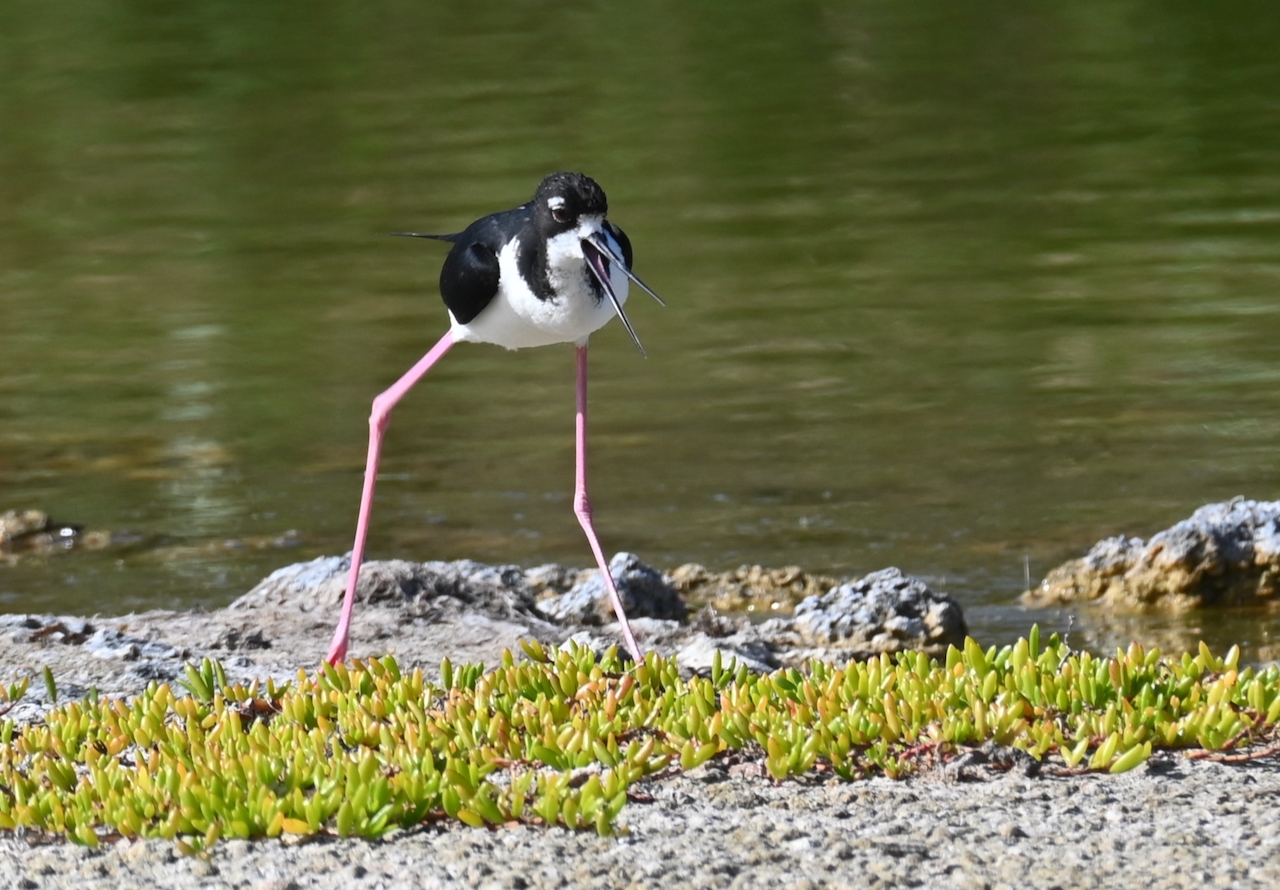
The young ‘akekeke had learned something similar from his parents as they led him and his sister and brothers around the Alaskan tundra near where they’d hatched. There they found the bugs and worms that filled their bellies and kept them growing. Both mother and father, however, warned them against eating too much, and after one of his brothers ignored their advice and got a nasty stomachache the rest of the chicks decided their parents knew something after all.
As the summer wore on, it became time for the trip to Hawai’i. The four chicks became fledglings, learned to fly, and watched as more and more of the ‘akekeke began flying toward the coast. Their mother joined in with lots of the other mothers, leaving them with their father to finish flight school with him.
Even more birds departed before their father gathered them along with some other youngsters into a little flock and said, “It’s time to get ready.” They flew to the shoreline where they found a number of other groups of ‘akekeke probing through the shallows for small fish and shrimp.
“It will be time soon,” said their father, “to make the long flight to Hawai’i. You’ll need all the energy you can get for this. So eat. Eat all you can. Eat more than you think you can.”
“But wait,” said his son. “You’ve been telling us for weeks not to eat too much. In fact, when our brother tried it anyway, he got sick. Are you telling us that was wrong?”
“It was wrong then,” said father, “but now we’re doing something very different. We’re making a long flight and there’s nowhere to stop and eat until we get there. This is the time to plan. This is the time to prepare. This is the time to get ready.”
The young ‘akekeke wasn’t convinced. He wasn’t convinced that eating a lot was a good idea, even though his sister and two brothers had plunged right into an outcrop of mussels. He also wasn’t sure that taking such a long flight was a good idea, even if so many of the adults had already gone. His father looked at him with sympathy and with love.
“There’s some time, youngster,” he said. “Take time. Consider. I don’t think you’ll enjoy staying here for the winter – it gets cold, you see. But think it over. I hope you’ll join us.”
The young ‘akekeke thought about it. He thought about being cold, which he couldn’t really imagine. He thought about eating more than he ever thought possible, which he couldn’t really imagine, either, but he could see that his father, sister, and brothers didn’t seem to have any troubles as they ate their way along the shoreline. He thought about Hawai’i, which he also had trouble imagining, since he’d never been there before. Mostly he thought about being the only ‘akekeke in Alaska when everybody else had gone.
A little while later he was industriously feeding himself alongside his father.
“I’ve thought it over,” he said, “and I’ll stick with you.”
by Eric Anderson
Watch the Recorded Story
I write these stories ahead of time, but I tell them without notes, so the text I prepared does not match the way I told it in worship.
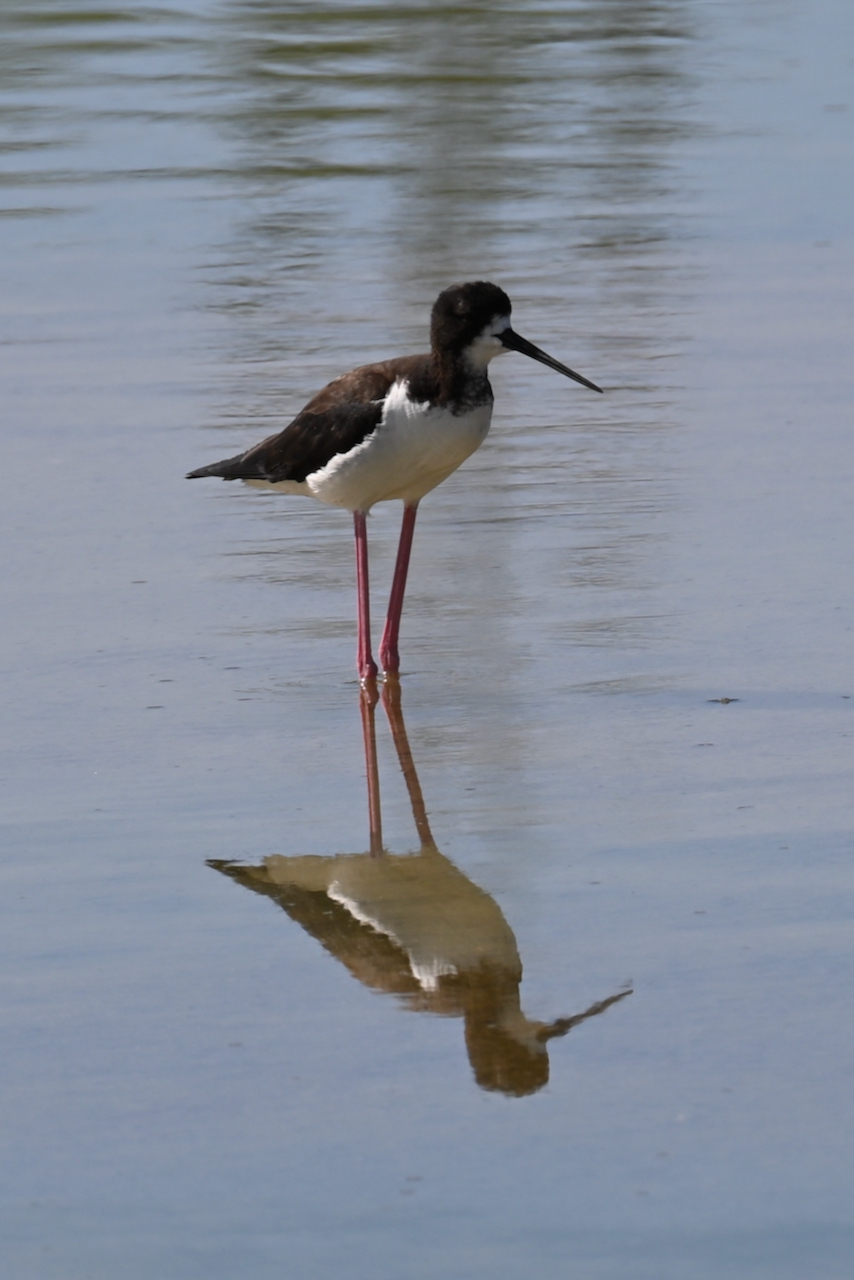
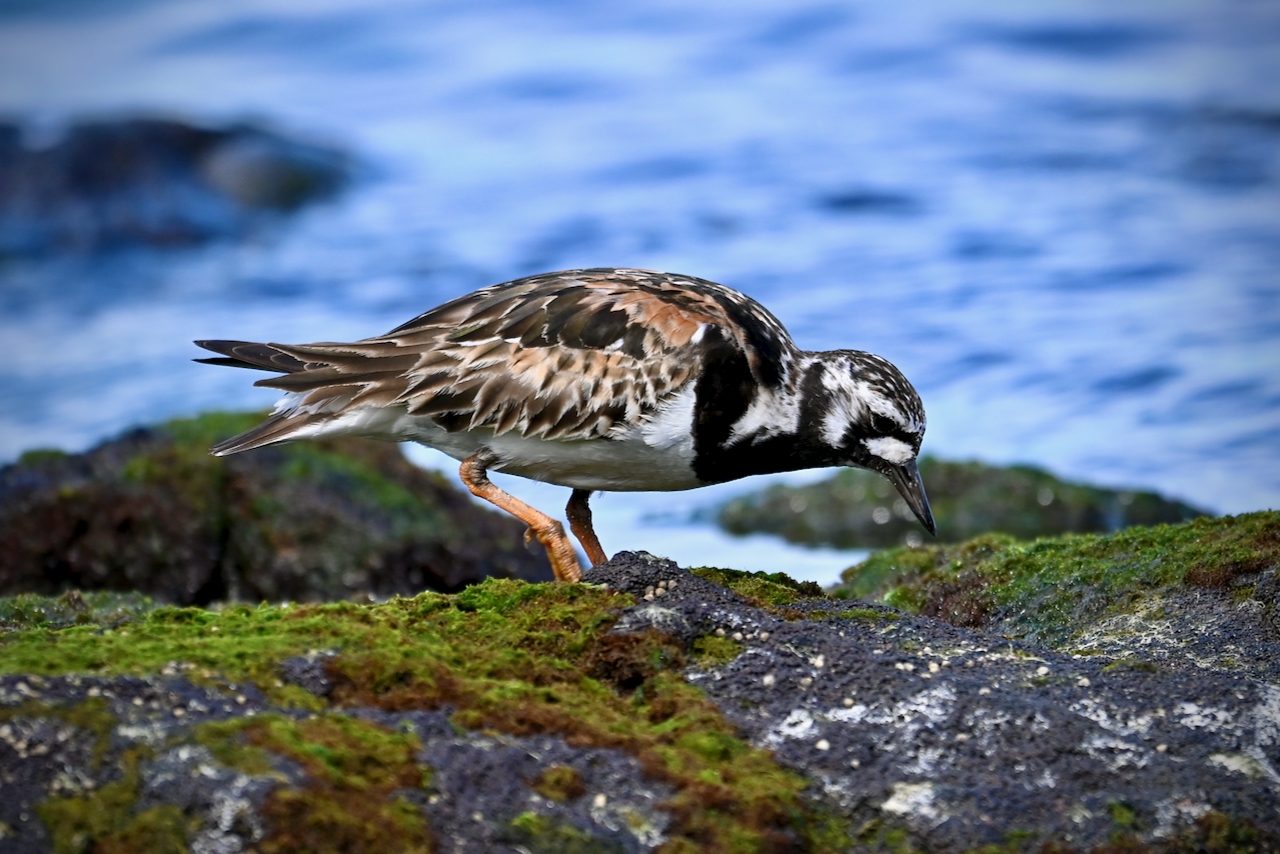
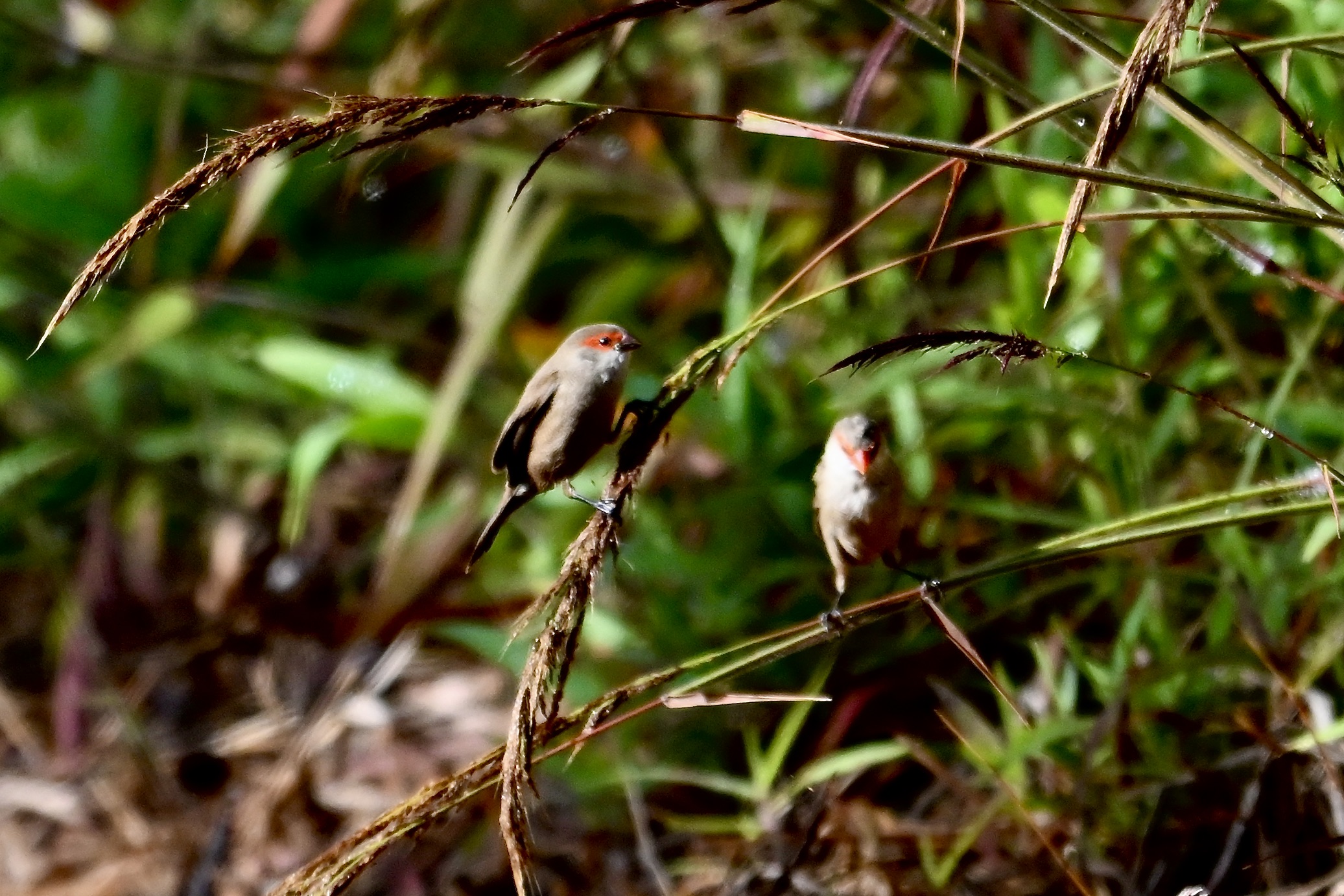
Photo of an ‘akekeke (ruddy turnstone) on Hawai’i Island by Eric Anderson.
“[Jesus said,] ‘For which of you, intending to build a tower, does not first sit down and estimate the cost, to see whether he has enough to complete it? Otherwise, when he has laid a foundation and is not able to finish, all who see it will begin to ridicule him, saying, “This fellow began to build and was not able to finish.”‘” – Luke 14:28-30
What are we, Jesus, except people (men, women, beyond the binary) who have begun to build and have not finished?
The Church may be your body, Jesus (an image which you did not create), but if it is, it’s a growing body. Growing, perhaps, and barely born.
It’s a tower rising slowly. Is there a course of stones or even less above the ring of the foundation?
How many Christ disciples over the millennia have hesitated, dropped their stones before they’ve placed them on the wall?
It is no wonder that so many ask derisively, “Do you still hope to finish this construction, grow this Church?
“The walls are fragile, trembling in a gentle breeze. They waver from their courses so that any stone which rests upon them will inevitably fall.”
Well, Jesus, here’s my stone. I’m not sure it’s well shaped. I’m not sure it’s well placed. But here it is. Long may it stand.
A poem/prayer based on Luke 14:25-33, the Revised Common Lectionary Gospel Reading for Year C, Proper 18 (23).
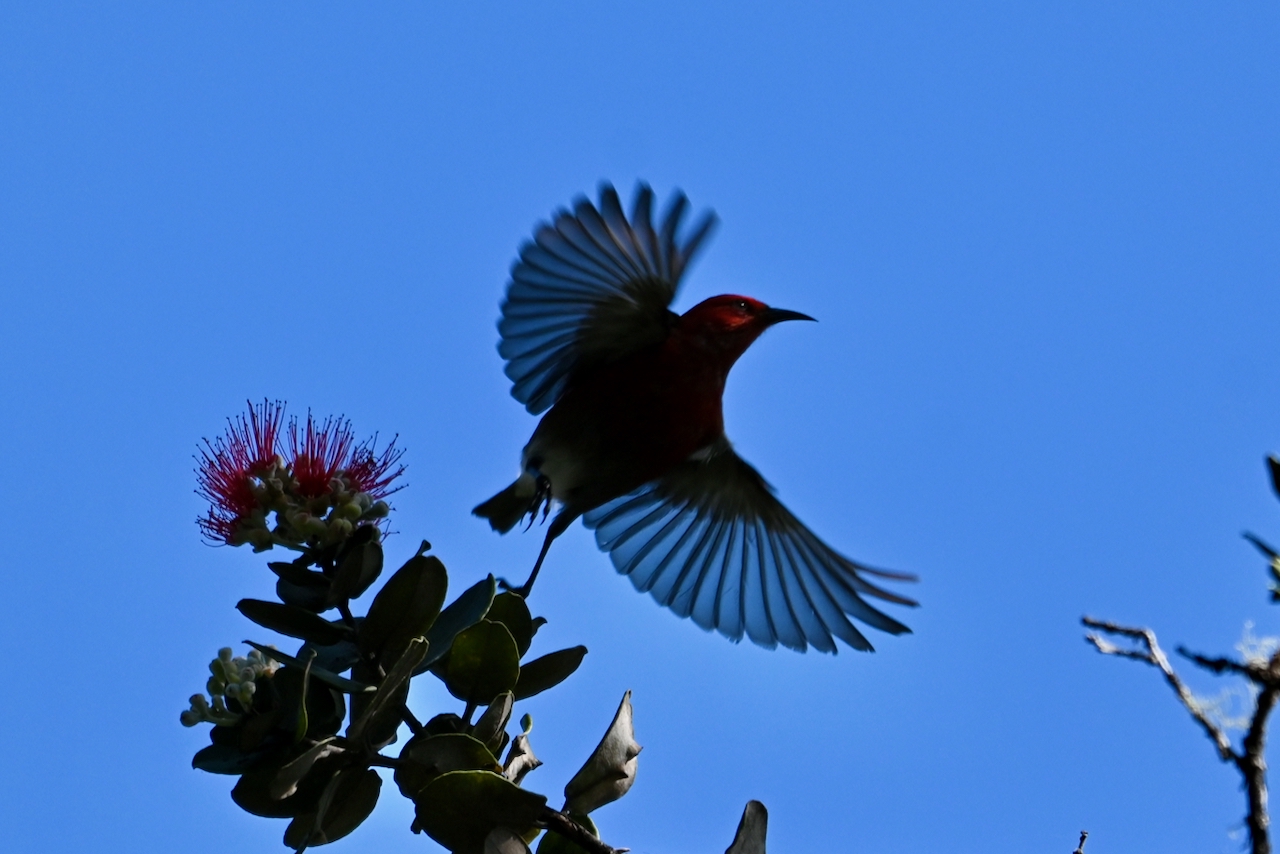
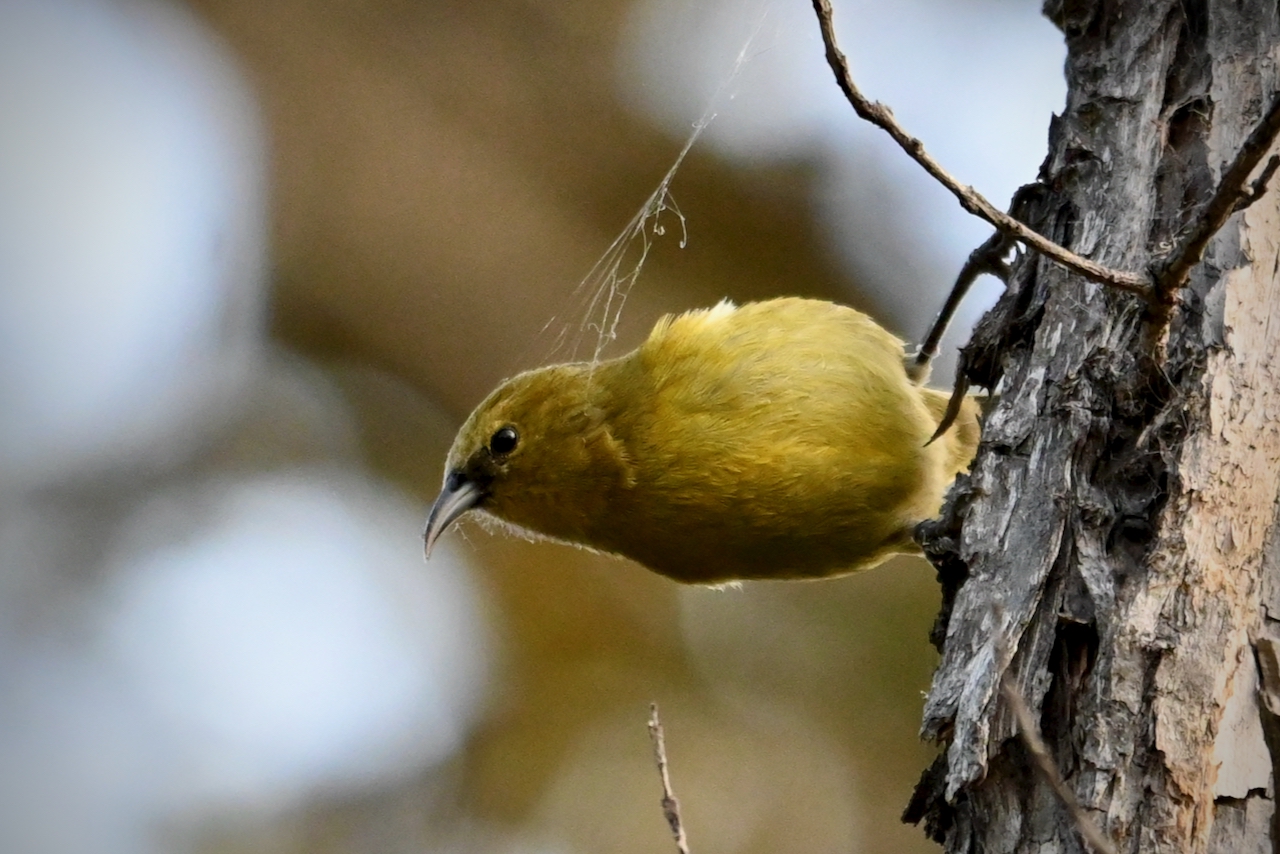
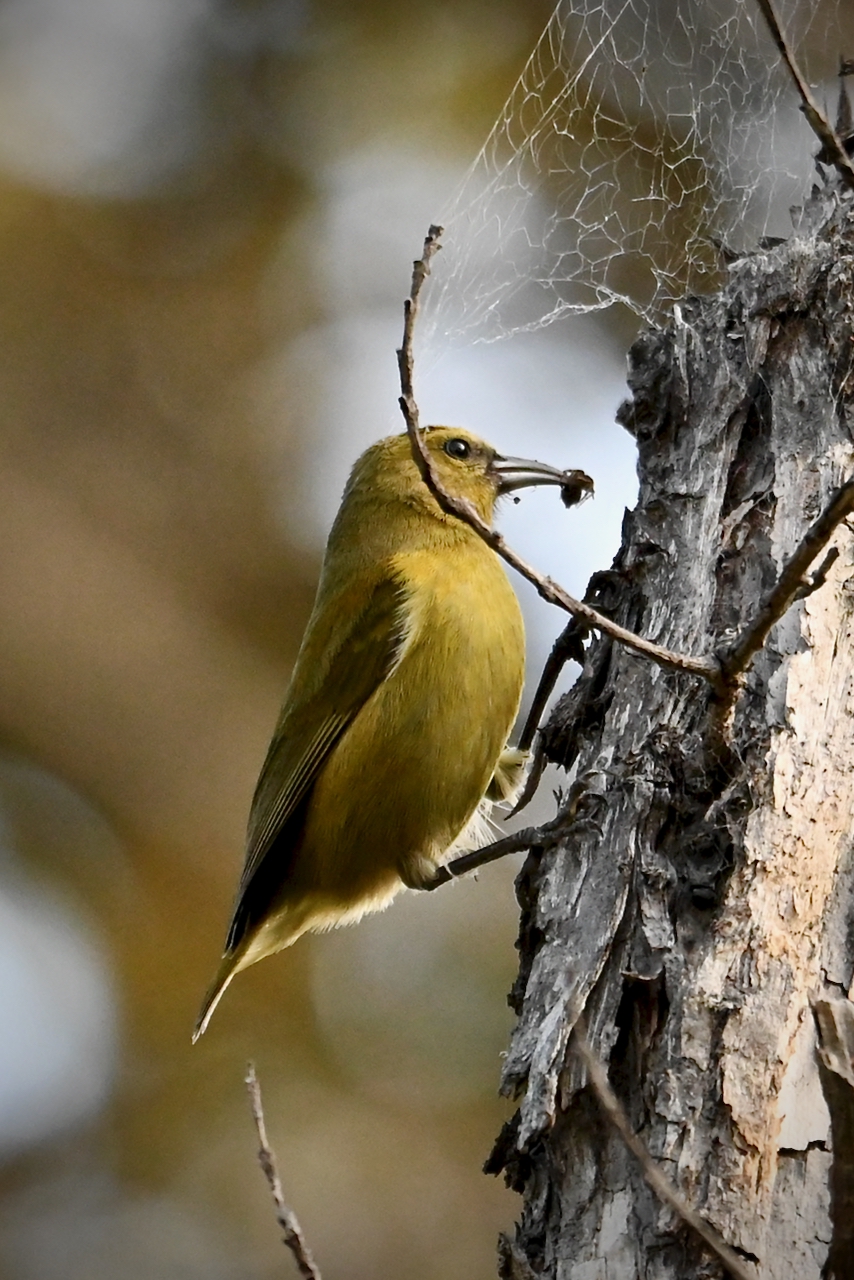
Up on the mountain slopes, there are a lot of very colorful birds. The i’iwi and the ‘apapane are the brightest in color, with those glistening red feathers and the contrasting black of their wings. They’re not alone, though. The ‘amakihi makes a pretty brave sight in yellow, and the ‘akiapola’au is brighter still. Add in the colors of the flowers on the trees and on the bushes, and the forest is a pretty colorful place.
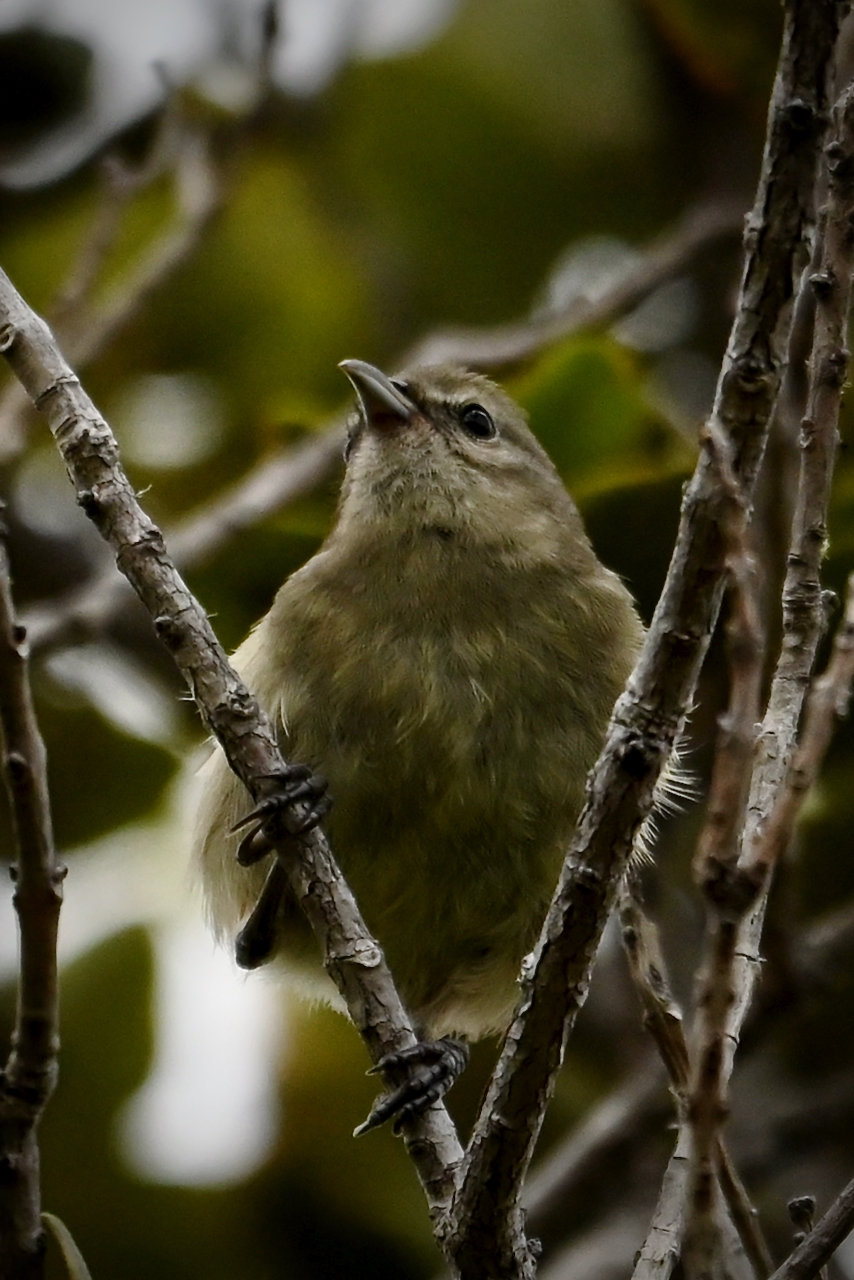
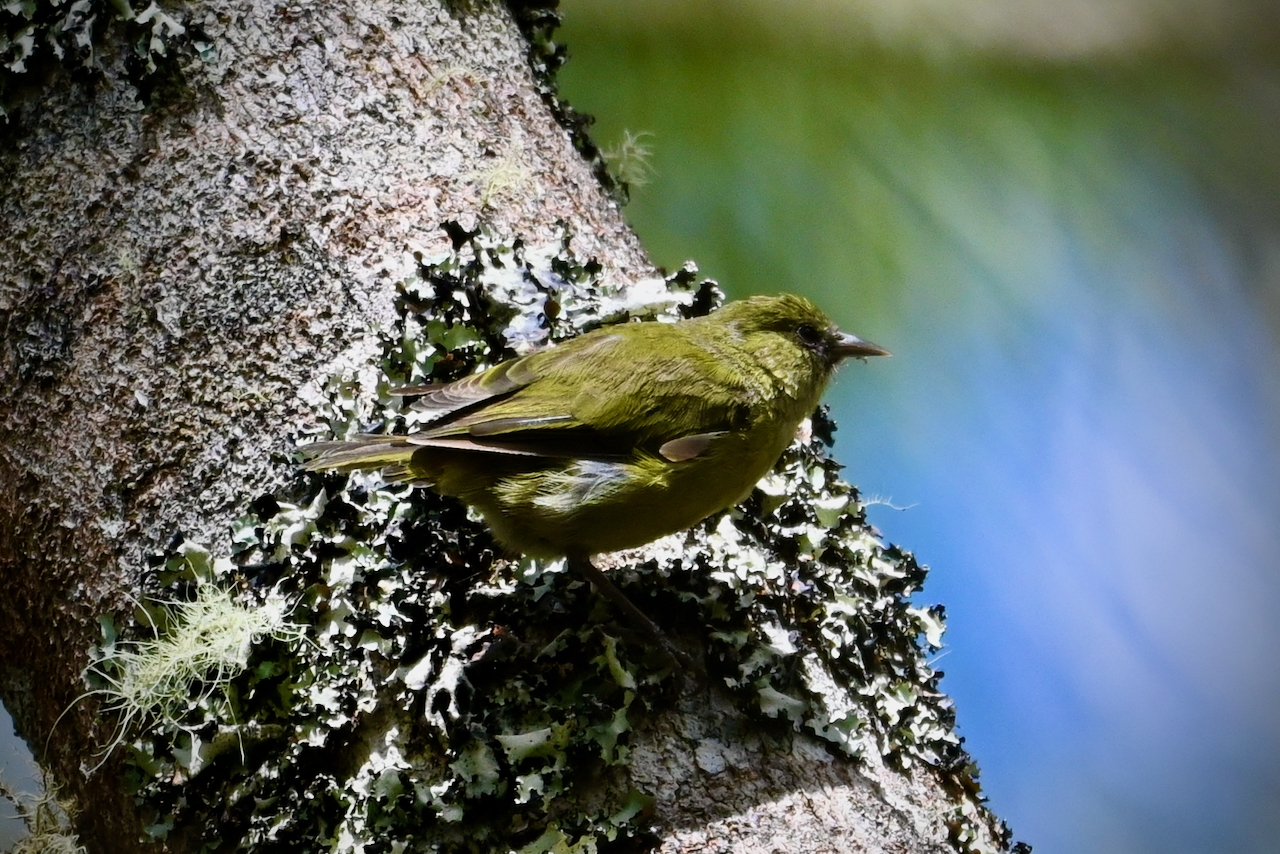
And then there’s the ‘alawi. The ‘alawi isn’t brightly colored. It’s grayish green with some yellow tint on the belly. It’s not even a strong singer. It has a pretty plain kind of call. It’s so understated, in fact, that people went many years before making the connection between the old Hawaiian word “’alawi” and a bird westerners called the “Hawai’i Creeper.”
Mostly, this hasn’t bothered the ‘alawi at all, since they don’t pay much attention to what people think of them. But one of them did start to feel bad. In the midst of a forest full of bright red ‘apapane, orange ‘akepa, and yellow ‘akiapola’au, who would notice a little green ‘alawi?
“It’s a pity I’m so drab,” he told himself one day. “I’m going to change that.”
I have to admit that his approach had some promise. He was going to start wearing jewelry – that is, he was going to tuck a flower behind his ear, as we see so often from human women in Hawai’i. He was so clever that he came up with the idea himself – he really didn’t pay much attention to people.
There was, however, a problem. Oh, he could grasp flowers with his feet quite well. But when you want to tuck a flower behind your ear, it really helps to have, well, ears.
An ‘apapane watched him do this and asked, “Why? I mean, why?”
“I want to be noticeable,” he said with some embarrassment. “I don’t want to be drab.”
“I’m noticing,” said the ‘apapane, “and I guess you aren’t drab. But you do look silly. Is that how you want to be noticed?”
This might have gone on for a while, but it turned out to be another of those dry times in the forest, and it got harder and harder to find things to eat. For the ‘alawi that’s mostly bugs. Everyone in the forest was feeling the pinch in their bellies.
Our friend the ‘alawi, however, got lucky one day. He found a stand of trees that were better watered, and the flowers on them had attracted a good crowd of insects. He flew over to feed, but stopped. He didn’t want anyone else to be hungry while he ate his fill. So he started to call the ‘alawi’s plan song. That didn’t seem to attract anyone, so he found an ‘akiapola’au and brought him to those trees. The ‘akiapola’au whistled, and some other birds and some other birds and some other birds made their way over, sang their songs, and settled in to eat.
Hopping along a tree branch, the ‘alawi met the ‘apapane he’d seen a few days before.
“You found a way to be noticed, youngster,” said the ‘apapane.
“I did?” said the ‘alawi.
“You did,” said the ‘apapane. “We’ve all noticed you, and not for wearing a flower. We’ve all noticed you for being the considerate and compassionate bird you are. Well done. And thank you.”
by Eric Anderson
Watch the Recorded Story
I write these stories in advance, but I tell them without notes, so between memory and improvisation the story as I told it is different from the story as I wrote it.
“[Jesus said,] ‘But when you are invited, go and sit down at the lowest place, so that when your host comes, he may say to you, “Friend, move up higher”; then you will be honored in the presence of all who sit at the table with you.'” – Luke 14:10
Is it fair to tell you I’m waiting, Jesus? Yes, waiting for you to return in power. Yes, waiting for resurrection’s dawn. Yes, waiting for the Day of the Lord.
But I’m also waiting for your advice to work.
For truly, and sadly, I’m just as proud as ever I was. When others are honored, a part of me waits to hear my name called though I know that it’s not about me.
But Jesus, you know, it’s still about me.
I’ve no cause to complain. I’m aware that the praise I’ve received is more than I’m due. I know it, and know I should head for the end of the room, and take my place there,
But Jesus, you know I don’t like to be there.
I like the limelight, the spotlight, the office. I like the small pond where my frog looks big. I like it, and sure I’ve received it quite often. I’ve heeded the summons of, “Friend, move up higher.”
But Jesus, I don’t always think I should be.
I can’t say I’ve bidden the poor to my table. I can’t say I’ve done all the work I could do. I can’t say I’ve lifted the spirits beside me. I can’t say I’ve always been guided by you.
So Jesus, I’ll wait, and I’ll pray that you call.
A poem/prayer based on Luke 14:1, 7-14, the Revised Common Lectionary Gospel Reading for Year C, Proper 17 (22).
Up on the slopes of Mauna Loa, where the forest birds gather into little flocks during the summer, there was one little flock that had decided to get itself better organized. They figured out who was the best in the flock at finding food, and other birds that were good at spotting bad weather. They found places to shelter when it was hot in the middle of the day and places to start foraging when it was cool in the morning. Each bird got a buddy to make sure nobody got lost. Each bird got a buddy to make sure that when they were feeding, everybody found out about it. Each bird got a buddy to make sure that everybody got fed and sheltered and safe.
The birds agreed that it was a pretty good system.
“One more thing,” said one of the birds who had been a big part of the organizing. “No i’iwi.”
“What do you mean?” said an ‘amakihi. “They don’t like to fly in flocks anyway.”
“What I mean is,” said the first bird, “that if we see any i’iwi, we chase them away.”
That didn’t sound good to most of the other birds, who were far more accustomed to flying away from a chasing i’iwi than chasing one.
“I don’t think that’s going to work,” said an ‘akepa. The other birds chorused their agreement.
“Well, all right,” said the first bird, an ‘apapane. “but we won’t encourage them, either. Make sure when you call that there’s no i’iwi listening. We’ve organized to feed ourselves, not them.”
And so it was. There was one ‘apapane in the flock, though, who thought that sounded a little unfair. Sure, she’d been chased by i’iwi more than once and hadn’t enjoyed it, but she didn’t see any reason for even a grumpy bird to go hungry.
It turned out to be a tough season in their area of Mauna Loa. It was dry, and the trees weren’t blossoming much. There were a few spots around where a small grove would bloom all once, but they were hard to find. The finder birds were a real blessing. Without them the flock would have been much hungrier.
One day the scout birds had to work really hard. They looked this way and that without finding much. Finally one pair spotted a little group of trees with blossoms, and they called the flock. The other birds followed gratefully.
That’s when one of them spotted an i’iwi. “Remember!” he shouted out. “Don’t tell the i’iwi where we’re going!” Most of the flock, in fact, detoured so that the i’iwi wouldn’t notice them.
But not the one ‘apapane. She couldn’t bear the thought of another bird going hungry, even a grumpy i’iwi. She took a turn over the tree where the i’iwi was and called out a quick, “Follow me!” As she flew along the i’iwi followed, and when they arrived at the little stand of blossoming trees, the i’iwi settled into a tree as far away from the others as it could.
“Why did you do that?” asked her buddy bird. “You broke the rule. You brought an i’iwi!”
“Of course I did,” she said. “Have you been hungry? Did you enjoy it?”
“Yes, of course,” he said, “and no I didn’t.”
“So was he,” she told him, “and I’m sure he didn’t like it either.”
“But he’s an i’iwi!” he told her. “He’s a bully and a jerk.”
“And he’s hungry,” she said. “Everybody should get help when they’re hungry.”
From the adjacent tree, the i’iwi let out an unpleasant chirp, but that’s because i’iwi aren’t great singers. The two ‘apapane, however, knew that he’d said, “Thank you.” Nobody likes to be hungry, and everybody should get help when they are.
by Eric Anderson
Watch the Recorded Story
I write these stories in advance, but I tell them without notes. Between the vagaries of memory and the impulse to improvise (not to mention the contributions of the congregation), what I’ve written and the way I told it are not the same.
“But the Lord answered him and said, ‘You hypocrites! Does not each of you on the sabbath untie his ox or his donkey from the manger, and lead it away to give it water? And ought not this woman, a daughter of Abraham whom Satan bound for eighteen long years, be set free from this bondage on the Sabbath day?'” – Luke 13:15-16
It’s awkward, Jesus. You had a way to know the ways in which the people who surrounded you were bound. Now, I do not perceive as truly or reliably as you. I can, and do, assume too much.
I have to ask, “Are you restricted? Are you tethered in some way? What holds you back, or ties you down, or bars your path?” Because it might be what I see, or what I don’t.
My prayer, then, Jesus, on this day is that you liberate me from my expectations, so that when I put my shoulder to the door, I push upon the door I should, and not one I should not.
A poem/prayer based on Luke 13:10-17, the Revised Common Lectionary Gospel Reading for Year C, Proper 16 (21).
During the summer, plenty of the forest birds form small flocks which may include ‘apapane, ‘amakihi, ‘akepa, and so on. Plenty of those birds may fly about and forage by themselves as well, but one little flock on the slopes of Mauna Loa was having a bad day. They just weren’t finding much in the way of food.
“I’m hungry,” complained an ‘amakihi.
“We all are,” replied an ‘apapane, and the other birds agreed.
“What are we going to do about it?” asked the first ‘amakihi.
“Does anyone have any good ideas?” asked another ‘apapane, looking around at the other birds. From the shaking heads, nobody did.
That’s when the heard they heard the squeaky sound of an i’iwi. They watched as he rose from a nearby tree – one which didn’t have much in the way of flowers on it, circled once or twice, and flew off.
“What was that about?” asked an ‘apapane.
“I don’t know,” said an ‘akepa.
“How about we follow him?” said the first ‘amakihi, the one who was hungry.
Nobody could think of a good reason not to, so the little flock took to the air and flew in the same direction the i’iwi had taken. For a little while they just flew over flowerless trees, but then a few ohi’a blossoms appeared. Things were looking up. Eventually the i’iwi settled in a tree just dripping with flowers, surrounded by plenty of other blossoming trees as well.
The i’iwi squawked a little unpleasantly at them – they’re not great singers, the i’iwi – but didn’t come out to chase them away as they settled into surrounding trees and began checking the flowers for nectar and the branches for bugs. There wasn’t much sound for a while other than some satisfied songs and wing flutters as they shifted from branch to branch.
“How did you know?” said an ‘apapane to the ‘amakihi.
“How did I know what?” said the ‘amakihi.
“How did you know that the i’iwi would lead us to flowers?”
The ‘amakihi shrugged. “I didn’t know,” he said, “but as sad as it is that the i’iwi isn’t a great singer, and as nasty as they can get when they’re upset about something, they’re really good at finding trees in blossom. I’d trust them to find food any day of the week.”
“You’d trust an i’iwi?” said the ‘apapane in wonder.
“I trust an i’iwi to do what an i’iwi does,” said the ‘amakihi. “And look. This one did.”
The i’iwi, who had overheard all this, let out a contented squawk, hopped to another flower, and settled in to sip the sweet nectar.
by Eric Anderson
Watch the Recorded Story
I write these stories in advance, but I tell them from a combination of memory and improvisation, so what I wrote and how I told it do not match.
“By faith Rahab the prostitute did not perish with those who were disobedient, because she had received the spies in peace. And what more should I say? For time would fail me to tell of Gideon, Barak, Samson, Jephthah, of David and Samuel and the prophets…” – Hebrews 11:31-32
Rahab and Samson, heroic opposites. She was the foreigner betraying her nation, saved by her pledge to the ruthless invader. Her neighbors all died, but she and her family did not.
Samson the Strong, a leader and judge, praised for his strength but not for his folly. Like Rahab, he trusted an enemy, losing his strength. But when it returned, he died with his foes.
Grim heroes. Grim stories of warfare, betrayal, coercion, and death. No wonder that neither received “the promise” in full. How could they, when the promise of Jesus is life?
A poem/prayer based on Hebrews 11:29:12:2, the Revised Common Lectionary Second Reading for Year C, Proper 15 (20).
The image is of two mosaics in Santa Maria Maggiore, Rome (ca. 430). Above: Joshua meets the commander of the Lord’s army. Below: Israel’s scouts flee from Jericho, aided by Rahab. Photo by Fabrizio Garrisi – Own work, CC0, https://commons.wikimedia.org/w/index.php?curid=157025271.