“Many peoples shall come and say, ‘Come, let us go up to the mountain of the LORD, to the house of the God of Jacob, that he may teach us his ways and that we may walk in his paths.'” – Isaiah 2:3
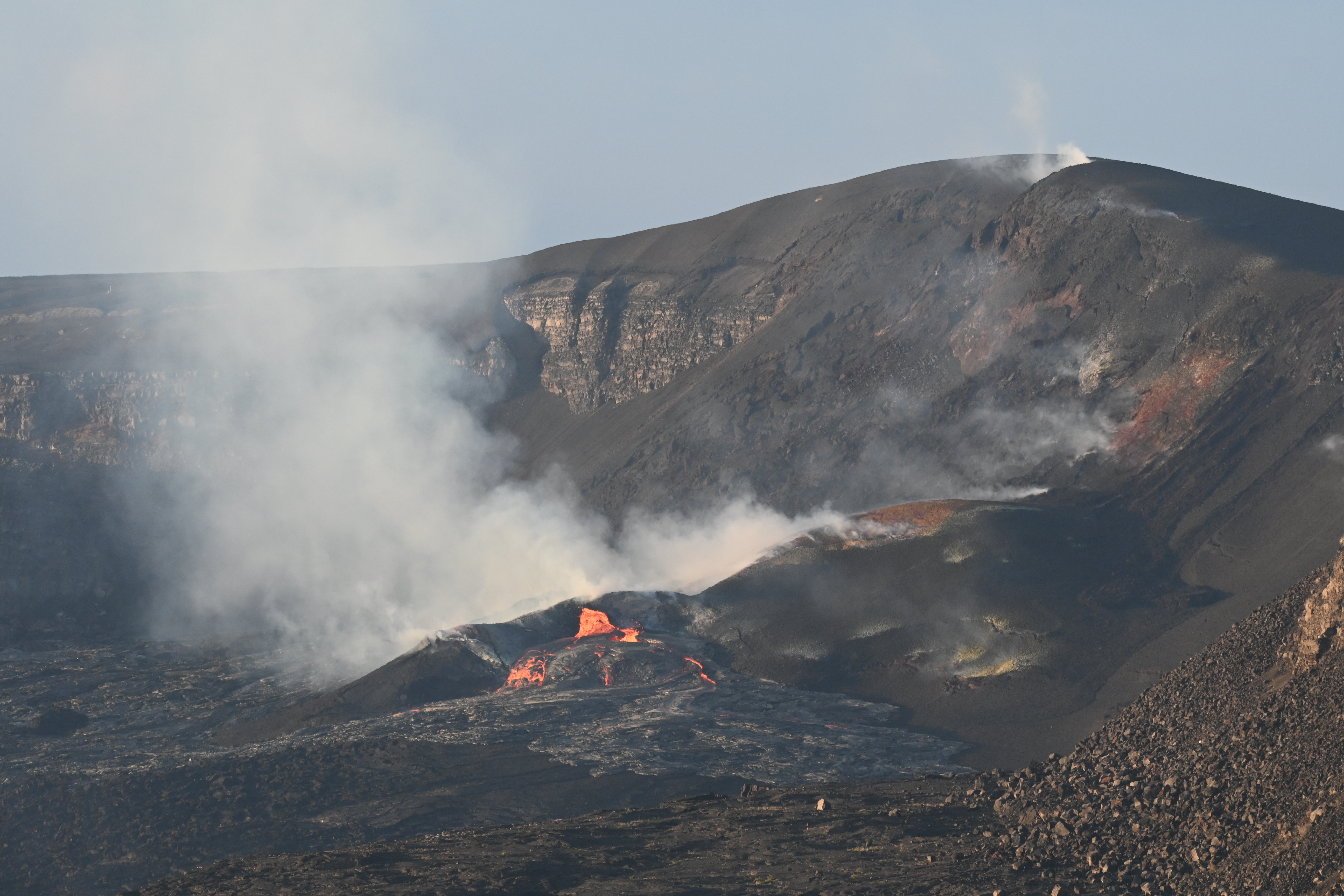
A mountaintop is the House of God, a place of mystery.
A mountaintop lacks human homes, for it is foreign ground.
A mountaintop is a solid thing, we think, until it flows.
A mountaintop can teach us anything we wish to learn.
A mountaintop can teach us truth unless we’d rather hold our lies.
The liquid stone flows down the mountainside passing people flowing up.
The mountain’s fluid flanks sweep our pretense away.
And then the lava hardens into rock like human hearts
Who fail to learn the truth that swords and spears mean nothing
And the truth that plows and pruning hooks mean everything.
A mountaintop can teach us truth unless we’d rather hold our lies.
A poem/prayer based on Isaiah 2:1-5, the Revised Common Lectionary First Reading for Year A, First Sunday of Advent.
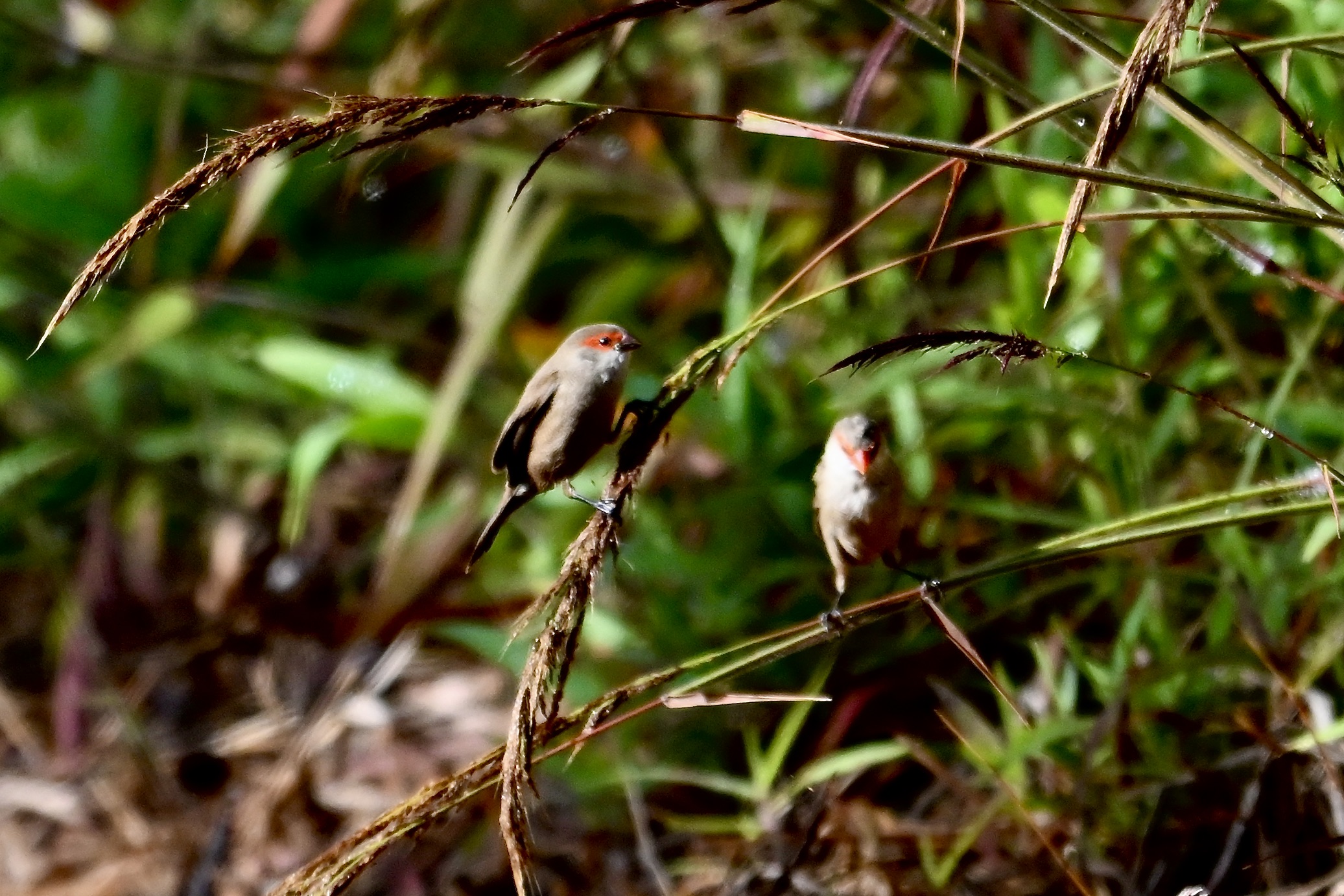
The common waxbills may be the smallest birds in Hawai’i – meaning how big the adults get. Newly hatched chicks even of very large birds can be smaller. But if you see a very small bird with a rosy beak, it’s likely to be a common waxbill.
They like to eat the small seeds of grasses and herbs, and they tend to move about in flocks of anywhere from a pair up to thirty or forty birds. With a flock, of course, comes the problem of decision. If I’m the only one who needs to make a choice, well, I can make the choice. I decide whether to go this way or that way. When there’s somebody else, though, now we have to work out our direction, our left or right, our up or down.
Waxbills have the same problem. When they’ve eaten the seeds in this plot of grass, how do they decide where to go next?
A waxbill decided one day, after a certain amount of chirped argument, that somebody had to take charge. Somebody had to make the decision. Somebody had to rule.
“We’re going this way,” he called, and took off. Most of the other waxbills took off with him, but not all, so he circled back and screeched at them until they, too, joined the rest of the flock and flew with him. Some of them were relieved not to have to argue any more. Others were irritated that they had ideas that nobody listened to. And there were a few that didn’t want to go in this direction at all.
One of the nice things about being a bird that eats grass seed is that, pretty much any direction you go is likely to have grass in it. They flew. They found. They ate. But not everybody in the flock was happy.
The next day, the waxbill in charge decided to take charge again, but this time some of the waxbills wouldn’t go at all. He chirped at them. He screeched at them. He even flew at them as if he was going to hit them with his wings. But they wouldn’t go.
Eventually the flock settled back to the ground again, and one of them said, “I don’t mind following you, but we need to take trouble to agree which way we’re going to go.”
“No, we don’t,” said their self-appointed leader. “I know what I’m doing. I’m in charge.”
“We all have ideas about where to find seeds,” said the waxbill speaking for the others. “Some might be more right. Some might be more wrong. And that includes you. If we all share, we’ve got a better chance that the ones who are more right will be heard, and that we, as a group, will find more seeds.”
“You’re a fine leader,” he went on, “but you’re not the only one with good ideas. We’ll follow – but we’ll also contribute. If you don’t want to listen, well, somebody else will have to lead.”
It took longer that way. It did. But this little flock of little birds did better than they ever had before at finding good clumps of grasses in seed, and they did it with birds who felt better about their leadership and their fellow fliers in the flock than they ever had before.
It can be a challenge to make decisions. It might be that the most important decision you can make is how you make a decision for yourself and with others.
by Eric Anderson
Watch the Recorded Story
I write these stories in full ahead of time, but I tell them from memory (plus improvisation). As a result, what you read and what you hear will be different.
And the people stood by watching, but the leaders scoffed at him, saying, “He saved others; let him save himself if he is the Messiah of God, his chosen one!” – Luke 23:35
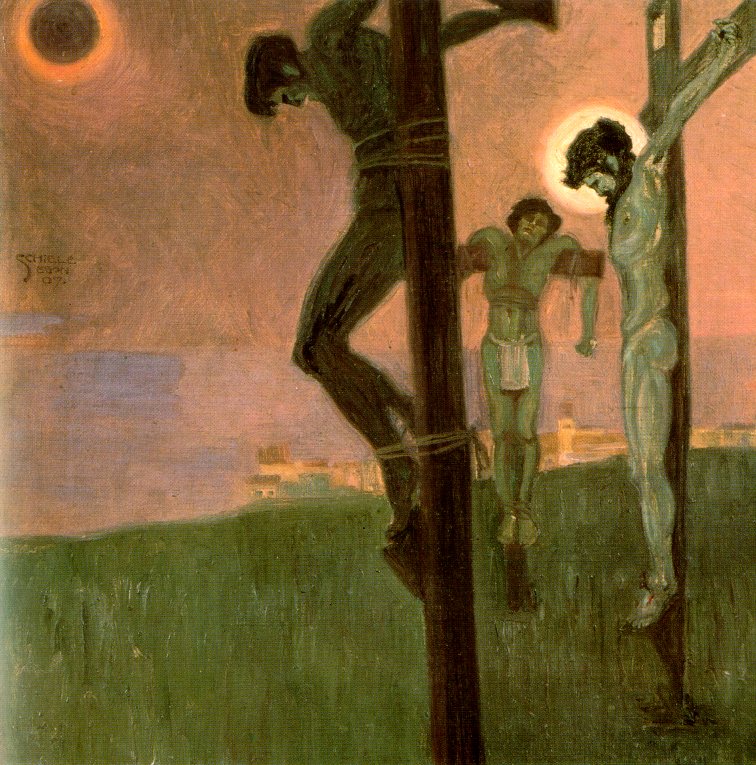
I sometimes ache for your pain, O Savior, tortured there upon the cross, and I, without the mocking, echo those cruel words of long ago, and urge you, “Save yourself!”
But when I do, you hold me close with misted eyes. My lips go silent, as I strain to hear your soft reply: “Instead, I will save you.”
A poem/prayer based on Luke 23:33-43, the Revised Common Lectionary Gospel Reading for Year C, Reign of Christ, Proper 29 (34).
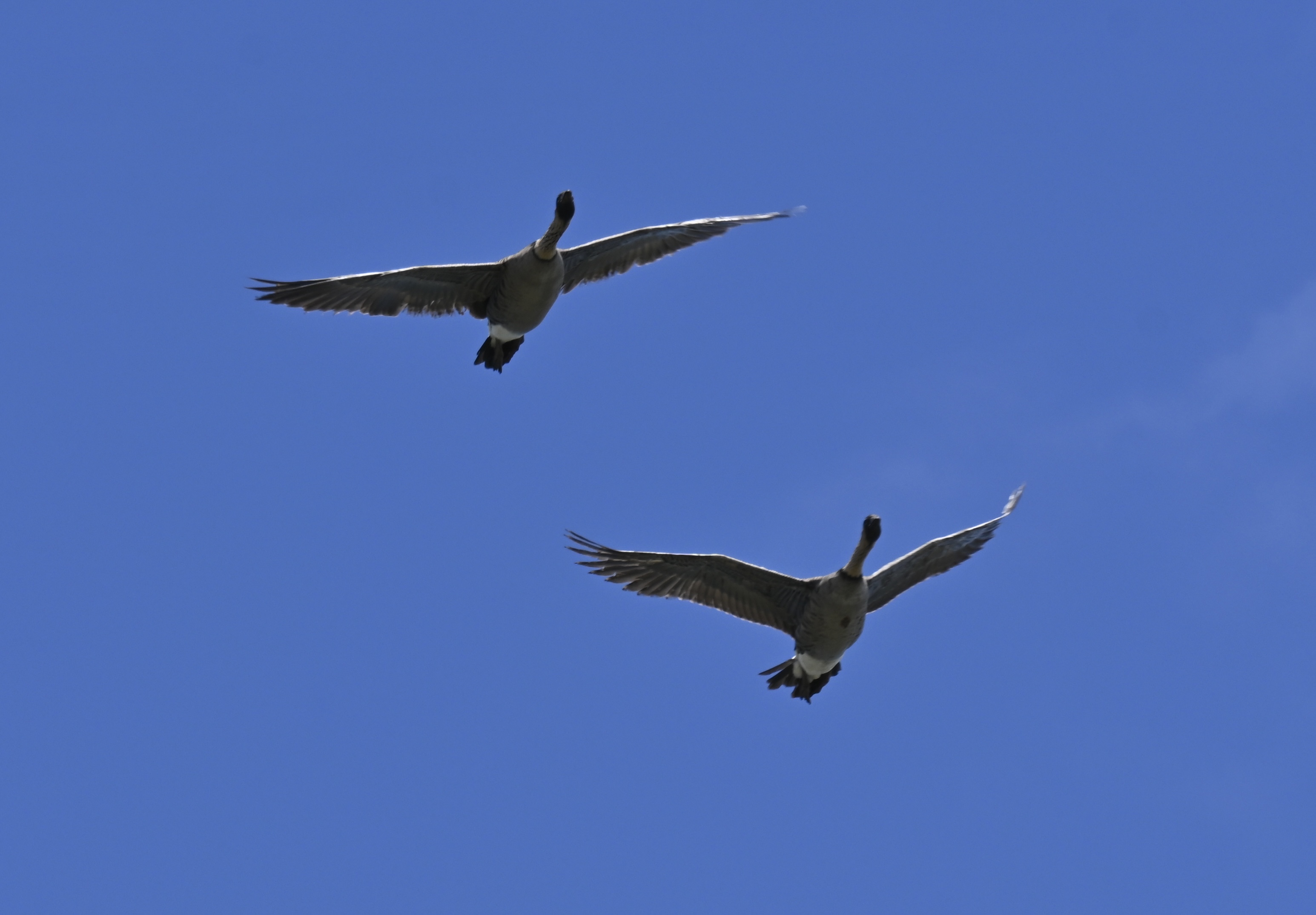
It’s been a while since I’ve talked about nene school, which hasn’t changed what’s gone on there a bit. Goslings have gone to school, they’ve learned about advanced eating and flying, and some of them have wondered about becoming nene teachers themselves.
There was a time when there were just two nene teachers. Both of them were solid at the job. They could coax a timid flyer into dramatic aerobatics. They could coach a fussy eater into finding a much wider diet – sort of a nene version of heavy pupus. They held their students’ attention. They taught their lessons. Best of all, the students learned.
That’s the mark of a good teacher, when the students learn.
One of the students noticed something else, too.
Both teachers taught that it was important for nene to care for the flock. If you see a storm coming, they said, warn your neighbors. If it looks like a mongoose might be close to a nest, drive them away. If you found a good clump of ‘ohelo berries, call your friends over. Take care of the flock. The other members of the flock will take care of you.
That was an important lesson, and they mentioned it every day.
One of the teachers, though, seemed a little confused about its application. When her students were learning about finding food, she was very helpful. “Look for these colors as you’re flying about,” she’d say. And when they found some, she gave them lots of praise. “Well done, my friends!” she’d say to the beaming young nene.
And then she’d eat the food they’d found.
The other teacher did things differently. He was helpful about finding food, too. “These are the colors to watch for,” he’d say. “Make sure to look side to side.” And like his colleague, he had good things to say to his students when they found that tasty clump of ‘ohelo. “That’s exactly right,” he’d tell them. “Well spotted.”
But then he said, pretty much every time, “Call the other students in. Is anybody hungry?”
As I said, one of the students notice this, and one day he asked his parents about it. “My teachers help me a lot,” he told them, “but when we find food, one of them eats it. I suppose that’s OK; she is the teacher, after all. But the other one invites us to share. Which one am I supposed to learn?”
His parents looked at one another, and then they looked back at him. “Which one makes you feel better?” they asked. “Which one makes you feel like you’re an important part of the flock? Which one seems to be strengthening the flock as a whole?”
“Well, that’s easy,” said their son. “It’s the one who invites us to eat.”
“So which example will you follow?”
He thought about it.
“I spotted some ‘ohelo a few minutes ago,” he told them. “Are either of you hungry?”
by Eric Anderson
Watch the Recorded Story
I write these stories in full ahead of time, but I tell them on Sunday morning from memory and inspiration. The recording does not match the prepared text.
“This was not because we do not have that right but in order to give you an example to imitate.” – 2 Thessalonians 3:9
We have the right to claim whatever we want. We say. We have the right to say offensive things and sneer at those who hear. We have the right to say to one, “Go here,” and to another, “Go there,” and they will go. We enforce. We have the right.
Are we any more than irresponsible, mere busybodies, tearing down the building of a blessed community?
Is it not true that we who say, “The one who does not work, we’ll let that one not eat,” do little for our neighbors?
Is it not true that we who say, “The one who does not work, we’ll let that one not eat,” will underpay their workers?
Is it not true that Paul’s example, sparing those he served from burdens, that the greatest burden, ignorance of love, might lift from them, is our greatest call to work?
Is it not true that we are Paul’s “mere busybodies, not doing any work,” not building up community. How can we claim our right to eat?
A poem/prayer based on 2 Thessalonians 3:6-13, the Revised Common Lectionary Second Reading for Year C, Proper 28 (33).
Life isn’t always easy in the mountain forests. Sometimes it gets really wet and uncomfortable, and while feathers are pretty good at keeping you warm and dry, they’re not perfect. Sit in the rain long enough, and an i’iwi will feel pretty cold and wet.
Worse, though, is when it gets dry, because the trees and the plants rely on water. When there’s been no rain for a good while, they have to save their energy. It’s like when you’ve been running around a lot and need to rest for a while. The way a tree rests, or another kind of plant rests, is to hold off on making flowers or fruit. When there’s more water, then it’s time to bloom.
The birds can mostly cope with that. The ‘elepaio eats bugs, and lots of the bugs eat things other than nectar. The ‘apapane and the ‘amakihi eat lots of nectar, but they can make a good meal from worms and spiders. They miss the nectar, but they can feed themselves.
The i’iwi has a rougher time. They will eat bugs, but they’re built to eat nectar, not bugs, and when the flowers aren’t blooming, they get hungry.
It was dry on the mountain. And the i’iwi were hungry.
As I’ve mentioned, while some i’iwi don’t get along with other birds, some i’iwi get along just fine. So there was a little flock of ‘apapane and ‘amakihi and ‘akepa that were worried about their i’iwi friend, who wasn’t saying much, but she was clearly getting hungrier and hungrier.
“What can we do?” an ‘amakihi asked an ‘apapane, who replied with a bird shrug, because he didn’t know, either.
“What can we do?” an ‘elepaio asked his friend the i’iwi, which was the same question but had the advantage of being asked of the right bird. Unfortunately, she didn’t know either.
“You’ve showed me where you’re finding some bugs to eat, and that’s helped some,” she said, “but I’m afraid I’m not as good at catching them as you. I don’t think you can get me more food any better than that.”
“I still want to help,” said the ‘elepaio, and all the other birds did the same.
“You know how you can help?” said the i’iwi. “Stay right where you ware. Stay close to me. Show me you care.”
“How will that help?” asked the ‘apapane, who had a very practical mind. “You can’t eat that.”
“Perhaps not,” she said, “but when you’ve done all you can to help me eat, I’m glad to have your company. It may not feed my stomach, but it feeds my heart.”
So they perched there together in the same tree. Sometimes one or the other birds would sing, and once the ‘amakihi caught a spider and gave it to the i’iwi, who ate it with a hearty “Mahalo.”
Mostly, though, they sat in friendship, friendship that fed the heart even better than flowers.
by Eric Anderson
Watch the Recorded Story
I write these stories in full ahead of time, but I tell them in worship from memory (and improvisation). The story when you watch it will not match the story when you read it.
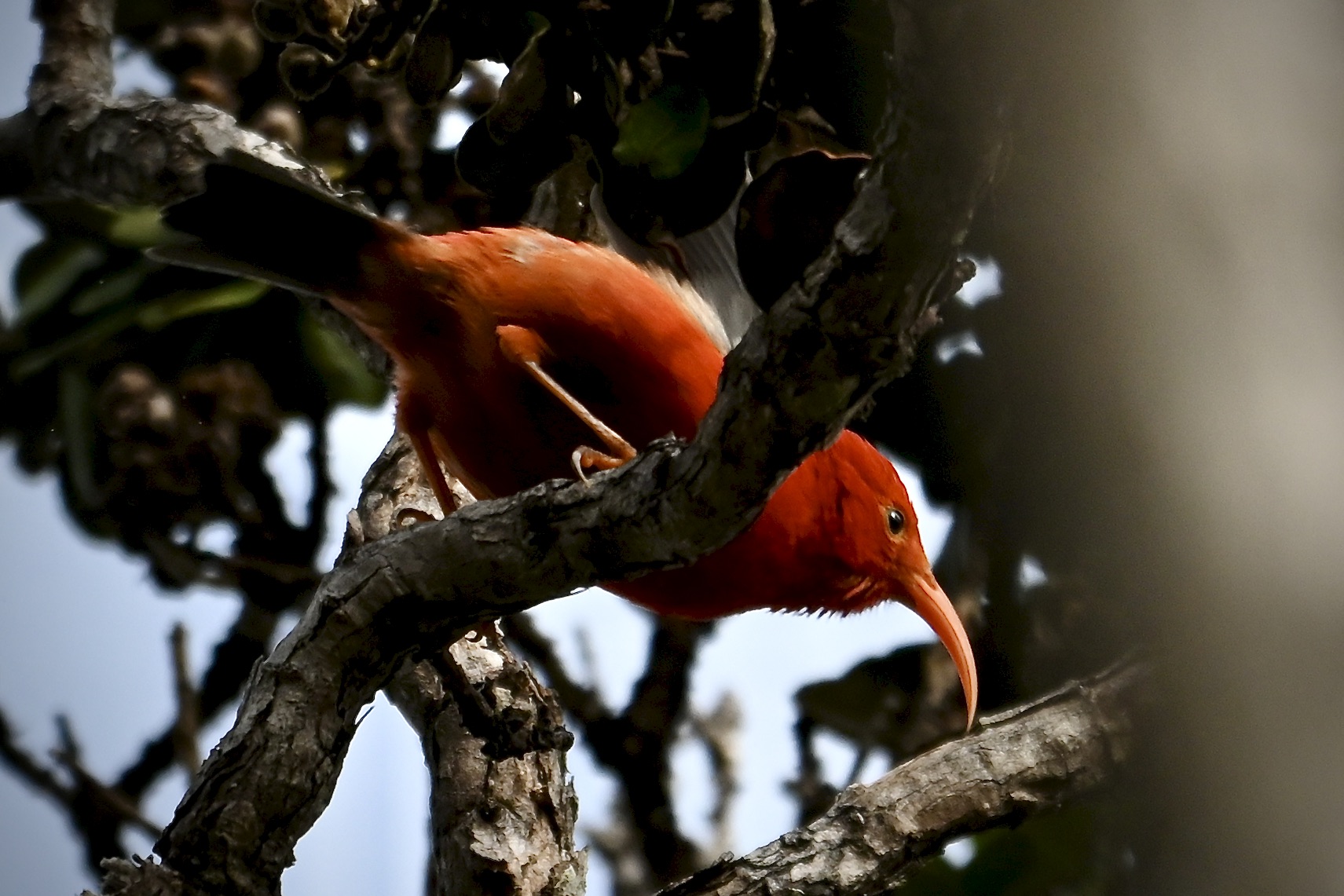
Photo of an i’iwi (who hopefully isn’t hungry) by Eric Anderson.
“He opposes and exalts himself above every so-called god or object of worship, so that he takes his seat in the temple of God, declaring himself to be God. Do you not remember that I told you these things when I was still with you?” – 2 Thessalonians 2:4-5
I remember lots of things. I remember grandiosity and pride. I recall my own, of course, and sometimes mourn its passing, though more often I regret its resurrection.
I remember lots of things, including those who, yes, exalt themselves. They openly accept the praise that’s due to God, declaring that they stand for God.
What law except their own will they obey? What limits place upon their power and their pride? What wisdom will they own except the rules of ownership and privilege?
In times like these, I fear I may be like your troubled friends in Thessalonica, dear Paul. With evil rampant, justice tossed aside, I say: “Come Jesus, now, and bring us your relief.”
Though twenty centuries have passed since Thessalonians cried out for the same thing, dear Paul advises us the same: Stand firm. Hold fast. Be filled with Spirit’s love. And may God strengthen you in doing good.
A poem/prayer based on 2 Thessalonians 2:1-5, 13-17, the Revised Common Lectionary Second Reading for Year C, Proper 27 (32).
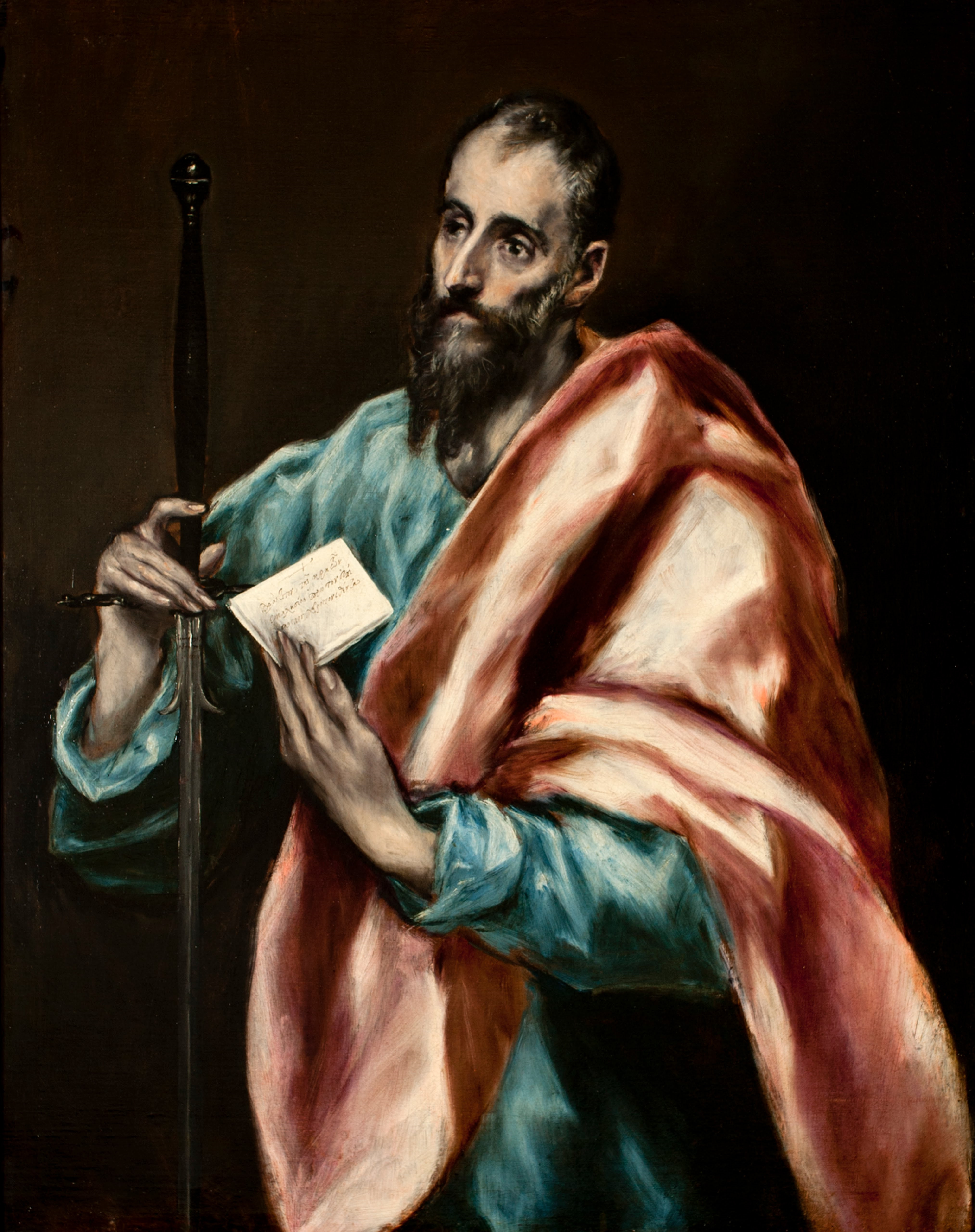
The image is The Apostle Saint Paul by El Greco (between 1610 and 1614; painting displayed at the El Greco Museum, Toledo, Spain – 1QEs4novinaf3A at Google Cultural Institute, zoom level maximum, Public Domain, https://commons.wikimedia.org/w/index.php?curid=29844105.
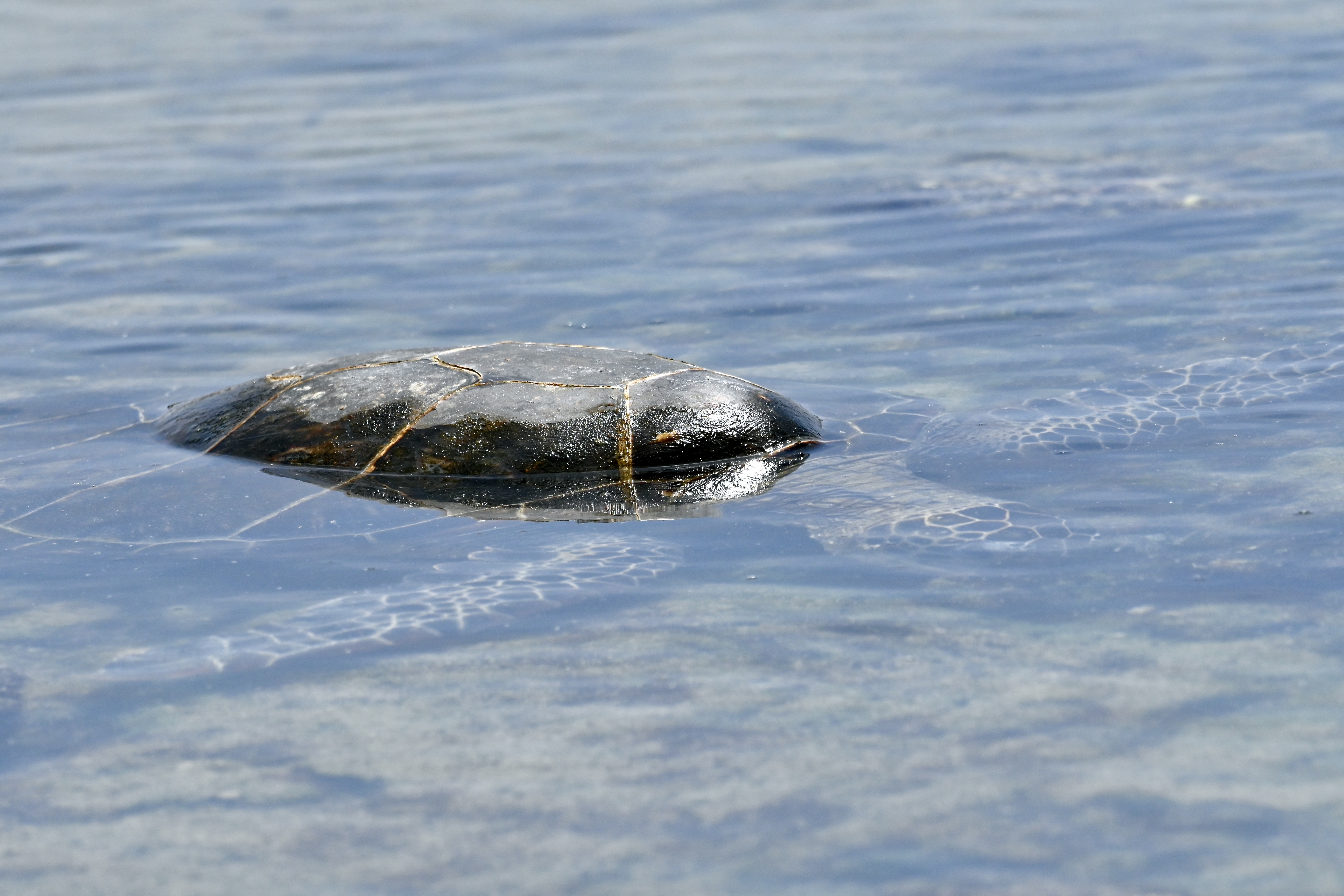
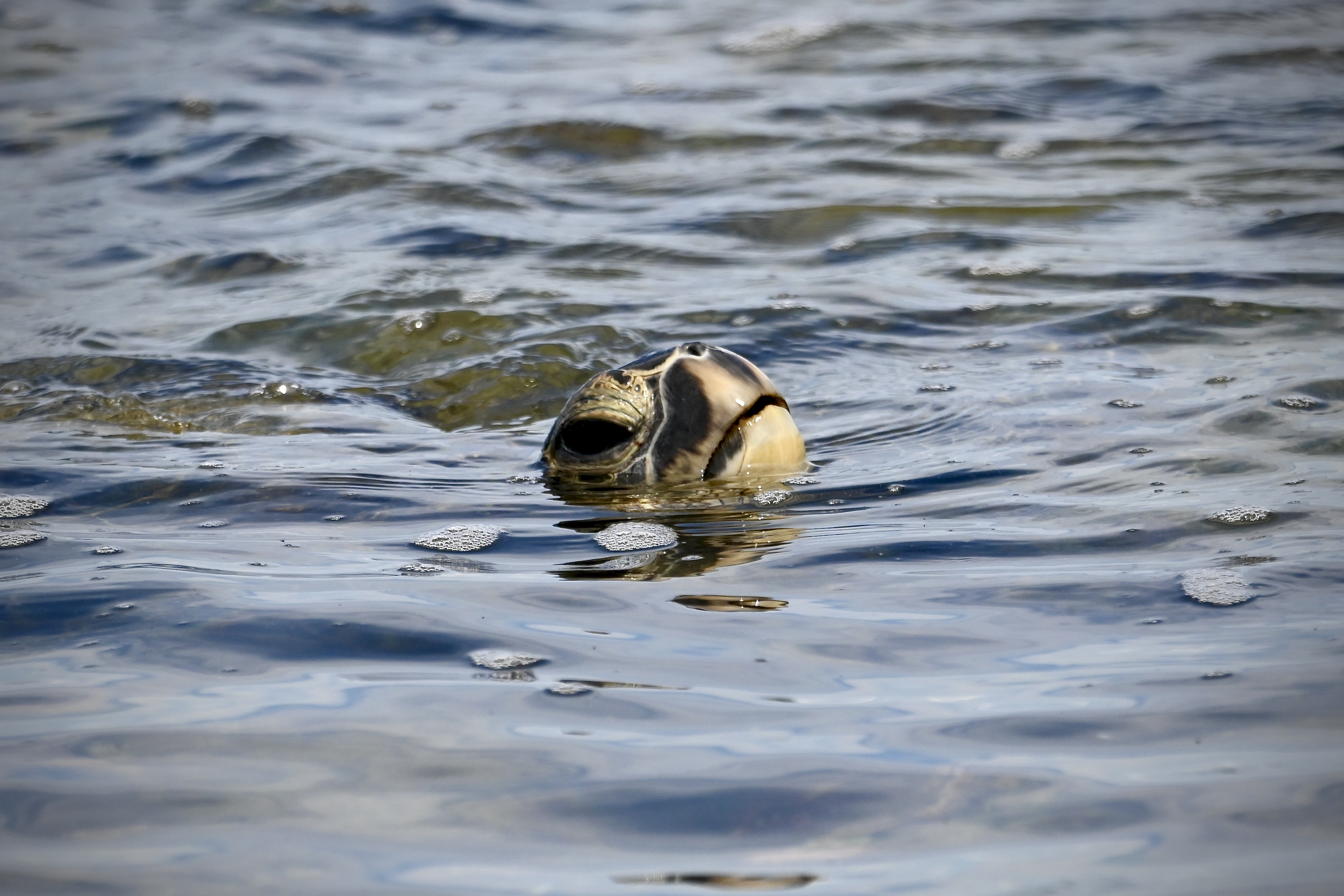
Well, I never have either. It’s not a natural place for a honu to be. A honu really prefers to be in water, like the honu in this picture.
Unfortunately, one day a honu found herself in a tree.
As I mentioned, I’ve never actually seen, let alone photographed, a honu up a tree. I’m afraid that photo is the result of a certain amount of non-artificial intelligence that produced that unconvincing image.
It was a storm, of course. Ordinarily honu in a storm find a safe place to ride it out, which is frequently offshore. I don’t know precisely what happened with this honu, and I’m not sure she ever did, either. One minute she was being tossed about in the water, and the next minute she was flailing around in a tree, not getting anywhere, and getting sprayed by the waves and the rain.
All in all, not where she wanted to be.
When things got brighter, the birds came out and found the honu in the tree, and they knew she wasn’t supposed to be there.
“Can you swim out?” asked an ala’e ke’oke’o, who was a swimming bird, even though the honu had better flippers on her limbs than the ala’e ke’oke’o had on his.
“I’ve tried all night,” said the honu. “My flippers can’t move these leaves the way they move water.”
“Besides,” she added, “I’m a pretty high off the ground here, and those rocks look hard. I think I might hurt myself if I fell from here.”
The birds looked things over and thought about it. Winged creatures don’t think about falling very much.
“I know,” said some of them. “Let’s pull some of the leaves and twigs out of the way so she’ll slip down slowly.”
“Right!” said some others. “And we’ll go get some other leaves and grass and mud and sand and we’ll cushion the rocks below her.”
That’s what they did. Some pulled up grass for padding, some moved branches of naupaka aside (OK. She was in a naupaka bush, not a tree, but it looked like a tree to her). The pile of padding grew and her distance from it slowly shrank. They worked slowly but steadily, cautiously but creatively, until with a creaking sound the last naupaka branches bent and lowered her to the top of the padded mound.
The birds cheered as the honu hauled herself off with her flippers and made her way down the beach to the water.
At water’s edge she turned and said, “Mahalo nui loa, friends. I hope you get help like this if you’re ever up a tree!”
One of the birds, a kolea, shrugged and said, “Most of us will be quite fine up a tree. But if you can help me out like this if I’m ever stuck in the water, I’ll be just as grateful as you are now.”
Then she waved and swam off into the deep. I don’t know if she ever did have to help a bird stuck in the water, but I know she would have, and she’s ready to if there’s ever a need.
by Eric Anderson
Watch the Recorded Story
I write these stories ahead of time, but I tell them from memory and improvisation. What you have just read is not identical to the way I told it.
Photos of a honu and of naupaka by Eric Anderson, as is the not-very-convincing blending of the two.
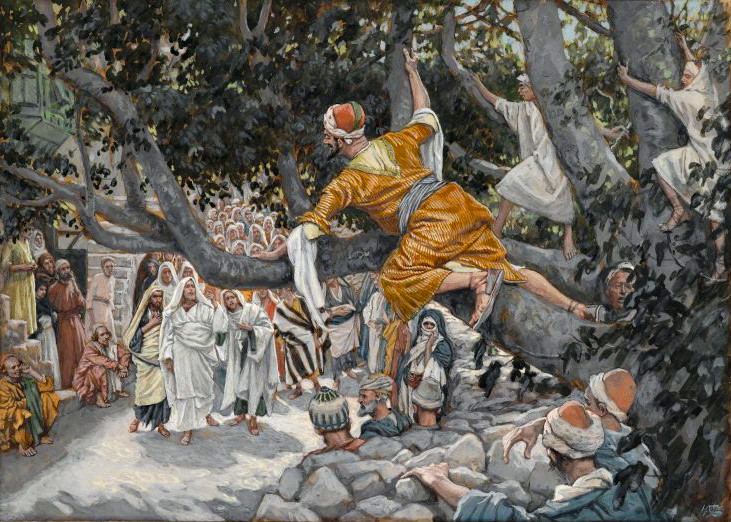
“So he ran ahead and climbed a sycamore tree to see him, because he was going to pass that way.” – Luke 19:4
I didn’t think my hands could grip so tight. I also didn’t think I’d ever be this high. So let’s be clear that I regret this choice. I wish I hadn’t scaled these heights.
Were I to fall, the people down below would step aside. I grant you that not one of them could cushion me. We’d both be left in broken bones and tears upon the road.
I really wish I hadn’t climbed this high into this tree or into my career. I used to see my neighbors’ faces as they doled out coins. Now I just see the coins.
Their faces turn away before I can pronounce their names, but not before I recognize their scorn, their bitter fear, and their disgust at just how high I’ve gone.
Too high. Too high. When branches creak at heights like this, the climber’s soul sways unassuaged by creature comforts, linen, gold, attentive slaves.
I got myself into this tree. I don’t know how to get myself down to the ground. My hands are knotted to this limb. My breath is hoarse as I cling on.
Ignore me, Jesus, Just pass by. Don’t look up. Don’t notice me. Don’t speak. Don’t call. Don’t ask me anything. Above all else, don’t ask me to come down.
A poem/prayer based on Luke 19:1-10, the Revised Common Lectionary Gospel Reading for Year C, Proper 26 (31).
The image is Zachée sur le sycomore attendant le passage de Jésus (Zacchaeus in the Sycamore Awaiting the Passage of Jesus) by James Tissot – Online Collection of Brooklyn Museum; Photo: Brooklyn Museum, 2008, 00.159.189_PS2.jpg, Public Domain, https://commons.wikimedia.org/w/index.php?curid=10904526.
I remember a good number of things. I also forget a good number of things. Some of them I’m happy to forget, especially if they made me unhappy at the time. Some of them I wish I could remember, especially if they involve the question of where did I put down my keys?
The i’iwi wasn’t much worried about the things he’d remember. He was worried about the things others would remember about him.
A lot of i’iwi get remembered by other birds as being, well, kind of aggressive. Bossy. Selfish. They drive other birds away from the places that they’re eating. Other kinds of birds do that, too, but when an i’iwi gets aggressive, ‘apapane and ‘amakihi will tend to give in and fly away.
“But is that,” he asked himself, “how I want to be remembered?”
He knew plenty of i’iwi that loved to chase other birds away. They claimed that they ate better when they did, but he also knew i’iwi that tended to ignore other birds, even slept in the same trees overnight. They seemed to eat just as well, he thought.
“How do I,” he asked himself, “want to be remembered?”
He had a friend who was one of the most effective bullies around. Where some of the aggressive i’iwi would chase an ‘apapane for a couple of feet, he’d chase them for a twice or three times as far. Sometimes he’d chase a bird so far that he’d find another bird in the place where he’d started, and he’d chase that one, too. If that seems like extra work to you, it does to me, too. Still, he was flashy (but then, all i’iwi are pretty flashy) and he was popular (as long as he wasn’t chasing you).
“But is that,” he asked himself, “how I want to be remembered?”
Then he remembered his grandmother.
She didn’t take any nonsense from other birds, no she didn’t. No ‘apapane had ever driven her away from a cluster of ohi’a blossoms. But she’d never chased an ‘apapane, either, or an ‘amakihi, or a young i’iwi. In fact, she’d let other birds know when she’d found a good spot, whatever the color of their feathers.
His grandmother loved him. He knew that, because she used to hop aside so he could get to the best flowers.
He loved his grandmother.
He went to find her, and said, “I want to be remembered like you, grandmother.”
“That’s good,” she said. “Let’s go see if we can find something good to eat, and then we’ll let everybody else know.”
That’s how both of them would be remembered.
by Eric Anderson
Watch the Recorded Story
I write these stories in advance, but I tell them from memory (plus improvisation) during Sunday worship. The story you have just read will not precisely match the story as I told it.
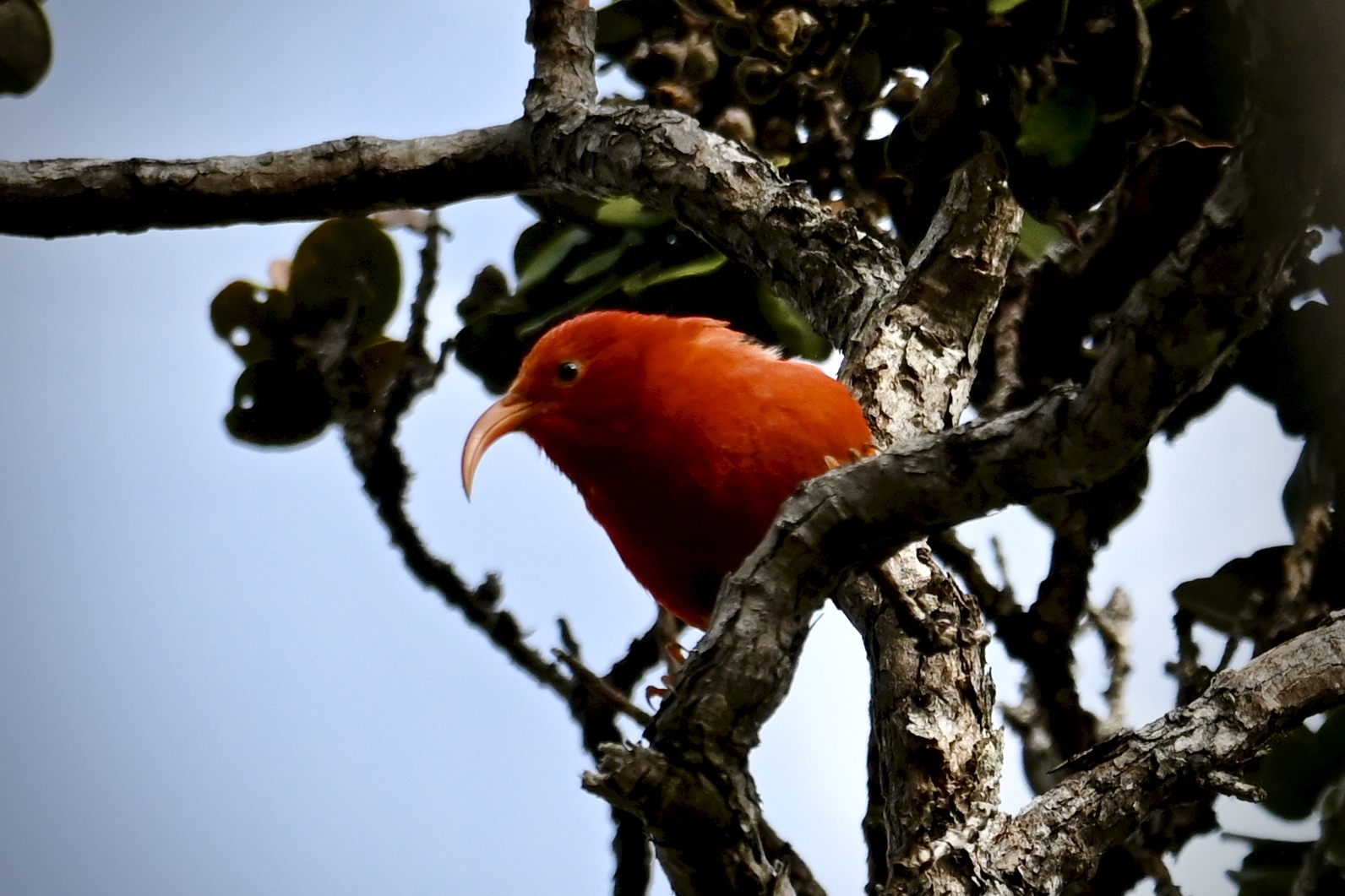
Photo of an i’iwi (being reflective?) by Eric Anderson.


 ordainedgeek