“[Jesus said,] ‘But woe to you who are rich, for you have received your consolation.'” – Luke 6:24
What’s new, Beatitudes? Woe, woe, woe!
OK, Jesus. I’ll get serious with you, since you’ve got serious with me. I’m hardly rich, you know (except by global standards). I’m hardly full, except when I’ve scraped bare my dinner plate. Nor do I laugh, except, of course at my own jokes (a punster’s lot). And people don’t speak well of me, or, well, I guess they do. From time to time.
What’s new, Beatitudes? Woe, woe, woe!
I’d claim I do not need this list of warnings if I could maintain the case that I would honor them without them. And… as I’m relatively rich, and definitely full, and able to make merry, granted honor that is probably beyond my worth, it looks as if I haven’t taken heed of warnings you have made.
What’s new, Beatitudes? Woe, woe, woe!
Well, bring them on, these challenges to what I’ve done and do. Charge me once again to love my enemies and pray for them, to do them good and not bring harm. I’ll note they do not do the same for me. I’d rather not be struck upon the cheek, but if it comes, I’ll not strike back. I’ll turn the other way, and wait, and hope my tears dissuade a second blow.
A poem/prayer based on Luke 6:20-31, the Revised Common Lectionary Gospel Reading for Year C, All Saints Day.
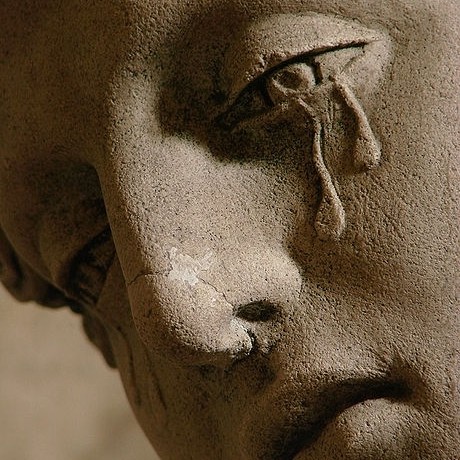
The image is a detail of the figure of Mary Magdalene in the sculpture The Entombment of Christ in the Church of St. Martin, Arc-en-Barrois, France. Photo by User:Vassil – File:Sépulcre_Arc-en-Barrois_111008_12.jpg, CC BY 3.0, https://commons.wikimedia.org/w/index.php?curid=16942922.
I wrote this song for worship on October 19, 2025, and it is based on the story of Jacob wrestling with God in Genesis 32.
[Chorus]
You’ve got to hold on, hold on Though your limbs are weary and your soul is tired You’ve got to hold on, hold on For the sun will rise and bless your eyes
[Verses]
Jacob sent all his riches ahead His brother had pledged to see him dead. How could he be safe? So he stayed behind Then he wrestled a man until the morning light.
[Chorus]
Jacob lost that match, and called the victor God. He held on to be blessed by eternal love. Now he walked with a limp but he strode out all right To reconcile with his brother in the morning light.
[Chorus]
When the shadows put you in fear Never forget: love is every near. It will come to your aid; it will never deny. You’ve got to hold on until the morning light.
Where I grew up on the shores of the Atlantic Ocean, there are birds that eat worms. In fact, a lot of birds eat worms. Some of them would eat worms (and bugs, and spiders) that burrow into trees. Some of these would use their beaks to dig holes into the bark to get those caterpillars out. Some would even carve pretty big holes in the wood.
Those birds are called woodpeckers.
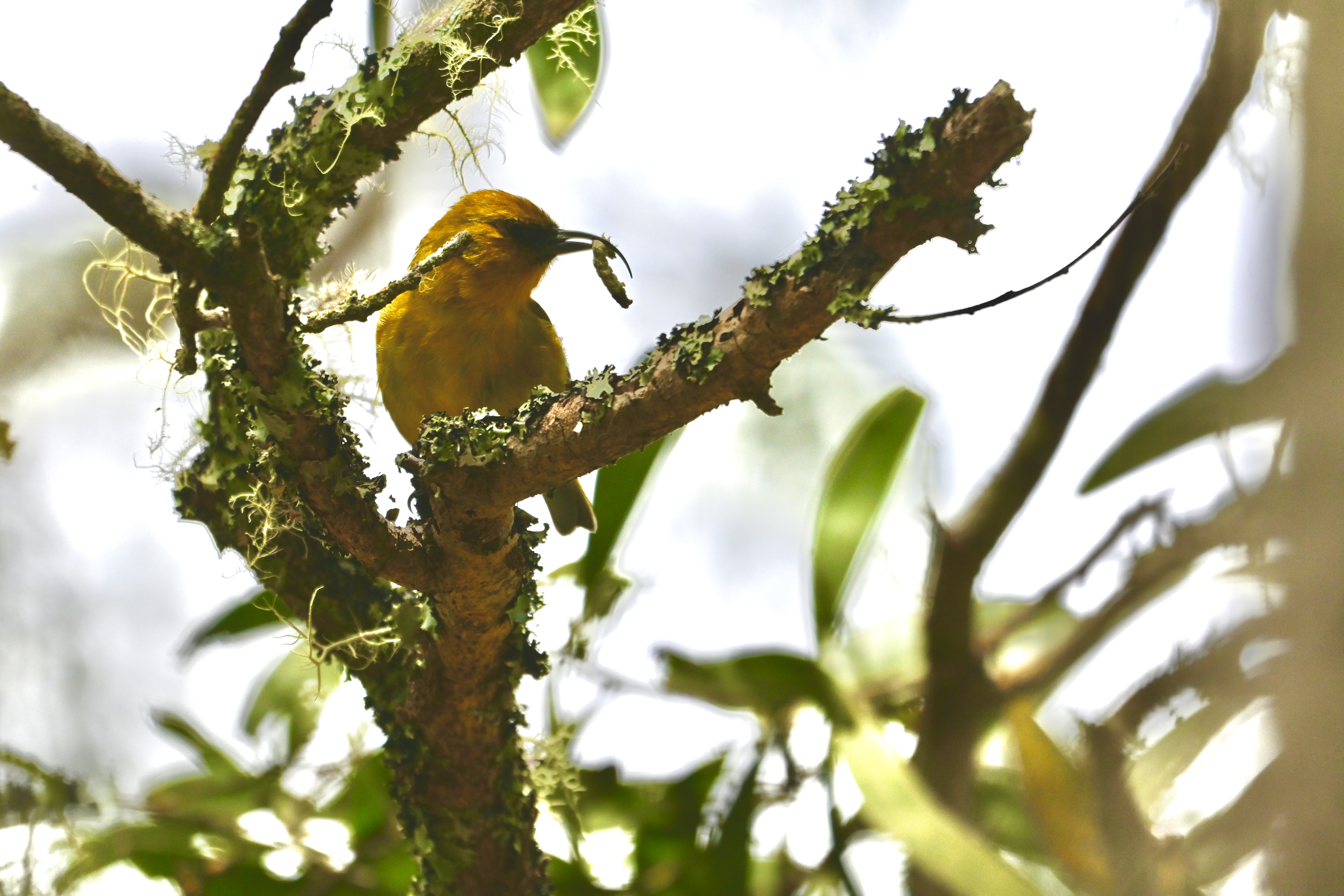
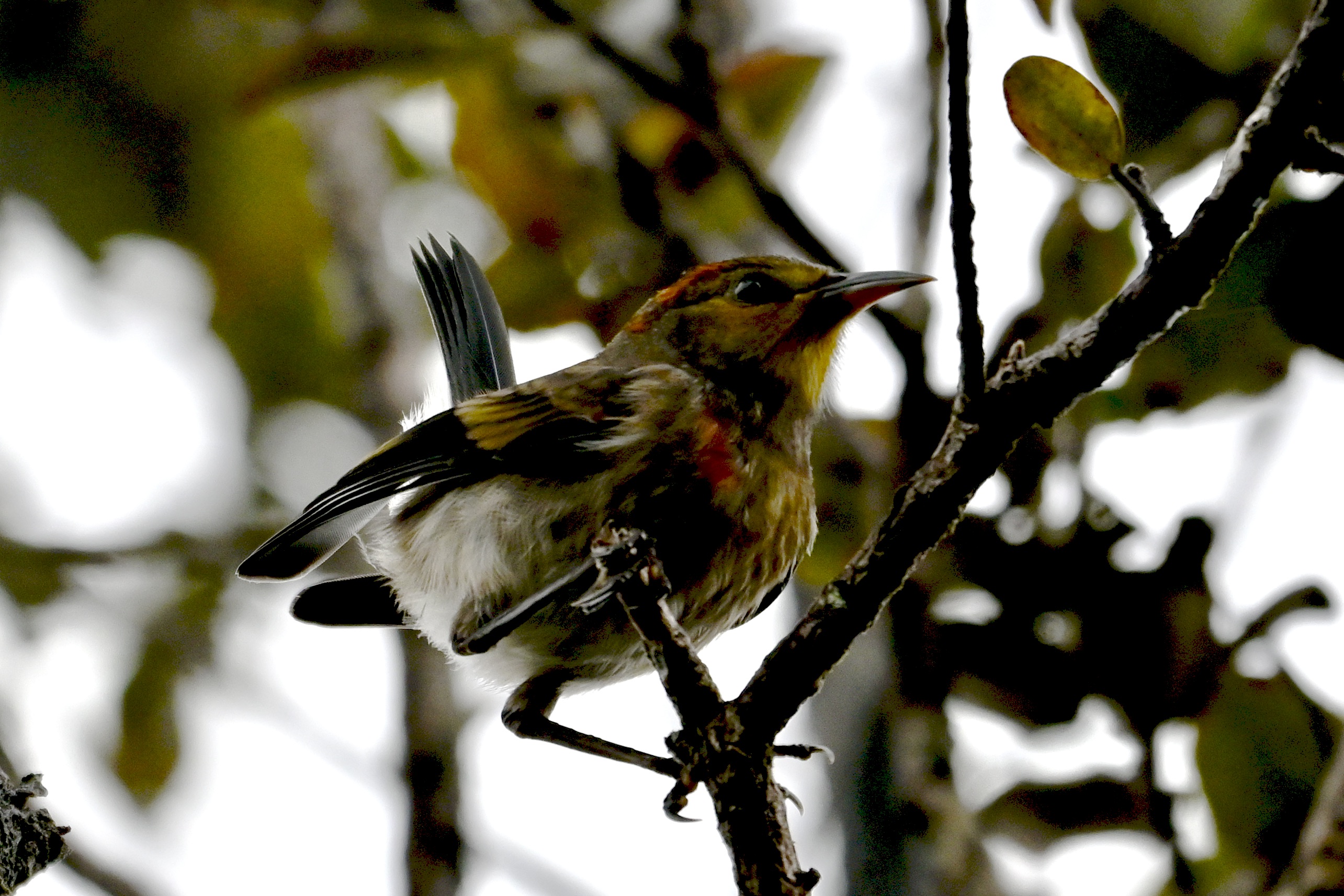
On our island, we don’t have woodpeckers, we have the ‘akiapola’au, and I think I’ve mentioned before that it’s a very rare bird. They only live on our island, and there are less than two thousand of them. They have a short lower beak, and they use that to dig into tree bark where caterpillars or worms might be hiding. When they find one, they use the curved top beak like a fishhook, only they’re catching the worm.
I guess you could say they use both the upper and lower beak to actually eat what they’ve caught.
One day an ‘akiapola’au caught a caterpillar, but he wasn’t alone when he did. There were several other birds around, and none of them had the unique beak of an ‘akiapola’au. Therefore they had a lot of different ideas about what the ‘akiapola’au should do with his newly caught caterpillar.
“It’s stuck on your beak,” said an ‘apapane. “You can’t eat it from there. How are you going to get it into your mouth?”
“He could put it down,” suggested an ‘amakihi, who may have said that because he was hungry and thought he could get to the caterpillar if it crawled off.
“Is it too big to eat?” asked an ‘elepaio, which isn’t a very big bird but neither is an ‘akiapola’au. “You could bite it into smaller pieces.”
“That sounds like a good idea!” said the hungry ‘amakihi, who hoped to get one of the smaller pieces.
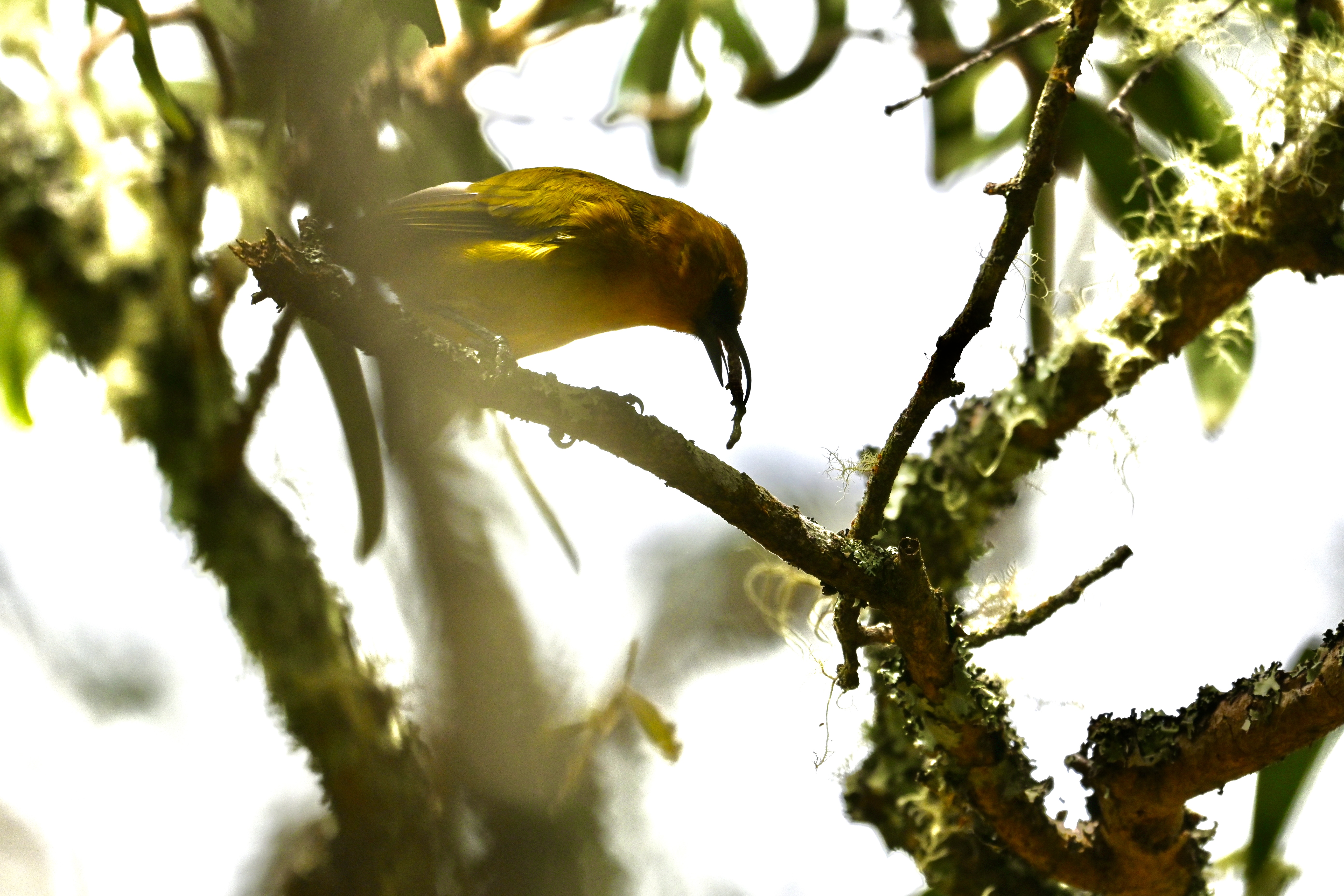
The ‘akiapoloa’au swung the caterpillar around, using the twigs and branch to get it from the hook of his beak toward his mouth. The other birds chimed in with advice like “Left!” “Right!” “Up!” “Down!” which wasn’t very helpful.
The worst advice came from an i’iwi, whose beak curves pretty dramatically, too. “Just put the caterpillar down,” she said. “Get some flower nectar instead. I mean, yuck!”
The hungry ‘amakihi echoed her, but the ‘akiapola’au ignored them all, all except an ‘alawi, another bird that likes a menu of bugs and caterpillars, who simply said, “Hold on.”
Hold on.
The ‘akiapola’au held on as he used the twigs to get the caterpillar lined up just right, and then, well, he was a happier ‘akiapola’au because he wasn’t as hungry. He looked at the helpful ‘alawi, who was searching for a caterpillar of her own.
“When you find what you need,” he said, “hold on.”
There are plenty of things in life that it’s good to let go of. Hot pans. Mosquitoes. Sharp things. There are plenty of habits in life that it’s good to let go of. Greed. Making fun of other people. Eating too much sugar.
But when you find what you need, whether it’s the food for the body or the food for the soul, the best advice there is, is: “Hold on.”
by Eric Anderson
Watch the Recorded Story
I write these stories ahead of time, but I tell them from memory, so what I said will not match what I wrote.
Photos of an ‘akiapola’au (and his lunch) by Eric Anderson.
“When the man saw that he did not prevail against Jacob, he struck him on the hip socket, and Jacob’s hip was put out of joint as he wrestled with him. Then he said, ‘Let me go, for the day is breaking.’ But Jacob said, ‘I will not let you go, unless you bless me.'” – Genesis 32:25-26
Breath in gasps, Slipping grip, growling throat, flailing arms, feet scraping the ground.
And suddenly
Hip on fire Leg will not lever.
Hold on.
Hold on to win? Hold on to survive. Hold on to endure. Victory passes in the night in the unsocketed hip.
I will hold on, I say, though daybreak come and break me, though night should fall again and claim my fading sight.
I will hold on. I will insist on blessing. I will be overcome
And overcome.
A poem/prayer based on Genesis 32:22-31, the Revised Common Lectionary Alternative First Reading for Year C, Proper 24 (29).
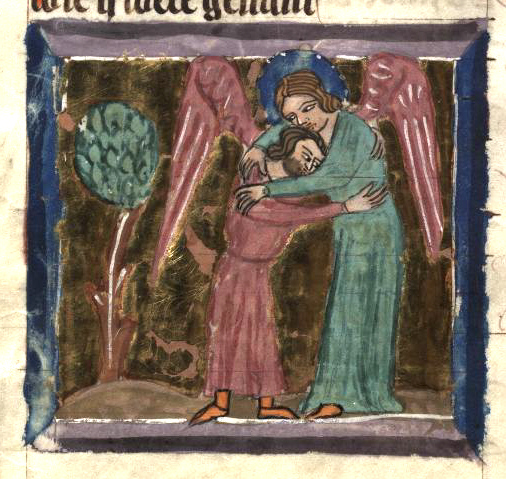
The illustration is “Jacob Wrestling with the Angel” by Anonymous “Meister 1”, found in the World Chronicle by Rudolf van Ems (between 1350 and 1375) – Hochschul- und Landesbibliothek Fulda, Public Domain, https://commons.wikimedia.org/w/index.php?curid=23797771.
Birds, by their very nature, rely on faith. Every bird knows about gravity; every bird knows that what goes up must come down. Every bird knows that while flight is the most natural thing in the world to them, it is also the most unnatural thing in the world. Somehow they hold those two things together.
At least, most of the time they do.
One young ‘apapane had learned to fly from his parents. He’d flown any number of times on his own. He was also still pretty young, so a lot of his feathers were still grey and brown. That had been fine. Now, however, some of his adult colors were coming in, so he had red feathers mixed among the grey and brown, and he had a speckled look. Frankly, I think he looked really interesting, but he thought he looked odd, even a little ugly.
With feathers that looked like that, he thought, how could he keep up with flying?
I don’t think that makes much sense, do you? He’d been flying just fine, and suddenly he didn’t believe he could fly because his feathers were changing? But you know, the first step in doing something is believing that you can do the thing. He stopped believing he could do the thing.
So he stopped flying.
He did manage to feed himself by journeying to other trees in the slowest, and possibly most exhausting way possible. He hopped from twig to twig, then from branch to branch, and when branches got close he jumped from tree to tree. It took time, and it wore him out, and frankly made him hungrier, but he did it.
It was a funny way to live for an ‘apapane.
It took a while for the other birds to notice, because he did turn up among his family and friends, even if he turned up later than everyone else. They just assumed he’d flown off in some other direction and finally got turned around the right way.
It was Tutu, his grandmother, who noticed the way he hopped, rather than flew, from tree to tree. She hopped over to his branch and said, “Are you all right, grandson? Have you hurt your wings?”
“No, they feel fine,” said her grandson.
“Then why are you hopping everywhere?” she asked. “Why aren’t you flying?”
“Well, just look at me,” he said. “Do these look like flying feathers? If I take off with these I’ll crash a moment later.”
“You think you can’t fly because of these feathers?” asked his grandmother.
“That’s right, Tutu,” he said.
Grandmother thought. She was a wise old bird, and she knew that you have to believe you can fly if you’re going to fly. She was tempted to let him hop around until he finished molting, but she knew he’d be pretty miserable the whole time. And who knows? He might never come around to believing again. That would be sad.
“Grandson, are you an ‘apapane?”
“Yes, of course I am,” he said, puzzled.
“Do you believe that you have wings?”
“Of course I do.”
“Do you believe in your feathers?”
“They’re right here,” he said.
“I believe in your feathers, too,” said Tutu, “the ones you have and the ones you’ll grow. In fact, all your family believes in them. Do you believe us?”
“I’m not sure,” he said.
“It takes just a little belief,” said his grandmother, “and that’s the amount of belief it takes to spread your wings. You’ve done it before. You can do it now.
“Believe it. Spread your wings, grandson. Fly.”
by Eric Anderson
I regret that we continue to have problems with the audio in our video stream, so a recording of this story is not available.
“[Jesus said,] ‘Would you not rather say to him, “Prepare supper for me; put on your apron and serve me while I eat and drink; later you may eat and drink”?'” – Luke 17:8
Stand at your watchpost, Holy One, and see, if I have brought your sustenance to table where the hungry you have called are blessed by word, and heart, and bread.
Stand at your watchpost, by the door, to see if any leave with bellies pinched, with faces sad, with spirits quenched. See if your banquet has been served.
Stand at your watchpost, Jesus, to observe if I have nurtured that so precious seed of faith into a shelter for the birds and beasts and people. O Jesus, have I grown my faith in you?
A poem/prayer based on Luke 17:5-10, the Revised Common Lectionary Gospel Reading for Year C, Proper 22 (27), with an additional nod to Habakkuk 1:1-4, 2:1-4.
The image is a photo of the shrine at the Tomb of Habakkuk in Tuyserkan, Iran. Photo by hamid3 – Own work, CC BY 4.0, https://commons.wikimedia.org/w/index.php?curid=99699676. The tower may date to the 11th or 12th centuries, an architect’s attempt to render Habakkuk’s vision of the watchtower.
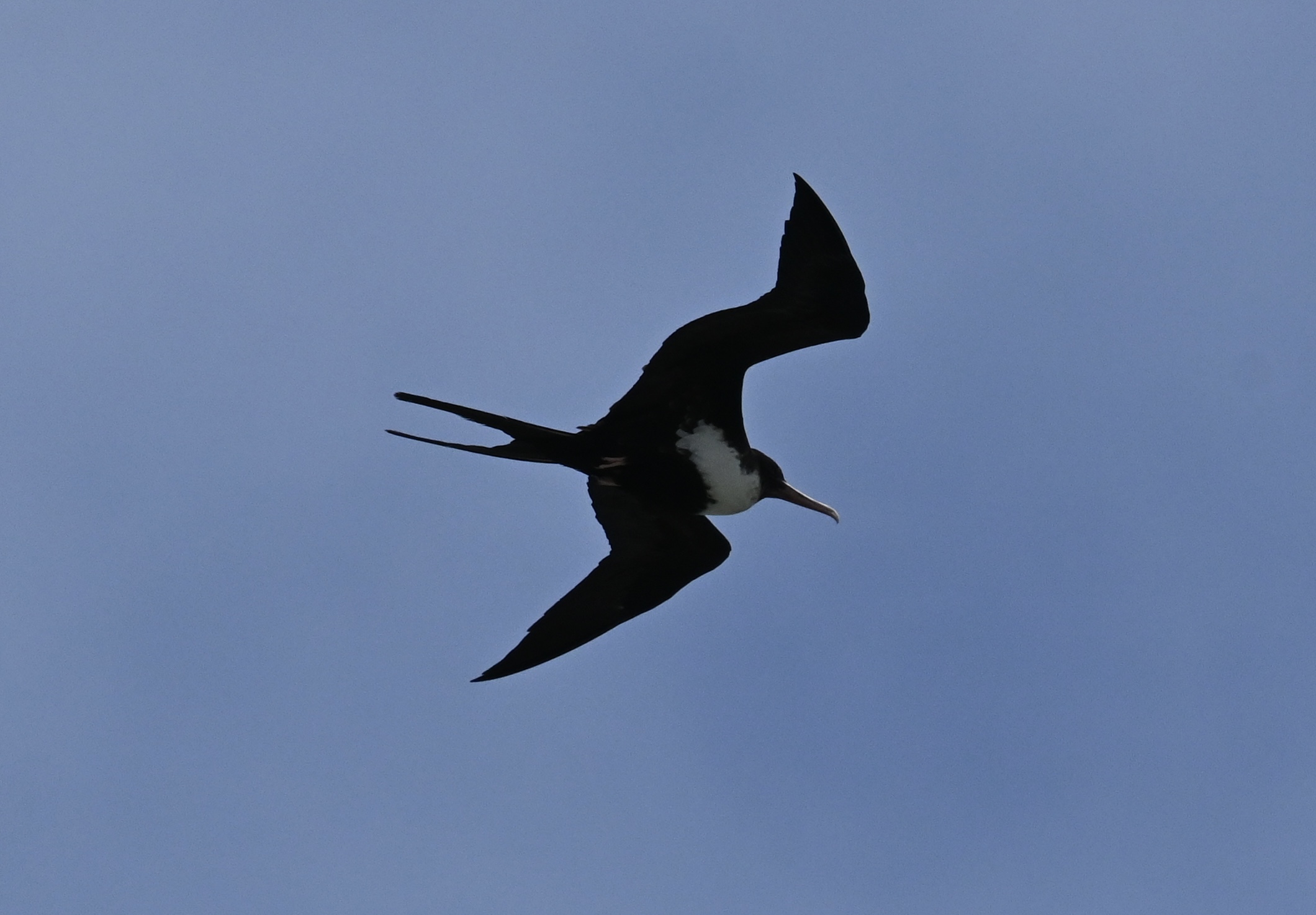
The ‘iwa, or great frigatebird, has a bad reputation among the seabirds around Hawai’i. ‘Iwa have been known to bully other birds to get them to drop their meals, which the ‘iwa then swoops down to eat. That’s pretty nasty. As a result, a flock of koa’e ula – red-tailed tropicbirds – had decided to have nothing to do with them.
When an ‘iwa flew by, they ignored him. Or her. They veered off to one side or another to keep their distance. When the ‘iwa called out a friendly “Aloha!” they said nothing in return. They called out to one another instead.
Except for one bird.
This koa’e ula decided that until an ‘iwa actually did anything mean, he’d assume that they were as worthy of a friendly “aloha” as any other bird. Seabirds tend to swoop around together a lot, which means that the air is full of “aloha,” which sounds a lot like lots of bird calls to us. A shore with lots of seabirds over it can be a very noisy place.
“Why are you greeting the ‘iwa?” asked his friends. “They’re bullies. They’re mean. They’re never going to give you an aloha.”
“I don’t know about any of that,” said the koa’e ula. “None of the ‘iwa I’ve greeted have done anything to me. Except to say, ‘aloha’ right back.”
Koa’e ula can fly for a long time, but they also like to spend some time resting on the ground, usually on smaller islands offshore from bigger islands like Kauai. There came a day when most of this particular flock was resting from some pretty vigorous flying and fishing. On that day something had happened a long way away that they didn’t know about. It was a big earthquake, and it kicked up the water into an ocean-spanning tsunami. All this was much too far away. The birds had no idea.
Hours later, a series of great waves approached the little island. A few of the koa’e ula were aloft, but they weren’t looking at the water closely. As the first wave came closer, an ‘iwa swooped low over the island, right over the place where the friendly koa’e ula had settled.
“Take off! Fly!” cried the ‘iwa. “There’s a big wave coming! Get into the air!”
“Take off! Fly!” shouted the koa’e ula to those near him, and he opened his wings and leapt into the air. Those near him did the same, and in a few moments the island was empty of birds and the sky was filled with them.
They looked down as the first wave washed over the entire island where they’d been. They were so shocked that they forgot to call “aloha” to one another as they circled. Without the warning of the ‘iwa, they’d have been there when the wave came.
“How did you know?” they started to ask the friendly koa’e kea, the one the ‘iwa had come to warn. “Hod did you know that the ‘iwa would know to warn us?”
“I didn’t know,” said the koa’e kea. “I just knew that everyone deserves an aloha. Everybody deserves aloha.”
As the ‘iwa swooped by with an anxious look to make sure her friend was all right, the koa’e ula called out, “Aloha and mahola nui loa to you!” The ‘iwa looked relieved and called back, “Aloha!” and she soared off once more.
I don’t know what other flocks do – there are ‘iwa and there are koa’e ula all around the world – but I can tell you that there’s been lots more aloha among those birds from that day to this, and long may it stay the same.
by Eric Anderson
Unfortunately, the video recording of worship for September 28, 2025, did not include audio, so there is no recording appended.
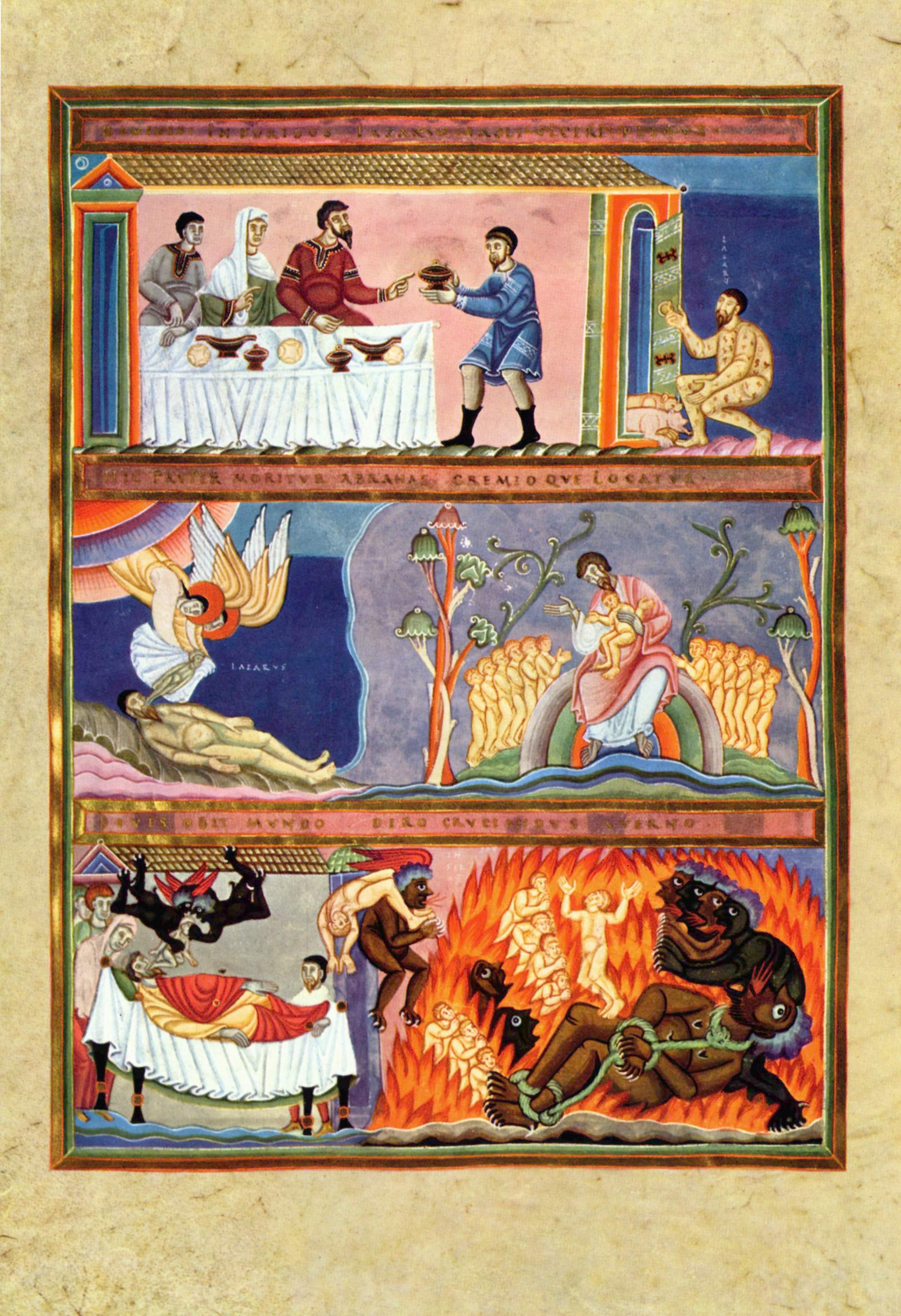
“[Jesus said,] [The rich man] said, ‘Then I beg you, father, to send him [Lazarus] to my father’s house–for I have five brothers–that he may warn them, so that they will not also come into this place of torment.'” – Luke 16:27-28
O Holy One,
When I should find myself (again) in torment I have made myself, may my compassion and my wisdom be enough to call a warning to the ones I love, and to the ones I don’t, with my own voice, and not rely upon the voice of those I have oppressed.
A poem/prayer based on Luke 16:19-31, the Revised Common Lectionary Gospel Reading for Year C, Proper 21 (26).
The image is “The Parable of the Rich Man and the Beggar Lazarus,” an illustration in the Codex Aureus Epternacensis (Golden Gospels), by the Master of Codex Aureus Epternacensis – The Yorck Project (2002) 10.000 Meisterwerke der Malerei (DVD-ROM), distributed by DIRECTMEDIA Publishing GmbH. ISBN: 3936122202., Public Domain, https://commons.wikimedia.org/w/index.php?curid=155243.
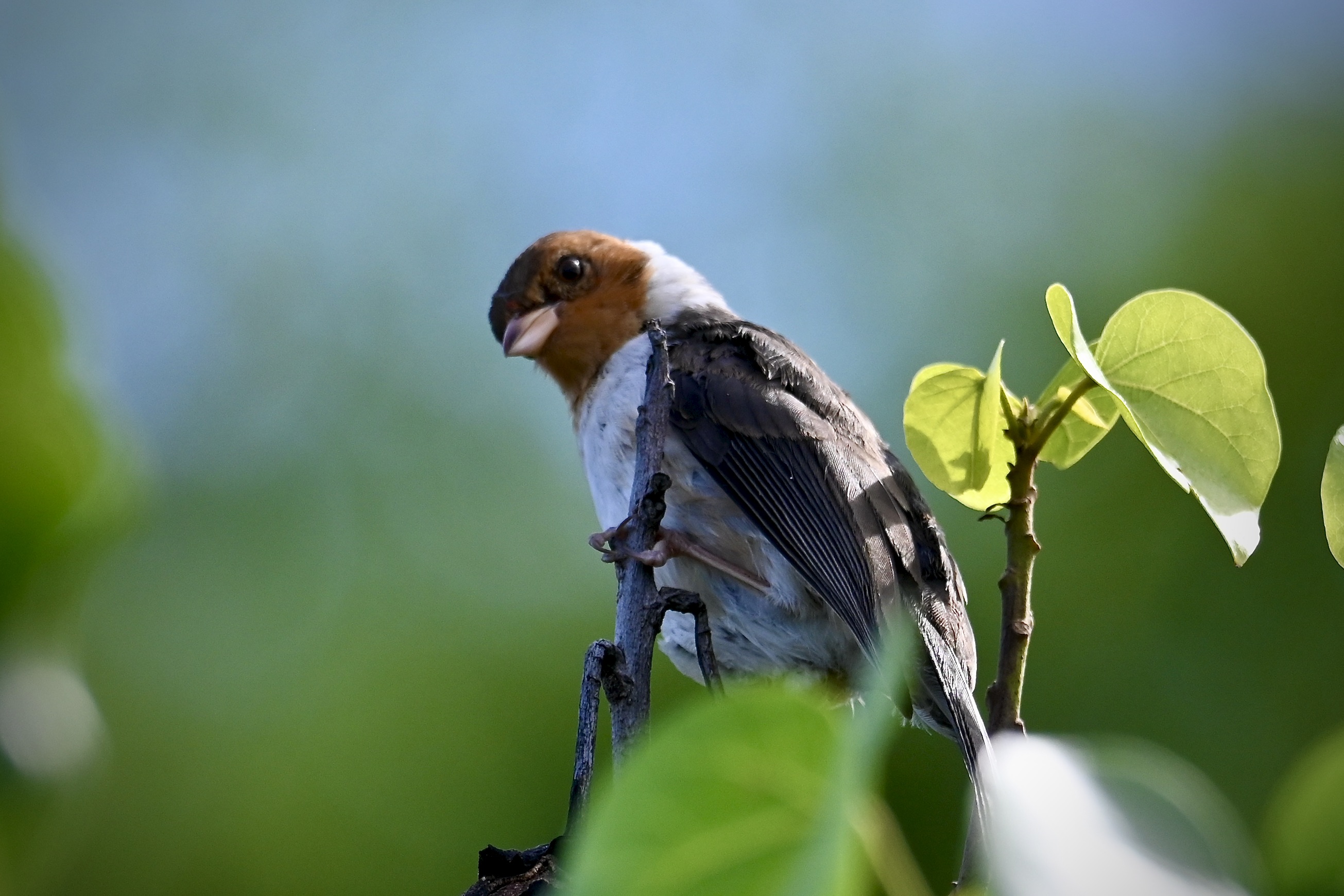
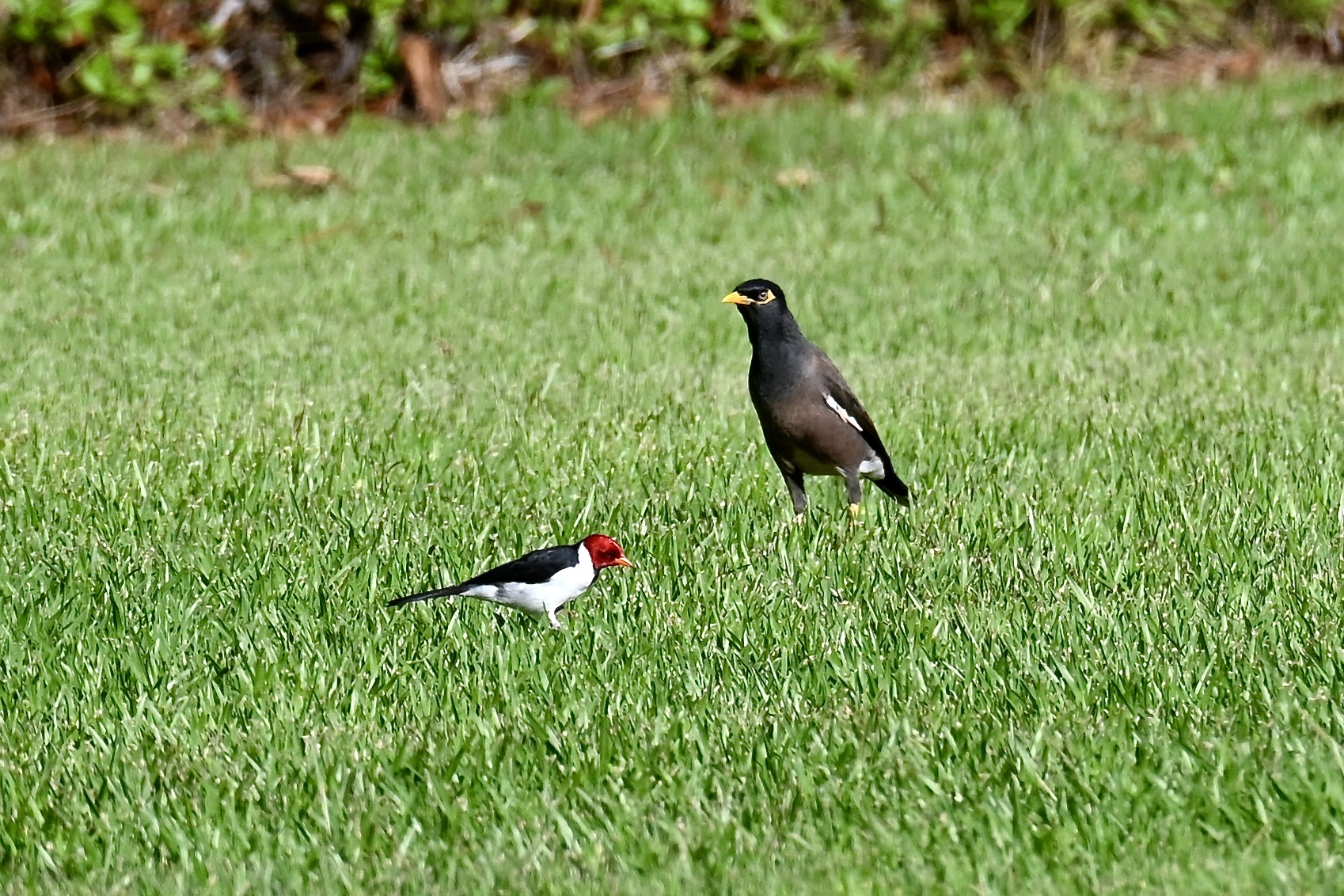
He was a yellow-billed cardinal, and he was young. He was so young, in fact, that the feathers on the top of his head weren’t red; they were brown. He was so young that his bill wasn’t yellow, it was tan.
He was old enough to be living mostly on his own, finding his own food among the seeds and berries, and his own shelter for the night. He was old enough to enjoy a sunrise or a sunset, and he was old enough to enjoy sitting quietly in the sun.
What he wasn’t old enough for was to understand what “peace” was.
That may seem odd, given that sitting quietly and enjoying the sunshine sounds pretty peaceful, but it didn’t always feel that way. For one thing, if he sat in the sunshine for too long, he’d start to feel hungry. Feeling hungry, he thought, wasn’t very peaceful. I guess he had a point there. Being uncomfortable isn’t very peaceful.
Worse than that, though, when he got hungry, he had to find food. He knew how to do that, of course. That wasn’t the problem. The problem was that other birds would show up, and he didn’t like that. Other yellow-billed cardinals were usually OK – he knew a couple of them that tended to tease him – but he really didn’t like it when different kinds of birds turned up. House finches made him nervous. House sparrows were kind of scary. Saffron finches made him feel uneasy about his rather dull coloring.
Worst of all, as you might guess, were the mynas. For one thing, they had brighter yellow bills than he did. For another, they were a good deal bigger. And, of course, they were often really loud, really argumentative, and really frightening.
As he got older and his head feathers turned red and his bill turned more yellow, he still didn’t like it when other birds turned up while he was feeding. He didn’t really notice that the finches and sparrows and kolea really paid him no mind. They just got on with looking for bugs and seeds and worms to eat. So when the myna turned up near him while he was eating, he jumped.
“What’s wrong, youngster?” asked the myna. “Is there something wrong?”
“Oh, no, myna sir,” said the yellow-billed cardinal. “Nothing wrong at all.”
“You jumped,” said the myna. “Did something startle you?”
“Well,” said the cardinal, “you did. You caught me by surprise when you landed.”
“Oh, that’s fine,” said the myna, who sounded somewhat relieved. “Sorry about that. You had me worried for a minute there.”
“You worried?” said the yellow-billed cardinal. “Why?”
“Some birds get upset about mynas,” said the myna. “They think we’re loud and obnoxious. They don’t like it when we’re around.”
The yellow-billed cardinal had thought such things, so he thought that now he’d better stay quiet.
“I’m glad you’re not like that,” said the myna. “I could do with a bit of peace today.”
That’s when the yellow-billed cardinal learned what peace could be – a time when creatures who were rather different could live side-by-side, meet their needs, and not fear one another. A yellow-billed cardinal could be safe from the bullying he feared from a bigger bird. A myna could be safe from the rejection and disdain of a smaller bird.
“I could use a bit of peace myself,” said the yellow-billed cardinal. “Let’s enjoy it while we can.”
by Eric Anderson
Watch the Recorded Story
I write these stories in advance, but I tell them from memory, which means things change.
First of all, then, I urge that supplications, prayers, intercessions, and thanksgivings be made for everyone, for kings and all who are in high positions, so that we may lead a quiet and peaceable life in all godliness and dignity. – 1 Timothy 2:1-2
In a perfect world, prayer should have been enough to win a quiet life in peace, in godliness and dignity. In a perfect world, the Emperor would offer thanks for prayer, would offer to his subjects tranquil peace.
But it is not a perfect world, now is it, Paul? Instead of peace, the emperor presented you a sword, and not to hold. It stilled your tongue, your pen, your breath, and yes, your prayers.
We struggle still to pray for those who persecute our neighbors and ourselves, whose hands retain their firmest grip upon the sword, and strike the pen, the lips, the breath, the prayers from us.
A poem/prayer based on 1 Timothy 2:1-7, the Revised Common Lectionary Second Reading for Year C, Proper 20 (25).
The image is of the mosaic including the beheading of Saint Paul in the Cathedral of Monreale, Sicily (ca. late 12th early 13th centuries). Photo by Holger Uwe Schmitt – Own work, CC BY-SA 4.0, https://commons.wikimedia.org/w/index.php?curid=128492483.



 ordainedgeek