“By faith Rahab the prostitute did not perish with those who were disobedient, because she had received the spies in peace. And what more should I say? For time would fail me to tell of Gideon, Barak, Samson, Jephthah, of David and Samuel and the prophets…” – Hebrews 11:31-32
Rahab and Samson, heroic opposites. She was the foreigner betraying her nation, saved by her pledge to the ruthless invader. Her neighbors all died, but she and her family did not.
Samson the Strong, a leader and judge, praised for his strength but not for his folly. Like Rahab, he trusted an enemy, losing his strength. But when it returned, he died with his foes.
Grim heroes. Grim stories of warfare, betrayal, coercion, and death. No wonder that neither received “the promise” in full. How could they, when the promise of Jesus is life?
A poem/prayer based on Hebrews 11:29:12:2, the Revised Common Lectionary Second Reading for Year C, Proper 15 (20).
The image is of two mosaics in Santa Maria Maggiore, Rome (ca. 430). Above: Joshua meets the commander of the Lord’s army. Below: Israel’s scouts flee from Jericho, aided by Rahab. Photo by Fabrizio Garrisi – Own work, CC0, https://commons.wikimedia.org/w/index.php?curid=157025271.
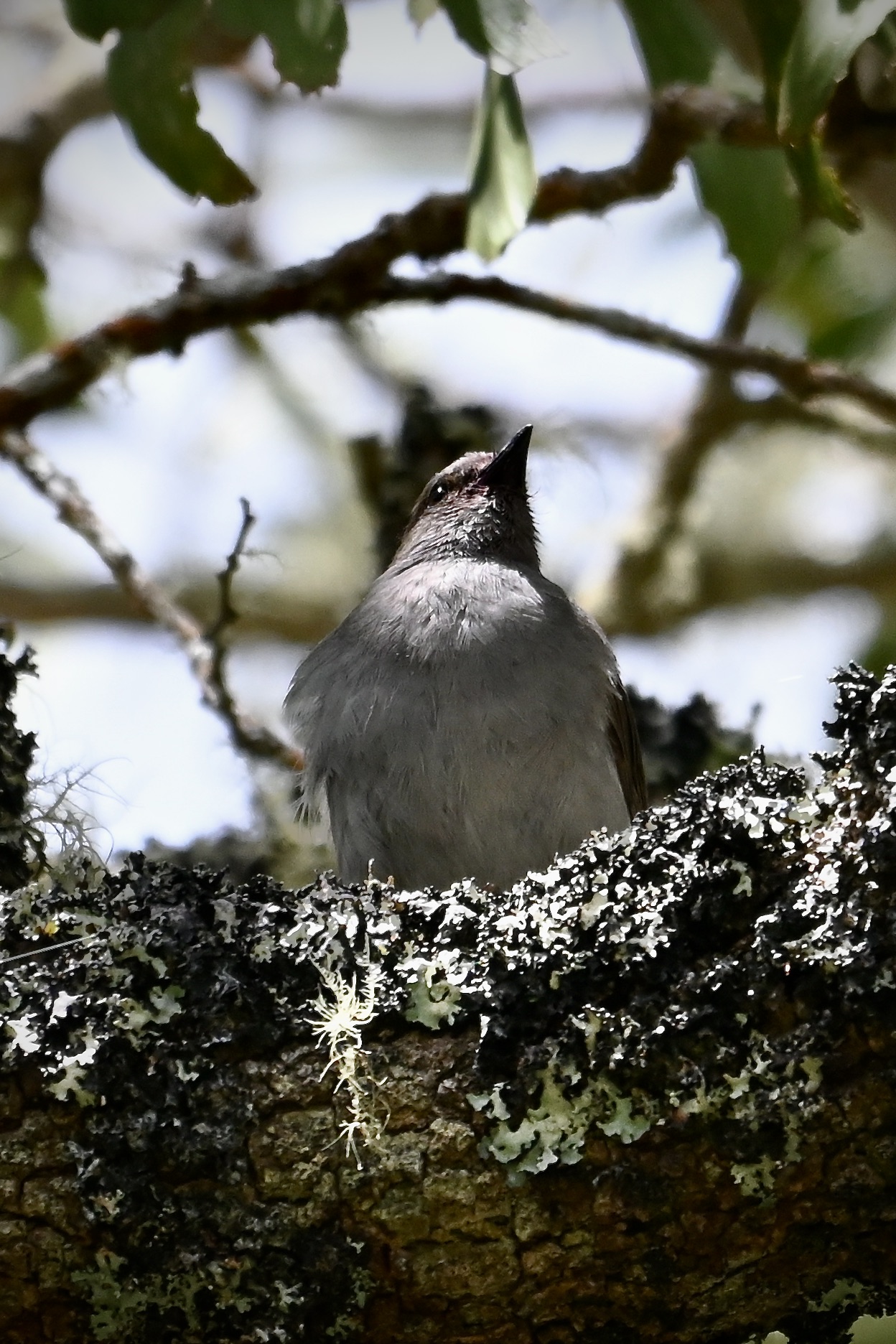
The ‘elepaio are usually the most actively curious birds in the forest. They hop and flutter and fly their way around the trees from the topmost branches all the way to the forest floor. They look into gaps in the leaves, cracks in the bark, and even holes in the rocks for the bugs and things they like to eat. They’ll perch on a branch and pick up bugs and caterpillars. They’ll pull bugs out of rolled-up leaves. They’ll chase flying insects on the wing.
You can do that if you’re paying attention.
If you’re not paying attention, well… it’s all going to be harder.
There was an ‘elepaio who just couldn’t concentrate. He didn’t pay attention to what was around him. His friends liked to sneak up on him and ruffle their feathers; they made a game of how loud they had to be before he noticed. I’d like to say that he was so inattentive because in his curiosity he was thinking deep thoughts, but no. He wasn’t.
Mostly he was sitting rather sleepily on a branch.
The result was that he got rather hungry. An ‘elepaio is a small bird, for sure, but an ‘elepaio eats small things, so you have to eat a lot of small things to keep from being hungry. He’d get hungry, but it would only rouse him to do a casual look around. If he spotted a bug, well, he could usually catch it. He still didn’t look closely, though, and it surprised those who watched him how many other bugs and caterpillars he’d miss.
It was an ‘alawi that helped him concentrate.
She was moving along a branch near the one he perched on one day, searching for the bugs she liked to eat, which were also pretty much the bugs that the ‘elepaio liked to eat. He wasn’t greedy, so he didn’t chase her away. He was even feeling a little friendly, so he called out a greeting, and then said:
“I’m afraid you won’t find anything there. I’ve been here a while and haven’t seen anything to eat.”
She looked puzzled, because right in front of her, barely hidden by a fold in the bark, was a spider. She took it in her beak, showed it to the ‘elepaio, and ate it rather sheepishly. She felt a little guilty eating in front of a hungry fellow creature.
“Oh,” he said. “I didn’t see that one.”
“How about this one?” she said, showing him another bug.
“Really? There were two?”
“Three,” she said, and then, “Four. Actually, quite a bit more than four.”
He watched in some amazement as she pulled bug after spider after caterpillar from the branch he was sure didn’t have any bugs on it.
“How did you find those?” he asked, astonished.
“I looked,” she said. “I moved along, and as I moved, I looked.”
He thought about what he’d been doing, which was sitting still, and not looking.
“I guess I ought to do more of that,” he said.
“If you don’t want to be hungry, it would work better,” she agreed.
So the two birds moved along their respective branches, and both of them agreed it was good to be fed.
by Eric Anderson
Watch the Recorded Story
I write these stories ahead of time, but I tell them in worship from memory (and improvisation). What you just read will not match the video recording of my telling.
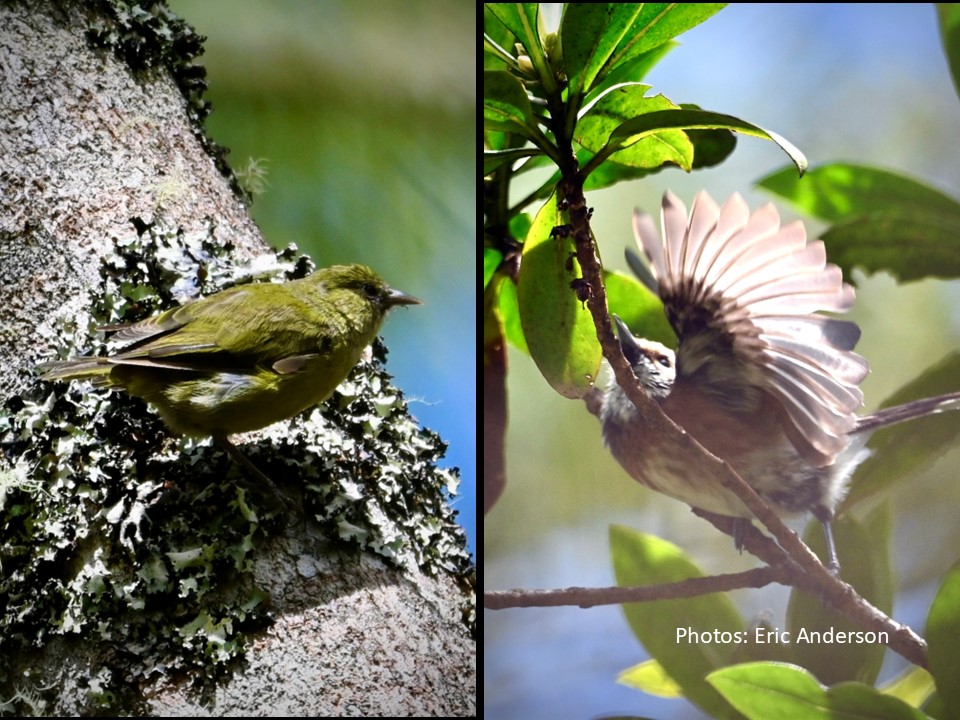
Photos of an ‘alawi and ‘elepaio by Eric Anderson.
“[Jesus said,] ‘Sell your possessions and give alms. Make purses for yourselves that do not wear out, an unfailing treasure in heaven, where no thief comes near and no moth destroys. For where your treasure is, there your heart will be also.'” – Luke 12:33-34
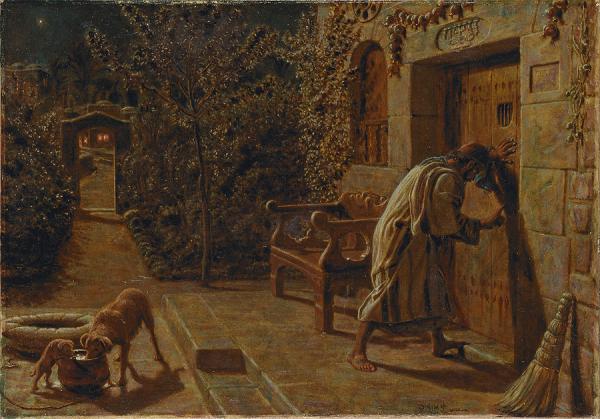
Jesus, I am not a wealthy man… by some standards. Were I to leave my work, I’d quickly run through savings, have no home, sell the things I use to give me joy – the instruments, the cameras, the things that prompt my memory.
By other standards, I have wealth beyond imagination. I do not know where my next meal will come from, but I know that it will come. I know that if a wave arises or a lava river flows, I’ll have a place where I am safe.
My wealth be great or small, I must confess, it still is mine. In honesty, I’d sooner heed Isaiah’s words: do good, seek justice, rescue the oppressed, defend the orphan, raise my voice in favor of the widow. But.
You, Jesus, raised the bar. The tithes has turned to everything: my ukulele, photographs; my work time and my leisure, what I think and write and speak and make. For you demand all these be yours, be God’s, be holy gift.
So Jesus, I confess that though I give you much, it is not all. I may give alms; I may give time; I’ve taken on the role of the religious, but: it is not all. It is not all.
Dear Jesus, please accept my offerings, my alms of treasure and of time, of sweat and contemplation. Take the portion of my heart that unreservedly I give to you. And forgive the heart, and treasure, which I still keep for myself.
A poem/prayer based on Luke 12:32-40, the Revised Common Lectionary Gospel Reading for Year C, Proper 14 (19).
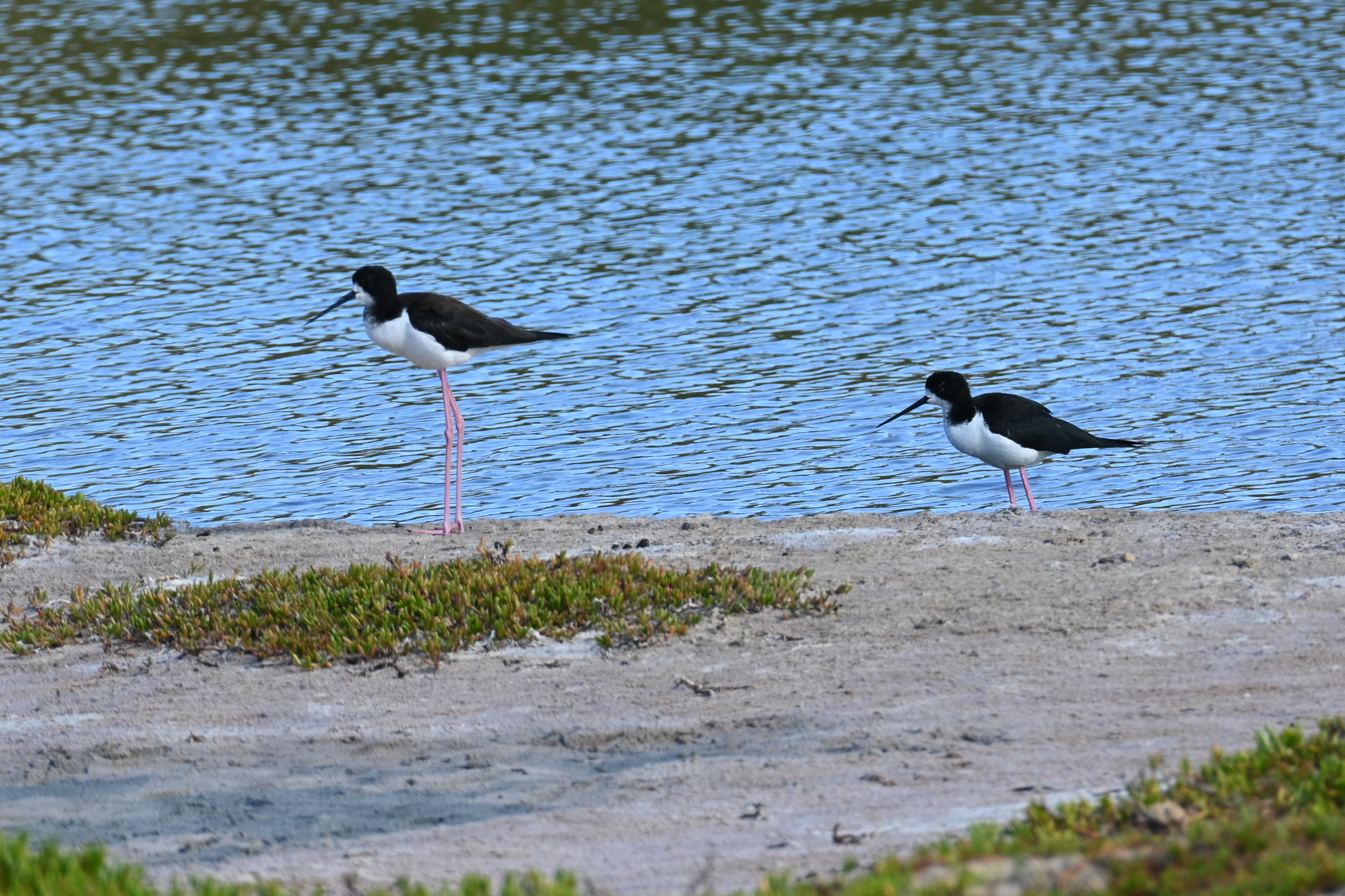
How would an ae’o (that’s a black-necked stilt in English) even think about getting rich? You might be wondering, and I would be wondering, too. This particular ae’o had been listening to some human beings who were visiting the Hawaiian shoreline near where she hunted for shrimp and bugs in an old fishpond. The people had been talking about how wealthy they were and how glad they were to be rich.
I’m afraid a lot of it was pure foolishness, and some of it was pure hard-heartedness, because they talked about how they paid their workers as little as possible and bought things for low unfair prices and sold things for high unfair prices. Frankly, most of that went over the ae’o’s head, despite how long her neck and her bright pink legs were. Still, the humans seemed pleased about it, so she determined to get rich.
“How would an ae’o get rich?” she wondered.
She wondered about it as she and her husband prepared a nest. An ae’o nest is pretty simple. They make a hollow in the ground, then line it with grasses and even some of their downier feathers. As they were working, she noticed something bright on the ground. It was a white pebble.
“I know how to be rich!” she said. “I’ll line our nest with bright things.”
Her husband had no idea what to make of that, and even less when she flew out and around and returned with odd things that didn’t make much sense in an ae’o nest. She found more pebbles, which poked at you when sitting on the nest. She found plastic bottle lids, which weren’t any more comfortable than the pebbles. She brought in crushed soda cans that someone had carelessly dropped somewhere, which took up a lot of room, and she brought in bits of discarded paper with the shiny photos of visitor brochures.
“Why are you doing this?” asked her husband. “To get rich,” she told him, and had no better answer.
It was her grandmother, of course, who came by at last to take a look at the bright and shining nest. She was settled uncomfortably into it, wedged in by cans and bottles and avoiding the sharp bits of glass that a sensible bird would have left where they were.
“You call this being rich?” said tutu ae’o.
“Of course,” she replied.
“It looks more like this nest is demanding more of you than it’s giving you in return. It’s supposed to protect your eggs. Is it doing that?”
Indeed, the eggs were going to have a hard time finding space amidst all the hard and sharp surfaces in the nest. Even our rich ae’o had to admit that.
“This isn’t how an ae’o gets rich anyway,” said tutu. “We get rich with family. We get rich with sunshine. We get rich with a big school of shrimp. We get rich with the things the world gives us, things that are never ours, but which we enjoy when they come.
“Give up this empty nest, granddaughter,” she said. “Come lay your eggs someplace comfortable and safe. Then you’ll be rich with a new generation.”
Without a word, the ae’o stood up and walked off to build a new nest with her husband. She never looked back. She looked ahead to being rich in love.
by Eric Anderson
Watch the Recorded Story
I write these stories in full ahead of time, but I tell them from memory plus improvisation. As a result, what you just read does not precisely match the way I told it in the video.
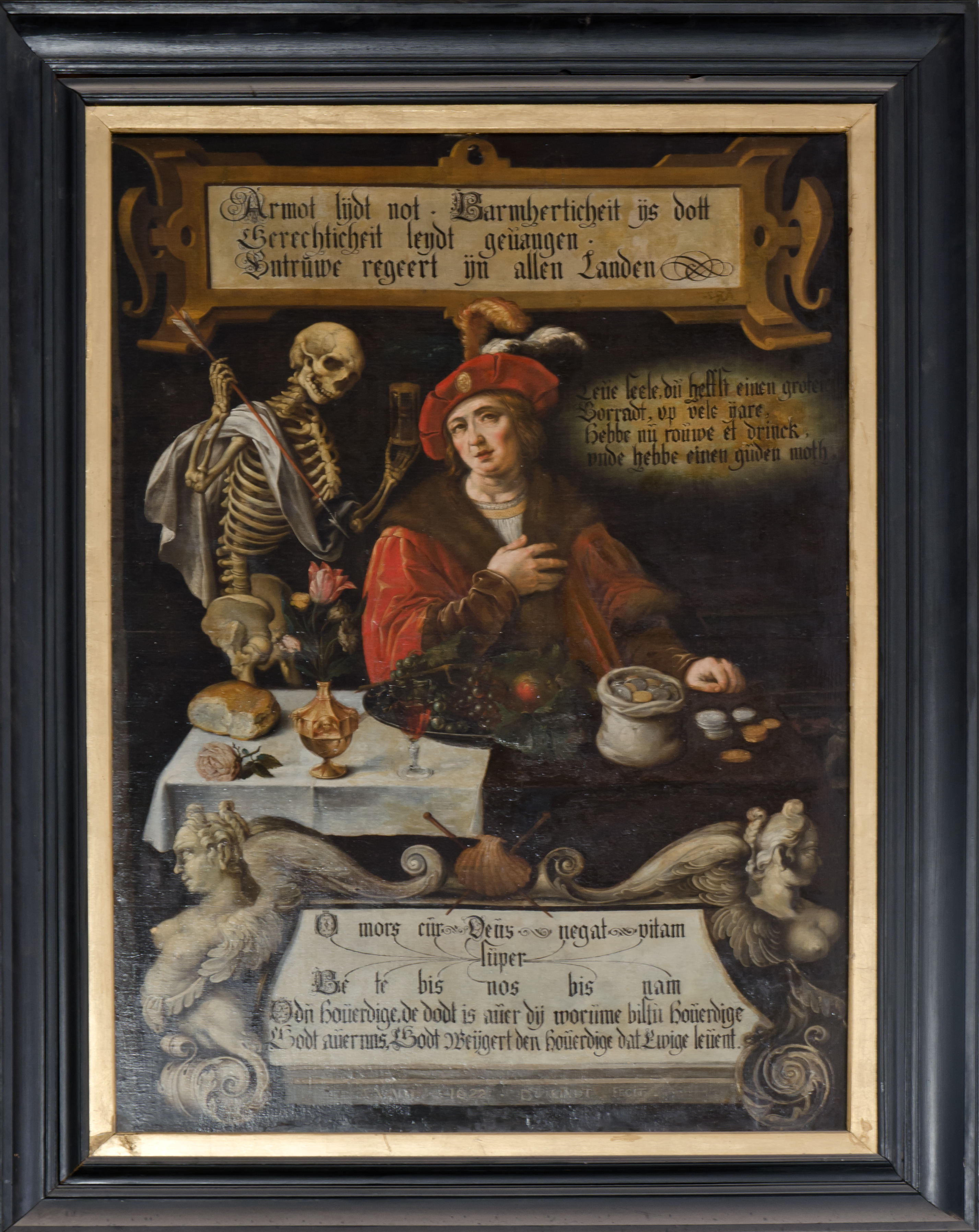
It hardly seems fair to call him a fool. Call him a practical man, call him far-seeing, call him descendant of Joseph, I say.
What did he do when faced with a surplus? He saved! Did the thing I’ve been told since a lad I’m to do with the coins that remain. When the rainy days comes, I’ve been told, they’ll be there.
In Egypt, the dreams of a monarch warned Joseph, “Prepare when it’s fruitful for days when it’s not.” And so I’ve been taught (if not followed so well), and so I have urged when it’s my turn to tell.
What’s wrong the rich man? Why was he a fool? He followed the ancient advice to the letter: Built barns that would hold all a good year produced; saved grain for the needs a bad year would demand.
Is that what he did? No, he said, “I’ll make merry with all of my goods in my barns and my hand. I might give a pink slip to all of my workers. They’ve done all I want, and I want to be done.”
Whose will the grain be? And whose all the wealth when the soul and the body divorce in the night? Not his. He has gone where the soul is the seed, and gold is the spirit which he had ignored.
How easy, how likely, to play such a fool, to mistake greed for prudence and pride for precaution. How often, I wonder, have I played the fool, for much lesser riches
And hubris as great? You know, Storyteller, and though you disclaim it, I know that you judge with a knowledge I lack. Though I’ve no grain for barns,
And no fruit for freezers, I’ll spend what I have for the people around me: a poem, a song, or even a sermon. May God bless these gifts. May God bless us all.
A poem/prayer based on Luke 12:13-21, the Revised Common Lectionary Gospel Reading for Year C, Proper 13 (18).
You know how it is with brothers and sisters and siblings of all kinds. Some days everybody gets along, and the next day nobody gets along. It’s squabbling from dawn to sunset, and on the following day everybody is happy again.
In one ‘apapane family, that wasn’t what happened.
Mind you, they were pretty good to one another in the nest. They were cheerful most of the time when they were learning to fly and when they were getting their adult red-and-black feathers. Each of them felt very grown up as they paraded their bright colors through the ohi’a trees.
For a reason nobody ever discovered, that’s when things fell apart. The two younger ones – and younger is a very narrow thing when you hatch in the same nest just minutes or an hour apart – couldn’t speak a kind chirp to one another. “You’re impossible!” said the brother, who was the middle one. “You’re more impossible!” said the youngest, who was one of the sisters. “There’s no such thing as more impossible!” said her slightly older brother, and it went downhill from there.
The oldest one, an older sister, listened to them with a mixture of laughter at her younger siblings and a fair amount of sadness that they couldn’t get along.
It got worse during nesting season. For some reason some of the supplies were in short supply. Twigs were in plenty, and grasses for lining, but a lot of the mosses were hard to find. The younger sister and her husband had a lot of trouble. Her older brother and his wife, on the other hand, did pretty well. It was chance, pretty much, but they actually had more mosses than they could use and his sister didn’t.
That’s when she flew over to her brother’s nest and clamored and called for help.
“No!” he called. “Go away!” But her nest really needed the materials, and she really couldn’t find them.
“Help! Help us!” she said, and she kept calling and pecking at the branch by the nest until, at last, he couldn’t do anything but give her some mosses and watch her fly away to her own nest.
Of course she came back. She still needed more. One beakfull wasn’t enough, as both of them knew. She had to go through the same thing again. And again. Until he relented – again – and she flew off with the mosses.
That’s when big sister appeared at her younger brother’s nest.
“Are you going to make her go through that again?” she asked.
“She’s annoying,” said her younger brother, which sort of was and sort of wasn’t an answer to the question.
“And you’re not?” said older sister, to which younger brother could only mumble in reply.
“Did you grow these mosses?” asked his sister. “Did you grow this tree? Do you make the sun to shine or the rain to fall? Do you make the sweet nectar in the flowers? Did you make it so that eggs could hatch and fledglings fly?”
Of course the answer to all those questions was no.
“Be like the sun. Be like the rain,” said his older sister. “Be like the tree and the flowers. Don’t make her peck and poke for what the world provides. It’s easier, too. You’ll both feel better.”
When the younger sister came back, her brother had mosses ready for her, and even helped her carry some back to her own nest. And when, in another season, it was the younger sister who found lots of nesting materials and older brother who didn’t, she shared without fuss or complaint.
They were like the sun, the rain, and the trees.
by Eric Anderson
Watch the Recorded Story
I write these stories in advance, but I tell them in worship from memory and improvisation. As a result, what I wrote doesn’t match how I told it.
“[Jesus said,] ‘I tell you, even though he will not get up and give him anything out of friendship, at least because of his persistence he will get up and give him whatever he needs.'” – Luke 11:8
I could wish that Israel had been so considerate of its poor, instead of getting into bed with riches and with greed. I’d think that hard-edged coins would break their sleep, but sleep they did until they slept no more.
I could wish that Hosea had been so considerate of his wife and children. Yes, It was a metaphor of power, but I’d think the tears of hard-said words and names would break their sleep, but sleep they did.
I could wish the neighbor heard his friend’s distress and rose with empathetic energy to meet his need. I guess the friend was fortunate that shouts and calls would break their sleep, until they brought the bread and slept anew.
I could wish all these many things and more, when wealthy men enrich themselves at the expense of people who, deprived of healing balm, find death would break their sleep, and carry them from this world’s cares.
While in the shadows Jesus watches, weeping. While in the shadows God is raging, tears a-stream to know that in these broken covenants even the rich will wake from sleep to find their fortunes blazing.
While in the shadows God the Holy Spirit waits for someone who will listen and embrace the wisdom that resounds of old: to give your neighbor care, and wake from sleep to bright and joyful day.
A poem/prayer based on Hosea 1:2-10 and Luke 11:1-13, the Revised Common Lectionary First Reading and Gospel Reading for Year C, Proper 12 (17).
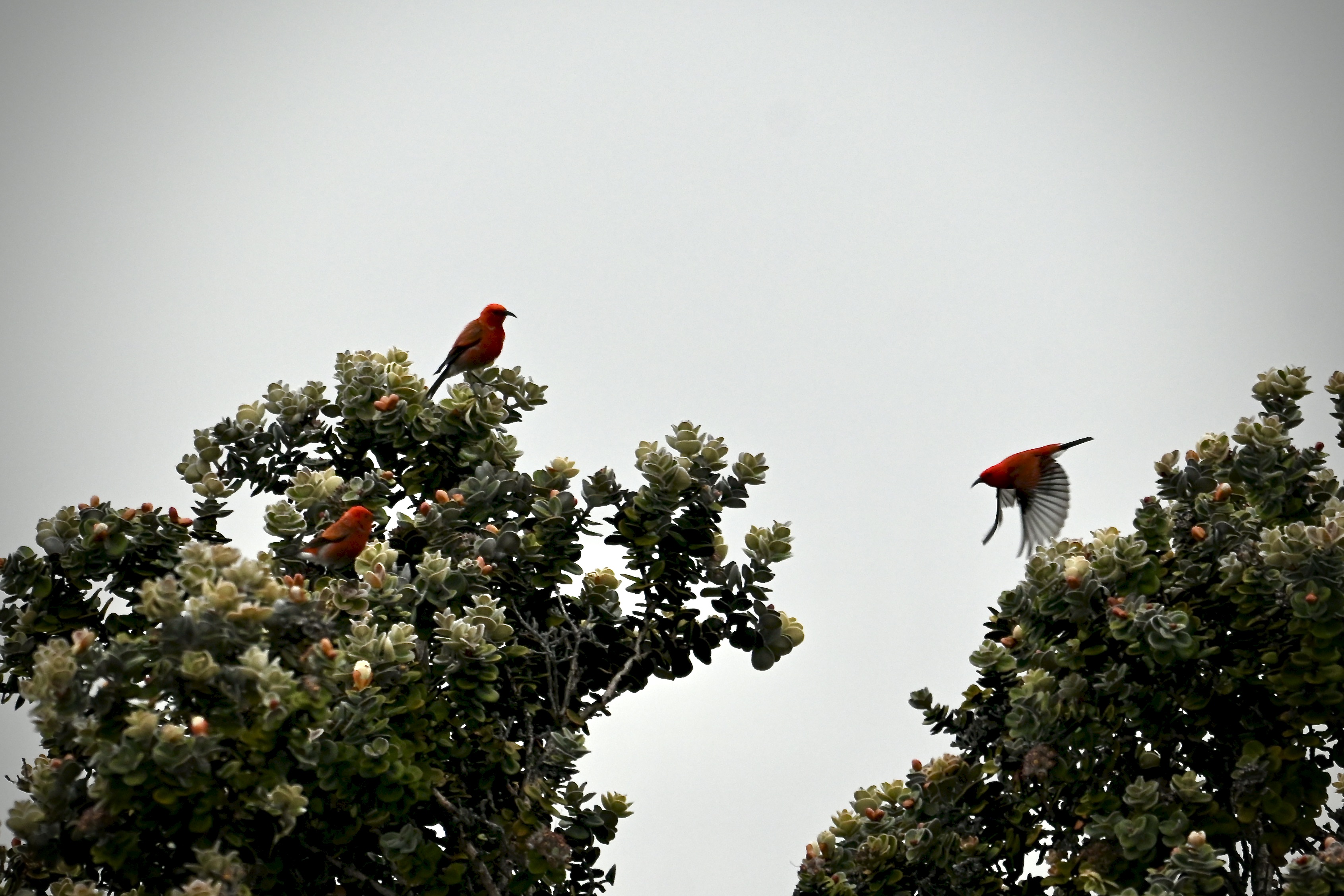
The oma’o’s heart was in the right place, mostly. The physical heart was, of course, in the right place in his chest and beating regularly. His emotional and spiritual heart was maybe a little bit off to the side, because while he was thinking a little bit about another living thing, it has to be said that he mostly was thinking about himself.
It was a thinnish koa tree that he chose to protect. Its leaves were pretty thick even if its trunk wasn’t the widest. He liked the flavor of its flowers. There were some other birds that did, too, and he began to chase them away whenever he saw them. “I’m preventing them from over-feeding,” he said to himself. “That way the flowers can bloom and the fruit will grow.”
There were also bugs and caterpillars on the trunk and branches of the tree. Some of those he ate, because an oma’o will eat just about anything. Most of them he ignored. Oma’o might eat anything, but when there’s fruit around, they’ll eat that.
But he also wouldn’t let other birds approach the tree to eat the bugs, either. He chased away ‘apapane and ‘amakihi, ‘alawi and ‘elepaio. He even chased away the hook-beaked ‘akiapola’au after he caught one digging into the tree bark with its short lower beak.
“Stop digging into this tree!” he shrieked. “You’re hurting it!”
“This caterpillar in the bark is hurting it,” said the ‘akiapola’au. “I’m getting it out.”
“Not while I’m around!” shouted the oma’o, and chased the other bird away.
As the days went on, the koa leaves started to turn funny colors and droop. When the oma’o landed on a branch, it didn’t spring back up the way it had. Twigs dried up and fell away. Leaves littered the ground around the base of the trunk.
“That tree is sick,” said an ‘elepaio to the oma’o. “It’s got too many bugs. Let us help!”
“No,” said the oma’o. “You’ll hurt it.”
“Look at all those caterpillar tracks below the bark,” said an ‘akiapola’au. “Let us dig them out. The tree will get better.”
“I’m not letting you anywhere near this tree,” said the oma’o.
Even he had to admit that things weren’t going well. He no longer ate flowers from the tree, because there weren’t any. He visited other trees for fruit. There were plenty of bugs to eat, but when he ate some, there were always more.
When a tree falls in the forest, it does make a noise. The birds hear it. And they cry about it.
The birds heard the oma’o’s tree fall. And they cried.
“Why are you crying?” the oma’o asked an ‘elepaio. “It was my tree, not yours.”
“I’m crying because that tree could have been a place to nest for decades,” said the ‘elepaio. “It would have sheltered my family in the rain,” said an ‘amakihi. “It would have fed my children and my grandchildren,” said an ‘akiapola’au.
Looking around, the oma’o realized that not only had he hurt the tree he’d called his own, he’d hurt all the birds around. Not only that, he’d hurt future generations.
When a tree falls in the forest, the sound of its fall echoes into the future.
by Eric Anderson
Watch the Recorded Story
I write these stories in advance, but I tell them from memory (plus improvisation), so it does not match the text you just read.
“This is what the Lord GOD showed me: a basket of summer fruit…
“The time is surely coming, says the Lord GOD, when I will send a famine on the land, not a famine of bread or a thirst for water, but of hearing the words of the LORD.” – Amos 8:1, 11
Your summer fruit, O God (and in these islands fruit of winter, fall, and spring), is filled with flavor, brightly colored, nourishing to body and to soul.
Your summer fruit, O God, is not like fruit of human avarice, which may be rich in flavor, but when it grows from stems of greed
It rots much quicker in the heart. It sickens not just those who eat, but also those who see the way to grow rapacious wealth
And plant their poisonous seeds as well. So we have seen, and now we see, your warning via Amos, God, against the ones who grow their fruit
by trampling on the needy, ravishing the poor, rushing to sell short and place their thumbs upon the scales.
The poor are sold for silver and the needy are worth less than shoes. E’en so the fruit of greed decays and poisons all who breathe its stench.
A poem/prayer based on Amos 8:1-12, the Revised Common Lectionary First Reading for Year C, Proper 11 (16).
@dailyshoot: 2010/10/11: Let’s start out the new week by making a photo with a red point of interest. Make sure your subject really stands out. #ds330
Don’t get close to my rotten tomatoes. After all the effort to grow them, being sick, I’ve not had time or energy to cook with them. These two went to the compost, the basket to the trash, and the remaining toms to a neighbor who can use them right away.
“[Jesus asked the expert in the law] ‘Which of these three, do you think, was a neighbor to the man who fell into the hands of the robbers?’ He said, ‘The one who showed him mercy.’ Jesus said to him, ‘Go and do likewise.'” – Luke 10:36-37
We all know the story, O Jesus – a credit to you that we understand its scandalous message even today. “Who is my neighbor?” “The one who shows mercy.” Even the one whom we view eyes askance.
We all know the story. We’ve not softened its meaning. If we would be neighbors, the model Samaritan shows us the way. I just have one question: When did we choose that we would not be neighbors?
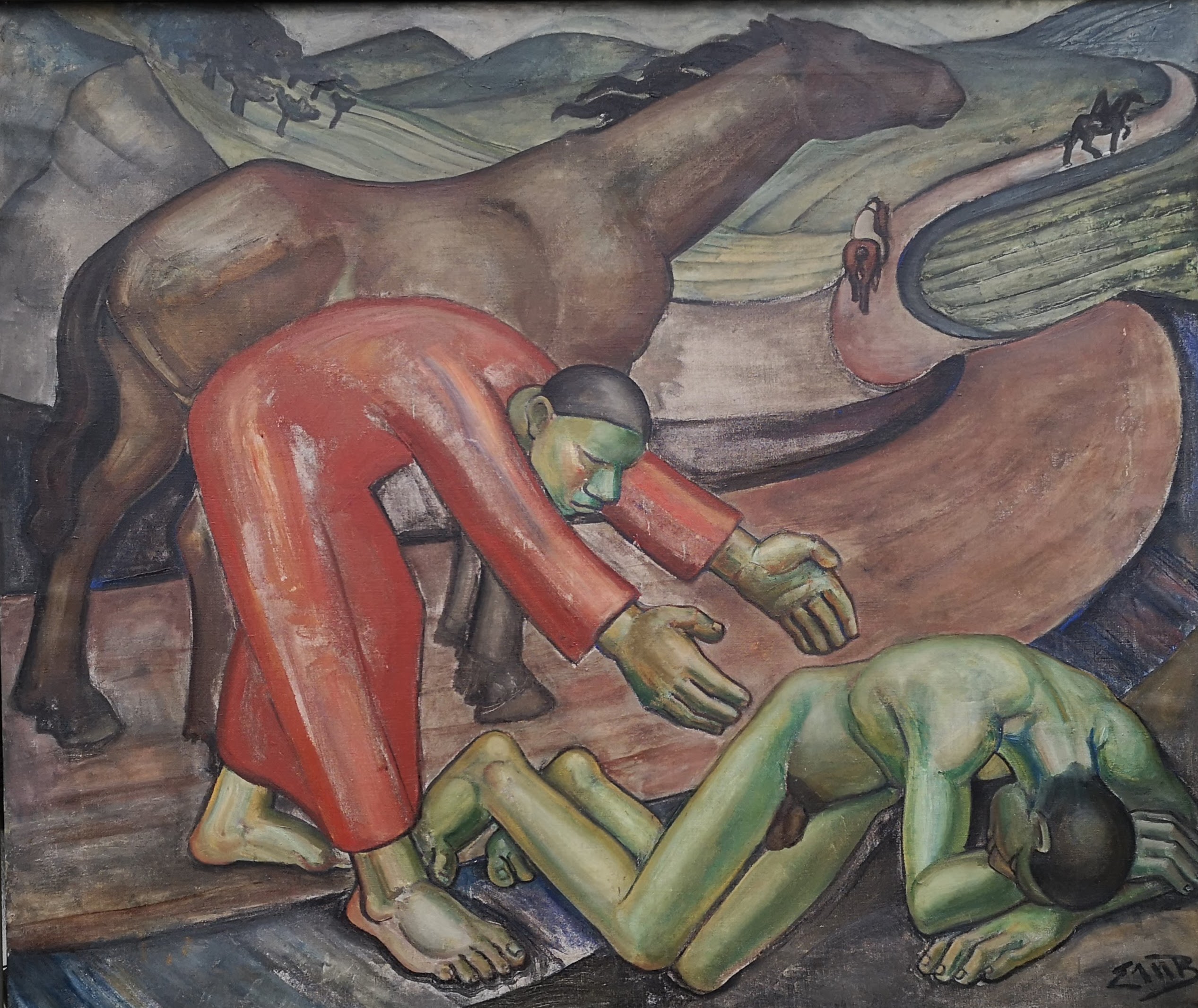
Mercy lies bleeding on the stones of the highway.
A poem/prayer based on Luke 10:25-37, the Revised Common Lectionary Gospel Reading for Year C, Proper 10 (15).
The image is Den barmhjertige samaritaner (The Good Samaritan) by Elisa Maria Boglino (1928) – Eget foto af maleri udført af (own photo of painting of) Elisa Maria Boglino, CC BY-SA 4.0, https://commons.wikimedia.org/w/index.php?curid=73771804.


 ordainedgeek