February 22, 2026
Genesis 2:15-17, 3:1-7
Matthew 4:1-11
Saltiness, sweetness, and yes, I’m visiting another one of the taste buds. I’m afraid it’s bitterness. That’s not a favorite for many people.
Now, coffee drinkers do tend to like some bitterness to it, but the birds of the mountain forests don’t drink coffee. Instead, they drink nectar, and as I mentioned last week, nectar is basically sugar, so it’s sweet. ‘Apapane and ‘amakihi both like the nectar of ohi’a and koa and mamane and lots of other flowers and flowering trees of the forest, as well as some of the fruits.
Those trees don’t flower all at the same time, and they don’t flower all the time, so the birds have to move to and fro to find the ones in blossom. If you’ve got wings to fly with, that’s not so bad, but when those birds can’t find flowers, they look for other sources of food. Mostly, that’s bugs and spiders.
To which I say, yuck.
As it happened, so did an ‘amakihi.
Plenty of birds, ‘apapane and ‘amakihi and others, like the taste of bugs. They like the flavor. They like the crunch. Best of all, they like the way that after they eat some, they don’t feel hungry, which is a very good thing.
This ‘amakihi didn’t like feeling hungry, it’s true. Unfortunately, he really didn’t like the crunchiness of a bug meal. And he didn’t like the flavor at all.
“It’s bitter,” he complained.
“It’s not that bad,” said a friend.
“I rather like it,” said another friend.
“Yuck,” said our ‘amakihi. “It’s bitter and nectar is so much better. I don’t want to deal with a crunchy life.” So he flew off to look for flowers.
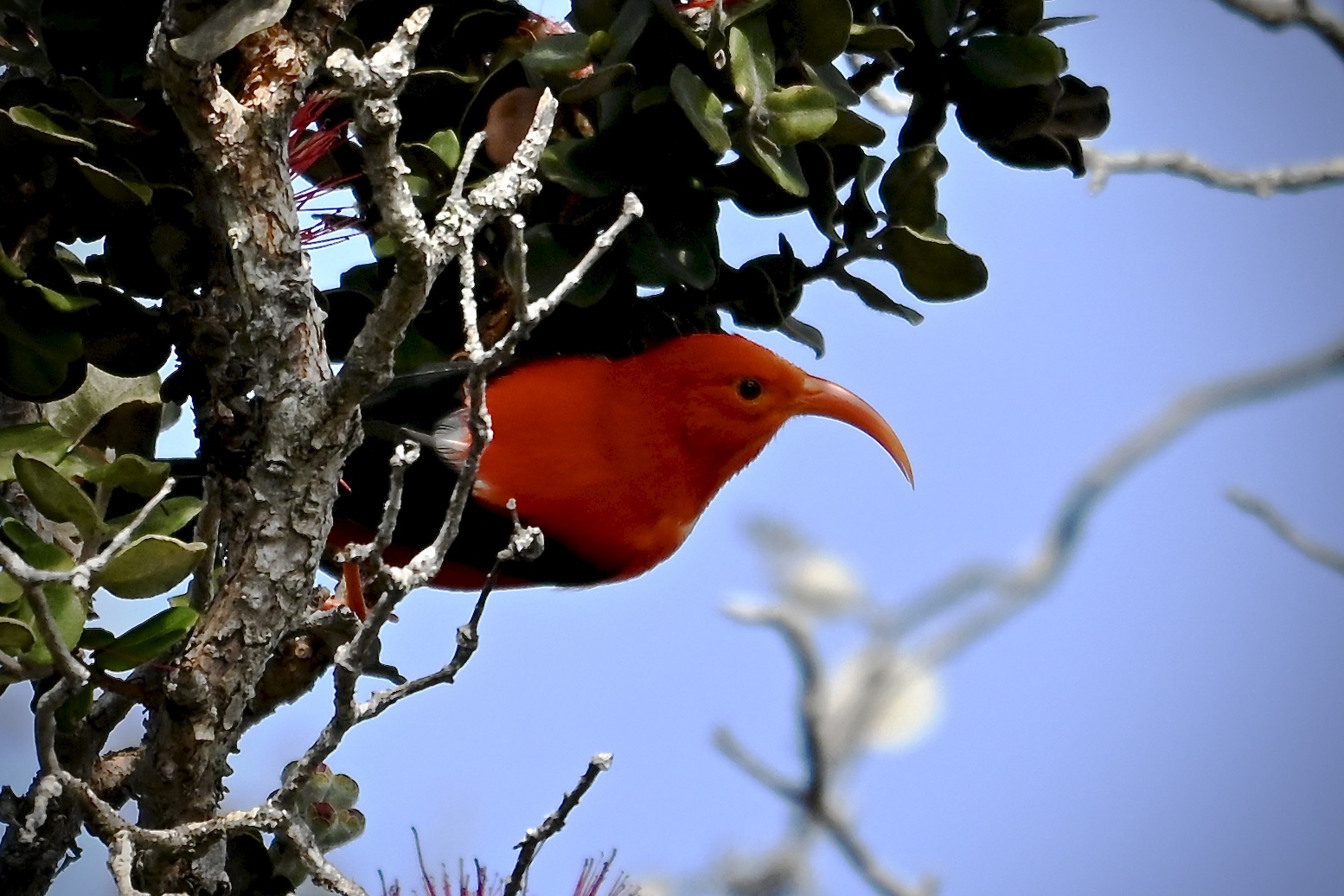
It was a bad day for nectar. Most of the trees were in seed, not flower. The trees that did have flowers also tended to have grumpy i’iwi in them who’d chase him away. He’d get a sip or two from a lonely flower on a lonely tree, then fly off again, sometimes with an i’iwi behind him.
It was a bad day for nectar, and it was a bad day for him.
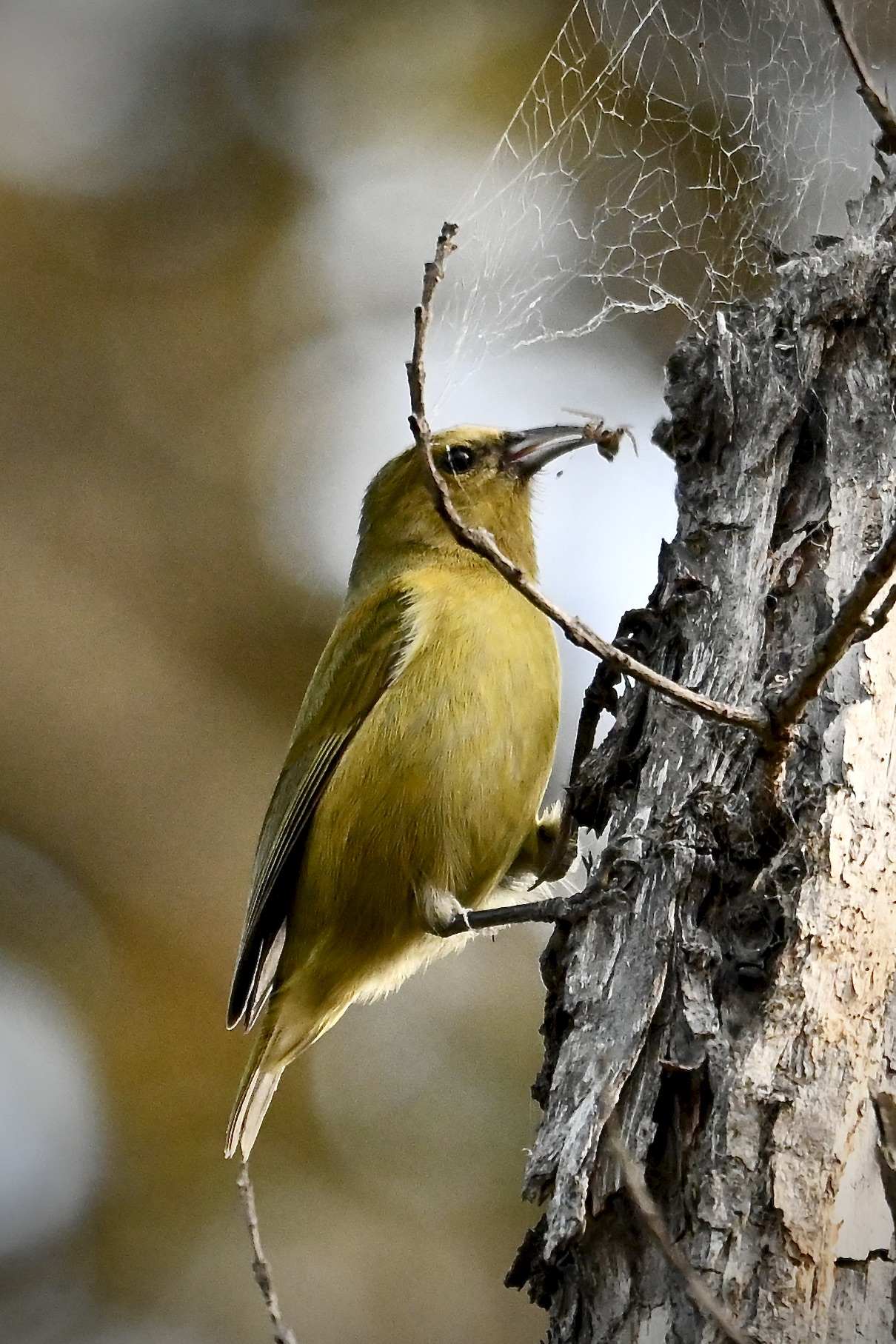
Sitting on an ohi’a branch, he spotted a spider’s web. That had made for a bad day for some bugs, but now the ‘amakihi was hungry enough that he’d manage the bitterness. He poked his beak about until the spider came out, and a moment later he’d eaten it, bitter crunch and all.
“Yuck,” he said, but his heart wasn’t in it. That bit of food inside him made him feel so much better, so much better than he’d expected. He found another spiderweb and another spider, and he caught a couple of flying bugs as well.
“How are things going?” asked one of those friends he’d flown away from a couple hours before when he went to search for nectar. “Did you find what you were looking for?”
“Not really,” he said. “I didn’t find many flowers, and the ones I found were claimed by i’iwi who chased me away. I found something better, though.”
“What’s that?” asked his friends.
“I can deal with the bitter when I have to,” he told them. “I can hold on until a better day. I can appreciate being fed even when it’s not so sweet. I can even savor the crunchiness of life.”
by Eric Anderson
Watch the Recorded Story
I write these stories in full, but I tell them from memory and from interaction. The story as you read it does not match the way I told it.
Photo of an ‘amakihi (and a spider) by Eric Anderson.

 ordainedgeek