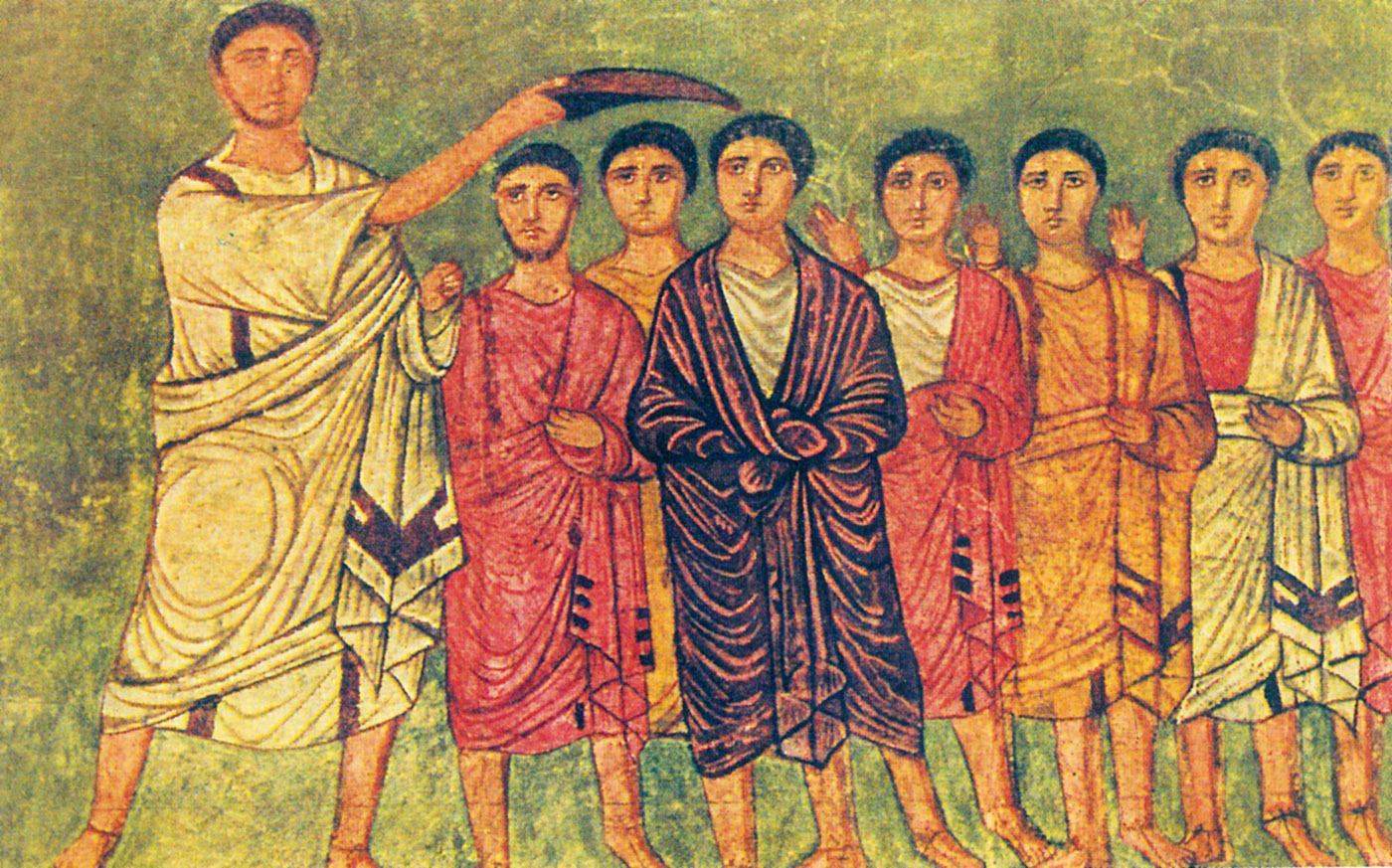
“Jesse made seven of his sons pass before Samuel, and Samuel said to Jesse, ‘The LORD has not chosen any of these.'” – 1 Samuel 16:10
Eliab, no. Abinadab: rejected, too. Perhaps Shammah? Well, no. Not he. Four more paraded past their father and the prophet and of those seven sons you chose, O God,
Not one.
I wonder if they knew. I wonder if they guessed, since all seemed to have heard that king and prophet were at odds. Were they at all concerned that You, O God, sought to incite rebellion?
Maybe one?
You told the prophet you peer in the heart, where humans cannot comprehend (my own heart is a mystery). Full seven times you looked, and saw, and told the prophet, “No.
“Not this one.”
What did you see in David, God, for he committed sins that Saul had never dreamed. A hasty spear that missed is terrible. Conspiracy to cover up a rape is so much worse, as David did.
This one.
They fade away from this account: Eliab and Abinadab, Shammah as well. Four brothers’ names have fallen from the tale. I wonder, though, how many breathed a soul-relieving sigh that they were not anointed by the sage, that they were not
The one.
A poem/prayer based on 1 Samuel 16:1-13, the Revised Common Lectionary Gospel Reading for Year A, Fourth Sunday in Lent.
You are the light of the world. A city built on a hill cannot be hid.
“[Jesus said,] ‘People do not light a lamp put it under the bushel basket; rather they put it on the lampstand, and it gives light to all in the house. In the same way, let your light shine before others, so that they may see your good works and give glory to your Father in heaven.'” Matthew 5:15-16
You sure do build on Scripture, Jesus. God told Abraham that he and Sarah would become a blessing to the nations of the world, to all the families of Earth.
A pity that he promptly lied and said his wife was not his wife, and gave her up to Pharaoh for a concubine, which cursed the land, afflicted every family.
Isaiah comforted survivors of a great destruction after years had passed, declaring that the people, soon renewed, would shine a beacon to the aching world.
A pity that so many kept the ways that frustrated the prophets years before, preferring their own wealth and potency and damming justice’ waters lest they flow.
Well, Jesus, to fulfill the broken Law and bring to life the prophets’ promised call will call for more than human frailty, unseasoned salt, or lamp without a flame.
Can we fulfill what you came to fulfill? Can we preserve and season all the Earth? Can we be candles brilliant in the dark? Can we be great in Heaven’s realm of life?
A poem/prayer based on Matthew 5:13-20, the Revised Common Lectionary Gospel Reading for Year A, Fifth Sunday after the Epiphany.
The image is “The Candle,” an etching by Jan Luyken illustrating Matthew 5:15 in the Bowyer Bible, Bolton, England (1795). Bowyer Bible photos contributed to Wikimedia Commons by Phillip Medhurst – Photo by Harry Kossuth, FAL, https://commons.wikimedia.org/w/index.php?curid=7550068.
“And he began to speak and taught them, saying: ‘Blessed are the poor in spirit, for theirs is the kingdom of heaven.'” – Matthew 5:2-3
By God, you’ve got it so wrong, Jesus. Do you really not know? That’s not how it works.
The poor in spirit won’t receive the kingdom of heaven. The poor in spirit are poor by their own negligence. They could be rich, you know, if they made the right choice, invested in the things that bring them gain, ignored the claims of other obligations, engaged in fraud, then they’d be rich…
In spirit. Right. Of course. In spirit.
The ones who mourn, will they be comforted? There’s a whole industry to comfort them. They’ll pay for it, of course, because who wants to write insurance for a mental health distress? If they were rich, they’d comfort themselves…
In spirit. Right. Of course. In spirit.
The meek? Don’t make me laugh. The earth belongs to those who take and seize and hold it firm. The meek are those who follow orders barked by armed and masked anonymous authorities. The meek are not entitled to the earth…
In spirit. Right. Of course. In spirit.
Now how can you assert that anyone is hungering for righteousness? We have the law (that serves me well) and isn’t that enough? And if we bend it some to punish those we’ve in advance condemned, we will not satisfy this thirst of sentimental saps…
In spirit. Right. Of course. In spirit.
I see the people who cry, “Mercy!” stand between the human vultures and their prey, and hear them ask the victims if they are OK, and tell the wolves, “That’s fine, dude. I’m not mad at you,” and they receive the mercy I expect…
In spirit. Right. Of course. In spirit.
As for the pure in heart, they can be pure as pure they wish to be. But if they live where I don’t want them to, and if they live on land I want, well. They’ll just have to move. If they resist, they will see God for sure…
In spirit. Right. Of course. In spirit.
Now if I claim to be a peacemaker and threaten nations with invasion after blowing boats to kingdom come and killing their survivors, you’ll give to me the prize of Child of God? That’s right…
In spirit. Right. Of course. In spirit.
Once more I tell you, Jesus, not one soul is persecuted for their righteousness. They suffer for their crimes, the crimes that I decide, the story that I tell, and I alone. Not heaven theirs, but hell, and hell on earth…
In spirit. Right. Of course. In spirit.
And tell me, Jesus, who you think has been oppressed or injured for their loyalty to you? We pepper spray the ministers who resist us, not for their faith in you. Do you maintain that they are marching in the streets on your behalf?
In spirit. Right. Of course. In spirit.
By God, you’ve got it so wrong, Jesus. Do you really not know? That’s not how it works.
And Jesus wept.
A poem/prayer based on Matthew 5:1-12, the Revised Common Lectionary Gospel Reading for Year A, Fourth Sunday after the Epiphany.
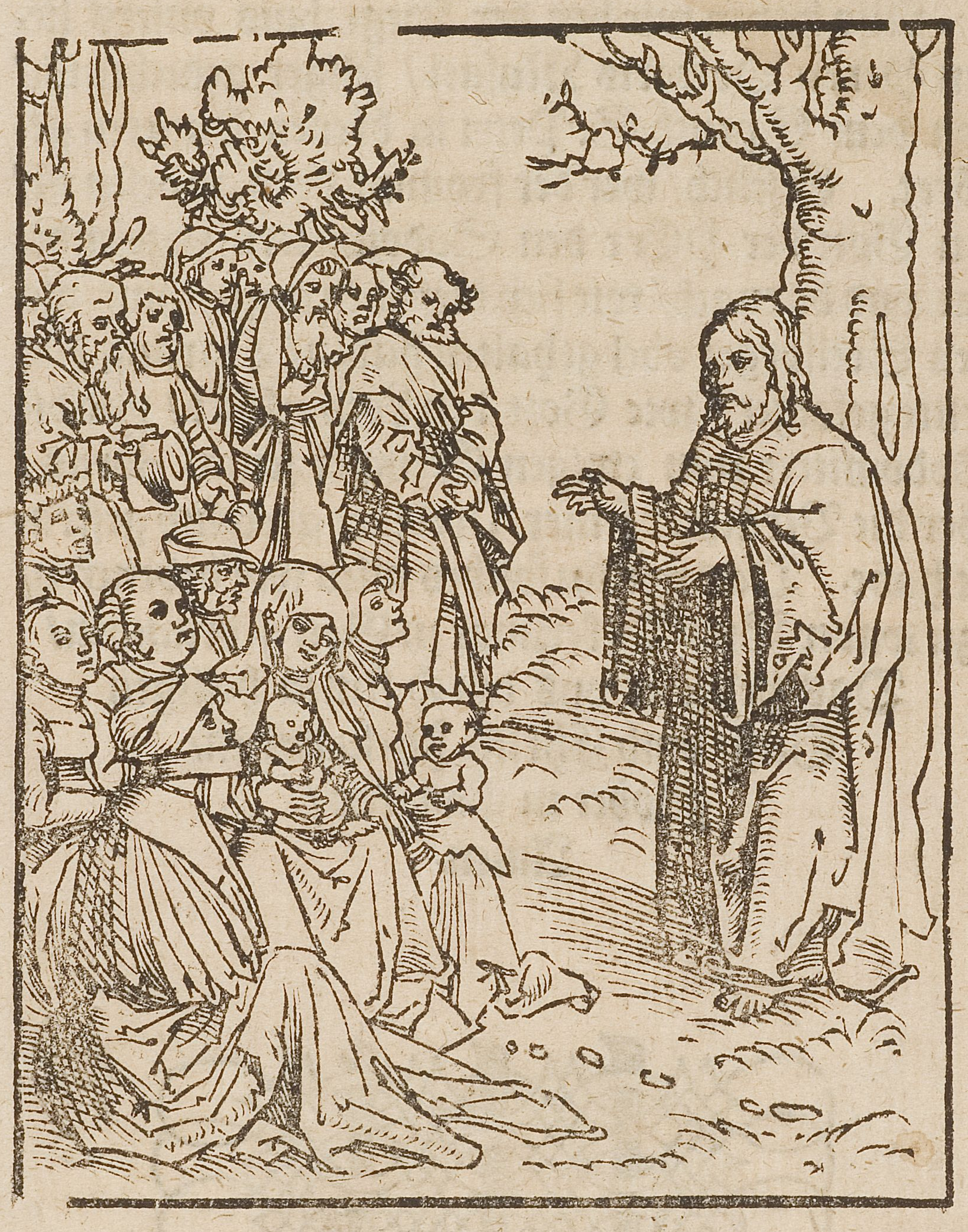
The image is “The Sermon on the Mount,” woodcut by Lucas Cranach the Elder, from his Passion Christ und Antichrist, Herzog Anton Ulrich-Museum, Braunschweig (1582) – Digitised image, Rheinisches Bildarchiv, Köln, Public Domain, https://commons.wikimedia.org/w/index.php?curid=50665418.
I wrote this song for worship on October 19, 2025, and it is based on the story of Jacob wrestling with God in Genesis 32.
[Chorus]
You’ve got to hold on, hold on Though your limbs are weary and your soul is tired You’ve got to hold on, hold on For the sun will rise and bless your eyes
[Verses]
Jacob sent all his riches ahead His brother had pledged to see him dead. How could he be safe? So he stayed behind Then he wrestled a man until the morning light.
[Chorus]
Jacob lost that match, and called the victor God. He held on to be blessed by eternal love. Now he walked with a limp but he strode out all right To reconcile with his brother in the morning light.
[Chorus]
When the shadows put you in fear Never forget: love is every near. It will come to your aid; it will never deny. You’ve got to hold on until the morning light.



 ordainedgeek