Story: Remember

October 26, 2025

Ephesians 1:11-23
Luke 6:20-31

I remember a good number of things. I also forget a good number of things. Some of them I’m happy to forget, especially if they made me unhappy at the time. Some of them I wish I could remember, especially if they involve the question of where did I put down my keys?

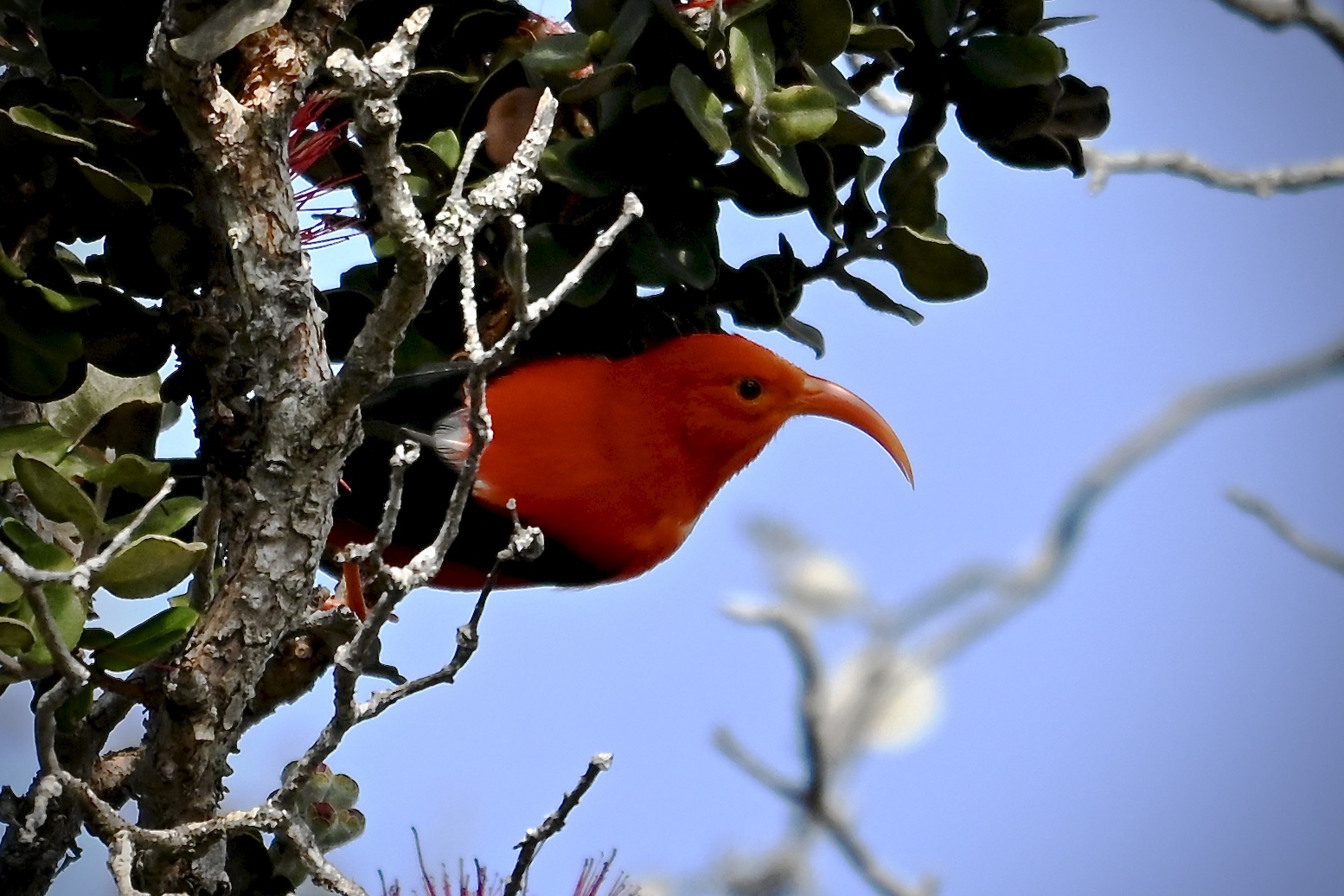
The i’iwi wasn’t much worried about the things he’d remember. He was worried about the things others would remember about him.

A lot of i’iwi get remembered by other birds as being, well, kind of aggressive. Bossy. Selfish. They drive other birds away from the places that they’re eating. Other kinds of birds do that, too, but when an i’iwi gets aggressive, ‘apapane and ‘amakihi will tend to give in and fly away.

“But is that,” he asked himself, “how I want to be remembered?”

He knew plenty of i’iwi that loved to chase other birds away. They claimed that they ate better when they did, but he also knew i’iwi that tended to ignore other birds, even slept in the same trees overnight. They seemed to eat just as well, he thought.

“How do I,” he asked himself, “want to be remembered?”

He had a friend who was one of the most effective bullies around. Where some of the aggressive i’iwi would chase an ‘apapane for a couple of feet, he’d chase them for a twice or three times as far. Sometimes he’d chase a bird so far that he’d find another bird in the place where he’d started, and he’d chase that one, too. If that seems like extra work to you, it does to me, too. Still, he was flashy (but then, all i’iwi are pretty flashy) and he was popular (as long as he wasn’t chasing you).

“But is that,” he asked himself, “how I want to be remembered?”

Then he remembered his grandmother.

She didn’t take any nonsense from other birds, no she didn’t. No ‘apapane had ever driven her away from a cluster of ohi’a blossoms. But she’d never chased an ‘apapane, either, or an ‘amakihi, or a young i’iwi. In fact, she’d let other birds know when she’d found a good spot, whatever the color of their feathers.

His grandmother loved him. He knew that, because she used to hop aside so he could get to the best flowers.

He loved his grandmother.

He went to find her, and said, “I want to be remembered like you, grandmother.”

“That’s good,” she said. “Let’s go see if we can find something good to eat, and then we’ll let everybody else know.”

That’s how both of them would be remembered.

by Eric Anderson

Watch the Recorded Story

I write these stories in advance, but I tell them from memory (plus improvisation) during Sunday worship. The story you have just read will not precisely match the story as I told it.

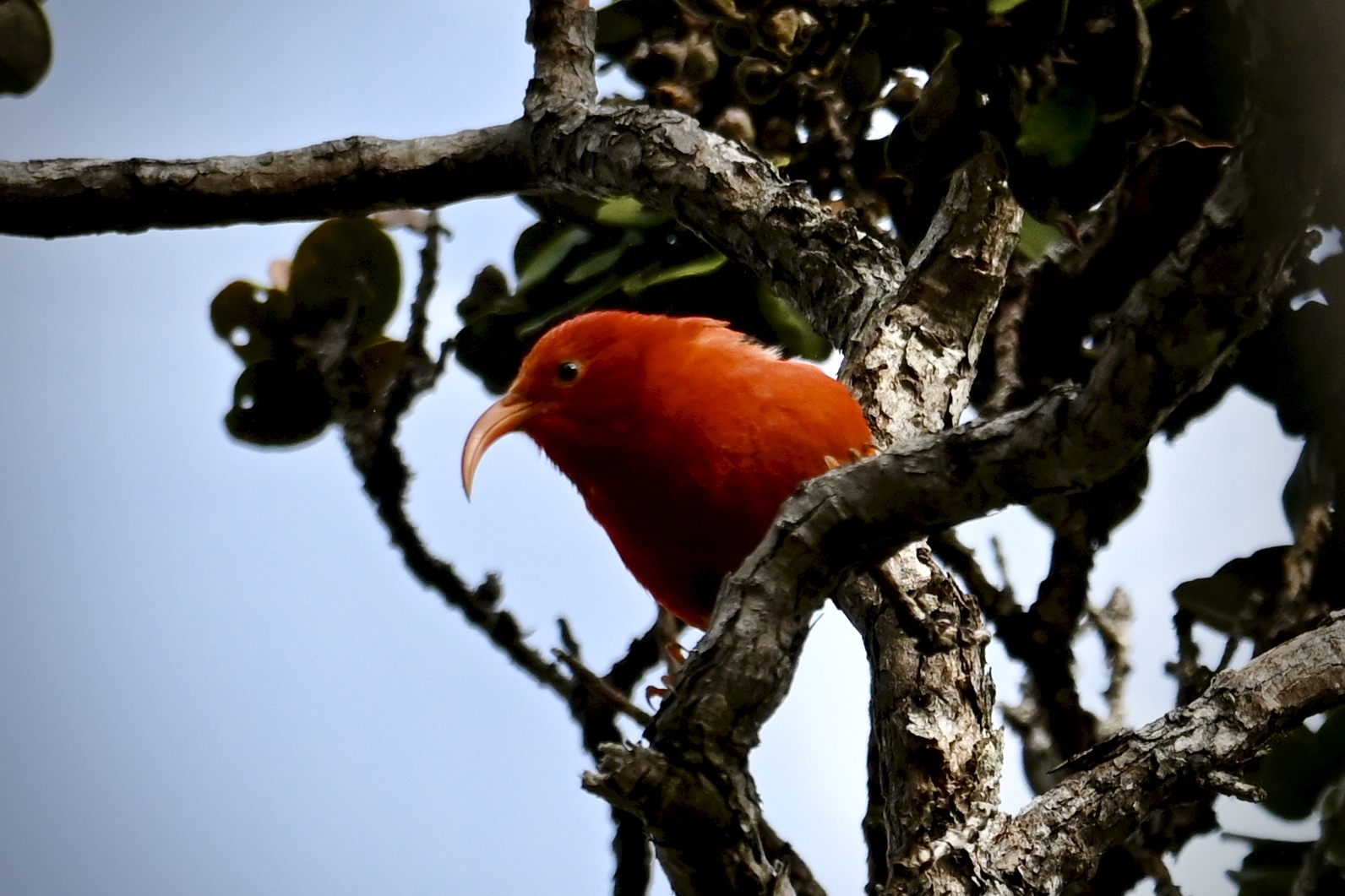
Photo of an i’iwi (being reflective?) by Eric Anderson.

Story: Small Differences

January 19, 2025

1 Corinthians 12:1-11
John 2:1-11

The akiapla’au is a small bird. It has a unique beak, with a short lower beak, and a longer top beak that hooks down in front of the lower beak. It may look odd, but the lower beak can drill into tree bark after bugs and grubs, and the top beak hooks them to draw them out.

If that seems strange, just imagine that you had to chase the chocolate chips through a cookie, and you might think a double-purpose beak sounds pretty good.

An akiapola’au is a small bird. It isn’t any bigger than a saffron finch or a yellow-beaked cardinal. There aren’t very many of them, either, perhaps about 1,900 here on Hawai’i Island. There aren’t any anywhere else in the world.

I think they’re pretty wonderful and pretty special.

A youngish akiapola’au, however, wasn’t certain about this. I don’t know whether he knew that birds like him live only on this one island, but I’m certain he knew there weren’t a lot of them around. Think about how you know so many of the people of Hilo, and how many of them you call “auntie” or “uncle.” After a couple of years, he knew pretty much every akiapola’au there was, and he called a lot of them “auntie” or “uncle.”

“There aren’t very many of us, and we’re very small birds,” he said to himself one day. “How will we ever make a difference in the world?” He had dreams, he did. He wanted to make the world better. He wanted someone else to benefit because he lived. He wanted to love the world somehow.

“But how?” he asked himself. “I’m too small to move anything bigger than a caterpillar with this beak of mine. And if we gathered all of us together and flapped our wings as hard as we could, what could we akiapola’au do but make a light breeze that the trade winds would blow away?”

It made him sad.

“Auntie,” he asked one day, “how can I make a difference?”

“What makes you think you don’t?” she asked.

“I’m too small to move anything,” he said, “and there aren’t enough of us together to make anything different.” Sadly, he dug out another little worm, hooked it with his upper bill, and ate it.

“What did you just do?” asked his auntie.

“Nothing,” he said, startled. “Well. I ate a worm.”

“Look at that tree over there,” said his auntie. “What do you see?”

“I see a sick tree,” said the younger akiapola’au. “It’s had so many caterpillars and worms that it’s fading. It might be dying.”

“What about this tree?” asked auntie.

“This tree is doing better,” he said.

“Why?”

“It doesn’t have so many worms and bugs,” he said.

“Why?” she asked.

“Because… I’m not sure. Is it because we’ve been eating them?”

“It is. And not just us. Other birds do the same. Between us, we’re helping this tree stay healthy.”

“But that’s just one tree,” he protested.

“I feed from lots of trees, and you know you do, too,” said his auntie. “That’s still a difference.

“You and I are small in the world,” she told him, “but these trees have better, stronger lives because of us. We make a difference for them, and they make a difference for us. For that matter, they make a difference for all the creatures of this forest. Our small difference contributes to everyone’s lives. You make the world a little better every day.”

by Eric Anderson

Watch the Recorded Story

I write these stories ahead of time, but I tell them from memory supplemented by improvisation. The story you just read will not match the way I told it.

Photo of an akiapola’au (though it’s not a good one) by Eric Anderson.

Story: The I’iwi Who Disliked Getting Wet

January 12, 2025

Acts 8:14-17
Luke 3:15-17, 21-22

She wasn’t vain, though she might have been. Her feathers ranged from deep black with white accents to the fiery orange-red that complimented her long curved beak. In short, she was an i’iwi, and those are feathers any bird would wear with pride.

Some birds are vain, and those birds might settle and resettle their feathers with their beak or their feet. They might avoid rainfall that would slick their feathers across their body, which can end up looking pretty sad and messy. Wet red feathers might look shiny and glossy, but they might also look dull and out of place. There are birds who would worry about that.

She wasn’t one of them. She kept herself neat because feathers in their places are more comfortable. She liked to greet other birds with some sense that she’d respected them by looking good. No, she wasn’t vain. But.

She didn’t like getting wet. She didn’t like it much at all.

Wet feathers might be glossy or they might be dull, but mostly she thought they were chilly and cold. And, well, wet. She didn’t like the sensation of drops pooling along her skin. Feathers are pretty good at shedding water, but they’re not as good as an umbrella or a raincoat. Eventually the rain seeps in, and she just didn’t like it.

“Yuck,” she said during one rainstorm. “I hate rain.”

A friend heard her complaint, which she’d made many times before. “You always say that,” he replied.

“I always hate rain,” she said. “Always.”

“Well, if you always hate rain,” said her friend, “have you ever thought of finding shelter?”

As it happens, she’d tried it. She’d tried trees with thick canopies of leaves. The rain got through. She’d tried gaps in the branches. They let water in, too. The saddest failure had been when she found a lava tube and settled there. To her horror, the rain poured in through the opening and flooded floor. Water rising from below, she thought, wasn’t any better than coming down from above. She told her friend so.

“Well, you can fly. Fly someplace without rain,” he told her, rather annoyed.

“All right. I will,” she said, and flew out into the rain.

Fortunately for her, she flew west across the center of the island toward Kona. I’m afraid she’d have found more rain, not less, here on the Hilo side. Sure enough, she found herself flying out from under the clouds as they exhausted their rain upon the slopes of Mauna Loa and Mauna Kea. Soon she flew over the sunny grasslands west of the mountains.

And she saw nothing to eat.

She flew back and forth, looking for ohi’a or mamane trees, and while she saw one or two, she certainly didn’t see a forest. It took a while for her to realize the truth: the trees she relied on relied in turn on rain. They needed the water that annoyed her, in order to provide her with the nectar that she needed.

Hungry, she turned back toward home, flying back beneath the clouds still shedding their rain. Back on the branch with her friend, she began sipping nectar from the damp flowers, with raindrops speckling her feathers.

“You’re back,” said her friend. “Didn’t you find sunshine?”

“I did,” she said, “but it turns out that rain isn’t so bad. At least the trees think so, and,” she paused to take another sip, “if they think so, I do, too.”

by Eric Anderson

Watch the Recorded Stories

I write these stories in full in advance, but I tell them from memory plus improvisation. What you have just read will not match the way I told it on Sunday.

Photo of an i’iwi by Eric Anderson.

Better than Appears

June 4, 2023

Genesis 1:1-2:4a
2 Corinthians 13:11-13

The young ‘amakihi had had a bad morning. First there was the big wind that had woken him, first by howling in his ears, then by twisting the branch he was perched on in a very odd way, third by pitching him off the branch into the air, and finally by whirling him along for a way, struggling to get himself upright and under controlled flight.

He’d managed it, but he was still breathing hard when he clutched the twigs of another ohi’a tree tossing in the breeze. It soon settled down, though – that had been a big puff of wind, but just one – when things got exciting again. His eyes caught movement overhead and he took to his wings once more, this time diving further down into the forest canopy to escape the i’o that had just broken from its spotting circle toward a hunting dive. His heart was beating wildly again when he found a space within the branches the i’o couldn’t reach. The i’o flew off to hunt somewhere else.

His breath was just settling to normal when suddenly there was an i’iwi whistling at him. The tree he’d perched in also contained the i’iwi’s nest, and she wasn’t about to put up with an ‘amakihi near her nest. She’d stayed quiet while the hawk was near, but after that. Well. Lots of whistles.

He flew off to another tree, blessedly free of i’iwi, i’o, or high winds, and reflected on his lousy morning. “This is a rotten world,” he said aloud.

“You think so?” said a voice. He looked up. Just to crown his bad morning, just when he’d said something she was bound to criticize, there was his mother.

“If you’d had the morning I’ve had,” he couldn’t help saying, “you’d agree. The world is rotten.”

“Is it?” she said, and beckoned him to follow. They flew over to a great field of lava rock, dark grey and hard and heating up in the morning sun.

“Right! Just like this! Hard and colorless and hot,” he told his mother, who said: “Look again.”

This time when he looked he saw the water droplets left by a rain shower, shining like stars in a grey sky, but now on earth rather than above. He looked again and saw, in the cracked rock, water soaking into small bits of sand. Some of those bits of sand had green things growing in them, some of them had fern shoots, some had leaves waving above. There was ohi’a growing here and there from those crevasses: shoots, stems, bushes, even small trees. His mother led the way down to one young tree in full blossom. They landed amidst the perfume of its nectar.

“The world isn’t so bad,” he said when she gave him a look. ‘Amakihi mothers have a Look, you know, much as many human mothers do.

“Taste,” she said, and even though he knew what he’d taste, he did.

He gave his mother an ‘amakihi smile. She gave him one back.

“The world,” he said, “is good.”

by Eric Anderson

Watch the Recorded Story

I tell these stories from my memory of what I’ve written. And, well, my notion of how they might be improved in the telling.

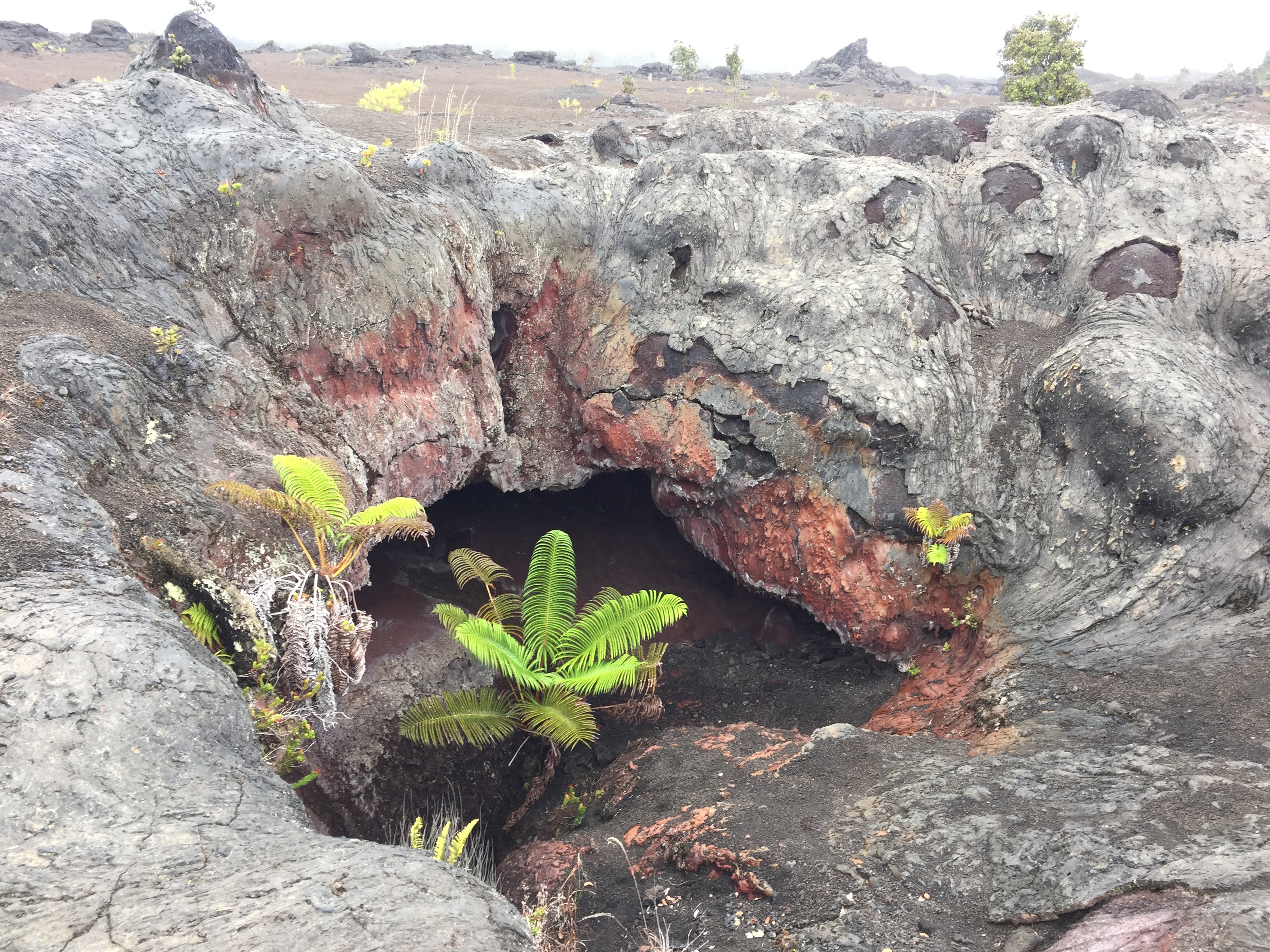
Photo by Eric Anderson.

Shifting Prayer

Be like the sun, O Holy One,
that warms the morn with glowing light,
excites the air to jump and dance,
and grants us comfort from the chill of night.

Be like the rain, O Holy One,
that cools the overheated day,
bathing our perspiring brows
and moistening our clay.

Be like the stars, O Holy One,
that wash the darkened Earth with light,
that raise our gazes heavenward
and glorify the night.

Be like the clouds, O Holy One,
which we cannot control,
that may bring rain, or part for sun.
In either, bring us respite for the soul.

Today I am grateful for physical rain – and spiritual rain – to soothe an overheated time.

Photo by Eric Anderson.

Mine?

You can stop right there, Jesus,
after beatitude/blessing/makarios
(Hey! I can pray in Greek!)
the first. You know as well as I
the poverty of my spirit.

No mustard seeds to see,
no pearls beyond appraisal,
no fields a-hundred-fold
to view for you. Just sighs
and bluster nearly equal there.

So you might want to think again
about this notion you would make
the realm of heaven mine. I can’t
conceive of an idea much worse
despite the virtues of the thinker.

For you to give the realm of God
to me is just as ludicrous
as if you gave the keys of heaven
to a fisherman named, “Rock.”

Oh. That’s right. You did.

A poem/prayer based on Matthew 5:1-12, the Revised Common Lectionary Gospel reading for Year A, Fourth Sunday after Epiphany.

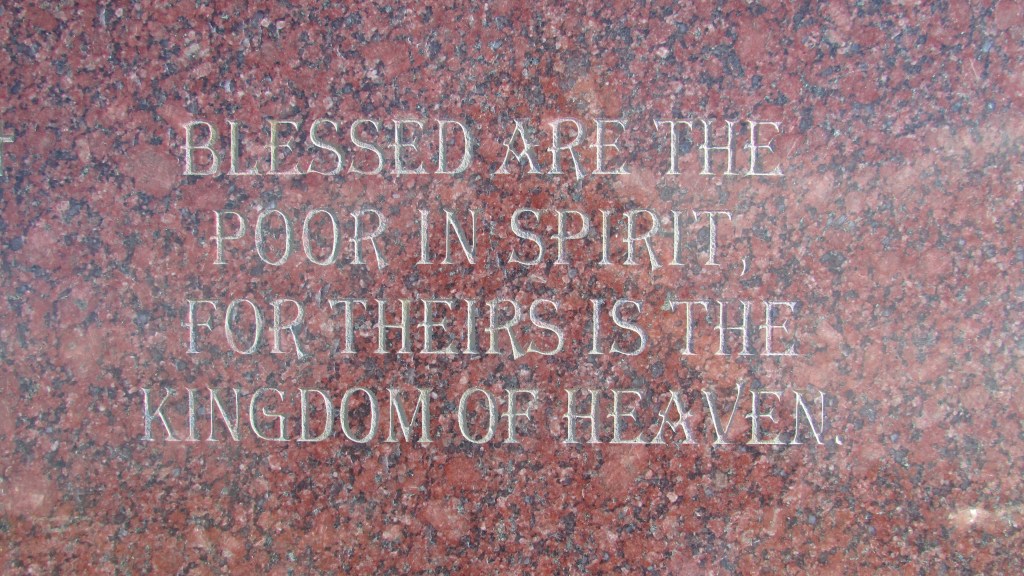
Photo is of a monument at Our Lady of Peace Shrine, Pine Bluffs, Wyoming. Photo by Chris Light – Own work, CC BY-SA 4.0, https://commons.wikimedia.org/w/index.php?curid=53688733.

That’s a Laugh

Fumes still rise in Leilani Estates, Puna, Hawai’i.

Blessed are the poor, you say?
I turn to shroud my laughter.

Blessed are the hungry now? Indeed?
I pop a snack into my mouth to hide the grin.

Blessed are the weepers?
Sure. No doubt. Except for… not.

Blessed are the hated and reviled?
Then you, Humanity’s Child, are the most blessed of all.

A poem/prayer based on Luke 6:17-26, the Revised Common Lectionary Gospel reading for Year C, 6th Sunday after the Epiphany.

January 2019 photo taken in Leilani Estates by Eric Anderson.