Story: Remember

October 26, 2025

Ephesians 1:11-23
Luke 6:20-31

I remember a good number of things. I also forget a good number of things. Some of them I’m happy to forget, especially if they made me unhappy at the time. Some of them I wish I could remember, especially if they involve the question of where did I put down my keys?

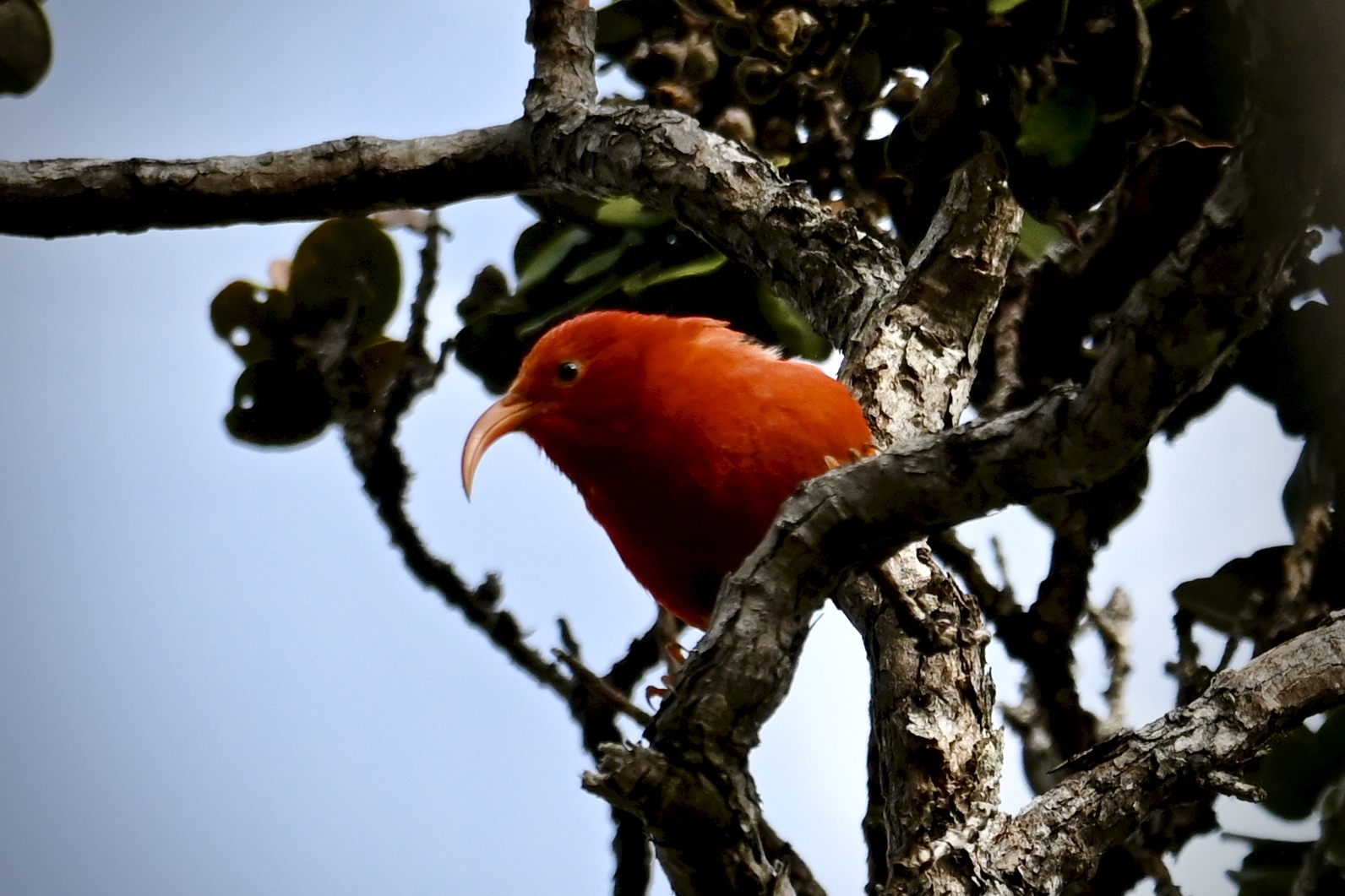
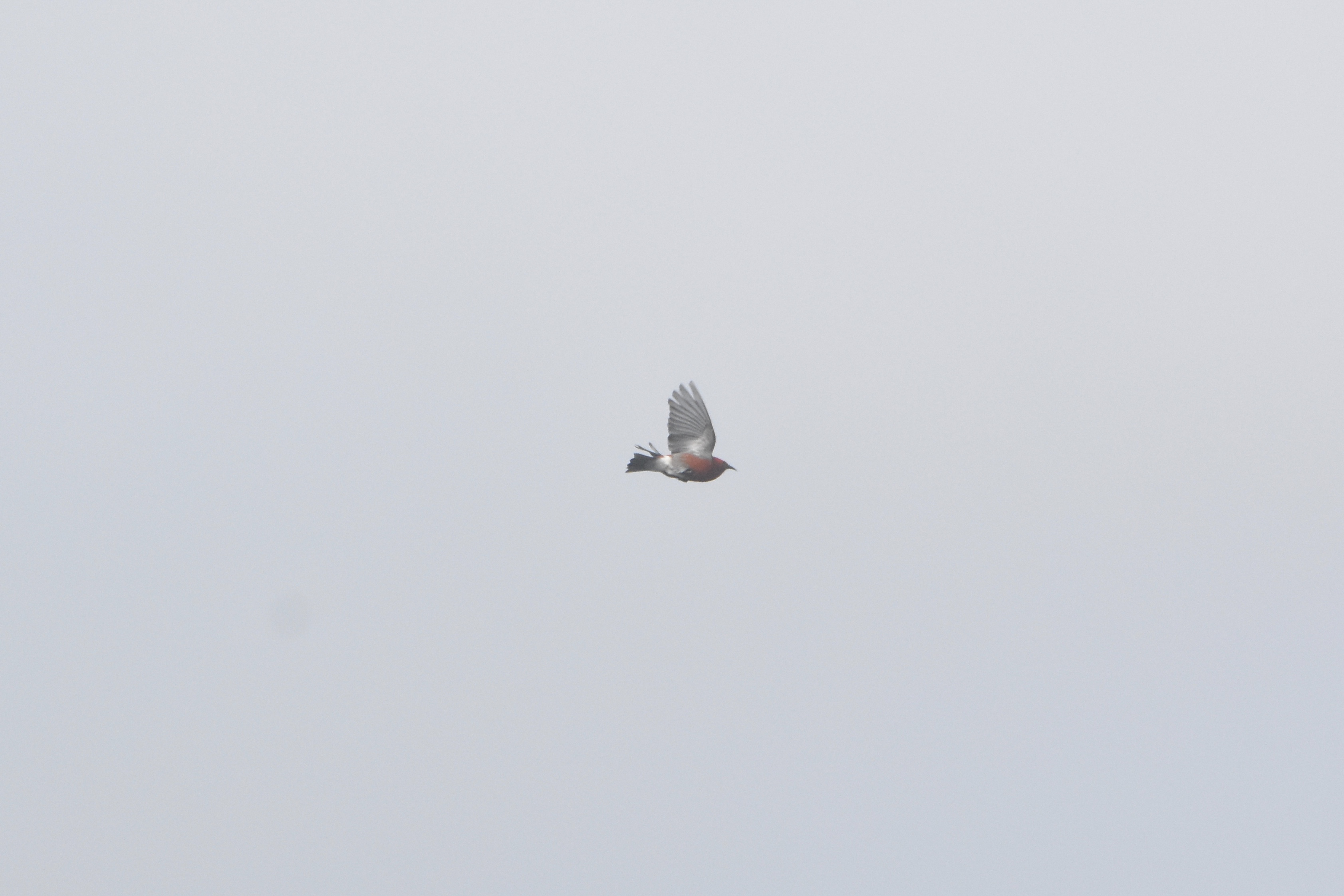
The i’iwi wasn’t much worried about the things he’d remember. He was worried about the things others would remember about him.

A lot of i’iwi get remembered by other birds as being, well, kind of aggressive. Bossy. Selfish. They drive other birds away from the places that they’re eating. Other kinds of birds do that, too, but when an i’iwi gets aggressive, ‘apapane and ‘amakihi will tend to give in and fly away.

“But is that,” he asked himself, “how I want to be remembered?”

He knew plenty of i’iwi that loved to chase other birds away. They claimed that they ate better when they did, but he also knew i’iwi that tended to ignore other birds, even slept in the same trees overnight. They seemed to eat just as well, he thought.

“How do I,” he asked himself, “want to be remembered?”

He had a friend who was one of the most effective bullies around. Where some of the aggressive i’iwi would chase an ‘apapane for a couple of feet, he’d chase them for a twice or three times as far. Sometimes he’d chase a bird so far that he’d find another bird in the place where he’d started, and he’d chase that one, too. If that seems like extra work to you, it does to me, too. Still, he was flashy (but then, all i’iwi are pretty flashy) and he was popular (as long as he wasn’t chasing you).

“But is that,” he asked himself, “how I want to be remembered?”

Then he remembered his grandmother.

She didn’t take any nonsense from other birds, no she didn’t. No ‘apapane had ever driven her away from a cluster of ohi’a blossoms. But she’d never chased an ‘apapane, either, or an ‘amakihi, or a young i’iwi. In fact, she’d let other birds know when she’d found a good spot, whatever the color of their feathers.

His grandmother loved him. He knew that, because she used to hop aside so he could get to the best flowers.

He loved his grandmother.

He went to find her, and said, “I want to be remembered like you, grandmother.”

“That’s good,” she said. “Let’s go see if we can find something good to eat, and then we’ll let everybody else know.”

That’s how both of them would be remembered.

by Eric Anderson

Watch the Recorded Story

I write these stories in advance, but I tell them from memory (plus improvisation) during Sunday worship. The story you have just read will not precisely match the story as I told it.

Photo of an i’iwi (being reflective?) by Eric Anderson.

Story: The ‘Apapane Army

Two birds with bright red feathers on their heads sitting on a branch, with a third bird flying up toward them from below.

January 26, 2025

Nehemiah 8:1-3, 5-6, 8-10
Luke 4:14-21

‘Apapane are not generally aggressive birds. They tend to be the ones that fly away from other, touchier, birds. Once in a while, though, ‘apapane will flock together and this discourages the bullies (which are mostly i’iwi, I’m sorry to say).

One year, an ‘apapane got an idea.

First, he gathered as large a flock as he could. There were dozens of birds, maybe a hundred birds. No i’iwi would threaten them, he knew.

Second, he chased away all the non-‘apapane. ‘Apapane will flock with ‘amakihi and ‘akepa sometimes, but not in this flock, no. He made sure that for every bird he chased away, he invited two or three more ‘apapane to join. The flock got bigger.

Third, he set his ultimate plan in motion. He called them into a stand of ohi’a bright with blossoms. “These are our trees, ‘apapane trees,” he told the gathered birds. “We will keep them for ourselves and only for ourselves. We will chase away the i’iwi so they never bother us again. More than that, we will chase away the ‘amakihi and the ‘akepa and the ‘alawi and anyone else who tries to steal our nectar. We will be the grandest birds in the forest.”

Sure enough, that’s what they did. They chased the other birds away from the trees they called theirs. They soaked up the sunlight, they reveled in the nectar, they crunched up the bugs.

The ohi’a forest, however, changes. The grove that is bright with blossoms today goes to seed tomorrow. The trees they had claimed for their own went from flower to seed. The ‘apapane began to get hungry.

“Do not fear!” he called. “It’s time to go get other trees.”

With that, an ‘apapane army took to the air. They flew to another stand of blossoming trees and they chased away all the other birds. Except for one. One bird remained perched in her tree, sipping from one of the bright red blossoms.

An i’iwi.

“Get out,” ordered the leader of the ‘apapane army. “These are our trees. ‘Apapane trees. You are not welcome.”

The i’iwi took another sip. “And what will you do if I don’t go?” she asked.

“We’ll mob you,” said the ‘apapane. “You’ll never have any peace.”

“But if I let you chase me from every tree with flowers, I’ll never have any peace, either,” said the i’iwi. “If I can’t have peace I might as well have nectar. And,” the i’iwi looked over the ‘apapane leader’s shoulder at the birds behind him, “I’m not sure if you’ve got a mobbing flock back there.”

One of the birds swallowed hard and hopped forward. “We’re not bullies,” he said. “It’s one thing to keep bullies away. It’s another thing to make other birds hungry.”

“Keep your place!” whistled the leader. “This is my decision! Mine alone!”

And that’s where the ‘apapane army broke up. There were birds who wouldn’t be bullies, so they flew away. There were birds that wouldn’t be servants, and they flew away. And there were birds that had had enough of army life, and they flew away.

Only three birds remained: the i’iwi, the ‘apapane leader, and the first ‘apapane who had refused to be a bully.

The ‘apapane leader asked the i’iwi, “So now you’ll bully us?”

“No, I don’t think so,” she said. “There’s plenty of nectar in the forest. Eat your fill.” The ex-leader stared at her a moment before flying away himself.

“Would you like some nectar?” the i’iwi asked the ‘apapane who wouldn’t be a bully.

“I would. Thank you. Thank you for everything,” he said, and side by side they sipped from the bright red flowers.

by Eric Anderson

Watch the Recorded Story

I write these stories in advance, but I tell them from memory plus improvisation. What you have just read is not identical to the way I told it.

Photo of three ‘apapane by Eric Anderson.

Story: Bully Price

November 24, 2024

2 Samuel 23:1-7
John 18:33-37

The noio, or black noddy, nests in the cliffs above the breaking waves on Hawai’i Island (and, actually, on lots of islands. They’re all over the Pacific and Atlantic Oceans). You’ll tend to find a lot of them close together. They raise their young together, they fly together, and they fish together.

One of the younger noio was fast, big, and strong. There were a few who were faster. There were one or two that were bigger. Nobody could remember anyone who was quite that strong, though. He used that strength to pick up fish that were just a little bigger than everyone else, and as you might expect, that was part of what made him big and strong.

One day as he was out fishing with lots of other noio, he saw an ‘Iwa, a great frigatebird, soaring around overhead. He didn’t think much of it until the ‘iwa dove down upon the flock of circling noio. It chased a noio who had just caught a fish until the noio dropped it, and then snatched the fish from the air, ate it, and climbed back into the sky.

Then the ‘iwa did it again. And again.

When it was no longer hungry it flew away. The frustrated noio returned to their fishing.

The big, strong noio was impressed. The ‘iwa had had a complete meal and never caught a fish on its own. That seemed like a lot less work than sweeping over the surface to pluck a squid from below.

So he tried it. He chased another noio, and it worked. The noio dropped its fish, and the bigger, stronger noio ate it. Then he did it again. And again.

The other noio squawked at him to no avail. He did it over and over until he was satisfied.

Nobody would speak to him later.

Nobody would speak to him the next day when he did it again. His friends, his cousins, even his own sisters wouldn’t say a thing except to squawk as he swooped and pecked to make them drop their fish.

Later, though, one of his uncles landed next to him on his ledge, which should have been crowded with noio, but everybody left when he landed. Except, now, there was his uncle, another big, strong bird.

“I heard what you’ve been doing,” said his uncle. “You’ve learned to be an ‘iwa.”

“I’m eating pretty well, too,” said the nephew. “You’re big enough to try it. It would work for you.”

“I did try it, long ago,” said his uncle, “but it wasn’t worth the price.”

“What price?” asked his nephew, though he already knew.

“The price of an empty ledge,” said his uncle. “The price of never having a friend, except for someone else who’ll bully with you, and who will bully you the first chance they get. The price of the skies emptying when they see you. The price of hearing only the wind and the waves when you should be hearing the cries of other noio.”

The nephew said nothing.

“Look around, nephew,” said the uncle. “Where are your cousins now? Who are your friends? Who do you fly with?

“Is it worth the price?”

by Eric Anderson

Watch the Recorded Story

I writes these stories in advance, but I tell them from memory (and improvisation), so what you read will not match what you see and hear.

Photo by Eric Anderson.

Story: The ‘Apapane Bully

July 28, 2024

2 Samuel 11:1-15
John 6:1-21

Last week I told you a story about an ‘apapane who, when he was selected to lead a mixed flock of ‘apapane, ‘amakihi, ‘akepa, and ‘alawi, learned a lesson about proper leadership. He may not have liked learning it, but he learned it, and in just two or three days.

This week, I’m sorry to say, the story is about an ‘apapane who didn’t learn that lesson in their week as leader, and… Well, maybe I should just tell the story.

He was big for an ‘apapane (not so big for an ‘io). That made him bigger than pretty much all of the birds, especially the smaller ‘akepa and ‘alawi. Other ‘apapane tended to hop or turn out of his way when he came to their branch or crossed his flight path. Even i’iwi, who tend to be the more aggressive of the forest birds, learned to recognize this ‘apapane and stayed out of his way.

It seemed natural that such a big, strong, confident bird should be selected as leader. Right? Leadership is what big, strong, confident people – er, birds – are for. Right?

It didn’t go well.

First of all, he didn’t really pay attention to the other birds. He’d just give orders. “Go find a better tree!” he ordered one bird, who was nearly caught by an ‘io that the leader hadn’t troubled to look for. “Let’s go!” he shouted when they headed to a new tree, but he didn’t bother to make sure that all the birds heard it. Half of them stayed behind. When he discovered that, he flew back to the old tree, screamed and shouted, and even beat at one or two of them with his wings.

Worst of all, he picked on the smaller birds. He’d find ‘akepa sipping nectar and he’d push them out of the way. He pecked at ‘alawi with his beak if they got close. And if they weren’t close, he’d hop over and peck them.

In short, he’d crossed the line from “leader” to “bully.”

Flock elders talked to him, and the next day went the same. His parents talked to him, and the next day went the same. Flock elders came in a group with his grandparents – always listen to tutu, right? – and it went exactly the same the next day.

The flock had had enough.

The last morning of his leadership, five flock elders perched before him. “Just so you know,” they said, “you will not be elected leader again.”

“How can that be?” he screeched. “I’m biggest and strongest. I’m made to lead!”

“We require leadership,” they told him. “We will not tolerate bullying.”

“You’ll do what I tell you!” he shouted.

“No,” they said. “Never again.”

Every single bird in the flock turned away from him. Not one turned in his direction. Not one followed his screeched orders. When he flew over to peck at an ‘akepa, ten other birds flew over and formed a living shield to protect her.

“You’ll be sorry!” he shrieked and flew away.

But as far as I know, that flock has never been sorry that they know the difference between leadership and bullying, and that they insist on leadership, and send bullying away.

by Eric Anderson

Watch the Recorded Story

I writes these stories in advance, then tell them from memory on Sunday morning. It’s a different medium, and the results differ, too!

Photo of an ‘apapane (who is not, as far as I know, a bully) by Eric Anderson.

Fighting the Storm

July 7, 2024

2 Corinthians 12:2-10
Mark 6:1-13

I like honu (green sea turtles). How about you? It’s just so comforting to me watching those sea turtles raise their flippers to the surface to breathe and look around, and then taking them down to snack on the seaweed, then turning themselves about like the most agile of dancers, then hauling themselves out on the shore to get a good solid nap in the sun.

I like honu.

It’s hard to believe that one could be a bully, but I’m afraid this story is about a honu who did become a bully. He’d shove smaller turtles out of his way as he grazed on seaweed. He knocked shells with honu who were in the spot he wanted to sunbathe in. Actually, he’d knock shells with a honu just to get it to move, then he’d nap somewhere else. He slapped other turtles with his flippers, he nipped them with his mouth, he’d slide over them when they surfaced to breathe, he… well.

He was a bully.

I’m sorry to say that, mostly, it worked for him. He didn’t have a lot of friends, and I guess part of the reason he was mean was that he didn’t have a lot of friends. But he ate a lot, and he got comfortable spots on the beach, and other honu didn’t pick on him, no they didn’t. So, as I say, it mostly worked for him.

Until, one day, he decided to bully the ocean.

The winds were strong and the surf was high that day. Rain lashed down from overhead so that even a honu found it difficult to tell where the sea top ended and the air began. Spray flew in sheets. Wavetops tossed careless fish into the air.

And this honu decided to go nap on the beach. I don’t think he expected to find sunshine there, but when somebody expects to get things his way all the time, who knows?

The problem was that the waves at the surface tossed him about, and when he dove down, the currents underwater dragged him back to sea. He was trying to get to one specific part of the beach, but the wind carried him along past where he wanted to go, and when he tried to swim back against it, he couldn’t – at least not from where he was. He lashed his flippers at the water both at the surface and deeper down, and in neither place could he make much headway.

Eventually he let the underwater current carry him back out to sea, where he surfaced and howled in rage – which is very rare for a honu – at the winds and the surf.

An older honu drifted by and said, “What’s the matter, youngling?”

He wasn’t that young, but she was a lot older (and bigger), so he didn’t quite yell back when he said, “The stupid wind and waves won’t get me where I want to go!”

“Watch the youngling there,” said the older honu, and he did. A younger, smaller turtle, one that he’d bullied any number of times, had positioned himself in a place where the combination of wind, waves, and current would carry him toward the beach. He made just the smallest of adjustments with his flippers as the water bore him along. Just at the beach, he dipped down to slow himself in the current going back and to avoid being thrown onto the shore from the top of a wave. Then he slid onto the shore, and slowly moved up on his now-active flippers.

“You can’t bully the sea, youngling,” said the older honu. “You shouldn’t bully anything, but especially not the ocean, which won’t notice you at all.”

It took him a long time to learn that lesson deeply, I’m afraid, and he spent a number of storms tossing about in the surf. Eventually, though, he learned that sometimes you don’t fight, you follow. And when he did, he fought less with other honu, and a bully learned to do better.

by Eric Anderson

Watch the Recorded Story

Due to a technical error, the story was not recorded this week.

Photo of a honu (who showed no signs of being a bully) by Eric Anderson.

Story: Stranger

August 20, 2023

Isaiah 56:1, 6-8
Matthew 15:10-28

When the young myna was a fledgling, he didn’t pay much attention to other birds around. As he grew he took more of an interest in the little flock and those around.

Mynas don’t typically pay a lot of attention to other birds – they save most of their squawks and shrieks for other mynas – but this young myna was a little more territorial. He thought the grasses and seeds and bugs and worms on his turf should be for the mynas, and pretty much only for the mynas. Other birds weren’t worthy. They could go wait in a corner until the mynas were done.

He would fly and shriek at the cardinals and finches and waxbills that settled on his flock’s patch of grass until they flew off to find a quieter place for lunch. The other mynas mostly ignored this; some birds go through this stage, they told one another. He’ll grow out of it.

To their surprise, there was one bird he was particularly mean to. He didn’t actually peck at this bird, but he’d get closer and scream louder and flap his wings harder at the kolea than any spotted dove. It might be because the kolea was actually slightly bigger than he was, so he put more effort into his, well, I guess we’ve got to call it bullying, don’t we? than he needed to for a little yellow-beaked cardinal. And I’m afraid the other reason was that the kolea was always alone. The saffron finches usually fed in pairs, but the kolea was always alone.

To this bully of a myna, that just made him vulnerable.

He’d scream and flap and chase and generally make himself obnoxious. The kolea never said a word, just hopped or flew aside until the myna was satisfied. And he always came back.

Until one day when the kolea wasn’t there, and the myna thought he’d won.

“I drove that one off for good!” he exclaimed, but there was a big myna argument going on so nobody heard him to correct him.

Months passed, and one morning he landed on his flock’s favorite grassy area to find the same kolea, resting peacefully and feeding on grasses and bugs and worms. The myna was furious.

“How dare you come back?” he shrieked. “You’ve no business here, you coward. I drove you off once, I’ll drive you off again!”

“Hold on a minute,” said an older, somewhat wiser myna. “What are you talking about?”

“I drove this pest away months ago. He hasn’t dared to show his beak since.”

“You didn’t drive him off,” said the older myna. “He spends the summers in Alaska.”

“Where?” said the bully myna, who’d never heard of Alaska, and of course the older myna had never been to Alaska, so it took some time to explain that the kolea had flown 3,000 miles over the ocean to get there, and another 3,000 miles to get back.

“That kolea’s no coward,” said the older myna in conclusion. “Nor are the saffron finches or the northern cardinals or the spotted doves. They just don’t like all the noise while they eat.”

The bully myna was silent. He couldn’t fly 3,000 miles and back, and he knew it.

“The kolea’s more worthy of eating here than I am,” he said.

“Everyone’s worthy of eating here, youngster,” said the older myna. “’Worth’ has nothing to do with being hungry and needing food.”

After that the young myna still had to be reminded to let other birds alone from time to time, but that was OK, because it usually meant that he got to screech at other mynas instead, and that, as we know, is just what mynas love to do.

by Eric Anderson

Watch the Recorded Story

I tell these stories live without notes – so they will always be different from the text I’ve prepared.

Photo of a myna by Eric Anderson

Story: Not Like That

June 25, 2023

Genesis 21:8-21
Romans 6:1-11

There were three fledglings in the ‘apapane nest, a sister and two brothers. All three had hatched on the same day, which is pretty common for ‘apapane. All three had steadily grown from the food their parents brought to them each day. They’d just begun to learn to fly.

For whatever reason, and who knows the reasons for these things, the sister grew more quickly than her two brothers. Her wing muscles got stronger faster, and she stood taller than they in the nest and on the branches near the nest. And… she started to take charge.

When father or mother came by at mealtimes, she got to the front first. Her brothers got the same amount of food that she did, so the parents didn’t remark on it, but she increasingly got fed first. When it came time for their first test flights, she summoned more of her parents’ attention than her brothers did. She’d fly a little farther among the branches of the nesting tree so they had to keep track of her. But she’d also sing out, “Look at me!” when father or mother started giving instructions to one of her brothers.

When they settled down at night, her brothers had to be satisfied with what room she left them in the nest. She began to push them aside when she wasn’t comfortable, and she began to order them to do things for her. She was bigger. She was stronger. They did what she ordered them to do.

They weren’t happy about it.

“Don’t complain,” she told them. “I’m the oldest and the biggest. You have to do what I tell you.”

She wasn’t actually the first to hatch, but they didn’t dare to tell her so.

Father and Mother didn’t actually notice all this. When one of them was nearby, they were the oldest and the biggest, and she didn’t try to dominate them. But the moment the three chicks were alone, she was in charge, and when she was in charge, she got what she wanted.

If one of her brothers had flown to a particularly nice cluster of ohi’a blossoms, she’d come along and order him away. If one of her brothers was relaxing in a sunny spot, she’d push him off the branch. If it was raining and one of them found a spot where the leaves kept the drops away, guess who would be dry at the end of the shower?

You guessed it. She would.

It was grandmother who spotted all this, observing from a neighboring tree. She flew over when big sister had taken over a cluster of ohi’a flowers.

“Not like that,” she told her granddaughter.

“Not like what?” said granddaughter.

“Stop bullying your brothers.”

“I’m not bullying them,” she said.

“You certainly are,” said grandmother. “You just took over this flower cluster.”

“I’m entitled,” said the big sister. “I’m the biggest and the oldest. How should I treat my little brothers?”

“Not like that. You all hatched on the same day,” said grandmother, “and soon enough your brothers will catch up to your size and one or both of them might get bigger than you are. Will you be content to be kicked off your flowers then?”

Her granddaughter had to admit that she wouldn’t.

“Treat your brothers the way you want to be treated. Treat them better, in fact. That’s how we build a strong family. It’s how we make peace among ‘apapane.”

She did change her ways, though it took a little while. Fortunately she did it before one of her brothers did, in fact, grow to be bigger than she was – but he had learned that lesson, too, and treated his sister as he wanted to be treated, and even better.

by Eric Anderson

Watch the Recorded Story

First I write the story (you’ve just read what I wrote). Then I tell it without the written copy in front of me. And… things change.

Photo of an ‘apapane in flight by Eric Anderson.

You Can Do Something

May 29, 2022

Acts 16:16-34
John 17:20-26

by Eric Anderson

The i’iwi, I’m afraid, can be something of a bully.

Most of the time things are OK. They’ll even join a flock of ‘apapane to find good trees for nectar sipping. But… there are times when it all goes very badly. An i’iwi that finds an ohi’a tree in full blossom first is pretty likely to chase other birds away. ‘Apapane and ‘amakihi in particular aren’t welcome when there’s a tree full of flowers. When an i’iwi starts swooping at them, most of the time they leave.

There was one i’iwi in the ohi’a forest, though, who was a thoroughgoing bully. He would chase ‘apapane away from a tree with just a few flower clusters. He would dive at ‘amakihi as they passed by a tree he was sitting in. If there were more flowers, he’d just get more aggressive. Some ‘apapane had to dodge strikes with his long curved beak. Some ‘amakihi swerved away from his extended claws.

A group of ‘apapane were perched in a not-very-flowery ohi’a tree rather glumly. They weren’t exactly hungry, but they certainly weren’t well fed. They’d had to fly further to find ohi’a in blossom, and sometimes he’d come after them and chase them away from those trees, too. It was a bad situation.

“I wish there was something we could do about it,” said one of the ‘apapane.

“You know, I think there might be,” said an ‘amakihi at the edge of the group.

The birds, ‘apapane and ‘amakihi alike, and maybe an ‘akepa or two, listened in astonishment as she shared her idea.

“I don’t think that will work,” said a skeptical ‘apapane.

“If it doesn’t, we’re no worse off than we were,” said the ‘amakihi, and they all had to agree.

The next day, a few ‘amakihi joined the one whose idea it had been and flew by the tree the bully i’iwi was perched in. It was a tree just dripping with blossoms and nectar, so of course he took off after them to chase them off. What he didn’t notice was that as he flew after them, a larger group of ‘apapane and ‘amakihi and ‘akepa descended on the tree he had left and began to feed. When he returned, he found the tree full of birds. With more anger and confidence than good sense, the bully set in to chase them away, but found they weren’t very chase-able when they already had a purchase in the tree – and when there were quite a good number of them. The decoy ‘amakihi flew in behind and so they, too, were in the tree, as the i’iwi fluttered about, getting wings and beaks batted at him by three or four birds at a time, until he finally flew off in disgust.

“I didn’t think it would work,” repeated the skeptical ‘apapane.

“My tutu told me you can always do something,” said the ‘amakihi who’d led the flock. “Sometimes the something even works.”

You can always do something.

Watch the Recorded Story

The story is told from memory of this prepared text – and thus will never be quite the same.

Photo by ALAN SCHMIERER from southeast AZ, USA – HAWAI’I AMAKIHI (8-30-2017) Hakalau Forest National Wildlife Refuge, Hawaii Co, hawaii-03 male, CC0, https://commons.wikimedia.org/w/index.php?curid=74675379.