Story: Flowers and Friends

November 9, 2025

Haggai 2:1-9
2 Thessalonians 2:1-5, 13-17

Life isn’t always easy in the mountain forests. Sometimes it gets really wet and uncomfortable, and while feathers are pretty good at keeping you warm and dry, they’re not perfect. Sit in the rain long enough, and an i’iwi will feel pretty cold and wet.

Worse, though, is when it gets dry, because the trees and the plants rely on water. When there’s been no rain for a good while, they have to save their energy. It’s like when you’ve been running around a lot and need to rest for a while. The way a tree rests, or another kind of plant rests, is to hold off on making flowers or fruit. When there’s more water, then it’s time to bloom.

The birds can mostly cope with that. The ‘elepaio eats bugs, and lots of the bugs eat things other than nectar. The ‘apapane and the ‘amakihi eat lots of nectar, but they can make a good meal from worms and spiders. They miss the nectar, but they can feed themselves.

The i’iwi has a rougher time. They will eat bugs, but they’re built to eat nectar, not bugs, and when the flowers aren’t blooming, they get hungry.

It was dry on the mountain. And the i’iwi were hungry.

As I’ve mentioned, while some i’iwi don’t get along with other birds, some i’iwi get along just fine. So there was a little flock of ‘apapane and ‘amakihi and ‘akepa that were worried about their i’iwi friend, who wasn’t saying much, but she was clearly getting hungrier and hungrier.

“What can we do?” an ‘amakihi asked an ‘apapane, who replied with a bird shrug, because he didn’t know, either.

“What can we do?” an ‘elepaio asked his friend the i’iwi, which was the same question but had the advantage of being asked of the right bird. Unfortunately, she didn’t know either.

“You’ve showed me where you’re finding some bugs to eat, and that’s helped some,” she said, “but I’m afraid I’m not as good at catching them as you. I don’t think you can get me more food any better than that.”

“I still want to help,” said the ‘elepaio, and all the other birds did the same.

“You know how you can help?” said the i’iwi. “Stay right where you ware. Stay close to me. Show me you care.”

“How will that help?” asked the ‘apapane, who had a very practical mind. “You can’t eat that.”

“Perhaps not,” she said, “but when you’ve done all you can to help me eat, I’m glad to have your company. It may not feed my stomach, but it feeds my heart.”

So they perched there together in the same tree. Sometimes one or the other birds would sing, and once the ‘amakihi caught a spider and gave it to the i’iwi, who ate it with a hearty “Mahalo.”

Mostly, though, they sat in friendship, friendship that fed the heart even better than flowers.

by Eric Anderson

Watch the Recorded Story

I write these stories in full ahead of time, but I tell them in worship from memory (and improvisation). The story when you watch it will not match the story when you read it.

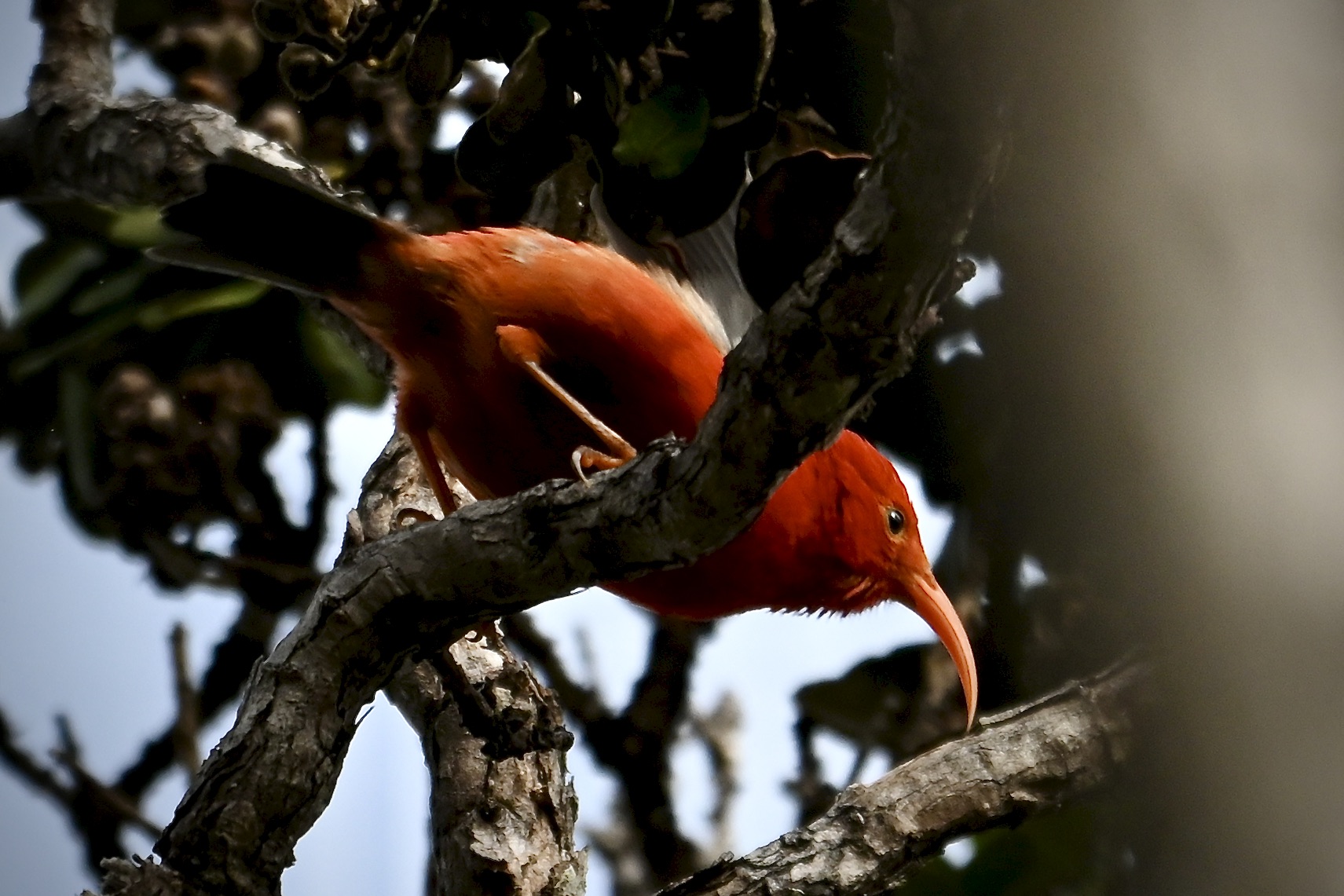
Photo of an i’iwi (who hopefully isn’t hungry) by Eric Anderson.
Story: The ‘Alawi Who Was Noticed

August 31, 2025

Proverbs 25:6-7
Luke 14:1, 7-14

Up on the mountain slopes, there are a lot of very colorful birds. The i’iwi and the ‘apapane are the brightest in color, with those glistening red feathers and the contrasting black of their wings. They’re not alone, though. The ‘amakihi makes a pretty brave sight in yellow, and the ‘akiapola’au is brighter still. Add in the colors of the flowers on the trees and on the bushes, and the forest is a pretty colorful place.

And then there’s the ‘alawi. The ‘alawi isn’t brightly colored. It’s grayish green with some yellow tint on the belly. It’s not even a strong singer. It has a pretty plain kind of call. It’s so understated, in fact, that people went many years before making the connection between the old Hawaiian word “’alawi” and a bird westerners called the “Hawai’i Creeper.”

Mostly, this hasn’t bothered the ‘alawi at all, since they don’t pay much attention to what people think of them. But one of them did start to feel bad. In the midst of a forest full of bright red ‘apapane, orange ‘akepa, and yellow ‘akiapola’au, who would notice a little green ‘alawi?

“It’s a pity I’m so drab,” he told himself one day. “I’m going to change that.”

I have to admit that his approach had some promise. He was going to start wearing jewelry – that is, he was going to tuck a flower behind his ear, as we see so often from human women in Hawai’i. He was so clever that he came up with the idea himself – he really didn’t pay much attention to people.

There was, however, a problem. Oh, he could grasp flowers with his feet quite well. But when you want to tuck a flower behind your ear, it really helps to have, well, ears.

An ‘apapane watched him do this and asked, “Why? I mean, why?”

“I want to be noticeable,” he said with some embarrassment. “I don’t want to be drab.”

“I’m noticing,” said the ‘apapane, “and I guess you aren’t drab. But you do look silly. Is that how you want to be noticed?”

This might have gone on for a while, but it turned out to be another of those dry times in the forest, and it got harder and harder to find things to eat. For the ‘alawi that’s mostly bugs. Everyone in the forest was feeling the pinch in their bellies.

Our friend the ‘alawi, however, got lucky one day. He found a stand of trees that were better watered, and the flowers on them had attracted a good crowd of insects. He flew over to feed, but stopped. He didn’t want anyone else to be hungry while he ate his fill. So he started to call the ‘alawi’s plan song. That didn’t seem to attract anyone, so he found an ‘akiapola’au and brought him to those trees. The ‘akiapola’au whistled, and some other birds and some other birds and some other birds made their way over, sang their songs, and settled in to eat.

Hopping along a tree branch, the ‘alawi met the ‘apapane he’d seen a few days before.

“You found a way to be noticed, youngster,” said the ‘apapane.

“I did?” said the ‘alawi.

“You did,” said the ‘apapane. “We’ve all noticed you, and not for wearing a flower. We’ve all noticed you for being the considerate and compassionate bird you are. Well done. And thank you.”

by Eric Anderson

Watch the Recorded Story

I write these stories in advance, but I tell them without notes, so between memory and improvisation the story as I told it is different from the story as I wrote it.

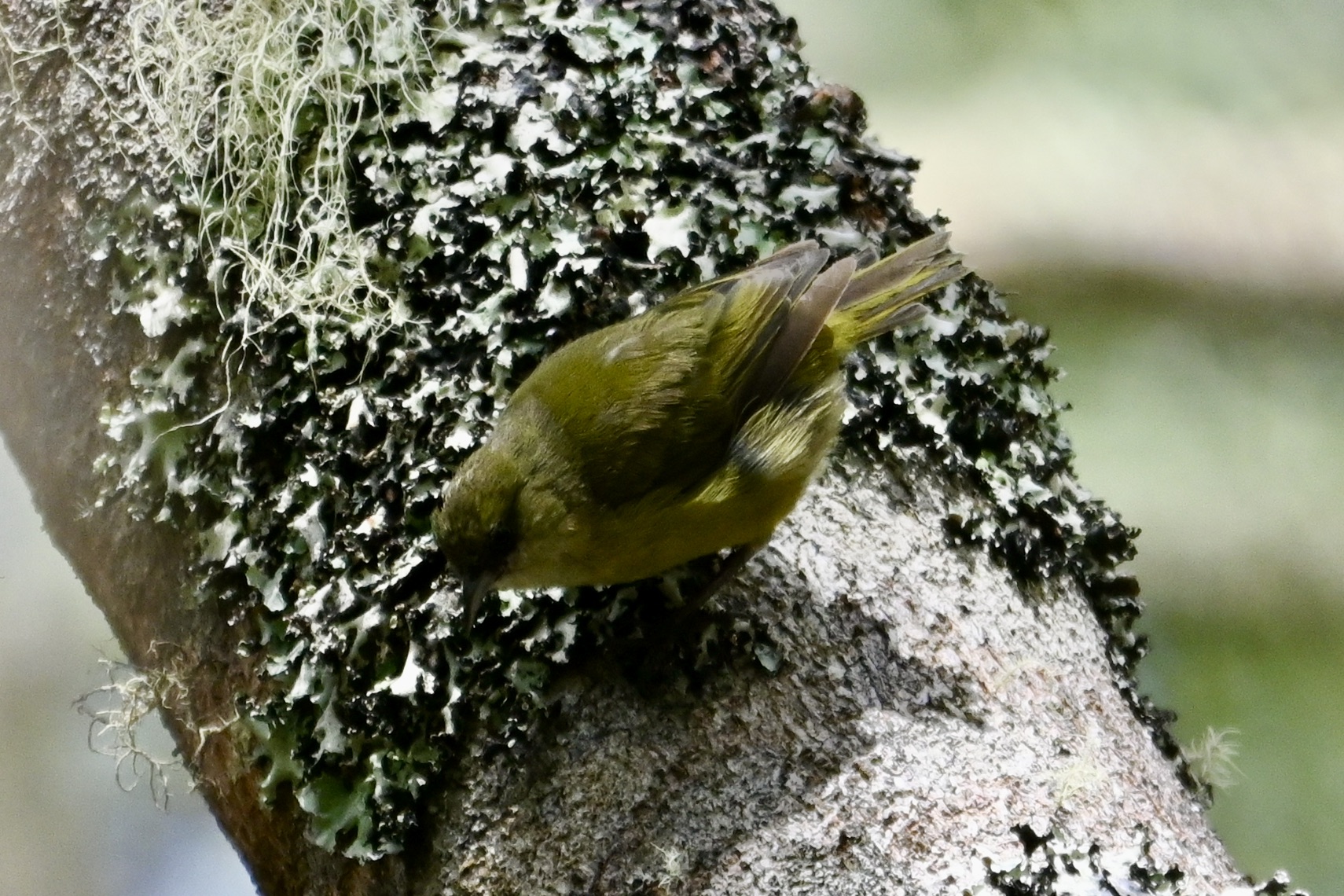
Photo of an ‘alawi by Eric Anderson.

Story: Merciful

October 27, 2024

Hebrews 7:23-28
Mark 10:46-52

It was a dark and stormy night.

Well, that’s not an original way to begin a story, but it was pretty dark, and rain was falling, and the winds were howling up there on the mountain. If you were a pig, it was a good night to find a rocky overhang. If you were an ohi’a tree, it was a good night to rock back and forth with limbs and trunk, and a better night to hold on tight with your roots.

If you were one of the honeycreepers of the forest, it was a good night to shelter beneath lots of thick leaves and hope the branch you’d perched on was sturdy.

A grumpy ‘amakihi had found just such a space in a koa tree. He wasn’t exactly dry, but he wasn’t being pelted by rain, either. The branch he grasped with his feet was only tossing a little bit. He wasn’t comfortable – that’s why he was grumpy – but he was as comfortable as he was going to get until the sun came out so he could dry his feathers.

He wasn’t pleased when the branch gave another bounce that was out of rhythm with the winds and there was a new shadow among the leaves. A young ‘apapane – so young that she didn’t have her red feathers yet – had landed on the branch and stood shivering. She tried to shake the water from her wings, but mostly just banged herself against the leaves and twigs.

“Stop that,” said the grumpy ‘amakihi. “What are you doing here? You shouldn’t be flying in this storm.”

“I didn’t mean to,” said the young ‘apapane. “The wind swept me off the branch.”

“Well, you’d better go back there,” said the ‘amakihi. “Go on.”

The young ‘apapane looked out through a gap in the leaves to where they could both see the trees tossing in the gale.

“Well, maybe not right now,” said the ‘amakihi, who was still grumpy but a fairly considerate bird. “What can I get for you? Do you want a bug? There’s some here.”

“No, sir,” said the ‘apapane.

“How about a drink of water? Well, maybe not,” he said, when the young ‘apapane shivered. “You’ve probably had enough water.”

“Yes, sir,” said the ‘apapane.

“Well, what do you want? You don’t want me to help you find your own tree, do you?”

The ‘apapane shook her head.

“What do you want me to do for you?” insisted the ‘amakihi.

“Could I just stay here for a while, and not be alone?” asked the ‘apapane.

“You don’t want to be alone?” asked the ‘amakihi.

“No, sir,” said the ‘apapane.

The ‘amakihi thought about it, and realized even as he said it, “You know, I don’t want to be alone in this storm, either. Come find a dryish spot here on this branch. We’ll ride it out together.”

And that is how a grumpy ‘amakihi and a frightened ‘apapane were merciful to each other in the midst of the storm.

by Eric Anderson

Watch the Recorded Story

I write these stories in advance, then tell them from memory during worship. That means that changes happen.

Photo of an immature ‘apapane by Eric Anderson.