Christmas Pageant: The GOAT

The GOAT
A Christmas Skit

By Eric Anderson

CHARACTERS

Shepherd 1: A tender of sheep
Shepherd 2: A tender of sheep and one goat
Sheep: A wooly creature
Goat: A non-wooly creature
Lead Angel: A messenger to shepherds
Angels: A backup chorus of messengers
Mary: A young woman
Joseph: A young man
Magi 1: A scholar dressed a lot like a king
Magi 2: Another scholar dressed a lot like a king

SCENE 1: A hillside

[SHEPHERD 1, SHEPHERD 2, GOAT, and SHEEP enter]

Shepherd 1:                I can’t believe you brought a goat.

Shepherd 2:                Why not bring a goat? Goats are cool. They don’t get lost as often as sheep. And they give milk. That’s useful.

Shepherd 1:                OK, all that is true. But you only brought one goat. Shouldn’t you have brought a herd of goats?

Shepherd 2:                Of course I’ve heard of goats.

Shepherd 1:                Ha, ha. I’m not sure that joke is going to be funny even if two thousand years go by.

Shepherd 2:                I thought it was funny. And I’m sure the goat heard. Did you think it was funny?

Goat:                           Bah!

Sheep:                         Bah!

Shepherd 1:                Why did you bring just one goat?

Shepherd 2:                I’m picky.

Shepherd 1:                So brought just one goat because…

Shepherd 2:                It’s the best goat.

Shepherd 1:                Just how do you choose the best goat?

Shepherd 2:                The best goat has great hair, great hooves, great ears, and most of all, great horns.

Shepherd 1:                And this one is the best goat, is it?

Goat:                           Bah!

Sheep:                         Bah!

Shepherd 2:                You hear them? They agree.

Shepherd 1:                That sounded like “Bah” to me.

[The LEAD ANGEL and the ANGELS enter]

Shepherds:                 Aaaggghhhh!

Sheep:                         Bah!

Goat:                           Bah!

Lead Angel:                 Do not be afraid!

Shepherd 1:                Why not? I’m terrified!

Shepherd 2:                Me, too! I planned on the best goat, not the Lead Angel.

Angels:                        Us, too!

Shepherd 2:                Plus the other angels. Sorry.

Lead Angel:                 I bring you good news!

Shepherd 1:                We’re getting good grass this season?

Shepherd 2:                The price of goat’s milk is going up?

Shepherd 1:                My family is going to learn to spin and weave wool?

Shepherd 2:                This really is the best goat ever?

Sheep:                         Bah!

Goat:                           Bah!

Angels:                        Hush and you’ll learn something!

Lead Angel:                 Think bigger, shepherds.

Angels:                        Much bigger!

Shepherd 2:                I need a bigger goat?

Goat:                           Bah!

Lead Angel:                 No. Down the hill in the City of David…

Shepherd 1:                The what?

Lead Angel:                 Bethlehem. It’s where King David came from.

Angels:                        Now stop interrupting!

Lead Angel:                 Down in the City of David a child has been born to save all people. He is the Messiah, the Lord.

Shepherd 1:                Wow.

Lead Angel:                 Go to the city and look for a newborn who is wrapped in swaddling cloths and lying in a manger.

Shepherd 2:                Excuse me. I don’t mean to interrupt, but… what are swaddling cloths?

Lead Angel:                 You don’t have children, do you?

Shepherd 2:                No. I have the best goat, though.

Goat:                           Bah!

Sheep:                         Bah!

Lead Angel:                 Swaddling cloths are light blankets you wrap around a baby to keep him warm.

Shepherd 2:                Oh. OK. Good. And… One other thing?

Lead Angel:                 Really? All right. What else do you want to know?

Shepherd 2:                A manger? Like, a feeding trough? We should be looking for the Messiah in a stable?

Lead Angel:                 Where else would you look?

Shepherd 1:                Don’t argue with the angel.

Goat:                           Bah!

Sheep:                         Bah!

Shepherd 2:                Right. We’ll look in the stables.

Shepherd 1:                Thanks for the good news!

Angels:                        Hallelujah! Glory to God!

[ANGELS and LEAD ANGEL exit]

Shepherd 2:                What do we do now?

Shepherd 1:                You might want to argue with angels, but not me. We’re going to Bethlehem.

Goat:                           Bah!

Shepherd 1:                Don’t forget your goat.

[SHEPHERD 1, SHEPHERD 2, GOAT, and SHEEP exit]

SCENE 2: A Stable

[MARY and JOSEPH enter with baby]

Mary:                          Did I just have a baby in a stable?

[JOSEPH looks at the bundle Mary is carrying]

Joseph:                        That’s a baby you’ve got. I’d say yes. Yes, you just had a baby in a stable.

Mary:                          No wonder I’m so tired. Can you hold him for a bit?

Joseph:                        Sure. Wait. There’s a manger here. It’s got straw in it. That should be soft for a baby, right?

Mary:                          Put him in it and see if he cries.

[JOSEPH puts the baby in the manger. No crying]

Joseph:                        No crying.

Mary:                          Not from him, maybe. I’m about ready to cry. What a night!

Joseph:                        It’s all right, Mary. It’ll all be quiet from here.

[SHEPHERD 1, SHEPHERD 2, GOAT, and SHEEP enter]

Shepherd 1:                Hi. Sorry to bother you, but is there a baby here in a manger?

Shepherd 2:                This is our sixth stable tonight and boy are my feet tired.

[GOAT looks in the manger]

Goat:                           Bah!

Sheep:                         Bah!

Shepherd 2:                Would you look at that?

Shepherd 1:                It’s a baby in a manger!

Shepherd 2:                And my goat found it. He really is the best, you know.

Joseph:                        Excuse me, but who are you?

Mary:                          And why are you looking for a baby in a manger? Why would you even think to look for a baby in a manger?

Shepherd 1:                Oh, we didn’t think of it.

Goat:                           Bah!

Sheep:                         Bah!

Shepherd 2:                We don’t think very much, really.

Shepherd 1:                Some angels came and told us to look for a baby in a manger.

Shepherd 2:                It was pretty scary, actually.

Shepherd 1:                It was scarier after you started arguing with the angels. Who does that?

Goat:                           Bah!

Sheep:                         Bah!

Shepherd 2:                I don’t do it often.

Joseph:                        Slow down. You say angels told you to come here?

Shepherd 1:                They told us to look here.

Shepherd 2:                And six stables later, here you are!

Mary:                          Why? Why did the angels tell you to look for a baby in a stable?

Shepherd 2:                Oh. Didn’t we mention that?

Goat:                           Bah!

Sheep:                         Bah!

Shepherd 1:                I guess we didn’t. You see, the angel told us that this baby is…

Goat:                           Bah!

Shepherd 2:                The Messiah!

[Everyone looks at the baby]

Shepherd 1:                So… that’s what a Messiah looks like?

Mary:                          When he’s just been born.

Shepherd 2:                Oh. So you knew already?

Mary:                          Let’s just say I’ve had my own conversation with an angel.

Shepherd 1:                I’m sure she didn’t argue the way you did.

Mary:                          I just asked questions.

[LEAD ANGEL and other ANGELS enter]

Lead Angel:                 You didn’t argue at all.

Mary:                          It was weird, though.

Lead Angel:                 Of course it was unusual. You don’t think we send Messiah every day, do you?

Goat:                           Bah!

Sheep:                         Bah!

Lead Angel:                 Well said.

Angels:                        Hallelujah!

Shepherd 2:                Of course it’s well said. He’s the best goat.

[MAGI 1 and MAGI 2 enter. MAGI 1 is really tired.]

Magi 1:                        Greetings, favored one! The Lord is with you.

Lead Angel:                 Hey, that’s my line!

Mary:                          Yes, I’ve heard that one before.

Magi 2:                        I’m sorry. You’ll have to forgive him. He’s been carrying the heavy stuff.

Joseph:                        If you don’t mind, who are you, and why are you barging into our baby’s bedroom – er, stable – at this hour?

Magi 1:                        Barging? We haven’t got a barge. Not a sign of a boat at all. No, we’ve had camels.

Magi 2:                        Our other friend is parking the camels.

Magi 1:                        Why didn’t he bring them in here? It’s a stable, after all.

Magi 2:                        Because of the newborn baby? Really. Put the gold down. It’s not helping you think.

[The MAGI put their bundles down]

Shepherd 1:                Did he say, “Gold”?

Shepherd 2:                I think he said “Gold”.

Mary:                          Gold?

Joseph:                        Gold?

Goat:                           Bah!

Sheep:                         Bah!

Lead Angel:                 Yes, he said gold.

Mary:                          Why are you carrying gold?

Magi 1:                        I’m not carrying it any more. I put it down.

Magi 2:                        What my exhausted friend means is that we’re here to celebrate the birth of the newborn Messiah. That’s him, isn’t it? In… Why is he in a feeding trough?

Joseph:                        There wasn’t any room in the inn.

Magi 1:                        I guess the inn was an “out.”

Magi 2:                        That’s not going to be funny if you wait for two thousand years.

Goat:                           Bah!

Sheep:                         Bah!

Magi 1:                        Is that a goat criticizing my sense of humor?

Shepherd 2:                Yes, sir, but rest assured, he’s the best goat. The best goat ever.

Magi 1:                        Oh. Well, that’s different. The best goat ever.

Joseph:                        Could we go back to why you’re here?

Magi 2:                        We’re here to welcome the newborn king, and to make sure he’s greeted with proper respect.

Magi 1:                        And presents.

Magi 2:                        Right. Presents for a king.

Mary:                          Kings get presents?

Goat:                           Bah!

Sheep:                         Bah!

Magi 1:                        Oh, yes. Kings definitely get presents. And given that this one is sleeping in a manger, it seems like a good thing.

Joseph:                        He’s got a point.

Lead Angel:                 Oh, while we’re talking about it, you’ll probably want to sell the presents and go to Egypt for a while. And, wise men? Don’t go back to tell Herod where this baby is. OK?

Goat:                           Bah!

Sheep:                         Bah!

Angels:                        Amen!

Magi 2:                        Well. All right. We’ll go home another way.

Lead Angel:                 Good plan.

Mary:                          Could you tell me one more time why you’re all here in this stable with my baby in the middle of the night?

Shepherd 2:                Well, you see, we’ve got the best goat…

Shepherd 1:                I can’t believe you brought up the goat.

Shepherd 2:                No, really. We’ve got the best goat. But when I listen to the wise men here, and when I listen to the angels…

Lead Angel:                 When you’re not interrupting the angels…

Shepherd 2:                I realize that while I might have the best goat, here in this manger you’ve got, I mean, we’ve got, I mean, the whole world has got:

The GREATEST OF ALL TIME.

Goat:                           Amen!

ALL SING Hark! The Herald Angels Sing

© 2025 by Eric S. Anderson

Watch this Pageant Performed

The young people of Church of the Holy Cross UCC in Hilo, Hawai’i, performed “The GOAT” on December 21, 2025.

Author’s Note

I began writing Christmas pageants a few years ago when I realized that we could violate copyright if we streamed a commercially available script via live stream. It says something about me that I was more willing to write a script than I was to dig through the marketing of pageants to find one that included a streaming license.

It also means that I can adapt the script to the available actors. I once wrote a script with no Joseph because we simply didn’t have a youngster willing to do the role. In this case, the children were very impressed with a story featuring a goat that our Associate Conference Minister, the Rev. Jonathan Roach, told them some months ago. One of them announced that he wanted to be a goat in the pageant, and therefore the pageant needed to include a goat.

As is the way of some creatures, the goat took over.

One of the things I like about this pageant is the way everyone notices all the things that simply don’t make sense, such as a newborn monarch born in a stable rather than a palace. It emphasizes the truth that God does what God does, not what we expect God to do. A Messiah was born in a stable. What more might be waiting in God’s imagination?

Photo of goats by Eric Anderson.

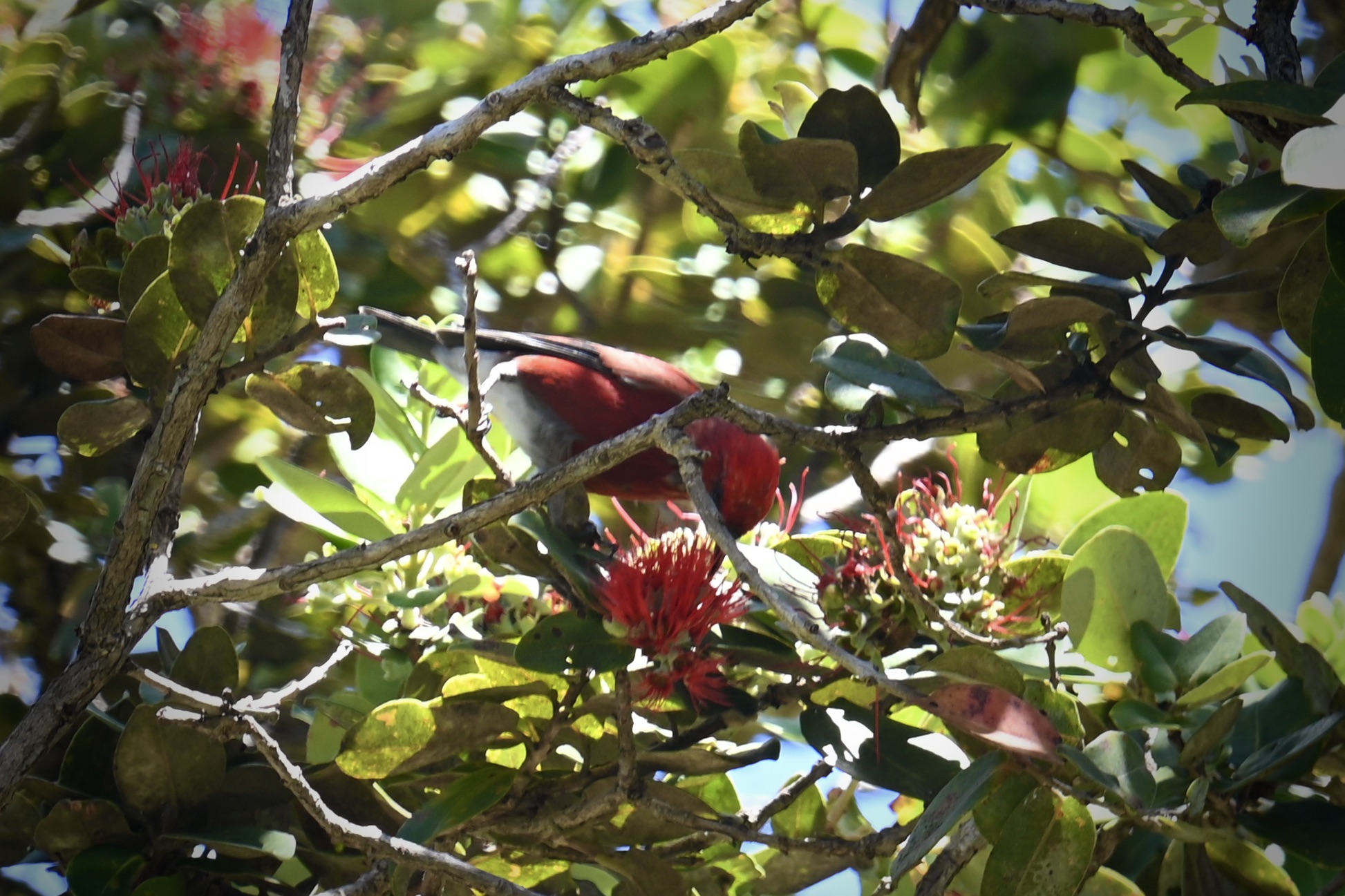
Story: The ‘Apapane’s Christmas Pageant (2025 version)

December 21, 2025

Isaiah 7:10-16
Matthew 1:18-25

I don’t know how it came into the ‘apapane’s head to organize a Christmas pageant. I don’t even know how he’d heard about Christmas, let alone a Christmas pageant. Nevertheless, he flew all over the island, searching for creatures to take part in the pageant.

He asked the I’iwi, who was feeling grumpy that day and didn’t say yes, or no, or anything at all.

He asked the ‘io, which was very brave of him. The ‘io said she might come and looked… hungry.

He flew down to the shoreline to ask the honu. She said no, she wasn’t going to swim up to the mountain forest, which seemed fair. A house sparrow said he might fly up after he’d finished his bath.

A saffron finch thought it sounded odd but said he might hang around for it. The ‘apapane asked a yellow-billed cardinal and a myna. They both looked doubtful, and then the myna started an argument with some other mynas that wasn’t over when he left to talk to more shorebirds.

The auku’u looked puzzled, but said he’d come. “I’m coming, too,” announced a kolea. “I’ve flown thousands of miles for this. I wouldn’t miss it.”

“If the kolea is coming, I’m coming, too,” piped up an ‘akekeke, and a hunakai said the same.

The koa’e kea announced that she would play Mary, because didn’t Mary have a long tail? The ‘apapane wasn’t sure, so he didn’t argue. An ala’e ke’oke’o asked if there was a good fish pond up in the forest, and when he was told there wasn’t, looked skeptical.

The ae’o said she might turn up. If she felt like it. If she didn’t have anything else to do. The cattle egret said, of course he’d be there. One of his ancestors had been present at the original birth, hadn’t she?

The ‘apapane left the shorebirds to spread the word further and returned to the forest. The oma’o stopped singing barely long enough to say, “Yes.” The ‘alawi just looked nervous and kept hunting insects without saying anything.

He searched long and hard for an ‘akiapola’au, who asked, “What’s that all about?” After listening to the ‘apapane’s explanation, he gave a whistle and flew off into the forest. The nene just stared at him.

When it was pageant time, it was chaos. Creatures stepped into the clearing the ‘apapane had selected, then faded back into the trees again. Frightened chirps flew back and forth, and so did frightened birds. Mejiro and ‘elepaio peeped out from the trees. The mynas announced that they would be the angel chorus, then exploded into another argument.

“What do you need to settle down and play your parts?” shouted the ‘apapane from a tree.

“Is the ‘io here?” asked an ‘amakihi. “Yes,” said the ‘io from the sky overhead. “Are you going to eat us?” asked the ‘amakihi. For a moment there was silence. Then the ‘io said, “No. Not today. Today there’s a pageant to do.”

The ‘apapane spent the next hour answering the questions. The koa’e kea had just flown in from a lava fountain, and since she wanted to play Mary, she did. A kioea had flown up from the shore and wanted to play Joseph. “You’re a rare bird,” said the ‘apapane, so he did. The little ‘elepaio played shepherds while the nene played sheep. The I’iwi didn’t want to cheer up, so he played the grumpy innkeeper. The sleeping pig was cast as a sleeping cow and did it very well.

High overhead the ‘io provided the voice of Gabriel, while ‘apapane, ‘amakihi, mejiro, and mynas sang as the angel chorus. Seabirds and shorebirds took places as creatures of the stable.

When the time came, birds from other shores – a northern cardinal, a red junglefowl, and a pair of zebra doves – played the magi.

The ‘akiapola’au lay just one egg and very rarely, so a young one played Jesus.

When it was over, the creatures vanished back into the trees, leaving the ‘apapane alone in the silence. He’d answered every question, met every need, somehow.

The trees rustled in the breeze, applauding the ‘apapene’s Christmas pageant.

The End.

by Eric Anderson

Watch the Recorded Story

On this occasion, I read from the prepared text (and still made a couple of changes).

Photos by Eric Anderson.

Dreaming with Joseph

“But just when he had resolved to do this, an angel of the Lord appeared to him in a dream and said, ‘Joseph, son of David, do not be afraid to take Mary as your wife, for the child conceived in her is from the Holy Spirit. She will bear a son, and you are to name him Jesus, for he will save his people from their sins.'” – Matthew 1:20-21

Let me dream with you, Joseph,
just for a moment.

Let us dream together that our trust
is well placed.
Let us dream together of a
promise fulfilled.

Let us dream together of a
God who is with us.
Let us dream together of a
break in the gloom.

Let us dream together, waking
newly resolved.
Let us dream together and see
a new day.

Let me dream with you, Joseph,
just for a moment.

A poem/prayer based on Matthew 1:18-25, the Revised Common Lectionary Gospel Reading for Year A, Fourth Sunday of Advent.

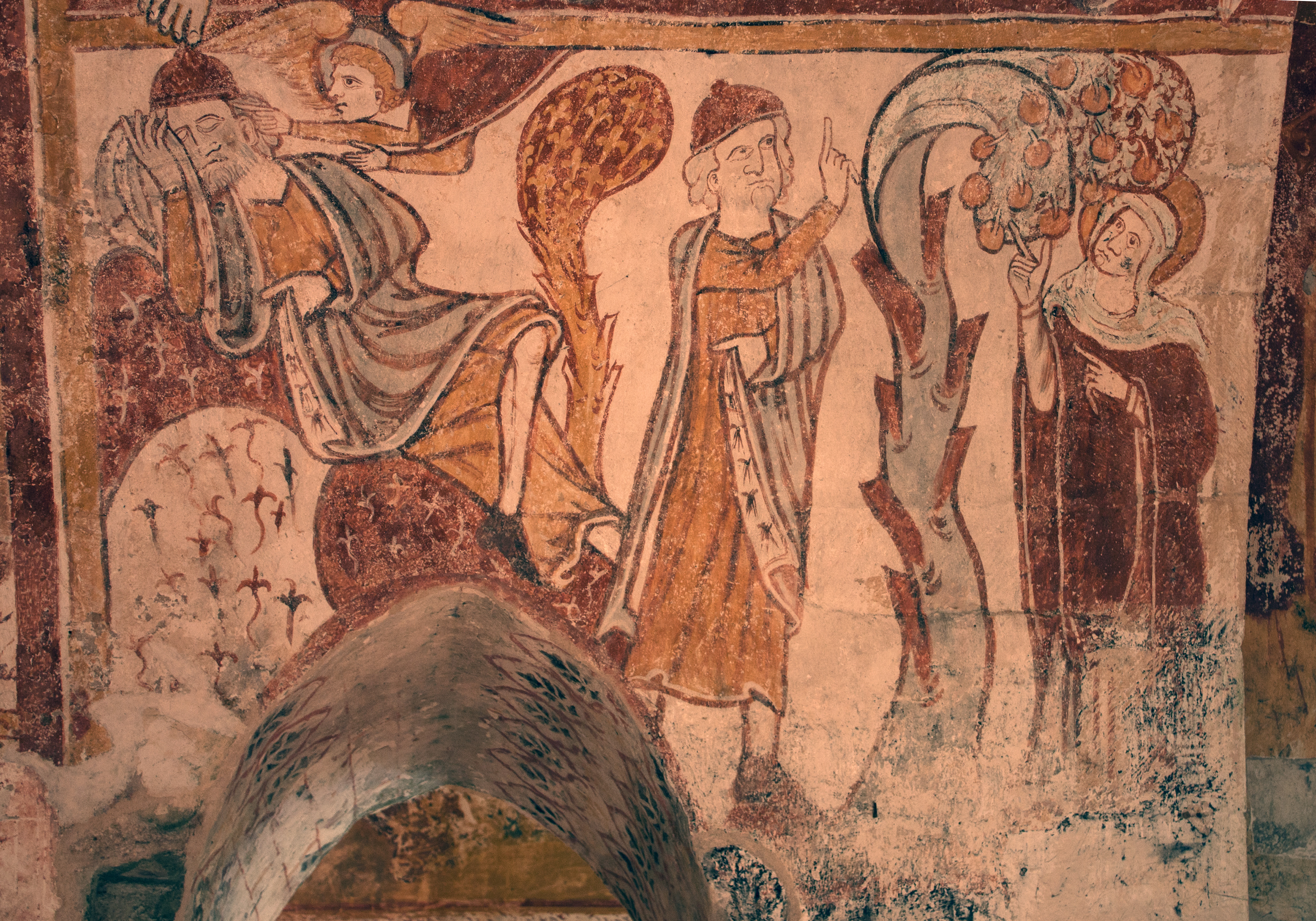
The image is a 12th century fresco of Joseph’s Dream and Joseph and Mary with the Cherry Tree (bizarrely misunderstood as Adam and Eve) in the crypt of the Notre-Dame Gargilesse church, Gargilesse-Dampierre, France. Photo by Daniel VILLAFRUELA, CC BY-SA 3.0, https://commons.wikimedia.org/w/index.php?curid=19347294.

Light in a Stable

“The true light, which enlightens everyone, was coming into the world.” – John 1:9

The true light may now be at hand,
but the light is lit by flickering flame
and smoky wick. I watch that light
with anxious eye, for fear it spread
its burning oil on the straw below.

The light unsteady served to hide
the dark green sticky contents of
that first cloth barrier, wrapped
inexpertly by unaccustomed fingers round
the infant’s flailing hips,

But did not muffle his fierce cries
of outrage testifying that the light
has lungs! Re-swaddled, he subsides,
and sleeps re-laid into the feeding trough,
while grateful stable denizens rest, too.

The midwife gone, the man and I
trade naps, and watch, and wait
for his next cry. Will he be hungry?
Dirty? Lonely? Or just angry that
the borrowed cloth moves roughly on his skin?

“The light shines in the darkness,” they will write,
and I suppose it does. It murmurs sleepily,
then coos a moment, then subsides.
The crude light wavers at the breeze,
and shadows waver on incarnate light asleep.

I am too weary to compose a poem;
I ache in every muscle, every bone.
I cannot help but think that this poor babe,
in manger laid, could shine so bright
this stable would be taken for a star.

For now, the light is dimmed,
and in its dimness I, at least, can see
that lovelight shines most clearly here,
in common human form, and in
the dark.

A poem/prayer based on John 1:1-18, the Revised Common Lectionary Gospel Reading for Year C, Second Sunday after Christmas Day.

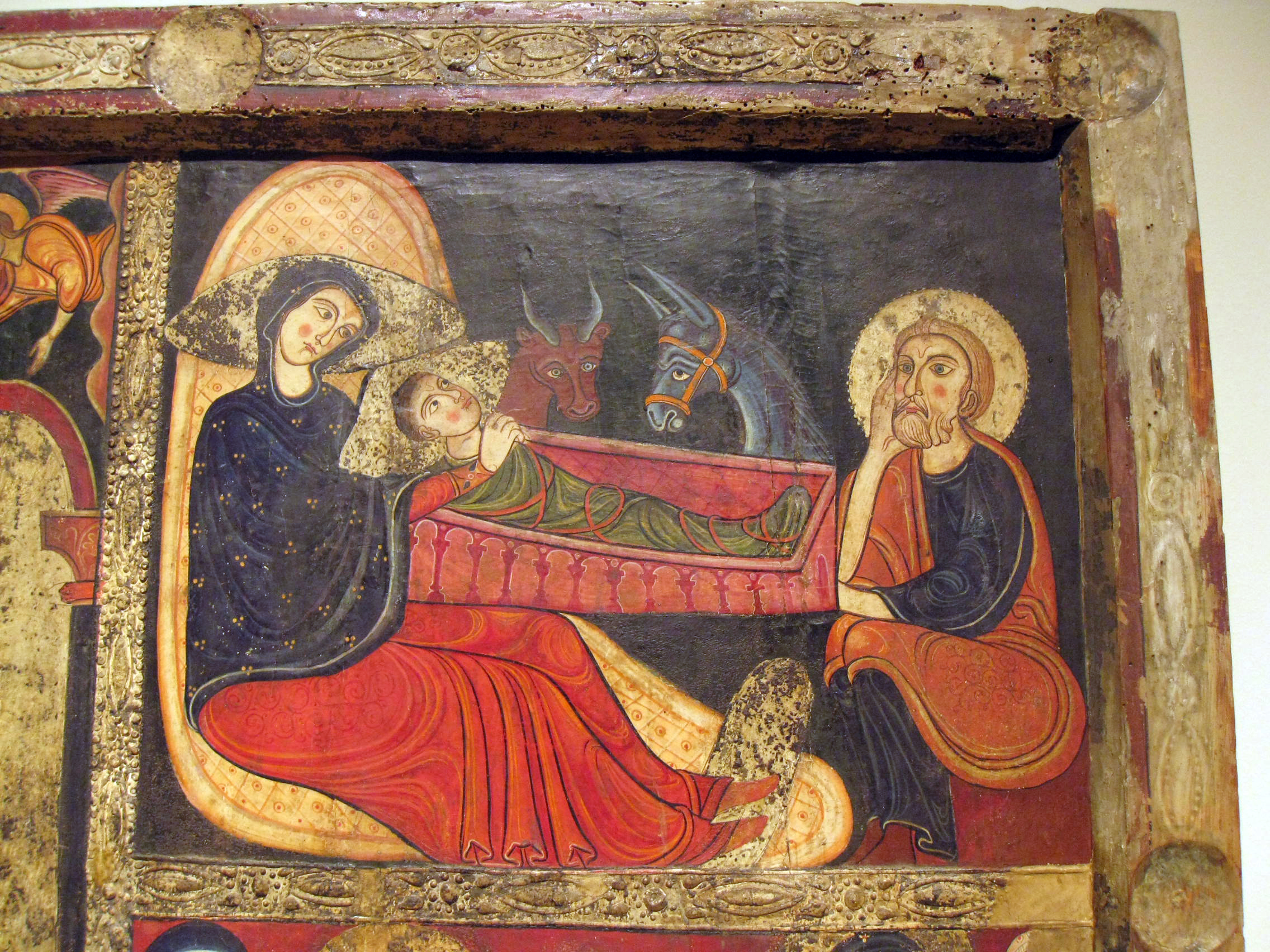
The image is The Nativity, a section of the 13th century altar frontal of St. Mary of Avia Church in Bergueda, Catalonia, Spain, by an unknown artist. The frontal itself is in the National Art Museum of Catalonia in Barcelona. Photo by Enfo – Own work, CC BY-SA 3.0, https://commons.wikimedia.org/w/index.php?curid=21384531.

Christmas Eve 2024

They summoned me, and so I rushed into the night,
my bag a-swinging from my hand. The city full
of census-driven travelers was mostly quiet, save
a corner of the stable of an inn, which groaned.

I knew these groans.

I swept the useless man aside, sent him for cloths
as if I hadn’t brought some with me, but what need
for men when birth is near? A glance alone told me
this girl had never birthed. “Be easy, child,” I sighed.

I knew this fear.

The man brought cloths, they fluttered down upon
the straw. “Stand there,” I ordered him, “and keep them out.”
The sounds had drawn the usual assortment of
the curious and well-meant helpers without skill.

I knew this crowd.

The hours wore away as the body of the woman did
its work, made straight a highway for the child
from womb to world, one built with heavy labor.
The gasps turned to deep growls as we neared the end.

I knew these growls.

The woman shrieked; the man choked on a sob.
The mothers in the crowd of curious made sounds
of sympathy, then held their breath to hear
the new-made mother’s gasping breaths and child’s cry.

I know those sounds, and I rejoice.

I lingered as the onlookers dispersed, to see
the squalling son find comfort in his mother’s arms.
Before I laid him there, his eyes looked into mine,
and shocked, I gasped, for they had pierced my soul.

I had not known that look.

I made my way on home, my lightened bag
a-swinging from my hand, and my heart
was lighter, too. “And is it you, Emmanuel?”
I asked. “Has God come down to Earth to us?”

I had not known such things before, but now:
I know.

A poem/prayer for Christmas Eve 2024.

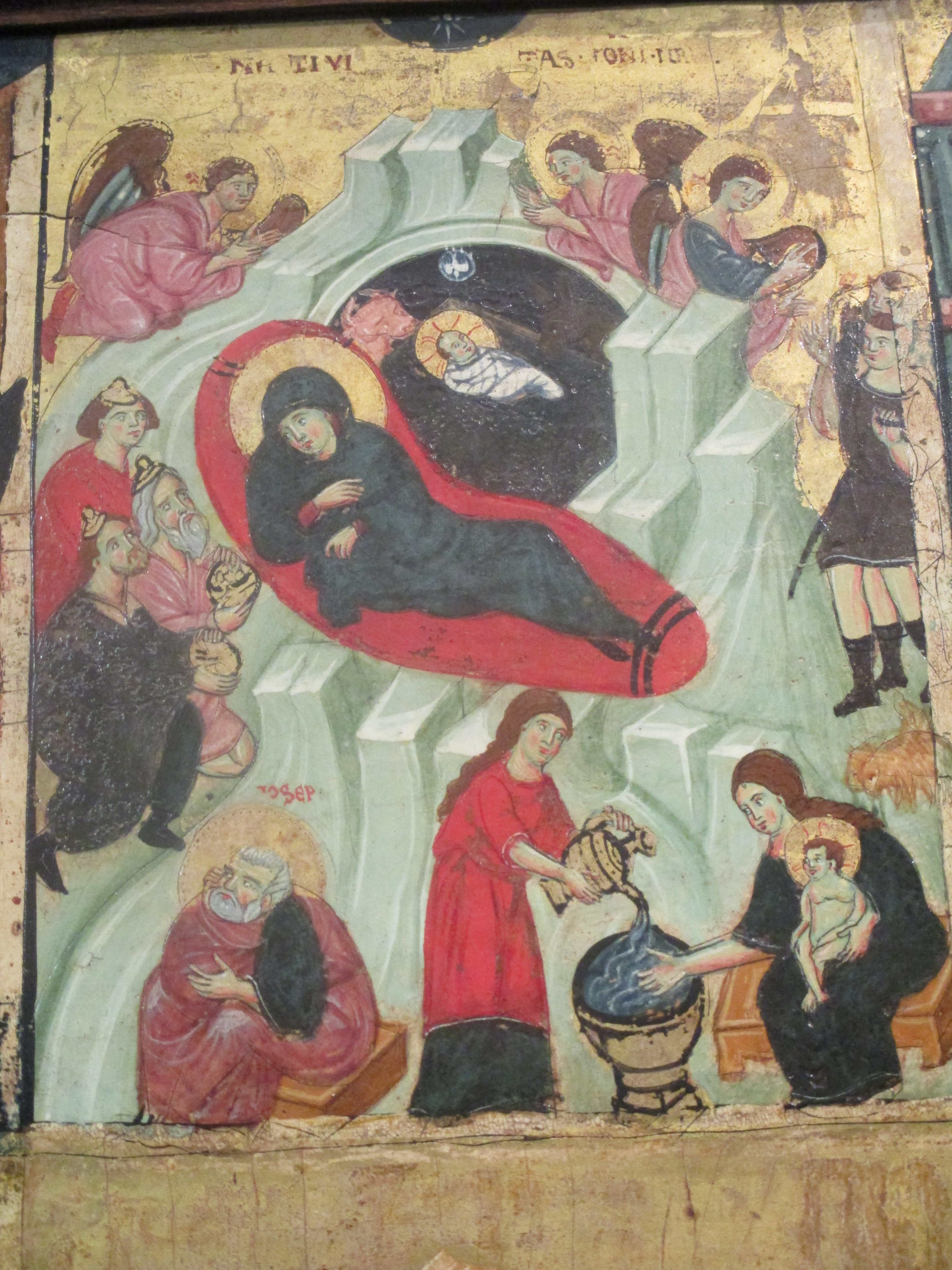
The image is The Nativity of Jesus, by an anonymous Roman artist (13th century). Photo by Thomon – Own work, CC BY-SA 4.0, https://commons.wikimedia.org/w/index.php?curid=82589118.

Story: The ‘Io’s Christmas Song

December 22, 2024

Micah 5;2-5a
Luke 3:46-55

The ‘io is not famous for singing. It makes a loud cry, for sure, which is majestic and dramatic, but nobody would call it musical. Except, perhaps, for once long ago, so long ago that there were no people living here on Hawai’i Island, and it belonged to the birds.

You see, there was an ‘io who wanted to sing. She’d heard the ‘apapane and the rest. She’d even admired the more subtle honks of the nene. When, she wondered, could she sing like that?

One morning, as the sun rose over the sea, the ‘io felt the world change. One moment everything was as it had always been, the next she knew that something different, something extraordinary, something wonderful, had taken place. Somehow she knew, deep in her heart, that the Creator had become part of the Creation in a deeply special way. Somehow she knew, though she never knew the name and didn’t even know what a human baby looked like, that Jesus, the Christ, was born.

When you know something that’s that wonderful, you just can’t keep still. She leapt into the air and soared through the sky. But that wasn’t enough. She danced on the breeze, pirouetted through the sky. And that wasn’t enough. Even though she knew she couldn’t do it, even though she knew it would be the same cry she’d always made, she opened her beak to sing.

Then: she sang.

There’s an old story that on the night Jesus was born, the animals across the world gained the ability to speak in human language. Who knows if that was true on Hawai’i Island, where there were no people whose language they could speak? What there was, was singing. And on that Christmas morning, an ‘io sang.

She sang so loud and so well that the ‘apapane began to sing along, and even to make new harmonies. Then the ‘amakihi chimed in, and the ‘akepa. The koa’e kea soared above the Kilauea caldera, and both noio and pueo flew up from the seacoast and the grasslands. Every one of them, with a voice they’d never known before, sang.

The ‘io led them all in the song, making new melodies, new variations, new rhythms. As she did, she circled and rolled, dove and climbed, dancing on the air, as the smaller birds wheeled around her.

It didn’t last long. Songs, even songs of joy, have an end. The small birds went back to the nectar in the trees. The pueo returned to the grasslands, the noio to the sea.

The ‘io let her tired wings carry her back to a tall tree, where she settled and breathed in, breathed out, because it’s a lot of work singing and flying and dancing at the same time.

An i’iwi poked its beak out of the next tree and chirped, “Thank you for the good news and the good song.”

The ‘io nodded back and said, “You’re welcome. Thank you for singing with me.”

And that is how the ‘io sang a Christmas song.

by Eric Anderson

Watch the Recorded Story

I write these stories in advance, but I tell them from memory (and improvisation), so the story as I tell it in the recording won’t precisely match what I originally wrote.

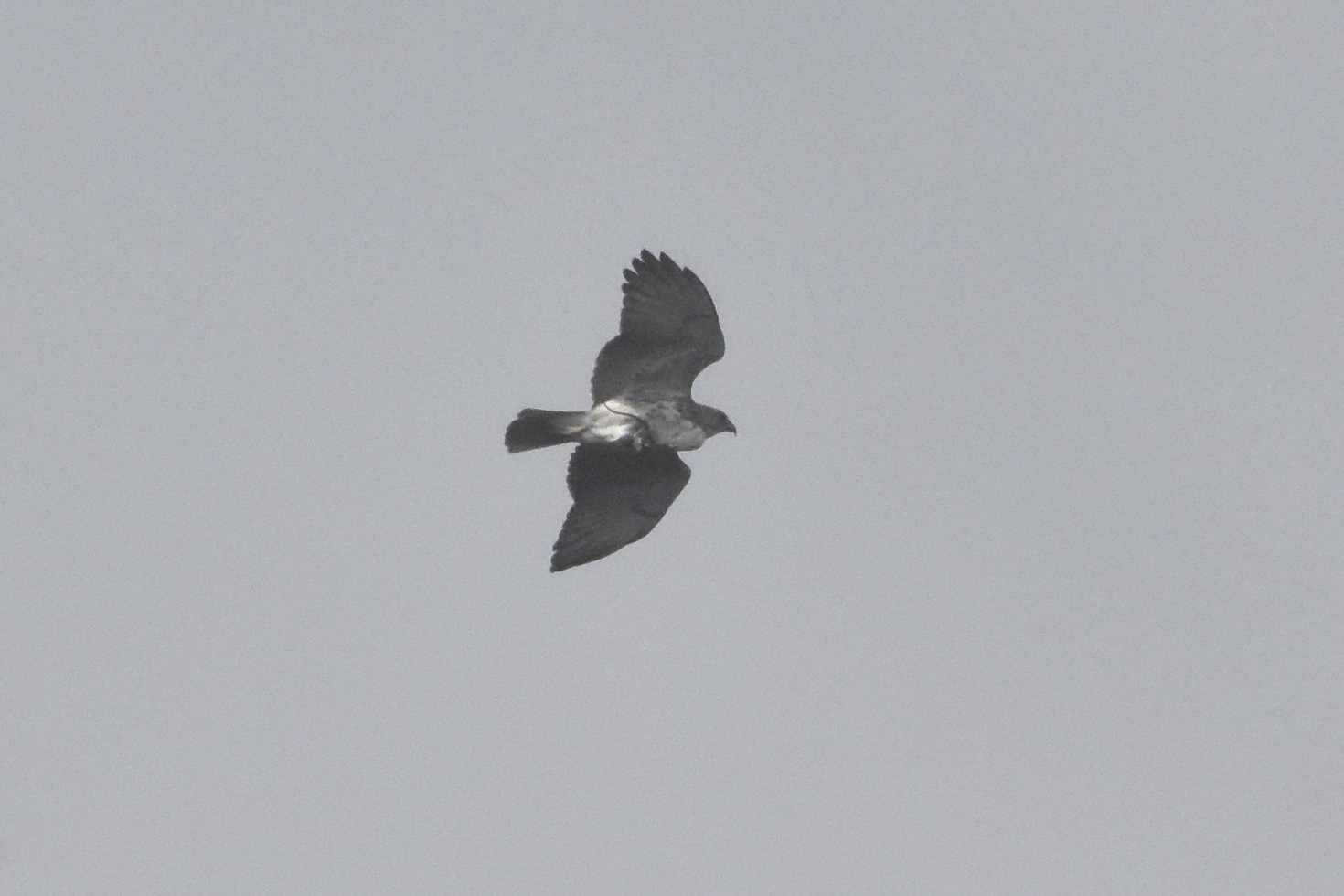
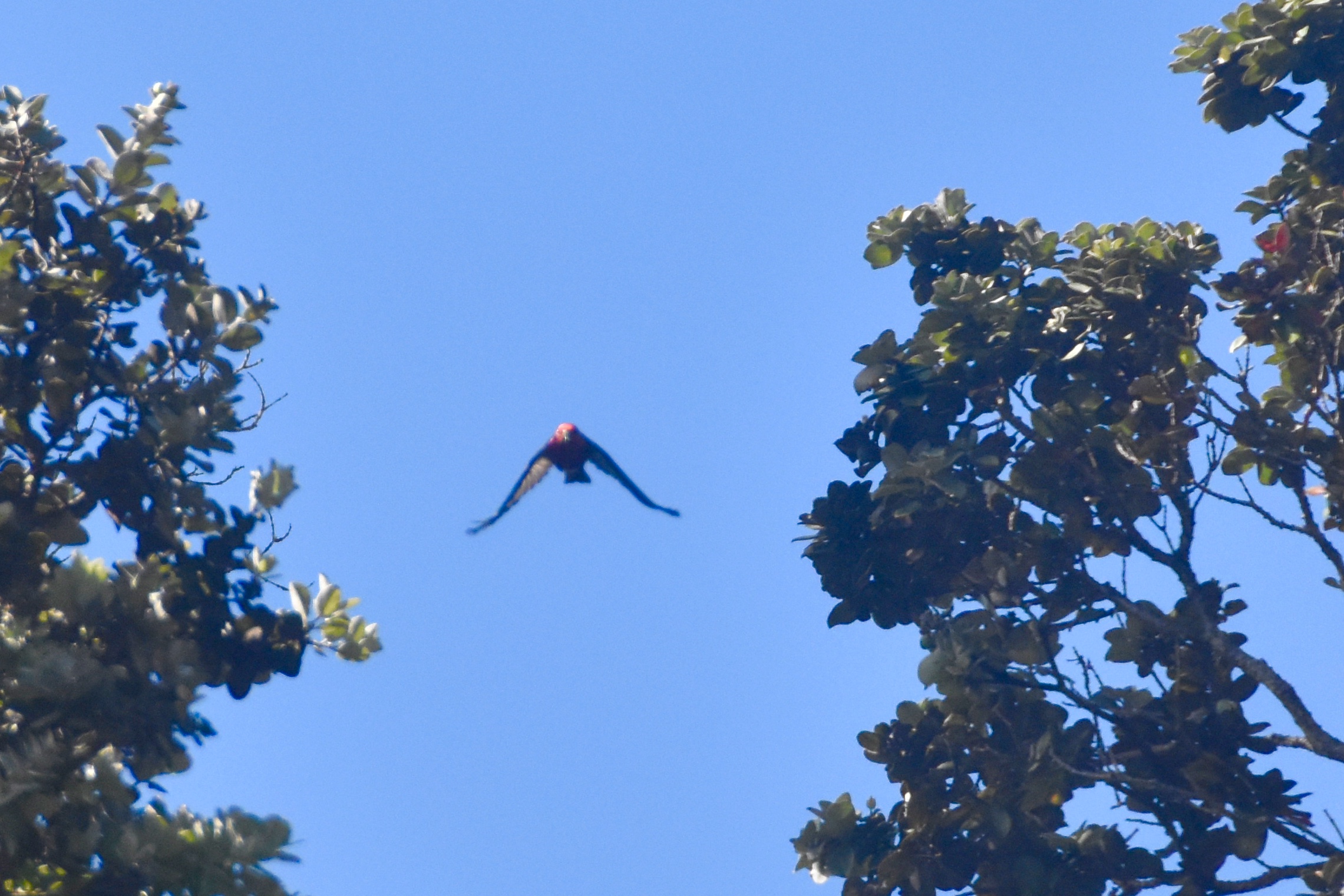
Photo of an ‘io in flight by Eric Anderson.

Story: The ‘Apapane’s Christmas Pageant

December 24, 2023

2 Samuel 7:1-11, 16
Luke 1:26-38

Last week you gave us a wonderful Christmas pageant. It was touching. It was funny. There was a lot of wonderful cuteness. Thank you. This story is about somebody else’s Christmas pageant. The ‘apapane’s Christmas pageant.

I don’t know how it came into the ‘apapane’s head to organize a Christmas pageant. I don’t even know how he’d heard about Christmas, let alone a Christmas pageant. Nevertheless, he flew around the forest, recruiting creatures who would take parts in the pageant.

He asked the i’iwi, who was feeling grumpy that day and didn’t say yes or no, nothing at all. He asked the i’o, which was pretty brave of him, and the i’o said she might come and looked… hungry. He asked the ‘amakihi and the ‘elepaio and the ‘akepa. They said they might. He even asked the palila in her mamane grove and spoke to a big flock of mynas. That set off an argument among them that wasn’t over when he went to talk with the mejiro.

The honu said no, because she wasn’t going to swim up to the ohi’a forest, which seemed fair. The koa’e kea insisted on playing Mary, because shouldn’t Mary have a long tail? The noio said he’d think about it. The mice looked nervous, and the mongoose looked puzzled. The pig in the forest said, “I’ll come.”

When it was pageant time, it was chaos. Creatures would step into the clearing he’d selected, then fade back into the trees again. Frightened chirps flew back and forth, and so did frightened birds. The mynas insisted they be the angel chorus, then exploded in another argument. The pig alone took its place in the clearing and announced, “I’ll play the pig in the stable,” which was a problem because there weren’t any pigs in the Bethlehem stable, but then he went to sleep.

“What do you need to calm down and play your parts?” asked the ‘apapane in exasperation.

One of the little ‘akepa hopped out. “Is the i’o here?” he asked.

“Yes,” said the i’o from the tree above him.

“Are you going to eat us?” asked the ‘akepa.

For a moment there was silence. Then: “No,” said the i’o. “Not today. Today we’ve got a pageant to do.”

The ‘apapane spent the next hour answering the question of each creature. The koa’e kea wanted to be Mary, so she was. A noio played Joseph after being assured that this wouldn’t take so long that he couldn’t go back to fishing later in the day. The mongoose promised the mice not to eat them, and they were duly cast as sheep and, believe it or not, shepherds. The i’iwi didn’t want to cheer up, so he became the grumpy innkeeper. The sleeping pig played a sleeping cow, and did it very well. The i’o, circling high above, took the voice of the angel Gabriel.

The mynas were relieved they wouldn’t be the only voices in the angel chorus, which stopped the argument, and they were joined by ‘apapane, ‘amakihi, and mejiro in their song, which echoed through the forest and down the mountainside. ‘Akepa brought the gifts of the magi. A young palila, such a rare bird, played baby Jesus.

When it was over, the creatures vanished back into the trees, leaving the ‘apapane alone in the silence. He’d answered every question, met every need, somehow.

The trees rustled in the darkness, applauding the ‘apapane’s Christmas pageant.

by Eric Anderson

Watch the Recorded Story

I probably should have taken a piece of paper with me when telling this story today, because there were a lot of creatures and I lost track of who wanted to do what, but this is the story as I told it this morning and I hope you enjoy it.

Photo by Eric Anderson.

What Do Angels Know?

“And he came to her and said, ‘Greetings, favored one! The Lord is with you.’ But she was much perplexed by his words and pondered what sort of greeting this might be.” – Luke 1:28-29

I almost wish I’d punched him in the nose.
What do angels know, anyway?

“Greetings, favored one!” he said.
I wish I’d told him, “Do not do me favors.
I’m up to here with ‘Just a little task,”
from parents and with posies from that man.

“Don’t do me any favors, angel!
I’m up to here with favors done,
and favors asked, and too few favors given.
Leave me to the chores I have already.”

“Perplexed,” Luke called it. There’s another man
who asked the favor of my memories,
and dressed them up in pink chiffon,
made me sweet as pie.

At least he didn’t blanche the tan
upon my face and rouge my cheeks
and paint a simpering smile on my lips.
No, centuries of artists, they did that.

I almost wish I’d punched him in the nose.
What do angels know?

What do angels know of explanations
to my mother, to my father,
to my oh-so-righteous fiancée?
Only one – my cousin – didn’t ask for words.

What do angels know of smirking gazes,
harsh denunciations, pity hidden
from those oh-so-righteous ones
and hardly even shared with me?

I wish I’d been like Moses, “No! Not I!”
Except it didn’t work for him at all.
And Jonah, I could follow him, through fish and all,
to sit unshaded bitter in God’s favor.

What do angels know?

Well. What do angels know?
They know who will say, “Yes.”
They know who will embrace the need,
and tolerate the scorn, and do the thing.

They know who will endure
the travels and travails, and sing
of mournful seven joys, will break their hearts.
That’s what angels know.

I really wish I’d punched him in the nose.
He knew I wouldn’t.

That’s what angels know.

Luke’s description of Mary during the Annunciation reveals very little emotion. The Greek word translated here as “perplexed” also means “upset.” Unlike my depiction here, Luke’s Mary appears composed, forthright, mindful, and faithful. This is in stark contrast with nearly every other story of a prophet’s call, and if only in the Magnificat, Mary played a prophet’s role. Thus my imaginative retelling here.

I don’t really think Mary would have punched Gabriel in the nose.

A poem/prayer based on Luke 1:26-38, the Revised Common Lectionary Gospel Reading for Year B, Fourth Sunday of Advent.

The image is Annunciation 1912 by Maurice Denis (1912) – Originally from en.wikipedia; description page is/was here., Public Domain, https://commons.wikimedia.org/w/index.php?curid=1880715.

Story: Imperfect

December 17, 2023

1 Thessalonians 5:16-24
Luke 1:46-55

She was making gingerbread cookies for the first time in her life – she wasn’t very old – and she was all excited about it. Her older brother had learned to make gingerbread cookies a few years before, and he’d got rather good at it.

This was her very first time.

She thought it was going pretty well, even if there sometimes seemed to be more flour on the counter than in the bowl. She might have miscounted the amount of ginger, too. She decided she’d better add some more to make sure there was enough. Yes. Just a little more. And a little more.

When she was cutting out the shapes – there were cookie cutters for people shapes, and for star shapes, and for reindeer shapes, and even for Christmas Tree shapes – she got things a little scrunchy. In transferring the cut-out cookies to the trays for baking, things got more disarranged. One poor gingerbread person lost their leg, and she tried to mash it back together.

Her older brother came by about this point and decided to make fun of her more oddly-shaped cookies. The two discussed it calmly and reasonably – well, no. The two of them were yelling by the time the cookies came out of the oven. Which might be why there were a little overdone.

She burst into tears.

Mother gathered her into her arms as she said, “They’re not perfect! They were supposed to be perfect!”

Indeed, they weren’t perfect. Some of the trees looked like they’d been through a windstorm. The mashed-together leg had come off in the baking. At least two of the stars had very bent points.

And, it had to be said, they were a little too brown. Not burnt, quite, but any longer in the oven and burnt they’d have been.

“They’re not perfect for Christmas!”

Mother, who thought about things like this, said, “Do you think Christmas is about being perfect?”

The girl said, “Isn’t it supposed to be?”

Mother told her that Jesus didn’t come into the world because it was perfect. It was full of people doing unkind, even cruel things to one another. Jesus came to show a better way, and help people find and live a better life here on earth and beyond. Jesus came to love the ones who didn’t think they were loveable.

“But my brother’s Christmas cookies are perfect.”

Brother, who was feeling sorry he’d picked on his sister, told her that they certainly hadn’t been perfect the first time. “I really burnt the first batch,” he said. “And the second batch wasn’t much better.”

“Let’s see how yours are,” said mother, and all three of them took a bite. She had, in fact, put in far too much ginger.

“I don’t think these are very good, Mommy,” she said, but she wasn’t crying.

“Not so good,” Mother agreed. “Shall we try again?”

In the meantime, her older brother reached for a second cookie. Mother and sister looked at him.

“I like lots of ginger,” he said. “Can I have the recipe?”

Imperfect we may be, but there’s love for us, too.

by Eric Anderson

Watch the Recorded Story

When I tell these stories, I tell them from what I remember of the story I’ve written. And… I make new things up as we go through. There will always be a difference between what I’ve prepared and what people hear.

The image of gingerbread people cookies is by ParentingPatch – Own work, CC BY-SA 3.0, https://commons.wikimedia.org/w/index.php?curid=24263325.

Story: Don’t Stop Me if You’ve Heard This One Before

December 25, 2022

Isaiah 62:6-12
Luke 2:1-20

So… Don’t stop me if you’ve heard this one before.

Once upon a time there was a woman named Mary, and she was expecting a baby. It was a special baby, which you’d think would mean that she’d be as comfortable as she could be when the baby was born – a nice room, plenty of helpers, that sort of thing – but instead she found herself far from home, amidst strangers except for Joseph, and putting her newborn baby in an animal’s feeding trough to sleep because there wasn’t any room in the inn.

You’ve heard this one before, haven’t you? I can tell.

Don’t stop me, though.

There were animals around when she wrapped the baby up and set him down to sleep. I mean, he was lying in their eating spot. I’m sure they were curious. A couple might have been a bit annoyed because where were they going to eat? If it had been you, would you be OK if somebody put a newborn lamb on your plate at your place at the dinner table?

A couple of those animals might have felt that way, too.

There’s some old stories – not as old as the story of the baby, but old – that say that the animals in that stable gained the ability to speak that night. It faded away in a short time, but that story says that they regain that power of speech each Christmas Eve – last night – but people never hear them because we’re all asleep.

And so the honu surfaces on the star-lit ocean and whispers to the ‘ulili on the shore, “Spread the word! God’s savior is in the world. Peace on earth, good will to all!”

The ‘ulili trots on its stilt legs until it finds a dozing saffron finch. “Spread the word! God’s savior is in the world. Peace on earth, good will to all!”

The saffron finch spreads its small wings and finds the sleeping nene. “Wake up! Spread the word! God’s savior is in the world. Peace on earth, good will to all!”

The nene takes to the sky and honks out to all who can hear, “Spread the word! God’s savior is in the world! Peace on earth, good will to all!”

On the mountain slopes, the ‘apapane awakes, and though I’m afraid that he’s cross, he flutters about and sings, “Spread the word! God’s savior is in the world! Peace on earth, good will to all!”

High above, the ‘io leaves off hunting for a moment, and soars over the bay, calling once more, “Spread the word! God’s savior is in the world! Peace on earth, good will to all!”

Now, you and I, we slept through all that. And with midnight gone, the creatures of Hawai’i have gone back to their regular voices, their everyday songs. So we have to take up the message, don’t we?

Spread the word. God’s savior is in the world. Let us bring peace on earth, and share our good will with all.

by Eric Anderson

Watch the Recorded Story

I told this story from memory of the text above – which means that between memory and improvisation, there are differences.

Photo by Eric Anderson.