May 25, 2025
Acts 16:9-15
John 14:23-29
He wasn’t the oldest among his siblings, cousins, and friends from nearby nests, but he was one of the first to molt from his young feathering to his adult colors. He’d had gray feathers on the chest and brown on his head and back, with black on his wings and tail. They all did. It made their games of hide-and-seek pretty difficult, because those colors melded into the shadows on the tree branches pretty well.
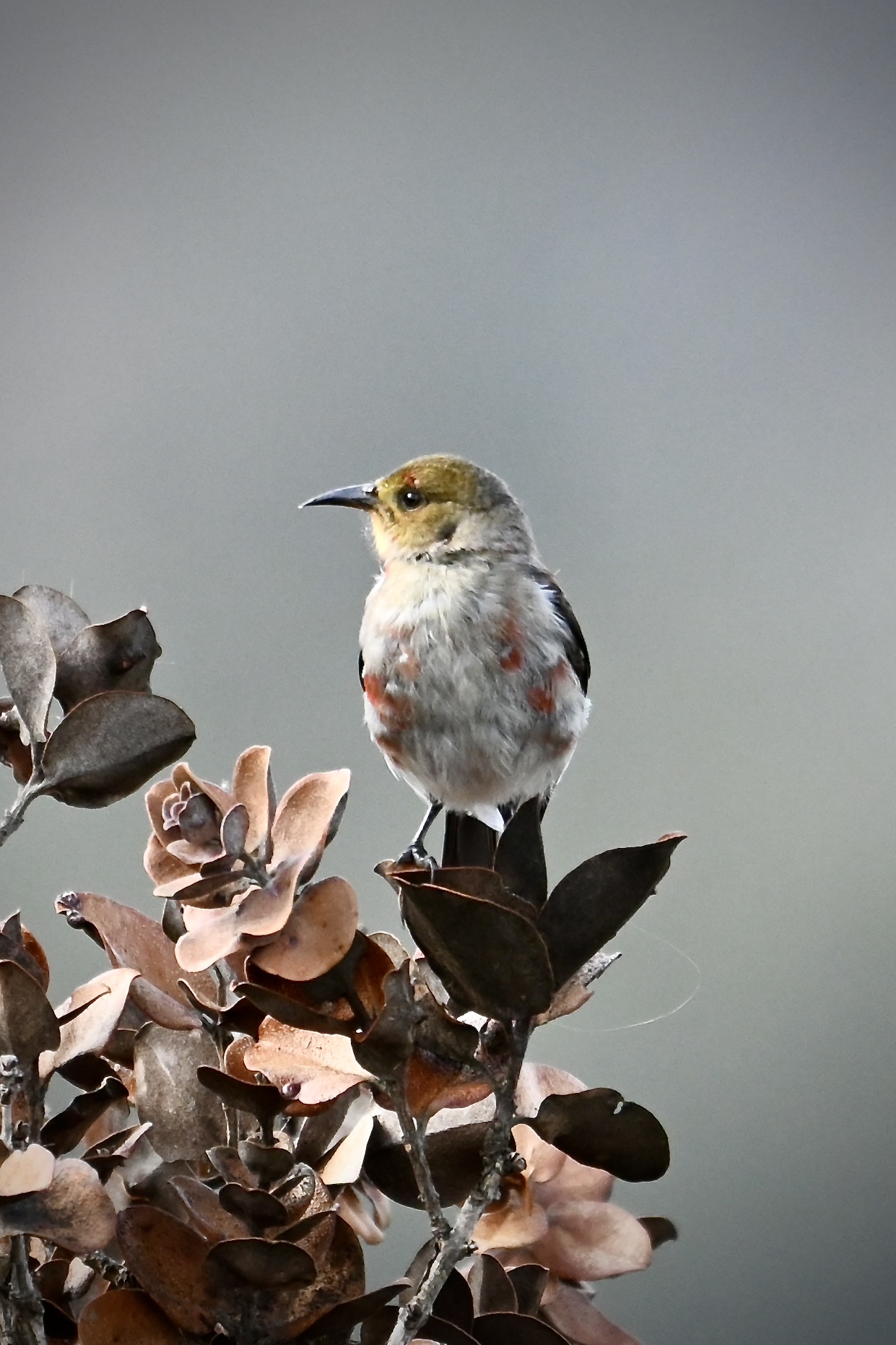
As I say, though, he was the first among them to start losing some of those brown and gray feathers, and start to gain the red feathers from head to tail. Frankly, it wasn’t going well. Loose feathers itched, and so did the new feathers as they grew in. They also didn’t fall out evenly. He found himself with a grayish belly blotched with the new red feathers.
“You look ridiculous,” said one of the young ‘apapane who played hide-and-seek with him, and, well, he felt ridiculous.
“Can’t you hide that?” asked another of the ‘apapane. He was a cousin, but he could be mean, even to a cousin. Our young ‘apapane couldn’t think of how.
“Go clean that up,” ordered one of the bossier young ‘apapane. She was one of those who thought she knew best for everybody else. But he still didn’t know how to take care of it, so he kept his perch and tried not to cry.
“Knock it off,” said the smallest of the young ‘apapane. All her feathers were still brown and gray, and she looked like she’d just been groomed by the finest feather-settlers of the forest. Everybody assumed that she was talking to the young bird with the splotchy red.
“Yeah, knock it off,” said the one who’d started this by calling him ridiculous in the first place.
“No, you knock it off,” said the smallest ‘apapane. “And you. And you. And all of you.”
She shook her wings and continued, “First of all, what can he do about it? You all know that our feathers will change from what we’re wearing to what our parents wear. Did you think that happened overnight? Didn’t you realize that it’s going to take time and that there are rough spots along the way?”
As it happened, none of them had thought about it.
“What are you going to do,” she demanded, “when this happens to you in a week or two? Are you going to make everybody going through this fly away, or are you going to help them when it itches and tell them it will be all right? What would you want for yourself?”
She asked that last question straight at the bird who’d ordered the molting ‘apapane to go clean that up. She didn’t say anything until it became clear that she had to answer.
“I’d want help,” she said.
“How about the rest of you?” demanded the smallest ‘apapane. They all admitted they’d want help.
“And that’s what you’ll get,” she said. “We’ll start with our friend here.”
“So how are you?” she asked. “Does it itch today?”
That’s how that generation of ‘apapane made it through their molt.
by Eric Anderson
Watch the Recorded Story
I write these stories in advance, but I tell them from memory and improvisation. What you have just read will not match the way I told it.
Photo of a juvenile ‘apapane in molt (at least that’s what I think it is) by Eric Anderson.
 ordainedgeek