Story: The Best Flock

December 7, 2025

Isaiah 11:1-10
Matthew 3:1-12

An ‘apapane wanted to know what the best way to be a flock is.

There are plenty of examples if you journey around the island. He found an i’iwi, who said, “Keep it small, less than ten. And chase everybody else away. Speaking of which, ‘apapane, it’s time you got out of here!”

He checked with a myna, who said, “Oh, just get a few birds together.” “Yeah,” said a second myna, “but make sure they don’t argue.” “What do you mean by that?” demanded a third myna. “Don’t you get cross with me!” said the first, and the ‘apapane flew away as the mynas argued about… nothing.

The ‘akiapola’au, the ‘akepa, and the ‘amakihi said that it’s useful to join a flock because then some of the predators, like cats and such, get intimidated. “A good flock is one that keeps us safe,” they told him.

That sounded pretty good.

He looked in on the ‘akekeke, who said, “Just stay together!” He asked the kolea, who prefer to keep some distance from one another. He thought about asking some fish, but they weren’t coming to the surface to talk to any hovering birds.

It was the nene, however, who gave him the most to think about.

When he found a nene to talk to, they were gathered around one of their number who’d hurt her wing. The little group was hungry and rather footsore as they trooped along, looking for ‘ohelo berries (or pretty much anything they could eat).

“Why aren’t you flying?” he asked one of them.

“Because she can’t fly for a while,” said the one in front.

“Can’t you leave her while you go eat?” he said.

The nene looked at him as if he’d lost his mind.

“A good flock is one where nobody gets left behind,” the nene said.

The ‘apapane returned to his part of the forest, and gathered his friends and family and any other birds he could. Together they could find food and shelter. Together they could scare off some of the dangers. But most of all, he told them:

“A good flock is one where nobody gets left behind.”

by Eric Anderson

Watch the Recorded Story

I write these stories ahead of time, but I tell them from memory plus inspiration. As a result, the recording of how I told it does not match how I wrote it.

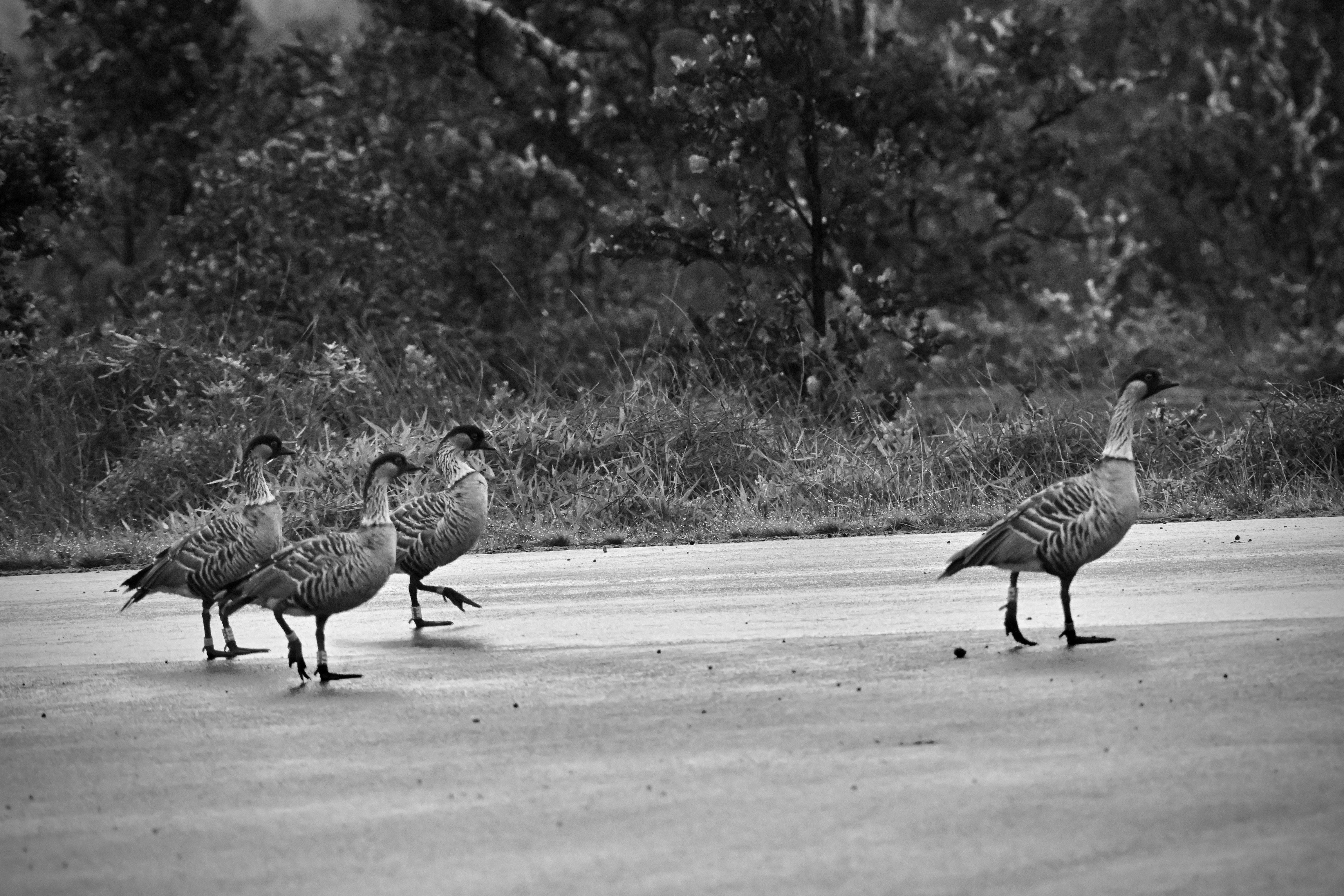
Photo of four nene by Eric Anderson.

Story: Teacher’s Example

November 16, 2025

Isaiah 65:17-25
2 Thessalonians 3:6-13

It’s been a while since I’ve talked about nene school, which hasn’t changed what’s gone on there a bit. Goslings have gone to school, they’ve learned about advanced eating and flying, and some of them have wondered about becoming nene teachers themselves.

There was a time when there were just two nene teachers. Both of them were solid at the job. They could coax a timid flyer into dramatic aerobatics. They could coach a fussy eater into finding a much wider diet – sort of a nene version of heavy pupus. They held their students’ attention. They taught their lessons. Best of all, the students learned.

That’s the mark of a good teacher, when the students learn.

One of the students noticed something else, too.

Both teachers taught that it was important for nene to care for the flock. If you see a storm coming, they said, warn your neighbors. If it looks like a mongoose might be close to a nest, drive them away. If you found a good clump of ‘ohelo berries, call your friends over. Take care of the flock. The other members of the flock will take care of you.

That was an important lesson, and they mentioned it every day.

One of the teachers, though, seemed a little confused about its application. When her students were learning about finding food, she was very helpful. “Look for these colors as you’re flying about,” she’d say. And when they found some, she gave them lots of praise. “Well done, my friends!” she’d say to the beaming young nene.

And then she’d eat the food they’d found.

The other teacher did things differently. He was helpful about finding food, too. “These are the colors to watch for,” he’d say. “Make sure to look side to side.” And like his colleague, he had good things to say to his students when they found that tasty clump of ‘ohelo. “That’s exactly right,” he’d tell them. “Well spotted.”

But then he said, pretty much every time, “Call the other students in. Is anybody hungry?”

As I said, one of the students notice this, and one day he asked his parents about it. “My teachers help me a lot,” he told them, “but when we find food, one of them eats it. I suppose that’s OK; she is the teacher, after all. But the other one invites us to share. Which one am I supposed to learn?”

His parents looked at one another, and then they looked back at him. “Which one makes you feel better?” they asked. “Which one makes you feel like you’re an important part of the flock? Which one seems to be strengthening the flock as a whole?”

“Well, that’s easy,” said their son. “It’s the one who invites us to eat.”

“So which example will you follow?”

He thought about it.

“I spotted some ‘ohelo a few minutes ago,” he told them. “Are either of you hungry?”

by Eric Anderson

Watch the Recorded Story

I write these stories in full ahead of time, but I tell them on Sunday morning from memory and inspiration. The recording does not match the prepared text.

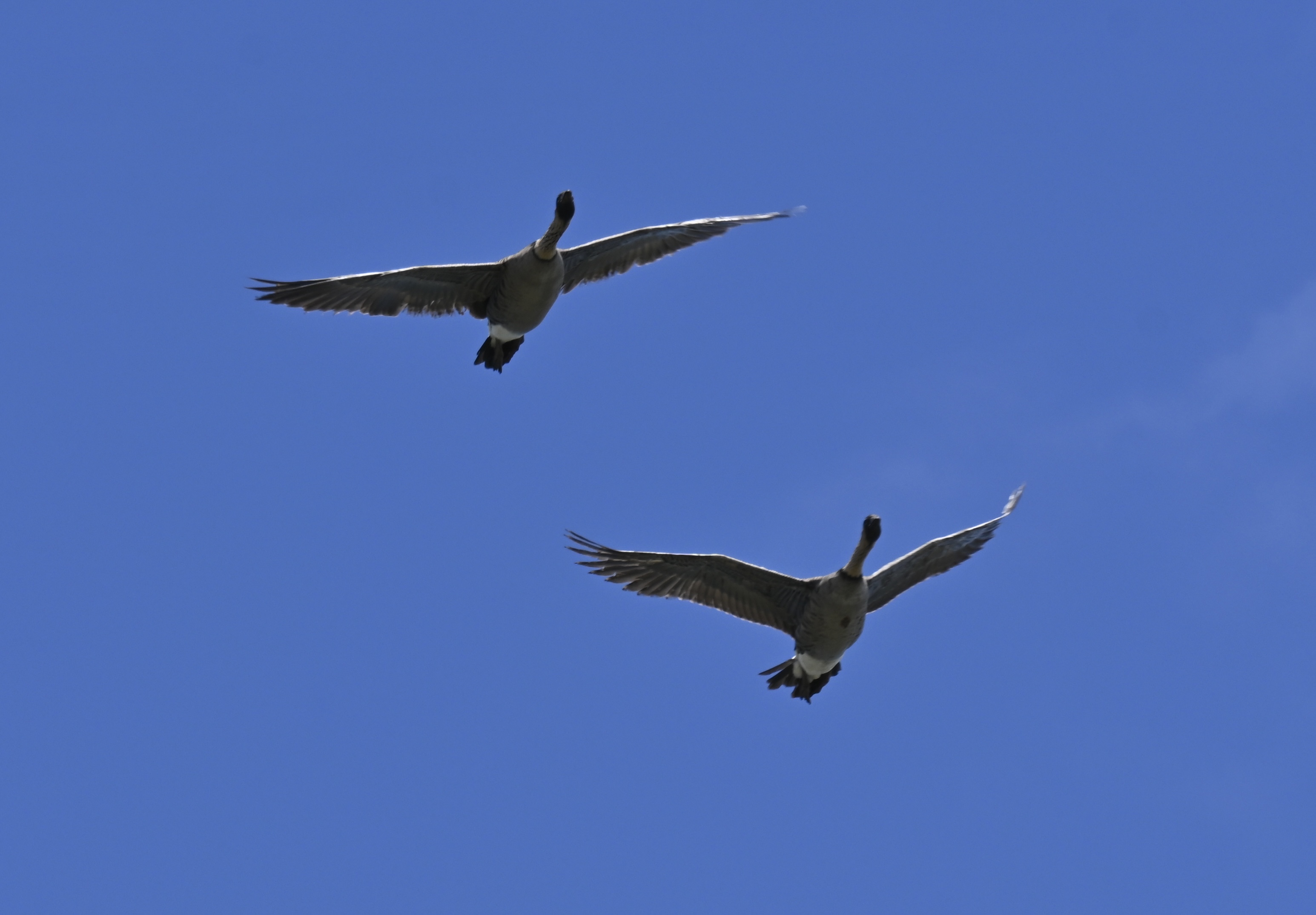
Photo of two nene in flight by Eric Anderson.

We Have the Right

“This was not because we do not have that right but in order to give you an example to imitate.” – 2 Thessalonians 3:9

We have the right to claim whatever we want.
We say.
We have the right to say offensive things
and sneer at those who hear.
We have the right to say to one, “Go here,”
and to another, “Go there,”
and they will go.
We enforce.
We have the right.

Are we any more than irresponsible,
mere busybodies,
tearing down the building of
a blessed community?

Is it not true that we who say,
“The one who does not work,
we’ll let that one not eat,”
do little for our neighbors?

Is it not true that we who say,
“The one who does not work,
we’ll let that one not eat,”
will underpay their workers?

Is it not true that Paul’s example,
sparing those he served from burdens,
that the greatest burden, ignorance of love,
might lift from them, is our greatest call to work?

Is it not true that we are Paul’s
“mere busybodies, not doing any work,”
not building up community.
How can we claim our right to eat?

A poem/prayer based on 2 Thessalonians 3:6-13, the Revised Common Lectionary Second Reading for Year C, Proper 28 (33).

The image is The Multiplication of the Bread and the Fish by Jacopo Tintoretto – http://catalogo.fondazionezeri.unibo.it/ricerca.v2.jsp?view=list&batch=100&sortby=LOCALIZZAZIONE&page=1&decorator=layout_resp&apply=true&percorso_ricerca=OA&locale=it, Public Domain, https://commons.wikimedia.org/w/index.php?curid=79669072.

Story: Aloha for the ‘Iwa

September 28, 2025

Jeremiah 32:1-3a, 6-15
Luke 16:19-31

The ‘iwa, or great frigatebird, has a bad reputation among the seabirds around Hawai’i. ‘Iwa have been known to bully other birds to get them to drop their meals, which the ‘iwa then swoops down to eat. That’s pretty nasty. As a result, a flock of koa’e ula – red-tailed tropicbirds – had decided to have nothing to do with them.

When an ‘iwa flew by, they ignored him. Or her. They veered off to one side or another to keep their distance. When the ‘iwa called out a friendly “Aloha!” they said nothing in return. They called out to one another instead.

Except for one bird.

This koa’e ula decided that until an ‘iwa actually did anything mean, he’d assume that they were as worthy of a friendly “aloha” as any other bird. Seabirds tend to swoop around together a lot, which means that the air is full of “aloha,” which sounds a lot like lots of bird calls to us. A shore with lots of seabirds over it can be a very noisy place.

“Why are you greeting the ‘iwa?” asked his friends. “They’re bullies. They’re mean. They’re never going to give you an aloha.”

“I don’t know about any of that,” said the koa’e ula. “None of the ‘iwa I’ve greeted have done anything to me. Except to say, ‘aloha’ right back.”

Koa’e ula can fly for a long time, but they also like to spend some time resting on the ground, usually on smaller islands offshore from bigger islands like Kauai. There came a day when most of this particular flock was resting from some pretty vigorous flying and fishing. On that day something had happened a long way away that they didn’t know about. It was a big earthquake, and it kicked up the water into an ocean-spanning tsunami. All this was much too far away. The birds had no idea.

Hours later, a series of great waves approached the little island. A few of the koa’e ula were aloft, but they weren’t looking at the water closely. As the first wave came closer, an ‘iwa swooped low over the island, right over the place where the friendly koa’e ula had settled.

“Take off! Fly!” cried the ‘iwa. “There’s a big wave coming! Get into the air!”

“Take off! Fly!” shouted the koa’e ula to those near him, and he opened his wings and leapt into the air. Those near him did the same, and in a few moments the island was empty of birds and the sky was filled with them.

They looked down as the first wave washed over the entire island where they’d been. They were so shocked that they forgot to call “aloha” to one another as they circled. Without the warning of the ‘iwa, they’d have been there when the wave came.

“How did you know?” they started to ask the friendly koa’e kea, the one the ‘iwa had come to warn. “Hod did you know that the ‘iwa would know to warn us?”

“I didn’t know,” said the koa’e kea. “I just knew that everyone deserves an aloha. Everybody deserves aloha.”

As the ‘iwa swooped by with an anxious look to make sure her friend was all right, the koa’e ula called out, “Aloha and mahola nui loa to you!” The ‘iwa looked relieved and called back, “Aloha!” and she soared off once more.

I don’t know what other flocks do – there are ‘iwa and there are koa’e ula all around the world – but I can tell you that there’s been lots more aloha among those birds from that day to this, and long may it stay the same.

by Eric Anderson

Unfortunately, the video recording of worship for September 28, 2025, did not include audio, so there is no recording appended.

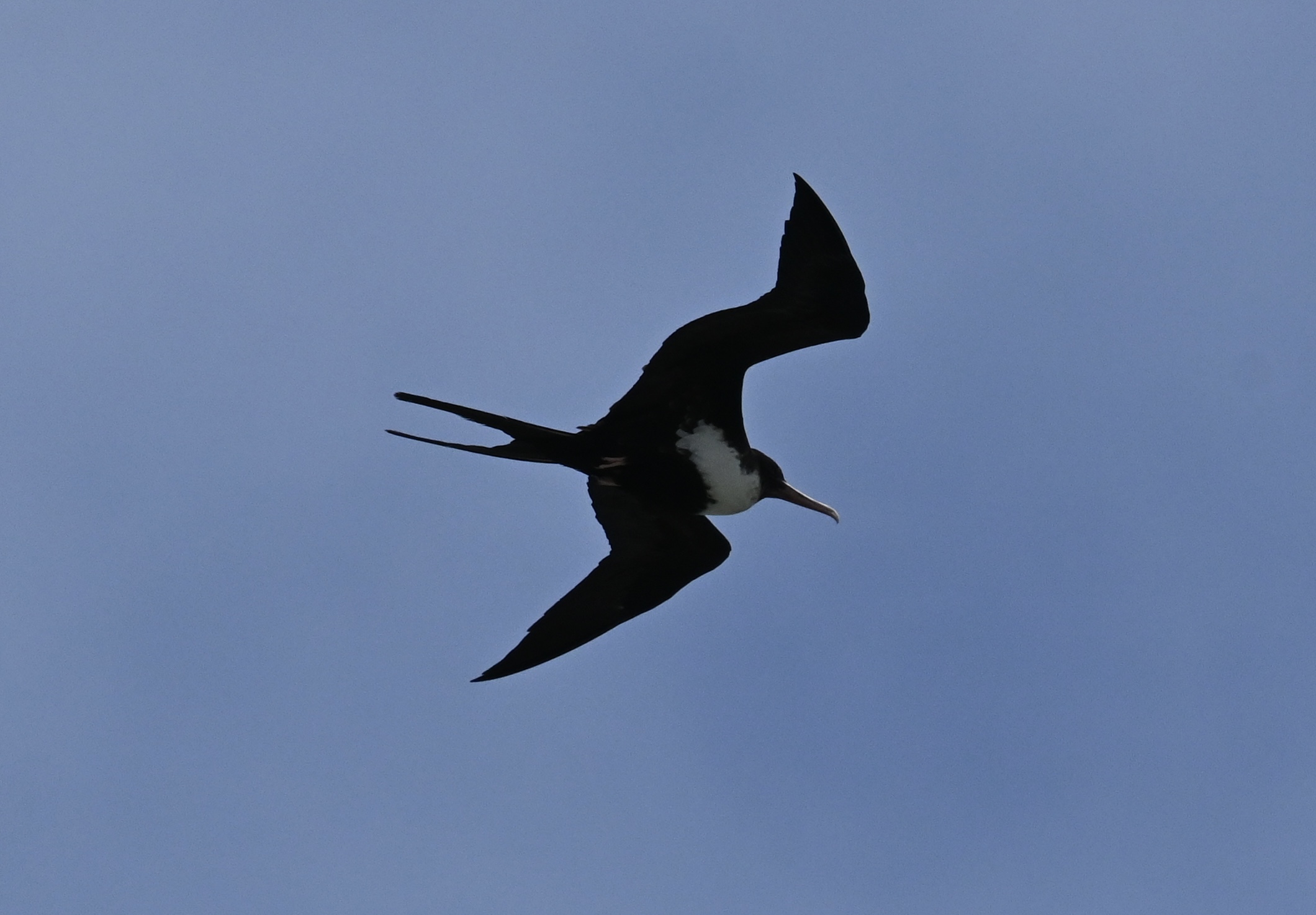
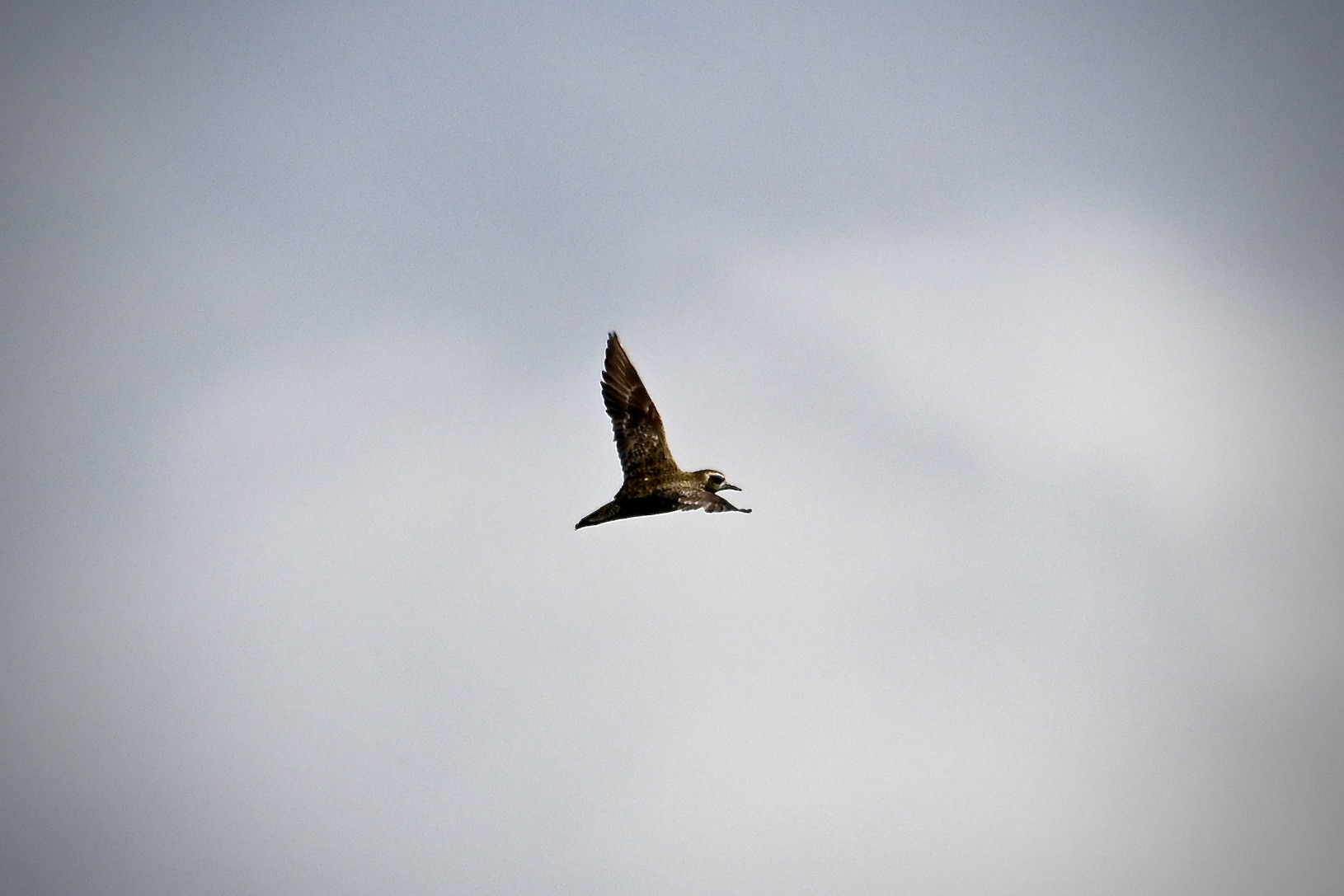
Photo of an ‘iwa (female) by Eric Anderson.

Story: Peace

September 21, 2025

Jeremiah 8:18-9:1
1 Timothy 2:1-7

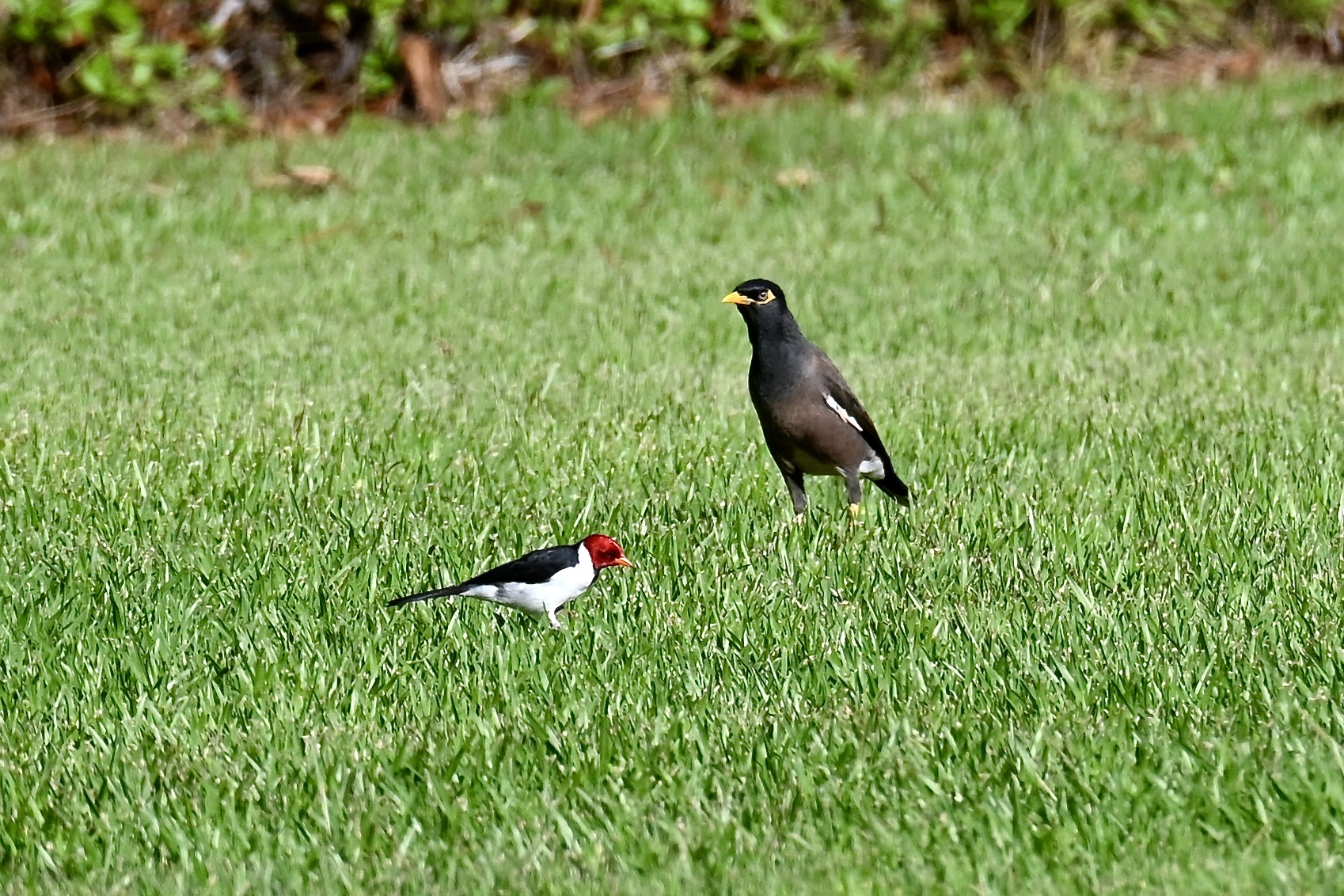
He was a yellow-billed cardinal, and he was young. He was so young, in fact, that the feathers on the top of his head weren’t red; they were brown. He was so young that his bill wasn’t yellow, it was tan.

He was old enough to be living mostly on his own, finding his own food among the seeds and berries, and his own shelter for the night. He was old enough to enjoy a sunrise or a sunset, and he was old enough to enjoy sitting quietly in the sun.

What he wasn’t old enough for was to understand what “peace” was.

That may seem odd, given that sitting quietly and enjoying the sunshine sounds pretty peaceful, but it didn’t always feel that way. For one thing, if he sat in the sunshine for too long, he’d start to feel hungry. Feeling hungry, he thought, wasn’t very peaceful. I guess he had a point there. Being uncomfortable isn’t very peaceful.

Worse than that, though, when he got hungry, he had to find food. He knew how to do that, of course. That wasn’t the problem. The problem was that other birds would show up, and he didn’t like that. Other yellow-billed cardinals were usually OK – he knew a couple of them that tended to tease him – but he really didn’t like it when different kinds of birds turned up. House finches made him nervous. House sparrows were kind of scary. Saffron finches made him feel uneasy about his rather dull coloring.

Worst of all, as you might guess, were the mynas. For one thing, they had brighter yellow bills than he did. For another, they were a good deal bigger. And, of course, they were often really loud, really argumentative, and really frightening.

As he got older and his head feathers turned red and his bill turned more yellow, he still didn’t like it when other birds turned up while he was feeding. He didn’t really notice that the finches and sparrows and kolea really paid him no mind. They just got on with looking for bugs and seeds and worms to eat. So when the myna turned up near him while he was eating, he jumped.

“What’s wrong, youngster?” asked the myna. “Is there something wrong?”

“Oh, no, myna sir,” said the yellow-billed cardinal. “Nothing wrong at all.”

“You jumped,” said the myna. “Did something startle you?”

“Well,” said the cardinal, “you did. You caught me by surprise when you landed.”

“Oh, that’s fine,” said the myna, who sounded somewhat relieved. “Sorry about that. You had me worried for a minute there.”

“You worried?” said the yellow-billed cardinal. “Why?”

“Some birds get upset about mynas,” said the myna. “They think we’re loud and obnoxious. They don’t like it when we’re around.”

The yellow-billed cardinal had thought such things, so he thought that now he’d better stay quiet.

“I’m glad you’re not like that,” said the myna. “I could do with a bit of peace today.”

That’s when the yellow-billed cardinal learned what peace could be – a time when creatures who were rather different could live side-by-side, meet their needs, and not fear one another. A yellow-billed cardinal could be safe from the bullying he feared from a bigger bird. A myna could be safe from the rejection and disdain of a smaller bird.

“I could use a bit of peace myself,” said the yellow-billed cardinal. “Let’s enjoy it while we can.”

by Eric Anderson

Watch the Recorded Story

I write these stories in advance, but I tell them from memory, which means things change.

Photos by Eric Anderson.

Story: A Tree Falls

July 20, 2025

Amos 8:1-12
Luke 10:38-42

The oma’o’s heart was in the right place, mostly. The physical heart was, of course, in the right place in his chest and beating regularly. His emotional and spiritual heart was maybe a little bit off to the side, because while he was thinking a little bit about another living thing, it has to be said that he mostly was thinking about himself.

It was a thinnish koa tree that he chose to protect. Its leaves were pretty thick even if its trunk wasn’t the widest. He liked the flavor of its flowers. There were some other birds that did, too, and he began to chase them away whenever he saw them. “I’m preventing them from over-feeding,” he said to himself. “That way the flowers can bloom and the fruit will grow.”

There were also bugs and caterpillars on the trunk and branches of the tree. Some of those he ate, because an oma’o will eat just about anything. Most of them he ignored. Oma’o might eat anything, but when there’s fruit around, they’ll eat that.

But he also wouldn’t let other birds approach the tree to eat the bugs, either. He chased away ‘apapane and ‘amakihi, ‘alawi and ‘elepaio. He even chased away the hook-beaked ‘akiapola’au after he caught one digging into the tree bark with its short lower beak.

“Stop digging into this tree!” he shrieked. “You’re hurting it!”

“This caterpillar in the bark is hurting it,” said the ‘akiapola’au. “I’m getting it out.”

“Not while I’m around!” shouted the oma’o, and chased the other bird away.

As the days went on, the koa leaves started to turn funny colors and droop. When the oma’o landed on a branch, it didn’t spring back up the way it had. Twigs dried up and fell away. Leaves littered the ground around the base of the trunk.

“That tree is sick,” said an ‘elepaio to the oma’o. “It’s got too many bugs. Let us help!”

“No,” said the oma’o. “You’ll hurt it.”

“Look at all those caterpillar tracks below the bark,” said an ‘akiapola’au. “Let us dig them out. The tree will get better.”

“I’m not letting you anywhere near this tree,” said the oma’o.

Even he had to admit that things weren’t going well. He no longer ate flowers from the tree, because there weren’t any. He visited other trees for fruit. There were plenty of bugs to eat, but when he ate some, there were always more.

When a tree falls in the forest, it does make a noise. The birds hear it. And they cry about it.

The birds heard the oma’o’s tree fall. And they cried.

“Why are you crying?” the oma’o asked an ‘elepaio. “It was my tree, not yours.”

“I’m crying because that tree could have been a place to nest for decades,” said the ‘elepaio. “It would have sheltered my family in the rain,” said an ‘amakihi. “It would have fed my children and my grandchildren,” said an ‘akiapola’au.

Looking around, the oma’o realized that not only had he hurt the tree he’d called his own, he’d hurt all the birds around. Not only that, he’d hurt future generations.

When a tree falls in the forest, the sound of its fall echoes into the future.

by Eric Anderson

Watch the Recorded Story

I write these stories in advance, but I tell them from memory (plus improvisation), so it does not match the text you just read.

Photo of an oma’o by Eric Anderson.

Story: The Molting ‘Apapane

May 25, 2025

Acts 16:9-15
John 14:23-29

He wasn’t the oldest among his siblings, cousins, and friends from nearby nests, but he was one of the first to molt from his young feathering to his adult colors. He’d had gray feathers on the chest and brown on his head and back, with black on his wings and tail. They all did. It made their games of hide-and-seek pretty difficult, because those colors melded into the shadows on the tree branches pretty well.

As I say, though, he was the first among them to start losing some of those brown and gray feathers, and start to gain the red feathers from head to tail. Frankly, it wasn’t going well. Loose feathers itched, and so did the new feathers as they grew in. They also didn’t fall out evenly. He found himself with a grayish belly blotched with the new red feathers.

“You look ridiculous,” said one of the young ‘apapane who played hide-and-seek with him, and, well, he felt ridiculous.

“Can’t you hide that?” asked another of the ‘apapane. He was a cousin, but he could be mean, even to a cousin. Our young ‘apapane couldn’t think of how.

“Go clean that up,” ordered one of the bossier young ‘apapane. She was one of those who thought she knew best for everybody else. But he still didn’t know how to take care of it, so he kept his perch and tried not to cry.

“Knock it off,” said the smallest of the young ‘apapane. All her feathers were still brown and gray, and she looked like she’d just been groomed by the finest feather-settlers of the forest. Everybody assumed that she was talking to the young bird with the splotchy red.

“Yeah, knock it off,” said the one who’d started this by calling him ridiculous in the first place.

“No, you knock it off,” said the smallest ‘apapane. “And you. And you. And all of you.”

She shook her wings and continued, “First of all, what can he do about it? You all know that our feathers will change from what we’re wearing to what our parents wear. Did you think that happened overnight? Didn’t you realize that it’s going to take time and that there are rough spots along the way?”

As it happened, none of them had thought about it.

“What are you going to do,” she demanded, “when this happens to you in a week or two? Are you going to make everybody going through this fly away, or are you going to help them when it itches and tell them it will be all right? What would you want for yourself?”

She asked that last question straight at the bird who’d ordered the molting ‘apapane to go clean that up. She didn’t say anything until it became clear that she had to answer.

“I’d want help,” she said.

“How about the rest of you?” demanded the smallest ‘apapane. They all admitted they’d want help.

“And that’s what you’ll get,” she said. “We’ll start with our friend here.”

“So how are you?” she asked. “Does it itch today?”

That’s how that generation of ‘apapane made it through their molt.

by Eric Anderson

Watch the Recorded Story

I write these stories in advance, but I tell them from memory and improvisation. What you have just read will not match the way I told it.

Photo of a juvenile ‘apapane in molt (at least that’s what I think it is) by Eric Anderson.

Who Are the People of Spirit?

May 13, 2025

[Verse 1]

Simon Peter went to see a man
A Roman centurion with power in his hands.
“Speak to us, Peter, we’d like to hear news
of a new way of living, one we can choose.”

[Chorus]

Who are the people of Spirit?
Open my heart to see.
Who are the people of Spirit?
Is it you? Is it me?

[Verse 2]

Simon Peter told his story to them
How a crucified brow bore a bright diadem.
Then he gasped as those Romans, unashamed
Displayed in their bodies the Spirit unchained.

[Chorus]

[Verse 3]

Simon Peter brought the Council the word
That even in Gentiles the Spirit had stirred.
“Who am I, who are you, to hinder our God?”
In the grace of the Spirit their spirits were awed.

[Chorus]

© 2025 by Eric Anderson

Watch the Premiere Performance

I first performed this song during worship at Church of the Holy Cross UCC in Hilo, Hawai’i, on Sunday, May 18, 2025.

Story: Welcome

May 18, 2025

Acts 11:1-13
John 13:31-35

The young ‘amakihi was nervous. She had been busy growing up, which ‘amakihi do a lot quicker than human beings do, but there was a lot to pack into that time. There was eating, and learning what to eat. There was taking care of her feathers, which changed when she molted and the feather lengths changed. And of course there was flying.

Then she had to learn about eating again, because there were things she could get to with working wings that she couldn’t get to in a nest. She learned about new bugs, new fruits, and new flowers. She’d been too busy to be nervous.

She was nervous now, though, because her parents had announced that the family would join a flock for the summer. She wasn’t really used to other birds. She’d met an auntie or an uncle or two, and of course her tutu, but these would be strange ‘amakihi. Would they like her? Would they be mean to her?

It made her more nervous to realize that the flock wouldn’t include just ‘amakihi. It would include ‘akepa, ‘alawi, and scariest of all, ‘apapane. She knew there were a lot of ‘apapane around. She’d seen far more of them than she had ‘amakihi. She’d also seen them chase ‘amakihi through the forest, even her own father. “I got too close to their nest,” he’d explained, and that made sense because she’d seen him chase other birds away from her nest, but still. The ‘apapane made her nervous.

“It will be all right,” said her father. “It’s different when birds aren’t worried about nests and eggs.”

“It will be all right,” said her mother. “You’ll make it all right.”

The day came when she and her brother and her parents flew over to an ohi’a tree filled with other birds. There were other ‘amakihi, and she knew some of them because her tutu were there. There was ‘akepa and ‘alawi showing off their green and bright orange feathers. Mostly, though, there were ‘apapane. They hopped through the branches, singing their beautiful songs, and looking very sharp in their red and black feathers.

One of them, who was keeping rather quiet, hopped over to the branch where she was sitting, keeping very quiet and hoping nobody would notice her.

“Hi,” said the ‘apapane. “What kind of bird are you?”

“I’m an ‘amakihi,” she said. “And you’re an ‘apapane.”

“I am,” he said, and looking rather nervous, said, “I feel really dumb. I’ve never seen most of these birds before. Do you know any of them?”

“Well, I know my family,” she said, “and I’ve seen a couple of these other birds before,” – she didn’t mention that they’d been chasing her father away from their nest – “but most of these birds are as new to me as they are to you.”

“Oh, good,” said the ‘apapane. “I guess this is new to most of us youngsters?”

“I think it is,” said the ‘amakihi. “I’ve been worried that nobody would like me.”

“You’ve made me feel better,” said the ‘apapane. “I think most birds would like you for that.”

“And you’ve made me feel welcome,” said the ‘amakihi. “Thank you so much for that.”

Mother had known, after all. She had made it all right.

by Eric Anderson

Watch the Recorded Story

I write these stories ahead of time, but I tell them from a combination of memory and improvisation. As a result, what you’ve just read will not match what you hear.

Photo of an ‘amakihi by Eric Anderson.

Story: The Easy Way to Fly

November 17, 2024

Hebrews 10:11-25
Mark 13:1-8

I’m afraid it’s true that there are not many nene. They are easily outnumbered by the ‘apapane, and more than easily outnumbered by people. You may wonder why, if there aren’t that many of them, you hardly ever see them one at a time. I mean, wouldn’t you expect that a nene would go its own way from time to time, just to find some ‘ohelo berries of their very own?

One nene thought that independence sounded like the way to go.

He’d been to nene school, so he thought he knew it all. He knew how to find food. He knew how to fly. He’d done the drills at formation flying without getting excited about it. He was going to be the nene who made his own way, without relying on (and, you know, sharing with) the other nene.

So off he went to find his own spaces.

There’s a lot more of Hawai’i Island than there are nene, so it wasn’t difficult. If he spotted a little flock of nene in the air or on the ground, he’d just go somewhere else that they weren’t. That was lots of places, and plenty of those places had food, and water, and places to rest and relax. All in all, he thought he was having a pretty good nene life.

One day as he was in the air looking for another place to relax and eat, he heard the calls of some nene behind him. Glancing back, there was a little “V” shape of five geese flying in formation. They called out a friendly greeting, to which he replied – he liked being alone, but he wasn’t going to be rude about it.

What surprised him, however, was that the little “V” of nene was catching up with him. In fact, they passed him in the air, still calling out their “Hello!” He thought he was a pretty good flier, but they sped on by and he couldn’t keep up. It didn’t take long before they’d disappeared into the clouds.

How had they flown past him so fast?

Sometimes when you don’t know something and you don’t have Google, the best thing you can do is ask someone who should know. So he sought out his nene school teacher. When he found her, she was just finishing up a formation flying class. He waited, mostly patiently, until she was done, and told her about being passed by those other nene.

“Am I just so slow?” he asked her.

“No,” she said. “You’re not slow. You’re alone. Flying together – in that ‘V’ formation – allows us to fly more easily. The wings of the birds in front create good flying air for the birds behind. It makes a difference. We can put more strength into it. We fly better together.”

“You mean,” he said, “that if I always fly alone, I’ll always fly harder and slower?”

“That’s exactly what I mean,” she told him. “Together is the easy way to fly.”

Never let it be said that nene won’t learn. He found his own place in a little flock, and there in its “V” he flew easier and faster than he could remember doing before. Together is the easy way to fly.

by Eric Anderson

Watch the Recorded Story

I write these stories ahead of time, but I tell them from memory plus inspiration. The story you just read will not match the recorded telling of it.

Photo by Eric Anderson