Story: Flowers and Friends

November 9, 2025

Haggai 2:1-9
2 Thessalonians 2:1-5, 13-17

Life isn’t always easy in the mountain forests. Sometimes it gets really wet and uncomfortable, and while feathers are pretty good at keeping you warm and dry, they’re not perfect. Sit in the rain long enough, and an i’iwi will feel pretty cold and wet.

Worse, though, is when it gets dry, because the trees and the plants rely on water. When there’s been no rain for a good while, they have to save their energy. It’s like when you’ve been running around a lot and need to rest for a while. The way a tree rests, or another kind of plant rests, is to hold off on making flowers or fruit. When there’s more water, then it’s time to bloom.

The birds can mostly cope with that. The ‘elepaio eats bugs, and lots of the bugs eat things other than nectar. The ‘apapane and the ‘amakihi eat lots of nectar, but they can make a good meal from worms and spiders. They miss the nectar, but they can feed themselves.

The i’iwi has a rougher time. They will eat bugs, but they’re built to eat nectar, not bugs, and when the flowers aren’t blooming, they get hungry.

It was dry on the mountain. And the i’iwi were hungry.

As I’ve mentioned, while some i’iwi don’t get along with other birds, some i’iwi get along just fine. So there was a little flock of ‘apapane and ‘amakihi and ‘akepa that were worried about their i’iwi friend, who wasn’t saying much, but she was clearly getting hungrier and hungrier.

“What can we do?” an ‘amakihi asked an ‘apapane, who replied with a bird shrug, because he didn’t know, either.

“What can we do?” an ‘elepaio asked his friend the i’iwi, which was the same question but had the advantage of being asked of the right bird. Unfortunately, she didn’t know either.

“You’ve showed me where you’re finding some bugs to eat, and that’s helped some,” she said, “but I’m afraid I’m not as good at catching them as you. I don’t think you can get me more food any better than that.”

“I still want to help,” said the ‘elepaio, and all the other birds did the same.

“You know how you can help?” said the i’iwi. “Stay right where you ware. Stay close to me. Show me you care.”

“How will that help?” asked the ‘apapane, who had a very practical mind. “You can’t eat that.”

“Perhaps not,” she said, “but when you’ve done all you can to help me eat, I’m glad to have your company. It may not feed my stomach, but it feeds my heart.”

So they perched there together in the same tree. Sometimes one or the other birds would sing, and once the ‘amakihi caught a spider and gave it to the i’iwi, who ate it with a hearty “Mahalo.”

Mostly, though, they sat in friendship, friendship that fed the heart even better than flowers.

by Eric Anderson

Watch the Recorded Story

I write these stories in full ahead of time, but I tell them in worship from memory (and improvisation). The story when you watch it will not match the story when you read it.

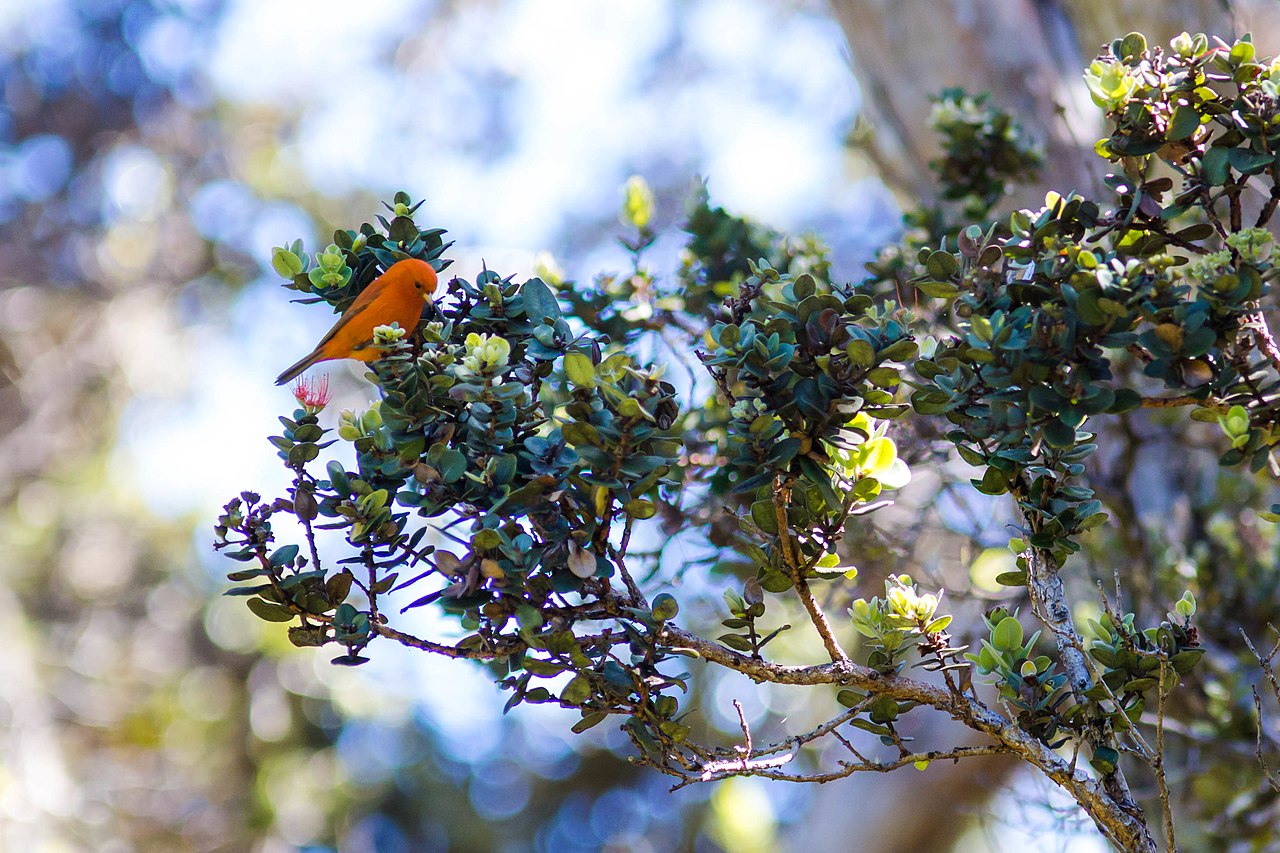
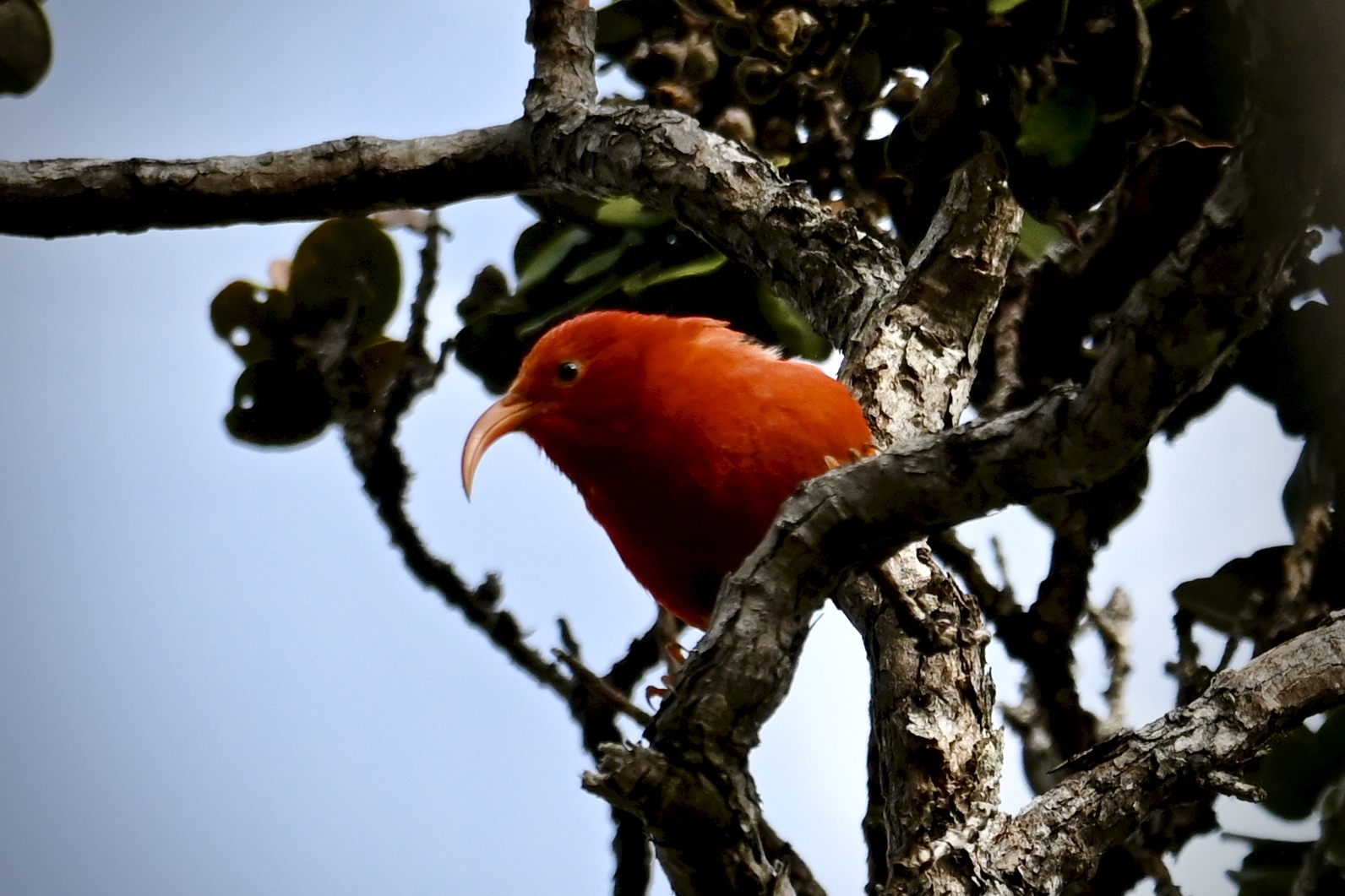
Photo of an i’iwi (who hopefully isn’t hungry) by Eric Anderson.
Story: Remember

October 26, 2025

Ephesians 1:11-23
Luke 6:20-31

I remember a good number of things. I also forget a good number of things. Some of them I’m happy to forget, especially if they made me unhappy at the time. Some of them I wish I could remember, especially if they involve the question of where did I put down my keys?

The i’iwi wasn’t much worried about the things he’d remember. He was worried about the things others would remember about him.

A lot of i’iwi get remembered by other birds as being, well, kind of aggressive. Bossy. Selfish. They drive other birds away from the places that they’re eating. Other kinds of birds do that, too, but when an i’iwi gets aggressive, ‘apapane and ‘amakihi will tend to give in and fly away.

“But is that,” he asked himself, “how I want to be remembered?”

He knew plenty of i’iwi that loved to chase other birds away. They claimed that they ate better when they did, but he also knew i’iwi that tended to ignore other birds, even slept in the same trees overnight. They seemed to eat just as well, he thought.

“How do I,” he asked himself, “want to be remembered?”

He had a friend who was one of the most effective bullies around. Where some of the aggressive i’iwi would chase an ‘apapane for a couple of feet, he’d chase them for a twice or three times as far. Sometimes he’d chase a bird so far that he’d find another bird in the place where he’d started, and he’d chase that one, too. If that seems like extra work to you, it does to me, too. Still, he was flashy (but then, all i’iwi are pretty flashy) and he was popular (as long as he wasn’t chasing you).

“But is that,” he asked himself, “how I want to be remembered?”

Then he remembered his grandmother.

She didn’t take any nonsense from other birds, no she didn’t. No ‘apapane had ever driven her away from a cluster of ohi’a blossoms. But she’d never chased an ‘apapane, either, or an ‘amakihi, or a young i’iwi. In fact, she’d let other birds know when she’d found a good spot, whatever the color of their feathers.

His grandmother loved him. He knew that, because she used to hop aside so he could get to the best flowers.

He loved his grandmother.

He went to find her, and said, “I want to be remembered like you, grandmother.”

“That’s good,” she said. “Let’s go see if we can find something good to eat, and then we’ll let everybody else know.”

That’s how both of them would be remembered.

by Eric Anderson

Watch the Recorded Story

I write these stories in advance, but I tell them from memory (plus improvisation) during Sunday worship. The story you have just read will not precisely match the story as I told it.

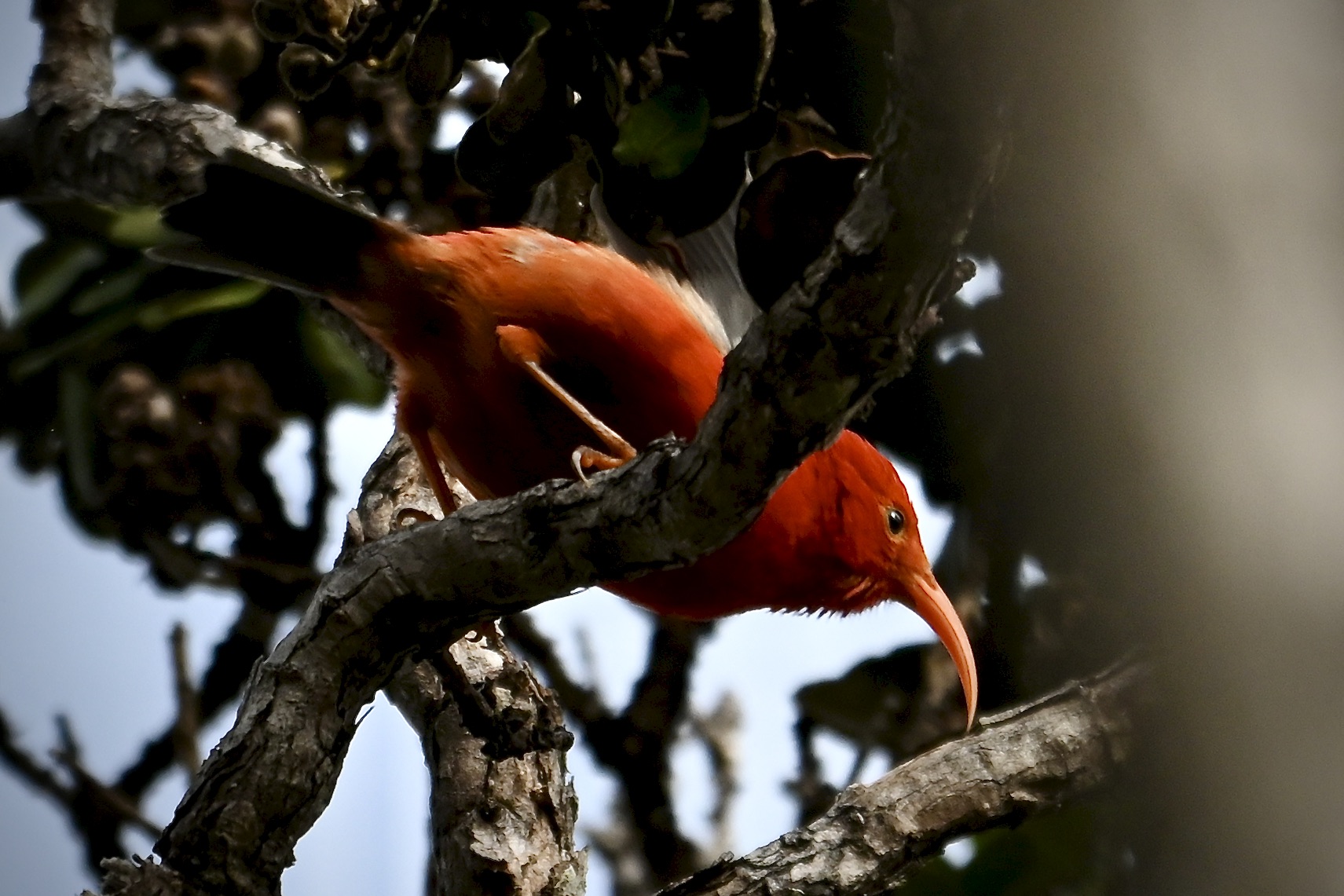
Photo of an i’iwi (being reflective?) by Eric Anderson.

Send Me


“[Jesus said,] [The rich man] said, ‘Then I beg you, father, to send him [Lazarus] to my father’s house–for I have five brothers–that he may warn them, so that they will not also come into this place of torment.'” – Luke 16:27-28

O Holy One,

When I should find myself (again)
in torment I have made myself,
may my compassion and
my wisdom be enough to call
a warning to the ones I love,
and to the ones I don’t,
with my own voice, and not rely
upon the voice of those I have oppressed.

A poem/prayer based on Luke 16:19-31, the Revised Common Lectionary Gospel Reading for Year C, Proper 21 (26).

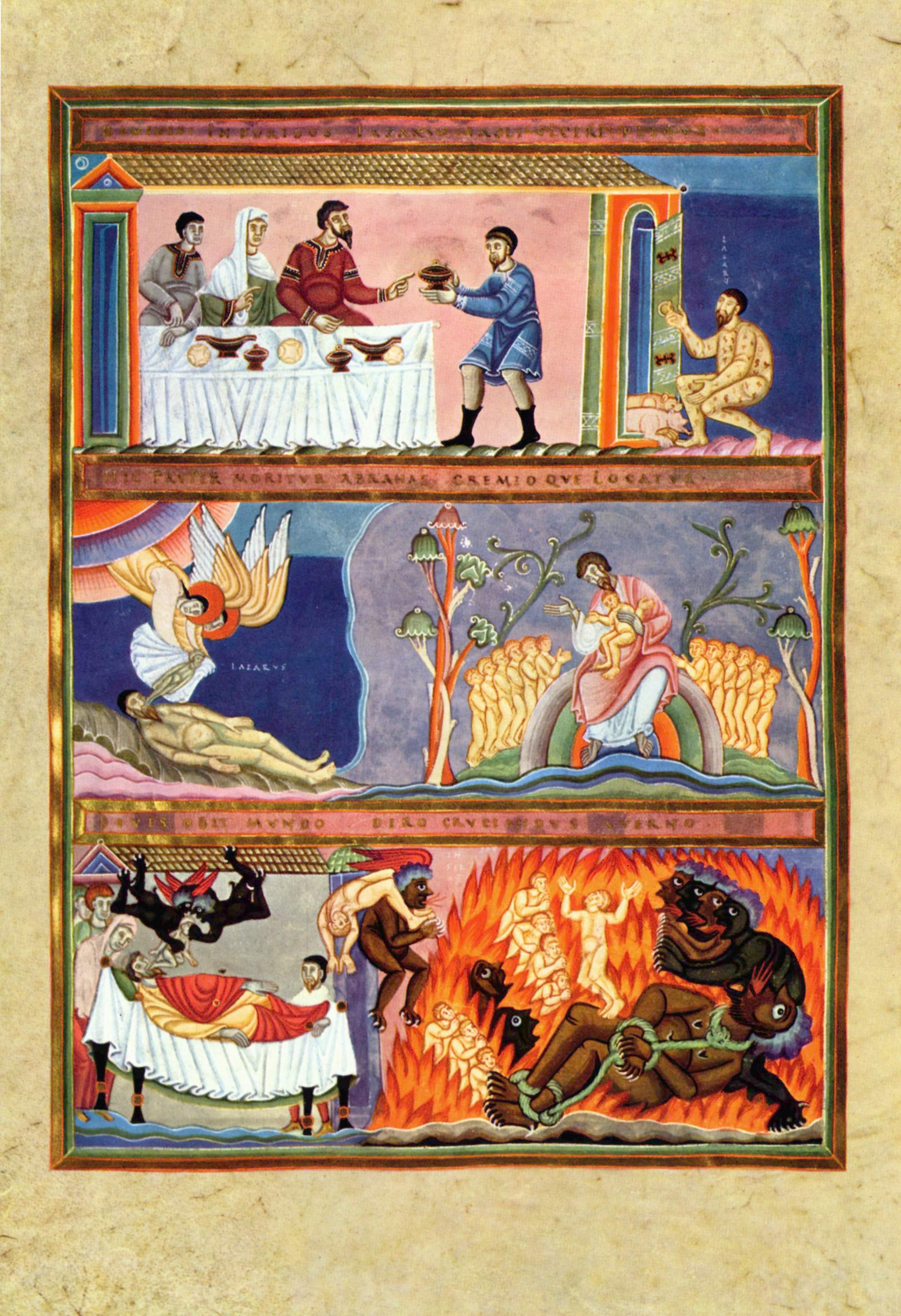
The image is “The Parable of the Rich Man and the Beggar Lazarus,” an illustration in the Codex Aureus Epternacensis (Golden Gospels), by the Master of Codex Aureus Epternacensis – The Yorck Project (2002) 10.000 Meisterwerke der Malerei (DVD-ROM), distributed by DIRECTMEDIA Publishing GmbH. ISBN: 3936122202., Public Domain, https://commons.wikimedia.org/w/index.php?curid=155243.

Story: Close to Heaven

Photo of a kolea (a Pacific Golden Plover), a bird with a thin straight beak, white, brown, and tan feathering, walking along a grassy area.

November 3, 2024

Ruth 1:1-18
Mark 12:28-34

It’s a funny thing. When you hear just part of a conversation, it can be misleading. I mean, you might think you know what folks are talking about, but it turns out you might not.

In this case, it was a kolea, a Pacific Golden Plover, who overheard some people talking about heaven. And yes, he got confused.

He heard enough to learn that the people talking about heaven believed it was a really nice place. He heard enough to learn that the people talking about heaven didn’t expect to go there for some time. He heard enough to learn that the people believed that other creatures could also go to heaven.

He didn’t hear anything about it being a new life and a very different kind of place. He didn’t hear anything about dying as a transition from one kind of life to another kind of life. They just didn’t mention that while he was listening.

But at the end of the conversation, as the people were walking away, one of them said something about heaven being beyond the clouds.

People tend to talk that way about heaven because even though we have telescopes and can look a long way into space, “beyond the clouds” is something most of us don’t know much about, and the life God intends for us beyond our lives here is also something we don’t know much about. But the kolea didn’t know that. He said to himself:

“Those people can’t fly beyond the clouds, but I can. I can get to heaven myself.”

And he launched himself into the sky.

A kolea migrating from Hawai’i to Alaska, or from Alaska to Hawai’i, can get very high indeed. He flew up over the low clouds that were raining on Hilo. Then he flew up over the middle clouds that were spotted about around the slopes of Mauna Kea. Then he flew up even above the high wispy clouds above Mauna Kea.

Each time, he looked about for signs of heaven.

Each time, he didn’t see them.

“I must be close to heaven,” he said.

What he found as he circled higher and higher was that it got colder and colder. He’d felt that before, but as he flew higher than he had before it got colder than he’d ever known. He didn’t like that. He also didn’t like that the air got thinner. Not only was it harder to breathe, he had to flap his wings harder to move enough air to keep flying. In fact, there came a point that he just couldn’t go higher. Gasping, he let himself fall, then circle, and glide back down to the ground.

He landed, still winded, on some grass near another kolea, who hopped over to see what was wrong. “I tried to fly up to heaven,” he said sadly, and told her the story. “I must have been close, but I couldn’t get there.”

“That’s too bad,” she said to him. “Here, take a bite or two. There’s some tasty things here. And you’ll find some good water to drink just over this way.” She led him over to the food, and water, and a safe place to rest.

He ate. He drank. He rested. His breathing settled. His wings regained their strength. He looked at his new friend.

“You know, I flew a long way up to get close to heaven,” he said, “but you’ve been kinder to me than I can remember anyone else being. It might just be that I’ve been closer to heaven here than I ever was up there in the sky.”

by Eric Anderson

Watch the Recorded Story

I write these stories in advance, then tell them from memory during worship. The story you just read and the story as I told you will not be the same.

Photo of a kolea (a Pacific Golden Plover) by Eric Anderson.

Story: Merciful

October 27, 2024

Hebrews 7:23-28
Mark 10:46-52

It was a dark and stormy night.

Well, that’s not an original way to begin a story, but it was pretty dark, and rain was falling, and the winds were howling up there on the mountain. If you were a pig, it was a good night to find a rocky overhang. If you were an ohi’a tree, it was a good night to rock back and forth with limbs and trunk, and a better night to hold on tight with your roots.

If you were one of the honeycreepers of the forest, it was a good night to shelter beneath lots of thick leaves and hope the branch you’d perched on was sturdy.

A grumpy ‘amakihi had found just such a space in a koa tree. He wasn’t exactly dry, but he wasn’t being pelted by rain, either. The branch he grasped with his feet was only tossing a little bit. He wasn’t comfortable – that’s why he was grumpy – but he was as comfortable as he was going to get until the sun came out so he could dry his feathers.

He wasn’t pleased when the branch gave another bounce that was out of rhythm with the winds and there was a new shadow among the leaves. A young ‘apapane – so young that she didn’t have her red feathers yet – had landed on the branch and stood shivering. She tried to shake the water from her wings, but mostly just banged herself against the leaves and twigs.

“Stop that,” said the grumpy ‘amakihi. “What are you doing here? You shouldn’t be flying in this storm.”

“I didn’t mean to,” said the young ‘apapane. “The wind swept me off the branch.”

“Well, you’d better go back there,” said the ‘amakihi. “Go on.”

The young ‘apapane looked out through a gap in the leaves to where they could both see the trees tossing in the gale.

“Well, maybe not right now,” said the ‘amakihi, who was still grumpy but a fairly considerate bird. “What can I get for you? Do you want a bug? There’s some here.”

“No, sir,” said the ‘apapane.

“How about a drink of water? Well, maybe not,” he said, when the young ‘apapane shivered. “You’ve probably had enough water.”

“Yes, sir,” said the ‘apapane.

“Well, what do you want? You don’t want me to help you find your own tree, do you?”

The ‘apapane shook her head.

“What do you want me to do for you?” insisted the ‘amakihi.

“Could I just stay here for a while, and not be alone?” asked the ‘apapane.

“You don’t want to be alone?” asked the ‘amakihi.

“No, sir,” said the ‘apapane.

The ‘amakihi thought about it, and realized even as he said it, “You know, I don’t want to be alone in this storm, either. Come find a dryish spot here on this branch. We’ll ride it out together.”

And that is how a grumpy ‘amakihi and a frightened ‘apapane were merciful to each other in the midst of the storm.

by Eric Anderson

Watch the Recorded Story

I write these stories in advance, then tell them from memory during worship. That means that changes happen.

Photo of an immature ‘apapane by Eric Anderson.

No Illusions

“Now the woman was a gentile, of Syrophoenician origin. She begged him to cast the demon out of her daughter. He said to her, ‘Let the children be fed first, for it is not fair to take the children’s food and throw it to the dogs.'” – Mark 7:26-27

I had no illusions, Jesus.

I almost didn’t spot you, though I looked.
A neighbor mentioned casually that
“a healer Jew from Galilee” was near
as if it made no difference to me.

You know it did, Jesus.

I left my wailing daughter with a friend
and searched the streets to find
a face I did not know. Despite our sorrows, I
know every face upon our streets.

I knew you from not knowing you, then, Jesus.

You’d made no effort to declare yourself
so I could not believe you’d come to help
the sick and demon-burdened in our village here,
but help you would, if I could have my way.

I had to have my way, Jesus.

I found your stranger’s face. I bowed
upon your feet. I begged you for
your healing touch to soothe my child’s rage,
assuage her fear, give to her peace.

I knew that you’d say, “No.”

You said it with a cruelty that nearly stopped
my breath, though I had no illusions, none.
I stammered out my need’s reply:
“The dogs can eat the children’s crumbs.”

I was not after crumbs.

No, Jesus, I would have it all.
Not all or nothing, I would have it all,
because what use is partial banishment
of demons burdening the human soul?

No crumbs, Jesus. All. And I mean all.

You gave it all to me, you know.
You gave me all your cruelty (I hope
you used it up). But then you gave me all
the healing power of your anguished face.

My daughter got it all.

She’s never seen you, Jesus, as
you know. You took your shattered heart,
remade it new, to heal and heal again,
and left behind a girl once more herself,

And your illusions cast aside.

A poem/prayer based on Mark 7:24-37, the Revised Common Lectionary Gospel Reading for Year B, Proper 18 (23).

The image is “Jesus and the Woman of Canaan” by an unknown artist (ca. 980-993) – found in the Codex Egberti, Fol 35v, Public Domain, https://commons.wikimedia.org/w/index.php?curid=8096755.

Story: How the ‘Akepa Began to Sip Nectar

July 3, 2022

Galatians 6:1-16
Luke 10:1-11, 16-20

If you’re not familiar with the ‘akepa, they are another of the small birds who live in the ohi’a forest. The males are a vivid orange or orange-red with black feathers on the edge of their wings. The females’ feathers are gray-green, rather close in color to ohi’a leaves. Mostly they eat bugs. And spiders. And caterpillars, which are the early stage of, well, bugs.

They eat a lot of bugs.

From time to time, though, they eat a little bit of ohi’a nectar. The i’iwi sip nectar nearly all of the time. The ‘apapane mostly sip nectar but will also eat some bugs. The ‘amakihi like to mix up their meals, some nectar here, some bugs there, some fruit in some other places. And the ‘akepa… eat bugs.

They eat a lot of bugs.

But they do sip a bit of nectar from time to time, and this is how that came about. The first known sip was an accident. A bright orange ‘akepa was hopping about the tree, poking his beak into clusters of leaves, searching for those tasty little bugs and spiders. A somewhat careless poke with his beak came back with nectar, not a bug.

It was a revelation. It wasn’t a bug – wouldn’t make a meal – but it would be a tasty snack every once in a while.

He decided he needed to share the news with the other ‘akepa. He found the little flock he flew with picking over another tree and shouted, “Hey, idiots! Try sipping the nectar!”

To a bird, they gave him a look that said, “Who are you calling an idiot?” and went back to chasing bugs.

“Are you stupid? Try the nectar!” They ignored him.

He kept this up for quite some time, getting more and more insulting until sunset put an end to his harangue. All the ‘akepa in the little flock went to sleep pretty irritated, in his case with them, and their case with him.

In the morning, before he could get started, one of his friends, a young female, flew over to him. “Are you going to call us idiots all day?” she asked.

“But you are!” he said.

“No, we’re not,” she said. “What we are is insulted. Now if you’ve found something interesting, we might consider it, but not as long as you treat us badly.”

He opened his beak to yell, but something in her look told him that he shouldn’t. He closed his beak. He opened it. He closed it. He sighed.

Then he dipped his beak into a nearby ohi’a blossom and gave it a good, deep sip.

“You might want to try this,” he said. “It’s different. And pretty good.”

She looked at him. He dipped his beak again.

“You’re not playing games with us?”

“No. I’m not.”

After she tried it, other ‘akepa tried it, too. Mostly, Ihave to say, they preferred bugs, and they do to this day. But also to this day, no ‘akepa has liked being called an idiot, and I guess that’s true of a lot of creatures in this world.

by Eric Anderson

Watch the Recorded Story

The story was told live from memory of this manuscript – with all the improvisations and omissions that suggests.

Photo of an ‘akepa by Melissa McMasters from Memphis, TN, United States – Hawaii akepa, CC BY 2.0, https://commons.wikimedia.org/w/index.php?curid=74469703.

I Pray for a Miracle

O, God,

I pray for a miracle.

I pray for weary bodies to find strength
and in resilience live beyond a virus.

I pray for souls who lack compassion
to find empathy for suffering.

I pray for those augmenting their own power
to embrace compassion and its sharing.

I pray for those obsessed with their self-image
to be filled with overflowing love.

I pray for those in pain of injury
to be comforted in justice.

I pray for those dismissive of their neighbors
to be startled at the gifts their neighbors share.

I pray, O God, for miracles
to erupt within the human soul.