Story: The Wisdom of Flight

January 4, 2026

Jeremiah 31:7-14
John 1:1-18

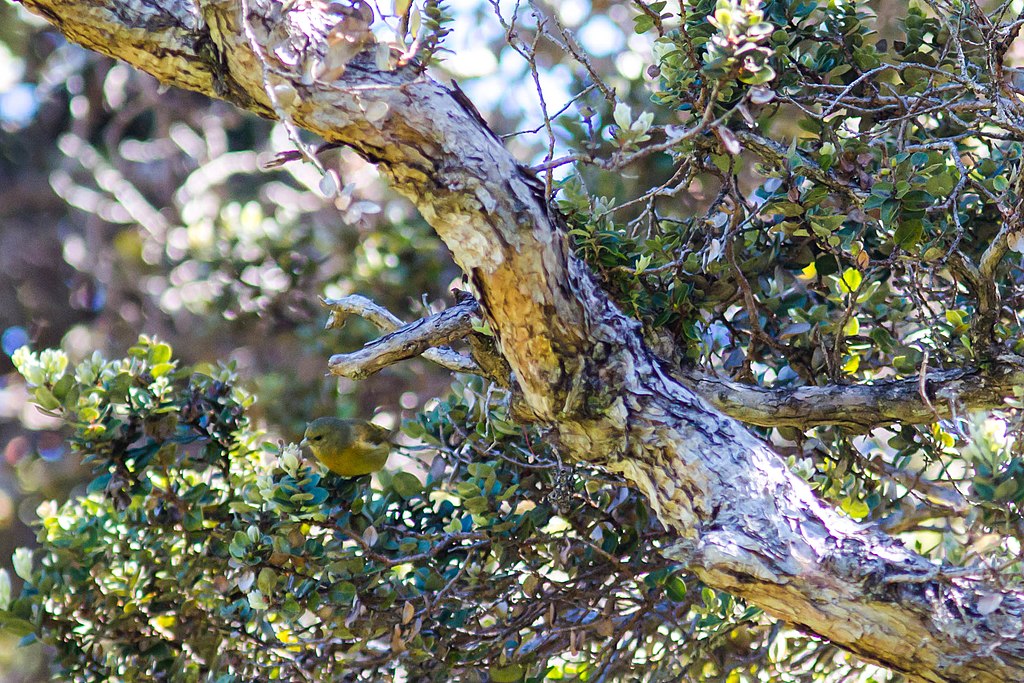
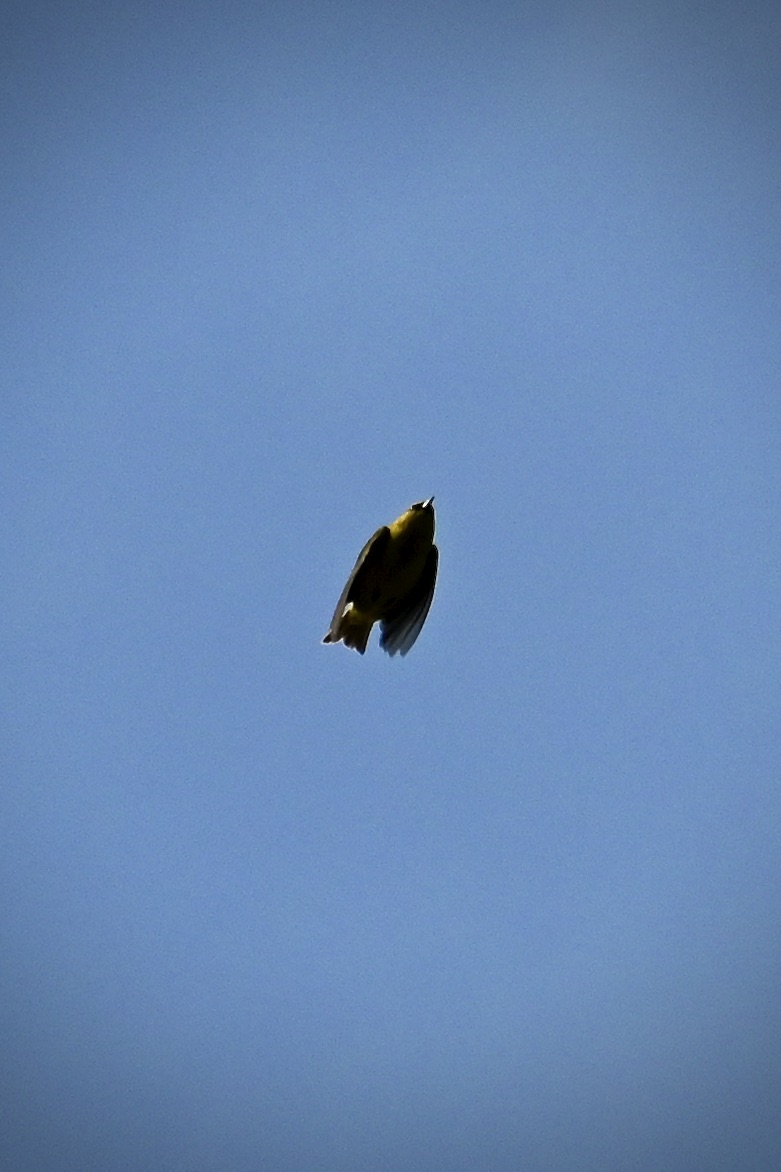
“What is wisdom?” wondered the ‘amakihi as he flew through the sky.

“What is wisdom?” wondered the ‘amakihi as he sipped on ohi’a nectar.

“What is wisdom?” wondered the ‘amakihi as he settled down to sleep at night.

“What is wisdom?” wondered the ‘amakihi as he woke in the morning.

“What is wisdom?” is, in fact, an extremely good question whether you’re an ‘amakihi or a human being. Wisdom, after all, tends to prevent a lot of foolishness. Foolishness, on the other hand, tends to happen in the absence of wisdom.

“What is wisdom?” wandered the ‘amakihi over the course of the day.

One of the features of wisdom is that when someone who is wise doesn’t know or doesn’t understand something, they do things to learn more about it. They look around at things. They measure and they think about what they’ve measured. If they’re human, they might read something, or a lot of somethings. They ask others to see what they know.

Whether you’re a human or an ‘amakihi, a good one to ask would be tutu.

“Tutu,” asked the ‘amakihi, “what is wisdom?”

Tutu was pleased. It was a wise question – if you don’t know something, wisdom says, “Ask.” He’d made a wise choice about who to ask – grandparents often know things. And he was asking about something important, wisdom itself.

She replied with a question of her own: “What is knowledge, grandson?”

“Knowledge?” he asked. “I hadn’t thought much about that… it seemed kind of obvious. If I know something that’s true, that’s been demonstrated to me, that’s knowledge. If I think I know something that isn’t true, or if I simply don’t know something, that’s not knowledge. Is that right?”

“That’s right,” said Tutu. “Now let me ask something else.”

“Are you going to answer my question?” asked her grandson, who was starting to worry that if he answered all her questions she wouldn’t get around to answering his.

“I am,” she said. “Now here’s my question: Can you fly with your wings closed?”

He opened his beak to reply, then stopped. It doesn’t make much sense, but he realized that sometimes while flying, he would close his wings. Not for long. Not all the time, obviously. But for a few moments in many flights, he would be flying with his wings closed.

“Yes,” he said carefully. “For a moment or two.”

“How do you know whether to close your wings in flight?”

“It’s complicated,” he said. “How high up am I? How much do I need to rest my wings for a moment? Will I need to make a quick turn or slow down to land? There isn’t a simple answer.”

“That’s right, there isn’t,” she told him. “Knowing that you can fold your wings in flight is knowledge. You know it’s something you can do. Choosing the right moment to do it – or the right moment not to do it – that’s wisdom.

“Wisdom is when you consider what you don’t know for certain, what might happen, or what might not happen if you do something, and then make a good choice. Wisdom looks at what you know, and asks whether you should.

“That, grandson, is wisdom.”

by Eric Anderson

Watch the Recorded Story

I write these stories in advance, but I tell them from memory and inspiration on Sunday mornings. What you have just read does not precisely match how I told it.

Photo of an ‘amakihi in flight by Eric Anderson.
Story: Decisions, Decisions

November 23, 2025

Jeremiah 23:1-6
Luke 23:33-43

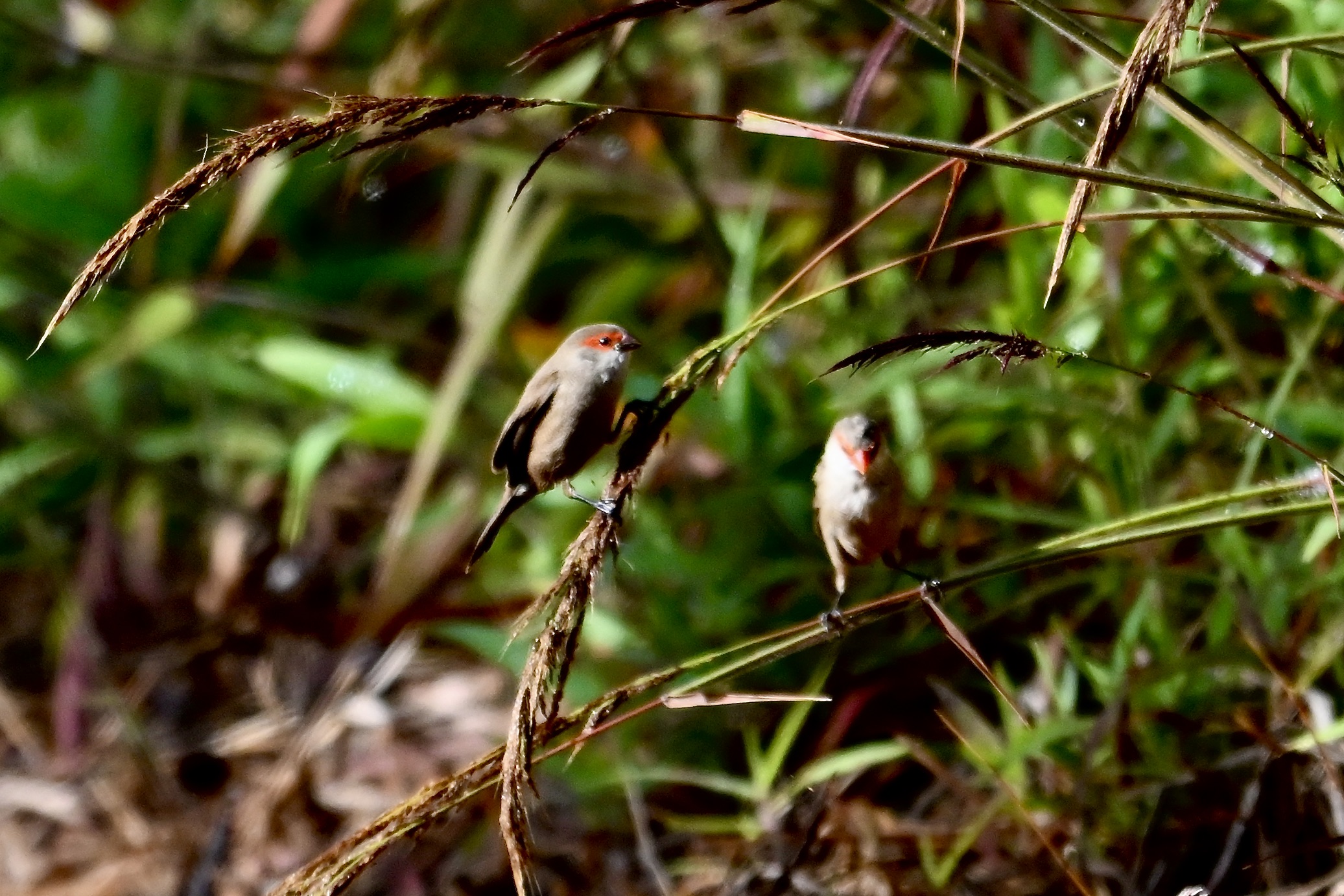
The common waxbills may be the smallest birds in Hawai’i – meaning how big the adults get. Newly hatched chicks even of very large birds can be smaller. But if you see a very small bird with a rosy beak, it’s likely to be a common waxbill.

They like to eat the small seeds of grasses and herbs, and they tend to move about in flocks of anywhere from a pair up to thirty or forty birds. With a flock, of course, comes the problem of decision. If I’m the only one who needs to make a choice, well, I can make the choice. I decide whether to go this way or that way. When there’s somebody else, though, now we have to work out our direction, our left or right, our up or down.

Waxbills have the same problem. When they’ve eaten the seeds in this plot of grass, how do they decide where to go next?

A waxbill decided one day, after a certain amount of chirped argument, that somebody had to take charge. Somebody had to make the decision. Somebody had to rule.

“We’re going this way,” he called, and took off. Most of the other waxbills took off with him, but not all, so he circled back and screeched at them until they, too, joined the rest of the flock and flew with him. Some of them were relieved not to have to argue any more. Others were irritated that they had ideas that nobody listened to. And there were a few that didn’t want to go in this direction at all.

One of the nice things about being a bird that eats grass seed is that, pretty much any direction you go is likely to have grass in it. They flew. They found. They ate. But not everybody in the flock was happy.

The next day, the waxbill in charge decided to take charge again, but this time some of the waxbills wouldn’t go at all. He chirped at them. He screeched at them. He even flew at them as if he was going to hit them with his wings. But they wouldn’t go.

Eventually the flock settled back to the ground again, and one of them said, “I don’t mind following you, but we need to take trouble to agree which way we’re going to go.”

“No, we don’t,” said their self-appointed leader. “I know what I’m doing. I’m in charge.”

“We all have ideas about where to find seeds,” said the waxbill speaking for the others. “Some might be more right. Some might be more wrong. And that includes you. If we all share, we’ve got a better chance that the ones who are more right will be heard, and that we, as a group, will find more seeds.”

“You’re a fine leader,” he went on, “but you’re not the only one with good ideas. We’ll follow – but we’ll also contribute. If you don’t want to listen, well, somebody else will have to lead.”

It took longer that way. It did. But this little flock of little birds did better than they ever had before at finding good clumps of grasses in seed, and they did it with birds who felt better about their leadership and their fellow fliers in the flock than they ever had before.

It can be a challenge to make decisions. It might be that the most important decision you can make is how you make a decision for yourself and with others.

by Eric Anderson

Watch the Recorded Story

I write these stories in full ahead of time, but I tell them from memory (plus improvisation). As a result, what you read and what you hear will be different.

Photo of common waxbills by Eric Anderson.

Story: The Uncertain ‘Akepa

January 28, 2024

Deuteronomy 18:15-20
Mark 1:21-28

Let’s be clear. Songbirds are not noted for being in-your-face kinds of birds, except every once in a while when there’s a big argument about the melody. I’m sure you’ve seen birds flying angrily at one another from time to time. I’m afraid it’s usually because somebody thinks somebody else isn’t singing it right.

The ‘akepa, with their bright orange feathers or with olive an green head and wings and a yellow chest if they’re female, are generally pretty shy birds. They keep mostly to themselves, perhaps foraging for their favored bugs and insects with a friend or a mate. If you ask their opinion, they’re likely to tell you, but they’re not likely to offer it in the first place.

One ‘akepa, however, was really shy about offering an opinion. It’s not that she didn’t think her thoughts were worthless; it’s just that she thought everybody else’s thoughts were equally worthwhile. That can lead to some good discussions when the question is something like, “What is the meaning of life?” “I’ve got one or two ideas. What are yours?” will get things started, won’t they?

When the question is, “Is there a good assortment of bugs for breakfast in that tree?” and your answer is, “I suppose there might be. But what does a good assortment look like to you?” – well, that kind of answer isn’t as helpful.

“Were you in that tree today?”

“I might have been. What do you mean by today?”

Her friends, even the one she most frequently went bug-seeking with, yearned for a good, solid, straightforward statement from her.

It came. It came on a stormy, windy day. She and her friend were in neighboring trees, both of them dancing in the wind. When I say dancing, I mean, jumping up and down and spinning around with no regard for a musical beat.

Looking at her friend’s tree, she noticed that the limb her friend perched on was starting to crack. “Do you think this would be a good time to go to another tree?” she called.

“I don’t want to fly right now!” called her friend.

“You might want to fly more than you think you do,” she called again, and her friend, riding the bucking branch up and down and side to side, barely heard her and said nothing.

As the branch began to really tear away at the trunk, our uncertain ‘akepa screamed, “Fly away right now now now!” and then came the sounds of wood breaking and the leaves scraping against other branches as it all came down. Some green and yellow feathers whirled away on the stormy wind.

“Good idea, flying,” heard our uncertain ‘akepa from just above, and there was her friend, breathing hard and looking a little the worse for wear, holding tight as her new branch in the new tree rocked about. “I’m really glad you were sure about that.”

Not everything in life is cut and dried, hard and fast. Not everything is wide open to options and opinion. It’s important to know the difference, especially when branches are falling in the storm.

by Eric Anderson

Watch the Recorded Story

I tell these stories from my memory of what I’ve written (which is the text you’ve just read). The story as told is… different.

Photo of a female ‘akepa by Melissa McMasters from Memphis, TN, United States – Hawaii akepa, CC BY 2.0, https://commons.wikimedia.org/w/index.php?curid=74469702. The ‘akepa is just below and just left of center.