The Work to Set Free

“But the Lord answered him and said, ‘You hypocrites! Does not each of you on the sabbath untie his ox or his donkey from the manger, and lead it away to give it water? And ought not this woman, a daughter of Abraham whom Satan bound for eighteen long years, be set free from this bondage on the Sabbath day?'” – Luke 13:15-16

It’s awkward, Jesus. You had a way to know
the ways in which the people who surrounded you
were bound. Now, I do not perceive as truly or
reliably as you. I can, and do, assume too much.

I have to ask, “Are you restricted? Are
you tethered in some way? What holds
you back, or ties you down, or bars your path?”
Because it might be what I see, or what I don’t.

My prayer, then, Jesus, on this day
is that you liberate me from my expectations,
so that when I put my shoulder to the door,
I push upon the door I should, and not one I should not.

A poem/prayer based on Luke 13:10-17, the Revised Common Lectionary Gospel Reading for Year C, Proper 16 (21).

The image is an illustration of the episode of the bent woman found in a Coptic illuminated gospel prepared by a monastic copyist and artist (ca. 1250) – From the Evangéliaire copte http://ipac.icp.fr/uPortal/page/decouvrir/expo/evangeliaire_copte/presentation.htm, Public Domain, https://commons.wikimedia.org/w/index.php?curid=8548976.
Weakness Obstructed

“…but [God] said to me, ‘My grace is sufficient for you, for power is made perfect in weakness.'” – 2 Corinthians 12:9

In weakness God makes power.
In the stammering speech.
In the thinning skin.
In the cane-assisted stride.

In weakness God makes power.
In the eyes that do not see.
In the ears that do not hear.
In the legs that do not bear.

In weakness God makes power.
In the mind that cannot focus.
In the hand that cannot grasp.
In the appetite that cannot resist.

In weakness God makes power.
But those who are made
in the image of God
make obstacles; and why?

In weakness God makes power.
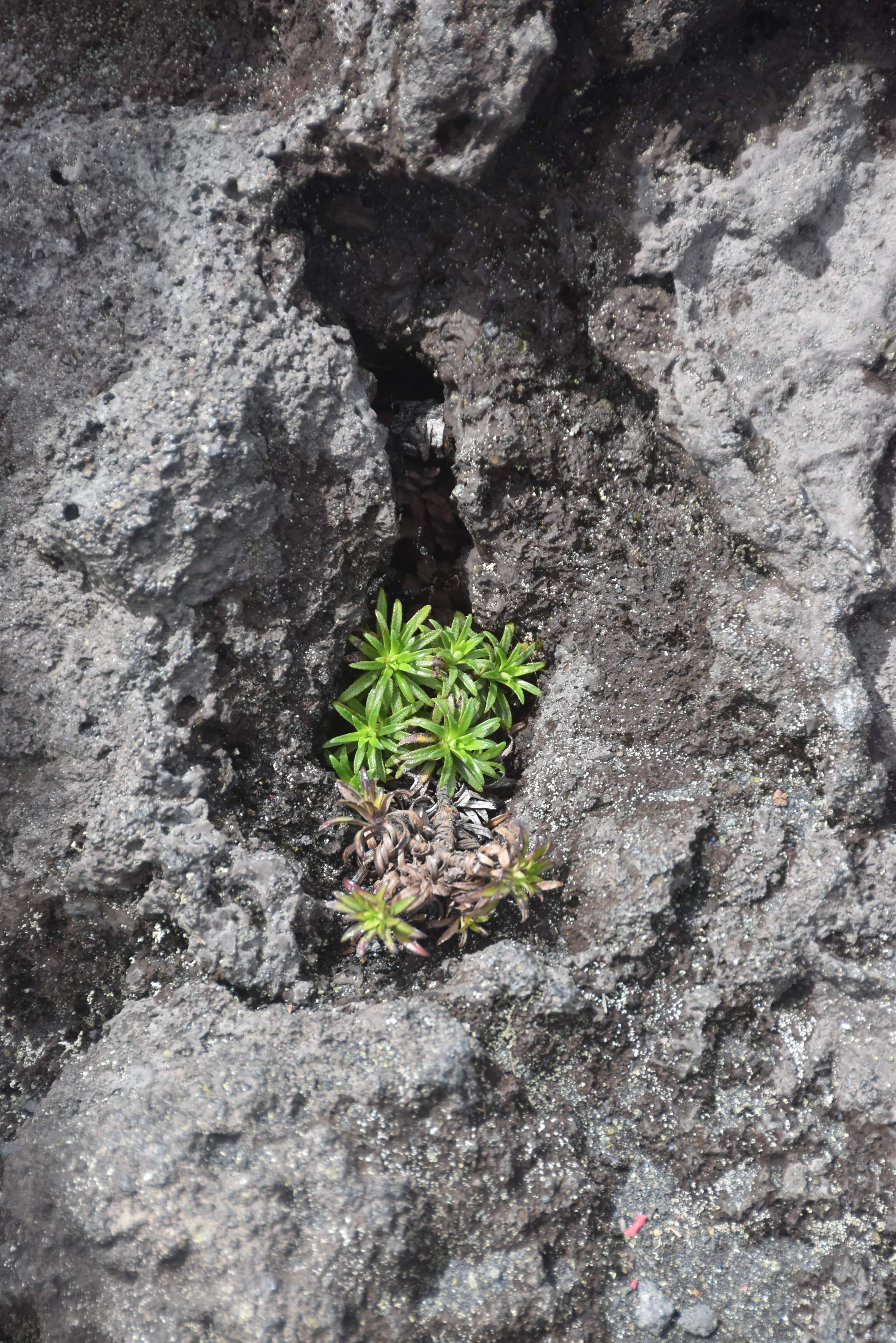
In the root that makes its soil.
In the child that makes its generation.
In the death that promises eternal life.

In weakness God makes power.

A poem/prayer based on 2 Corinthians 12:2-10, the Revised Common Lectionary Second Reading for Year B, Proper 9 (14).

Photo by Eric Anderson

Not Cool

“But she answered him, ‘Sir, even the dogs under the table eat the children’s crumbs.'” – Mark 7:28

Really, Jesus. Is this you at your best?
First you tell a woman desperate
for the health and healing of her child
she is an animal, a dog.

Not cool.

And when the crowd has brought
a man disabled, hard of hearing,
hard to understand his speech,
did you ask what he wanted? No.

Not cool.

I grant you that we get these stories
at some distance from events.
Perhaps you used a kinder phrase
to tell this woman that you would not help.

Still: not cool.

Perhaps when you withdrew with the
disabled man, you asked (somehow),
he understood (somehow), and so
you knew you’d do what he’d desire.

Still: not cool of Mark to leave that out.

We’re left uncertain from these words
whether a deaf man is as fully human
as a woman of another race
who had to claim humanity of you.

Not cool.

And we could use your clarity amidst
accursed reasons to dismiss
humanity by race, by gender, or
by disability.

Not cool.

Whatever demon tormented the girl
was nothing to the demons we embrace.
Whatever deafness afflicted the man
was nothing to the way we will not hear.

Not cool.

So Jesus, I must ask you this:
to exorcise the demons we acclaim,
and cure the deafness of our hearts
when we would not be healed.

Not cool: but oh, so needed.

A poem/prayer based on Mark 7:24-37, the Revised Common Lectionary Gospel Reading for Year B, Proper 18 (23).

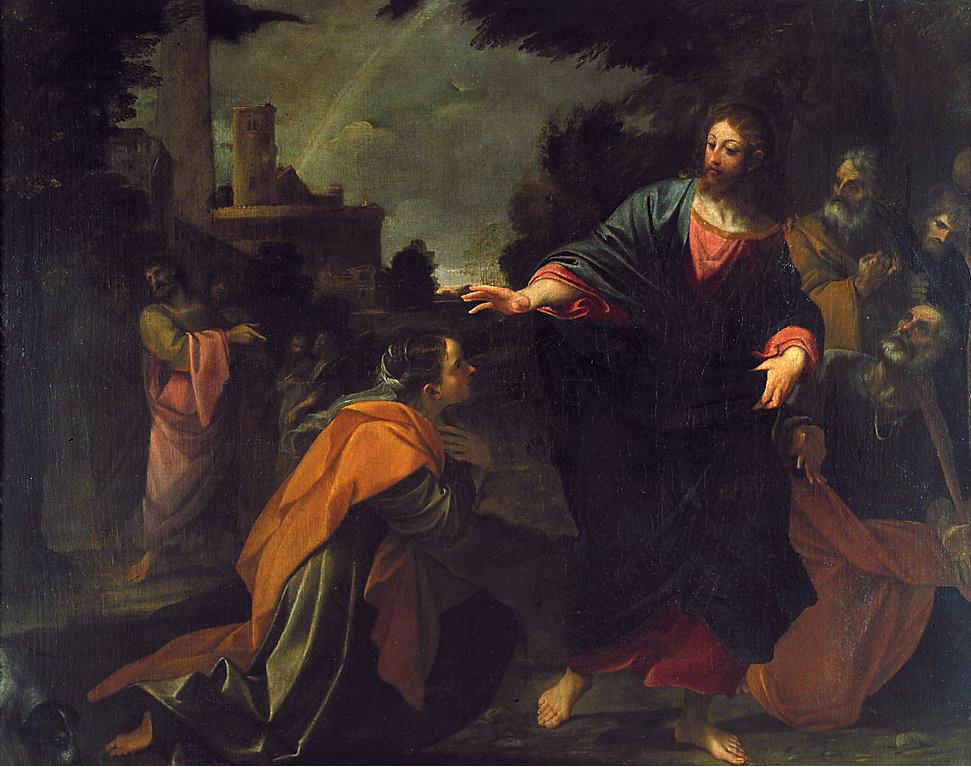
The image is Cristo e la Cananea (Christ and the Canaanite Woman) 16th cent. by Ludovico Carracci, Public Domain, https://commons.wikimedia.org/w/index.php?curid=35849286. Carracci’s depiction of this story has great movement. As is not uncommon in artistic depictions of this scene, there is a dog behind the woman in the lower left corner.

No Explanation; No Blame

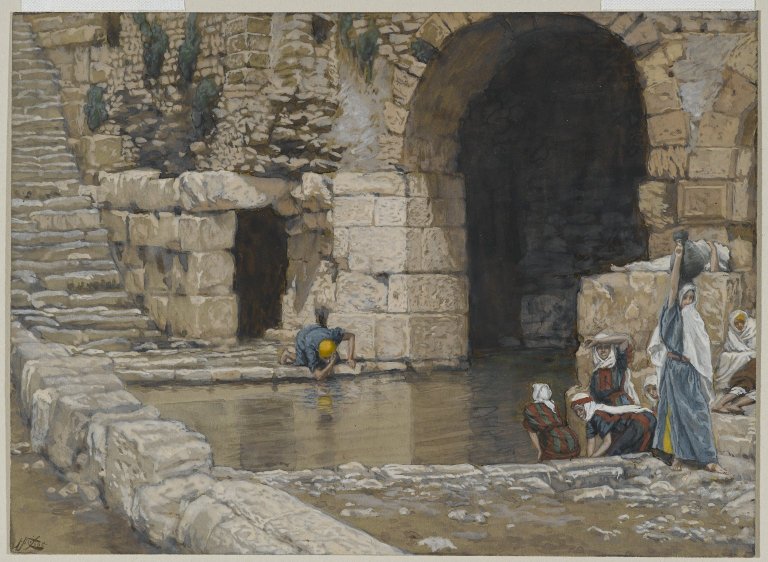
His disciples asked him, “Rabbi, who sinned, this man or his parents, that he was born blind?” (John 9:2)

All you need do, Redeemer, is explain.
Explain the suffering, the illness, the
dis-ease. Explain the disabilities,
ill fortunes, and abuse. Explain it all
so we may know the cause, the source, the blame.

In truth, we are less interested to see
the sufferer healed. We gain a measure of
self-satisfaction in our judgments, yes?
And leave the sad afflicted in the sad
result of “their own failed and sorry lives.”

But you, Redeemer, will not settle for
the sadness of our satisfaction. You
insist that we lay down our judgment, hear
the voices we would silence. You insist
we act as healers in the suffering world.

May we take your direction in this time:

[Jesus said] to him, “Go, wash…” (from John 9:7)

A poem/prayer based on John 9:1-41, the Revised Common Lectionary Gospel Reading for Year A, Fourth Sunday in Lent.

The image is Le aveugle-né se lave à la piscine de Siloë (The Blind Man Washes in the Pool of Siloam) by James Tissot – Online Collection of Brooklyn Museum; Photo: Brooklyn Museum, 2008, 00.159.173_PS2.jpg, Public Domain, https://commons.wikimedia.org/w/index.php?curid=10957455.