Don’t you like it, Simon, when I say that your Messiah is not what you want? Don’t you like it, Simon, when I tell you I’ll be raised up on a cross?
Of course you don’t, dear Simon. How could anyone be pleased to hear Messiah is no conqueror, except to turn the tables on Death.
I told you, but you wouldn’t hear it, Simon. You tell me how to live my life and die my death, and no. That’s not yours to settle or define. It’s mine. And God’s.
Ah, Simon Peter, my dear Rock, so hard of head, transparent of heart, so certain of things that must be true, and come to pass, and be:
I chide you hard for this denial now. A night will come when your denials will tap like a clock ticking toward dawn. And then, I will not chide, for you will turn aside
This song is based on the #lectionprayer “Simon Peter’s First Denial.” As you’ll find there, I was asked if the poem had been set to music. It hadn’t – but now, with some lyric adjustment, it has.
The song’s premiere performance was on February 28, 2024.
Author’s Note: This reflection was originally published as a Facebook Note (the platform’s never-fully-and-no-longer-much-at-all-supported blogging utility) on January 9, 2011. I’m reposting some of those Notes here because they’re difficult to find in Facebook now, and in some cases impossible.
January 9, 2011
As I was shoveling my driveway this morning, my next door neighbor had a question for me. ‘You’re a man of the cloth,’ he said, ‘Do you believe God makes it snow?’
‘Well, not at any particular time,’ I said. ‘I mean, I think God set the laws of nature that make snow happen, but that it snowed today rather than…’ and I waved my hand vaguely.
He nodded. ‘I don’t think God makes it snow,’ he replied. ‘If he did, you wouldn’t be out there shoveling it now.’
I laughed, but I also thought to myself, ah, but if somebody I really disliked were shoveling this snow right now, I might be inclined to think God had brought it for this moment. That would feel to me like divine justice. Or at least as if God were responding to my concerns in the world.
As I shoveled and thought, I realized that what I was thinking about (and not shoveling) wasn’t divine justice, but magic. Not the public performances of illusion we enjoy, but the exercise of power through invocation of other forces.
The appeal of magic is that it is reliable (stay with me here). That is, if I do the spell correctly, I get a predictable result. In the history of human religious thinking, gods were frequently invoked in the performance of magic. I recall that many years ago, archaeologists found a storehouse of papyrus fragments in Egypt, many of which had clearly been sold in the marketplace as spells of protection, blessings, or even curses against someone else. As I remember, the God of Israel was among the deities invoked, and also, I think, Jesus…
But the God I know is not one who is ‘magical.’ The God I know isn’t so controllable, so predictable, that I can call down snow on the unjust. Those ancient spells are attempts to control and to direct divine powers. The God I know merely smiles at the very idea.
The God I know invites human beings into relationship, into friendship, into mentorship, into worship. The God I know sends rain (and snow) onto the just and the unjust, and invites both to accept the free gift of divine grace. The God I know listens, considers, and acts in the world: but I would never pretend to predict just what this God will do. Merely be thankful when I recognize those acts for the blessings they are.
And to appreciate, as well, the wonders of random, not-necessarily-specifically-directed, and ‘magical’ in a different sense, snow.
The photo was taken by Eric Anderson on January 12, 2011, in Portland, Connecticut, after another snowstorm.
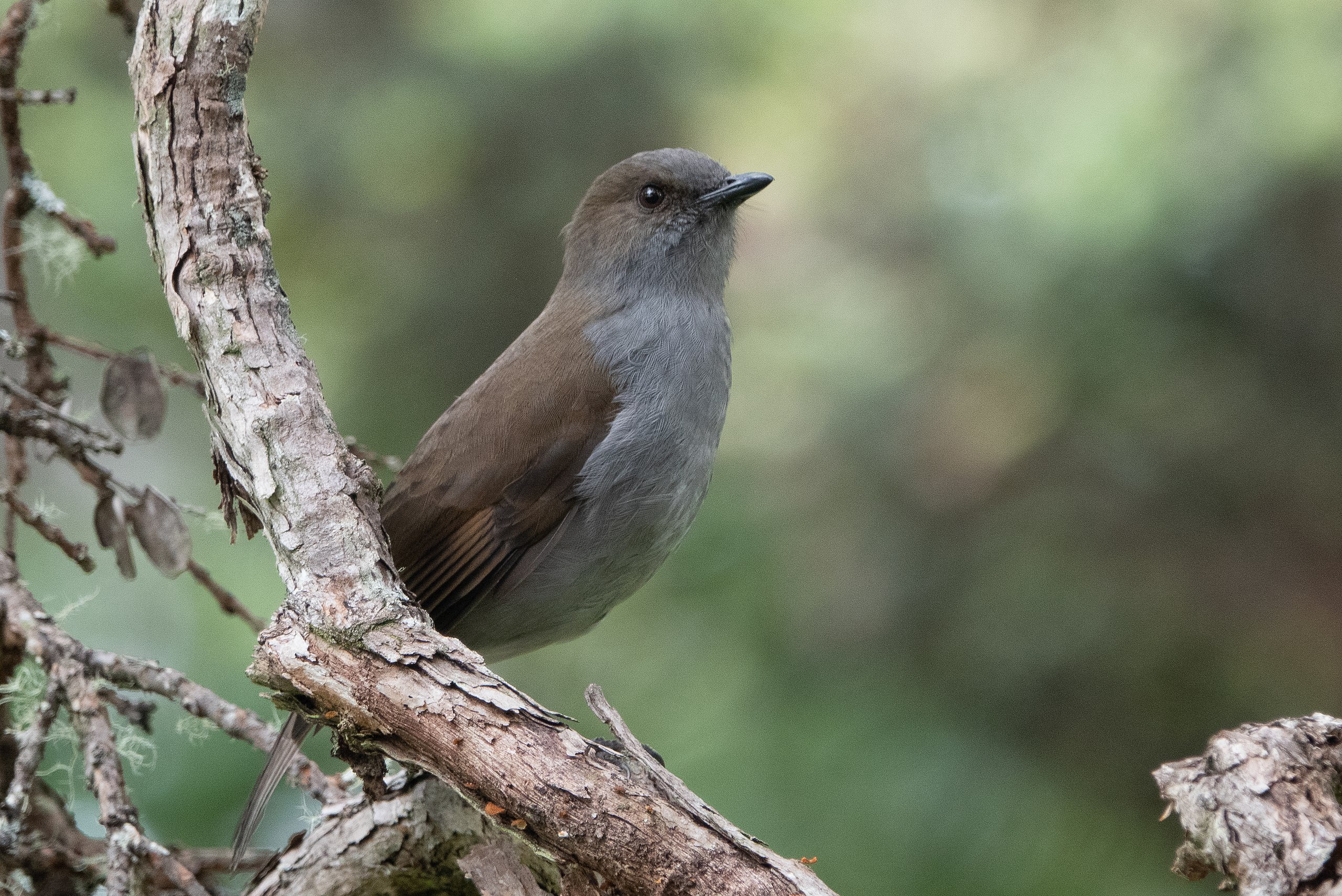
The oma’o is a fairly small bird, living on the lower slopes of the volcanoes from Hamakua to Ka’u. When you’re an oma’o chick, you’re even smaller. He hatched and grew up in a hole in a koa tree, and about the only thing he could even imagine as he looked out from the hole was:
It’s a great big world, and I’m a very small bird.
He was, of course, a very small bird, but he grew to become, well, a larger but still very small bird. The world outside was still a lot bigger than he was. He watched his parents fly back and forth to and from the nest, and wondered how they did it. Their wings seemed awfully small to carry even their small bodies. Their feet seemed awfully fragile to grip a twig. How was someone like him to have any place in a huge world like this?
Young oma’o do some experiments that lead to flying. They move their wings around and start to preen them, to settle their feathers with their beaks. They start to hop and stretch their legs in the nest – but they don’t leave the nest. In fact, after they leave the nest, they don’t come back to it. They’ll stay where their parents can find them – they still feed them for a while – but they don’t go back to the nest.
This young oma’o, however, wasn’t sure he wanted to leave the nest. Big world. Small bird. Small wings, big air. It was a night that the winds blew hard that he came to a decision.
“No,” he told his father. “I’m staying here.”
“Very smart, son,” said his father. “It’s a nasty night. The nest is a good place for now, and it’s not a great time to take your first flight.”
“No,” said the youngster. “I mean I’m just staying here. I’m not going to leave.”
The father didn’t know what to say, so he didn’t say anything. Nor did mother when the youngster told her in the morning.
“What are you going to do just staying in the nest?” asked mother.
“What I’m doing now,” he said.
“Wouldn’t you like to fly?” asked father.
“I don’t think so,” said the child.
It was mother who settled down with him and got him to say what was going on. The world was too big. The winds were too strong. His wings were too fragile. He was too small.
Then he asked, “How do you do it, Mom?”
She thought about it. “It is a big world,” she said. “I’m a small bird. My little wings aren’t much to carry me through strong winds. But I’ve got a couple of things that carry me through it all.”
“What?”
“Well, I haven’t got one just wing. I’ve got two. With only one, I don’t think I’d get far. With two, I can get anywhere I want.”
“But how did you make that first leap of faith?” he asked.
“I just flapped my wings and hopped, and as I hopped I hoped and prayed. Suddenly my wings caught the air and I was flying.”
Without even realizing it, the young fledgling was hopping and flapping. “So a wing and a prayer?” he asked.
“Two wings and a prayer,” said his mother, “and I took my first flight – just like you’re doing now.”
Sure enough, his flapping wings had caught the air and he’d taken off on his first short flight.
“Just like that,” he marveled, “on two wings and a prayer.”
by Eric Anderson
Watch the Recorded Story
The story was told from memory of this manuscript text – which means that in the recording, it’s told differently.
“Now faith is the assurance of things hoped for, the conviction of things not seen.” – Hebrews 11:1
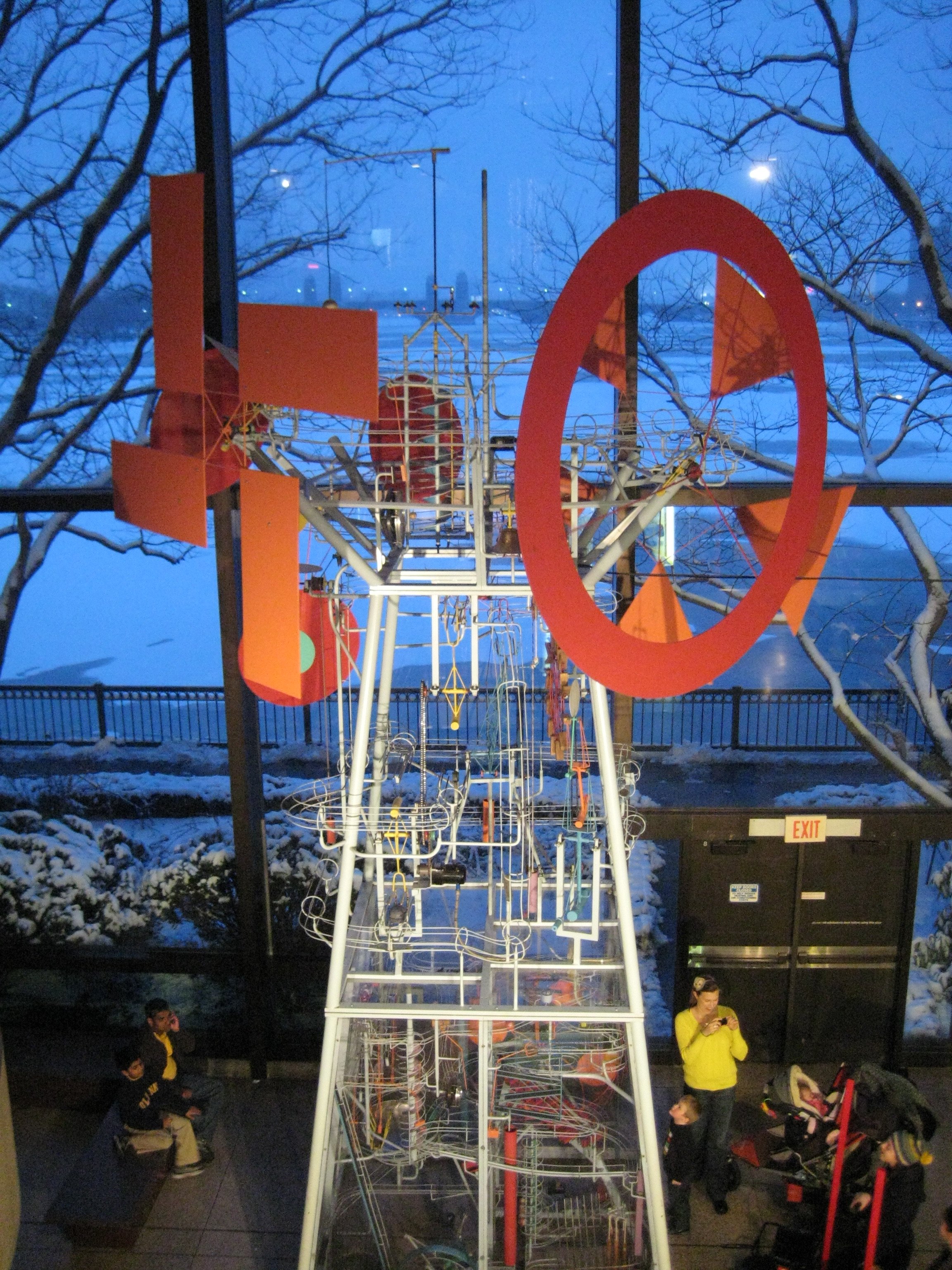
Oh, for a mechanical God, a God who spins when I pull down the lever, a God who chimes when I haul on the rope, a God whose actions I’d predict infallibly each day.
Oh, for a magical God, a God invoked by sound and tone, a God directed by desire, a God to do my will infallibly each day.
Oh, for a predictable God, a God whose rulings I affirm, a God whose justice I approve, a God whose mercy I… receive infallibly each day.
Ah, but an uncontrollable God, a God creating in profusion, a God with greater grace than mine, this God I humbly worship… quite fallibly… each day.
A poem/prayer based on Hebrews 11:1-3, 8-16, the Revised Common Lectionary Gospel Reading for Year C, Proper 14 (19).
The opihi – do you know about opihi? They’re a shellfish, a little bit like scallops or clams. Scallops and clams, of course, have two shells and a hinge. They’ve got protection from creatures that like to eat them on top and on the bottom. And when things are safer, they can open up and let the water bring the little bits of seaweed and tiny creatures to them.
An opihi, however, only has one shell. I suppose it’s a little bit like a hat, only it’s a hat that covers the entire creature. An opihi – they’re called limpets in English – finds a spot on the rocks and holds tight as its shell grows over its top. And then it continues to hold tight. It might move a little bit to get to another spot on the rock with more algae, but you and I might not even notice them on the move.
And they don’t talk much. There’s not a lot to talk about, when you’re an opihi.
Here’s the thing: they like to live in the shallows along the shorelines of our islands. In those places, the tides come in, and the tides go out. Sometimes when the tide goes out, an opihi is in a pool of water. But sometimes, it finds itself above the water after it drains away. Sometimes it just sits there in the open air.
A honu pulled itself up on a rock to nap in the sun one day and found an opihi already there. I’m a little surprised it noticed. A honu is a lot bigger than an opihi. But they both have shells, so the honu felt a little bit of sympathy for this opihi, stranded on the rock outside the water.
“Do you need help?” the honu asked. “I see you’re out of the water here.”
The opihi wasn’t used to conversation – there’s not a lot to talk about when you’re an opihi (I may have mentioned that). But finally it found a reply:
“No. I’m fine.”
“Isn’t being out of the water a problem?”
“Well, not so much. If it went on a long time, that would be a problem,” said the opihi.
“How do you know it won’t be a long time?”
The opihi thought about this. “Honestly, I don’t know that it won’t be a long time. I suppose it could be. This isn’t the first time I’ve been left high and dry. Some of those times really did seem pretty long.”
The honu waited. Finally the opihi finished:
“The tide has always come back. I trust the tide more than I trust myself to swim if you swept me off the rock into the water.
“The tide has always been good to me. I’ll hold on here until it returns again.”
by Eric Anderson
Watch the Recorded Story
The story is told from memory of this prepared text – and thus will never be quite the same.
“Jesus stood still and said, ‘Call him here.’ And they called the blind man, saying to him, ‘Take heart; get up, he is calling you.’ So throwing off his cloak, he sprang up and came to Jesus.” – Mark 10:49-50
He heard the Nazarene was near. He called the name, He shouted “Jesus, Son of David! Come and bring me mercy!”
He saw more clearly than the ones Who sought to quell his voice.
They sternly ordered him, But quiet would not serve the time. “Son of David, come! Come and bring me mercy!”
He saw more clearly than the ones Who shortly would declare, “Hosanna!”
They would acclaim a conquering prince. He shouted for a healer’s power. They would prefer their preconceptions To the Way the Christ would tread.
He saw more clearly than the ones Who sought to sit at left and right.
“The Teacher calls,” the word had spread, And hearing, he erupted from the ground, Now lighter in his movements as His cloak was left a-flutter in the dust.
He saw more clearly than the ones Who’d take two tunics on the Jesus road.
So Jesus, tell me true, Because I find myself confused. Why when he asked to see again, You said, “Your faith has made you well”?
You might have said, in deepest truth, “My friend, you see. You do.”
A poem/prayer based on Mark 10:46-52, the Revised Common Lectionary Gospel Reading for Year B, Proper 25 (30).
“Put on the whole armor of God, so that you may be able to stand against the wiles of the devil.” – Ephesians 6:11
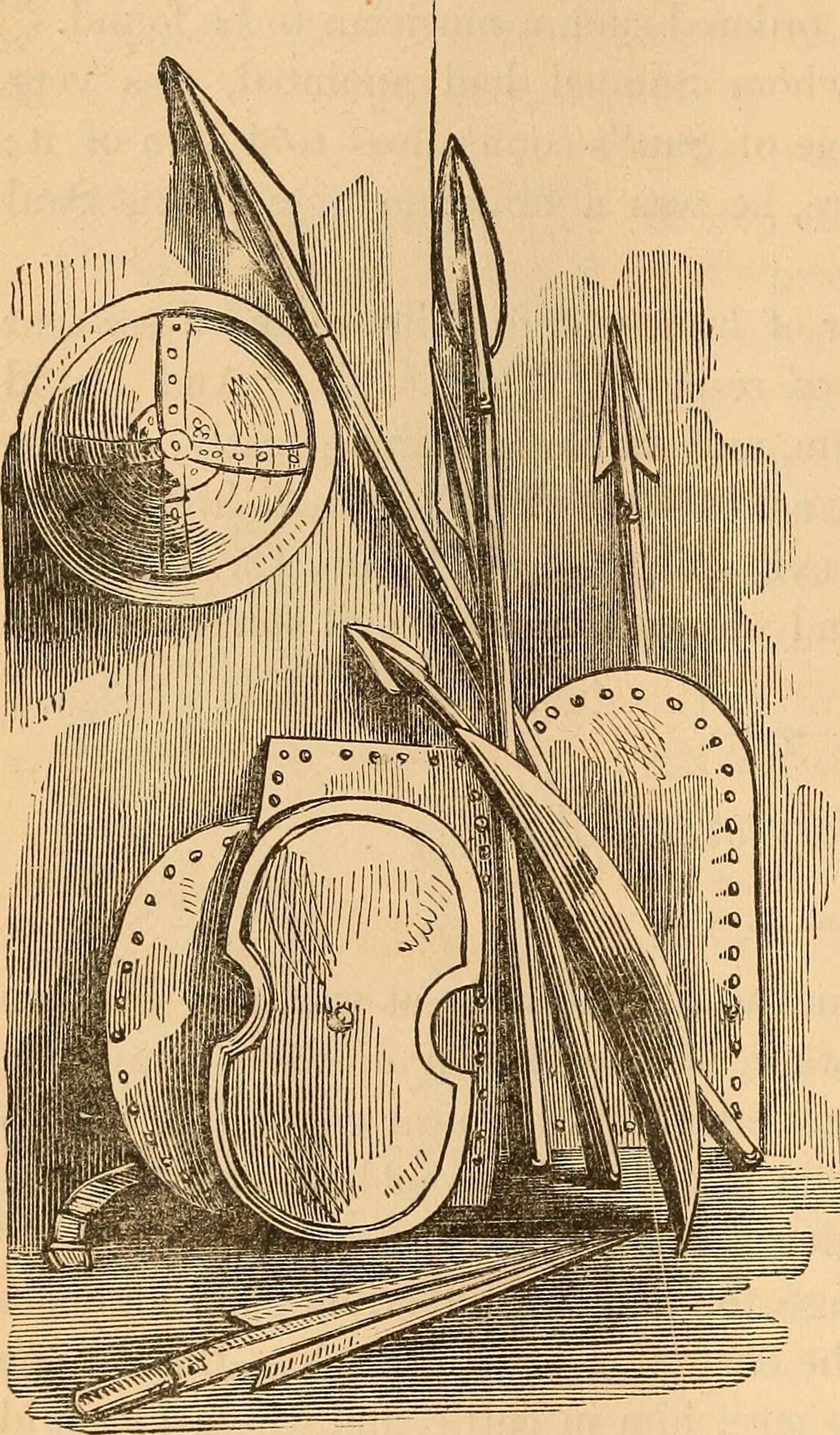
“Saul clothed David with his armor; he put a bronze helmet on his head and clothed him with a coat of mail. David strapped Saul’s sword over the armor, and he tried in vain to walk, for he was not used to them. Then David said to Saul, ‘I cannot walk with these; for I am not used to them.’ So David removed them.” – 1 Samuel 17:38-39
Truth? You want me to wear truth? That’s a heavy burden to carry on the belt. My hips are groaning just to think of carrying the truth. I cannot walk with these.
Righteousness? You want me to wear righteousness, to face the world with generosity presented as my face? I can’t imagine feeling any more vulnerable than that. I cannot walk with these.
Faith? You want me to bear faith? I tell that, as bucklers go, faith wears a little thin. The barbed and flaming arrows pierce it through even as I strain to lift it. No; I cannot walk with these.
Salvation? You want me to wear salvation? This one sounds good, I grant you, but it bows the head. I’d rather revel in my sovereignty than yours, which makes me bow. I cannot walk with these.
The hardest of all to wear are the shoes that make me ready to proclaim the gospel of peace. Where might they take me? Into what risks? And what protection do they offer? None.
No and no and no. I cannot walk with these.
And yet… I try.
A poem/prayer based on Ephesians 6:10-20, the Revised Common Lectionary Second Reading for Year B, Proper 16 (21).
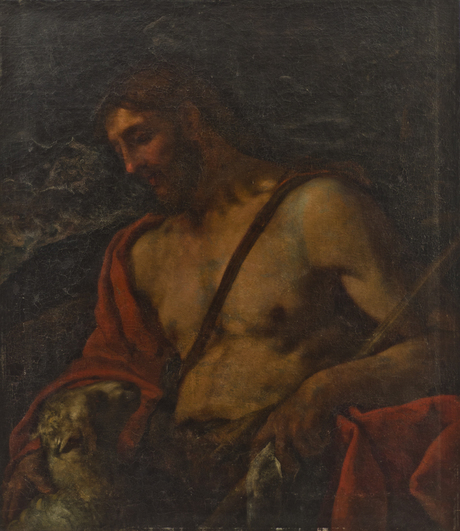
Too many earthly shepherds flail with rod and staff; they maim and kill their flock, and leave the predators untouched.
My enemies enjoy the feast that I will never taste.
This is place from which I cry, “De profudis clamavi ad te!” “Mimma’amaqqim qeratika!” “Mai loko o na wahi hohonu, ua kahea aku au ia ‘oe!” “Out of the depths I cry to you!”
Reassure me with your implements of protection, Holy Shepherd, for the night is long. I am afraid. I turn my prayers to you.
A poem/prayer based on Psalm 23, the Revised Common Lectionary Psalm Reading for Year A, fourth Sunday of Easter, Good Shepherd Sunday.
I was putting the final touches to the sermon on Sunday morning in my study at Church of the Holy Cross. My brain was slowly turning to think about the children’s message – though I consider ideas through the week, the final story takes its final shape on Sunday morning.
It may not be the least anxiety-provoking method in the world, but that’s how it goes.
The usual calm of the morning suddenly vanished. Above my head, I heard the voices of the mynas suddenly rising in volume and intensity. The metal roof began to pound and thump as they beat their wings at one another, resonating like a great drum at me as I sat wondering below.
I’ve heard myna arguments before, but never anything quite this shrill, quite this loud, and frankly, quite this amplified.
Whatever the conflict was about, it seemed to involve several birds, each of them screeching with might and main. The pounding doubled and redoubled. The voices multiplied. Nobody was willing to give in, it seemed. It went on and on.
Suddenly, the source of the sound began to move. Slowly at first, and then accelerating, the screeches and pounding moved from my left to my right, sliding down the slippery slope of the aluminum roof toward the edge. I looked left in time to see the birds drop from the gutter to the sidewalk, still screaming at one another, but with the wingbeats now slowing their unplanned descent to the ground.
For a few seconds more the argument continued unabated, then abruptly ceased. Silence fell. Then the birds, as one and without a sound, took to their wings and flew off.
I promptly threw out all the ideas I’d had for a children’s message to talk about the mynas whose argument ended like this:
“Well, that’s not where I thought this argument was gonna go.”
“Yeah.”
“Do you remember what this argument was about?”
“No.”
“Maybe we should take this up later?”
“Yeah.”
“Somewhere where it isn’t quite so slippery.”
“Yeah.”
They all knew what the future was supposed to be: a winner to the argument. Instead, the future turned out to be an embarrassed group of dusty mynas.
The future, I told the children, is not always what you expect.
In reflecting on the reflection, however, I realized that the future wasn’t what I expected, either. The image of a group of fighting mynas sliding down the roof had never occurred to me until I heard them doing it.
In the midst of our work and efforts, in the midst of our dedication to service and our commitment to creativity, in the midst of our solemn self-reliance that is so common and yet so foreign to nearly every faith tradition I’ve ever learned about, the subtle (or screeching) movements of the world around us may yet become the inspiration, or the direction, or the guide for our continued journeys. For if the mynas were surprised to find themselves dumped off the roof onto the parking lot, so was I. And if the mynas were surprised to find that a change in circumstance had wiped away their argument, so was I.
The future doesn’t always hold what we think it does. Our lives of faith don’t always look like what it think it will, either. The world may, from time to time, teach us where to go. The Divine may, from time to time, give us the ingredients for our imagination.




 ordainedgeek