Story: Why Do You Fly So Far?

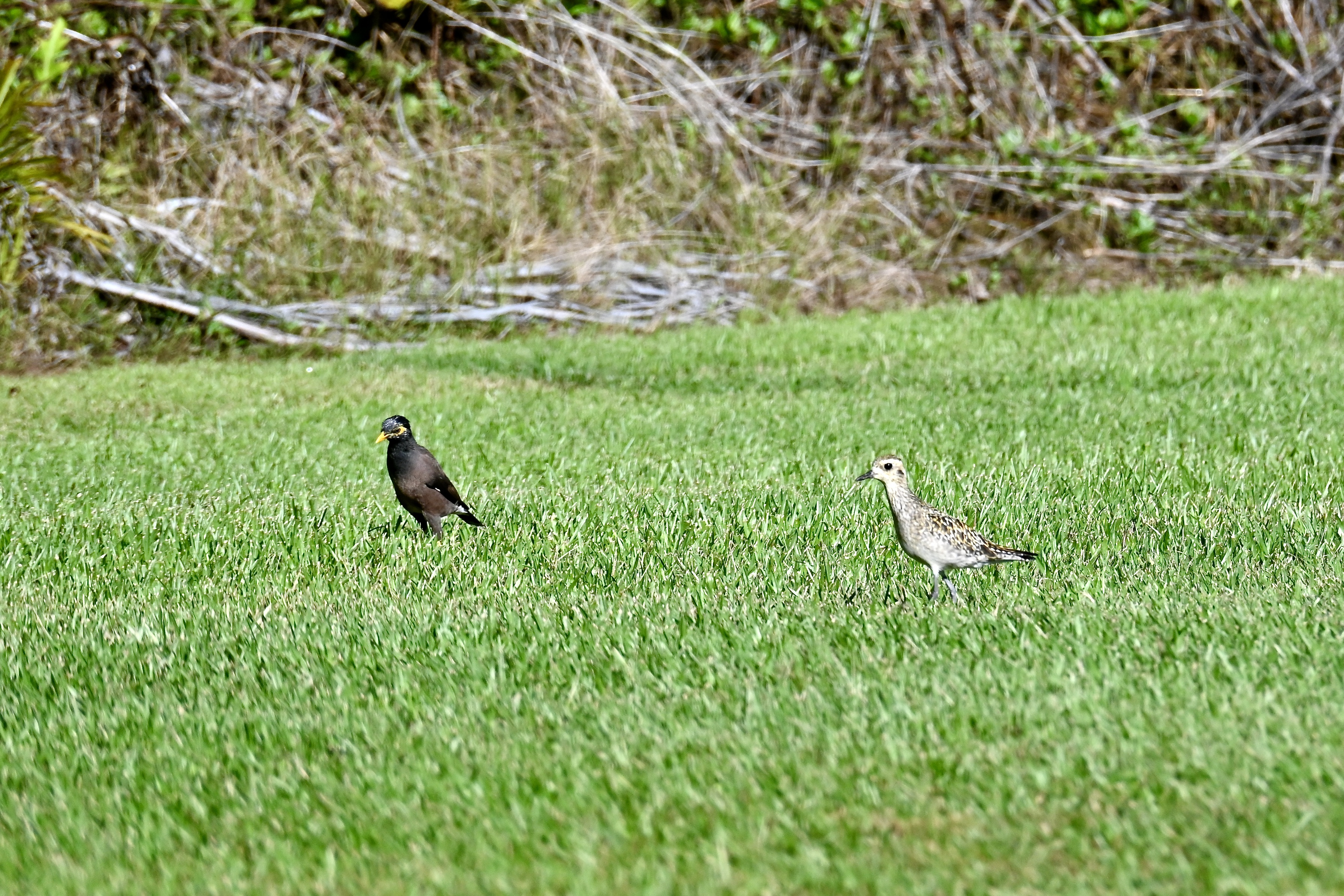
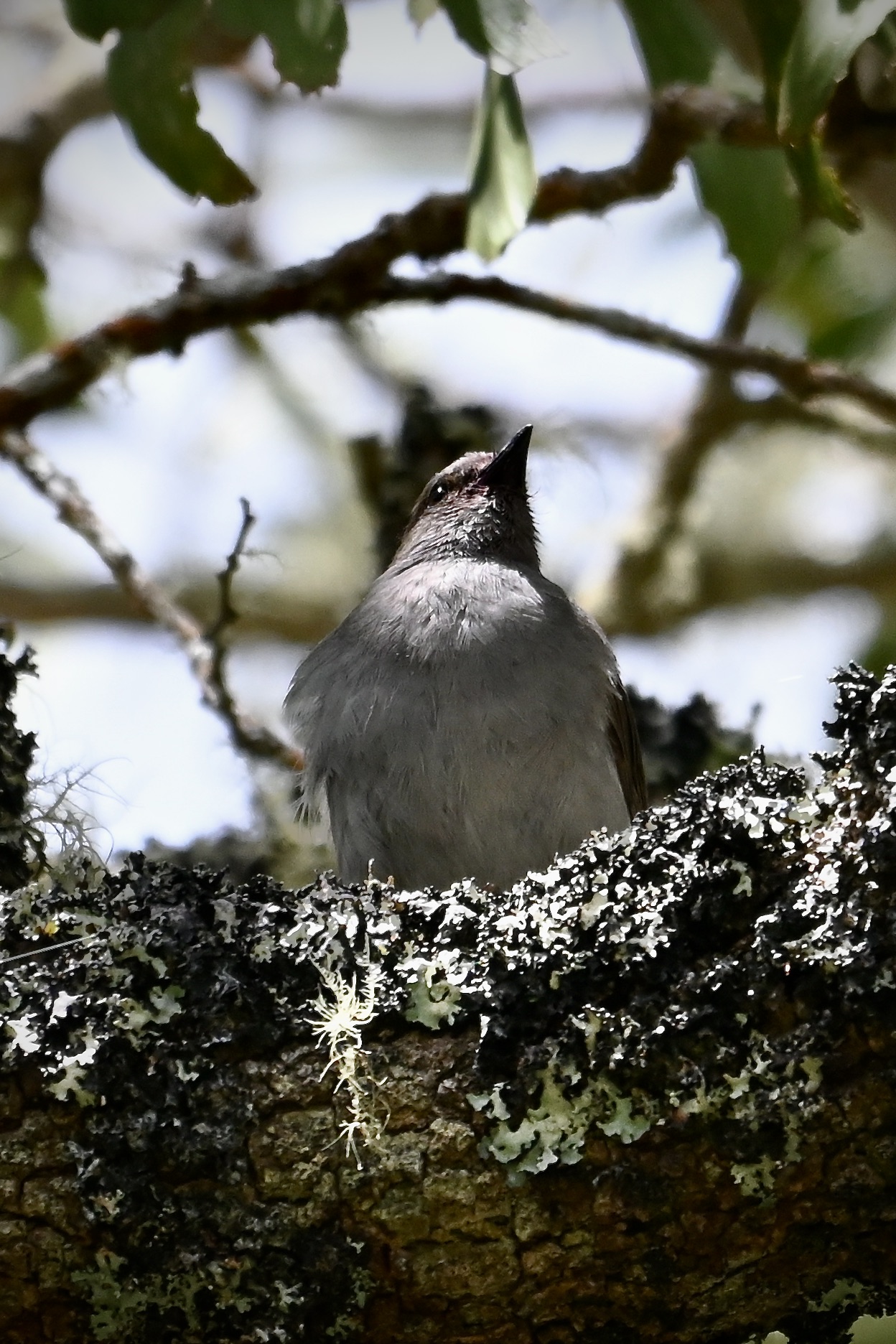
A myna (a dark colored bird with yellow feathers around the eye) and a kolea (Pacific Golden-plover, a light brown bird with darker brown spots) in a grassy field.

December 14, 2025

Luke 1:46-55
Matthew 11:2-11

The kolea is a pretty mellow bird. They’re not terribly skittish, though some will keep a sensible distance from people. We are a lot bigger than a kolea and probably look kind of scary to them.

The myna, on the other hand, is not a mellow bird. They sing a fair amount, but they also screech and argue. They’re pretty sociable with one another, and one moment everybody is happy and content, and the next moment everybody is hollering at one another.

Which makes them a lot like some people, now that I think of it.

Mynas fly, of course, but you could call them homebodies. They don’t tend to go very far. Kolea, on the other hand, fly long distances from where they nest in Alaska to where they spend the winter here in Hawai’i. If you’ve ever flown on an airplane to the North American continent, you know that’s a long flight. Well, kolea fly it with their own wings and they don’t go as fast, so it takes longer.

The mynas find it all rather puzzling and strange.

A myna was picking worms and seeds alongside a kolea one day. The two of them were quiet most of the time, because by chance most of the myna’s other friends had had a big argument and flown off to continue it somewhere else. So it was just the two of them.

“I’ve always wanted to know,” said the myna to the kolea. “Why do you fly so far?”

The kolea thought about it. “I’m not sure anyone has asked me that before,” he said.

“Well, I’m asking,” said the myna.

“I do like the change,” said the kolea, “and I know that it gets awfully cold in Alaska during the winter.”

“Then why not stay here?” asked the myna.

“There are different things there,” said the kolea, “and it just feels right to raise chicks there.”

“Then why fly all the way here?” asked the myna. “What do you come here to see?’

The kolea was quiet for so long that the myna was about to ask the question again, but then the kolea spoke:

“I come to see different trees, trees that blossom red and purple and gold. I come to see soaring mountains crowned with snow when there’s green all around the island. I come to see waterfalls that make rainbows. I come to see mountains with fire and beaches with black sand.

“I come to see birds that also live in Alaska, like ‘akekeke, and birds that don’t live in Alaska, like ‘apapane and nene and saffron finches.

“I don’t think I’d appreciated, though, that I also come to see mynas, and to be asked questions I was never asked. The next time I fly to Hawai’i, I’ll be coming to see you.”

“I’m glad,” said the myna. “Next time you fly from Alaska, I’ll be very glad to see you.”

by Eric Anderson

Watch the Recorded Story

I write these stories in advance, but I tell them from memory (and inspiration). The story you have just read is not identical to the story as I told it.

Photo of a myna (on left) and a kolea (on right) by Eric Anderson.

Story: Remember

October 26, 2025

Ephesians 1:11-23
Luke 6:20-31

I remember a good number of things. I also forget a good number of things. Some of them I’m happy to forget, especially if they made me unhappy at the time. Some of them I wish I could remember, especially if they involve the question of where did I put down my keys?

The i’iwi wasn’t much worried about the things he’d remember. He was worried about the things others would remember about him.

A lot of i’iwi get remembered by other birds as being, well, kind of aggressive. Bossy. Selfish. They drive other birds away from the places that they’re eating. Other kinds of birds do that, too, but when an i’iwi gets aggressive, ‘apapane and ‘amakihi will tend to give in and fly away.

“But is that,” he asked himself, “how I want to be remembered?”

He knew plenty of i’iwi that loved to chase other birds away. They claimed that they ate better when they did, but he also knew i’iwi that tended to ignore other birds, even slept in the same trees overnight. They seemed to eat just as well, he thought.

“How do I,” he asked himself, “want to be remembered?”

He had a friend who was one of the most effective bullies around. Where some of the aggressive i’iwi would chase an ‘apapane for a couple of feet, he’d chase them for a twice or three times as far. Sometimes he’d chase a bird so far that he’d find another bird in the place where he’d started, and he’d chase that one, too. If that seems like extra work to you, it does to me, too. Still, he was flashy (but then, all i’iwi are pretty flashy) and he was popular (as long as he wasn’t chasing you).

“But is that,” he asked himself, “how I want to be remembered?”

Then he remembered his grandmother.

She didn’t take any nonsense from other birds, no she didn’t. No ‘apapane had ever driven her away from a cluster of ohi’a blossoms. But she’d never chased an ‘apapane, either, or an ‘amakihi, or a young i’iwi. In fact, she’d let other birds know when she’d found a good spot, whatever the color of their feathers.

His grandmother loved him. He knew that, because she used to hop aside so he could get to the best flowers.

He loved his grandmother.

He went to find her, and said, “I want to be remembered like you, grandmother.”

“That’s good,” she said. “Let’s go see if we can find something good to eat, and then we’ll let everybody else know.”

That’s how both of them would be remembered.

by Eric Anderson

Watch the Recorded Story

I write these stories in advance, but I tell them from memory (plus improvisation) during Sunday worship. The story you have just read will not precisely match the story as I told it.

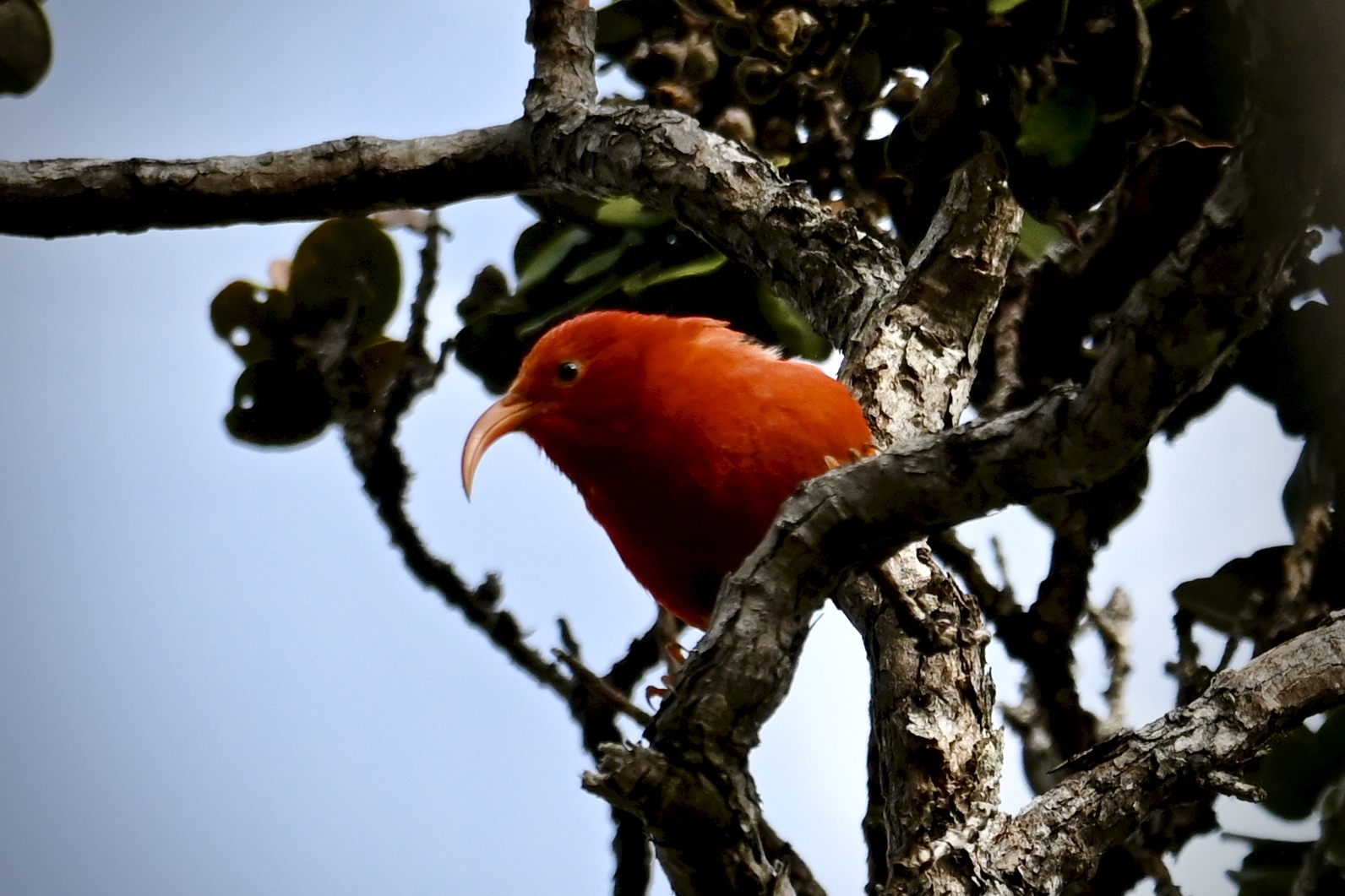
Photo of an i’iwi (being reflective?) by Eric Anderson.

Story: Hold On

October 19, 2025

Genesis 32:22-31
Luke 18:1-8

Where I grew up on the shores of the Atlantic Ocean, there are birds that eat worms. In fact, a lot of birds eat worms. Some of them would eat worms (and bugs, and spiders) that burrow into trees. Some of these would use their beaks to dig holes into the bark to get those caterpillars out. Some would even carve pretty big holes in the wood.

Those birds are called woodpeckers.

On our island, we don’t have woodpeckers, we have the ‘akiapola’au, and I think I’ve mentioned before that it’s a very rare bird. They only live on our island, and there are less than two thousand of them. They have a short lower beak, and they use that to dig into tree bark where caterpillars or worms might be hiding. When they find one, they use the curved top beak like a fishhook, only they’re catching the worm.

I guess you could say they use both the upper and lower beak to actually eat what they’ve caught.

One day an ‘akiapola’au caught a caterpillar, but he wasn’t alone when he did. There were several other birds around, and none of them had the unique beak of an ‘akiapola’au. Therefore they had a lot of different ideas about what the ‘akiapola’au should do with his newly caught caterpillar.

“It’s stuck on your beak,” said an ‘apapane. “You can’t eat it from there. How are you going to get it into your mouth?”

“He could put it down,” suggested an ‘amakihi, who may have said that because he was hungry and thought he could get to the caterpillar if it crawled off.

“Is it too big to eat?” asked an ‘elepaio, which isn’t a very big bird but neither is an ‘akiapola’au. “You could bite it into smaller pieces.”

“That sounds like a good idea!” said the hungry ‘amakihi, who hoped to get one of the smaller pieces.

The ‘akiapoloa’au swung the caterpillar around, using the twigs and branch to get it from the hook of his beak toward his mouth. The other birds chimed in with advice like “Left!” “Right!” “Up!” “Down!” which wasn’t very helpful.

The worst advice came from an i’iwi, whose beak curves pretty dramatically, too. “Just put the caterpillar down,” she said. “Get some flower nectar instead. I mean, yuck!”

The hungry ‘amakihi echoed her, but the ‘akiapola’au ignored them all, all except an ‘alawi, another bird that likes a menu of bugs and caterpillars, who simply said, “Hold on.”

Hold on.

The ‘akiapola’au held on as he used the twigs to get the caterpillar lined up just right, and then, well, he was a happier ‘akiapola’au because he wasn’t as hungry. He looked at the helpful ‘alawi, who was searching for a caterpillar of her own.

“When you find what you need,” he said, “hold on.”

There are plenty of things in life that it’s good to let go of. Hot pans. Mosquitoes. Sharp things. There are plenty of habits in life that it’s good to let go of. Greed. Making fun of other people. Eating too much sugar.

But when you find what you need, whether it’s the food for the body or the food for the soul, the best advice there is, is: “Hold on.”

by Eric Anderson

Watch the Recorded Story

I write these stories ahead of time, but I tell them from memory, so what I said will not match what I wrote.

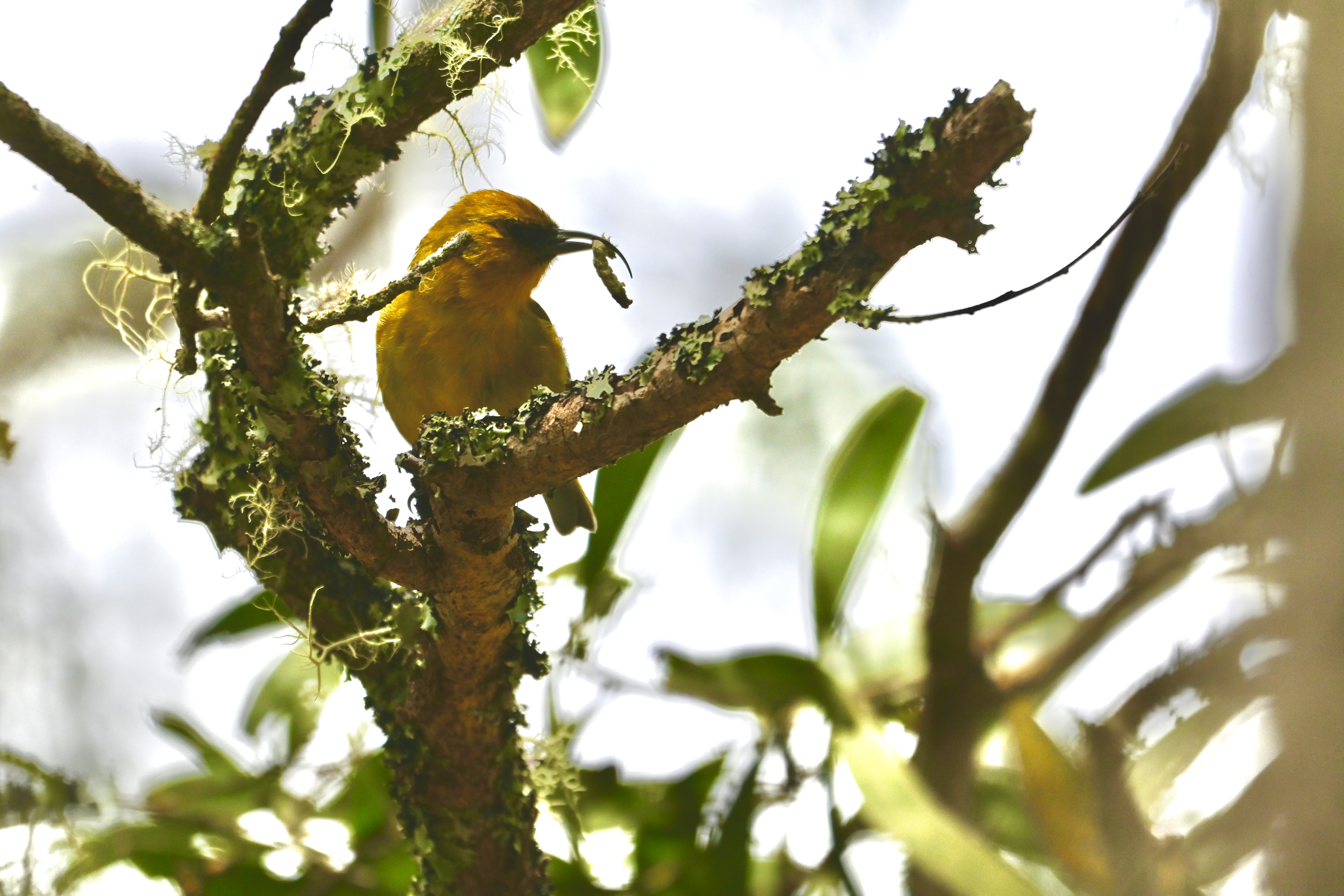
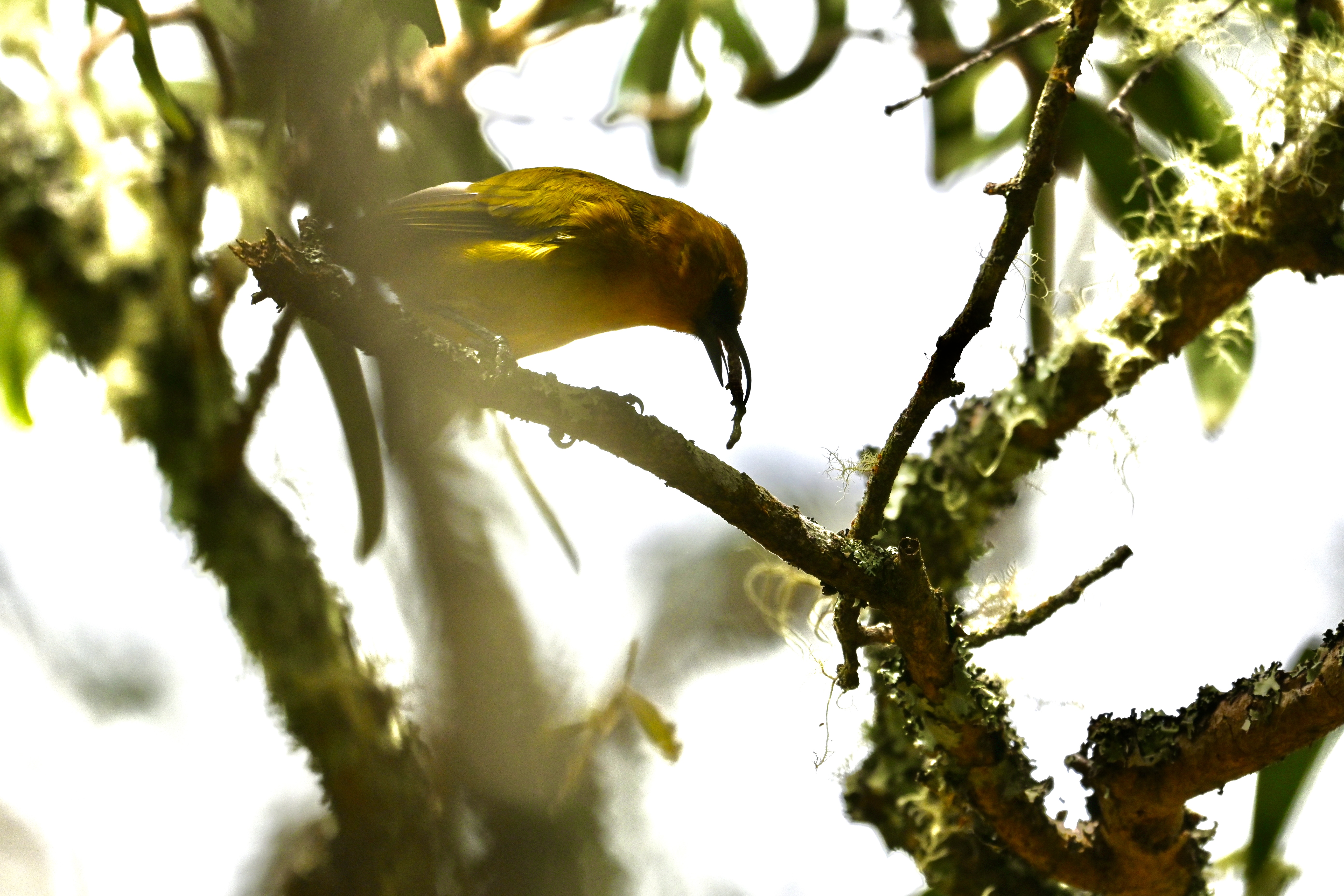
Photos of an ‘akiapola’au (and his lunch) by Eric Anderson.

Story: A Tree Falls

July 20, 2025

Amos 8:1-12
Luke 10:38-42

The oma’o’s heart was in the right place, mostly. The physical heart was, of course, in the right place in his chest and beating regularly. His emotional and spiritual heart was maybe a little bit off to the side, because while he was thinking a little bit about another living thing, it has to be said that he mostly was thinking about himself.

It was a thinnish koa tree that he chose to protect. Its leaves were pretty thick even if its trunk wasn’t the widest. He liked the flavor of its flowers. There were some other birds that did, too, and he began to chase them away whenever he saw them. “I’m preventing them from over-feeding,” he said to himself. “That way the flowers can bloom and the fruit will grow.”

There were also bugs and caterpillars on the trunk and branches of the tree. Some of those he ate, because an oma’o will eat just about anything. Most of them he ignored. Oma’o might eat anything, but when there’s fruit around, they’ll eat that.

But he also wouldn’t let other birds approach the tree to eat the bugs, either. He chased away ‘apapane and ‘amakihi, ‘alawi and ‘elepaio. He even chased away the hook-beaked ‘akiapola’au after he caught one digging into the tree bark with its short lower beak.

“Stop digging into this tree!” he shrieked. “You’re hurting it!”

“This caterpillar in the bark is hurting it,” said the ‘akiapola’au. “I’m getting it out.”

“Not while I’m around!” shouted the oma’o, and chased the other bird away.

As the days went on, the koa leaves started to turn funny colors and droop. When the oma’o landed on a branch, it didn’t spring back up the way it had. Twigs dried up and fell away. Leaves littered the ground around the base of the trunk.

“That tree is sick,” said an ‘elepaio to the oma’o. “It’s got too many bugs. Let us help!”

“No,” said the oma’o. “You’ll hurt it.”

“Look at all those caterpillar tracks below the bark,” said an ‘akiapola’au. “Let us dig them out. The tree will get better.”

“I’m not letting you anywhere near this tree,” said the oma’o.

Even he had to admit that things weren’t going well. He no longer ate flowers from the tree, because there weren’t any. He visited other trees for fruit. There were plenty of bugs to eat, but when he ate some, there were always more.

When a tree falls in the forest, it does make a noise. The birds hear it. And they cry about it.

The birds heard the oma’o’s tree fall. And they cried.

“Why are you crying?” the oma’o asked an ‘elepaio. “It was my tree, not yours.”

“I’m crying because that tree could have been a place to nest for decades,” said the ‘elepaio. “It would have sheltered my family in the rain,” said an ‘amakihi. “It would have fed my children and my grandchildren,” said an ‘akiapola’au.

Looking around, the oma’o realized that not only had he hurt the tree he’d called his own, he’d hurt all the birds around. Not only that, he’d hurt future generations.

When a tree falls in the forest, the sound of its fall echoes into the future.

by Eric Anderson

Watch the Recorded Story

I write these stories in advance, but I tell them from memory (plus improvisation), so it does not match the text you just read.

Photo of an oma’o by Eric Anderson.