Story: Teacher’s Example

November 16, 2025

Isaiah 65:17-25
2 Thessalonians 3:6-13

It’s been a while since I’ve talked about nene school, which hasn’t changed what’s gone on there a bit. Goslings have gone to school, they’ve learned about advanced eating and flying, and some of them have wondered about becoming nene teachers themselves.

There was a time when there were just two nene teachers. Both of them were solid at the job. They could coax a timid flyer into dramatic aerobatics. They could coach a fussy eater into finding a much wider diet – sort of a nene version of heavy pupus. They held their students’ attention. They taught their lessons. Best of all, the students learned.

That’s the mark of a good teacher, when the students learn.

One of the students noticed something else, too.

Both teachers taught that it was important for nene to care for the flock. If you see a storm coming, they said, warn your neighbors. If it looks like a mongoose might be close to a nest, drive them away. If you found a good clump of ‘ohelo berries, call your friends over. Take care of the flock. The other members of the flock will take care of you.

That was an important lesson, and they mentioned it every day.

One of the teachers, though, seemed a little confused about its application. When her students were learning about finding food, she was very helpful. “Look for these colors as you’re flying about,” she’d say. And when they found some, she gave them lots of praise. “Well done, my friends!” she’d say to the beaming young nene.

And then she’d eat the food they’d found.

The other teacher did things differently. He was helpful about finding food, too. “These are the colors to watch for,” he’d say. “Make sure to look side to side.” And like his colleague, he had good things to say to his students when they found that tasty clump of ‘ohelo. “That’s exactly right,” he’d tell them. “Well spotted.”

But then he said, pretty much every time, “Call the other students in. Is anybody hungry?”

As I said, one of the students notice this, and one day he asked his parents about it. “My teachers help me a lot,” he told them, “but when we find food, one of them eats it. I suppose that’s OK; she is the teacher, after all. But the other one invites us to share. Which one am I supposed to learn?”

His parents looked at one another, and then they looked back at him. “Which one makes you feel better?” they asked. “Which one makes you feel like you’re an important part of the flock? Which one seems to be strengthening the flock as a whole?”

“Well, that’s easy,” said their son. “It’s the one who invites us to eat.”

“So which example will you follow?”

He thought about it.

“I spotted some ‘ohelo a few minutes ago,” he told them. “Are either of you hungry?”

by Eric Anderson

Watch the Recorded Story

I write these stories in full ahead of time, but I tell them on Sunday morning from memory and inspiration. The recording does not match the prepared text.

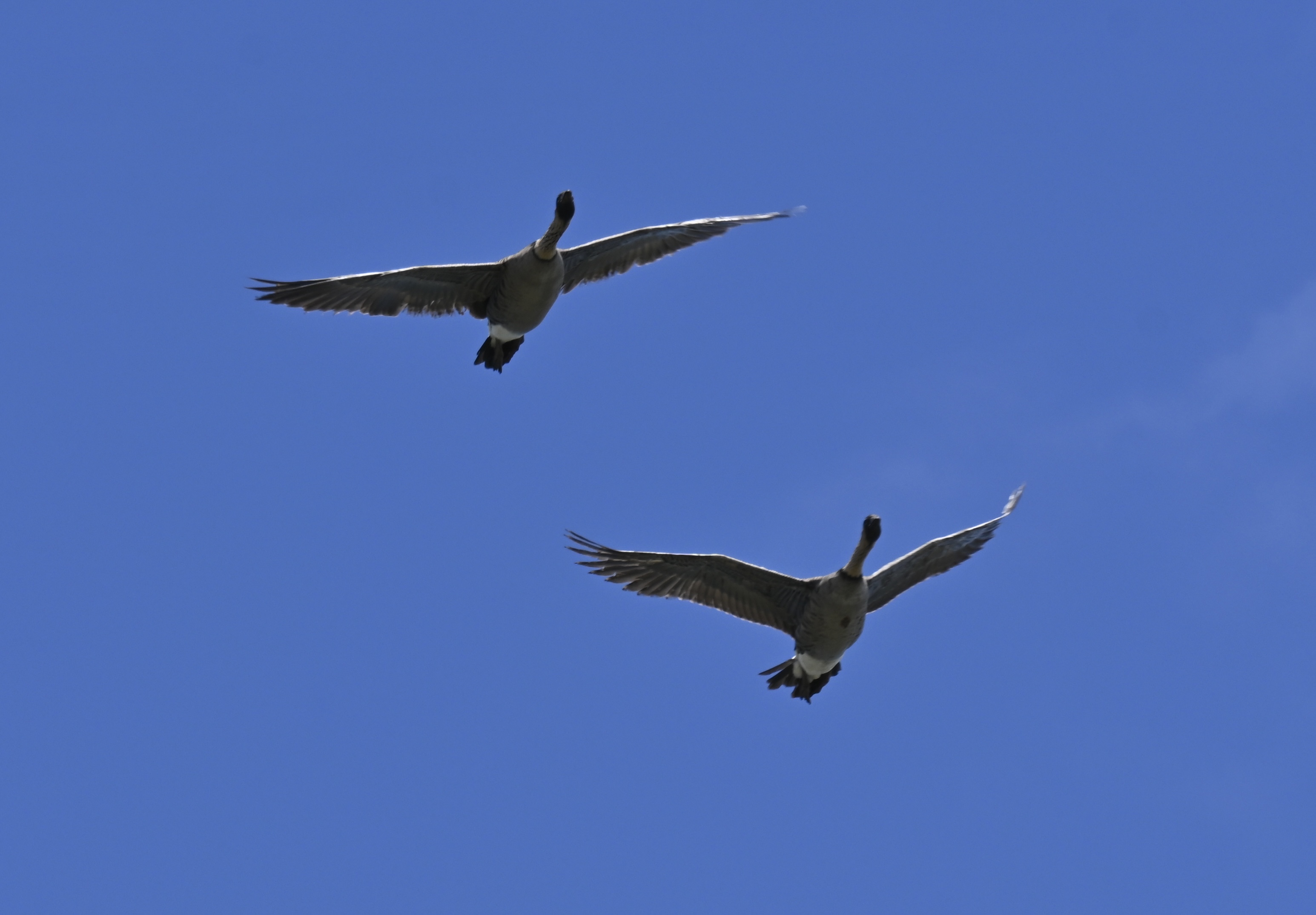
Photo of two nene in flight by Eric Anderson.

We Have the Right

“This was not because we do not have that right but in order to give you an example to imitate.” – 2 Thessalonians 3:9

We have the right to claim whatever we want.
We say.
We have the right to say offensive things
and sneer at those who hear.
We have the right to say to one, “Go here,”
and to another, “Go there,”
and they will go.
We enforce.
We have the right.

Are we any more than irresponsible,
mere busybodies,
tearing down the building of
a blessed community?

Is it not true that we who say,
“The one who does not work,
we’ll let that one not eat,”
do little for our neighbors?

Is it not true that we who say,
“The one who does not work,
we’ll let that one not eat,”
will underpay their workers?

Is it not true that Paul’s example,
sparing those he served from burdens,
that the greatest burden, ignorance of love,
might lift from them, is our greatest call to work?

Is it not true that we are Paul’s
“mere busybodies, not doing any work,”
not building up community.
How can we claim our right to eat?

A poem/prayer based on 2 Thessalonians 3:6-13, the Revised Common Lectionary Second Reading for Year C, Proper 28 (33).

The image is The Multiplication of the Bread and the Fish by Jacopo Tintoretto – http://catalogo.fondazionezeri.unibo.it/ricerca.v2.jsp?view=list&batch=100&sortby=LOCALIZZAZIONE&page=1&decorator=layout_resp&apply=true&percorso_ricerca=OA&locale=it, Public Domain, https://commons.wikimedia.org/w/index.php?curid=79669072.

Story: Aloha for the ‘Iwa

September 28, 2025

Jeremiah 32:1-3a, 6-15
Luke 16:19-31

The ‘iwa, or great frigatebird, has a bad reputation among the seabirds around Hawai’i. ‘Iwa have been known to bully other birds to get them to drop their meals, which the ‘iwa then swoops down to eat. That’s pretty nasty. As a result, a flock of koa’e ula – red-tailed tropicbirds – had decided to have nothing to do with them.

When an ‘iwa flew by, they ignored him. Or her. They veered off to one side or another to keep their distance. When the ‘iwa called out a friendly “Aloha!” they said nothing in return. They called out to one another instead.

Except for one bird.

This koa’e ula decided that until an ‘iwa actually did anything mean, he’d assume that they were as worthy of a friendly “aloha” as any other bird. Seabirds tend to swoop around together a lot, which means that the air is full of “aloha,” which sounds a lot like lots of bird calls to us. A shore with lots of seabirds over it can be a very noisy place.

“Why are you greeting the ‘iwa?” asked his friends. “They’re bullies. They’re mean. They’re never going to give you an aloha.”

“I don’t know about any of that,” said the koa’e ula. “None of the ‘iwa I’ve greeted have done anything to me. Except to say, ‘aloha’ right back.”

Koa’e ula can fly for a long time, but they also like to spend some time resting on the ground, usually on smaller islands offshore from bigger islands like Kauai. There came a day when most of this particular flock was resting from some pretty vigorous flying and fishing. On that day something had happened a long way away that they didn’t know about. It was a big earthquake, and it kicked up the water into an ocean-spanning tsunami. All this was much too far away. The birds had no idea.

Hours later, a series of great waves approached the little island. A few of the koa’e ula were aloft, but they weren’t looking at the water closely. As the first wave came closer, an ‘iwa swooped low over the island, right over the place where the friendly koa’e ula had settled.

“Take off! Fly!” cried the ‘iwa. “There’s a big wave coming! Get into the air!”

“Take off! Fly!” shouted the koa’e ula to those near him, and he opened his wings and leapt into the air. Those near him did the same, and in a few moments the island was empty of birds and the sky was filled with them.

They looked down as the first wave washed over the entire island where they’d been. They were so shocked that they forgot to call “aloha” to one another as they circled. Without the warning of the ‘iwa, they’d have been there when the wave came.

“How did you know?” they started to ask the friendly koa’e kea, the one the ‘iwa had come to warn. “Hod did you know that the ‘iwa would know to warn us?”

“I didn’t know,” said the koa’e kea. “I just knew that everyone deserves an aloha. Everybody deserves aloha.”

As the ‘iwa swooped by with an anxious look to make sure her friend was all right, the koa’e ula called out, “Aloha and mahola nui loa to you!” The ‘iwa looked relieved and called back, “Aloha!” and she soared off once more.

I don’t know what other flocks do – there are ‘iwa and there are koa’e ula all around the world – but I can tell you that there’s been lots more aloha among those birds from that day to this, and long may it stay the same.

by Eric Anderson

Unfortunately, the video recording of worship for September 28, 2025, did not include audio, so there is no recording appended.

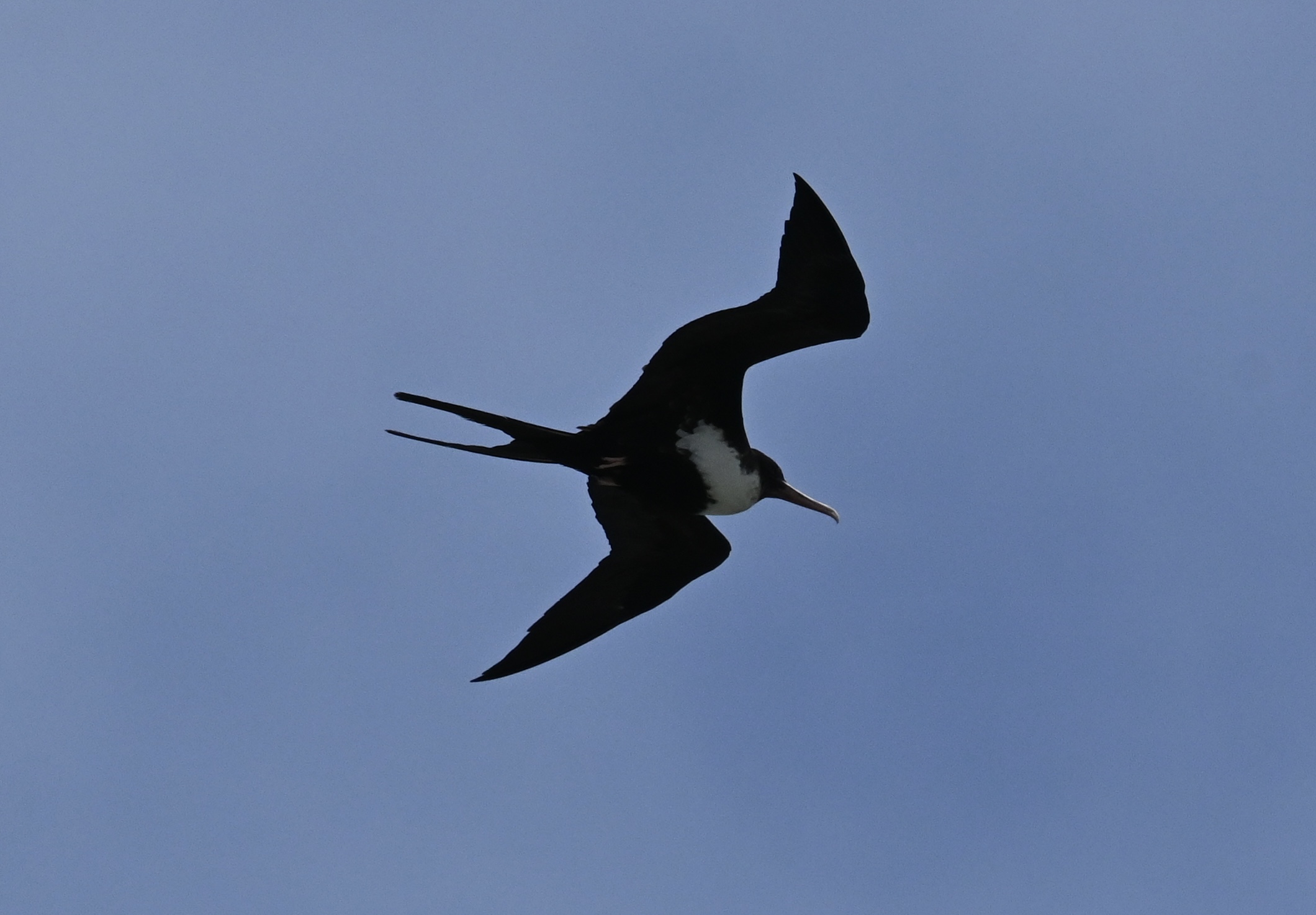
Photo of an ‘iwa (female) by Eric Anderson.

Send Me


“[Jesus said,] [The rich man] said, ‘Then I beg you, father, to send him [Lazarus] to my father’s house–for I have five brothers–that he may warn them, so that they will not also come into this place of torment.'” – Luke 16:27-28

O Holy One,

When I should find myself (again)
in torment I have made myself,
may my compassion and
my wisdom be enough to call
a warning to the ones I love,
and to the ones I don’t,
with my own voice, and not rely
upon the voice of those I have oppressed.

A poem/prayer based on Luke 16:19-31, the Revised Common Lectionary Gospel Reading for Year C, Proper 21 (26).

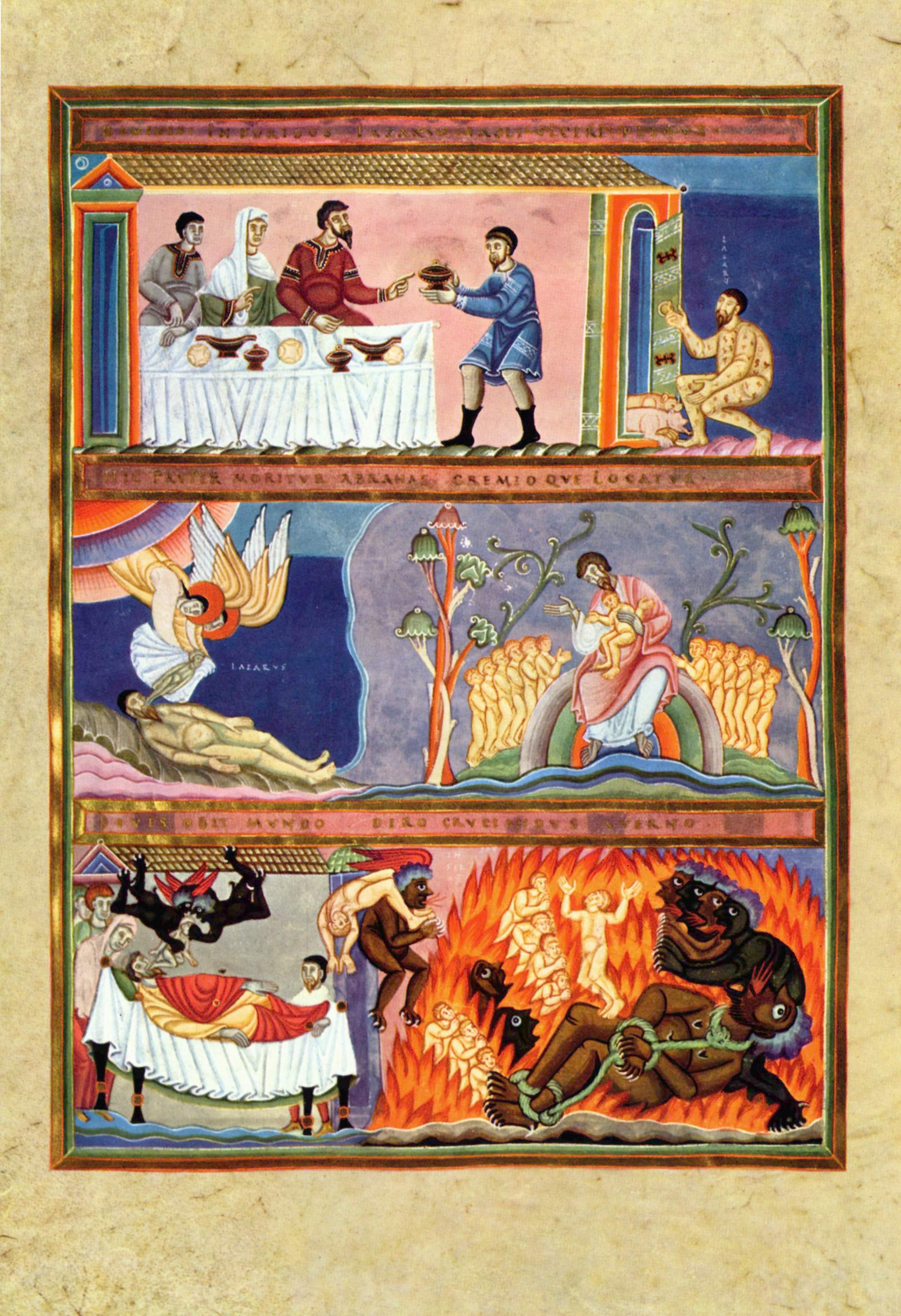
The image is “The Parable of the Rich Man and the Beggar Lazarus,” an illustration in the Codex Aureus Epternacensis (Golden Gospels), by the Master of Codex Aureus Epternacensis – The Yorck Project (2002) 10.000 Meisterwerke der Malerei (DVD-ROM), distributed by DIRECTMEDIA Publishing GmbH. ISBN: 3936122202., Public Domain, https://commons.wikimedia.org/w/index.php?curid=155243.

Story: The ‘Alawi Who Was Noticed

August 31, 2025

Proverbs 25:6-7
Luke 14:1, 7-14

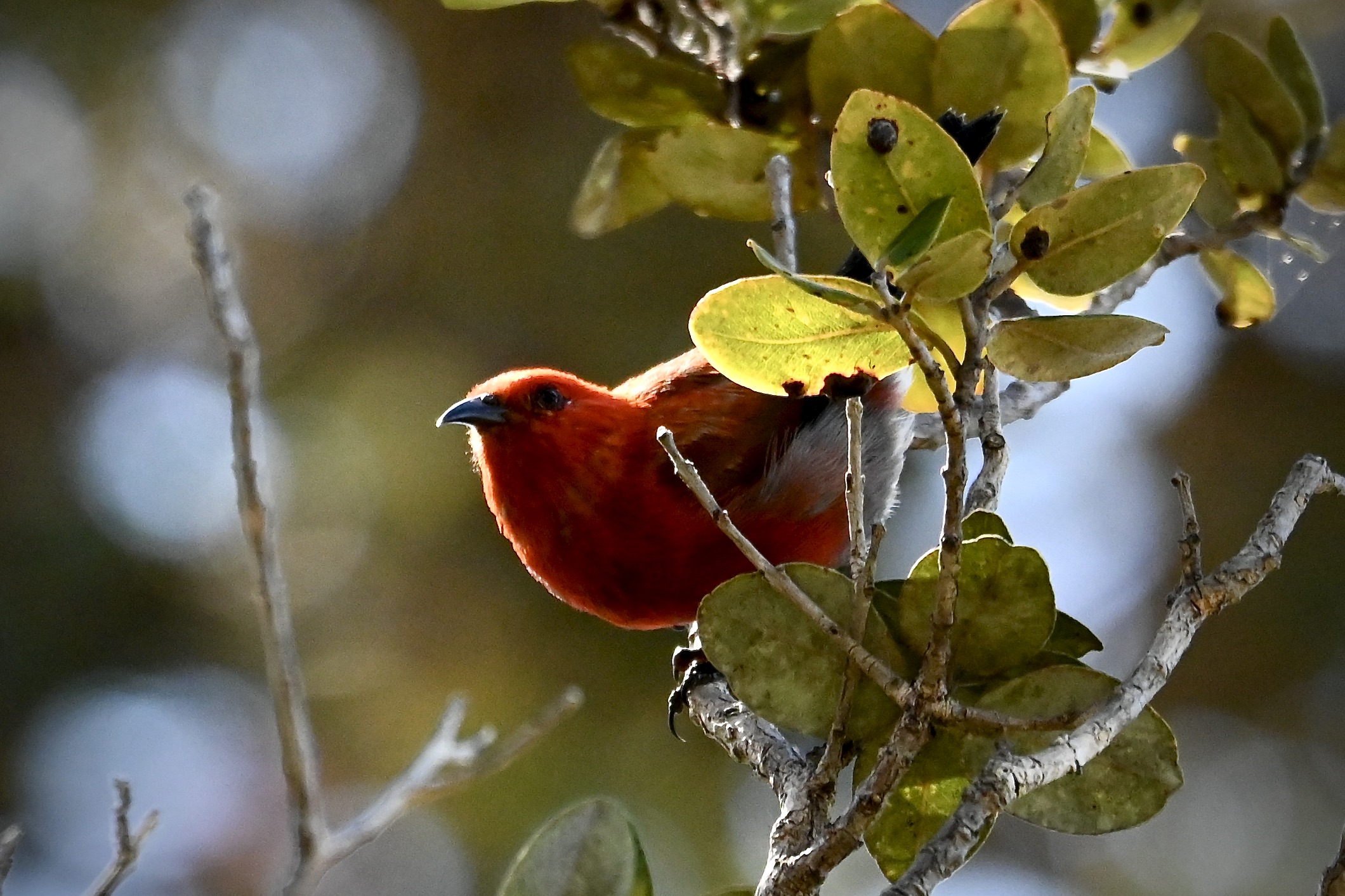
Up on the mountain slopes, there are a lot of very colorful birds. The i’iwi and the ‘apapane are the brightest in color, with those glistening red feathers and the contrasting black of their wings. They’re not alone, though. The ‘amakihi makes a pretty brave sight in yellow, and the ‘akiapola’au is brighter still. Add in the colors of the flowers on the trees and on the bushes, and the forest is a pretty colorful place.

And then there’s the ‘alawi. The ‘alawi isn’t brightly colored. It’s grayish green with some yellow tint on the belly. It’s not even a strong singer. It has a pretty plain kind of call. It’s so understated, in fact, that people went many years before making the connection between the old Hawaiian word “’alawi” and a bird westerners called the “Hawai’i Creeper.”

Mostly, this hasn’t bothered the ‘alawi at all, since they don’t pay much attention to what people think of them. But one of them did start to feel bad. In the midst of a forest full of bright red ‘apapane, orange ‘akepa, and yellow ‘akiapola’au, who would notice a little green ‘alawi?

“It’s a pity I’m so drab,” he told himself one day. “I’m going to change that.”

I have to admit that his approach had some promise. He was going to start wearing jewelry – that is, he was going to tuck a flower behind his ear, as we see so often from human women in Hawai’i. He was so clever that he came up with the idea himself – he really didn’t pay much attention to people.

There was, however, a problem. Oh, he could grasp flowers with his feet quite well. But when you want to tuck a flower behind your ear, it really helps to have, well, ears.

An ‘apapane watched him do this and asked, “Why? I mean, why?”

“I want to be noticeable,” he said with some embarrassment. “I don’t want to be drab.”

“I’m noticing,” said the ‘apapane, “and I guess you aren’t drab. But you do look silly. Is that how you want to be noticed?”

This might have gone on for a while, but it turned out to be another of those dry times in the forest, and it got harder and harder to find things to eat. For the ‘alawi that’s mostly bugs. Everyone in the forest was feeling the pinch in their bellies.

Our friend the ‘alawi, however, got lucky one day. He found a stand of trees that were better watered, and the flowers on them had attracted a good crowd of insects. He flew over to feed, but stopped. He didn’t want anyone else to be hungry while he ate his fill. So he started to call the ‘alawi’s plan song. That didn’t seem to attract anyone, so he found an ‘akiapola’au and brought him to those trees. The ‘akiapola’au whistled, and some other birds and some other birds and some other birds made their way over, sang their songs, and settled in to eat.

Hopping along a tree branch, the ‘alawi met the ‘apapane he’d seen a few days before.

“You found a way to be noticed, youngster,” said the ‘apapane.

“I did?” said the ‘alawi.

“You did,” said the ‘apapane. “We’ve all noticed you, and not for wearing a flower. We’ve all noticed you for being the considerate and compassionate bird you are. Well done. And thank you.”

by Eric Anderson

Watch the Recorded Story

I write these stories in advance, but I tell them without notes, so between memory and improvisation the story as I told it is different from the story as I wrote it.

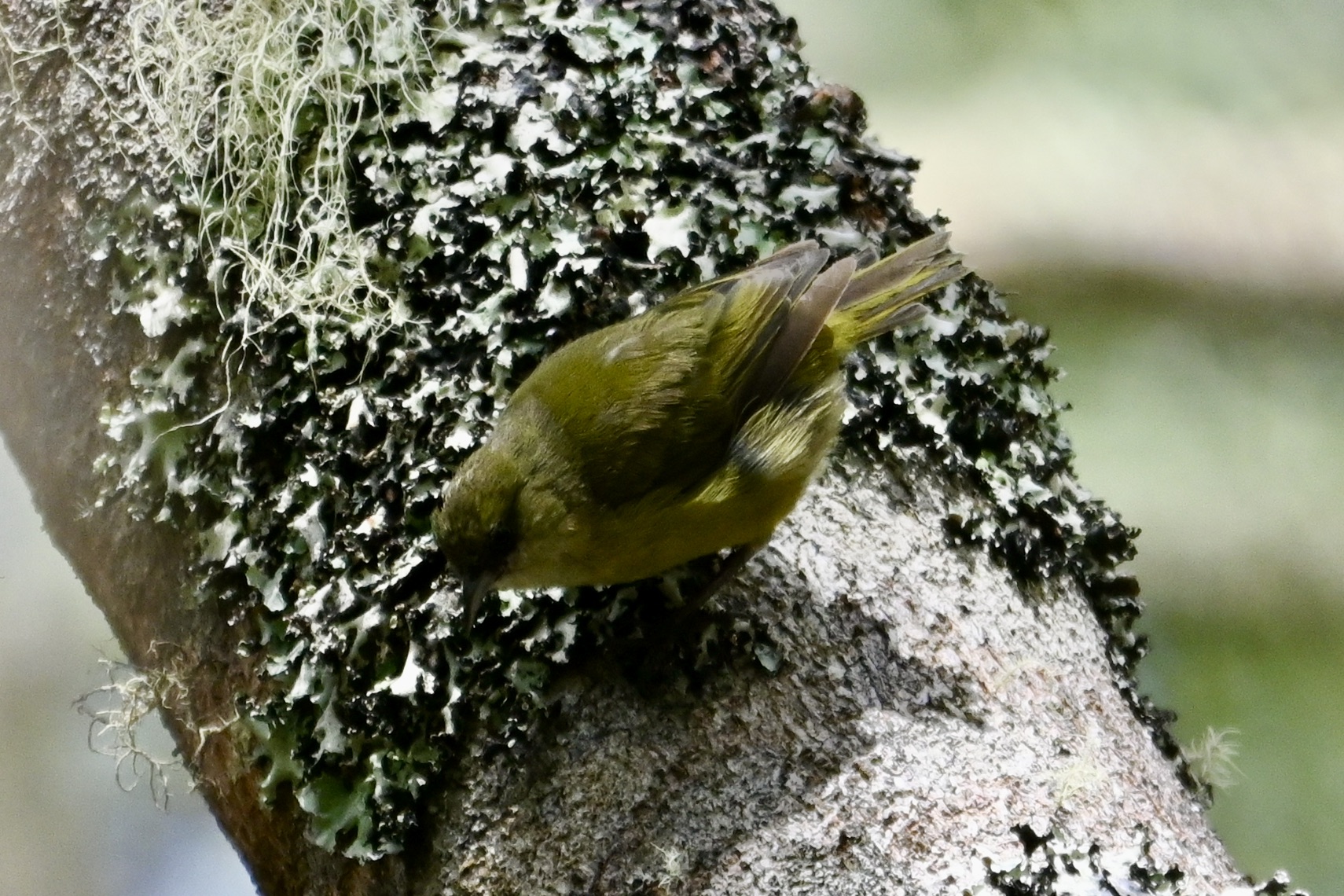
Photo of an ‘alawi by Eric Anderson.

Story: Feeding the I’iwi

August 24, 2025

Isaiah 58:9-14
Luke 13:10-17

Up on the slopes of Mauna Loa, where the forest birds gather into little flocks during the summer, there was one little flock that had decided to get itself better organized. They figured out who was the best in the flock at finding food, and other birds that were good at spotting bad weather. They found places to shelter when it was hot in the middle of the day and places to start foraging when it was cool in the morning. Each bird got a buddy to make sure nobody got lost. Each bird got a buddy to make sure that when they were feeding, everybody found out about it. Each bird got a buddy to make sure that everybody got fed and sheltered and safe.

The birds agreed that it was a pretty good system.

“One more thing,” said one of the birds who had been a big part of the organizing. “No i’iwi.”

“What do you mean?” said an ‘amakihi. “They don’t like to fly in flocks anyway.”

“What I mean is,” said the first bird, “that if we see any i’iwi, we chase them away.”

That didn’t sound good to most of the other birds, who were far more accustomed to flying away from a chasing i’iwi than chasing one.

“I don’t think that’s going to work,” said an ‘akepa. The other birds chorused their agreement.

“Well, all right,” said the first bird, an ‘apapane. “but we won’t encourage them, either. Make sure when you call that there’s no i’iwi listening. We’ve organized to feed ourselves, not them.”

And so it was. There was one ‘apapane in the flock, though, who thought that sounded a little unfair. Sure, she’d been chased by i’iwi more than once and hadn’t enjoyed it, but she didn’t see any reason for even a grumpy bird to go hungry.

It turned out to be a tough season in their area of Mauna Loa. It was dry, and the trees weren’t blossoming much. There were a few spots around where a small grove would bloom all once, but they were hard to find. The finder birds were a real blessing. Without them the flock would have been much hungrier.

One day the scout birds had to work really hard. They looked this way and that without finding much. Finally one pair spotted a little group of trees with blossoms, and they called the flock. The other birds followed gratefully.

That’s when one of them spotted an i’iwi. “Remember!” he shouted out. “Don’t tell the i’iwi where we’re going!” Most of the flock, in fact, detoured so that the i’iwi wouldn’t notice them.

But not the one ‘apapane. She couldn’t bear the thought of another bird going hungry, even a grumpy i’iwi. She took a turn over the tree where the i’iwi was and called out a quick, “Follow me!” As she flew along the i’iwi followed, and when they arrived at the little stand of blossoming trees, the i’iwi settled into a tree as far away from the others as it could.

“Why did you do that?” asked her buddy bird. “You broke the rule. You brought an i’iwi!”

“Of course I did,” she said. “Have you been hungry? Did you enjoy it?”

“Yes, of course,” he said, “and no I didn’t.”

“So was he,” she told him, “and I’m sure he didn’t like it either.”

“But he’s an i’iwi!” he told her. “He’s a bully and a jerk.”

“And he’s hungry,” she said. “Everybody should get help when they’re hungry.”

From the adjacent tree, the i’iwi let out an unpleasant chirp, but that’s because i’iwi aren’t great singers. The two ‘apapane, however, knew that he’d said, “Thank you.” Nobody likes to be hungry, and everybody should get help when they are.

by Eric Anderson

Watch the Recorded Story

I write these stories in advance, but I tell them without notes. Between the vagaries of memory and the impulse to improvise (not to mention the contributions of the congregation), what I’ve written and the way I told it are not the same.

Photo of an ‘apapane by Eric Anderson.

Where Is My Treasure?

“[Jesus said,] ‘Sell your possessions and give alms. Make purses for yourselves that do not wear out, an unfailing treasure in heaven, where no thief comes near and no moth destroys. For where your treasure is, there your heart will be also.'” – Luke 12:33-34

Jesus, I am not a wealthy man… by some standards.
Were I to leave my work, I’d quickly run through savings,
have no home, sell the things I use to give me joy –
the instruments, the cameras, the things that prompt my memory.

By other standards, I have wealth beyond imagination.
I do not know where my next meal will come from, but
I know that it will come. I know that if a wave arises
or a lava river flows, I’ll have a place where I am safe.

My wealth be great or small, I must confess, it still is mine.
In honesty, I’d sooner heed Isaiah’s words: do good,
seek justice, rescue the oppressed, defend the orphan, raise
my voice in favor of the widow. But.

You, Jesus, raised the bar. The tithes has turned to everything:
my ukulele, photographs; my work time and my leisure,
what I think and write and speak and make.
For you demand all these be yours, be God’s, be holy gift.

So Jesus, I confess that though I give you much,
it is not all. I may give alms; I may give time;
I’ve taken on the role of the religious, but:
it is not all. It is not all.

Dear Jesus, please accept my offerings, my alms
of treasure and of time, of sweat and contemplation. Take
the portion of my heart that unreservedly I give to you. And
forgive the heart, and treasure, which I still keep for myself.

A poem/prayer based on Luke 12:32-40, the Revised Common Lectionary Gospel Reading for Year C, Proper 14 (19).

Photo by Eric Anderson.

Story: Sun, Rain, and Trees

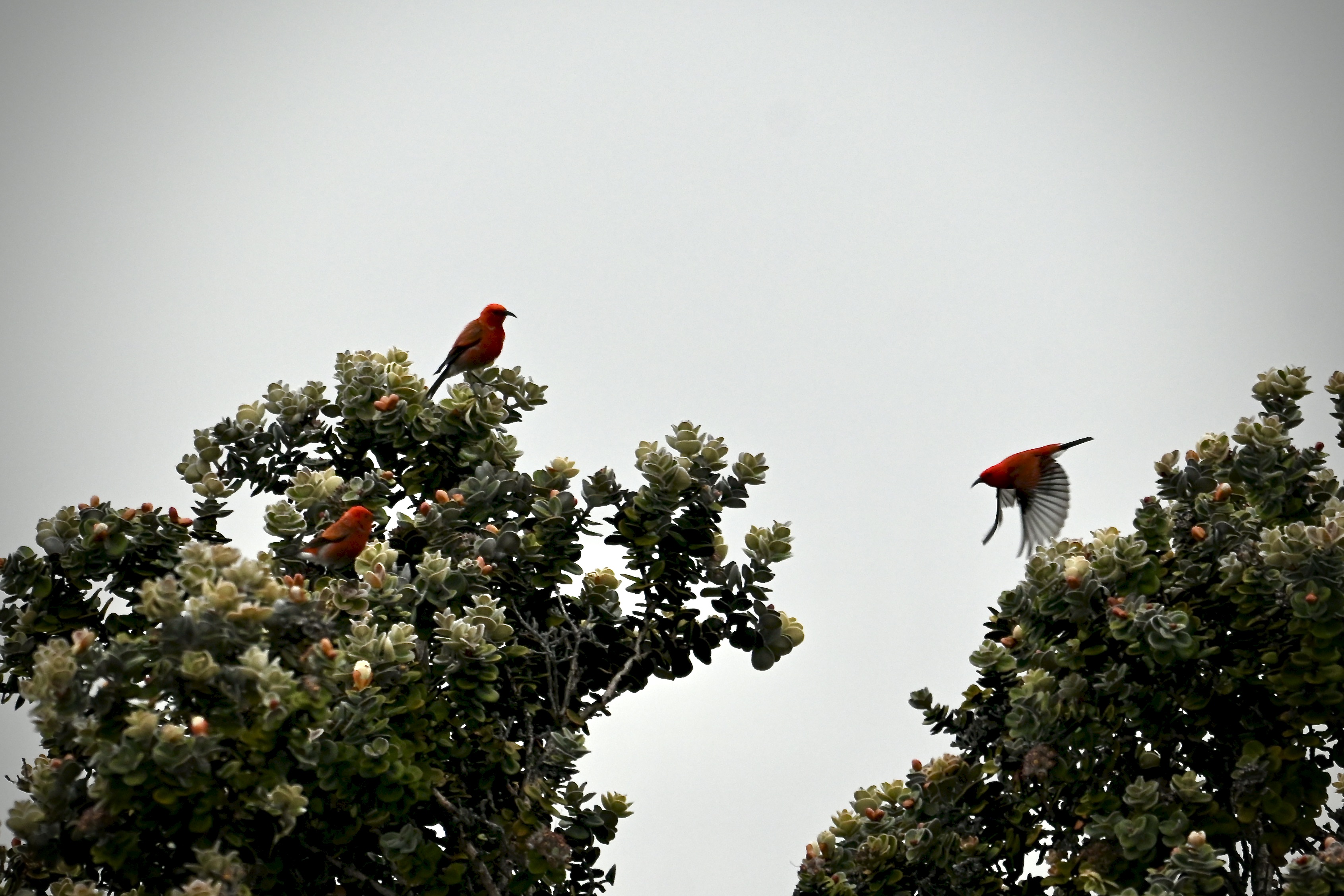
Three red birds with black wings, two perched in a tree top, with the third flying toward the other two from the right.

July 27, 2025

Hosea 1:2-10
Luke 11:1-13

You know how it is with brothers and sisters and siblings of all kinds. Some days everybody gets along, and the next day nobody gets along. It’s squabbling from dawn to sunset, and on the following day everybody is happy again.

In one ‘apapane family, that wasn’t what happened.

Mind you, they were pretty good to one another in the nest. They were cheerful most of the time when they were learning to fly and when they were getting their adult red-and-black feathers. Each of them felt very grown up as they paraded their bright colors through the ohi’a trees.

For a reason nobody ever discovered, that’s when things fell apart. The two younger ones – and younger is a very narrow thing when you hatch in the same nest just minutes or an hour apart – couldn’t speak a kind chirp to one another. “You’re impossible!” said the brother, who was the middle one. “You’re more impossible!” said the youngest, who was one of the sisters. “There’s no such thing as more impossible!” said her slightly older brother, and it went downhill from there.

The oldest one, an older sister, listened to them with a mixture of laughter at her younger siblings and a fair amount of sadness that they couldn’t get along.

It got worse during nesting season. For some reason some of the supplies were in short supply. Twigs were in plenty, and grasses for lining, but a lot of the mosses were hard to find. The younger sister and her husband had a lot of trouble. Her older brother and his wife, on the other hand, did pretty well. It was chance, pretty much, but they actually had more mosses than they could use and his sister didn’t.

That’s when she flew over to her brother’s nest and clamored and called for help.

“No!” he called. “Go away!” But her nest really needed the materials, and she really couldn’t find them.

“Help! Help us!” she said, and she kept calling and pecking at the branch by the nest until, at last, he couldn’t do anything but give her some mosses and watch her fly away to her own nest.

Of course she came back. She still needed more. One beakfull wasn’t enough, as both of them knew. She had to go through the same thing again. And again. Until he relented – again – and she flew off with the mosses.

That’s when big sister appeared at her younger brother’s nest.

“Are you going to make her go through that again?” she asked.

“She’s annoying,” said her younger brother, which sort of was and sort of wasn’t an answer to the question.

“And you’re not?” said older sister, to which younger brother could only mumble in reply.

“Did you grow these mosses?” asked his sister. “Did you grow this tree? Do you make the sun to shine or the rain to fall? Do you make the sweet nectar in the flowers? Did you make it so that eggs could hatch and fledglings fly?”

Of course the answer to all those questions was no.

“Be like the sun. Be like the rain,” said his older sister. “Be like the tree and the flowers. Don’t make her peck and poke for what the world provides. It’s easier, too. You’ll both feel better.”

When the younger sister came back, her brother had mosses ready for her, and even helped her carry some back to her own nest. And when, in another season, it was the younger sister who found lots of nesting materials and older brother who didn’t, she shared without fuss or complaint.

They were like the sun, the rain, and the trees.

by Eric Anderson

Watch the Recorded Story

I write these stories in advance, but I tell them in worship from memory and improvisation. As a result, what I wrote doesn’t match how I told it.

Photo by Eric Anderson.

In the Night

“[Jesus said,] ‘I tell you, even though he will not get up and give him anything out of friendship, at least because of his persistence he will get up and give him whatever he needs.'” – Luke 11:8

I could wish that Israel had been so considerate
of its poor, instead of getting into bed
with riches and with greed. I’d think that hard-edged coins
would break their sleep, but sleep they did until they slept no more.

I could wish that Hosea had been so considerate
of his wife and children. Yes, It was a metaphor of power,
but I’d think the tears of hard-said words and names
would break their sleep, but sleep they did.

I could wish the neighbor heard his friend’s distress
and rose with empathetic energy to meet his need.
I guess the friend was fortunate that shouts and calls
would break their sleep, until they brought the bread and slept anew.

I could wish all these many things and more,
when wealthy men enrich themselves at the expense
of people who, deprived of healing balm, find death
would break their sleep, and carry them from this world’s cares.

While in the shadows Jesus watches, weeping.
While in the shadows God is raging, tears a-stream
to know that in these broken covenants even the rich
will wake from sleep to find their fortunes blazing.

While in the shadows God the Holy Spirit waits
for someone who will listen and embrace
the wisdom that resounds of old: to give your neighbor care,
and wake from sleep to bright and joyful day.

A poem/prayer based on Hosea 1:2-10 and Luke 11:1-13, the Revised Common Lectionary First Reading and Gospel Reading for Year C, Proper 12 (17).

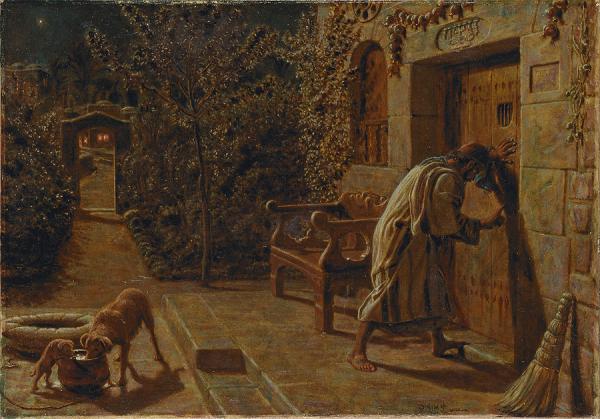
The image is The Importunate Neighbour by William Holman Hunt (1895) – http://www.ngv.vic.gov.au/collection/pub/itemDetail?artworkID=32843, Public Domain, https://commons.wikimedia.org/w/index.php?curid=10103482.

Her Whole Life

A painting of a well-dressed African man putting gold coins in a jar while a slim African woman carrying a baby and with a basket on her head puts two small coins in the jar. Others watch.
The Widow’s Mite – Luke 21:1-4

For all gave out of their abundance, but she—out of her poverty—gave all that she was having, her whole life. – Mark 12:44, translation by D. Mark Davis.

You’d warned about them, Jesus, all those who
devour widows’ houses with religious obligation.
I wonder, did you think you’d see it happen
there in front of you, so poignant and so soon?

She dropped her life into the box or jar
and heard it ring, so tinny and so small.

I wonder that you found the words
to say to your disciples “She gave all.
She gave her life, all that remained.”
I would have been struck silent in my tears.

A poem/prayer based on Mark 12:38-44, the Revised Common Lectionary Gospel Reading for Year B, Proper 27 (32).

I have written two other poems on this text: “Devoured” from 2021 and “All She Gave” from 2018.

The image is from JESUS MAFA. The Widow’s Mite, from Art in the Christian Tradition, a project of the Vanderbilt Divinity Library, Nashville, TN. https://diglib.library.vanderbilt.edu/act-imagelink.pl?RC=48392 [retrieved November 5, 2024]. Original source: http://www.librairie-emmanuel.fr (contact page: https://www.librairie-emmanuel.fr/contact).