For all gave out of their abundance, but she—out of her poverty—gave all that she was having, her whole life. – Mark 12:44, translation by D. Mark Davis.
You’d warned about them, Jesus, all those who devour widows’ houses with religious obligation. I wonder, did you think you’d see it happen there in front of you, so poignant and so soon?
She dropped her life into the box or jar and heard it ring, so tinny and so small.
I wonder that you found the words to say to your disciples “She gave all. She gave her life, all that remained.” I would have been struck silent in my tears.
A poem/prayer based on Mark 12:38-44, the Revised Common Lectionary Gospel Reading for Year B, Proper 27 (32).
I’iwi are not known for their generosity. They tend to chase other i’iwi away if one comes too close, and they have an expansive notion of what “too close” means. They’re willing to put up with other birds, most of the time, but if there’s an ohi’a tree full of flowers to be sipped at, well. Then things can get exciting, and they’ll chase the ‘apapane and the ‘amakihi away.
One day an i’iwi was perched in a tree and saw a family of four humans come along. They stopped for a moment nearby and the big humans gave the little humans the last two cookies out of a little bag. The littlest human, a boy, took big bites. The next-littlest human, a slightly older and taller girl, nibbled at her cookie, enjoying its sweetness.
When the little boy had finished his cookie, the parents announced that it was time to keep walking, and their son burst into tears. He was tired. He didn’t like walking. Most of all, he was still hungry, because he hadn’t had enough cookie.
But there were no more cookies in the little bag.
Big sister – who wasn’t that much bigger, remember – looked at her cookie. More than half of it was left. Without a word she broke it in half and gave a piece to her little brother. He stopped crying – mostly, he snuffled some more – but the two of them finished their cookies together, and then the family moved on.
The i’iwi was impressed. Half a cookie had done so much good for the little boy, and also for the parents who wanted to comfort him but couldn’t. Half a cookie wasn’t a big thing, but it made a big difference.
The i’iwi decided that he’d make a difference, too. Not with cookie halves, which he wasn’t going to eat anyway, but with ohi’a flowers. He’d bring those to the hungry birds of the forest.
If he could figure out how.
An i’iwi’s long curved beak is pretty good for sipping nectar, but it’s not that good for snipping flowers from branches or carrying them. His first few experiments showed him that he damaged more flowers beyond use than he actually carried. He managed to get one blossom in his beak, however, and flew off to find a hungry bird to give it to.
After a few minutes, he found a section of the forest where the trees weren’t blossoming much, and then he found a sad-looking ‘apapane perched on a leafy, but flowerless, branch. He landed and carefully placed the flower on some leaves before he said, “Here. You look hungry. Take a good sip.”
The ‘apapane looked surprised and then puzzled, but said, “Thank you,” before dipping her beak into the flower. Sadly, there wasn’t much nectar to be found. Much of it had dried out when it was plucked from the tree and carried through the air.
“I’m sorry,” said the i’iwi. “I’ll go get you another one.”
“Wouldn’t it be easier,” asked the ‘apapane, “to show me the tree you found it on?”
“Why, yes,” said the i’iwi. “It would. Why didn’t I think of that?”
Cookies don’t grow on trees. Sometimes if you want to share, you have to divide them up. But sometimes if you want to share, you can bring your friend to the flower, not the flower to the friend. However you share, though, remember that small things can make a big difference, and that giving to someone goes a long way.
Watch the Recorded Story
I write these stories ahead of time, but I tell them from memory – memory plus improvisation – so what you hear will not match what you’ve read.
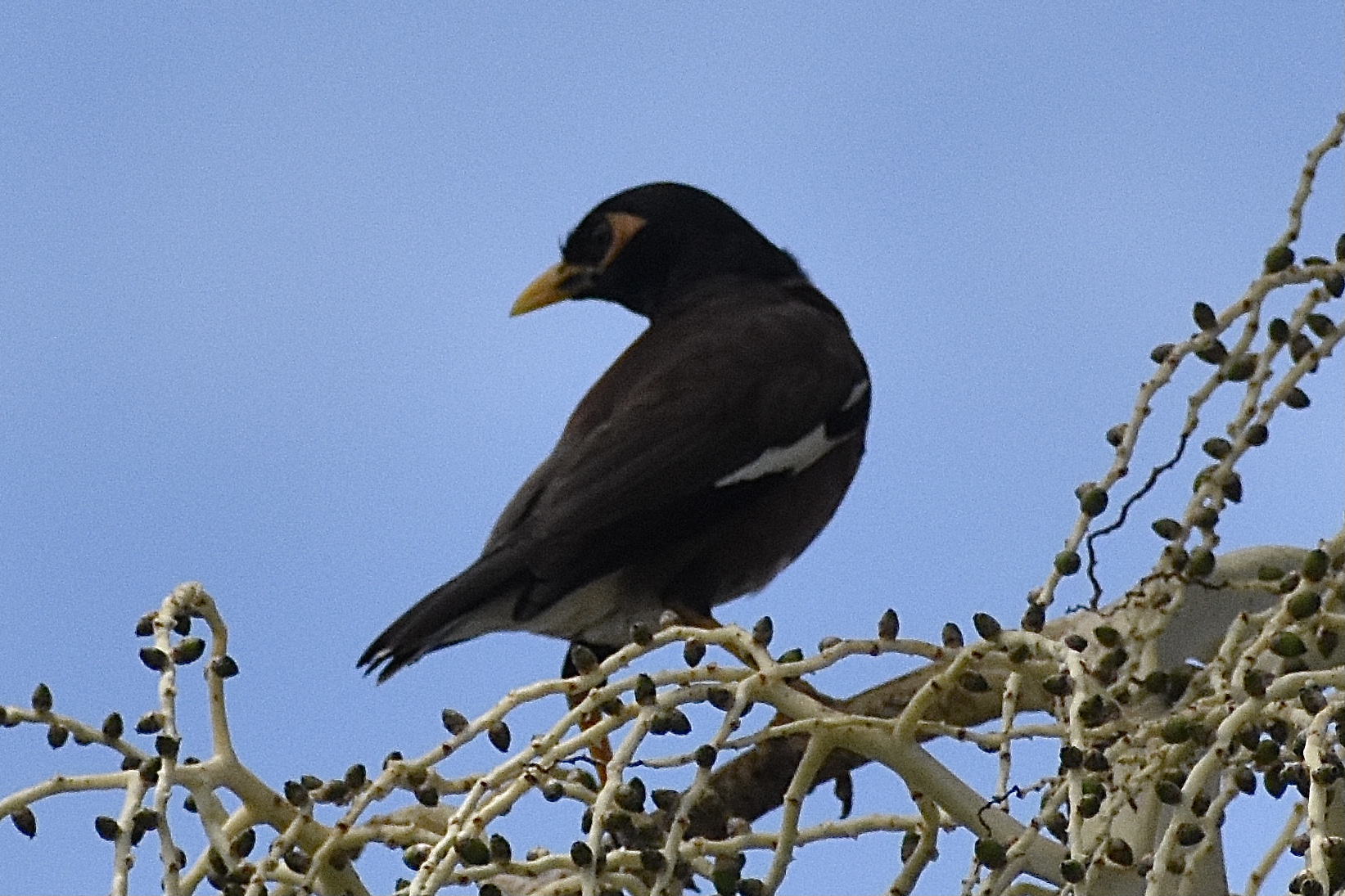
Two humans were watching a small flock of mynas. The mynas were doing myna things, which was basically hopping around the grass looking for things to eat, finding the things to eat, and then eating them. By and large this went fine, but every once in a while one myna would hop closer to another myna, and sometimes the second myna would object, and then the first myna would object, and the result would be a lot of myna noise that was… objectionable.
The two humans shook their heads at this. One wondered, “Will the myna ever learn to share?”
They kept watching and somehow didn’t notice that when one myna objected to another myna, it wasn’t trying to steal food. It wasn’t trying to chase it away from food. It just wanted space. A little space. A little more space than you’re giving me, please. Thank you very much and would you kindly remember that for next time you…!
They squabbled about spacing. Not about feeding. Somehow the two people failed to notice that the mynas were sharing by making sure everybody had a spot to hunt for things to eat.
Eventually the humans got hungry. One had prepared a really nice lunch, with lettuce and pickles on the sandwich along with spreads and meats and cheeses. When one of the mynas managed to get a crumb later, she thought the bread was pretty special, too. With the sandwich the person had a big bottle of flavored ice tea. The mynas never learned how that tasted. The human finished every drop. Oh, and there were chips and a salad and there was chocolate for dessert. The mynas didn’t taste any of those, either.
The other human had a sandwich, but the space between the slices of bread was a lot thinner. No greenery poked out the sides. The myna consensus from trying the bread crumbs later was that it was pretty ordinary bread, rather lacking in flavor. This person drank water and had no other food than the sandwich. They finished sooner than the person with the bigger lunch, and didn’t taste any more of that than the mynas did.
Later on, the two people stopped watching the mynas for the day and got set to return home. The one with the nicer lunch got into a big, shiny car. The one with the small lunch got into a smaller car with dull paint and a few rust marks. When they drove off the small car left behind a cloud of oil-smelling smoke.
Two of the mynas looked at one another. One of them asked, “Do you think humans will ever learn to share?”
In fairness to the humans, one of them was sharing knowledge with the other – teacher to student. But still, doesn’t that question linger:
Will humans ever learn to share?
by Eric Anderson
Watch the Recorded Story
I tell the stories from my memory of the text I’ve written. Sometimes memory changes things. Sometimes creativity does. To be honest, it’s hard to tell one from the other.
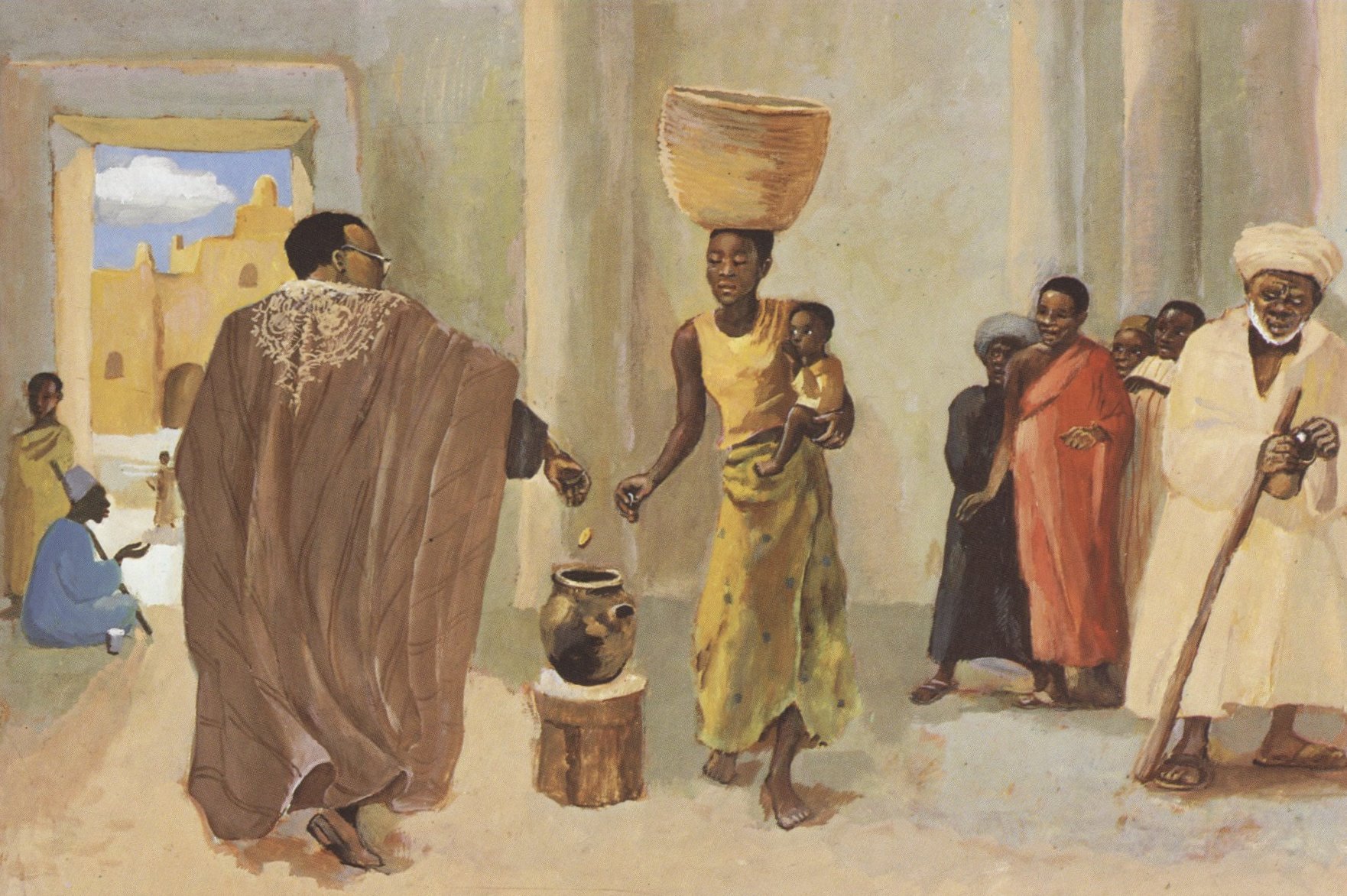
Note that both Jesus and the widow are in the background of the painting. The foreground features a religious official who resembles those Jesus described as liking to walk around in long robes and be greeted with respect.
“They devour widows’ houses…” – Mark 12:40a
“…But she out of her poverty has put in everything she had, all she had to live on.” – Mark 12:44b
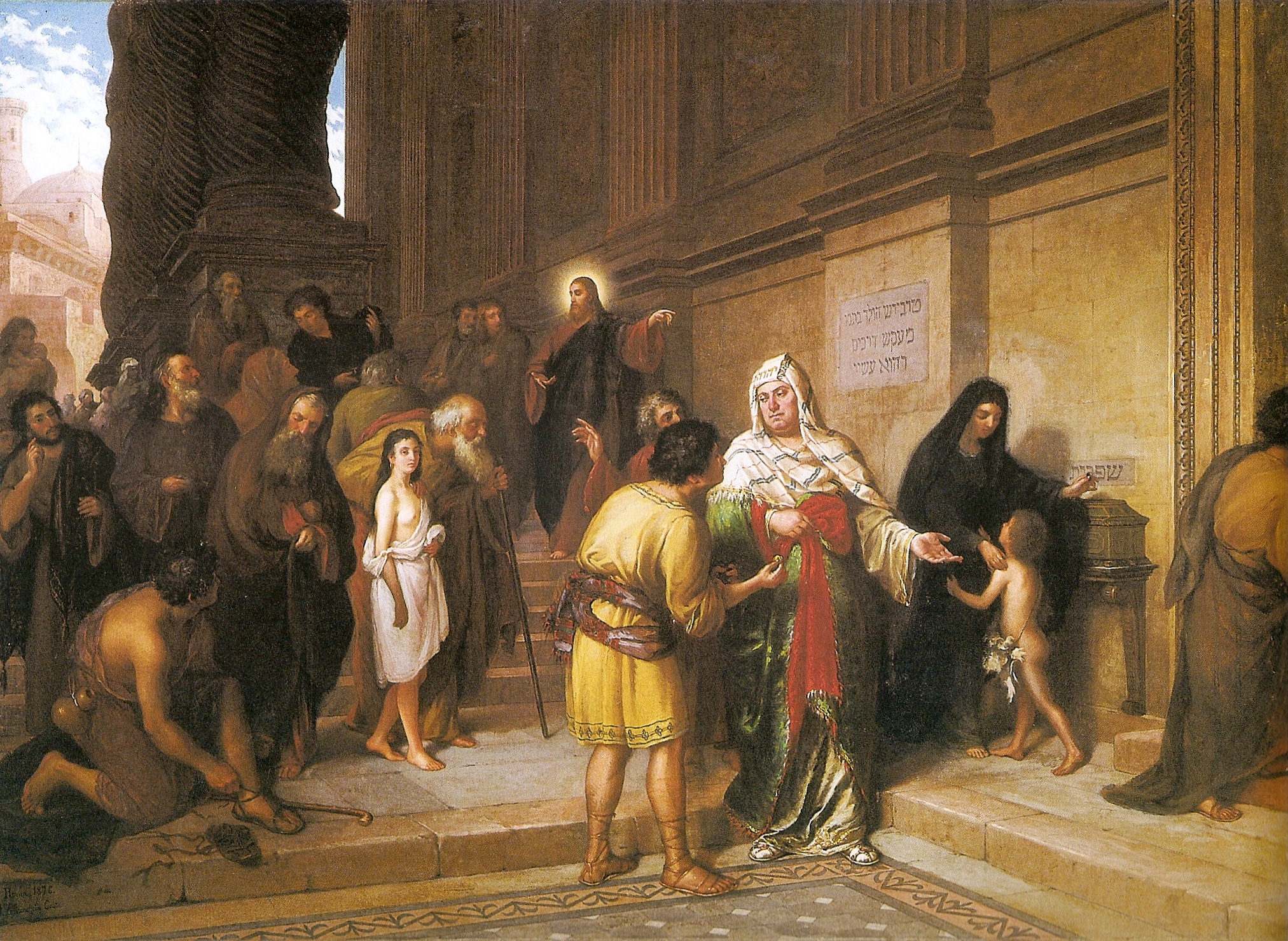
So what was your expression, Jesus, when you called your friends to see the widow whose last coins had rattled down into the treasury collection?
Did you watch with soft, approving eyes, to see such faith, such generosity, such confidence of God’s aloha to relieve the crisis now at hand?
Or did your brow bear furrows of concern, of worry, for her poverty had now reached destitution, and her final meal had clinked into the box?
Or did you grind your teeth to witness on the Temple grounds the very thing of which you’d warned? For here a widow’s house had been consumed.
Oh, Jesus! Have you any teeth remaining in your jaws? Or do you lubricate their grinding with your tears? For still the widows bring their homes… and we devour.
A poem/prayer based on Mark 12:38-44, the Revised Common Lectionary Gospel Reading for Year B, Proper 27 (32).
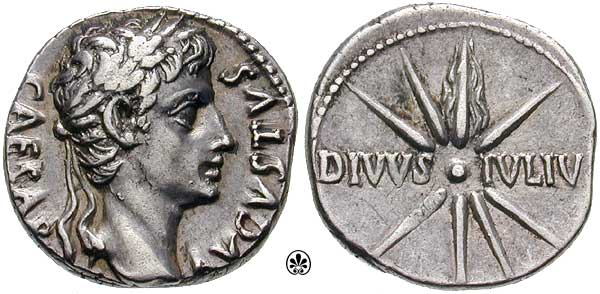
When those hired about five o’clock came, each of them received [a denarius] the usual daily wage. – Matthew 20:9
“I got a rock.” – Charlie Brown in It’s the Great Pumpkin, Charlie Brown
Nobody hired us. You could say I didn’t try. At least, I didn’t try the ones with work. I promise you I tried the ones that didn’t, at least the ones who said they didn’t.
Another day of working to find work; another day of working without pay; another day of wondering just how the evening’s meal will come together.
“Why are you standing here so idle all the day?” “I’ve chased the ones who will not hire from this end of the marketplace to that. So now, I stand, because there is no hope for work.”
Or is there?
Now that was just an hour ago. I worked to pull the weeds and stake the vines, but to be honest, darkness came too soon to make much impact on this vineyard.
Darkness came too soon to make much impact on the emptiness of my larder. Darkness came too soon for work to be rewarded with enough to keep our lives.
But look: there in my hand. The owner of the vineyard has presented me with a denarius, a coin whose worth will keep us fed today, perhaps tomorrow.
I run back to the marketplace for oil and flour, beans and dates. My family will not believe the owner’s generosity – I hardly do!
Behind me I hear quarrelling. I pay no mind if others’ eyes are evil. My family will eat tonight because someone was good.
I usually imagine Jesus’ parable from the perspective of the all-day workers, the ones “who have borne the burden of the day and the scorching heat.” For this poem/prayer, I thought I’d choose another point of view.
A poem/prayer based on Matthew 20:1-16, the Revised Common Lectionary Gospel Reading for Year A, Proper 20 (25).
Father of orphans and protector of widows is God in his holy habitation. God gives the desolate a home to live in; he leads out the prisoners to prosperity, but the rebellious live in a parched land. – Psalm 68:5-6
I am grateful, O God, to know the people for whom You labor, the people for whom You care.
You care for the homeless. You care for the resource-less. You care for the refugee.
I am grateful, O God, to know the people for whom You care. Do You wonder why people do not?
A poem/prayer based on Psalm 68:1-10, 32-35, the Revised Common Lectionary Psalm Reading for Year A, seventh Sunday of Easter.


 ordainedgeek
