Send Me


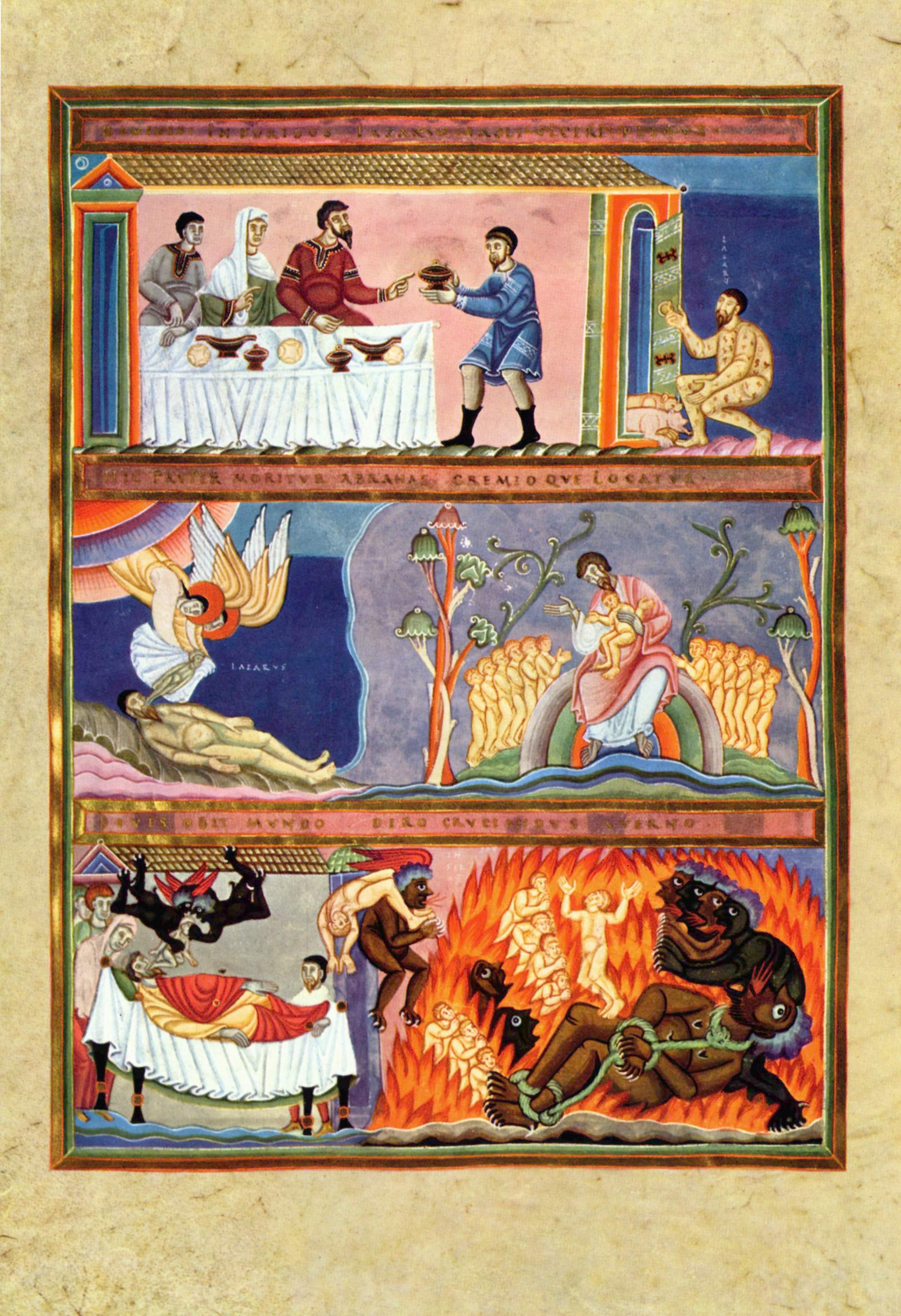
“[Jesus said,] [The rich man] said, ‘Then I beg you, father, to send him [Lazarus] to my father’s house–for I have five brothers–that he may warn them, so that they will not also come into this place of torment.'” – Luke 16:27-28

O Holy One,

When I should find myself (again)
in torment I have made myself,
may my compassion and
my wisdom be enough to call
a warning to the ones I love,
and to the ones I don’t,
with my own voice, and not rely
upon the voice of those I have oppressed.

A poem/prayer based on Luke 16:19-31, the Revised Common Lectionary Gospel Reading for Year C, Proper 21 (26).

The image is “The Parable of the Rich Man and the Beggar Lazarus,” an illustration in the Codex Aureus Epternacensis (Golden Gospels), by the Master of Codex Aureus Epternacensis – The Yorck Project (2002) 10.000 Meisterwerke der Malerei (DVD-ROM), distributed by DIRECTMEDIA Publishing GmbH. ISBN: 3936122202., Public Domain, https://commons.wikimedia.org/w/index.php?curid=155243.

You Fool

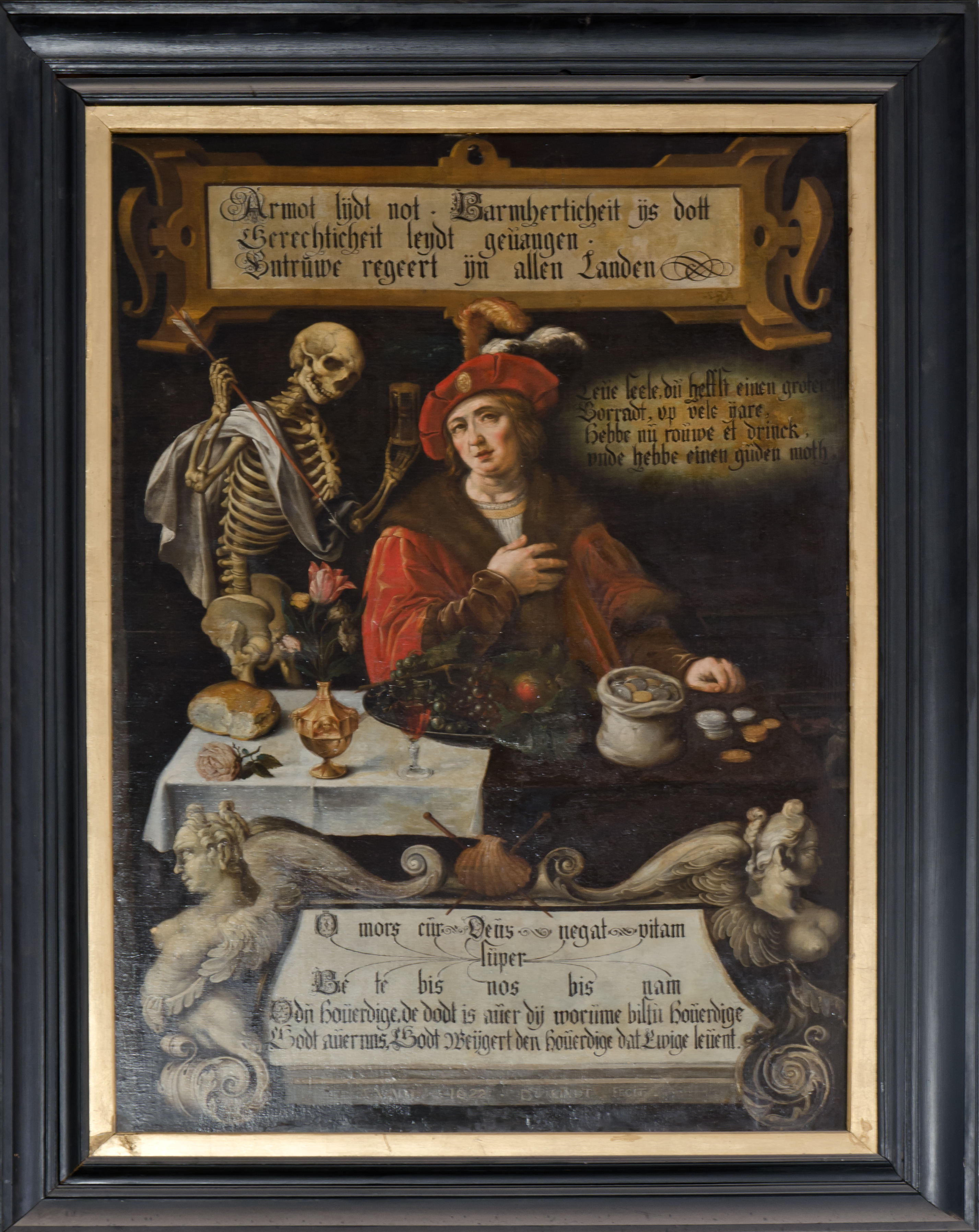
A skeleton stands beyond a seated man in fine clothes with food and coins before him.

“But God said to him, ‘You fool!'” – Luke 12:20

It hardly seems fair to call him a fool.
Call him a practical man,
call him far-seeing,
call him descendant of Joseph, I say.

What did he do when faced with a surplus?
He saved! Did the thing I’ve been told since a lad
I’m to do with the coins that remain.
When the rainy days comes, I’ve been told, they’ll be there.

In Egypt, the dreams of a monarch warned Joseph,
“Prepare when it’s fruitful for days when it’s not.”
And so I’ve been taught (if not followed so well),
and so I have urged when it’s my turn to tell.

What’s wrong the rich man? Why was he a fool?
He followed the ancient advice to the letter:
Built barns that would hold all a good year
produced; saved grain for the needs a bad year would demand.

Is that what he did? No, he said, “I’ll make merry
with all of my goods in my barns and my hand.
I might give a pink slip to all of my workers.
They’ve done all I want, and I want to be done.”

Whose will the grain be? And whose all the wealth
when the soul and the body divorce in the night?
Not his. He has gone where the soul is the seed,
and gold is the spirit which he had ignored.

How easy, how likely, to play such a fool,
to mistake greed for prudence and pride
for precaution. How often, I wonder, have I
played the fool, for much lesser riches

And hubris as great? You know, Storyteller,
and though you disclaim it, I know that
you judge with a knowledge I lack.
Though I’ve no grain for barns,

And no fruit for freezers, I’ll spend
what I have for the people around me:
a poem, a song, or even a sermon.
May God bless these gifts. May God bless us all.

A poem/prayer based on Luke 12:13-21, the Revised Common Lectionary Gospel Reading for Year C, Proper 13 (18).

The image is Der reiche Mann und der Tod (The Rich Man and Death) by David Kindt (1622) – CC BY-SA 3.0, https://commons.wikimedia.org/w/index.php?curid=22079990.

I really like this painting. Subtle it’s not.

In the Night

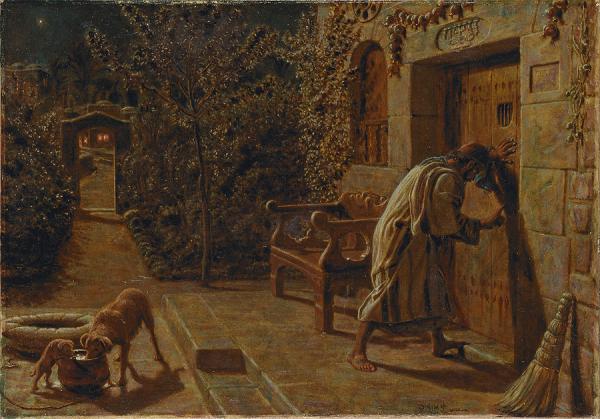
“[Jesus said,] ‘I tell you, even though he will not get up and give him anything out of friendship, at least because of his persistence he will get up and give him whatever he needs.'” – Luke 11:8

I could wish that Israel had been so considerate
of its poor, instead of getting into bed
with riches and with greed. I’d think that hard-edged coins
would break their sleep, but sleep they did until they slept no more.

I could wish that Hosea had been so considerate
of his wife and children. Yes, It was a metaphor of power,
but I’d think the tears of hard-said words and names
would break their sleep, but sleep they did.

I could wish the neighbor heard his friend’s distress
and rose with empathetic energy to meet his need.
I guess the friend was fortunate that shouts and calls
would break their sleep, until they brought the bread and slept anew.

I could wish all these many things and more,
when wealthy men enrich themselves at the expense
of people who, deprived of healing balm, find death
would break their sleep, and carry them from this world’s cares.

While in the shadows Jesus watches, weeping.
While in the shadows God is raging, tears a-stream
to know that in these broken covenants even the rich
will wake from sleep to find their fortunes blazing.

While in the shadows God the Holy Spirit waits
for someone who will listen and embrace
the wisdom that resounds of old: to give your neighbor care,
and wake from sleep to bright and joyful day.

A poem/prayer based on Hosea 1:2-10 and Luke 11:1-13, the Revised Common Lectionary First Reading and Gospel Reading for Year C, Proper 12 (17).

The image is The Importunate Neighbour by William Holman Hunt (1895) – http://www.ngv.vic.gov.au/collection/pub/itemDetail?artworkID=32843, Public Domain, https://commons.wikimedia.org/w/index.php?curid=10103482.

The Fading of Summer Fruit

“This is what the Lord GOD showed me: a basket of summer fruit…

“The time is surely coming, says the Lord GOD, when I will send a famine on the land, not a famine of bread or a thirst for water, but of hearing the words of the LORD.” – Amos 8:1, 11

Your summer fruit, O God
(and in these islands fruit of winter, fall, and spring),
is filled with flavor, brightly colored,
nourishing to body and to soul.

Your summer fruit, O God,
is not like fruit of human avarice,
which may be rich in flavor,
but when it grows from stems of greed

It rots much quicker in the heart.
It sickens not just those who eat,
but also those who see the way
to grow rapacious wealth

And plant their poisonous seeds as well.
So we have seen, and now we see,
your warning via Amos, God,
against the ones who grow their fruit

by trampling on the needy,
ravishing the poor,
rushing to sell short
and place their thumbs upon the scales.

The poor are sold for silver and
the needy are worth less than shoes.
E’en so the fruit of greed decays
and poisons all who breathe its stench.

A poem/prayer based on Amos 8:1-12, the Revised Common Lectionary First Reading for Year C, Proper 11 (16).

Photo by Alan Levine (cogdogblog) – https://www.flickr.com/photos/cogdog/5073842069/, CC BY 2.0, https://commons.wikimedia.org/w/index.php?curid=57008876.

Caption from the original photo

@dailyshoot: 2010/10/11: Let’s start out the new week by making a photo with a red point of interest. Make sure your subject really stands out. #ds330

Don’t get close to my rotten tomatoes. After all the effort to grow them, being sick, I’ve not had time or energy to cook with them. These two went to the compost, the basket to the trash, and the remaining toms to a neighbor who can use them right away.

Myna Distraction

June 29, 2025

Galatians 5:1, 13-25
Luke 9:51-62

It had been hot and dry. Most creatures, including people, don’t get too surprised by warm weather in East Hawai’i. We get upset if the trade winds subside for very long, but let’s face it. We’re in the tropics. Hot weather comes with that.

Dry, however, was strange and uncomfortable. The grasses didn’t grow as well, so there weren’t as many seeds around. Bugs went looking in different places for their meals, so they were harder to find. As for the worms, well. They dug deeper into the soil, making it harder and harder for the birds to find a meal.

Some of the birds started getting anxious.

“We have to do something,” announced a myna as they hopped around a lawn, picking over the picked-over grasses for a seed somebody had missed, or a careless spider, or a worm that had, for no reason anyone could think of, taken a wrong turn and emerged on the surface.

“Yes, we do!” agreed the other mynas.

“What do we do?” asked one after it became clear that the first myna had said all he was going to say.

“We need to find more worms,” said one.

“We need to find more seeds,” said another.

“We need to keep the worms and seeds we find for ourselves,” said a third. And now, everybody listened.

“Yes!” said another myna. “We’ll drive other birds away and we’ll have all the food.”

“Great!” said yet another myna. “And who will do the driving away?”

“The biggest ones,” said a smaller myna. “They’ll scare the finches away.”

“And while we’re driving them away,” said a big myna, “what will you smaller ones be doing?”

“Waiting for you,” said a smaller myna innocently.

“Yeah, right,” said a big myna, and suddenly the whole flock erupted into an argument about who would guard, and who would eat, and who would wait to eat.

While they argued, a pair of house sparrows landed on the lawn nearby and started hunting for seeds and bugs. They didn’t find a lot, but they did find some.

“What are the mynas arguing about?” said one of the sparrows to the other.

“Who gets to eat,” said the second.

“Why?” asked the first. “While they’re arguing nobody gets to eat.”

“I don’t know,” said the second. “It seems like a distraction to me.”

“That’s what it is,” said the first. “It’s a myna distraction.”

The two of them ate together for a while, then flew off to another place, while the myna distraction went on.

by Eric Anderson

Watch the Recorded Story

I write these stories in advance, but I tell them from memory and with a certain amount of improvisation, so what you have just read will not match how I told it on Sunday.

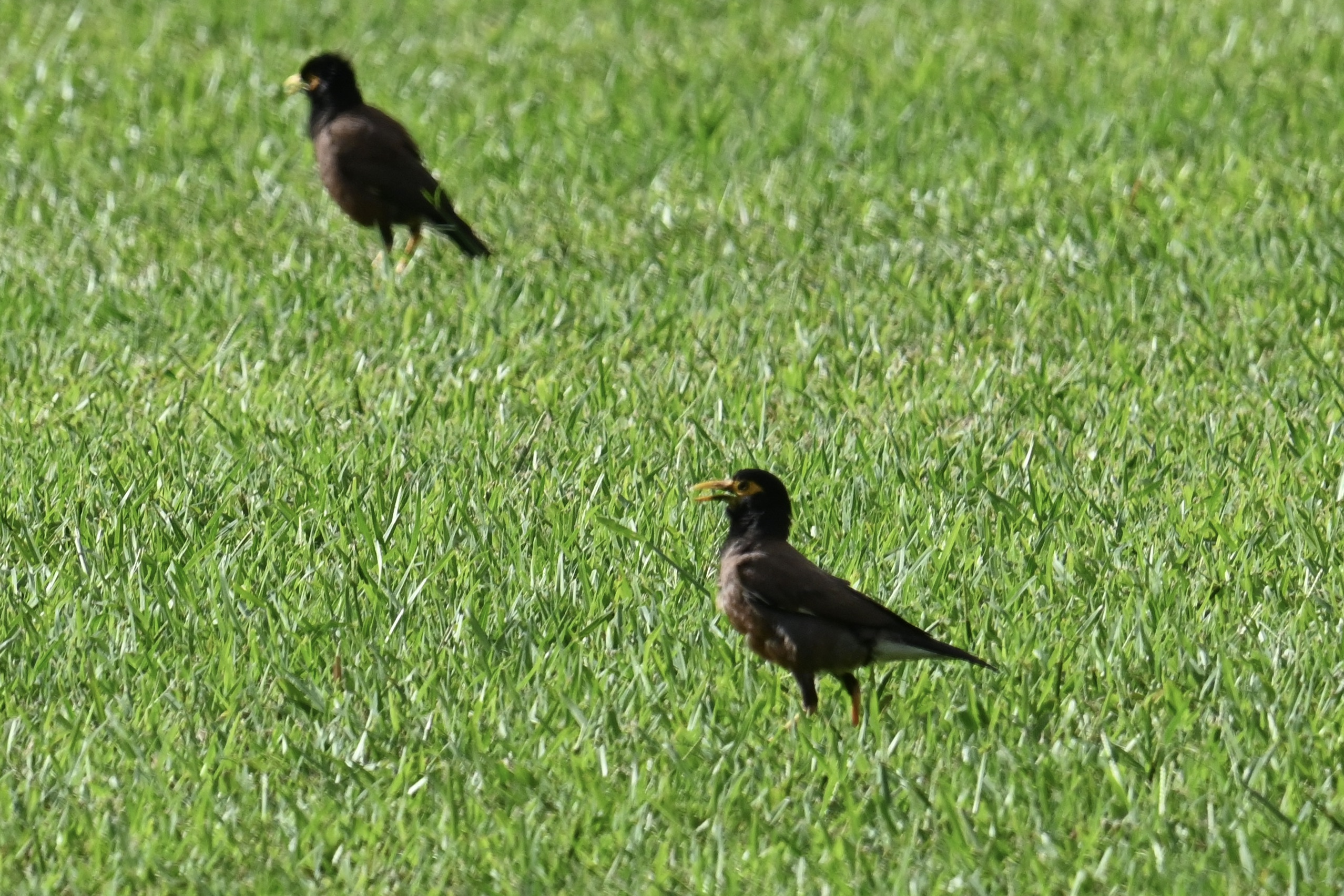
Photo of two common mynas by Eric Anderson.

Story: The ‘Amakihi Hoard

June 1, 2025

Acts 16:16-34
Revelation 22:12-14, 16-17, 20-21

He was young, which may explain why he tried something that an older bird would know didn’t work. He was also pretty anxious about things, which explains more. In the end, though, it was his tutu who saw the biggest reason, which was…

I’m getting ahead of myself. Perhaps I should start the story at the beginning.

The ‘amakihi was young. And, as I mentioned, he could get anxious about things. If it was sunny, he worried about whether rain would come again. If it was raining, he worried about whether it would ever stop. If he was surrounded by other birds, he worried about whether it would ever be quiet with all these birds singing. If he was by himself, he worried that he’d be lonely forever.

Mostly, though, he worried about being hungry.

As a young and growing bird, he’d driven his parents to distraction by his constant calls for food. Some birds, and people for that matter, eat when they’re hungry. He’d call for food when he was full, because he knew he’d be hungry again soon. That can be pretty unhealthy for people and for birds, but frankly his parents couldn’t keep up with his demands, so they fed him more or less the right amount of food.

When he left the nest, he kept it up. If he was hungry, he’d head for the nearest flower, snap up the bugs, and drink the nectar. If he was still hungry, it was time for the next flower and the next bug. And if he wasn’t hungry, he’d still move on to the next flower.

What kept him from getting sick from overeating is that he had to do enough flying between trees that he couldn’t quite eat more than was good for him. Not quite.

One day, though, he was watching some bugs instead of trying to eat them. They were bees in their hive, and they were gathering nectar and storing it away. Suddenly it struck him.

“I can gather flowers and store them away like the bees,” he said. “Then I’ll never have to worry about finding flowers, and I’ll never be hungry.”

Off he flew.

He started snipping blossoms from the trees: Ohi’a, Mamane, anything he could find. He tucked them into an abandoned nest he found, then flew out in search again. If there were other birds around, he’d chase them off first so he could get the flowers. He had gotten rather big with eating, so other birds tended to fly away. The forest filled with squawking, protesting birds as he flew about with flowers in his beak.

He’d made quite a few trips and the forest was in an uproar when he found his grandmother perched next to his store of flowers.

“Aloha, Tutu,” he told her.

“Aloha, grandson,” she said to him. “What are you doing?”

“Storing flowers,” he said, “so I’ll never be hungry.”

“Really?” she said. “Who gave you that idea?”

“The bees,” he said. “They store nectar and pollen and they’re never hungry.”

“Grandson,” said Tutu, “would you look carefully at your flowers?”

For the first time since he started collecting them, he looked. No longer connected to their branches, they’d wilted and faded. Their nectar had dried and disappeared. A few bugs were crawling on them, of course, but even the bugs preferred the liquid nectar of a living flower.

“Why did you do that?” she asked. “Did you really think it would work?”

“I thought that I needed food for myself,” said her grandson, “that the other birds couldn’t take away from me.”

“The forest is for everyone,” said Tutu, “for every one of us. We’re not bees, who have ways of storing things, and they share what they store with the entire hive. We are forest birds. We don’t hoard. We don’t keep things away from others, not from ‘amakihi, not from ‘apapane, not from i’iwi. We share.”

She looked at him closely. “What do we do, grandson?”

“We share, Tutu.”

“Good. Let’s go have lunch.”

They left the sorry hoard behind for the living flowers they shared with all the creatures of the forest.

by Eric Anderson

Watch the Recorded Story

I write these stories in full ahead of time, but I tell them from memory (and inspiration).

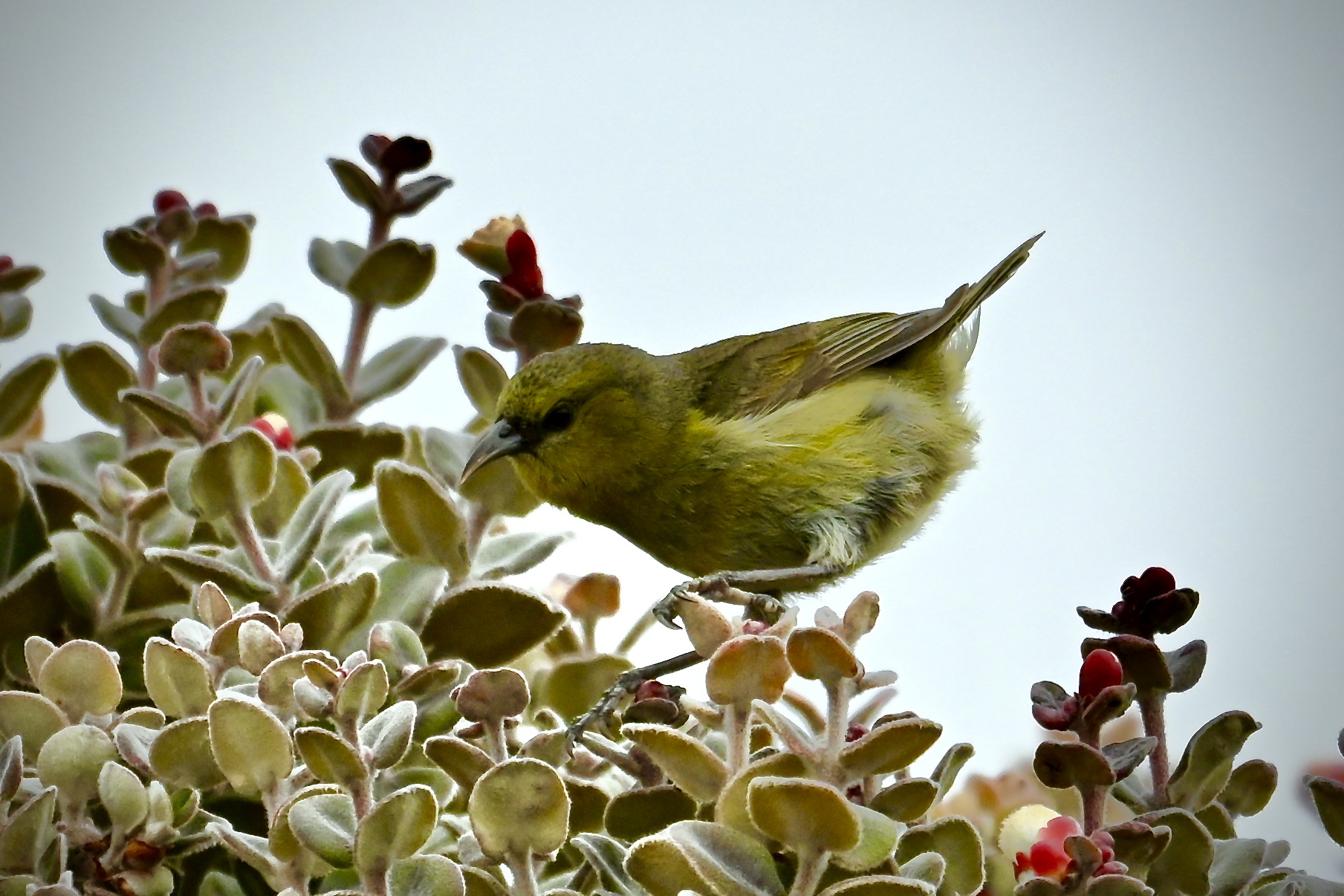
Photo of an ‘amakihi by Eric Anderson.

Romance

“All who believed were together and had all things in common; they would sell their possessions and goods and distribute the proceeds to all, as any had need.” – Acts 2:44-45

Bring me your time and a rose, apostles,
gathered in prayer; gathered to share.
Bring me your time and a rose-colored glass,
to which we’ll aspire and fail.

Bring me the needs that were met, apostles,
the poor lifted up, assembled to sup.
Bring me the gifts of the rich, apostles,
become poor in the blood of the cup.

Bring me the change – for it came, apostles.
The rich held their wealth despite failure of stealth.
Bring me the gifts for the saints, apostles,
they gave for Jerusalem’s health.

The rose-colored glass will not hide, apostles,
Saphira’s collapse, Ananias’ grim lapse.
Nor the laud that is given to greed, apostles,
however much time will elapse.

Bring me your time and a rose, apostles,
gathered in prayer; gathered to share.
Bring me your time and a rose-colored glass,
to which we’ll aspire and fail.

A poem/prayer based on Acts 2:42-47 (with some reference to Acts 5:1-11), the Revised Common Lectionary First Reading for Year A, Fourth Sunday of Easter.

The image is The Distribution of Alms and the Death of Ananias by Masaccio (ca. 1426-1427), a fresco in the Brancacci Chapel, Florence, Italy – Web Gallery of Art:   Image  Info about artwork, Public Domain, https://commons.wikimedia.org/w/index.php?curid=15463099.

Misunderstood?

“Someone in the crowd said to him, ‘Teacher, tell my brother to divide the family inheritance with me.’ But he said to him, ‘Friend, who set me to be a judge or arbitrator over you?'” – Luke 12:13-14

Greedy? Never! Jesus, you misunderstand!
Of course I come to you for aid
in seeking justice for myself
(and for my sisters, too, of course, which goes
without my even mentioning their needs to you).
You are a Teacher, you a specialist in Law,
in virtue, and in righteousness.
Who better to give me advice, or (better)
act for me in dealing with my brother, or
declaring in my favor (that would be the best).

But greedy? No! Oh, Jesus, you are just so wrong.
It’s just the justice of the thing. I did as much
(and more, much more) than he, my older brother, did.
We both were active on the land, but he, it must be said,
just doesn’t have the feel for farming, doesn’t have
the skill to know which crops to plant and plants to tend.
Left solely in his hands, our patrimony withers on the vine.
(Why yes, there’s grapes upon the land. How did you know?)

And – quietly into your ear, O Teacher of the Law,
he hasn’t really been the best of men. He stays up late.
Well, I do, too, but I still rise before the dawn and he
comes stumbling out just as the sunbeams gleam.
It’s not a major difference, sure, but which of us
should have the double portion, would you say?
The one born first, or me, the one who’s first to greet the day?

So Jesus, I don’t need a lecture on the sin of greed,
nor echoes of another ancient Teacher (“the things you have
prepared, whose will they be?”) when I’m arguing
quite clearly and with concrete proofs
my brother, though he’s mostly fine, is not
equipped to fairly manage this estate, and I,
in humble duty, must step forward, and
in justice, ask you to decide for me.

What are you saying now?

Didn’t I tell you I do not need to hear
a story about greed?

A poem/prayer based on Luke 12:13-21, the Revised Common Lectionary Gospel Reading for Year C, Proper 13 (18).

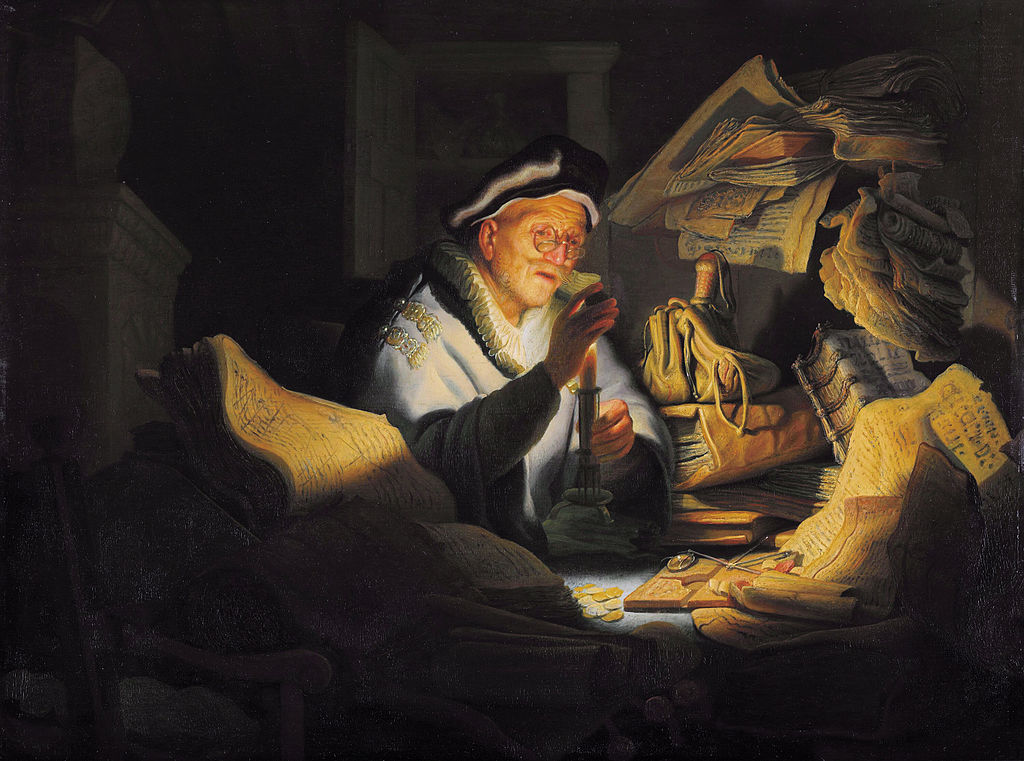
The image is The Parable of the Rich Fool by Rembrandt (1627) – http://www.uni-leipzig.de : Home : Info : Pic, Public Domain, https://commons.wikimedia.org/w/index.php?curid=5812686.

Devoured

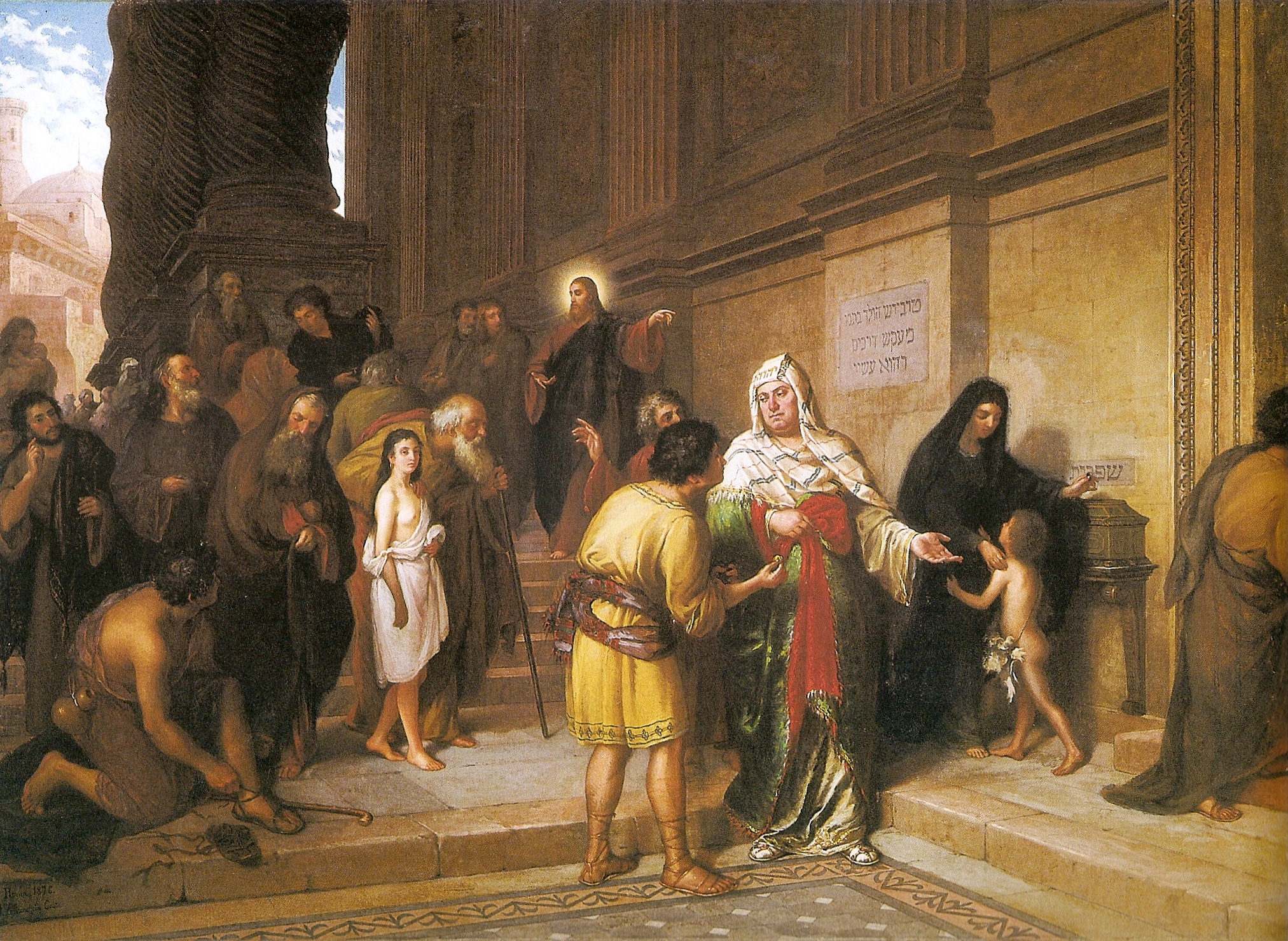
Note that both Jesus and the widow are in the background of the painting. The foreground features a religious official who resembles those Jesus described as liking to walk around in long robes and be greeted with respect.

“They devour widows’ houses…” – Mark 12:40a

“…But she out of her poverty has put in everything she had, all she had to live on.” – Mark 12:44b

So what was your expression, Jesus,
when you called your friends to see
the widow whose last coins had rattled down
into the treasury collection?

Did you watch with soft, approving eyes,
to see such faith, such generosity,
such confidence of God’s aloha
to relieve the crisis now at hand?

Or did your brow bear furrows
of concern, of worry, for her poverty
had now reached destitution, and
her final meal had clinked into the box?

Or did you grind your teeth to witness on
the Temple grounds the very thing
of which you’d warned? For here
a widow’s house had been consumed.

Oh, Jesus! Have you any teeth remaining in
your jaws? Or do you lubricate
their grinding with your tears? For still
the widows bring their homes… and we devour.

A poem/prayer based on Mark 12:38-44, the Revised Common Lectionary Gospel Reading for Year B, Proper 27 (32).

The image is O óbolo da viúva (The Widow’s Mite) by João Zeferino da Costa (1876) – Scan: MNBA/Banco Santos catalogue, São Paulo, 2002., Public Domain, https://commons.wikimedia.org/w/index.php?curid=15742896.

Holy Week 2020: Monday

It’s all right, Jesus.
You don’t have to look.
We know what’s in the Temple –
our temples, not the one
in Jerusalem –
just the same thing you saw
that overwhelmed your soul
with rage and summoned you
to drive the money changers out.

We know what’s in the temple.
The demons that will place
economy ahead of life.
The devils that will hoard
the PPEs until they get
a higher price.
The monsters who once profited
from home foreclosures now
have charge of the nation’s wealth.

You warned us, Jesus, and we…
We have learned nothing.
People will die for others’ wealth.
People will die for others’ hubris.
People will die for others’ greed.
People will die for others’ faith,
a faith you long ago rejected.
People will die, and die, and die.
For God’s sake, Jesus, drive them all away.

The image is Christ Driving the Money-Changers from the Temple by Gaetano Previati – https://www.dorotheum.com/en/auctions/current-auctions/kataloge/list-lots-detail/auktion/12991-19th-century-paintings-and-watercolours/lotID/146/lot/2337326-gaetano-previati.html, Public Domain, https://commons.wikimedia.org/w/index.php?curid=65830821.

These were my thoughts last year… Plus ca change, plus ca meme chose…