“[Jesus said,] ‘Would you not rather say to him, “Prepare supper for me; put on your apron and serve me while I eat and drink; later you may eat and drink”?'” – Luke 17:8
Stand at your watchpost, Holy One, and see, if I have brought your sustenance to table where the hungry you have called are blessed by word, and heart, and bread.
Stand at your watchpost, by the door, to see if any leave with bellies pinched, with faces sad, with spirits quenched. See if your banquet has been served.
Stand at your watchpost, Jesus, to observe if I have nurtured that so precious seed of faith into a shelter for the birds and beasts and people. O Jesus, have I grown my faith in you?
A poem/prayer based on Luke 17:5-10, the Revised Common Lectionary Gospel Reading for Year C, Proper 22 (27), with an additional nod to Habakkuk 1:1-4, 2:1-4.
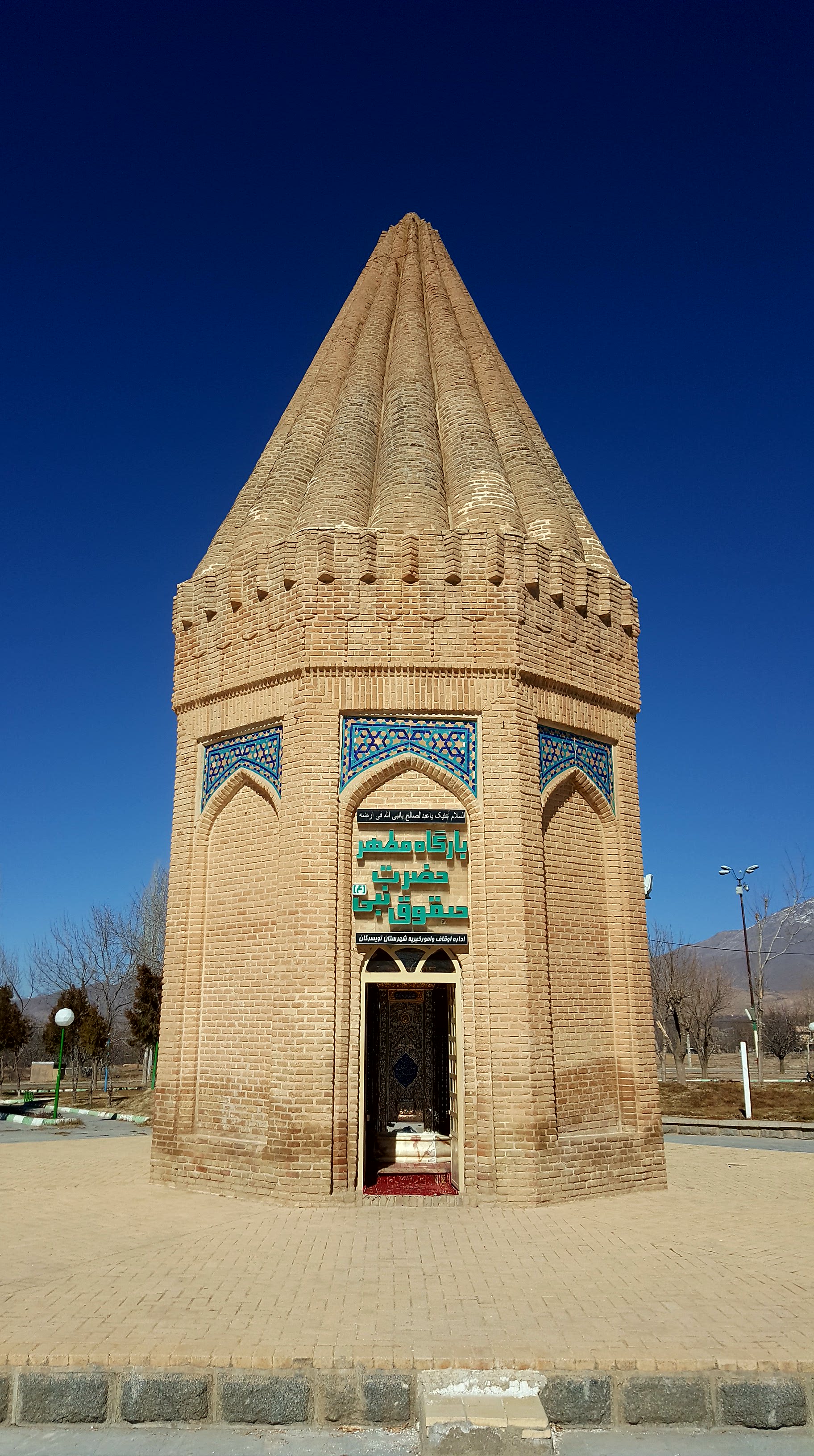
The image is a photo of the shrine at the Tomb of Habakkuk in Tuyserkan, Iran. Photo by hamid3 – Own work, CC BY 4.0, https://commons.wikimedia.org/w/index.php?curid=99699676. The tower may date to the 11th or 12th centuries, an architect’s attempt to render Habakkuk’s vision of the watchtower.
January 15, 2025 (for a meeting of the Hawai’i Conference Committee on Ministry)
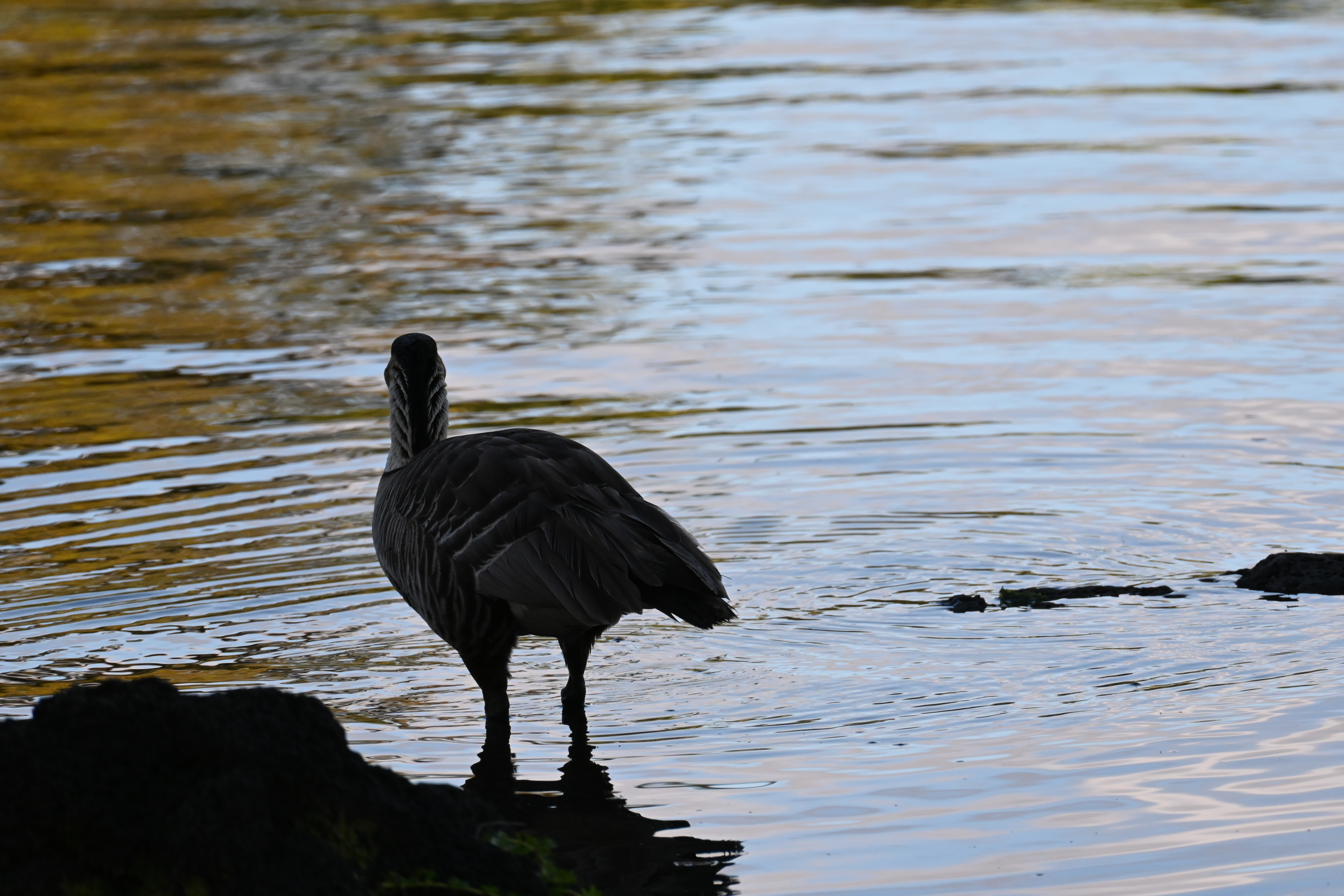
Nene School was in session. There was a new teacher that year, but he was getting help from a more experienced nene. She had been his teacher some years before. And because he was new, he had a relatively small class. Just three students.
Two of them were siblings, a brother and sister. The third was immediately interested in Food Identification part of the curriculum – Nene School basically consists of Flight and Food. The new teacher thought he’d be a good student, but mostly he was hungry. Time after time the teacher would have to rush over as the student reached out for yet another inedible item.
It kept him hopping.
He hoped that the brother and sister would be good flight students, since they’d already learned to fly together. His hopes were dashed, however, the first time they took off for basic formation flying. Honks of “You’re took close!” and “Get away from me!” resounded over the rocks and forest. He could barely be heard over them to try to coach them into position. Eventually there was a collision, and the two bruised siblings settled down to the ground to continue their recriminations.
The teacher could feel his teacher’s eyes on the back of his head, watching him as his class turned into a full-fledged disaster – that’s a disaster with feathers on. Or fluttering down from the sky because they didn’t stay on.
This went on for a week, and things didn’t get better. The hungry young nene never seemed to listen or retain what he’d been told. The siblings fought on the ground, climbing, cruising, descending, and on the ground again. The watching teacher said nothing. The young teacher got desperate.
As the class ended with more flying feathers, more angry honking, and a certain amount of vomit from an ill-considered berry, he burst out in fury: “You are the worst nene I’ve ever met! You’ll never learn! I’m sorry you were ever hatched!”
Shocked, the students flew away.
He turned to find his teacher standing right behind him. He couldn’t read the look in her eyes. “What?” he challenged.
“I’m disappointed,” she said.
“I’m disappointed in them, too,” he growled.
“I’m disappointed in you,” she said.
“What?”
“Haven’t you noticed that the siblings have been carefully listening to every word you’ve said about finding food? Haven’t you noticed that they never ask you twice about it? That they’ve learned so much in just a week?”
He hadn’t noticed.
“Haven’t you noticed that the third one sticks right by you in flight? He was awkward the first day, but he’s been right off your wingtip ever since. Haven’t you noticed?”
He hadn’t noticed.
“When they come back tomorrow, what are you going to say?” she asked, and then left him to consider.
The next morning, the three students stood anxiously before their teacher. They almost hadn’t come back. The older nene had persuaded them to come.
“I’m very sorry for what I said yesterday,” he said. “I had no business saying any of that. You’re here to learn, and I haven’t been teaching you very well.”
“Youngster,” he said to the hungry student, “I want you to keep an eye on the brother and sister here. They’ve done really well at learning what’s good to eat and what’s not. You can trust what they do.”
“And you two,” he said to the siblings, “can learn a lot from this youngster here. He’s been keeping good formation on me since the second day. Watch him. He’ll show you what to do.”
I won’t tell you that things went absolutely smoothly after that – there were still ruffled feathers and feelings, and the hungry student only gradually gave up whatever looked good at the time – but I will say that the students learned. All the students. One of whom was the teacher.
by Eric Anderson
I wrote this story as the opening devotional for a meeting of the Hawai’i Conference UCC Committee on Ministry Chairs.
The ‘amakihi was concerned. He was about 15 months old, feeling something like an adult – I know that’s young for a human being but he was an ‘amakihi, and they grow faster. Come to think of it, they haven’t got quite as much growing to do. He could fly. He could find food. He could sing. All in all, he had a pretty good ‘amakihi life.
He didn’t want it to change.
His feathering was still that of a younger ‘amakihi, which is basically a medium green with some hints of yellow. Some birds might think it dull – the bright red i’iwi might say so – but he rather liked it. It matched the leaves of an ohi’a tree rather nicely. Sometimes he thought of that as safety from circling i’os. Sometimes he thought of it as a fashion statement. Anyway, he liked his feathers, their color, and their shapes.
He didn’t want it to change.
But… it was starting to change and he knew it.
Already he’d had a couple of his big wing feathers fall out and grow back, and more were coming. He’d been through feather molting before, and he knew what was coming. The wing feathers would go and grow, and then the smaller feathers on his head and chest. Even with the first wing feathers he could see the change in color. They were less green, more yellow, and he knew that when the new feathers came on his chest they’d be bright yellow in the sun.
And he didn’t want it to change.
He couldn’t think of a single thing to do about it, so he went to his grandmother. “Tutu,” he said, “what do I do? My color is changing and I don’t want it to!”
“What’s wrong with it?” she asked.
“Nothing, but I like how I am now. I don’t want to change.”
“You don’t want to change?” she asked, and when he said no, she took to her wings and called, “Follow me!”
The first thing they saw was a butterfly flitting through the air. When they landed, there was a caterpillar on the branch. “One of these,” said Tutu, “made a big change to become one of those,” and she pointed her beak at the butterfly. “Do you think it was worth it?”
“To fly? Yes, I do,” said her grandson, and flew off after Tutu again.
They took a look at an ‘amakihi nest, where two young birds had hatched, grown, and taken their first flights over the previous several weeks. They were about ready to leave for a life of their own. “Did you want to stay in the nest?” asked Tutu.
“Of course not,” he said.
“But that was a change.”
“I suppose it was,” he said.
“Life is filled with change,” said Tutu. “Some are big, like the caterpillar that becomes a butterfly, or the ‘amakihi that leaves the nest. Some are smaller, like the bright yellow feathers that are coming to you. Perhaps you’ll become a parent, and that’s a big change, and perhaps there will be a lava flow in our forest, and that’s a big change.”
“So what do I do?” he asked.
“Make the best new you as you grow and change,” said Tutu gently. “Find delight in new things where you can, and make delight when the new things come hard. You’ll always be a new you. Be a loving and caring new you.”
by Eric Anderson
Watch the Recorded Story
I tell my Sunday morning stories from memory of what I’ve written. Memory and what’s written… rarely match.
Photo of an ‘amakihi in mature feathering by Bettina Arrigoni – Hawaii Amakihi (male) | Palilia Discovery Trail | Mauna Kea | Big Island | HI|2017-02-09|12-21-50.jpg, CC BY 2.0, https://commons.wikimedia.org/w/index.php?curid=74674240.
Last week’s story was about a kolea who came back from a summer in Alaska to find Pohoiki completely changed by lava. It was a hard thing to accept that this is how an island grows. He saw a landscape that had been green and growing transformed into one that was rocky and barren.
He might have taken more comfort if he’d talked with a tree – though I’m not sure whether even a kolea really knows how to listen to a tree.
The trees whisper on the wind. They let their soft voices swirl about on the breeze like a sigh. A lot of what they say is simply, “Do you remember?” and “Yes, we remember,” and the memories float through the forest.
Higher up Kilauea, surrounding the crater we call Kilauea Iki, there are a lot of trees and they have been watching that crater for a long time. “Do you remember?” they sigh, and yes: they remember. They remember when it sloped down into a notch. Trees and bushes sprouted along the sides and the bottom. They remember when lava fountained over a thousand feet into the air and poured down into valley. They remember watching the lava pooling and the lava pool rising. They remember that when the lava stopped fountaining and flowing, the valley floor was four hundred feet higher than it had been. They remember watching parts of the flat surface crack and tilt as the liquid rock cooled to solid.
“Do you remember?” they sigh. Yes, they remember.
They remember when it was just black rock, steaming in the rain, baking in the sun.
They remember when ohi’a seeds fell upon that hot rock and did nothing. They remember watching seeds landing on the rock in a small crack and doing their level best to sprout and grow, but even the pushing of their roots could only find a couple grains of sand. They remember when the first ohi’a landed in a spot where cracking and rain had created enough – just enough – small bits that a root could take hold and begin collecting rainwater. They remember when the first of the little ohi’a plants – so small, those plants – they remember when the first of them had enough soil and water and sunshine and strength to form flowers and set its own seeds to scatter.
“Do you remember?” they sigh. Yes, they remember, and that includes the small trees, some no more than inches high, that you’ll find one here, one there, on the floor of Kilauea Iki.
The kolea, I’m afraid, didn’t think to ask the trees, and he was in the wrong place to ask them down at Pohoiki if he’d thought of it, and he may not have understood what they said to him if he’d asked.
But the trees along the steep sides of Kilauea Iki remember, and they sigh their memories just the same way they scatter their seeds: cast out upon the blowing wind.
“Do you remember?” they ask, and they answer, “Yes, we remember.”
On the flat black surface of the Kilauea Iki crater, roots crack the rock into soil, shoots stand ever higher above the stony surface, ohi’a blossoms flutter crimson in the wind, and they share their seeds and their memories upon the blowing wind.
by Eric Anderson
Watch the Recorded Story
The story above was told from memory of this prepared manuscript. In my opinion, I told it better than I wrote it this time.
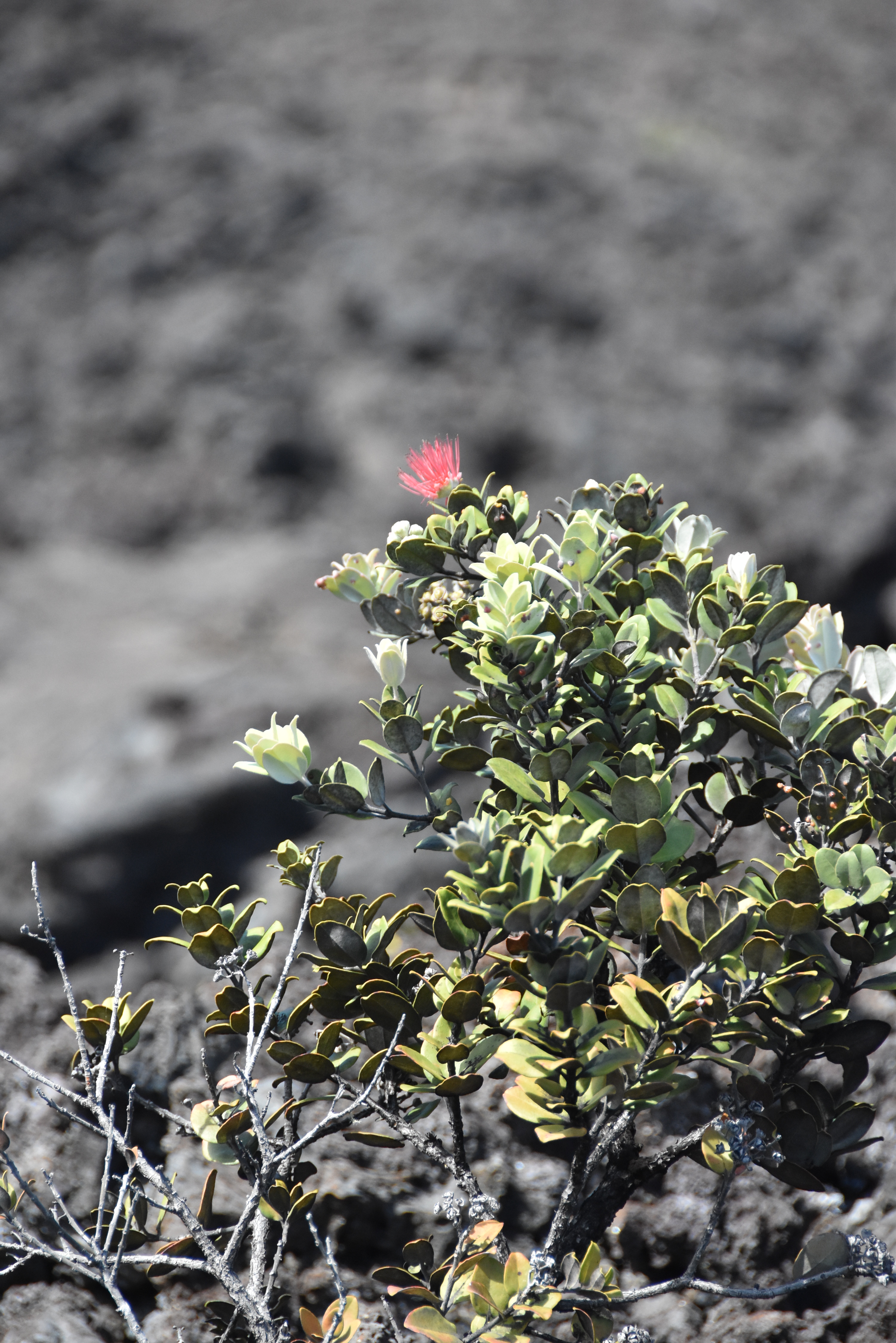
Photo of an ohi’a blossom in the Kilauea Iki crater by Eric Anderson, 2016. The Kilauea Iki eruption took place in 1959.
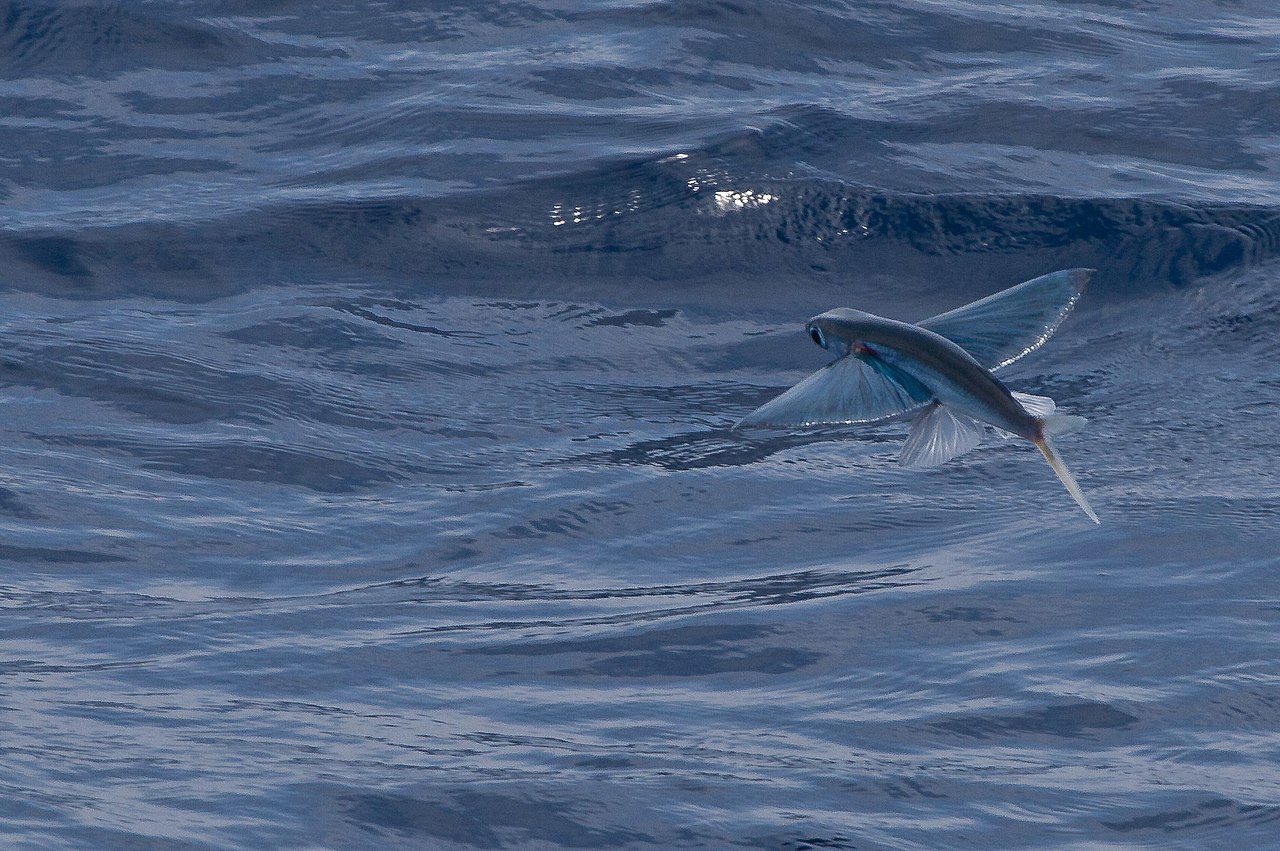
The mālolo is known in English as the flying fish. They don’t really fly, although I must admit that they fly better than, say, I do. They can get themselves moving through the water at near forty miles an hour, which is faster than you should be driving through the streets of Hilo. Then they spread their forward fins and glide above the water. They can stay in the air for about a quarter of a mile, which is about the distance across Liliuokalani Gardens.
I know I can’t stay in the air that far.
The mālolo didn’t always fly that far, or fly at all, however. They swam like fish do, and they swam in big groups, or schools, and they could swim really fast. That allowed them to get from one source of food to the next, and it also allowed them to swim away from fish that wanted to make them into food.
But there was a day when swimming fast just didn’t seem like it would be enough. Some great big ‘ahi had found a school of mālolo, and they were very hungry great big ‘ahi. Soon the school was scattered as the big fish charged through it.
One mālolo found himself pursued by an ‘ahi who was not only big and hungry but also very fast. The mālolo churned his tail and paddled his fore fins and he could feel the ‘ahi’s teeth getting closer and closer. A panicked curve of his fins brought him closer to the surface. The next thing he knew, he’d actually come right out of the water into the air and splashed down again. It confused the ‘ahi for a moment, so the mālolo put on as much speed as he could and spread his forward fins to curve him toward the surface.
This time when he emerged above the water he started to glide along with air streaming beneath those great fins. He held them stiff and kept on above the ocean surface, hoping the ‘ahi wasn’t following right beneath him. He stayed there as long as he could before he slowed and slid into the water once more.
The ‘ahi had turned aside. Perhaps it hadn’t seen him above the surface. Perhaps it had just thought he made a sharp turn in its confusion. It didn’t matter. It went elsewhere.
The mālolo went looking for his friends and family. The school was re-gathering. Some of them weren’t happy.
“What did you do?” they demanded. “Did you go above the water?”
“Well, yes,” he said. “I didn’t mean to.”
“We don’t go above the water,” some of them said. “We’ll die.”
“With the ‘ahi right behind me, I’d have died if I stayed in the water,” said the mālolo.
“How do you explain yourself?” the asked in the cold tones of judgement.
“I really can’t explain it,” said the mālolo, “except to say that it worked.”
I can’t say that the other mālolo took up gliding right away. They didn’t. Some of that generation never did. Others tried it but didn’t do it very well, and they ended up back in the water right in front of hungry predators. But each season more and more mālolo took up that glide through the air, for no other reason than… it worked.
“The earth produces of itself, first the stalk, then the head, then the full grain in the head.” – Mark 4:28
I am the seed, cradled in the loving embrace of God. I am the seed, held in the richness of mercy. I am the seed, surrounded by blessings. I am the seed, cracking my shell to grow.
I am the stalk, stretching toward the heavens. I am the stalk, nourished by my roots below. I am the stalk, proudly waving in the wind. I am the stalk, upheld by the ground divine.
I am the head, making space for the seeds. I am the head, barely aware of the soil that feeds me. I am the head, dancing among the grasses. I am the head, confident of my own grace.
I am the grain, ripe and rich and precious. I am the grain, and I have no memory of the Earth. I am the grain, the fruit of my own growing. I am the grain, flying out upon the wind.
I am the seed, fallen now to the dust. I am the seed, fearing the burning sun. I am the seed, praying for soil to cover me… I am the seed, cradled in the loving embrace of God.
A poem/prayer based on Mark 4:26-34, the Revised Common Lectionary Gospel Reading for Year B, Proper 6 (11).
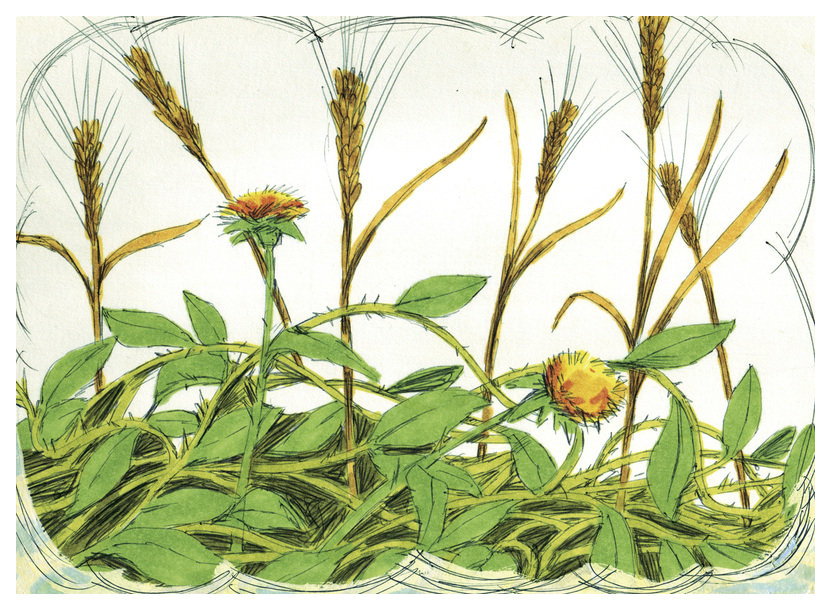
The image is by Jim Padgett, an illustration for Read’n Grow Picture Bible Illustrations (Biblical illustrations by Jim Padgett, courtesy of Sweet Publishing, Ft. Worth, TX, and Gospel Light, Ventura, CA. Copyright 1984); used by courtesy of Distant Shores Media/Sweet Publishing, CC BY-SA 3.0, https://commons.wikimedia.org/w/index.php?curid=18886335.

 ordainedgeek