2024: Birds and Music

After three years of living a very different existence, in the midst of and in the decline of a global pandemic, I found much of it rather exhausting. 2024 felt like playing “catch up” on projects and plans that had been deferred while managing COVID-19. Frankly, that wasn’t easy.

Church of the Holy Cross was able to give energy and focus to things we hadn’t. We resumed welcoming people into membership, and we launched an Open and Affirming committee. We continued to live stream worship via YouTube, since it serves both people who live at a distance and people who cannot attend worship. Video did not replace people in a sanctuary, and it won’t. It’s a different experience, and still worthwhile.

I completed my service as Chair of the Hawai’i Conference Council in June, presiding over an in-person ‘Aha Pae’aina for the first time. The meeting included a lengthy debate over an issue that continues to trouble the Conference: what financial support the Conference should give toward a position in one of the Associations. During my four years, the delegates chose both to fund it and not to fund it by narrow margins. I’m pretty sure that it will take more time and discussion before people consider it resolved.

To my sorrow, I found myself returning to the Chair of the Hawai’i Island Association Committee on Ministry, from which I’d stepped down when elected as Conference Council Chair. I returned to the Committee in May in great part because of the shortage of ordained ministers on Hawai’i Island. During the summer our Chair, the Rev. Larry Walter, died. The Association asked me to fill in, and then elected me to continue the work in the fall. The Committee was further marked by tragedy when one of the lay members, David Williams, died unexpectedly in October.

I continued to make a lot of music. I wrote eight songs in 2024, and all eight are available at 2024: The Songs. The instrument count remained the same (this year’s major expense category was cameras). I sang the spring and fall seasons of the Big Island Singers, which was both great fun and a huge amount of work. The fall concert included my solo performance of “Creature of this World,” which is now two years old. I continued the weekly “Song from Church of the Holy Cross” and the monthly Community Sings. I decided to reduce my solo Community Concerts, however, to four times a year. As the year closed, the musical community of east Hawai’i made its way to Church of the Holy Cross the sing Handel’s Messiah together.

I continued to write weekly LectionPrayers here on my blog, and also contributed to The Living Psalms project of the UCC. Preparing for worship I wrote liturgical materials, sermons, and stories. In the fall, I was welcomed onto the Board of the UCC Media Justice Ministry, my first appointment to a national ministry of the denomination.

I didn’t have a lot of visitors this year – and after welcoming my brother by getting a stomach bug and my cousin by having my water heater break I don’t blame them. Ben and Dee Anderson (no relation) came to Hawai’i in February and Ben did a dialogue sermon with me in church that Sunday.
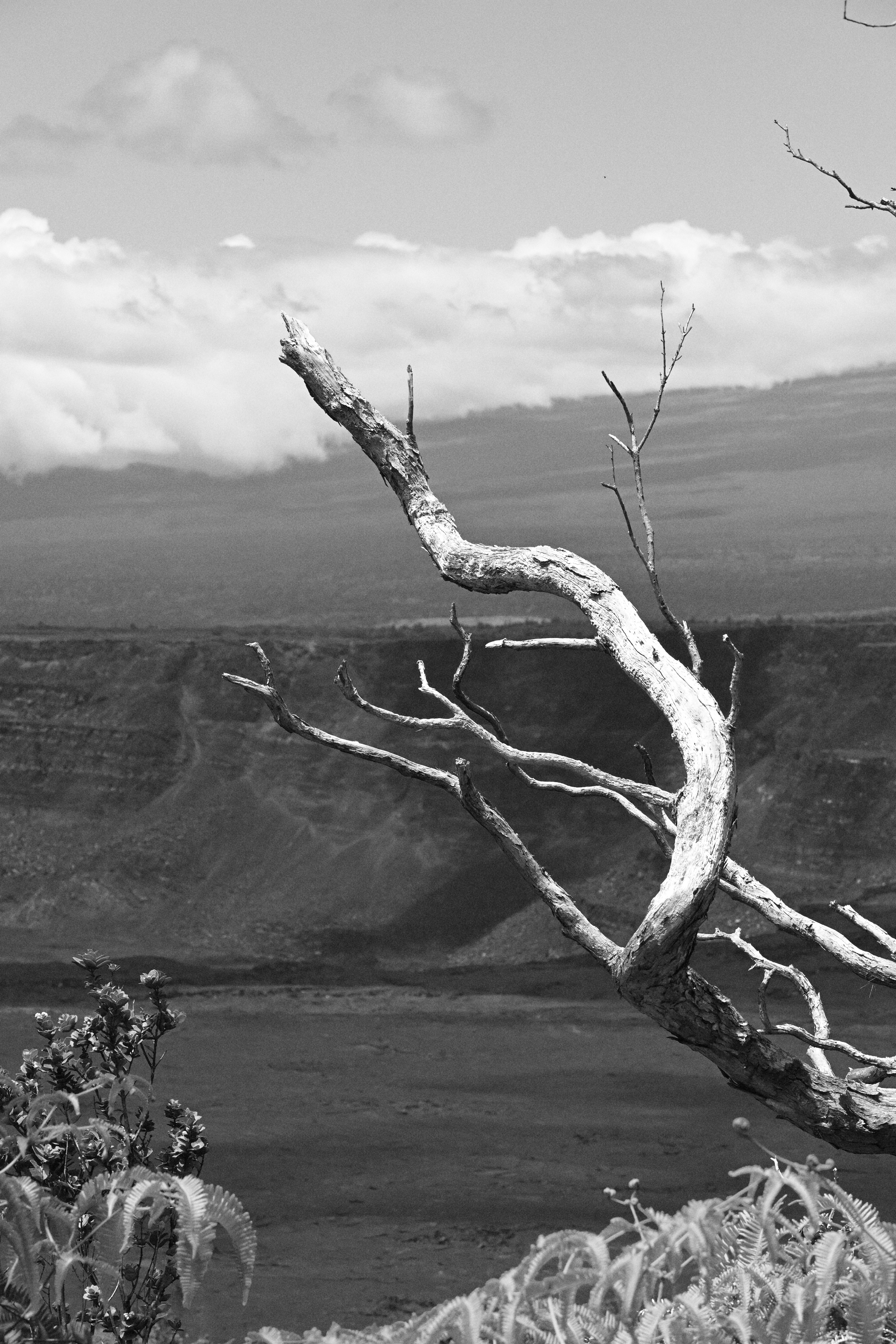
Kilauea summit, April 1, 2024.

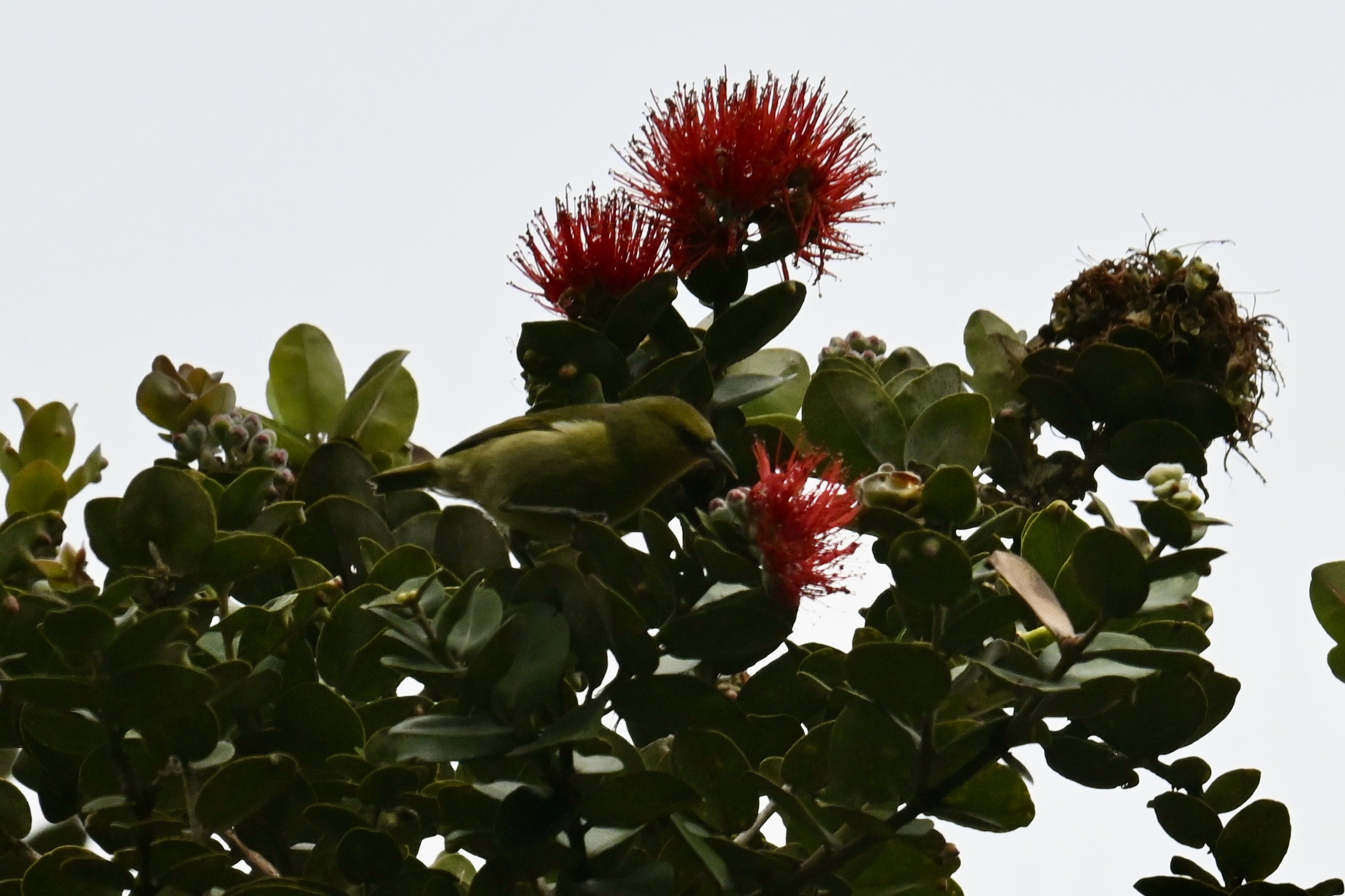
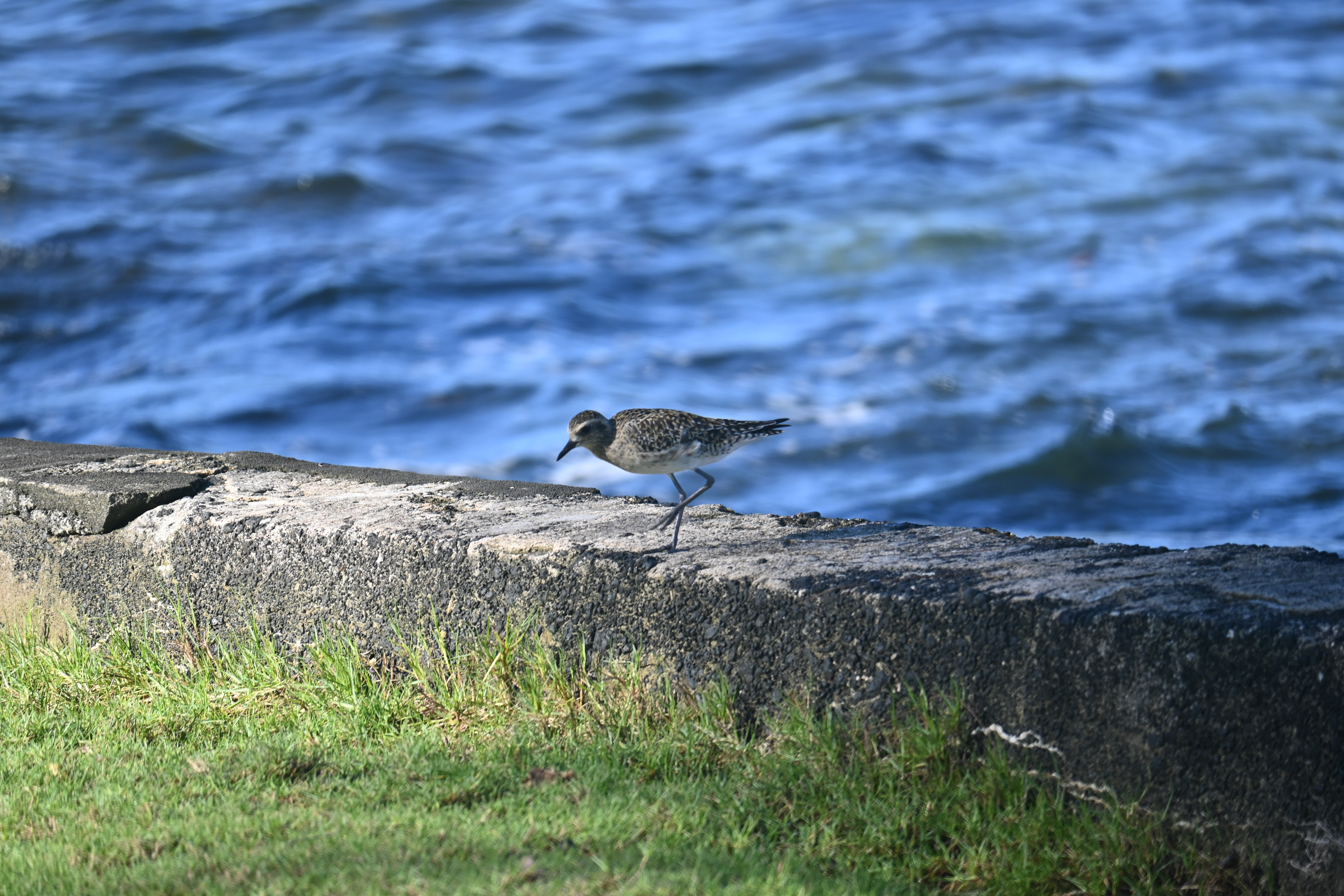
My primary outlet this year (and the most expensive) has been photography. I returned to many of my favorite subjects in 2024, including flowers, sunrises, the occasional sunset, landscapes, and natural shapes. A couple of my favorite images this year were black-and-white. I gave a lot of my attention, however, to birds. I can no longer claim I am not a birder.

Selected Favorite Birds 2024 - 1 of 59

I not only pointed my camera at birds, I made plans to go photograph them. Rather foolishly, I promised a friend I’d take a picture of a bird I hadn’t seen in eight years (the i’iwi, a distinctive Hawaiian honeycreeper with a distinctive long curved orange beak). I got a photo, and I even liked it. I even saw (and got a bad photo of) a bird I hadn’t even heard of, the ‘akiapola’au, thanks to two birders who were seeking it by the trail.

Next year, I plan to spend some time on other islands, and yes, I’ll bring my camera.

I didn’t do a lot of traveling in 2024. I made three trips to O’ahu as part of my Conference work, and flew to the northeast in July/August to visit my more-scattered family in Connecticut, Massachusetts, Vermont, and New York. I could have added Maine to that list, but I spent too much time in the rental car as it was. With driving being my primary activity, my photos tended to be of people I love, and there’s nothing wrong with that. I will say that the day Paul Bryant-Smith and I kayaked down a river in New York State was great fun and amazing birding – I saw great blue herons and bald eagles veery closely – but fortunately for my camera, I didn’t bring it along to share my dips in the creek.

2025 will bring something I’ve been waiting for this year: the second sabbatical of my career. Expect to see less new writing, as I’ve got a project for the time, but also expect to see some more photographs.

I suspect that a number of them will be of birds.

DSC_0003

Story: Start with You

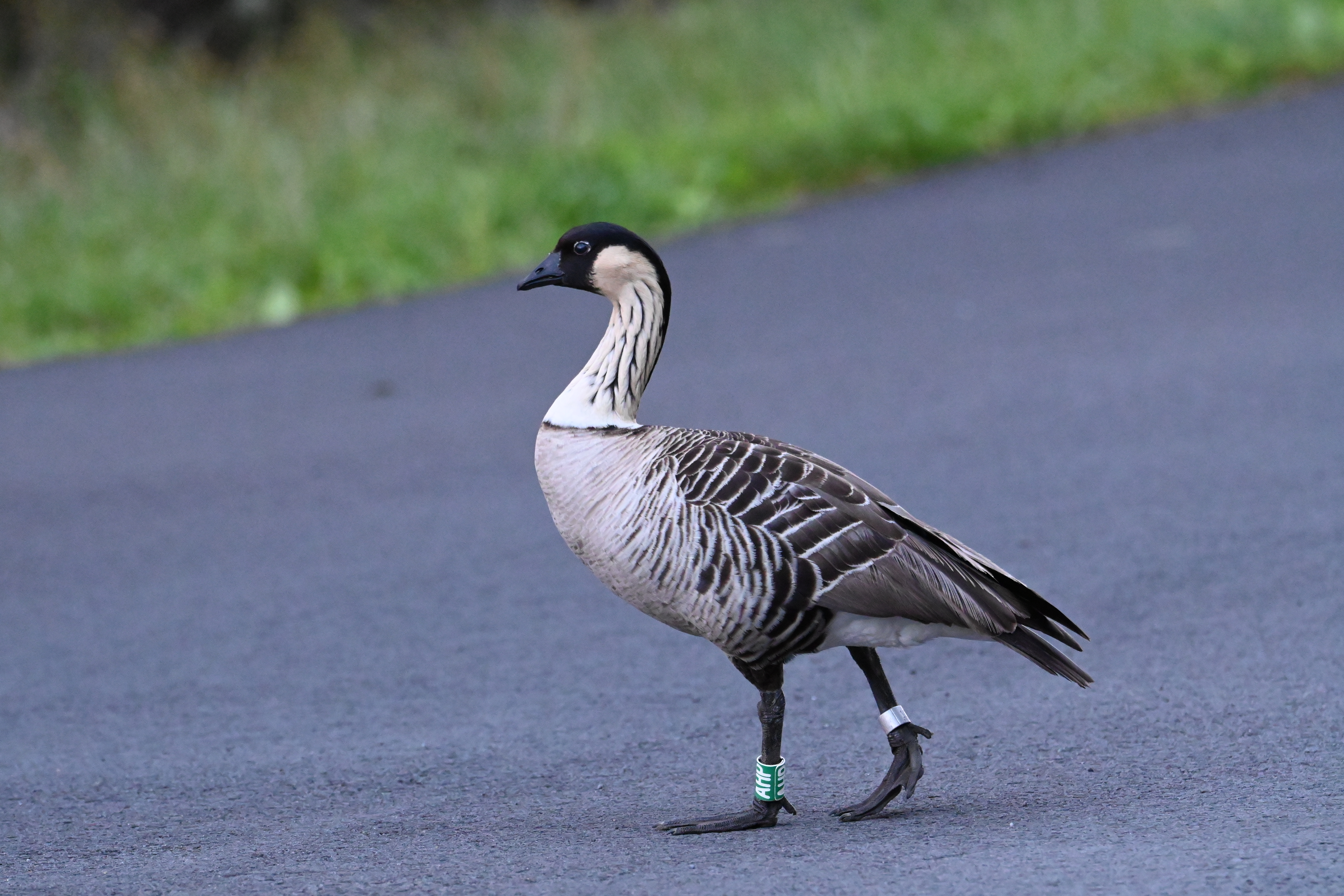
A nene (Hawaiian goose) walking along a road.

December 15, 2024

Philippians 4:4-7
Luke 3:7-18

The nene (a Hawaiian goose) was going to change the world.

He wanted to change a lot of things. Some of them, he thought, might be more difficult than he could actually do. He wanted ‘ohelo to grow more evenly through year, for example. Without learning how to plant and cultivate, which is hard to do when you have wings rather than hands, he didn’t think he’d get that accomplished anytime soon. Still. It’s nice to have a goal.

Mostly, though, he had ambitions to change the way that creatures interacted with one another on Hawai’i Island.

Most creatures in the forest don’t bother one another very much. Yes, the i’iwi gets possessive about flowering ohi’a trees sometimes. Yes, the ‘apapane get touchy around their nests. And there are mongoose that eat eggs. The nene thought that could change, too, but like the ‘ohelo idea, he thought it would take some time to persuade the mongoose to turn vegetarian.

What he most wanted to change, however, was the careless actions of human beings.

Other creatures don’t bother nene much, but human beings do. They come walking up where nene are feeding, they pick food the nene need to eat, and worst of all, they drive fast through places where nene walk and rest. I’m afraid that the biggest danger to a nene these days is getting hit by a car.

So our ambitious nene developed a plan to stand by the side of a road and talk to the people driving by. Or, well, honk at the people driving by. Yell at the people driving by.

I’m afraid it didn’t go well. The cars went by at the same high speeds they had before. A few of them stopped instead. One person even got out and went over to try to pet the nene, who decided that flying away was the best thing to do.

He watched for some time as the cars raced by at the same high speed with no change at all.

It made him sad.

Another set of wings fluttered next to him. It was a curious ‘elepaio. “What were you doing?” she asked.

The nene told her he was trying to get people to drive more carefully.

“That takes a lot of doing,” the ‘elepaio observed. “There are a lot of people to persuade. How is it going so far?”

The nene admitted that it wasn’t working so far.

“There’s an easier place to start,” mused the ‘elepaio. “What if you started with yourself?”

“What do you mean?” asked the nene.

“It’s right to be concerned about what others do,” said the ‘elepaio, “and to get them to change it. But the first step and the easiest step is to do what you can about yourself. Step back from the road. Walk further away. Do what you did a few minutes ago, and fly away from foolish people.

“You’ve got to start somewhere,” said the ‘elepaio. “Start with you.”

by Eric Anderson

Watch the Recorded Story

I write these stories ahead of time, but I tell them on Sunday mornings from memory and improvisation. What you have just read is not exactly what you’ll see in the video.

Photo of a nene by Eric Anderson.

Story: The Easy Way to Fly

November 17, 2024

Hebrews 10:11-25
Mark 13:1-8

I’m afraid it’s true that there are not many nene. They are easily outnumbered by the ‘apapane, and more than easily outnumbered by people. You may wonder why, if there aren’t that many of them, you hardly ever see them one at a time. I mean, wouldn’t you expect that a nene would go its own way from time to time, just to find some ‘ohelo berries of their very own?

One nene thought that independence sounded like the way to go.

He’d been to nene school, so he thought he knew it all. He knew how to find food. He knew how to fly. He’d done the drills at formation flying without getting excited about it. He was going to be the nene who made his own way, without relying on (and, you know, sharing with) the other nene.

So off he went to find his own spaces.

There’s a lot more of Hawai’i Island than there are nene, so it wasn’t difficult. If he spotted a little flock of nene in the air or on the ground, he’d just go somewhere else that they weren’t. That was lots of places, and plenty of those places had food, and water, and places to rest and relax. All in all, he thought he was having a pretty good nene life.

One day as he was in the air looking for another place to relax and eat, he heard the calls of some nene behind him. Glancing back, there was a little “V” shape of five geese flying in formation. They called out a friendly greeting, to which he replied – he liked being alone, but he wasn’t going to be rude about it.

What surprised him, however, was that the little “V” of nene was catching up with him. In fact, they passed him in the air, still calling out their “Hello!” He thought he was a pretty good flier, but they sped on by and he couldn’t keep up. It didn’t take long before they’d disappeared into the clouds.

How had they flown past him so fast?

Sometimes when you don’t know something and you don’t have Google, the best thing you can do is ask someone who should know. So he sought out his nene school teacher. When he found her, she was just finishing up a formation flying class. He waited, mostly patiently, until she was done, and told her about being passed by those other nene.

“Am I just so slow?” he asked her.

“No,” she said. “You’re not slow. You’re alone. Flying together – in that ‘V’ formation – allows us to fly more easily. The wings of the birds in front create good flying air for the birds behind. It makes a difference. We can put more strength into it. We fly better together.”

“You mean,” he said, “that if I always fly alone, I’ll always fly harder and slower?”

“That’s exactly what I mean,” she told him. “Together is the easy way to fly.”

Never let it be said that nene won’t learn. He found his own place in a little flock, and there in its “V” he flew easier and faster than he could remember doing before. Together is the easy way to fly.

by Eric Anderson

Watch the Recorded Story

I write these stories ahead of time, but I tell them from memory plus inspiration. The story you just read will not match the recorded telling of it.

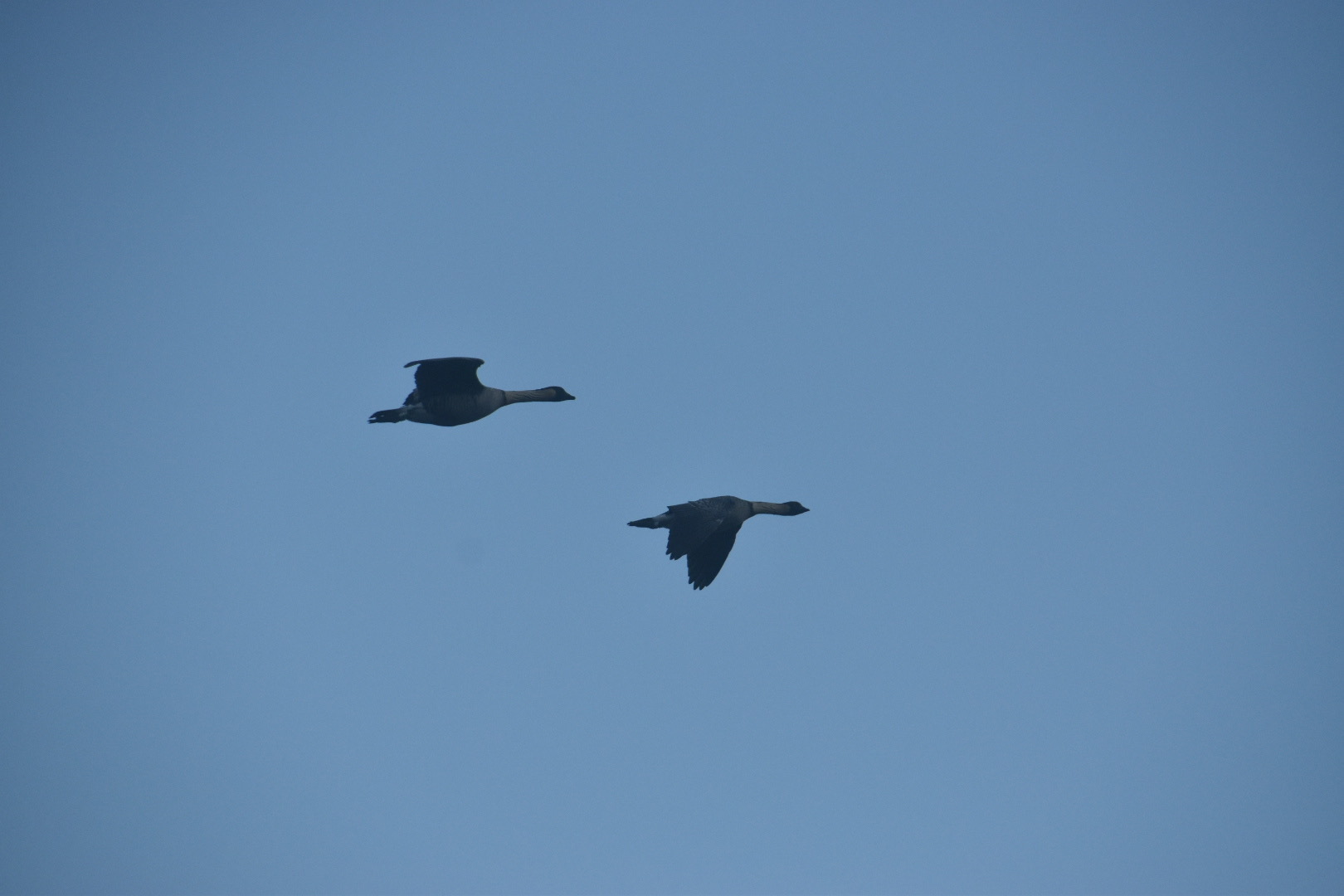
Photo by Eric Anderson

Story: Follow the Leaders

September 29, 2024

Numbers 11:4-6, 10-16, 24-29
Mark 9:38-50

It’s a funny thing about people. Sometimes people choose leaders without getting them ready for leadership first. You’ve probably seen it in school sometimes. The teacher asks someone to lead the class in a song or a reading, but it turns out they hadn’t learned it yet.

That can be pretty embarrassing.

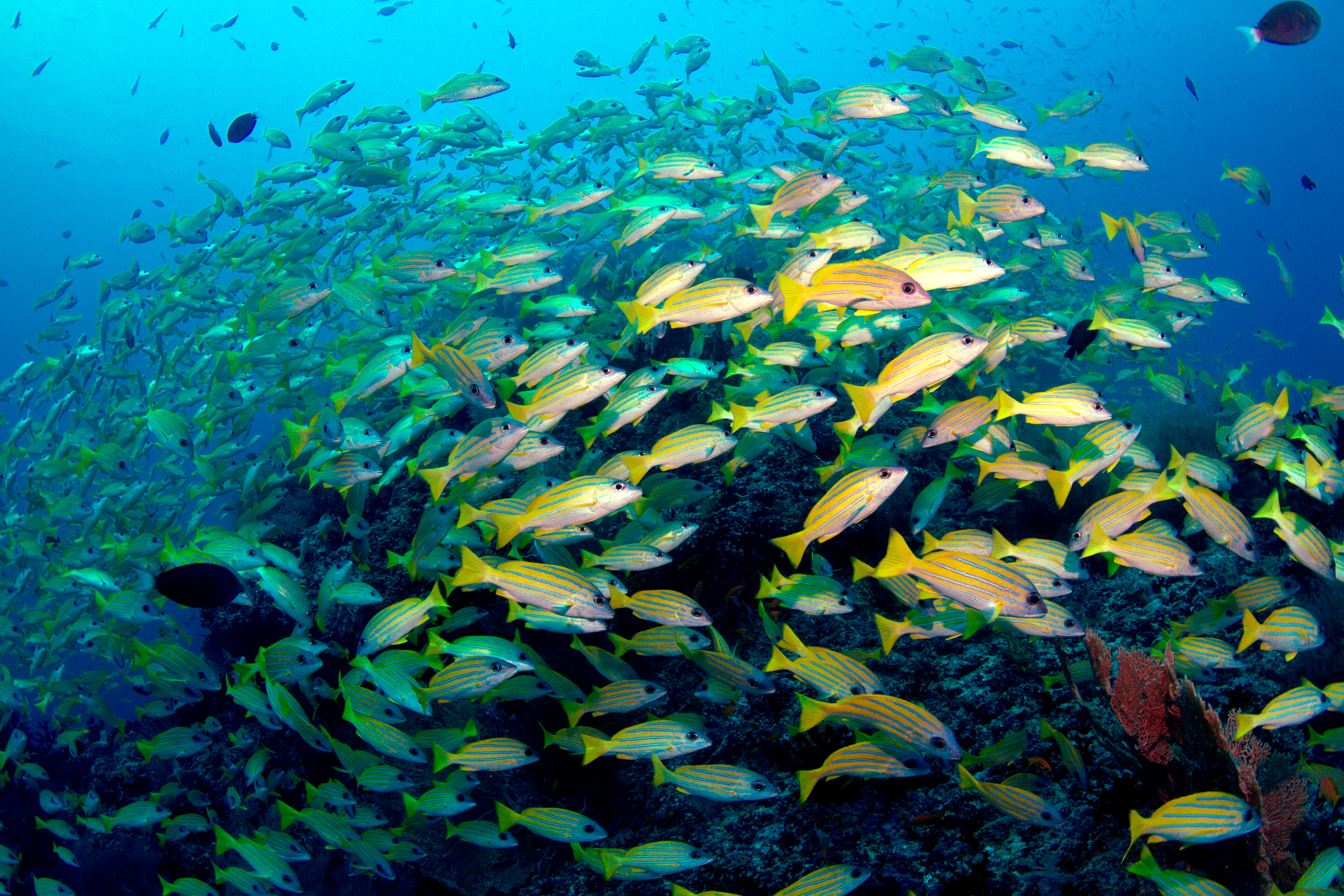
As it happens, it’s not just humans who do such things, although it turns out that for a lot of those creatures, a school is also the place to do them. A school of ta’ape, or “Bluestripe Snapper,” selected a relatively young fish to be the leader of their school one season. He was pretty big, he seemed pretty smart, and as far as anyone could tell without asking, he seemed to know what he was doing.

He… didn’t know what he was doing.

The first hour was a disaster. He tried calling out from the front of the school, “Everybody turn right!” And everybody turned right. Everybody who heard him. That wasn’t all that many of them. It was a big school, and his loudest voice didn’t carry all the way to the back, or even to the middle. Fish swam off in all sorts of different directions. It was quite a muddle.

Fortunately, he was a smart ta’ape, and one thing about being smart is knowing when you need to learn something. Clearly there were things he needed to learn about leading the school, and he needed to learn them quickly. So when the school was feeding quietly on some beds of algae, he sought out some of the ta’ape kupuna and said, “I need some help. How do I get the school to follow?

The kupuna were gracious. One or two of them did think he might have learned this before, but they kept quiet about it. They told him the secret.

“You need to choose fish to lead with you.”

“The school is too big for one fish to lead,” they said. “As you’ve found, it can’t be done by one fish. So you appoint other leaders, and space them throughout the school. The ones closest to you listen for what you’re doing, and the ones farther away listen for what they’re doing. When you turn, they turn, and the other leaders turn, and the school turns.”

The leader was relieved. He didn’t have to do this alone. He would have help. He promptly asked as many of the kupuna as were willing (some of them thought it was time for some new fish to learn) to become the other leaders, and he found a few more fish and taught them what. They needed to know.

The next time he directed the school toward clearer water they turned in a flash. He laughed for joy, and so did the other leaders, and so did the whole school full of fish, because he’d led them all in joy.

by Eric Anderson

Watch the Recorded Story

I write these stories ahead of time, but I tell them from memory. And sometimes I don’t remember the names of the fish.

Photo of a ta’ape school by Tchami – Bluestripe Snapper, CC BY-SA 2.0, https://commons.wikimedia.org/w/index.php?curid=34504430

Fighting the Storm

July 7, 2024

2 Corinthians 12:2-10
Mark 6:1-13

I like honu (green sea turtles). How about you? It’s just so comforting to me watching those sea turtles raise their flippers to the surface to breathe and look around, and then taking them down to snack on the seaweed, then turning themselves about like the most agile of dancers, then hauling themselves out on the shore to get a good solid nap in the sun.

I like honu.

It’s hard to believe that one could be a bully, but I’m afraid this story is about a honu who did become a bully. He’d shove smaller turtles out of his way as he grazed on seaweed. He knocked shells with honu who were in the spot he wanted to sunbathe in. Actually, he’d knock shells with a honu just to get it to move, then he’d nap somewhere else. He slapped other turtles with his flippers, he nipped them with his mouth, he’d slide over them when they surfaced to breathe, he… well.

He was a bully.

I’m sorry to say that, mostly, it worked for him. He didn’t have a lot of friends, and I guess part of the reason he was mean was that he didn’t have a lot of friends. But he ate a lot, and he got comfortable spots on the beach, and other honu didn’t pick on him, no they didn’t. So, as I say, it mostly worked for him.

Until, one day, he decided to bully the ocean.

The winds were strong and the surf was high that day. Rain lashed down from overhead so that even a honu found it difficult to tell where the sea top ended and the air began. Spray flew in sheets. Wavetops tossed careless fish into the air.

And this honu decided to go nap on the beach. I don’t think he expected to find sunshine there, but when somebody expects to get things his way all the time, who knows?

The problem was that the waves at the surface tossed him about, and when he dove down, the currents underwater dragged him back to sea. He was trying to get to one specific part of the beach, but the wind carried him along past where he wanted to go, and when he tried to swim back against it, he couldn’t – at least not from where he was. He lashed his flippers at the water both at the surface and deeper down, and in neither place could he make much headway.

Eventually he let the underwater current carry him back out to sea, where he surfaced and howled in rage – which is very rare for a honu – at the winds and the surf.

An older honu drifted by and said, “What’s the matter, youngling?”

He wasn’t that young, but she was a lot older (and bigger), so he didn’t quite yell back when he said, “The stupid wind and waves won’t get me where I want to go!”

“Watch the youngling there,” said the older honu, and he did. A younger, smaller turtle, one that he’d bullied any number of times, had positioned himself in a place where the combination of wind, waves, and current would carry him toward the beach. He made just the smallest of adjustments with his flippers as the water bore him along. Just at the beach, he dipped down to slow himself in the current going back and to avoid being thrown onto the shore from the top of a wave. Then he slid onto the shore, and slowly moved up on his now-active flippers.

“You can’t bully the sea, youngling,” said the older honu. “You shouldn’t bully anything, but especially not the ocean, which won’t notice you at all.”

It took him a long time to learn that lesson deeply, I’m afraid, and he spent a number of storms tossing about in the surf. Eventually, though, he learned that sometimes you don’t fight, you follow. And when he did, he fought less with other honu, and a bully learned to do better.

by Eric Anderson

Watch the Recorded Story

Due to a technical error, the story was not recorded this week.

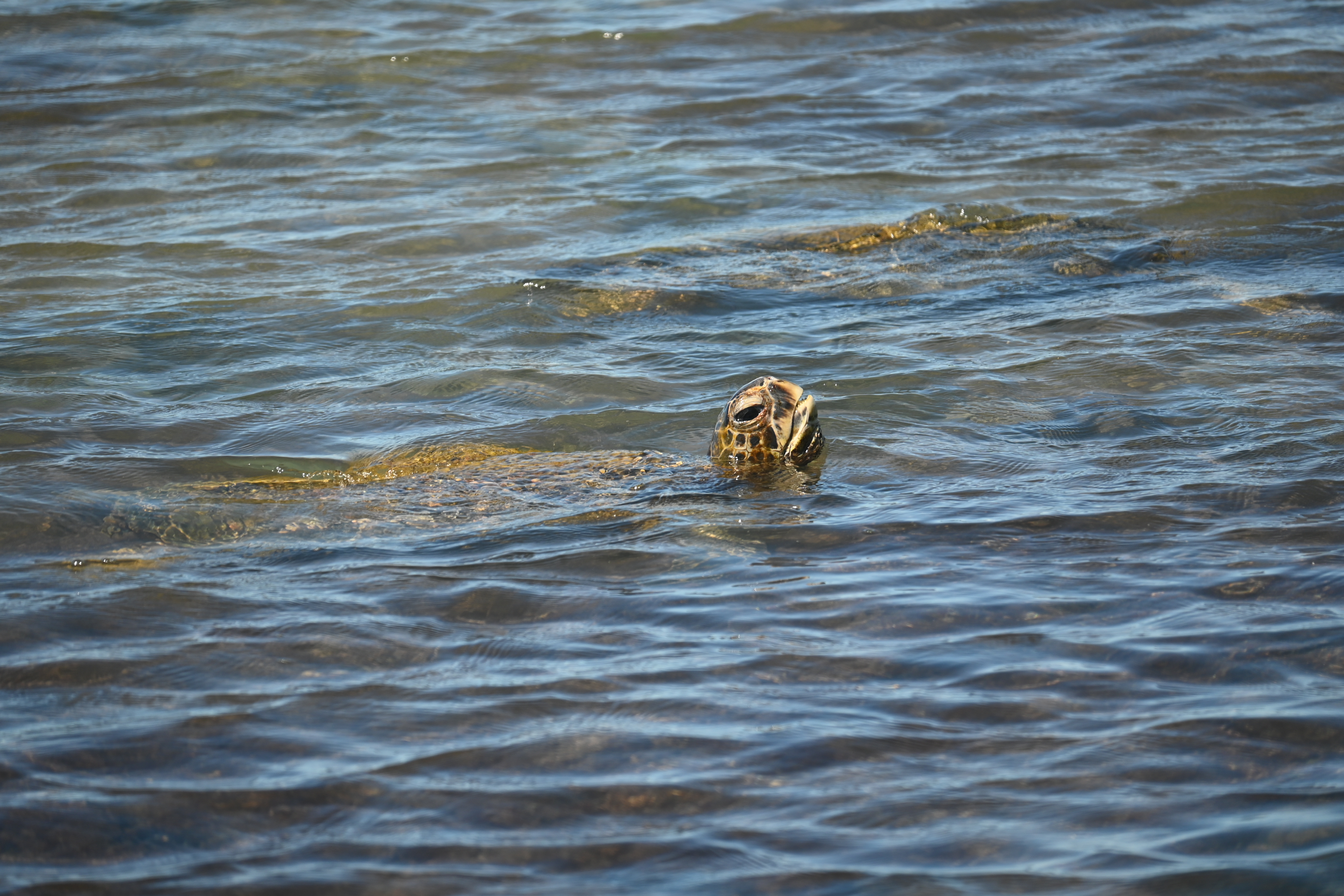
Photo of a honu (who showed no signs of being a bully) by Eric Anderson.

Story: Mother Memory

June 23, 2024

1 Samuel 17:32-49
Mark 4:35-41

The ‘amakihi was, everyone had to admit, an adult. Even her mother had to admit it. She was young, sure, but she had her adult feathering, she had lots of hours of flight time, and she knew the difference between a tasty bug and a yucky bug.

(Which I don’t, by the way. I’m inclined to think they’re all yucky bugs.)

Her mother, however, continued to give her good advice. She pointed out the tasty bugs. She pointed out the blooming ohi’a blossoms. She pointed out the ripe fruit. She even said, “Oh, look, it’s nighttime,” as the sun set beyond Mauna Loa.

“Mother is so boring,” said our adult ‘amakihi of a daughter.

“Why do you tell me these things all the time?” she asked one day, and her mother replied, “Because a day will come when I’m not around when you have a question. I want to make sure I’m always with you in your memories for such a time.”

“But it’s so boring,” said the daughter, but she said it to herself because she didn’t want her mother to hear.

One day, exasperated by another recital of the bugs that weren’t good to eat, she took off and flew fast and far. She didn’t pay a lot of attention to where she was going. When she got hungry, she’d stop for a nectar snack or a bug break. Then off she flew again.

When nighttime came, she realized that she had no idea where she was.

What should she do? she wondered. And as if her mother was there, but she wasn’t, she heard in her memory the words, “Look, it’s nighttime. Find a branch with greens around it and settle down to sleep.”

So she did. In the morning her mother’s voice in her memory guided her to tasty bugs and ripe fruit. But now she had to remember the more difficult thing: how to find her way home.

“Look at the slopes,” said her mother in her memory. “We don’t live on Mauna Loa, so don’t fly that way. But fly up the slopes of Kilauea until you find the crater at the top.”

She followed the rising slopes but didn’t turn up Mauna Loa. After some time, she saw some familiar trees. After a little longer, she saw the great crater at the summit. She made her way around it until she found the stand of trees where her nest had been.

And… found her mother.

Her mother fussed at her for a while about being away overnight, but her daughter said, “Please, let me say this,” and mother fell silent.

“Thank you,” said her daughter, “for being with me in my memory to get me home.”

I’m afraid that from time to time afterward, she did get exasperated with her mother and think she was boring, but… she never fussed or protested, because of how important it was to have her mother in her memory to help her find her way home.

by Eric Anderson

Watch the Recorded Story

I write these stories ahead of time, but I tell them from memory. And sometimes, as today, things happen that have to be acknowledged – like a mother clear saying to her son, “I told you so.”

Photo of an ‘amakihi by Eric Anderson.

Story: Soar Loser

May 19, 2024

Acts 2:1-21
John 15:26-27, 16:4b-15

The koa’e kea is a distinctive bird, with its bright white wings and body set off with deep black feathers, and that amazing long trailing tail. It’s distinctive, but it’s not unique to Hawai’i Island or to the Hawaiian Islands. You’ll find white-tailed tropicbirds (to use their English name) flying above and feeding in the warm waters of both the Pacific Ocean, the Indian Ocean, and even the Atlantic Ocean. Although they fish for food in the sea, some of them like to nest on the cliffs of Kilauea. Quite a few of them like to relax by soaring on thermals. That’s the warm air that rises from the black rock of the volcano summit.

One day a visitor to the islands who was knowledgeable about birds was standing at the crater rim and saw the koa’e kea soaring on the thermals. “Look at that,” he said to someone standing nearby. “Those are white-tailed tropicbirds, and they’re quite a ways inland. How odd for a seabird.”

“And it’s even stranger,” said his equally knowledgeable companion. “They’re soaring. White-tailed tropicbirds don’t soar.”

“It’s very odd indeed,” agreed that man and that woman, and they went on to talk about something else.

I’m sure such conversations happen often at those overlooks, but I suspect that more often nobody comments on these things at all. And it is true that koa’e kea don’t soar very much in other places in the world. They’re strong, agile fliers, to be sure, but most white-tailed tropicbirds don’t live where there are steady, reliable rising thermals.

So this wouldn’t have mattered if a koa’e kea hadn’t overheard, and become very concerned, that by soaring on thermals she was doing The Wrong Thing.

So she stopped.

Oh, she’d still fly around the summit craters, and she wasn’t so silly as to leave her nice spot on the cliffside. But when she flew she beat her wings quickly and steadily, the way she flew in all the other places she went.

Since she’d stopped soaring, I guess you’d have to call her a soar loser.

And nobody noticed.

I suppose it wasn’t that big of a difference to spot, but her family didn’t, her husband didn’t, her friends didn’t. Maybe they thought she had somewhere urgent to go. I don’t know.

It was a really young koa’e kea, one who’d been flying for less than a month, who said something.

“Why don’t you soar?” she asked one warm afternoon after they’d returned from successful fishing in the ocean.

“White-tailed tropicbirds don’t,” she said in reply, beating her wings in steady time.

They flew side-by-side over the summit for a while, and the younger one looked at other koa’e kea soaring nearby.

“It looks to me like they soar,” she said.

“They don’t soar in other places in the world,” said the older one, maintaining her wingbeats. “I heard some people discussing it, and people would know.”

“OK,” said the youngster. “But those birds are there. We’re here. I think we can do things differently here.”

The older one said nothing. She just flew along. Until, in a minute or two, her wingbeats stopped, and she held them out straight and firm.

Side by side, the young bird and the older bird soared.

by Eric Anderson

Watch the Recorded Story

I write these stories in advance, in full. In worship I tell them from memory, with a little improvisation added. So what you read here and what you see in the video will not be the same thing.

Photo of a koa’e kea (white-tailed tropicbird) soaring over one of the Kilauea craters by Eric Anderson.

Story: No Signs

kolea (Pacific Golden Plover)

March 3, 2024

Exodus 20:1-17
1 Corinthians 1:18-25

The kolea had successfully made his first flight to Hawai’i the previous fall. He’d hatched a young bird in Alaska, he’d been fed by his parents, he’d learned to find his own food, and eventually he’d taken off for the long journey to Hawai’i. He’d found a spot here to look for worms and seeds and berries. He’d worn his mottled tan and brown feathers through the winter months. He was starting to put on the black and white feathering of summer.

He’d also been paying attention to people. I advise you to pay good attention to people, because you are people, and paying attention to people who are people like you helps you to learn how to be people, and it also helps you to know what other people are going to do, like when they might step backward and one people steps on another’s people’s toes.

Um. Person’s toes.

While it’s useful for people to listen to people, it’s not always so useful for other creatures. For some reason, this kolea heard a lot of people talking about signs. If you want to find your way to Hilo, follow the signs. If you want to find your way to the beach, follow the signs. If you want to go not too fast and not too slow, follow the signs.

Where, wondered the kolea, would he find signs on the way to Alaska?

Mind you, people do put signs out on the waters. If you look around Hilo Bay, there are marker buoys out there to help boats find their way to the harbor mouth and back home. They’re easier to see at night, when they blink red and green. As you get further from the shore, however, there are fewer of them, and not many at all across the vast expanse of ocean.

The kolea hadn’t noticed any on the way to Hawai’i, and didn’t expect to see any on the way to Alaska.

“Where will I find the signs?” he asked.

“Why do you want signs?” an older kolea wanted to know.

“People use them all the time,” he answered, and the other kolea thought he meant kolea people rather than human people, and flew away because he wasn’t making any sense.

It was another older kolea who sat him down for a heart-to-heart, brain-to-brain, and feather-to-feather talk.

“What signs do you expect to see?” she wanted to know.

“Clouds, stars, lights, glowing plankton in the ocean,” he said.

“Did you see any coming here?” she asked.

“Of course I did,” he told her, because those things happen around the oceans.

“Did they tell you how to get here?” she asked.

Well, no, they hadn’t.

“How did you get here?” she asked.

He gave her an answer that he understood, and she understood, because they’re both kolea and they can fly three days over open ocean without signs, but that I don’t understand because I’m a human person and I don’t know how they do it.

“The signs are inside you,” she told him.

We live with a lot of signs around, it’s true, telling you everything from what the name of this church is to how far it is to Kona. Some things, however, and some of that is in our lives of prayer, take place within us, in our hearts and in our souls. There are signs for that, like the Bible, but down deep we’ll find the guidance of the Holy Spirit to bring us safely home.

by Eric Anderson

Watch the Recorded Story

I write these stories ahead of time and tell them in worship services from memory. As a result, the prepared text and the told story rarely match. I’m quite pleased how much of the paragraph with all the people I remembered this week.

Photo of a kolea in Hilo by Eric Anderson.

Story: ‘Opukaha’ia

February 18, 2024

Genesis 9:8-17
Mark 1:9-15

Usually I tell you stories about birds. Sometimes I tell you stories about other kinds of creatures, like honu. Sometimes I tell you stories about trees and seeds, and once or twice about clouds. And from time to time, I tell you stories about people, young people and older people.

And I make these stories up.

Today I’m going to tell you a story that I didn’t make up, although I’m putting the words together for it. It’s about a real person who lived and died over two hundred years ago, someone whose life made an enormous difference for you and for me. His name was ‘Opukha’ia.

He was born not terribly far from here in Ka’u. His early life was a sad one. There were wars as Kamehameha I sought to rule all the Hawaiian Islands, and in one of those wars ‘Opukaha’ia’s parents and siblings were killed. He was taken in first by one of Kamehameha’s warriors, and later by an uncle, who was a priest of the Hawaiian gods. The uncle raised ‘Opukaha’ia to become a priest as well.

One day ‘Opukaha’ia visited an American ship anchored offshore, and decided that he wanted to leave Hawai’i, feeling like he had lost his connection with his home with the death of his immediate family. His uncle, I should say, didn’t want him to go. There were two young Hawaiians on the ship, as a young man named Thomas Hopu had already signed on as a cabin boy. The ship made a long voyage, first to Alaskan waters to collect cargo, then to China to sell cargo and take on different cargo, and then all the way around the southern tip of Africa before making their way to the east coast of North America. The ship’s captain invited ‘Opukaha’ia to stay with him at his home in New Haven. New Haven, as it happened, was the site of Yale College, which taught math, science, literature, law – and religion.

The story goes that the young man was sitting on the steps of the main college building when a senior named Edwin Dwight came along and asked him if he wanted to learn. ‘Opukaha’ia wanted to learn very badly, and Edwin Dwight became his tutor. I’m not sure when he adopted the English name Henry. When the ship’s captain had to leave for another voyage, Edwin Dwight found Henry ‘Opukaha’ia another host with a relative named Timothy Dwight. He was, at the time, President of Yale College.

It took some years for Henry ‘Opukaha’ia to accept baptism and membership in the Christian Church, but not because he was slow to believe. He devoured study of Christianity just as eagerly as he ate up study of the English language with a series of mentors and tutors. He wasn’t sure of his own soul. He took it very seriously. He didn’t want to sadden God by falling away from his faith.

I don’t think he did make God sad, by the way.

He had a tremendous influence on the brand-new missionary movement in New England. The American Board of Commissioners for Foreign Missions was founded just a year after Henry ‘Opukaha’ia landed in New Haven. Originally, they planned to send missionaries to India and Sri Lankha. ‘Opukaha’ia made them consider Hawai’i, in great part because he was willing, available, and training to go as a missionary who spoke the language. In 1820, just ten years after the founding of the organization, the American Board of Commissioners for Foreign Missions landed its first missionary company here on this island, over in Kona.

Sadly, Henry ‘Opukaha’ia was not with them. He contracted a disease and in those days there was no effective treatment for it. He died at age 26 in Cornwall, Connecticut. Nearly his last words were, “Aloha o’e.”

by Eric Anderson

Watch the Recorded Story

I prepare these stories ahead of time in writing (it’s what you’ve just read). I tell them on Sunday morning from what I remember of what I’ve written and what I create in the moment. They are not the same.

The image of Henry ‘Opukaha’ia was prepared for the publication of his memoirs, Heneri Opukahaia, A Native Hawaiian, 1792-1818, by Edwin Welles Dwight, 1830.

2023: What will Normal Be?

January 2023 started with an eruption in Halema’uma’u Crater at the summit of Kilauea. The new lava continued to raise the crater floor. As it happened, two more eruptions would do the same during 2023, adding bit by bit to the island of Hawai’i.

Church of the Holy Cross UCC began the year with a gathered congregation and continued to live stream the service to those, far and near, who needed to worship from their homes. In the spring we ceased to require masking for those attending service. A number of people continue to do so. We experienced a few members falling ill with COVID-19 during 2023, but nobody reported a serious bout with the disease. I kept up with my vaccines as best I could.

I switched cameras this year, joining the ranks of mirrorless photographers. Even with pretty basic lenses I’ve been very pleased with the results.

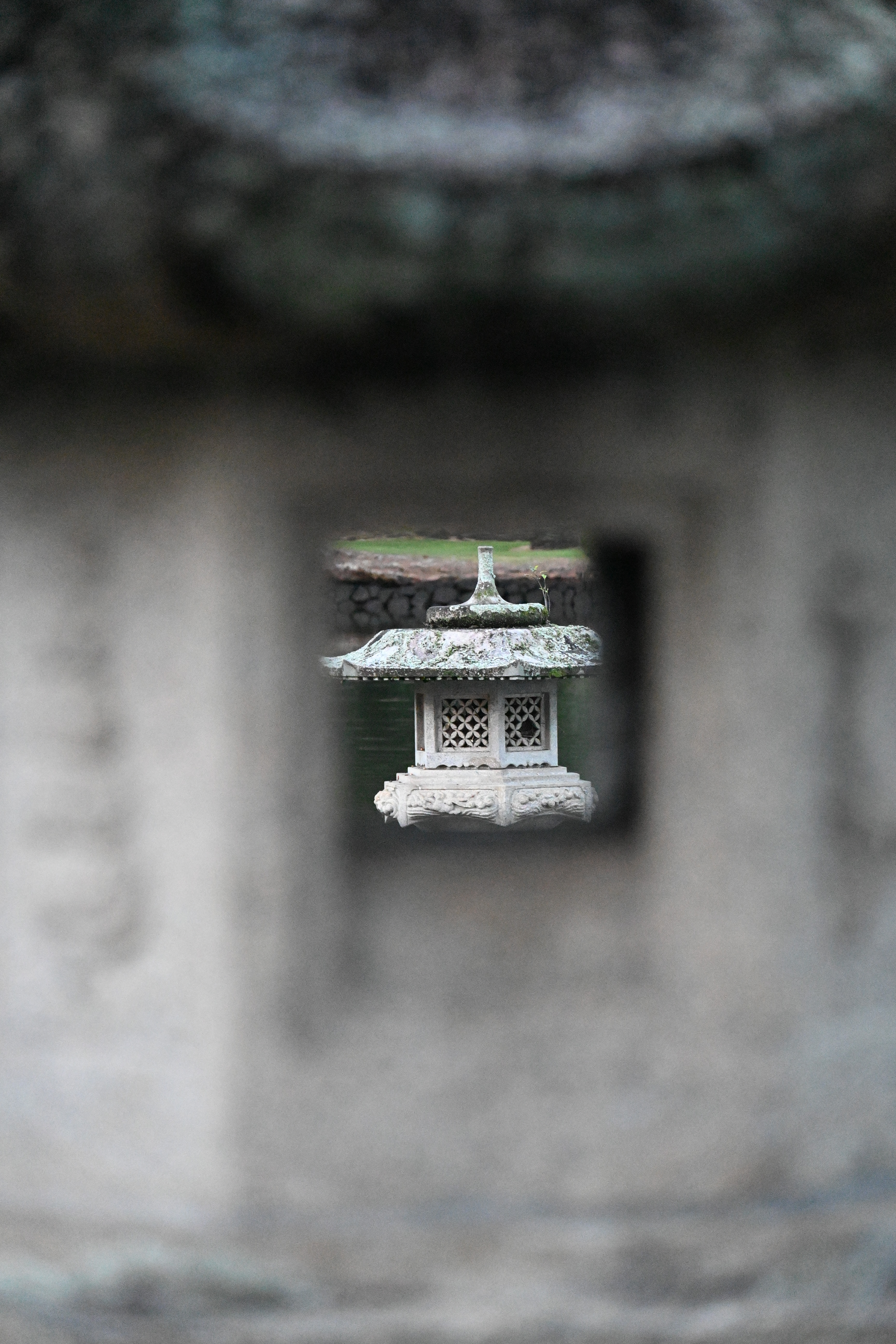
Japanese lanterns at Liliuokalani Gardens, Hilo.

This photo comes from February in Lili’uokalani Gardens in Hilo. It’s one of my favorite images of the year.

In addition to appearing on-camera live each Sunday morning, I continued to offer a song each Wednesday, and a reflection piece (What I’m Thinking) each Tuesday (a change in schedule). Another change was to resume the Community Sing, a gathering for people to choose songs for everyone to sing together. Because copyright issues would rapidly arise, those gatherings haven’t been streamed or recorded, but I did change the Community Concert series so that it includes both a live audience and a live stream.

I wrote seven songs this year, but only six have been recorded. The seventh piece is designed for background music during worship. I wrote it for the first gathered ‘Aha Mokupuni of the Hawai’i Island Association in May. The other six, however, have all been sung during one of the Wednesday performances, and like last year, I plan to create a “Songs of 2023” post shortly. I didn’t buy any new instruments in 2023, and for this grace I breathe a sigh of relief.

I sang with a new singing group in the area for two concert series. Big Island Singers, led by Holy Cross’ choir director Doug Albertson, performed in April, just after Easter, and in November, just before Thanksgiving. The music was lovely, varied, and definitely challenging. As 2024 arrives, my calendar already has rehearsal times marked on it.

I did have visitors, but not as hoped or expected either time. In March my brother Chris and his wife Linda visited, and I came down with a nasty stomach bug the day they got on the plane for Hawai’i. They ended up staying at a local hotel, and I wasn’t up to spending time with them until the last couple days of their visit. They put a lot of miles on my car, though, and I was glad to be at least a little of a decent host.

My cousin Peter and his wife Diane visited in September. The good news is that as they arrived Kilauea had a spectacular summit eruption. The bad news is that I had no hot water in my house. Again, they stayed in a local hotel until I had a water heater that worked. They discovered that there are tours down into Waipio Valley, which I hadn’t known, and I was really happy to join them on the tour and see a part of the island that I hadn’t seen before.

My own travel consisted of a trip to Indianapolis, Indiana, for General Synod, and about ten days vacation in New England afterward. It was a simple delight to see my friend Karen Georgia Thompson raised to become General Minister and President of the UCC and to see my daughter Rebekah taking part in worship leadership during the closing service. My schedule was that of a delegate (though I had voice only, no vote), which was more than challenging. I hope I’m able to return to the next Synod in my former guise as a reporter and photographer.

My trip east included my friend John Madsen-Bibeau’s retirement party and a gathering of former employees of the Connecticut Conference, for which I was most grateful. I also enjoyed time with my brother and sister-in-law, who were very gracious considering that I hadn’t hosted them all that well, with Paul and Kimberly Bryant-Smith, lots of the extended family, and of course Brendan and Bekah.

Those two have both moved since last July to their old college haunts. Bekah now lives in Northampton, Massachusetts, and Brendan in Burlington, Vermont. Bekah continues to work for the Julian Way, an organization working on the intersections between theology and disability, and Brendan started a post with the University of Vermont Medical School in December. I have informed them that visits from Dad will now take place in the summer.

Toward the end of the year, one of my stories appeared in Act Fast, a Lenten devotional published by the United Church of Canada, which is quite exciting.

I spent the year as Chair of the Hawai’i Conference Council and on the Board of Directors of the Hawai’i Conference Foundation; the first leads to the second. As 2024 approaches, we plan to do some review and evaluation of our work toward achieving goals set out in a six year old strategic plan. Since three of those years included a global pandemic, we have had plenty to distract us. In November I actually chaired an in-person meeting of the Council, the first since I received the position in October 2020. I found myself wondering if I knew how to chair a meeting with people present rather than small rectangles on a screen… I am looking forward to passing the gavel to someone else next June, but before I do, I also hope to lead an in-person ‘Aha Pae’aina.

I continued to serve on the Committee on Ministry of the Hawai’i Island Association this year, work I have been very glad of. During the fall I was asked to become mentor and advisor to Keoki Kiwaha, who was entering the ordination process and had been licensed as Kahu of Puka’ana Congregational Church UCC. That is one of the real highlights of my year.

On to 2024!

IMG_4782